
Excavated Soldier Created Copper 5th Corps Badge– Dug at the WildernessDecember 18, 2025
Excavated Soldier Created Copper 5th Corps Badge– Dug at the Wilderness
SOLD
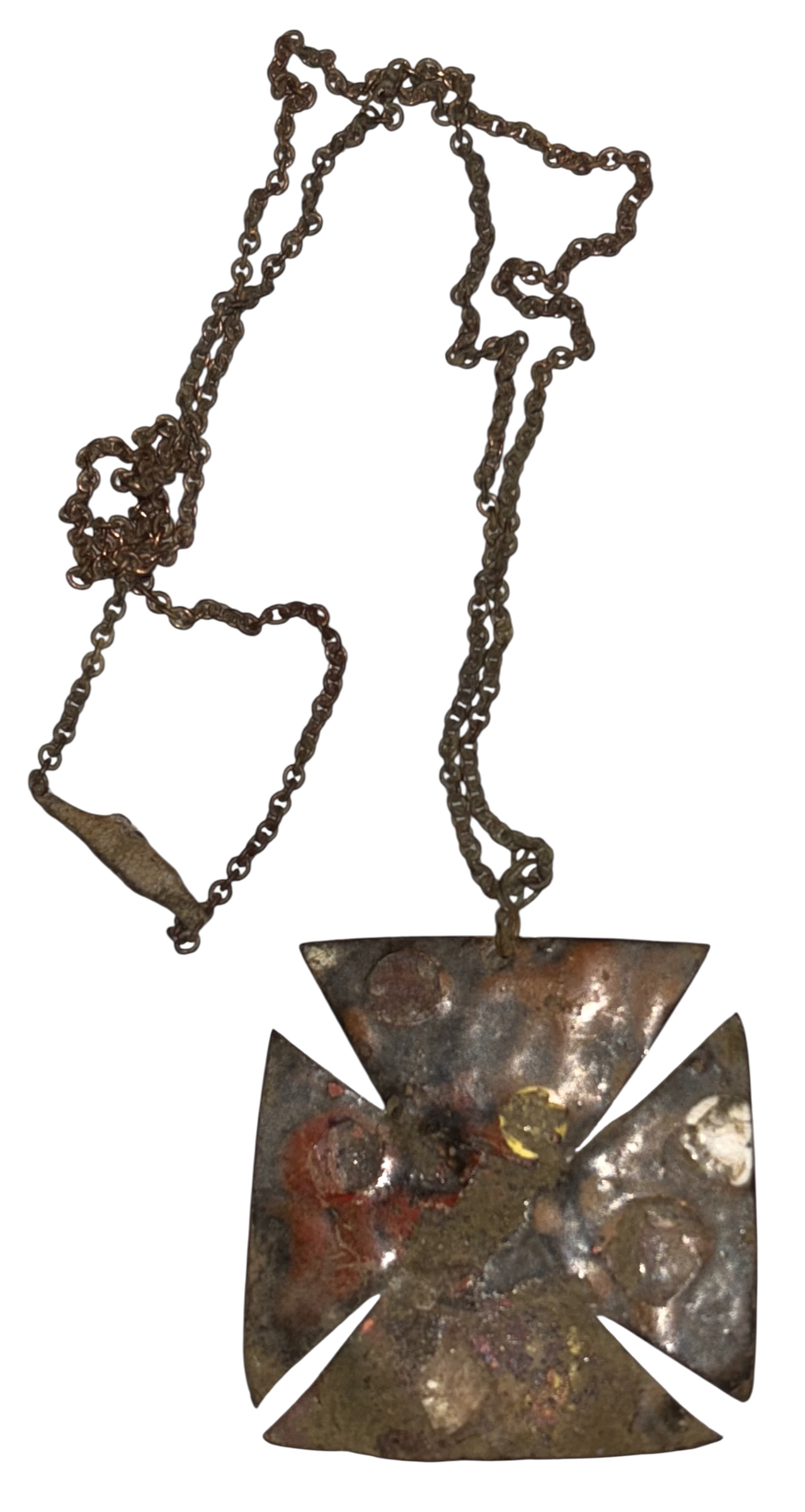
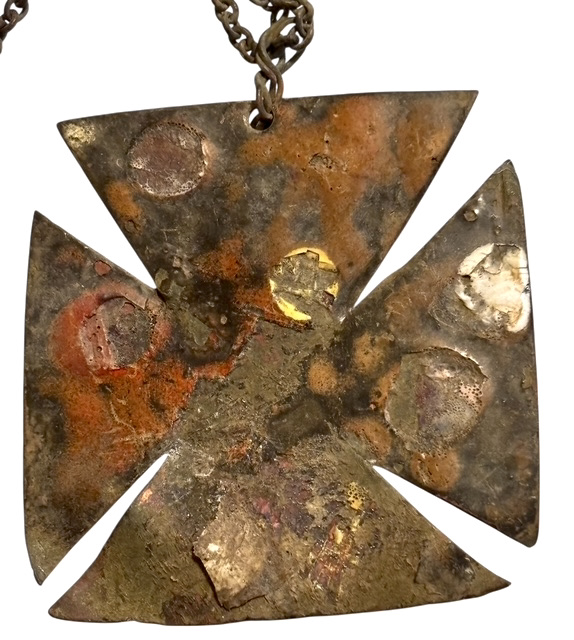
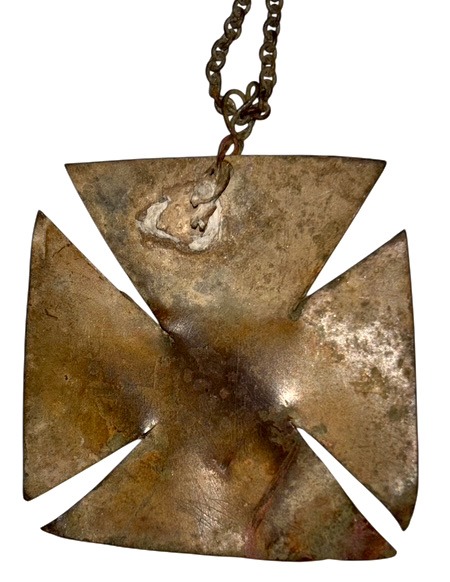
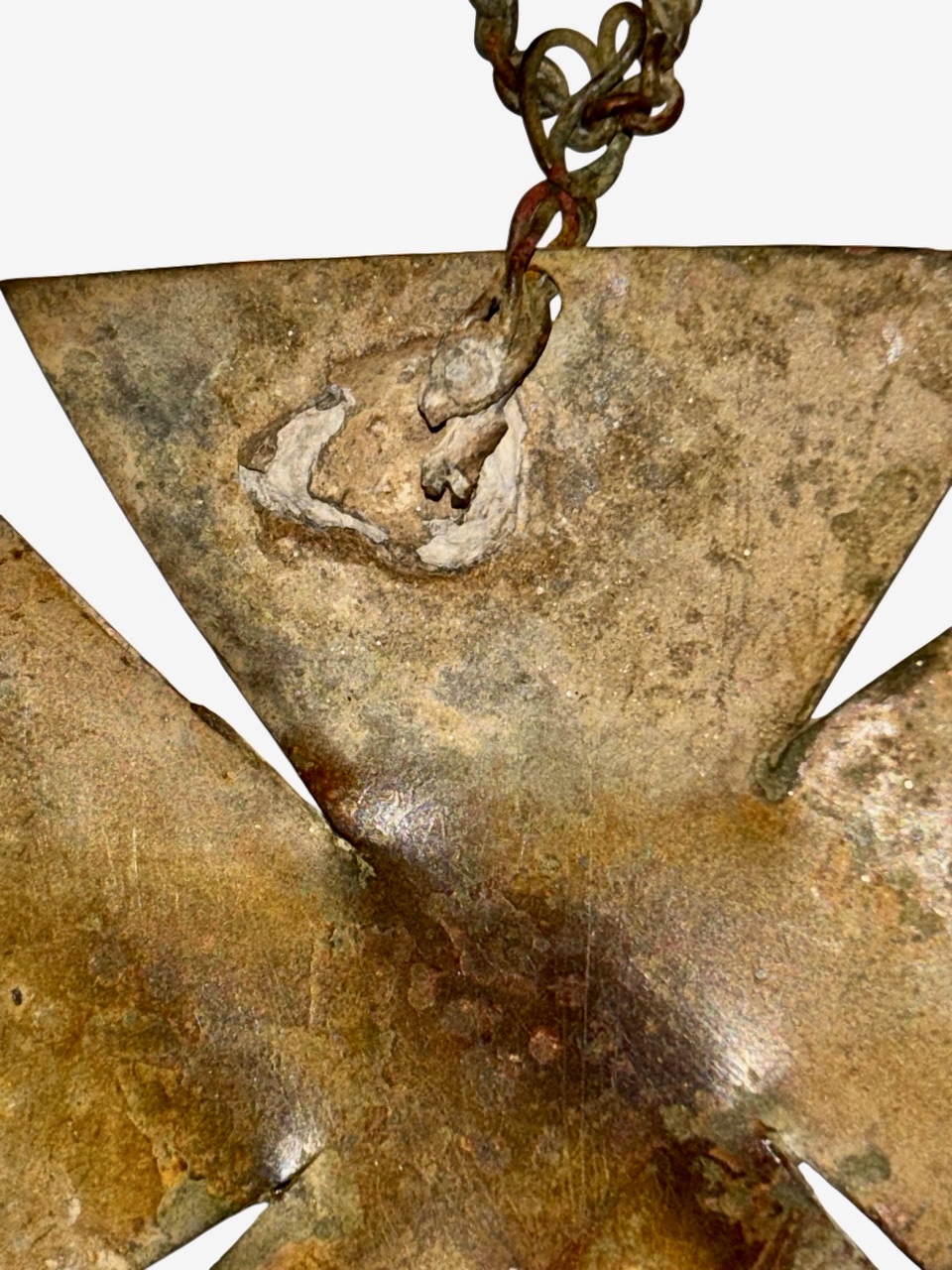
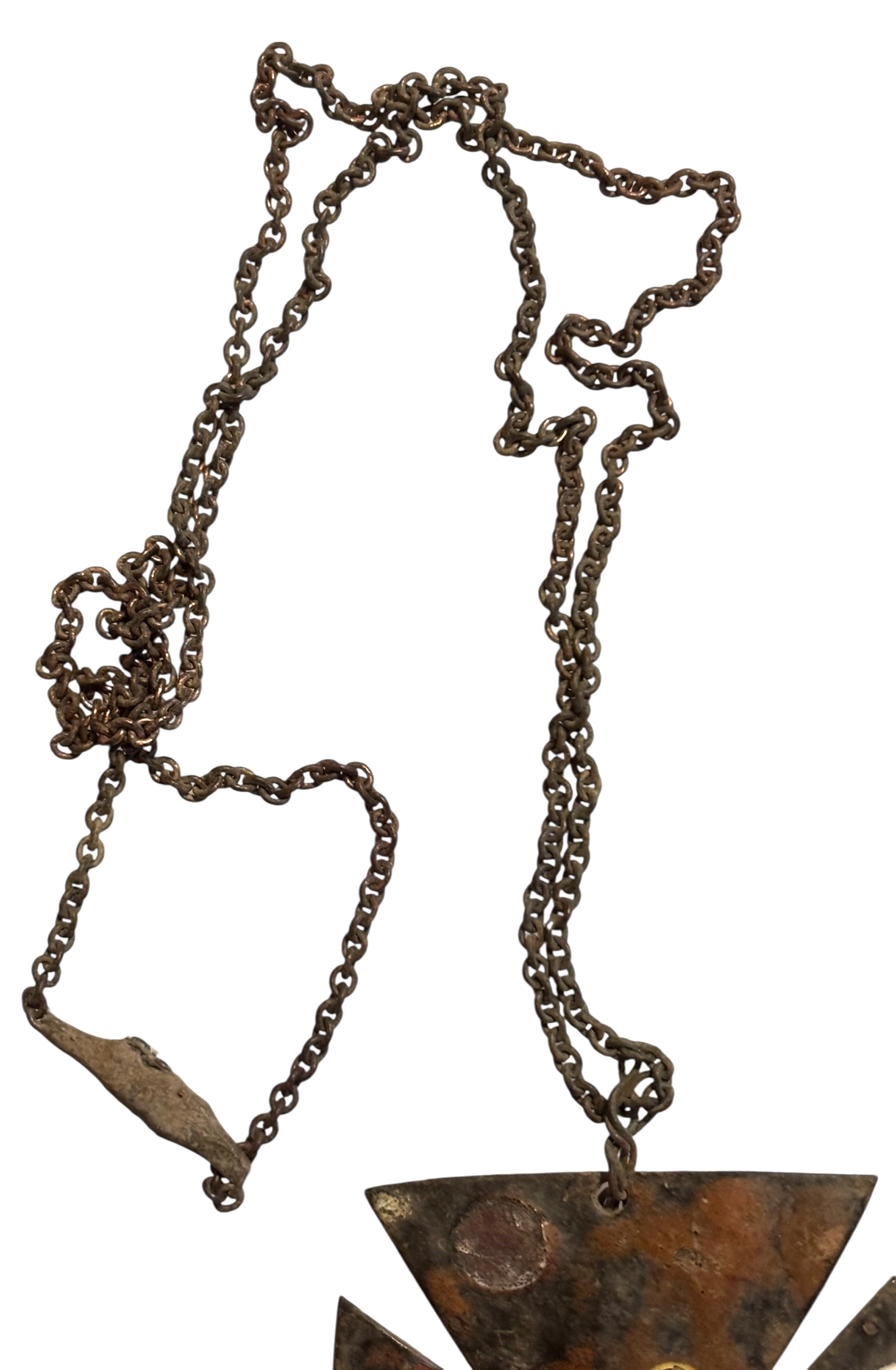
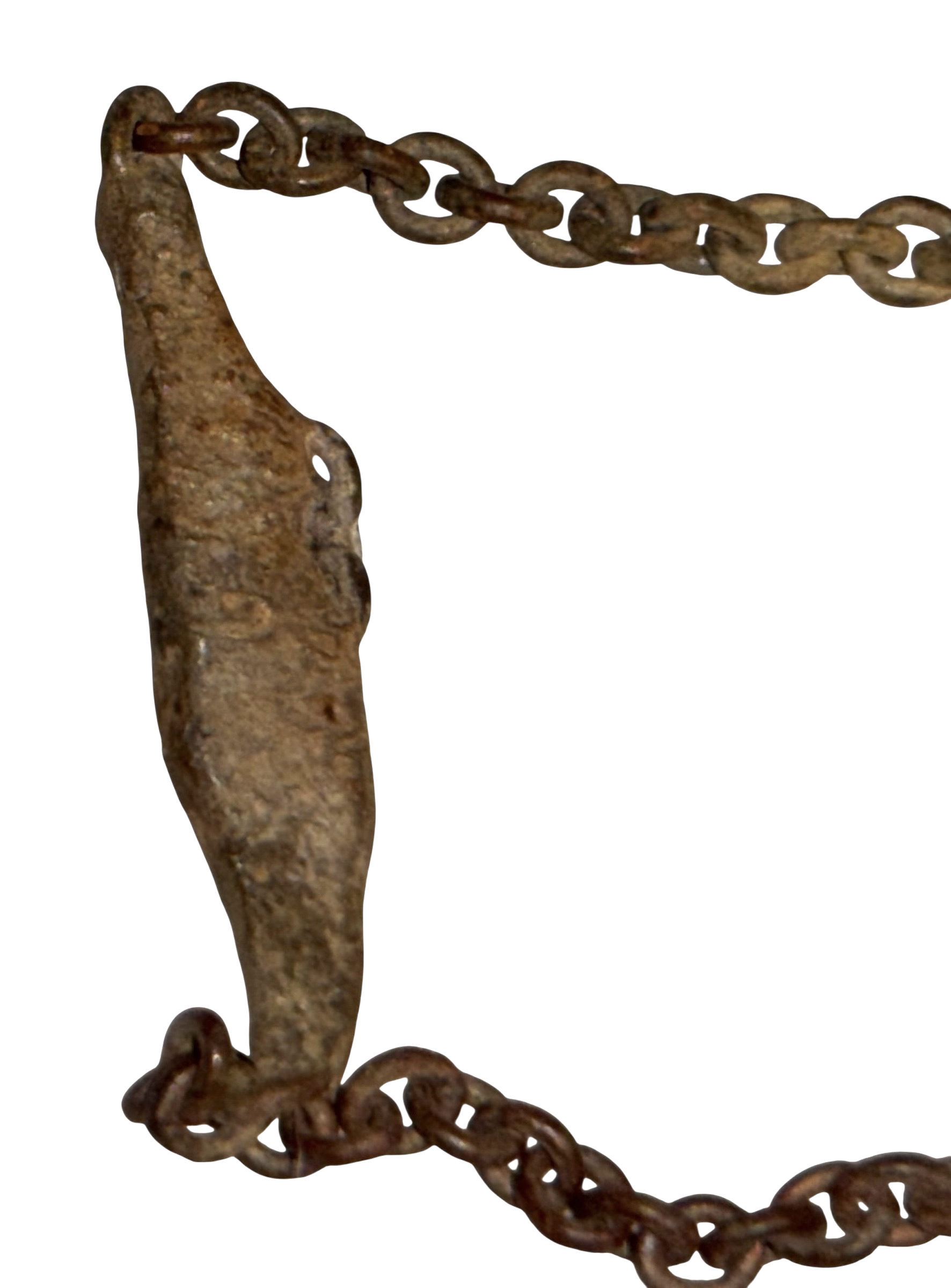
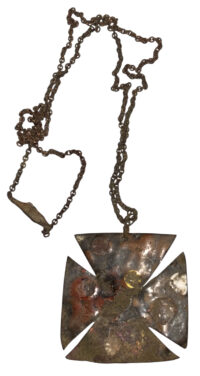
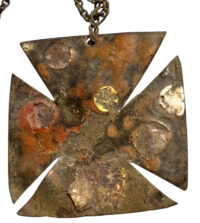
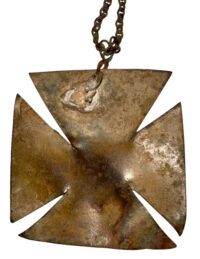
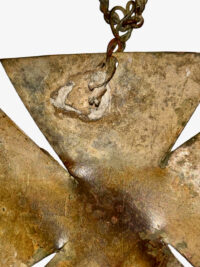
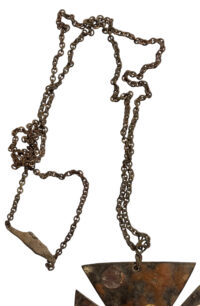
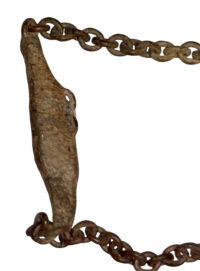
Excavated Soldier Created Copper 5th Corps Badge– Dug at the Wilderness – This unusual 5th Corps badge was probably created by a 5th Corps soldier; the badge is constructed of a sheet of copper, cut in the shape of the 5th Corps designated insignia and attached to a long, diminutive link chain. The badge is somewhat crudely cut and quite large – approximately 2” x 2”. The chain is affixed to the badge via a chain link inserted into a small hole in the sheet copper; there appears to be some remnants of lead solder on one side of the badge, as well as remnants of red paint. This is a unique, soldier created corps badge excavated at the site of one of the Civil War’s most brutal battles.
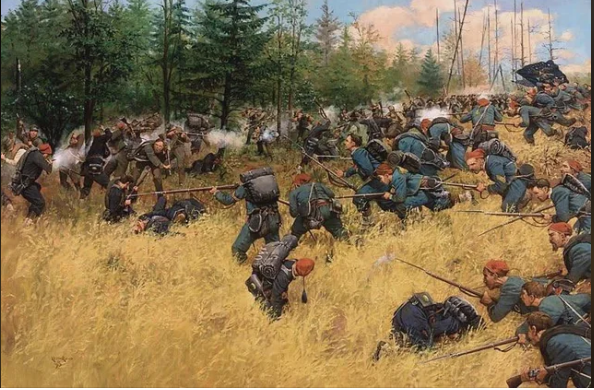
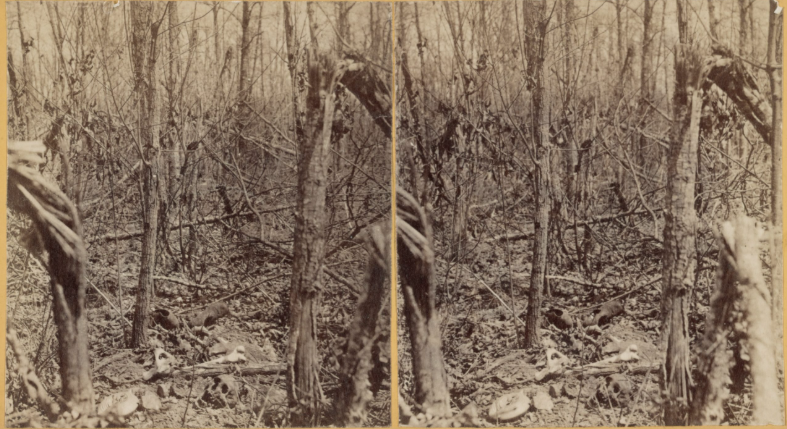
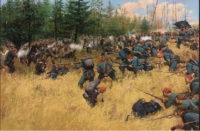
The Union’s 5th Corps played a crucial role at the Battle of the Wilderness (May 5-7, 1864), clashing fiercely with Confederate forces on the Orange Turnpike on the first day, launching attacks in the dense woods, and suffering heavy casualties, with commanders like Gen. Wadsworth being killed, but crucially, they held their ground, allowing Grant to continue his Overland Campaign rather than retreat, setting the stage for future battles.
Orange Turnpike
At 6:00 am on May 5, Warren’s V Corps began moving south over farm lanes toward Parker’s Store. The Confederate infantry was observed in the west near the Orange Turnpike, and Meade was notified. Grant instructed “If any opportunity presents itself of pitching into a part of Lee’s army, do so without giving time for disposition.” Meade halted his army and directed Warren to attack, assuming that the Confederates were a division and not an entire infantry corps. Hancock was held at Todd’s tavern. Although Meade told Grant that the threat was probably a delaying tactic without the intent to give battle, he stopped his entire army—the exact thing Lee wanted him to do. The Confederate force was Ewell’s Second Corps, and his men erected earthworks on the western end of the clearing known as Saunders Field. Ewell’s instructions from Lee were to not advance too fast, since his corps was out of the reach of Hill’s Third Corps—and Longstreet’s First Corps was not yet at the battlefield.
At noon, Meade had two fronts and no help from cavalry.
Warren approached the eastern end of Saunders Field with the division of Brigadier General Charles Griffin along the road on the right and the division of Brigadier General James S. Wadsworth on the left. Brigadier General Samuel W. Crawford‘s division was too far away on the left near Chewning Farm, and the division of Brigadier General John C. Robinson was in reserve closer to Wilderness Tavern. It took time to align Warren’s divisions, and there was some concern about Griffin’s northern (right) flank. A major problem was that “once a division left the roads or fields it disappeared utterly, and its commander could not tell whether it was in line with the others….” Brigadier General Horatio Wright‘s 1st Division from Sedgwick’s VI Corps began to move south on the Germanna Plank Road to Spotswood Road to protect Warren’s right. Warren requested a delay from attacking to wait for Wright. By 12:00 pm, Meade was frustrated by the delay and ordered Warren to attack before Sedgwick’s VI Corps could arrive. Warren’s troops arrived at Saunders Field around 1:00 pm. The Confederate division of Major General Edward Johnson was positioned on the Orange Turnpike west of Sanders Field, and it also guarded the Spotswood Road route of Sedgwick. Behind Johnson and further south was the division of Major General Robert E. Rodes, while the division of Major General Jubal Early waited further west in reserve.
Related Items
-

Model 1851 Cast Brass Civil War Officer’s Belt Plate
$300Model 1851 Cast Brass Civil War Officer’s Belt PlateJanuary 13, 2022 -

Model 1851 Cast Brass Civil War Officer’s Belt Plate
$325Model 1851 Cast Brass Civil War Officer’s Belt PlateFebruary 8, 2022 -

Relics Excavated Near Sailor’s Creek Battlefield
Relics Excavated Near Sailor’s Creek BattlefieldJanuary 4, 2022 -
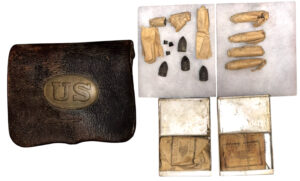
Civil War Pattern 1861 Cartridge Box Containing Unopened Pack of St. Louis Arsenal Cartridges and a Partially Opened Pack of St. Louis Arsenal Cartridges
Civil War Pattern 1861 Cartridge Box Containing Unopened Pack of St. Louis Arsenal Cartridges and a Partially Opened Pack of St. Louis Arsenal CartridgesAugust 2, 2025