
Doubly Id’d M1858 Civil War Enlisted Man’s Nine Button Infantry Frock Coat with Original Shoulder Scales – Pvt. Benjamin F. Clark Co. E 125th NY Infantry and Pvt. A. B. Clark Co. C 125th NY InfantryDecember 27, 2025






 US Model 1816 Flintl...$1,750
 Dug Confederate CS T...$2,450
Doubly Id’d M1858 Civil War Enlisted Man’s Nine Button Infantry Frock Coat with Original Shoulder Scales – Pvt. Benjamin F. Clark Co. E 125th NY Infantry and Pvt. A. B. Clark Co. C 125th NY Infantry
$4,950
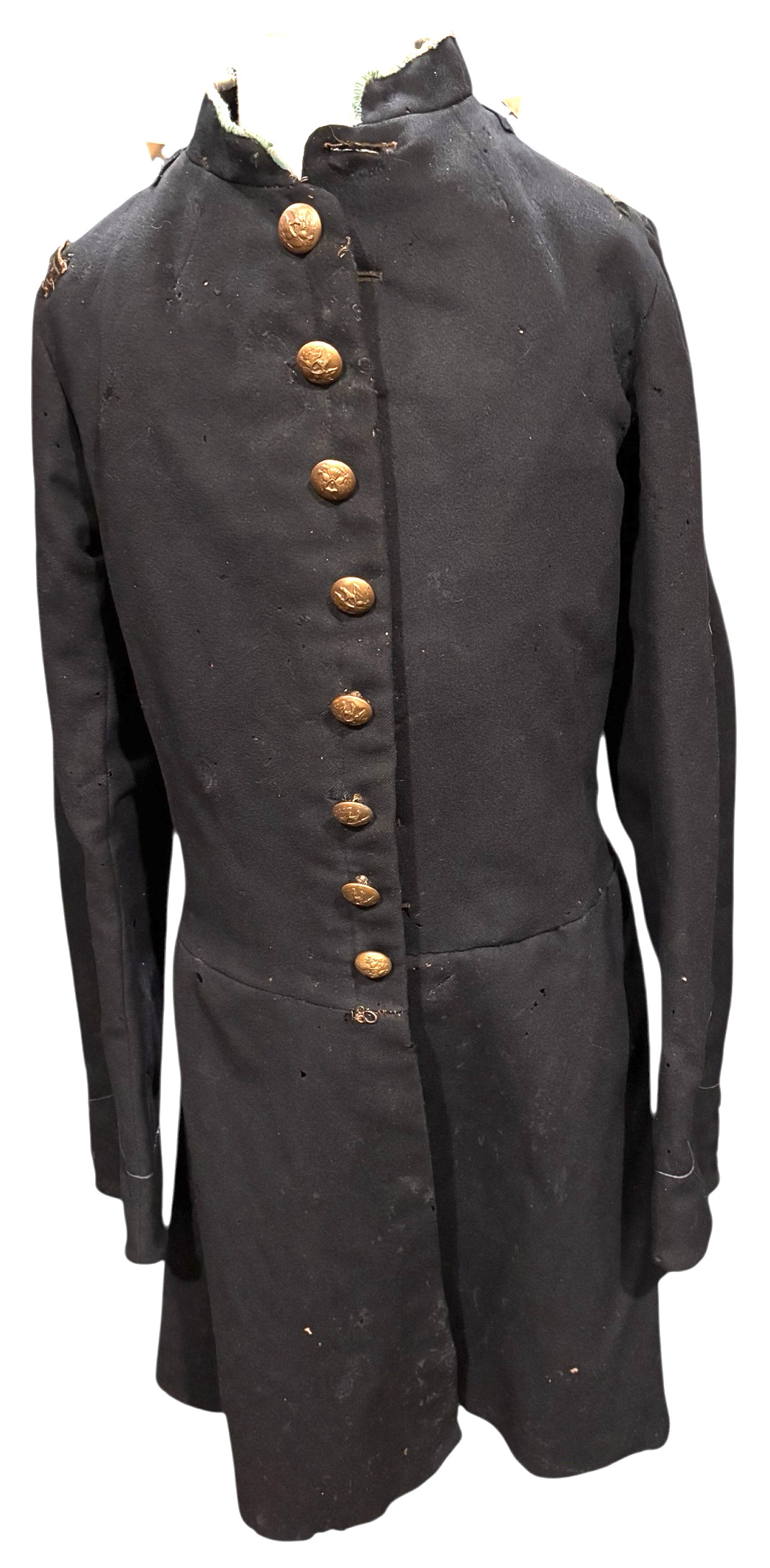
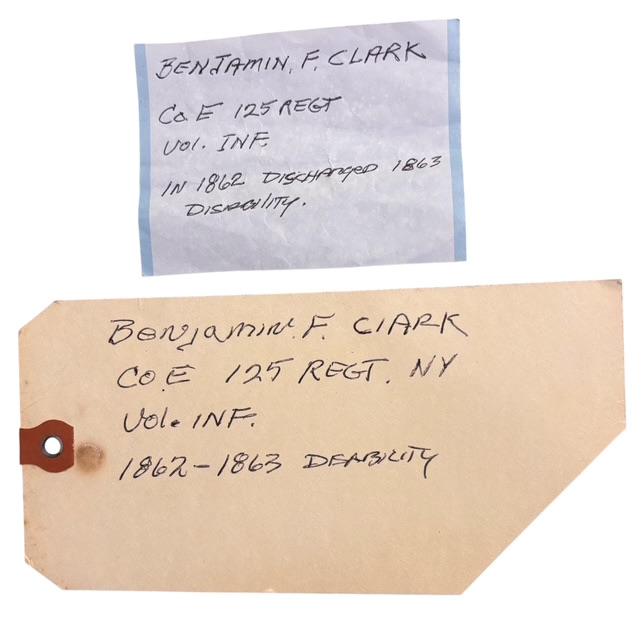
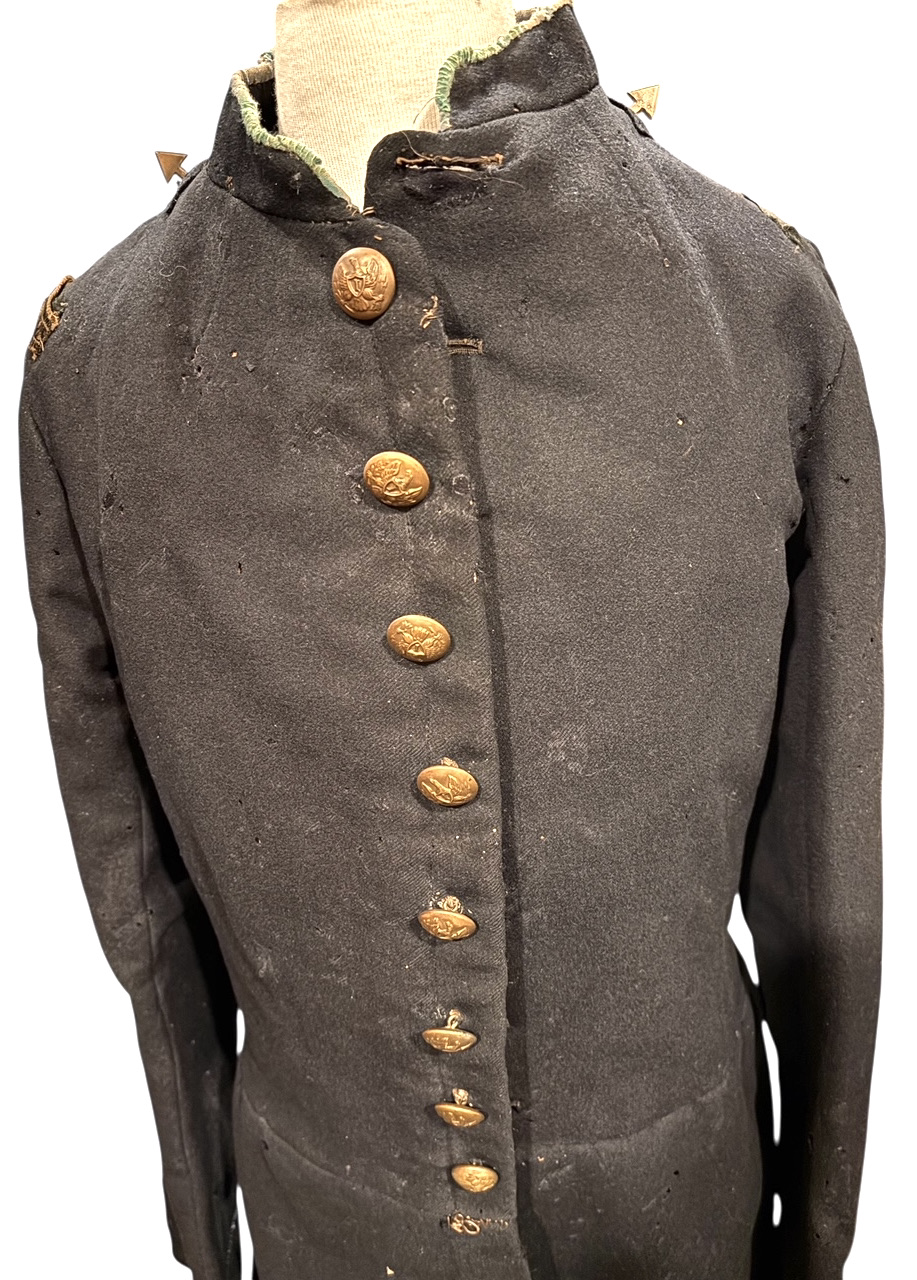
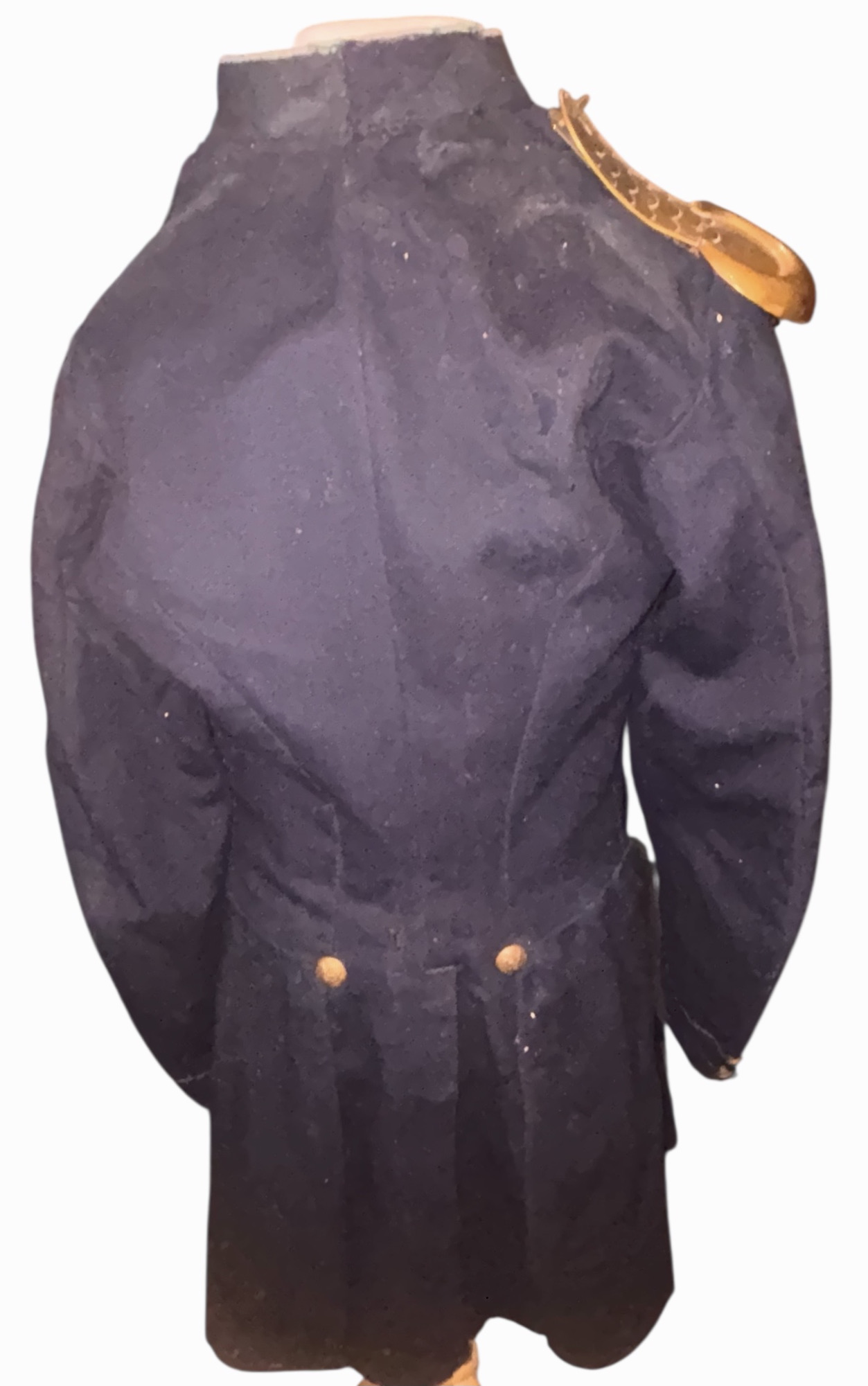
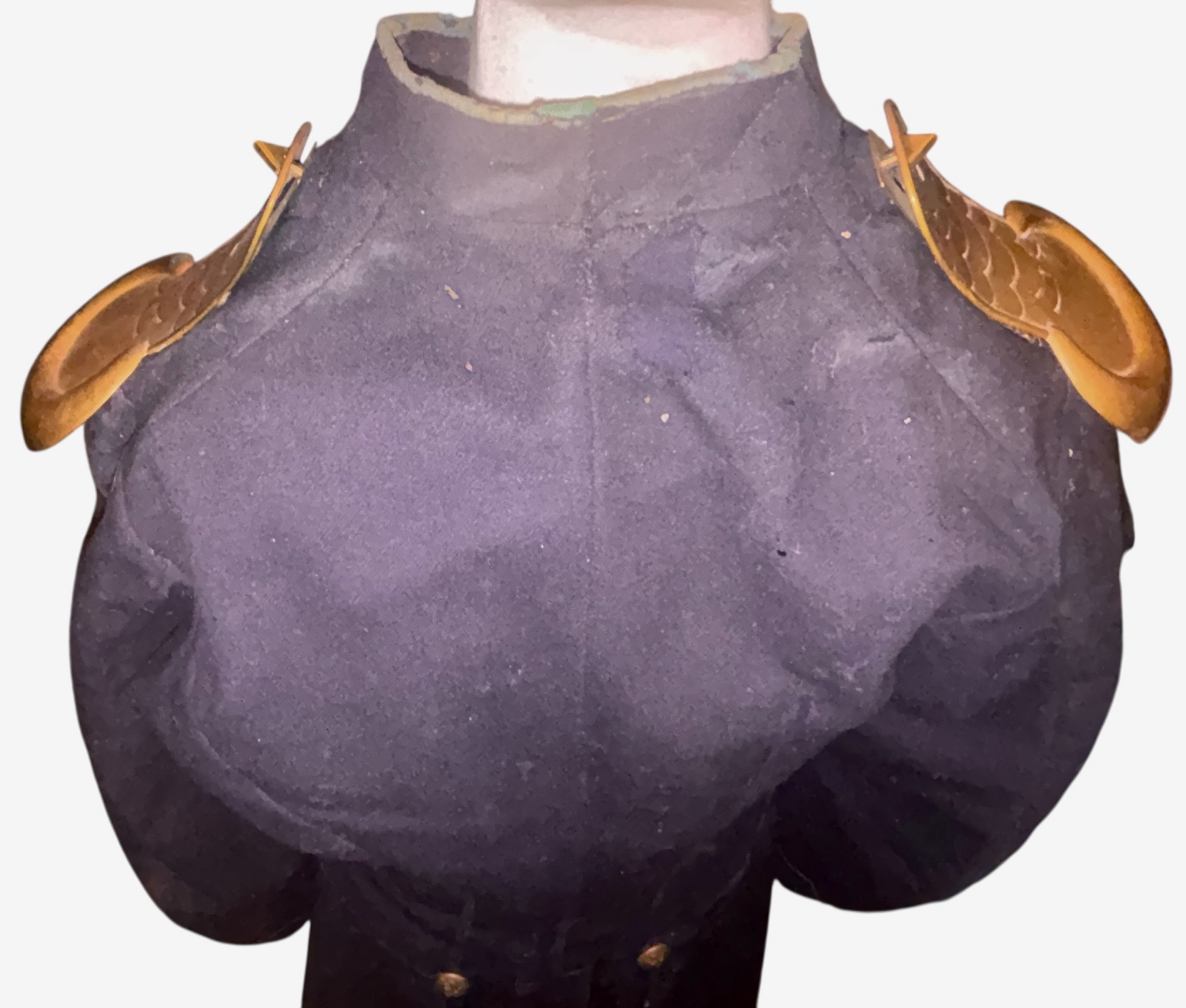
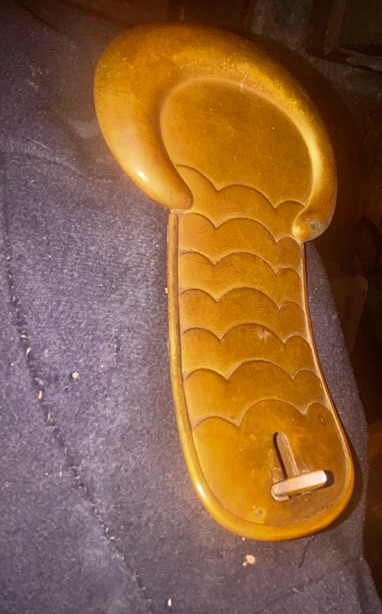
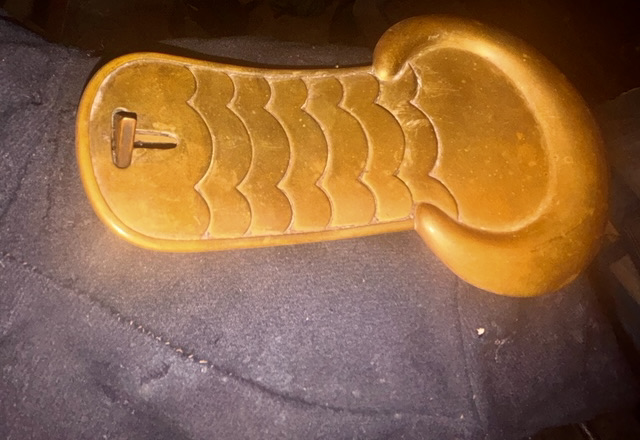
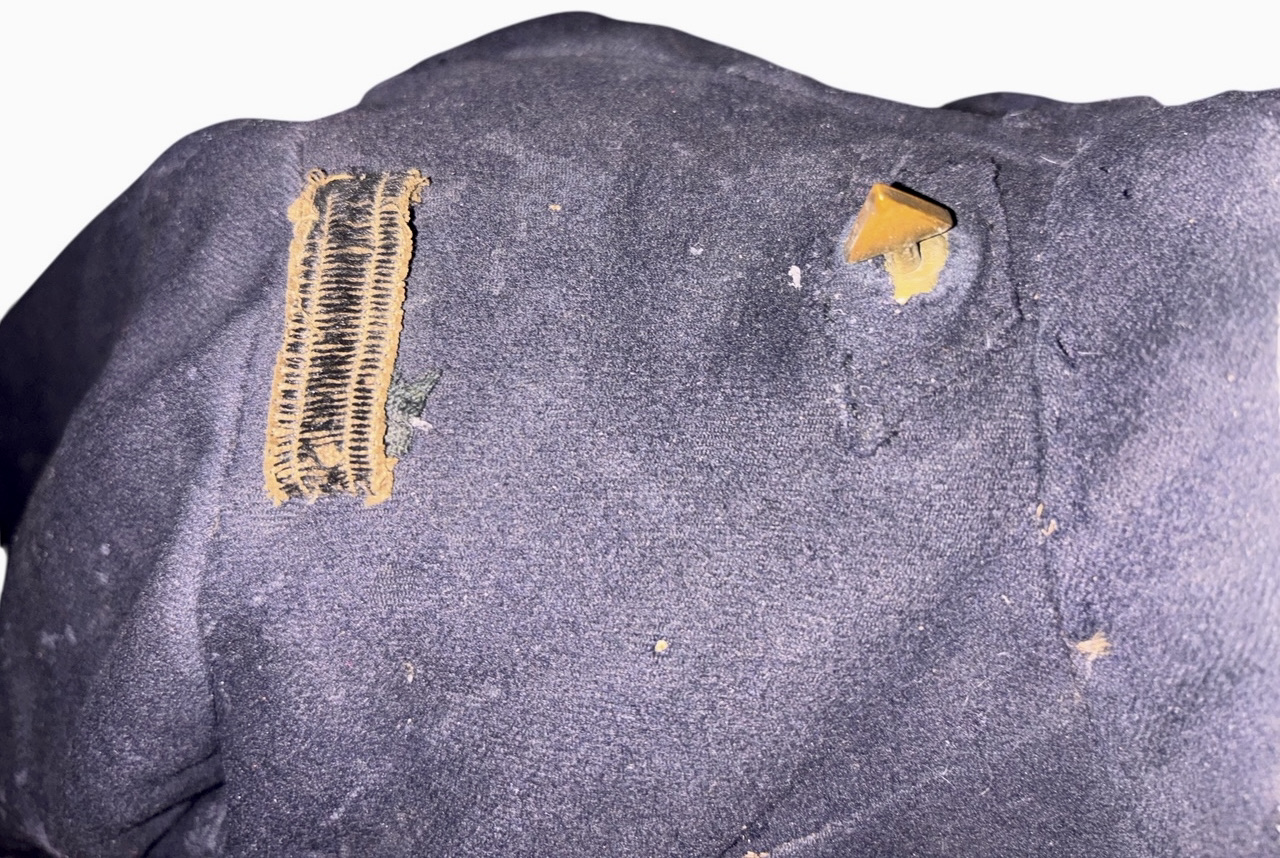
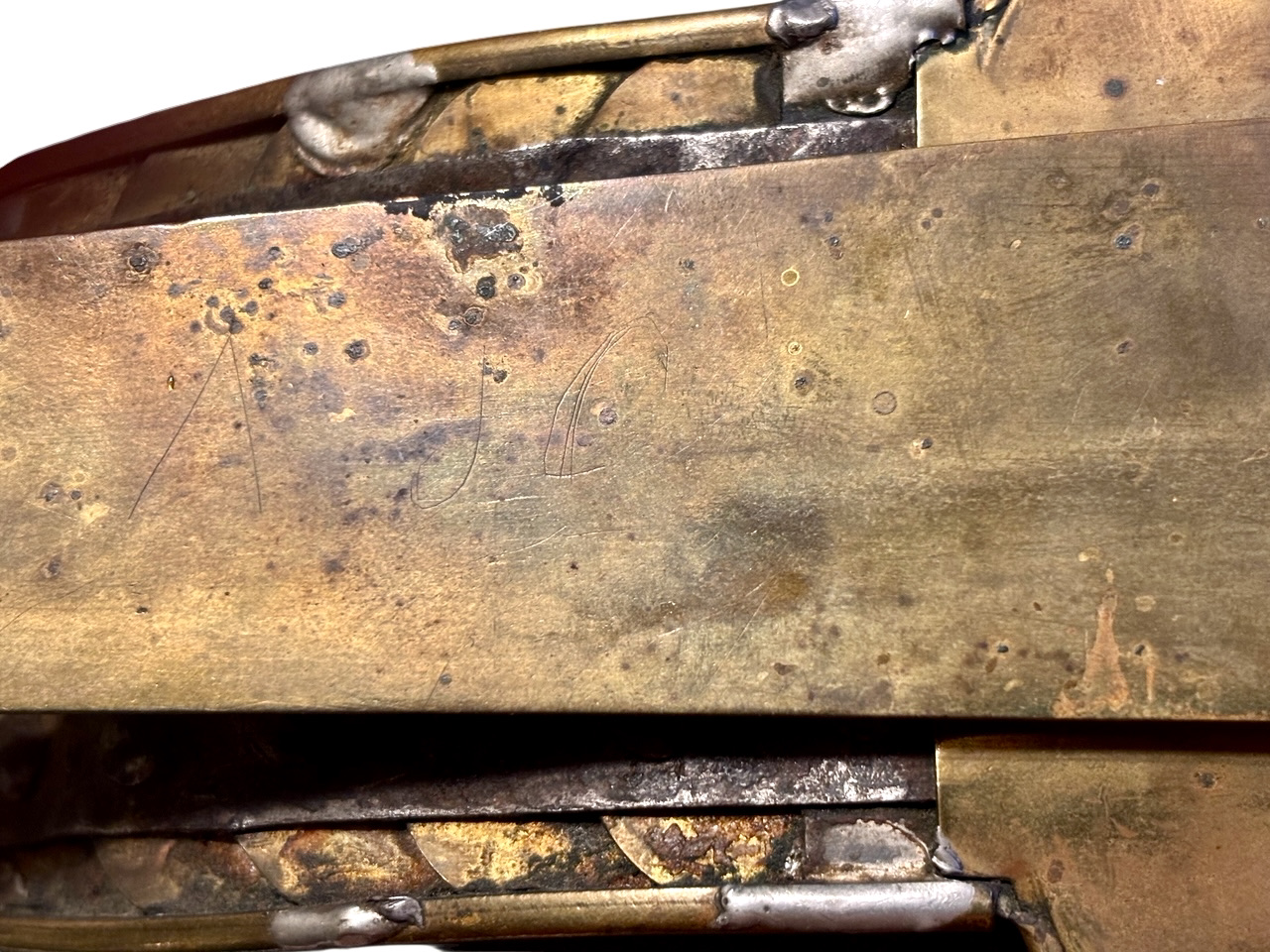
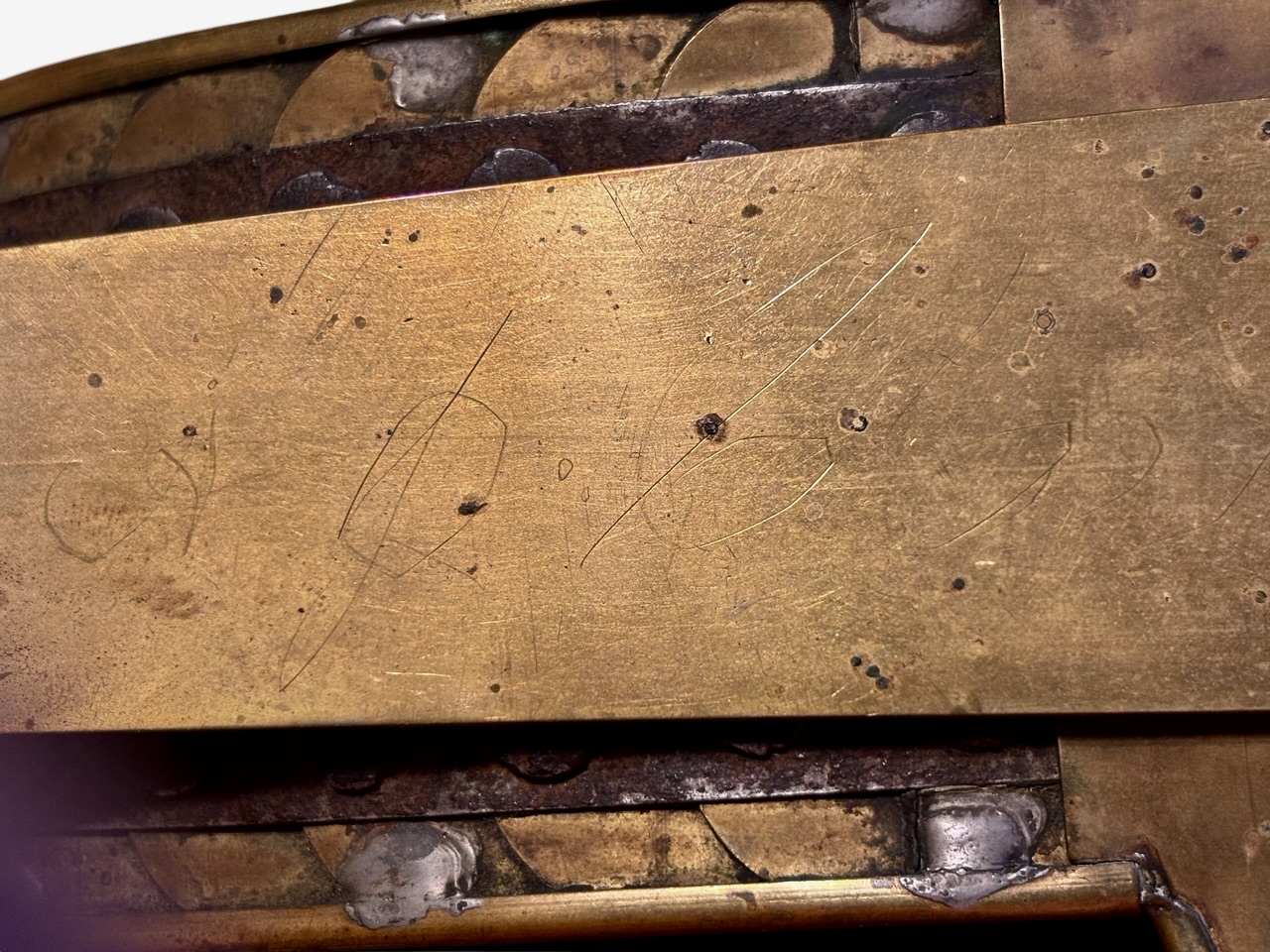
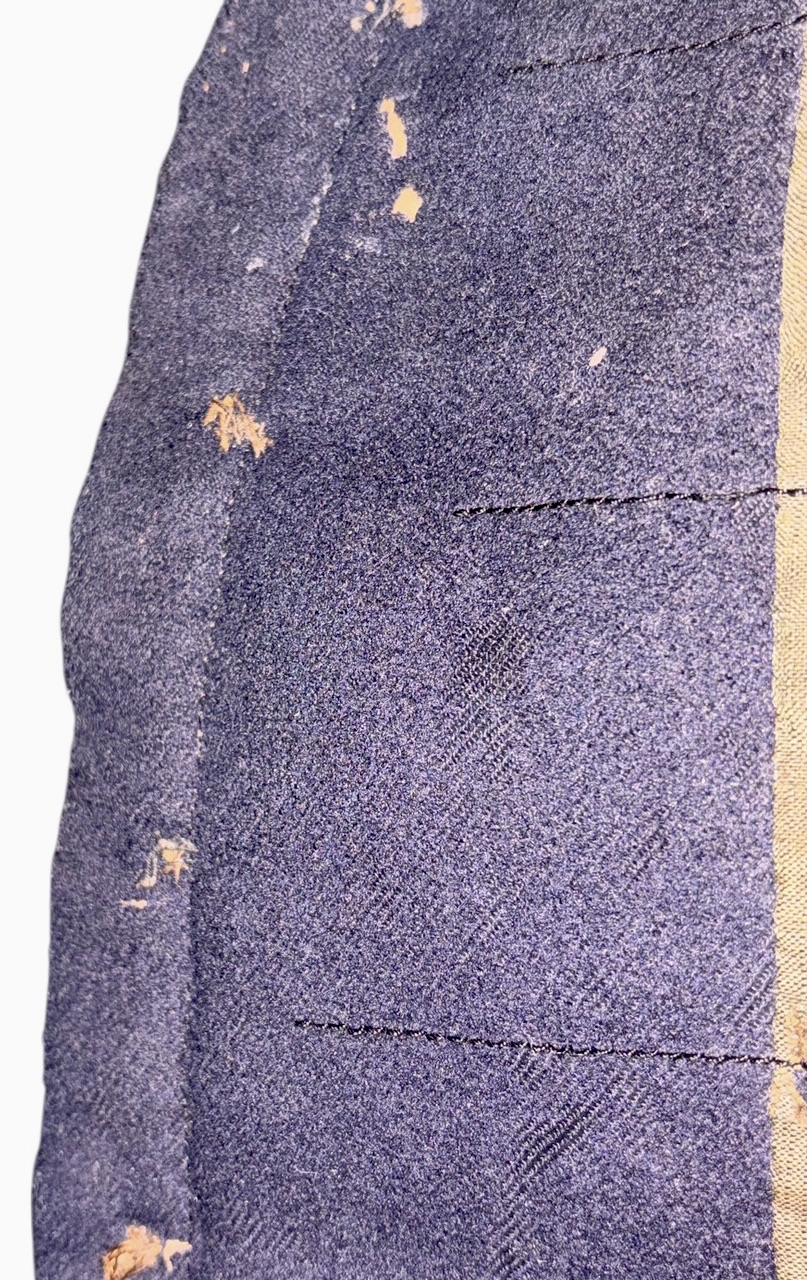
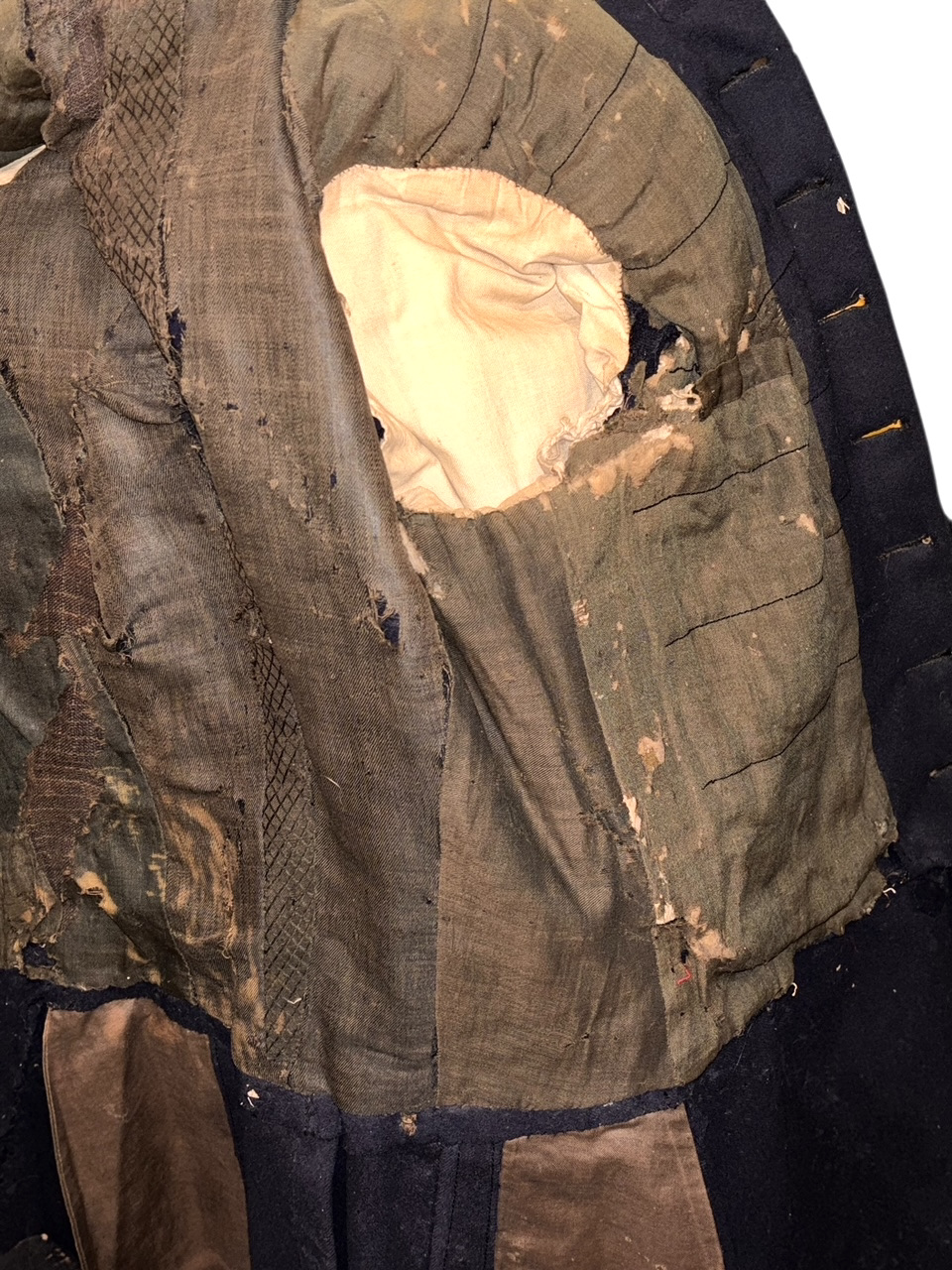
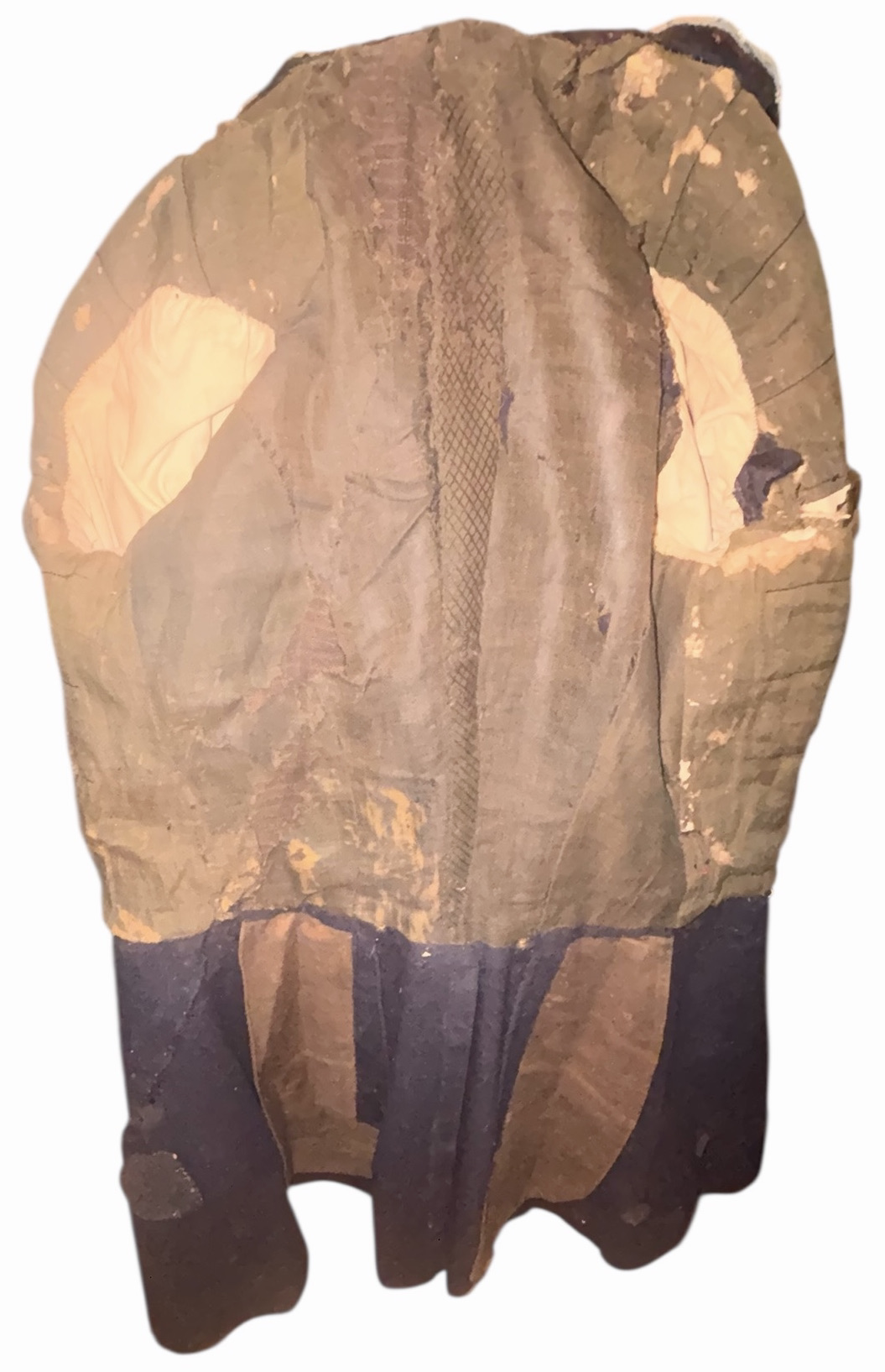
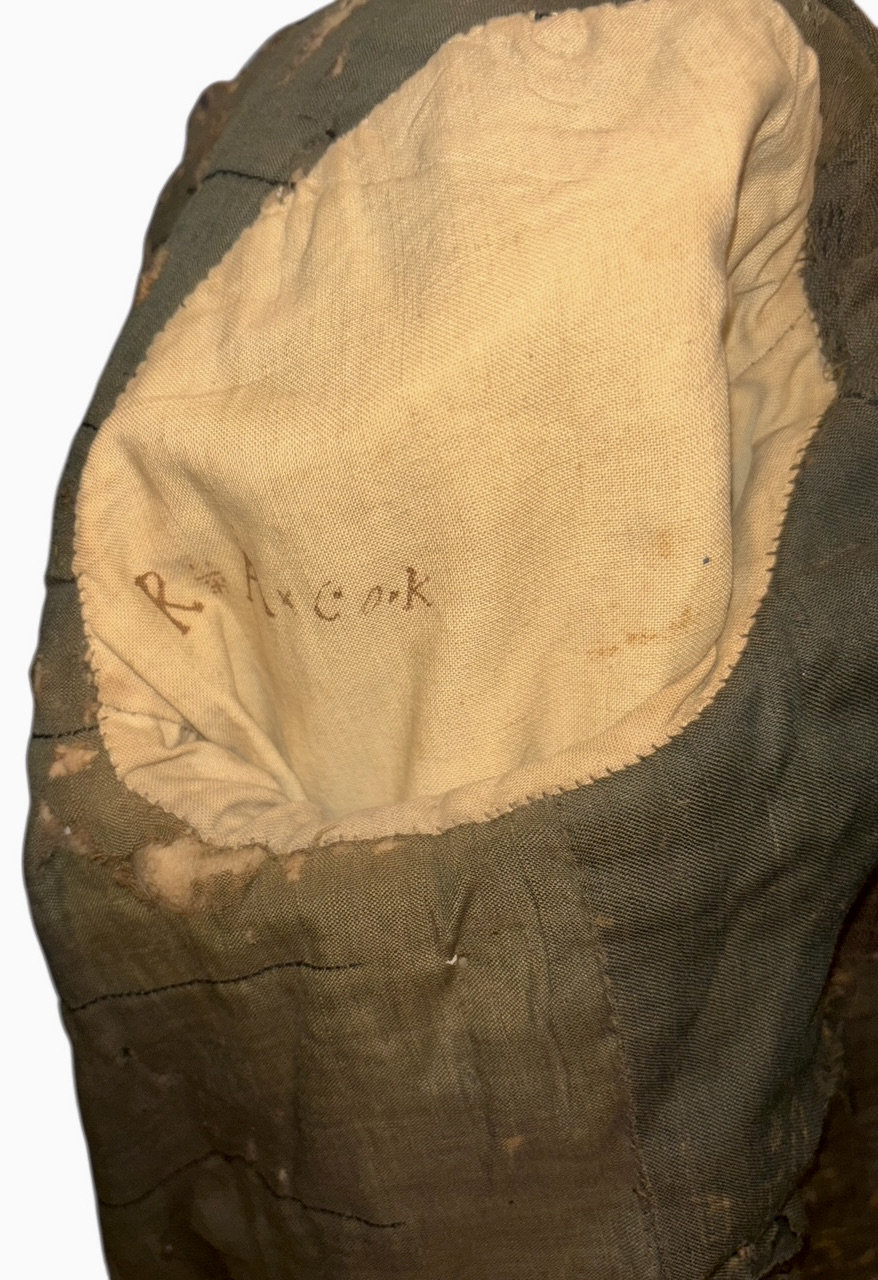
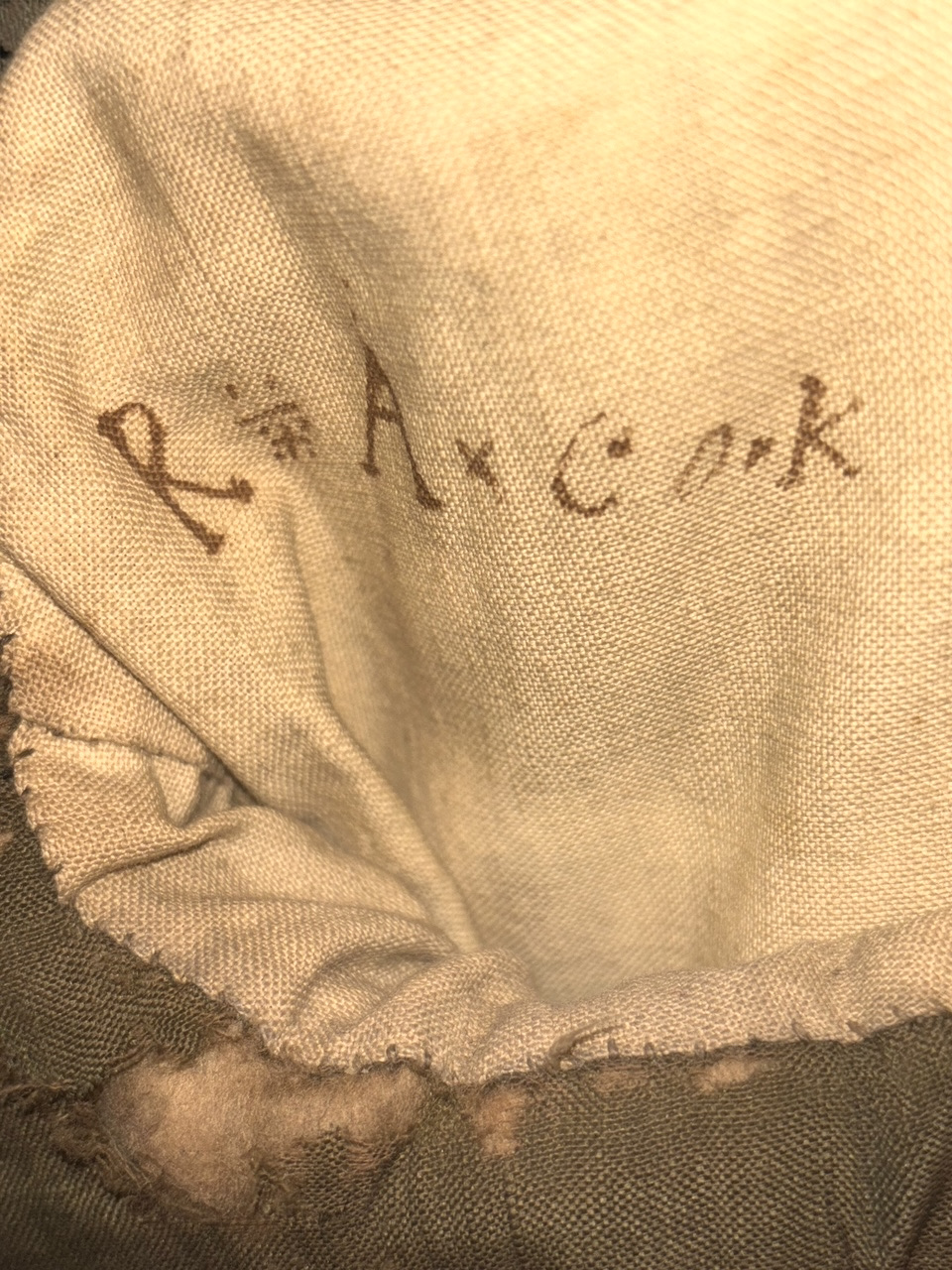
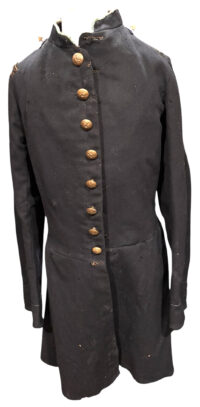
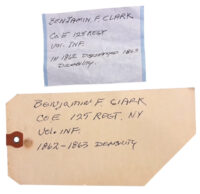
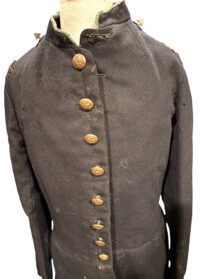
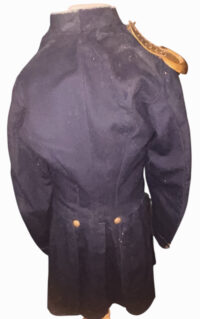
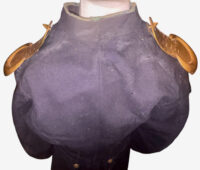
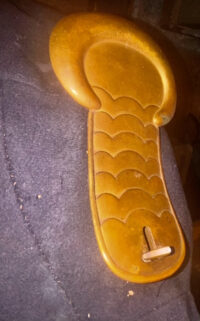
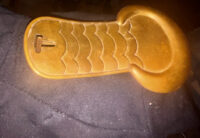
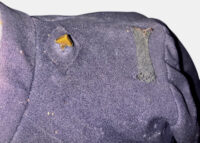
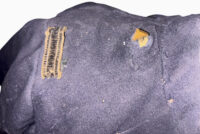
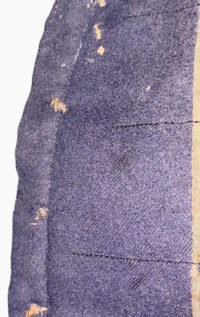
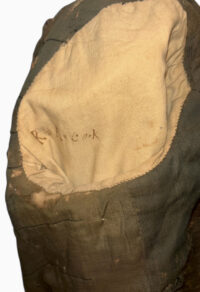
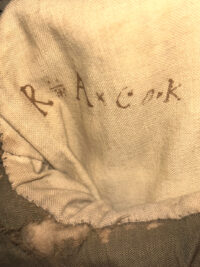
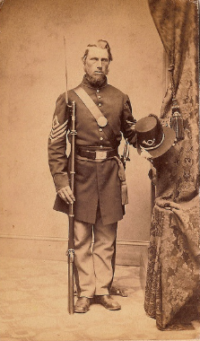
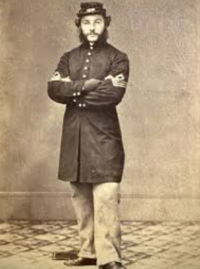
Doubly Id’d M1858 Civil War Enlisted Man’s Nine Button Infantry Frock Coat with Original Shoulder Scales – Pvt. Benjamin F. Clark Co. E 125th NY Infantry and Pvt. A. B. Clark Co. C 125th NY Infantry – This coat was initially obtained from a descendant of the two Clarks; we are unsure of the relation between Benjamin Clark and A.B. Clark although both enlisted in the 125th New York Infantry and both were from Troy, NY. When we obtained the coat it had two pieces of paper inside both stating that the coat was worn by Benjamin F. Clark; the scales were still attached to both right and left shoulders – upon examination of the underside of the scales, lightly scratched on the “blade” attachment bar was the name “A.B. Clark”. Both Clark men served only briefly with the 125th, a regiment that attained an embarrassing notoriety by being captured at Harpers Ferry, in its entirety, on September 15, 1862; the imprisoned soldiers of the 125th were almost immediately paroled and dispatched to a paroled camp in Chicago, Ill., for two months; shortly thereafter, the men were declared exchanged and returned to Virginia in December 1862. The regiment, perhaps in an attempt to regain lost pride, would serve throughout the rest of the war with noteworthy valor. Neither Clark would establish a significant war record – Benjamin F. Clark would be discharged for disability in May 1863; A. B. Clark deserted in January 1863. An unexplained additional identification is hand inked in the right interior shoulder area of the off-white, muslin sleeve lining that reads: “R A CO K “ – we are not sure of the significance of these markings. This style of enlisted frock coat was piped in blue (infantry) and was initially to be worn on dress occasions, although wartime, period images indicate that they were often worn in the field.
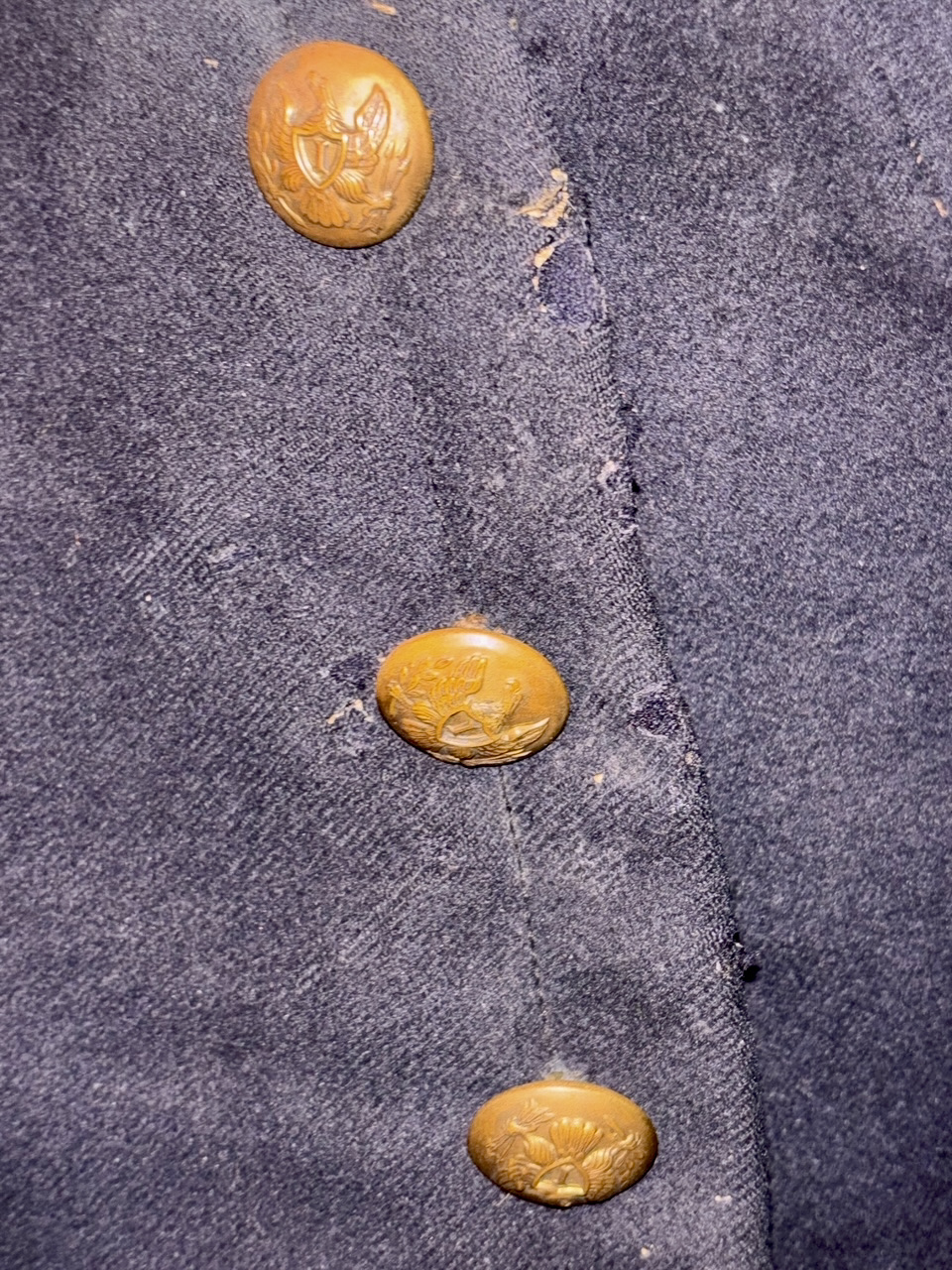
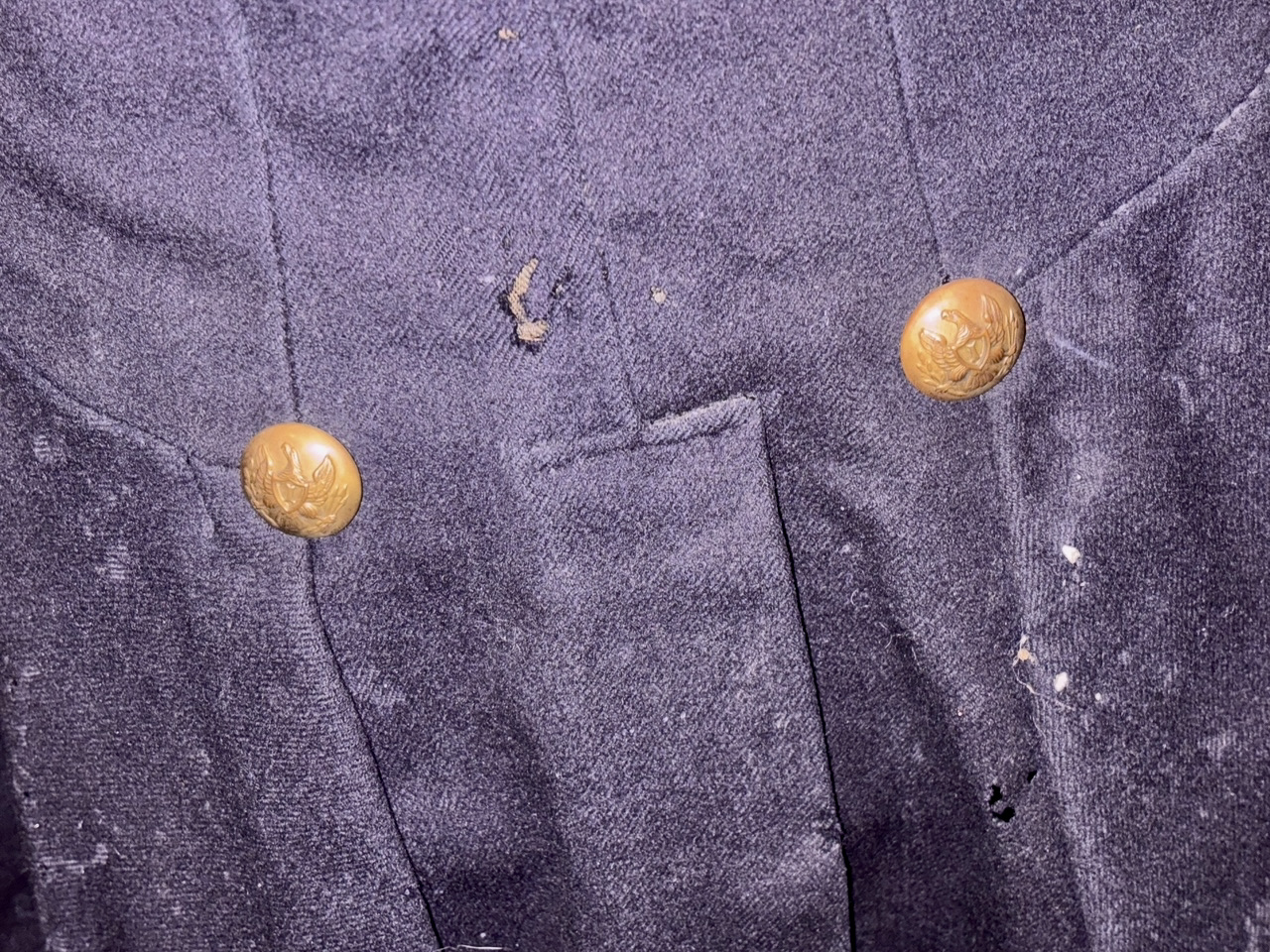
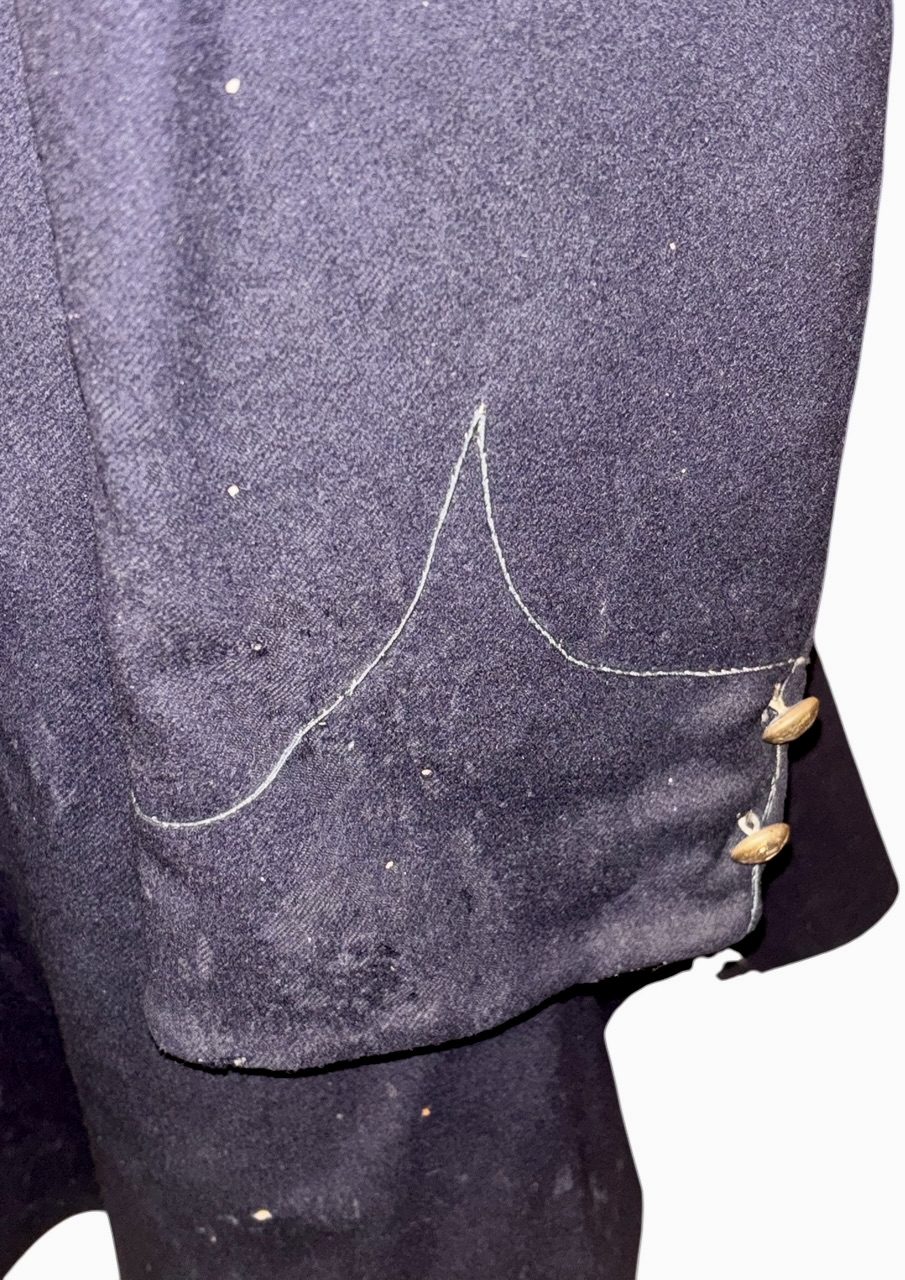
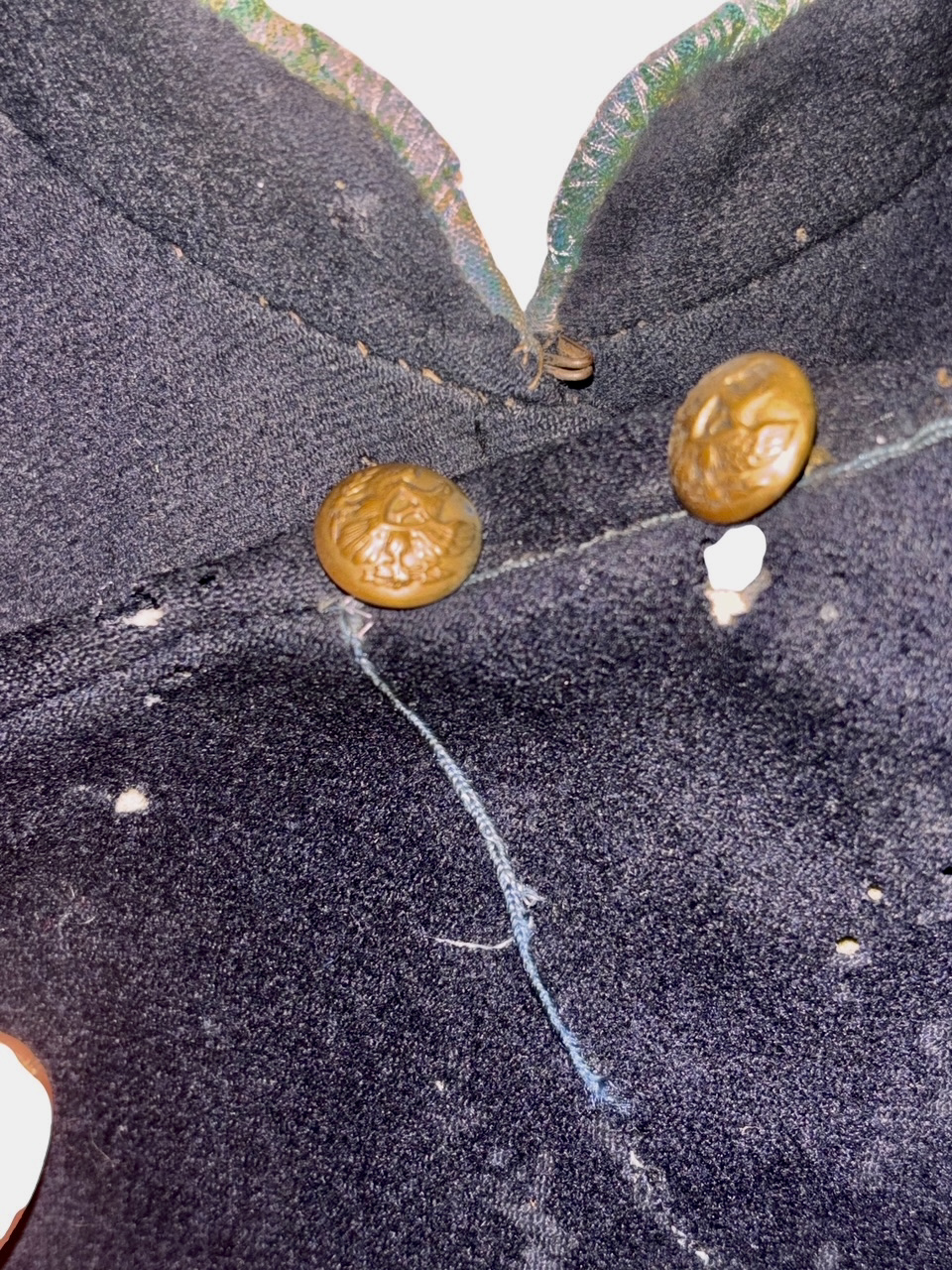
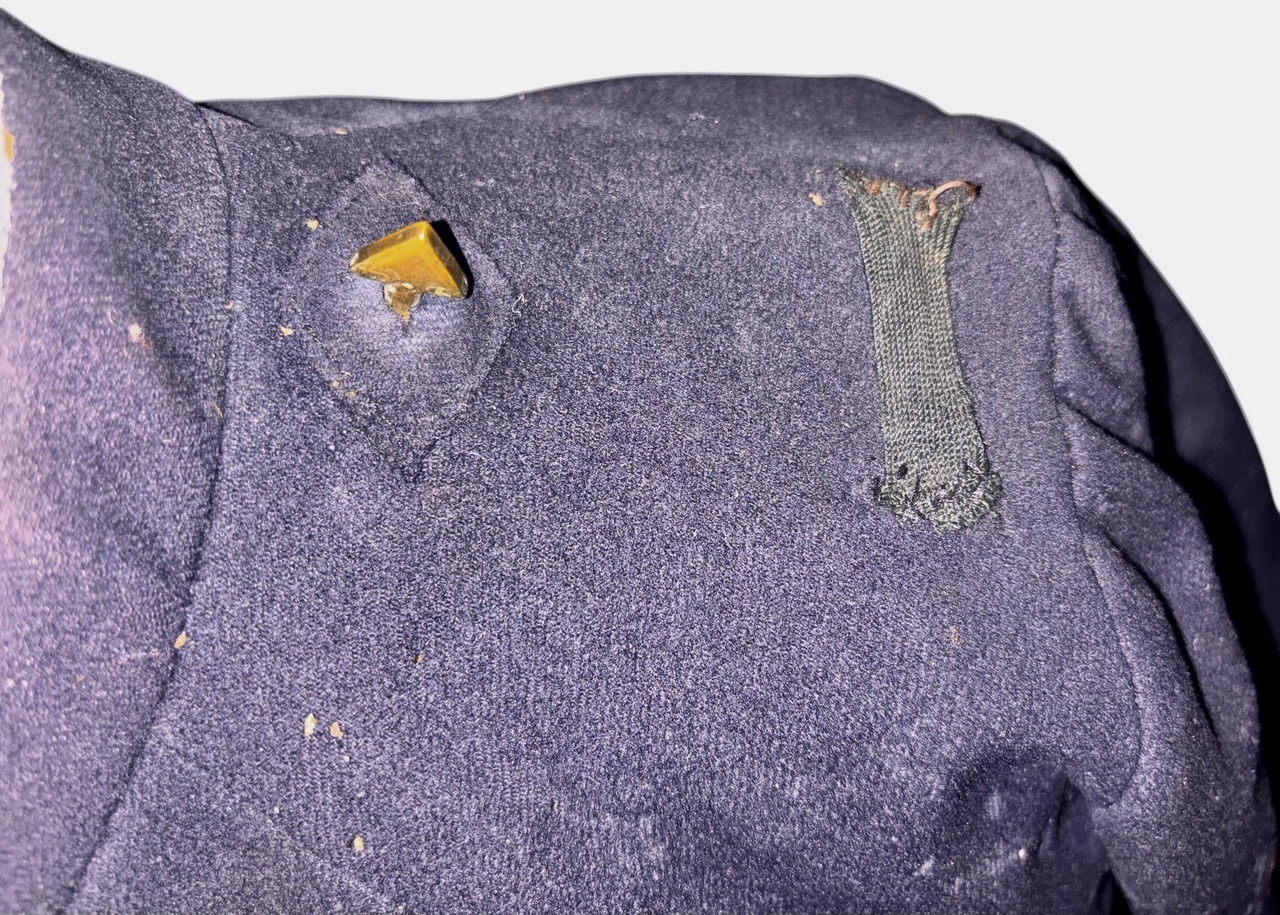
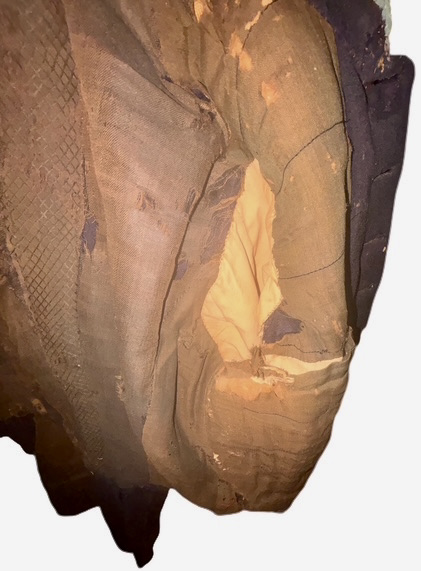
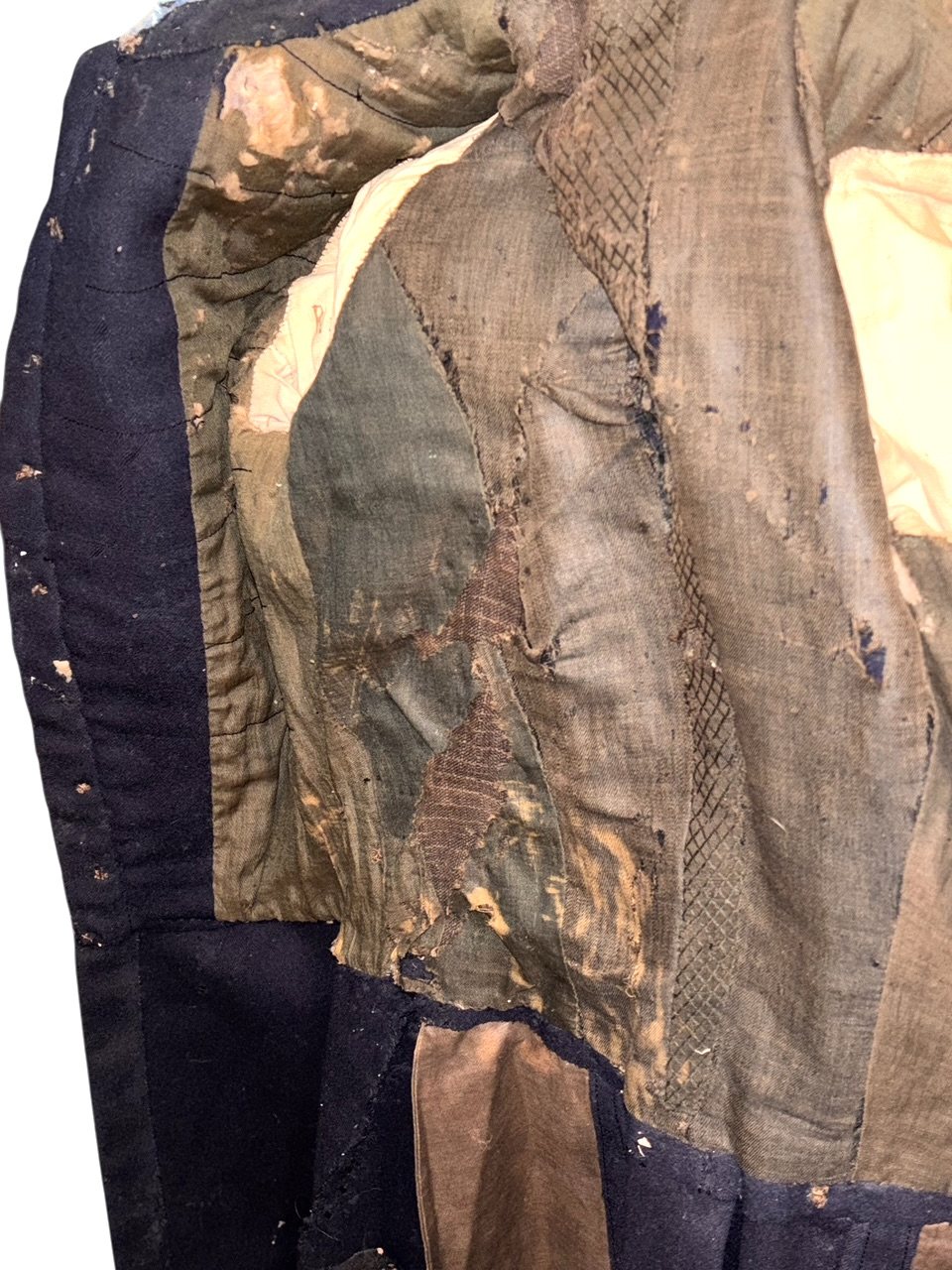
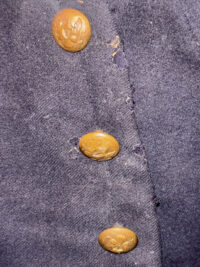
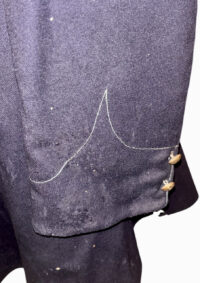
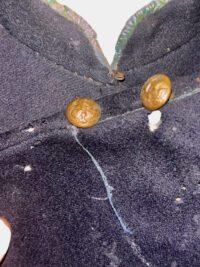
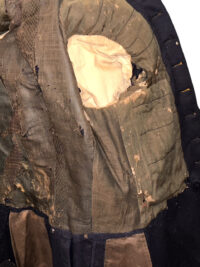
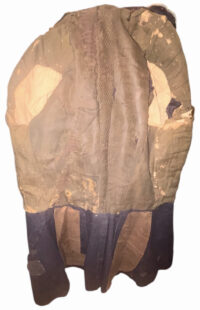
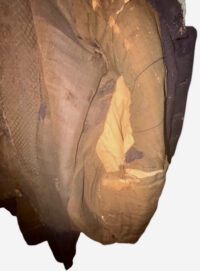
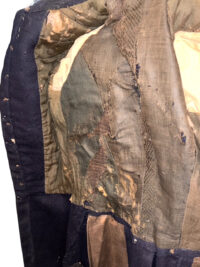
As correct per period construction, the skirts are unhemmed; the coat retains its original, Eagle I buttons; only eight are present, as it appears that one of the Clarks removed the bottom button and replaced it with a japanned hook and eye to insure proper closure. We have had some significant restoration completed on the coat, which had some areas of storage damage, as well as several pinhole size insect nips; the bulk of the coat is in good condition, retaining strong color and integrity of the fabric. The interior lining elements conform to U.S. Regulations of the period with a quilted chest area with heavy batting –the interior exhibits some tears in the lining, most of which are now repaired; both of the original, brown polished cotton tail pockets remain. The exterior cuffs exhibit two, per cuff, original Eagle I cuff size buttons; the buttons are decorative as the cuffs are nonfunctional with no buttonholes. The scales are original to the coat – their mode of attachment is unique – the “keys” exhibit an unusual triangular turning blade; fabric bands, not the usual brass, light gauge bars, allow the attachment of each underside blade to the coat. These coats have always been rare, especially if identified to a specific soldier.
Benjamin F. Clark
Residence was not listed; 36 years old.
Enlisted on 8/19/1862 at Troy, NY as a Priv.
On 8/27/1862, he mustered into “E” Co. New York 125th Infantry.
He was disch disability on 5/8/1863
He was listed as:
- POW 9/15/1862 Harper’s Ferry, VA (Paroled)
- Paroled 9/16/1862 Harper’s Ferry, VA
| Name: | Benjamin Clark |
| Enlistment Date: | 19 Aug 1862 |
| Enlistment Place: | Troy, New York |
| Side Served: | Union |
| State Served: | New York |
| Name: | Benjamin F
Similar Clark Exact |
| Gender: | Male |
| Rank: | Private |
| Role: | Veteran |
| Residence Date: | Jun 1890 |
| Residence Place: | Stephentown, Rensselaer, New York, USA
Adjacent County |
| Enumeration District: | 195 |
| Enlistment Date: | 19 Aug 1862 |
| Discharge Date: | 8 Aug 1863 |
| Regiment or vessel: | 125 Ns Inf |
| Company: | E |
| Length of Service: | 8 Mos 19 Days |
A. B. Clark
Residence was not listed; 22 years old.
Enlisted on 8/16/1862 at Lansingburg (Troy), NY as a Priv.
On 8/27/1862, he mustered into “C” Co. New York 125th Infantry.
He was deserted on 1/28/1863 at Fairfax Court House, VA
He was listed as:
- POW 9/15/1862 Harper’s Ferry, VA (Paroled)
- Paroled 9/16/1862 Harper’s Ferry, VA
Organized: Troy, NY on 8/27/1862
Mustered out: 6/5/1865
NEW YORK ONE HUNDRED AND TWENTY-FIFTH INFANTRY (Three Years) One Hundred and Twenty-fifth Infantry.-Cols., George L. Willard, Levin Crandell, Joseph Hyde; Lieut.-Cols., Levin Crandell, Aaron B. Myer, Joseph Hyde; Majs., James C. Bush, Aaron B. Myer, Samuel C. Armstrong, Joseph Hyde, Joseph Egolf, Nelson Penfield, William H. H. Brainard. This regiment, recruited in the county of Rensselaer, was organized at Troy, and there mustered into the U. S. service on Aug. 27-29, 1862, for three years. Two days later it left for Harper’s Ferry, where it was captured on Sept. 15, at the surrender of that post. The regiment was immediately paroled and was stationed at a paroled camp at Chicago, Ill., for two months, when the men were declared exchanged and returned to Virginia in December. It was encamped at Centerville during the winter and in the spring of 1863 was attached to Gen. Hays’ brigade. In June, 1863, the brigade joined the 3d division, 2nd corps, then marching to Gettysburg, Gen. Hays taking command of the division. At the battle of Gettysburg Col. Willard was killed while in command of the brigade and the loss of the regiment amounted to 26 killed, 104 wounded and 9 missing. It distinguished itself at Bristoe Station in October, both officers and men fighting with dash and extreme gallantry. Its loss in this action was 36 killed, wounded and missing. It was also present at the action of Mitchell’s ford, and took part in the Mine Run campaign, with a loss of 41 men. Upon the reorganization of the Army of the Potomac in April, 1864, it was transferred to Barlow’s (1st) division, to which it was attached during the remainder of its service. It lost 28 in killed, wounded and missing at the battle of the Wilderness, where Lieut.-Col. Myer fell mortally wounded. At the Po river and Spottsylvania its loss was 10 killed, 74 wounded and 6 missing, while further severe losses were sustained at the North Anna, Cold Harbor, and the battles around Petersburg, where its losses aggregated 85 killed, wounded and missing. Recrossing the James it fought at Deep Bottom and Strawberry Plains, and upon returning to the lines around Petersburg it was engaged in the disaster at Reams’ station, losing 9 wounded and 13 captured. It was present at Hatcher’s run in December, but without loss. Its veteran ranks had been sadly decimated by its hard service and when the final campaign of 1865 opened it could report only 12 officers and 219 men “present for duty,” although it still carried 547 names on its rolls. In this campaign the regiment participated in the final assault on Petersburg and the engagements of Deatonsville road, High bridge and Farmville, where it fought its last battle. The loss during the campaign was 32 killed, wounded and missing. The total enrollment of the regiment during service was 1,248, of whom 15 officers and 112 enlisted men were killed and mortally wounded, or 10.1 per cent.; 1 officer and 115 men died of disease and other causes; 3 officers and 61 men died in Confederate prisons; 464 officers and men were killed and wounded. It was mustered out near Alexandria, Va., under Col. Hyde, June 5, 1865, having gloriously earned its title as a fighting regiment.
125th New York Infantry Regiment
| 125th New York Infantry Regiment | |
| New York flag | |
| Active | 29 August 1862 to 5 June 1865 |
| Country | United States |
| Allegiance | Union |
| Branch | Infantry |
| Engagements |
|
| Commanders | |
| Colonel | John A. Griswold |
| Colonel | George L. Willard |
| Colonel | Levin Crandall |
| New York U.S. Volunteer Infantry Regiments 1861-1865 | ||||
|
The 125th New York Infantry Regiment was a volunteer regiment from Rensselaer County, New York, during the American Civil War. Formed during the summer of 1862, the unit was officially mustered into United States Service on 27–29 August 1862, by Col. George L. Willard. He had seen previous service in the Mexican War as well. Levin Crandall was commissioned lieutenant colonel, and James C. Bush major. The unit was mustered out on 5 June 1865.[1]
Regimental history
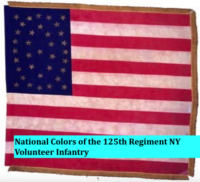
Guidon of the 125th New York Volunteers carried at Gettysburg, Pennsylvania. Flags like this silk swallowtail standard were used as markers on the battlefield to assist with maneuvers. The flag displays 34 gold-painted stars in the canton. It matches the stars and stripes pattern described in General Order No. 4, Headquarters of the U.S. Army, dated 18 January 1862. According to Colonel Levin Crandall, Private William F. Mullin carried this flag during the battle of Gettysburg where enemy fire reportedly pierced the flag and shattered the staff.[2]
Colonel John A. Griswold was authorized, 28 July 1862, to raise this regiment in Rensselaer county; on his resignation, Col. George L. Willard succeeded him 15 August 1862; the regiment was organized at Troy and there mustered in the service of the United States for three years 27–29 August 1862. The men not entitled to be mustered out with the regiment were on 5 June 1865, transferred to the 4th Artillery.[1]
The regiment left Troy, 30 August 1862, and proceeded by rail to Martinsburg, Virginia, and a few days later it marched to and was engaged in the Battle of Harpers Ferry. A few of its number were killed and wounded during this battle, and the regiment together with the rest of the garrison, totaling over 11,500 men, surrendered to the Confederates on 15 September 1862.[1]
With the other captured troops, the men were sent under parole to Camp Douglas, Chicago, to remain there while awaiting exchange, which was effected 22 November. The regiment was then ordered back to Virginia, where it was attached to Maj. Gen. Silas Casey‘s Division, in the defenses of Washington at Maryland Heights, and encamped at Centreville until 24 June 1863, when it joined the Second Corps, Army of the Potomac, and marched away to Gettysburg. Gen. Alexander Hays, who commanded the brigade while at Centreville, was placed in command of the division, and Colonel George L. Willard took over command of the brigade, which was composed of four New York regiments — the 39th, 111th, 125th, and 126th.[1]
Under command of Colonel Crandall, the 125th fought at Gettysburg where it lost 139 killed and wounded. Colonel Willard was killed while in command of the brigade, and Crandall was promoted colonel. Maj. A. B. Myer was made lieutenant colonel, and Capt. S. C. Armstrong, major.
The regiment was actively engaged at Auburn and Bristoe Station in October, losing 36 men in those battles. Capt. William H. Plumb was mortally wounded at Bristoe Station.[1]
Col. Levin Crandall, commanding officer of the 125th New York Volunteers
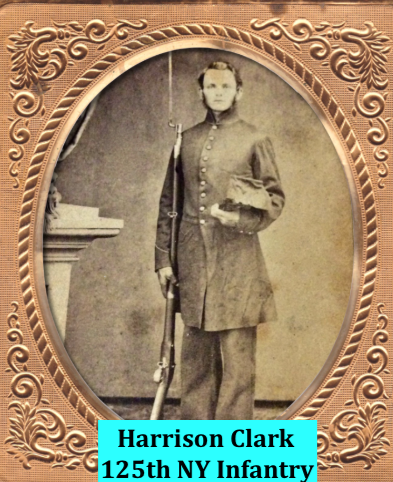
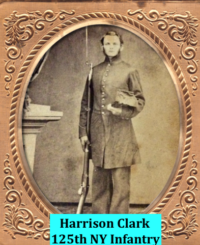
Colonel Crandall was temporarily absent on recruiting service, and Lieut. Col. Aaron B. Myer was in command at the battle of the Wilderness. He was mortally wounded in this engagement, and the command devolved on Capt. George E. Lemon. Color Sergt. Harrison Clark carried his flag within ten feet of the enemy’s line, where he fell with his leg shattered by a rifle ball. Colonel Myer, who at that time had not yet fallen, assisted in binding Clark’s wound and promoted him to a lieutenancy on the field. As Clark fell the flag was seized by Philip Brady, of Company I, but he was soon killed while waving the colors in advance of the men.[1]
A few days later, at Spotsylvania, the regiment was in the thick of the fight, forming part of a storming column that moved against the enemy’s works at daybreak on 12 May 1864. Capt. E. P. Jones, commanding the regiment, was killed in this assault, and Lieutenants Clapp and Cleminshaw were mortally wounded. Michael Burke of Company D captured an enemy’s battle flag, but was shot down in the act, falling with a bullet through his breast. In the two battles of the Wilderness and Spotsylvania, the 125th lost 118 in killed and wounded.[1]
On 26 May, Colonel Crandall returned from recruiting service and resumed command. The regiment was engaged at the Battle of North Anna, Battle of Totopotomoy Creek, and the Battle of Cold Harbor, with further losses in officers and men. Lieutenant Green was mortally wounded in the fight of 30 May at Totopotomoy.
In the Second Battle of Petersburg on 16 June, the decimated ranks were thinned again. Forty-four men were casualties, one-third of whom were killed in action. Another color sergeant, A. B. Green, was killed during the battle. Colonel Crandall was wounded by a piece of shell that struck him in the face. Lieutenants Bryan and Coleman were fatally wounded.[1]
In the battle at the Weldon Railroad on 22 June, the regiment lost several men who were captured by the enemy, while three more officers—Adjutant Miller, and Lieutenants Hull and Barnes—died during a disastrous and badly led battle.[1]
In addition to the minor battles of Reams’ Station, First and Second Battle of Deep Bottom, Strawberry Plains, and Hatcher’s Run, the regiment was daily engaged during the siege of Petersburg—from 16 July 1864, to 1 April 1865—on the picket line and in the trenches with frequent and continuous losses of men from wounds or by sickness caused by constant exposure. After the battle at Reams’ Station, Capt. Nelson Penfield was placed in command, the colonel having been placed previously in charge of the brigade.[1]
Colonel Crandall resigned 14 December 1864, after a distinguished and honorable term of service. He was succeeded by Lieut. Col. Joseph Hyde, who had entered the regiment originally as a lieutenant in Company H.
On 29 March 1865, the men broke camp and, crossing Hatcher’s Run, entered on their last campaign. The regiment was still in the Third Brigade (Henry J. Madill ‘s), First Division (Miles’s), Second Corps (Humphreys’). On April 2d, the regiment took part in the charge of Miles’s Division on the Confederate works at Sutherland’s Station, a bloody affair in which Capt. John Quay was killed. The brigade suffered severely in this attack, Colonel Madill being badly wounded. In the subsequent battles of the Second Corps prior to Lee’s surrender at Appomattox, the regiment was present but suffered only a slight loss.[1]
After marching in the Grand Review at Washington it proceeded to Troy, N. Y., where the men received their final payment and were mustered out on 15 June 1865.
Organization
Volunteers were recruited by town and the 11 companies of the regiment were organized by region:
- A Company: Hoosick Falls
- B Company: Troy
- C Company: Lansingburg, Troy, Sand Lake, Pittstown and Schaghticoke
- D Company: Troy
- E Company: Sand Lake, Stephentown, Nassau, and Hoag’s Corner
- F Company: Troy and Poestenkill
- G Company: Troy and New York City
- H Company: Troy
- I Company: Troy and New York City
- K Company: Schaghticoke and Troy
Campaigns
During the term of the unit’s service in the Civil War, the 125th New York Volunteers saw the following service:
- Battle of Harper’s Ferry, West Virginia, 12–15 September 1862
- Maryland Heights 12–13 September.
- Bolivar Heights 14–15 September.
- Surrendered 15 September.
- Paroled 16 September and sent to Annapolis, Md., thence to Camp Douglas, Chicago, Illinois, and duty there guarding prisoners until November, 1862.
- Declared exchanged 22 November 1862.
- Moved to Washington, D.C., 23–25 November.
- Camp at Arlington Heights, Virginia, until 3 December, and at Centreville, Virginia, until June, 1863.
- Ordered to join Army of the Potomac in the field and Joined 2nd Army Corps 25 June 1863.
- Battle of Gettysburg, Pennsylvania, 2–4 July
- Pursuit of Lee to Manassas Gap, Virginia, 5–24 July.
- Duty on lines of the Rappahannock and Rapidan until October.
- Advance from the Rappahannock to the Rapidan 13–17 September.
- Battle of Bristoe Station, 9–22 October
- Auburn and Bristoe 14 October.
- Advance to line of the Rappahannock 7–8 November.
- Mine Run Campaign 26 November-2 December.
- Duty near Brandy Station until May, 1864.
- Demonstration on the Rapidan 6–7 February.
- Campaign from the Rapidan to the James 3 May-15 June.
- Battle of Wilderness, 5–7 May
- Spottsylvania 8–12 May
- Po River 10 May
- Battle of Spotsylvania Court House, 12–21 May
- Assault on the Salient “Bloody Angle” 12 May.
- Battle of North Anna
- Battle of Totopotomoy Creek
- Battle of Cold Harbor
- Jerusalem Road
- Second Battle of Petersburg
- Battle of Weldon Railroad
- Second Battle of Ream’s Station
- First Battle of Deep Bottom
- Second Battle of Deep Bottom
- Strawberry Plains
- Battle of Hatcher’s Run
- White Oak Road
- Battle of Sutherland’s Station
- Fall of Petersburg
- Sailor’s Creek
- Farmville
- Appomattox Campaign
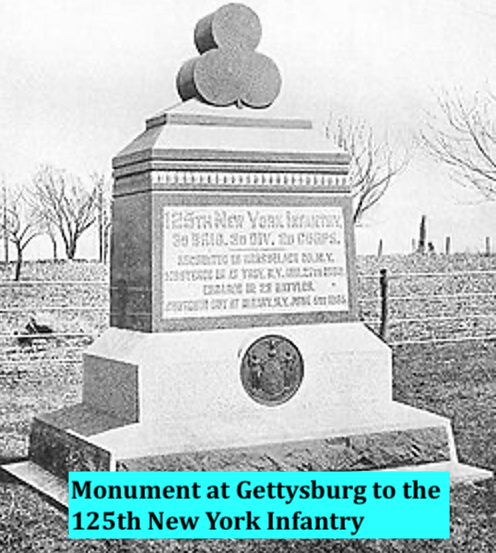
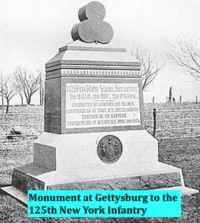
Monument to the 125th New York Volunteer Infantry Regiment at Gettysburg, Pennsylvania. The cloverleaf on top of the monument was the insignia of II Corps, 3rd Division.
During its various campaigns and battles the 125th New York sustained a loss of 15 officers and 112 enlisted men, killed or mortally wounded; 1 officer and 112 enlisted men who died of disease, accidents, or in Confederate prisons; total deaths, 240, out of a total enrollment of 1,248. Of the 113 who died of disease, 58 died in the hands of the enemy. The total of killed and wounded in all its battles amounted to 464.
During its service the regiment lost by death, killed in action, 7 officers, 70 enlisted men; of wounds received in action, 8 officers, 42 enlisted men; of disease and other causes, 1 officer, 115 enlisted men; total, 16 officers, 227 enlisted men; aggregate, 243; of whom 3 officers, 61 enlisted men died in the hands of the enemy.[3]
Medal of Honor recipients
Michael Burke
Burke was born in Ireland and like many immigrants joined the army. He enlisted at Troy, Rensselaer County, NY. A Private in Company D, 125th New York Infantry, at Battle of Spotsylvania Court House on 12 May 1864, he captured the enemy’s flag while advancing over the enemy’s works at Spotsylvania, Virginia, and sustained a bullet wound to the chest. His Medal of Honor was issued on 1 December 1864.
Harrison Clark
Corporal Harrison Clark, Medal of Honor recipient
Harrison Clark, born 10 April 1842 at Chatham, New York, entered Federal service in the US Army at Chatham. He earned The Medal of Honor during the Civil War for heroism on 2 July 1863 at Gettysburg, Pennsylvania.
CARRIED THE COLORS OF HIS WOUNDED COMRADE
It was about seven o’clock in the evening of 2 July 1863,” Corporal Harrison Clark writes, ” as we moved down into the fight, the sun was sinking low in the west and the heavens were ablaze with its splendor, in marked contrast with the lurid fires of death towards which we were marching. We were halted amid a heavy cloud of smoke in front of a swale and a new growth of trees. Through the smoke covering the field we could dimly see the outlines of men moving about. We commenced to fire, but the word was shouted: ‘firing on your own men,’ and the command was given to ‘cease firing.’ We soon learned our mistake.
The color-bearer at my right fell, mortally wounded, and before the old flag could touch the ground, I caught it, and on we rushed with loud cries; on, with bullets whizzing by our ears, shells screaming and cannon balls tearing the air, now bursting above and around us, laying many of our comrades either low in death, or bleeding with terrible wounds. Most of our color guard were killed or wounded.
The purpose was accomplished. The enemy had failed to break through our lines, and Little Round Top and Cemetery Hill were still ours. On the return march, as we were passing the swale, where over one hundred of our brave men had fallen in the space of half an hour, the regiment was again formed in line of battle, the colonel ordered me to step three paces in front of the regiment, promoted me color-bearer and, by his recommendation to Congress, I was awarded a Medal of Honor.
“At the battle of the Wilderness, Color-Sergeant Clark displayed rare bravery and continued fighting, though shot in the leg. He was promoted lieutenant on the battlefield.”[4]: 225
He died 18 April 1913 at the age of 71.
125th Regiment, New York Infantry
Overview:
Organized at Troy, N. Y., and mustered in August 29, 1862. Left State for Baltimore, Md., August 31; thence moved to Martinsburg, Va., September 2, 1862. Retreat to Harper’s Ferry, W. Va., September 11-12. Attached to Miles’ Command, Harper’s Ferry, W. Va., September, 1862. Camp Douglas, Chicago, Ill., to December, 1862. 3rd Brigade, Casey’s Division, Defences of Washington, D. C., to February, 1863. 3rd Brigade, Abercrombie’s Division, 22nd Army Corps, Dept. of Washington, to June, 1863. 3rd Brigade, 3rd Division, 2nd Army Corps, Army of the Potomac, to March, 1864. 3rd Brigade, 1st Division, 2nd Army Corps, to June, 1864. Consolidated Brigade, 1st Division, 2nd Army Corps, to November, 1864. 3rd Brigade, 1st Division, 2nd Army Corps, to June, 1865.
Service:
Defense of Harper¿s Ferry, West Va., September 12-15, 1862. Maryland Heights September 12-13. Bolivar Heights September 14-15. Surrendered September 15. Paroled September 16 and sent to Annapolis, Md., thence to Camp Douglas, Chicago, Ill., and duty there guarding prisoners till November, 1862. Declared exchanged November 22, 1862. Moved to Washington, D. C., November 23-25. Camp at Arlington Heights, Va., till December 3, and at Centreville, Va., till June, 1863. Ordered to join Army of the Potomac in the field and joined 2nd Army Corps June 25, 1863. Gettysburg (Pa.) Campaign June 25-July 24. Battle of Gettysburg, Pa., July 2-4. Pursuit of Lee to Manassas Gap, Va., July 5-24. Duty on lines of the Rappahannock and Rapidan till October. Advance from the Rappahannock to the Rapidan September 13-17. Bristoe Campaign October 9-22. Auburn and Bristoe October 14. Advance to line of the Rappahannock November 7-8. Mine Run Campaign November 26-December 2. Duty near Brandy Station till May, 1864. Demonstration on the Rapidan February 6-7. Campaign from the Rapidan to the James May 8-June 15. Battles of the Wilderness May 5-7. Spottsylvania May 3-12. Po River May 10. Spottsylvania Court House May 12-21. Assault on the Salient “Bloody Angle” May 12. North Anna River May 23-26. On line of the Pamunkey May 26-28. Totopotomoy May 28-31. Cold Harbor June 1-12. Before Petersburg June 16, 1864, to April 2, 1865. Jerusalem Plank Road, Weldon Railroad, June 22-23, 1864. Demonstration on north side of the James July 27-29. Deep Bottom July 27-28. Demonstration north side of the James August 13-20. Strawberry Plains, Deep Bottom, August 14-18. Ream’s Station August 25. Reconnoissance to Hatcher’s Run December 9-10. Dabney’s Mills, Hatcher’s Run, February 5-7, 1865. Watkins’ House March 25. Appomattox Campaign March 28-April 9. On line of Hatcher’s and Gravelly Runs March 29-30. White Oak Road March 31. Sutherland Station and fall of Petersburg April 2. Pursuit of Lee April 3-9. Sailor’s Creek April 6. High Bridge and Farmville April 7. Appomattox Court House April 9. Surrender of Lee and his army. Moved to Washington, D. C., May 2-12. Grand Review May 23. Mustered out at Alexandria, Va., June 5, 1865. Veterans and Recruits transferred to 4th New York Heavy Artillery.
Regiment lost during service 15 Officers and 112 Enlisted men killed and mortally wounded and 1 Officer and 112 Enlisted men by disease. Total 240.
New York State Military Museum and Veterans
125th Infantry Regiment
Mustered in: August 29, 1862
Mustered out: June 5, 1865
The following is taken from New York in the War of the Rebellion, 3rd ed. Frederick Phisterer. Albany: J. B. Lyon Company, 1912.
Colonel John A. Griswold was authorized, July 28, 1862, to raise this regiment in Rensselaer county; on his resignation, Col. George L. Willard succeeded him August 15, 1862; the regiment was organized at Troy and there mustered in the service of the United States for three years August 27-29, 1862. The men not entitled to be mustered out with the regiment were, June 5, 1865, transferred to the 4th Artillery.
The companies were recruited principally: A at Hoosick Falls; B, D and H at Troy; C at Lansingburg, Troy, Sandlake, Pittstown and Schaghticoke; E at Sandlake, Stephentown, Nassau and Hoag’s Corner; F at Troy and Poestenkill; G and I at Troy and New York City, and K at Schaghticoke and Troy.
The regiment left the State August 31, 1862; it served in the 2d Brigade, from September, 1862, at Harper’s Ferry, W. Va., where it was surrendered; at Camp Douglas, Chicago, Ill., from September 27, 1862; in the defenses of Washington, in 1st Brigade, Casey’s Division, and later 22d Corps, from December, 1862; in the 3d Brigade of the same, from January, 1863; in the 3d Brigade, 3d Division, 2d Corps, from June, 1863; in the 3d, for a time in the Consolidated, Brigade, 1st Division, 2d Corps, from April, 1864; and, commanded by Col. Joseph Hyde, it was honorably discharged and mustered out June 5, 1865, near Alexandria, Va.
During its service the regiment lost by death, killed in action, 7 officers, 70 enlisted men; of wounds received in action, 8 officers, 42 enlisted men; of disease and other causes, 1 officer, 115 enlisted men; total, 16 officers, 227 enlisted men; aggregate, 243; of whom 3 officers, 61 enlisted men died in the hands of the enemy.
The following is taken from The Union army: a history of military affairs in the loyal states, 1861-65 — records of the regiments in the Union army — cyclopedia of battles — memoirs of commanders and soldiers. Madison, WI: Federal Pub. Co., 1908. volume II.
One Hundred and Twenty-fifth Infantry.—Cols., George L. Wil-lard, Levin Crandell, Joseph Hyde; Lieut.-Cols., Levin Crandell, Aaron B. Myer, Joseph Hyde; Majs., James C. Bush, Aaron B. Myer, Samuel C. Armstrong, Joseph Hyde, Joseph Egolf, Nelson Penfield, William H. H. Brainard. This regiment, recruited in the county of Rensselaer, was organized at Troy, and there mustered into the U. S. service on Aug. 27-29, 1862, for three years. Two days later it left for Harper’s Ferry, where it was captured on Sept. 15, at the surrender of that post. The regiment was immediately paroled and was stationed at a paroled camp at Chicago, 111., for two. months, when the men were declared exchanged and returned to Virginia in December. It was encamped at Centerville during the winter and in the spring of 1863 was attached to Gen. Hays’ brigade. In June, 1863, the brigade joined the 3d division, 2nd corps, then marching to Gettysburg, Gen. Hays taking command. of the division. At the battle of Gettysburg Col. Willard was killed while in command of the brigade and the loss of the regiment amounted to 26 killed, 104 wounded and 9 missing. It distinguished itself at Bristoe Station in October, both officers and men fighting with dash and extreme gallantry. Its loss in this action was 36 killed, wounded and missing. It was also present at the action of Mitchell’s ford, and took part in the Mine Run campaign, with a loss of 41 men. Upon the reorganization of the Army of the Potomac in April, 1864, it was transferred to Barlow’s (1st) division, to which it was attached during the remainder of its service. It lost 28 in killed, wounded and missing at the battle of the Wilderness, where Lieut-Col. Myer fell mortally wounded. At the Po river and Spottsylvania its loss was 10 killed, 74 wounded and 6 missing, while further severe losses were sustained at the North Anna, Cold Harbor, and the battles around Petersburg, where its losses aggregated 85 killed, wounded and missing. Recrossing the James it fought at Deep Bottom and Strawberry Plains, and upon returning to the lines around Petersburg it was engaged in the disaster at Reams’ station, losing 9 wounded and 13 captured. It was present at Hatcher’s run in December, but without loss. Its veteran ranks had been sadly decimated by its hard service and when the final campaign of 1865 opened it could report only 12 officers and 219 men “present for duty,” although it still carried 547 names on its rolls. In this campaign the regiment participated in the final assault on Petersburg and the engagements of Deatonsville road, High bridge and Farmville, where it fought its last battle. The loss during the campaign was 32 killed, wounded and missing. The total enrollment of the regiment during service was 1,248, of whom 15 officers and 112 enlisted men were killed and mortally wounded, or 10.1 per cent.; 1 officer and 115 men died of disease and other causes; 3 officers and 61 men died in Confederate prisons; 464 officers and men were killed and wounded. It was mustered out near Alexandria, Va., under Col. Hyde, June 5, 1865, having gloriously earned its title as a fighting regiment.
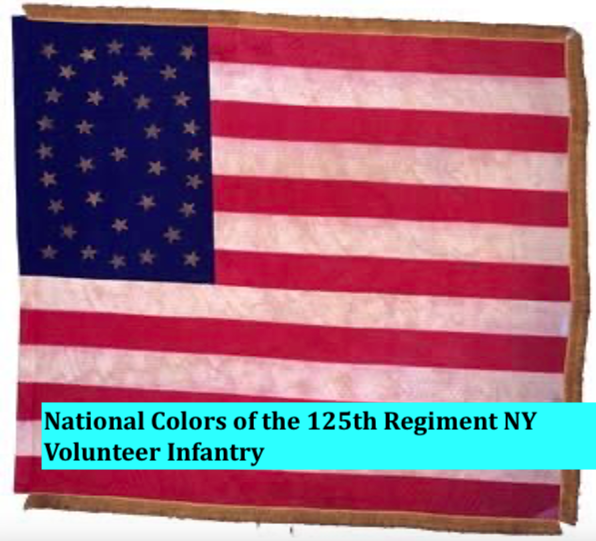
125th Regiment NY Volunteer Infantry | National Color | Civil War
The New York State Battle Flag Collection includes one silk national color carried by the 125th Regiment. The flag’s canton features 35…
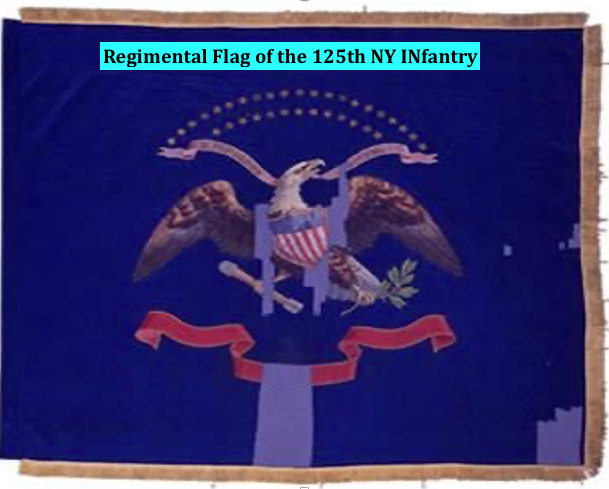
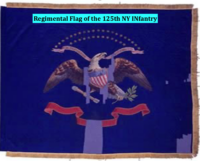
125th Regiment NY Volunteer Infantry | Regimental Color | Civil War
The New York State Battle Flag Collection includes one painted silk Regimental Color carried by the 125th Regiment. The color features the Arms of the…
Related Items
-
Rare Civil War Officer’s Cloak Possibly Id’d to Gen. Horace Porter
$6,500Rare Civil War Officer’s Cloak Possibly Id’d to Gen. Horace PorterMarch 22, 2023 -
Half Plate Daguerreotype of Civil War Chaplain Rev. Burr Baldwin and his Wife Cornelia Baldwin c. 1850
$650Half Plate Daguerreotype of Civil War Chaplain Rev. Burr Baldwin and his Wife Cornelia Baldwin c. 1850January 14, 2024 -
Civil War Period Shipboard Trunk and CDV of Lieutenant Charles H. Swasey, Mortally Wounded
$1,150Civil War Period Shipboard Trunk and CDV of Lieutenant Charles H. Swasey, Mortally WoundedNovember 10, 2021 -
Id’d Carved Bone 24th Corps Badge – Private James E. Lewis Co. B 206th Pa. Infantry
$650Id’d Carved Bone 24th Corps Badge – Private James E. Lewis Co. B 206th Pa. InfantryAugust 14, 2023