
Civil War Id’d Bible Carried by Surgeon Franklin A. Bushey Field & Staff 3rd Pa. Infantry, Field & Staff 4th Pa. CavalryApril 11, 2026
Civil War Id’d Bible Carried by Surgeon Franklin A. Bushey Field & Staff 3rd Pa. Infantry, Field & Staff 4th Pa. Cavalry
SOLD
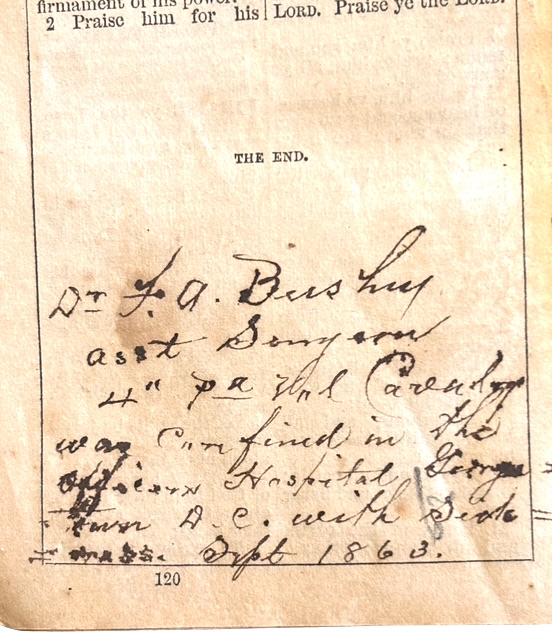
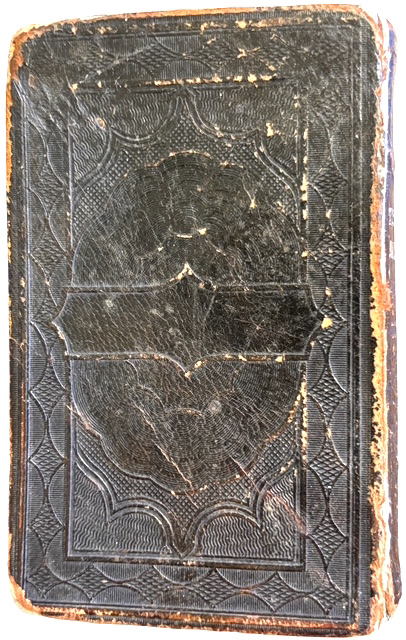
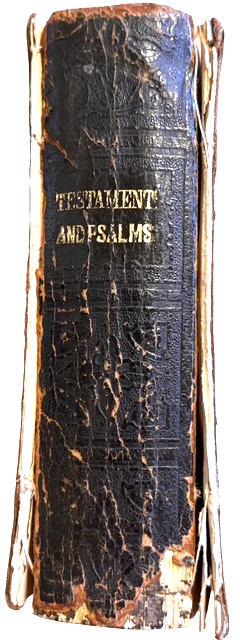
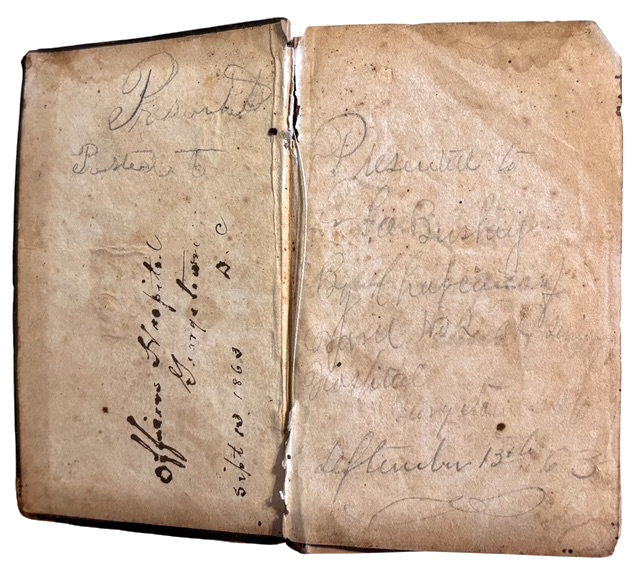
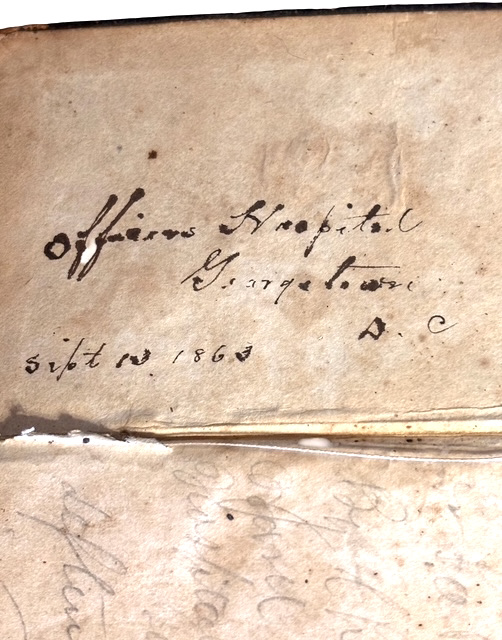
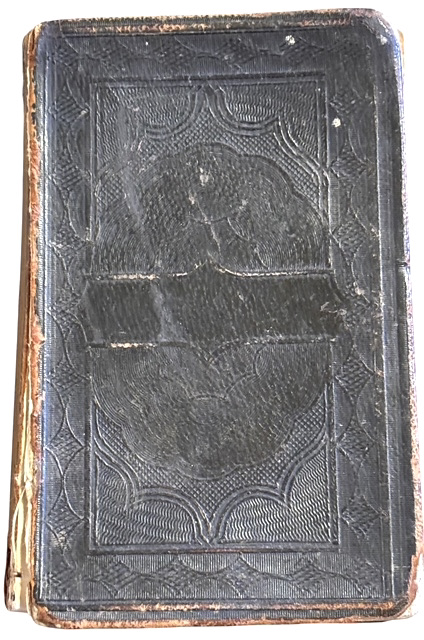
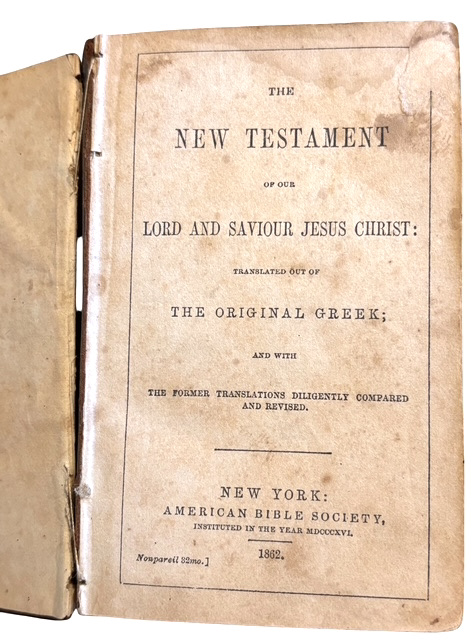
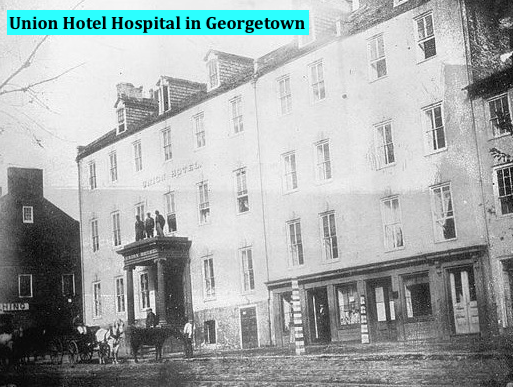
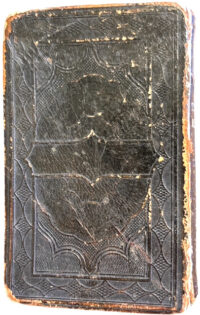
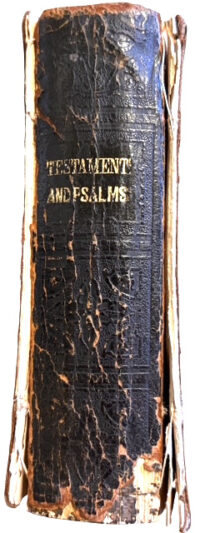
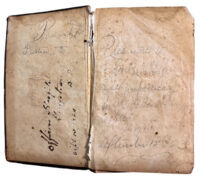
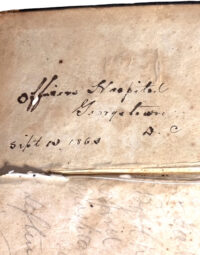
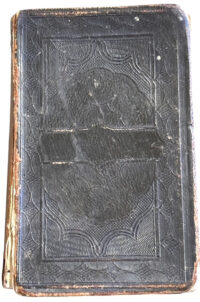
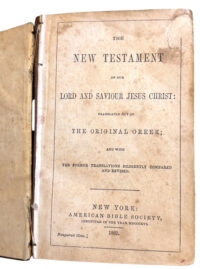
Civil War Id’d Bible Carried by Surgeon Franklin A. Bushey Field & Staff 3rd Pa. Infantry, Field & Staff 4th Pa. Cavalry – This 1862 dated Bible containing the New Testament, was presented to Franklin Bushy, Assistant Surgeon of the 3rd Pa. Cavalry, by the Chaplain at the U.S. Army Georgetown Hospital for officers in Washington, DC, in September 1863. On the blank, interior page backing the front board is inscribed in pencil an indecipherable word, followed by:
“Posted to”
And beneath this is inked:
“Officers Hospital
Georgetown
D.C.
Sept 10 1863”
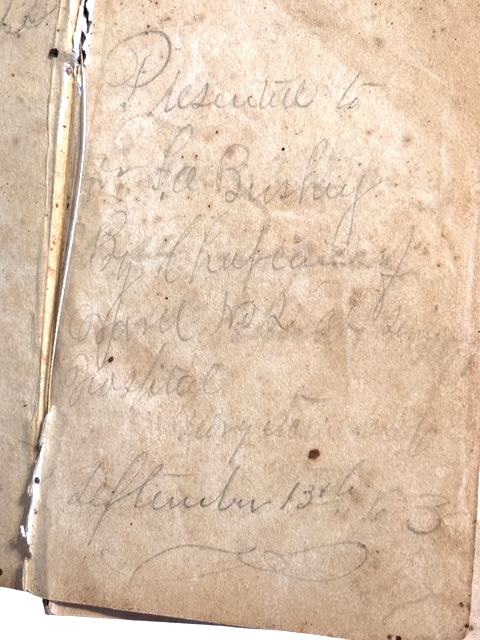
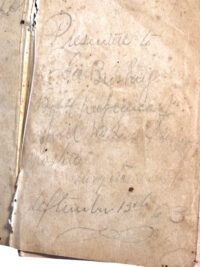
A penciled inscription on the opposite, first front blank page of the Bible reads as follows:
“Presented to
F.A. Bushy
By Chaplain of
Ward No. 2 of Seminary
Hospital
Georgetown
September 13th 63”
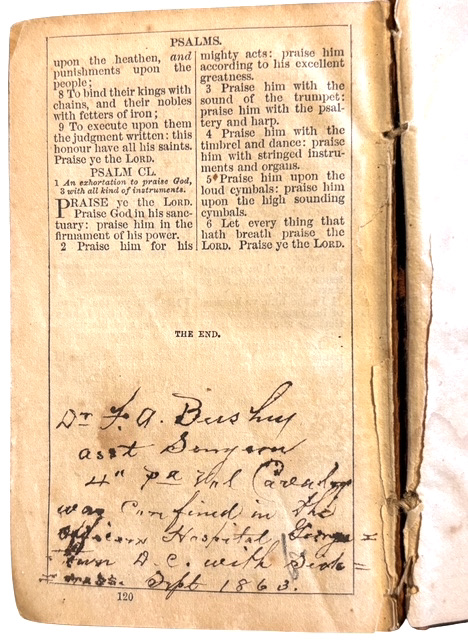
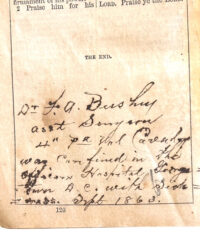
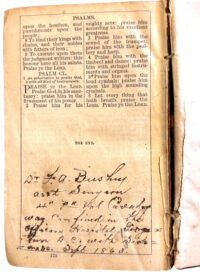
On the last page of the Bible, in ink, is the following inscription:
“Dr. F. A. Bushy
Assistant Surgeon
4th Pa Vol. Cavalry
was confined in the
officers hospital George
town D.C. with sick
ness. Sept 1863.”
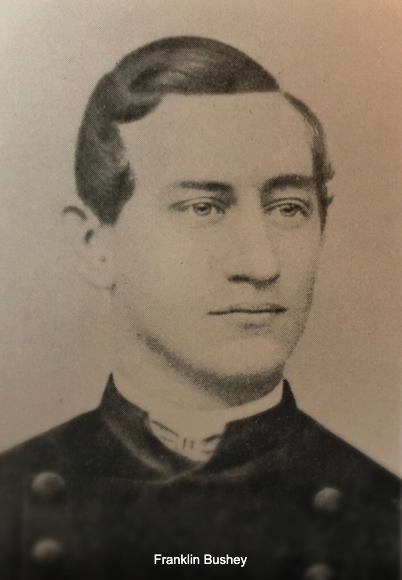
Dr. Franklin Abraham Bushy, having recently graduated from medical studies at the University of Maryland, enlisted in the Field & Staff of the 3rd Pa. Infantry, in September 1862, mustering out shortly thereafter; he then re-enlisted in the Field & Staff of the 4th Pa. Cavalry, serving as an assistant surgeon, until the end of the war – although, the records listed below indicate he resigned in December 1863, apparently that listing is incorrect, as multiple biographical studies imply he remained with the regiment until the end of the war. For a complete biographical enumeration of Bushy’s life, see the article below***. During his wartime service, young Dr. Bushy would be with the 4th Pa. Cavalry, when it was engaged in the Battle of Gettysburg, the Wilderness Campaign, Sheridan’s Raid, and the Appomattox Campaign.
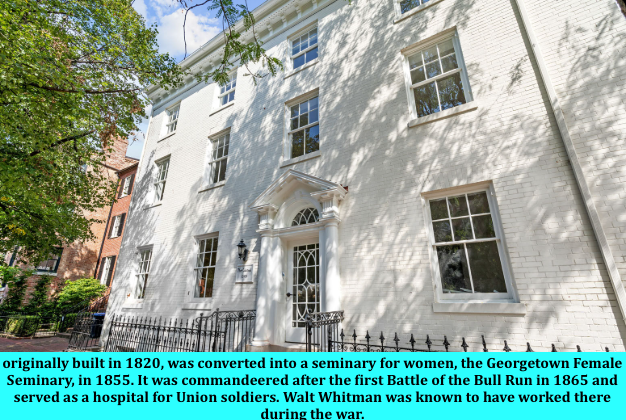
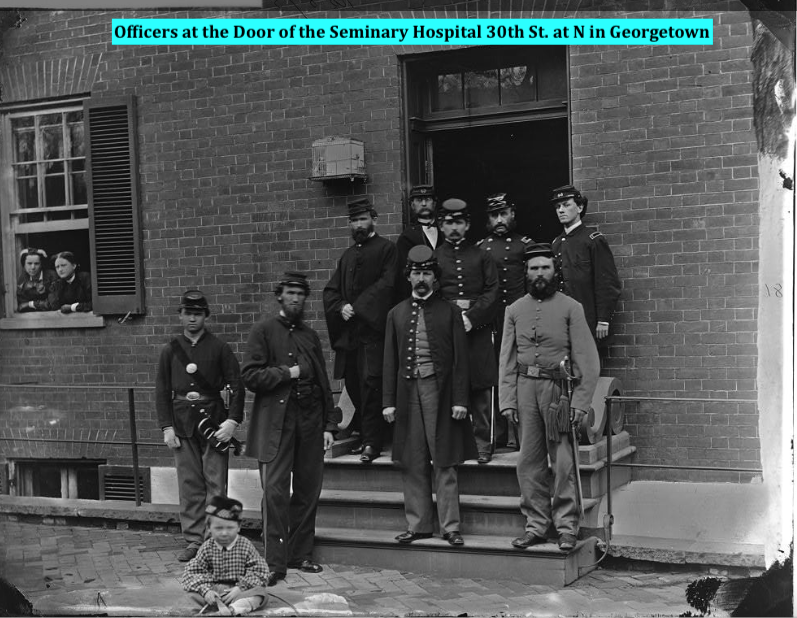
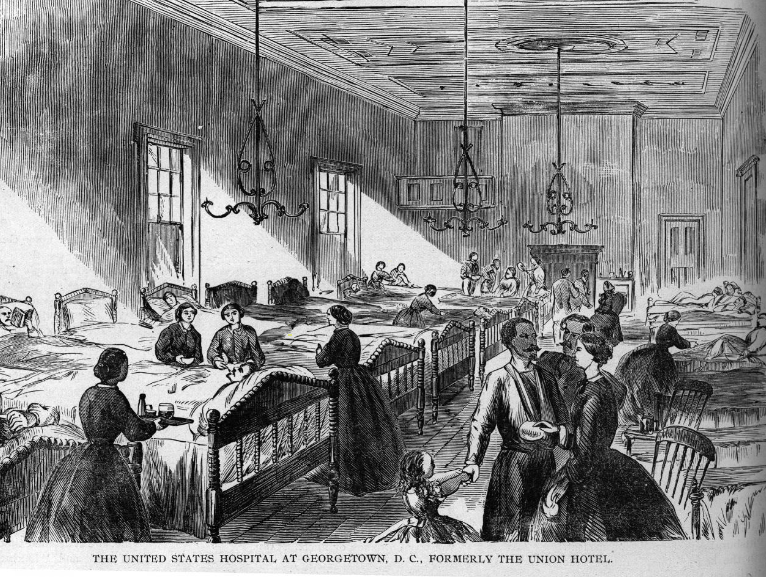
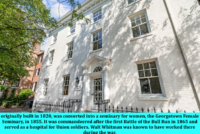
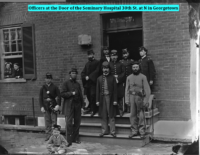
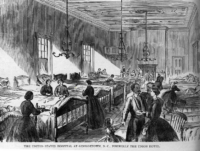
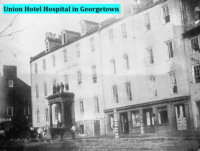
Seminary General Hospital, Georgetown (Seminary Branch of Union Hotel and Kennedy Hospital) – This general hospital was located in the female seminary in the rear of the Union Hotel. The Daily National Republican reported on Sept. 15, 1862, that “by a recent order, [the hospital] has been set apart for wounded and sick officers.” Dr. J. F. Kennedy, U.S.A., was the surgeon in charge at this time. The Seminary General Hospital in Georgetown, D.C., located at 30th and N Streets NW, was created in 1861 by the Union Army in the former building of Miss Lydia English’s Finishing School for Girls, which was part of the Seminary Branch of Union Hotel and Kennedy Hospital. The building was used to treat wounded officers during the Civil War.
The Bible remains in overall good condition; the front and rear boards are loose, but still attached; all pages are present.
Frank A. Bushey (Bushy)
Residence Franklin County, PA; years old.
Enlisted on 9/17/1862 at Chambersburg, PA as a Surgeon.
On 9/17/1862, he was commissioned into Field & Staff Pennsylvania 3rd Infantry.
He was Mustered Out on 9/24/1862 at Harrisburg, PA
On 12/15/1862, he was commissioned into Field & Staff Pennsylvania 4th Cavalry.
He resigned on 11/6/1863
Promotions:
- Asst Surgeon 12/15/1862 (As of 4th PA Cavalry)
3rd PA Infantry
Organized: on 9/11/1862
Mustered out: 9/25/1862
Pennsylvania MILITIA OF 1862. THE rebel army had no sooner achieved its triumph in the second battle Bull Run, than it hastened northward, and commenced crossing the Potomac. The southern border of Pennsylvania lay in close proximity, all unprotected, and by its rich harvests invited invasion. The Reserve Corps which was originally organized for the State defense, had been called away to the succor of the hard pressed army of McClellan upon the Peninsula, and was now upon the weary march, with ranks sadly thinned in the hard fought battles of Mechaniceville, Gaines’ Mill’ Charles City Cross Roads, and the second Bull Run, to again meet the foe, but powerless to avert the threatened danger. The result of the struggle on the plains of Manassas, was no sooner known, than the helpless condition of the State, which had been apparent from the first, became a subject of alarm. On the 4th of September, Governor Curtin issued a proclamation, calling on the people to arm, and prepare for defense. He recommended the immediate formation of companies and regiments throughout the Commonwealth, and, for the purpose of drill and instruction, that after three P. M., of each day, all business houses be closed. On the 10th, the danger having become imminent, the enemy being already in Maryland, he issued a general order, calling on all able bodied men to enroll immediately for the defense of the State, and to hold themselves in readiness to march upon an hour’s notice; to select officers, to provide themselves with such arms as could be obtained, with sixty rounds of ammunition to the man, tendering arms to such as had none, and promising that they should be held for service, for such time only as the pressing exigency for State defense should continue. On the following day, acting under authority of the President of the United States, the Governor called for fifty thousand men, directing them to report by telegraph for orders to move, and adding that further calls would be made as the exigencies should require. The people everywhere flew to arms, and moved promptly to the State Capital. One regiment and eight companies were sent forward during the night of the 12th, and others followed as fast as they could be organized. On the 14th, the head of the Army of the Potomac met the enemy at South Mountain, and hurled him back through its passes, and on the evening of the 16th, and day of the 17th, a fierce battle was fought at Antietam. In the meantime, the militia had rapidly concentrated at Hagerstown and Chambersburg, and General John F. Reynolds, who was at the time commanding a corps in the Army of the Potomac, had assumed command. Fifteen thousand men were pushed forward to Hagerstown and Boonsboro, and a portion of them stood in line of battle in close proximity to the field, in readiness to advance, while the fierce fighting was in progress. Ten thousand more were posted in the vicinity of Greencastle and Chambersburg, and “about twenty thousand,” says Governor Curtin, in his annual message, ” were at Harrisburg, on their way to Harrisburg, or in readiness and waiting for transportation to proceed thither. The Twenty-fifth regiment, under command of Colonel Dechert, at the request of General Halleck, was sent to the State of Delaware, to guard the Dupont Powder Mills, whence the National armies were principally supplied. But the enemy was defeated at Antietam, and retreated in confusion across the Potomac. The emergency having passed, the militia regiments were ordered to return to Harrisburg, and in accordance with the conditions on which they had been called into service, they were, on the 24th, mustered out and disbanded. The train on which the Twentieth regiment was returning over the Cumberland Valley Road, collided, when nearing Harrisburg, with one passing in the opposite direction, by which four men were killed and thirty injured. In a letter addressed to Governor Curtin, by General McClellan, thanking him for his energetic action in calling out the militia, and placing them in the field, the General adds; “Fortunately, circumstances rendered it impossible for the enemy to set foot upon the soil of Pennsylvania, but the moral support rendered to my army by your action, was none the less mighty. In the name of my army, and for myself, I again tender to you our acknowledgments for your patriotic course. The manner in which the people of Pennsylvania responded to your call, and hastened to the defense of their frontier, no doubt exercised a great influence upon the enemy.” In an order issued by Governor Bradford, of Maryland, soon after the battle, he says: “To Governor Curtin, of Pennsylvania, and the militia of his State, who rallied with such alacrity at the first symptoms of an invasion, our warmest thanks are also due. The readiness with which they crossed the border, and took their stand beside the Maryland brigade, shows that the border is, in all respects, but an ideal line, and that in such a cause as now unites us, Pennsylvania and Maryland are but one.”
Organized: Camp Curtin, Harrisburg, PA on 9/20/1861
Mustered out: 7/1/1865
PENNSYLVANIA 64TH INFANTRY (4th Cavalry) Fourth Cavalry.-Cols., David Campbell, James H. Childs, James K Kerr, George H. Covode, S. B. M. Young, Lieut.-Cols., James H. Childs James K Kerr, William E. Doster, S. B. M. Young, George H. Covode Alexander P. Duncan, Majs., James K Kerr, William E. Doster, James H. Trimble, George H. Covode, William M. Biddle, S. B. M. Young Alexander P. Duncan, James T. Peale, R. A. Robison, William B. Mays D. C. Phillips, Robert J. Phipps N. J. Horrell, John C. Paul. The 64th regiment of the line, known as the 4th cavalry, was recruited in Sept. and Oct., 1861, and rendezvoused at Camp Curtin, but was soon after transferred to camp in the vicinity of the soldier’s home, Washington, D. C. where the men were mustered into the U. S. service for three years. Co. A was raised in Northampton county, B, E and G in Allegheny, C and D in Westmoreland and Indiana, H, I, K and L in Venango, F in Lebanon and M in Luzerne. Col. Campbell had previously commanded the 12th infantry and was an experienced militia officer. The winter at Washington was spent in perfecting the command in drill and discipline. On March 12, Col. Campbell resigned to take command of the 5th cavalry, and Lieut.-Col. Childs succeeded him. It was with difficulty the command was maintained intact as the cavalry arm of the service was not then in favor. In May, 1862, it joined McDowell’s column on the Rappahannock and was assigned to McCall’s division Pa. reserves. Soon after it moved with its division by transport to the support of McClellan on the Peninsula, arriving at White House on June 24, where one battalion under Lieut.-Col. Kerr was detached and ordered to Yorktown, remaining there until the close of the Peninsular campaign. The balance of the regiment proceeded to the front, arriving in time to participate in the famous Seven Days’, battles of McClellan’s army. The 4th suffered a loss of a few men during the night attack by the enemy on July 31, at Harrison’s landing. Moving via Williamsburg to Yorktown it was joined by Kerr’s battalion and proceeded thence to Washington, but was too late to share in the second Bull Run fight. It was active at Antietam, here the regiment lost its colonel, temporarily in command of the brigade on that day. Col. Childs was succeeded in command by Lieut.-Col. Kerr. While encamped on the Potomac, near Hancock, in the early fall a battalion under Capt. Duncan, crossed the river and made a sudden descent on the headquarters of the enemy’s picket reserve at Hedgesville, capturing 3 officers and 20 men and winning praise from high quarters for its dashing exploit. The regiment rode with Gen. Pleasonton in his pursuit of Stuart; was engaged in numerous skirmishes while the army moved from Harper’s Ferry to Warrenton, and was part of the rear-guard when Burnside moved to Falmouth. During the battle of Fredericksburg it guarded the fords above the town on the north bank of the river. It shared in the “Mud March” in Jan., 1863, and then went into winter quarters at Potomac Creek Station. It had two squadrons engaged at the battle of Kelly’s ford, the first real cavalry victory of the war. It then skirmished at Rapidan Station and Ely’s ford, was in reserve with its division at Chancellorsville; was only lightly engaged at Brandy Station; still as a part of the 2nd brigade, 2nd cavalry division, it embarked on the Gettysburg campaign, being engaged at Middleburg and Upperville, and arriving on the field of Gettysburg on the morning of July 2. On the 5th it engaged in the pursuit of Lee, frequently skirmishing with his rear-guard. In the campaign of maneuvres which followed the march into Virginia, it was briskly engaged at Shepherdstown and suffered a heavy loss at Jeffersonton, losing in killed, wounded and prisoners about 200 men out of 375 in action. Many of the men captured here subsequently died in Andersonville prison. It was again sharply engaged at Bristoe Station in October and had its final skirmish of the campaign at Beverly Ford. It did not share in the Mine Run campaign, being posted for 4 months along the line of the Orange & Alexandria railroad. During the winter more than two-thirds of the men reenlisted for three years, but the veteran furlough was long delayed. Detachment after detachment of raw recruits were received and when the regiment entered on the Wilderness campaign in May the 4th, was a veteran regiment only in name, less than 20 of the original enlisted men being present for duty. It participated in Sheridan’s raid on Richmond, in which it was active at Yellow tavern and supported King’s battery in the battle inside the outer line of intrenchments before Richmond. On rejoining the army at the North Anna river its ranks were swelled by returning veterans and recruits, making it the largest regiment in the corps. It was active at Haw’s shop, and was present at Cold Harbor. It saw much hard service during Sheridan’s second raid, being heavily engaged at Trevilian Station and again at St. Mary’s Church, where the 4th lost 87 Men, and Col. Covode was mortally wounded, dying in the Enemy’s hands, though his body was after ward recovered by a party under Capt. Parke. Crossing the James, the 4th was almost constantly employed during the rest of the summer in skirmishing, marching and picket duty. It was engaged with Fitz Hugh Lee’s cavalry at Second swamp in July, and was again engaged in August on the Jerusalem plank road. Subsequently it was in the advance upon the Boydton plank road in October, and in December at Hatcher’s run it assisted in capturing a fort and 200 prisoners, 3 cannon and numerous stores. It shared in the raid on the Weldon railroad in December and, went into winter quarters on its return. It took part in the engagement at Hatcher’s run in Feb., 1865. In the final campaign of that year, under Lieut.-Col. Duncan, it had its full share, marching and fighting almost constantly. It suffered some loss at Dinwiddie Court House and in the action at Farmville. On the morning of Lee’s surrender, Gregg’s division had cut off a body of the enemy’s cavalry, but further operations were stopped by the news of Lee’s capitulation. The regiment returned after the surrender to Petersburg proceeding thence to North Carolina, but soon returned to Virginia and was permanently stationed at Lynchburg, Lieut.-Col. Duncan being made provost-marshal of a district embracing nine counties. On July 1, it was mustered out at Lynchburg and soon returned to Pittsburgh, where it was finally discharged. Source: The Union Army, vol. 1
***Local history: Celebrating the life of a Greencastle soldier
GREENCASTLE– Oct. 3rd marked the 185th birthday of Franklin A. Bushey, a local soldier whose story is one of family and dedicated service to the military and the Pennsylvania community in which he lived. He was a devoted husband, a father of three children, a solider during the Civil War, a spokesman for Civil War veterans and a historian who strived to the preserve history and memory of the soldiers from Pennsylvania.
Franklin was the youngest of five children born to Michael Bushey Sr. and his wife, Frances. A farming family who lived in the Antrim Township in a home that once belonged to a Revolutionary War veteran named Col. Thomas Johnston, the Bushey’s prospered and were able to offer their children an opportunity to pursue a good education.
Franklin studied medicine at the University of Maryland School of Medicine and the College of Physicians and Surgeons where he graduated in March of 1861. Not long after receiving his doctorate, the 22-year-old Franklin enlisted in the military and joined the Third Pennsylvania Militia and the Union to in their fight against the Southern rebels in the Civil War. In December of 1862, three months later, Franklin joined the Fourth Pennsylvania Cavalry as a surgeon, where he would serve in the Battle of Gettysburg.
When the war ended, Franklin returned to Greencastle where he would set up his medical practice. It was at this time he would meet Mary Ellen Carl, who he would wed on Dec. 27, 1865. They would have their first two children soon after. Daughters Elise and Bertha were born in 1867 and 1869. In 1900, the couple would adopt a son named Lamont Bartle.
Franklin was not just a successful physician in Franklin County but was an active member of the community, especially when it came to helping war veterans and their families. One way he accomplished this was by being the head of the Franklin County U.S. Pension Examining Board where he would see to it that every soldier would be compensated for their service.
Franklin BusheyGrave Marker
He was also a member and creator of the Grand Army of the Republic Chapter Post #438 where he served many roles. In 1885, when General Ulysses S. Grant died, Franklin wrote a Resolution of Respect for the GAR and spear-headed the re-internment of Corp. William H. Rihl, who had fallen in battle in 1862 and was influential in getting a monument of the corporal erected in his honor.
In his later years, Franklin would serve as a historian who spent his days preserving the history of Franklin County soldiers through his collecting of artifacts, historical articles and letters and through his writing for the local newspaper. He was also on several committees in Greencastle such as the Cedar Hill Cemetery Board of Managers and the Citizen National Bank, which he helped establish in 1901. His goal in life was to improve the lives of the citizens of Greencastle not just physically through his medical practice, but also intellectually and financially by his involvement in so many other local entities.
On January 27, 1915, Mary Ellen passed away at the age of 71 and Franklin’s daughter Elise, who was also widowed, returned home to Greencastle and lived with her grieving father. Franklin’s other daughter, Bertha, had married a physician and moved to Thurmont, Maryland, where she raised her own family.
Dr. Franklin Bushey died on June 16, 1924, at the age of 83. He left behind a long legacy of humanitarianism and dedication to not only his own family, but to the families of the men he fought beside and the neighbors to which he shared his life within Franklin County. His body was laid to rest next to his beloved wife, Mary Ellen, in Cedar Hill Cemetery.
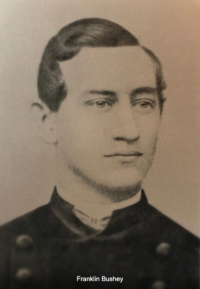
Dr Franklin Bushey, Civil War veteran and son-in-law to Dr. Adam Carl
***See Dr. Bushey’s collection in the Civil War Bay in the Barn. Click each image for more information.
~ He served April 21, 1861 to June 30, 1865.
~ In 1861 he served in the PA Emergency Militia & Surgeon for The 3rd PA Regiment. In 1862 he served in the Emergency Militia; and was Asst Surgeon in the 4th Pa Cavalry.
~ He was instrumental in establishing the Corp Wm H Rihl GAR Post #438. Bushey held many positions – commander, secretary, sergeant-at-arms, and he chaired various committees
~ Bushey played a vital role in the re-interment of Corp. William H. Rihl’s body on June 22, 1886, at the site where he was killed on June 22, 1863. Bushey was also very involved in the erection of the monument memorializing Rihl, on the site of the Civil War skirmish. On the day of dedication, he was the keynote speaker.
~ Born October 3, 1840 and died June 16, 1924 at 83 years, 8 months, 23 days.
~ Buried Section O, Lot 28, Cedar Hill Cemetery, Antrim Township, Franklin County, PA
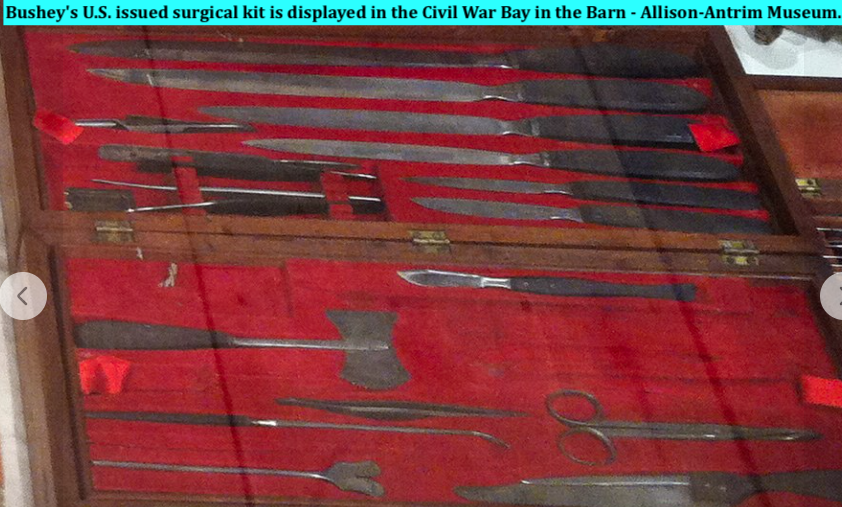
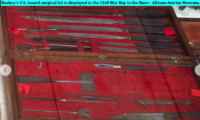
Franklin A. Bushey Dr. Franklin A. Bushey’s Soldier’s Story begins the same way his brother, Michael’s, did. In 1850, Michael Bushey Sr., a farmer, owned $15,000 worth of real estate in Antrim Township. According to several history sources, it is known that Michael and Frances owned the old “mansion” and property that had once been owned by Col. Thomas Johnston, at 11400 Stull Road, Antrim Township. Johnston served during the Revolutionary War and was the second son of James Johnston Sr., one of the early white settlers in Antrim Township. It was in this mansion house that Franklin A. Bushey was born on October 3, 1840. 2015 will mark the 175th anniversary of his birth. Michael and his wife Frances were both born in Pennsylvania, as were their five children – Henry (21), Catherine (18), Elizabeth (15), Michael N. (12), and Franklin A. (9). Elizabeth Scott (15) and John Hochlander (22) were included in the 1850 enumeration of the household. John was a laborer on the farm and Henry, the eldest, also helped with the farming. By 1860, Michael and Frances were living in Ft. Loudon. Michael was 60 years old, owned $20,000 of real estate, and at the age of 60, his occupation was “gentleman.” His wife Frances was 53 and only two of their children were still living with them – Elizabeth (23) and Franklin (19) was a medical student. Franklin’s eldest brother Henry H. Bushey (32) was a physician and he and his wife lived in Licking Creek Township, Fulton County. It seems that Henry, as a doctor, had a great influence on Franklin. Franklin’s childhood education included common school and a select school. Bushey studied medicine at the University of Maryland School of Medicine and College of Physicians and Surgeons and graduated from the same institution on March 2, 1861. Franklin County first required physicians to register with the county prothonotary in June 1881. Bushey registered on July 19, 1881. After the Confederate victory at the 2nd Battle of Bull Run, Pennsylvania was in great jeopardy of invasion along its southern border. Because the PA Reserves were fighting with McClellan, Gov. Andrew Curtin called for all able bodied men to arm themselves and, in each town businesses were to close at 3 pm so that the men of the town could participate in military drills. On September 11, 1862, Curtin called for 50,000 men to enroll. The men from the Cumberland Valley responded. Among them was Dr. Franklin A. Bushey. In Chambersburg, on September 17, 1862, Bushey was mustered in as the surgeon of the 3rd PA Militia. Under him were two assistant surgeons and a hospital steward. There were 10 companies in the regiment. In all, the 1862 PA Militia had 25 regiments and a National Guard regiment. 15,000 troops were moved to Hagerstown and Boosnsboro on the fringe of the great battle at Antietam. 10,000 troops were between Greencastle and Chambersburg and another 25,000 were in Harrisburg. The 25th PA Militia regiment was sent to Delaware to protect the DuPont Powder Mills. Upon the retreat of Lee’s Army after the Battle of Antietam, all the men were mustered out on September 24, 1862. Three months later, at Manchester, PA, on December 15, 1862, Dr. Franklin A. Bushey enrolled as an assistant surgeon with the 4th PA Cavalry. He was mustered in on December 15, at Harrisburg. Within the 4th Cavalry there were four surgeons and six assistant surgeons. The 4th PA Cavalry was engaged in the Battle of Gettysburg, the Wilderness Campaign, Sheridan’s Raid, and the Appomattox Campaign. When the war concluded, Bushey was placed in charge of a sizable government hospital in Missouri. His burial card indicates his term of service as April 21, 1861 to June, 30, 1865. Although I have not yet found any Pennsylvania army records, Franklin Bushey was most likely part of the 1861 PA Militia. After Bushey returned to Greencastle in 1865, he married Dr. Adam Carl’s youngest daughter, Mary Ellen, who was born on March 1, 1843. They were married on December 27. During his early career in Greencastle, he was associated with the practices of Dr. Adam Carl and his son, Dr. George D. Carl. Mary Ellen and Franklin had two daughters – Elise C., born October 2, 1867, and Bertha, born November 25, 1869. On the 1900 U.S. Census, Lamont Bartle, 10, was living in the Bushey household. He was listed as an adopted son. As with Michael N. Bushey, Franklin’s older brother, I have not yet been able to find an 1870 U.S. Census record for Franklin and Mary Ellen. Elise, their two-year old daughter was recorded in the 1870 census as “granddaughter,” within the household of Dr. Adam Carl. When Michael was killed by Indians in 1880, in Saguache County, CO, Franklin had a memorial headstone placed in the Bushey family burial plot in Cedar Hill Cemetery. In about 1900, Elise married an Episcopal minister, John C. Grimes. They were living in Williamsport, PA in 1910 and had no children during their 10 years of marriage. Two years later, John and Elise were living in Blossburg, Tioga County, PA. John took his own life on January 27, 1912. Elise returned to her hometown of Greencastle and lived with her widowed father. She passed away in 1933 and is buried in the Bushey family plot, Section O, Lot 28, Cedar Hill Cemetery. Bertha married Dr. Morris A. Birely. They lived in Thurmont, MD where they raised their family. At her death on July 22, 1957, she was survived by her son Dr. M. Franklin Birely, and a grandson F. Carter Birely. Bertha is buried in the Blue Ridge Cemetery in the Birely family plot. F. Carter Birley, has put on long-term loan to Allison-Antrim Museum, Dr. Bushey’s U.S. Army issued surgeon’s kit, his formal portrait, and a Franklin Bushey family coverlet, woven in Greencastle. When men or women were preparing to become physicians, they most often studied under local doctors. In 1882, William H. Brosius studied under Bushey, prior to attending Jefferson Medical College, Philadelphia. After graduating in 1886, Brosius returned to Greencastle, where he practiced for 10 months before establishing his office in Mont Alto, where he practiced until his death. Dr. Franklin A. Bushey’s love of his community and care and concern for his Civil War veterans is very evident from the history of his civic duty. For a long length of time, Bushey was the head of the U.S. Pension Examining Board, in Franklin County. It is said that he knew every Civil War veteran in Franklin County by sight and name, and remembered the regiment and company, in which each man served. Bushey was a charter member of the Grand Army of the Republic chapter of the Corporal William H. Rihl Post #438 and was instrumental in its establishment. He served in many positions – commander, secretary, sergeant-at-arms, and he chaired various committees. When Gen. Ulysses S. Grant died on July 23, 1885, Bushey penned GAR Post #438’s Resolution of Respect, (page 362). In 1886, he played a vital role in the re-interment of Corp. William H. Rihl’s body on June 22, 1886, at the site where he was killed on June 22, 1863. Bushey was also very involved in the erection of the monument memorializing Rihl, on the site of the Civil War skirmish. On the day of dedication, he was the keynote speaker. He became Greencastle-Antrim’s Civil War historian by, “the gathering and preserving of historical data, souvenirs, and traditions of Franklin County,” and by writing historical articles for the local newspaper. Bushey’s office cabinets were filled with Civil War and Indian relics and other items of local history. “His knowledge of the effect of the Civil War on the vicinity of Greencastle was encyclopedic…” From Pennsylvania A History – Biographical, by George P. Donehoo, 1928, Donehoo wrote of Bushey’s character, “A learned and humane physician of the old school, to be relied on always in time of need, a cultured and Christian gentleman, Dr. Bushey was of the finest type produced by this country. His personal characteristics were remarkable, for he retained the appearance and vigor of youth almost to the end of his days. His presence was handsome, his figure tall, slender and erect, and his manner gracious. His interesting conversation made him a social favorite; and his knowledge of local conditions, his good judgment, and his clearheaded common sense recommended him to all as a business advisor.” In addition to being a charter member and one of the most active members of the Corp. William H. Rihl GAR Post #438, Bushey was also a member of three fraternal organizations – the Knights of Honor and Legion of Honor – both of which had chapters in Greencastle. The Mount Pisgah Masonic Lodge No. 443 was established, on August 26, 1869, in Greencastle. Bushey served as one of the lodge’s officers during the 1880s. In 1882, during Greencastle’s centennial celebration, he served on the planning committee. Bushey also served on the “board of managers” for the Cedar Hill Cemetery. Always the champion of the common man, Bushey played an integral part in the establishment of Citizens National Bank, which opened on July 1, 1901, right next door to where he lived at 27 North Carlisle Street. Citizens Bank promoted itself as meeting the financial needs of the everyday citizen. Bushey served as a director of the bank until his death. Dr. Franklin A. Bushey was a friend of all, and prominent doctor and surgeon, who cared for the medical health of the G-A community. He lived to the age of 83 years, 8 months, and 23 days, dying on June 16, 1924. Franklin A. Bushey was buried in Section O, Lot 28, next to his wife Mary Ellen, in the Cedar Hill Cemetery, Antrim Township, Franklin County, PA. Information on Dr. Bushey was found in: History of Franklin County, Pennsylvania, 1887, Bates, Samuel P; Medical Men of Franklin County, 1750 – 1925, Ambrose, Watts Thrush, MD, 1928; Pennsylvania A History – Biographical, by George P. Donehoo, 1928; When War Passed This Way, Conrad, William P. & Alexander, Ted, 1989.
Dr. Franklin A. Bushey, retired surgeon; at Greencastle, Md. He once pulled a tooth for Gen. U. S. Grant.in 1884
Related Items
-
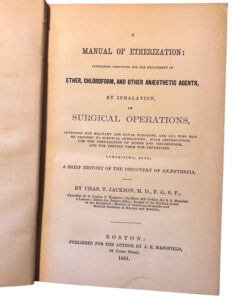
Rare 1st Edition Civil War Medical Book Entitled: A Manual of Etherization : Containing Directions for the Employment of Ether, Chloroform, and Other Anæsthetic Agents, by Inhalation, in Surgical Operations; with Instructions for the Preparation of Ether and Chloroform, and for Testing Them for Impurities. Comprising, also, a Brief History of the Discovery of Anæsthesia – By Charles T. Jackson
$850Rare 1st Edition Civil War Medical Book Entitled: A Manual of Etherization : Containing Directions for the Employment of Ether, Chloroform, and Other Anæsthetic Agents, by Inhalation, in Surgical Operations; with Instructions for the Preparation of Ether and Chloroform, and for Testing Them for Impurities. Comprising, also, a Brief History of the Discovery of Anæsthesia – By Charles T. JacksonJanuary 24, 2026 -
Richmond Antebellum Period M. E. Church South Bible Positioned in the R, F & P Railroad Station on Broad Street
$450Richmond Antebellum Period M. E. Church South Bible Positioned in the R, F & P Railroad Station on Broad StreetMarch 7, 2026 -
Fine Civil War Officer’s Autograph Book – 3rd NY Infantry – Close to 40 Signatures
$850Fine Civil War Officer’s Autograph Book – 3rd NY Infantry – Close to 40 SignaturesApril 23, 2021 -
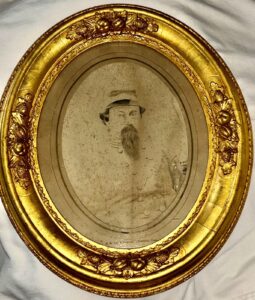
Large Format Salt Print of Captain Robin Jones 1st SC Cavalry KIA at Brandy Station
$3,000Large Format Salt Print of Captain Robin Jones 1st SC Cavalry KIA at Brandy StationMay 26, 2024