
Id’d Grouping – General’s Sash, Brigadier General’s Rank Straps, High Grade Officer’s Belt and CDV of General Ralph P. Buckland 72nd Ohio InfantryApril 12, 2026
Id’d Grouping – General’s Sash, Brigadier General’s Rank Straps, High Grade Officer’s Belt and CDV of General Ralph P. Buckland 72nd Ohio Infantry
SOLD
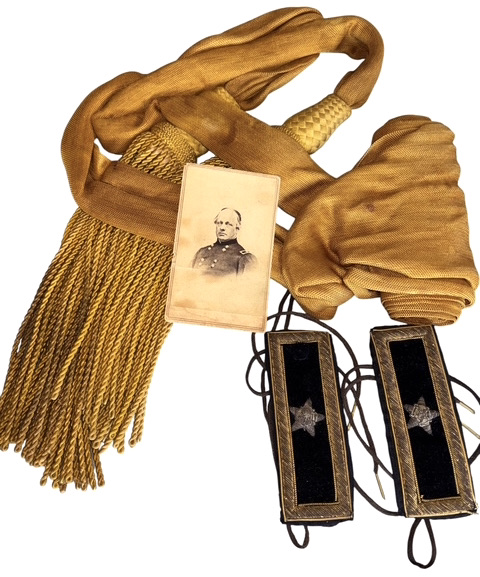
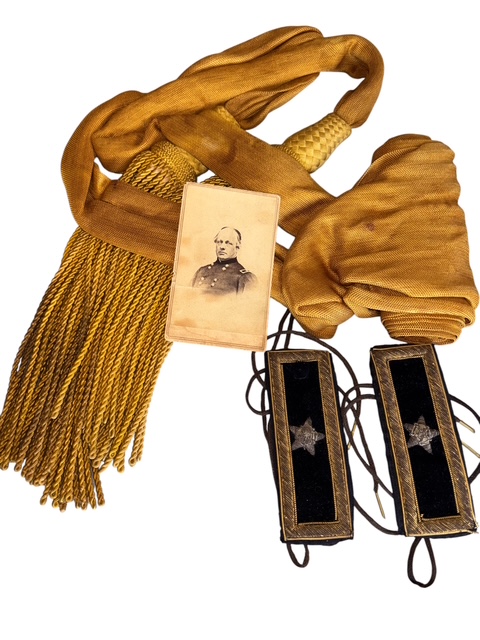
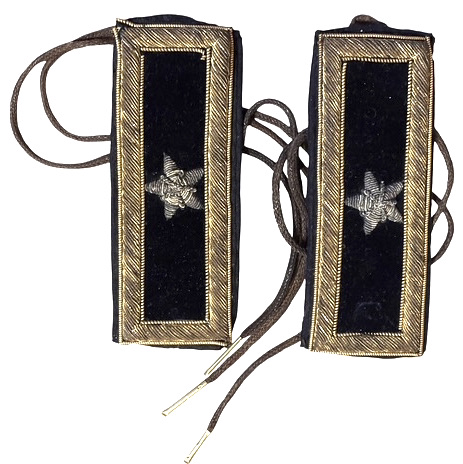
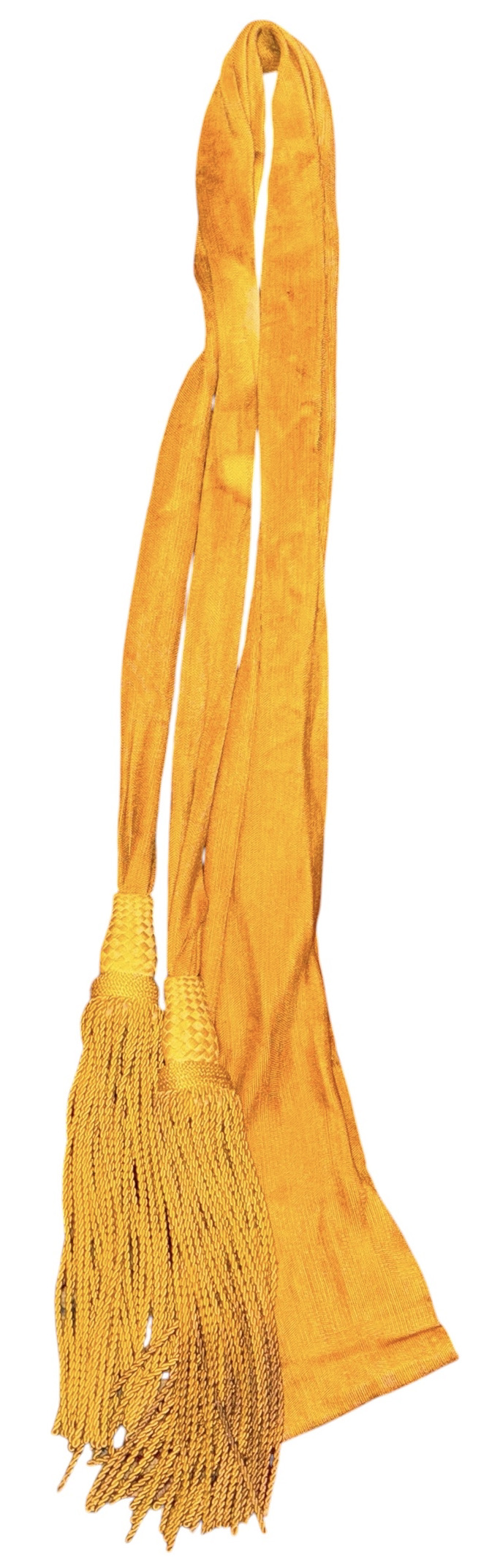
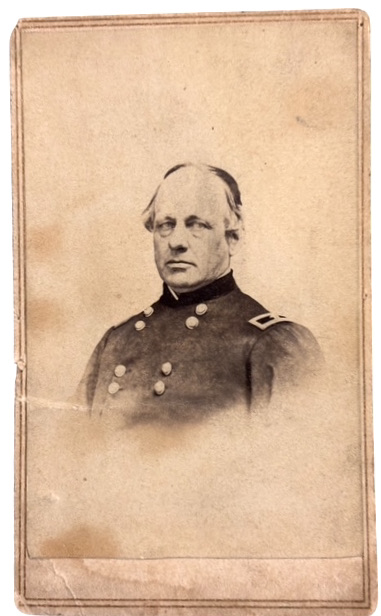
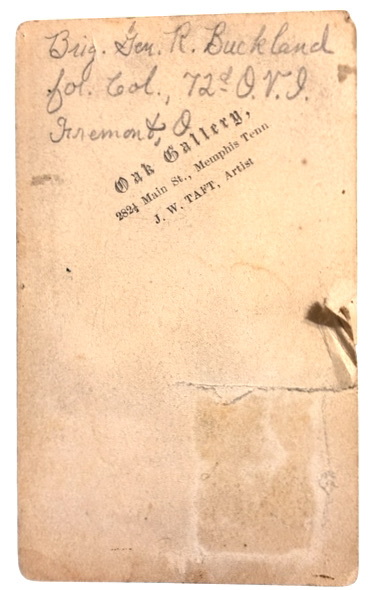
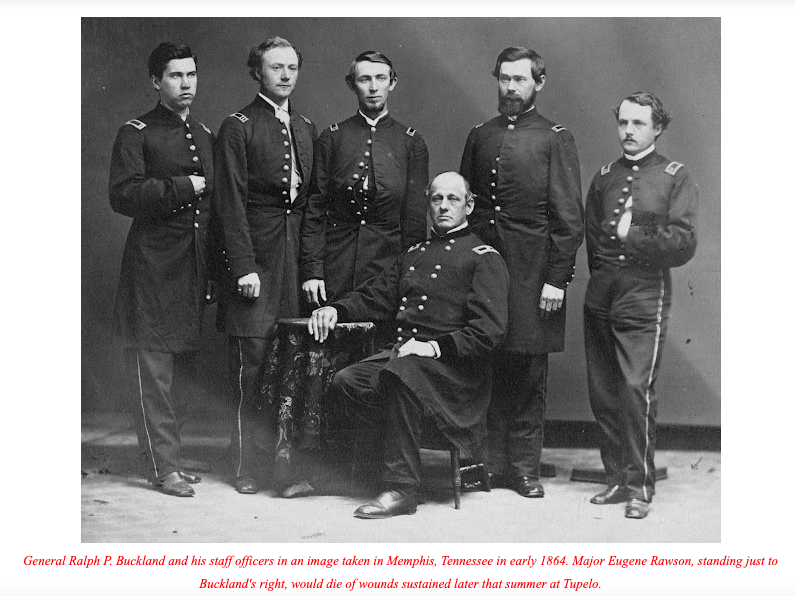
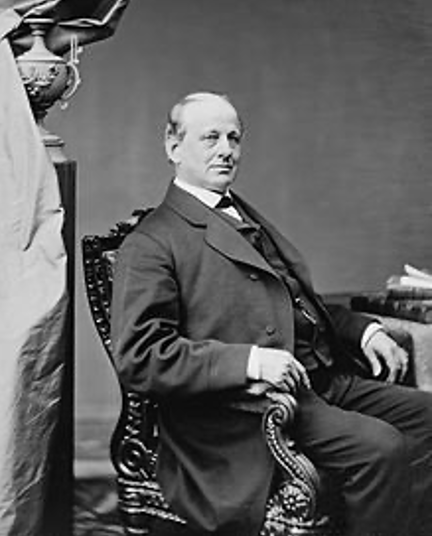
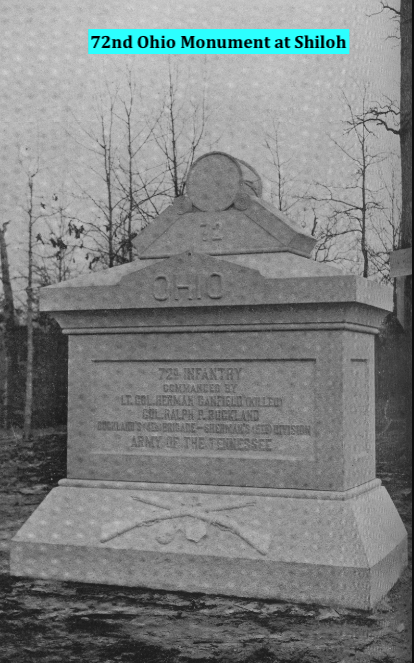
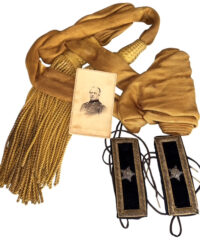
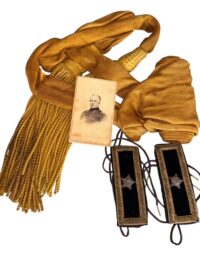
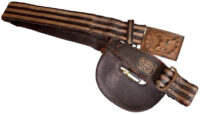
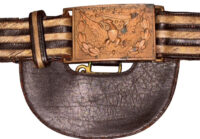
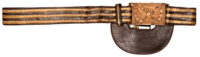
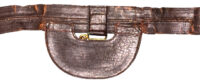
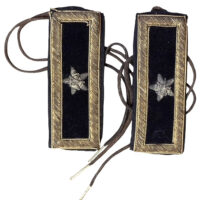
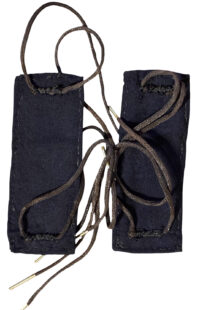
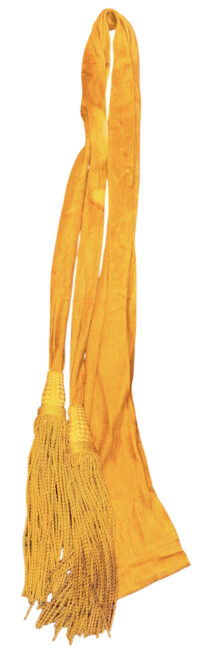
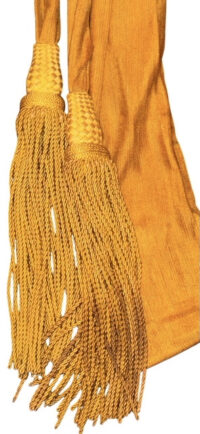
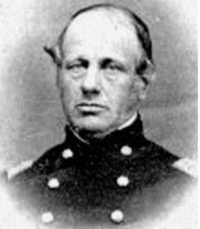
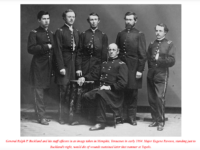
Id’d Grouping – General’s Sash, Brigadier General’s Rank Straps, High Grade Officer’s Belt and CDV of General Ralph P. Buckland 72nd Ohio Infantry – This is a superb, rare grouping of an Ohio Brigadier General’s sash, belt, CDV and rank straps of the wartime use by General Ralph Pomeroy Buckland. General Buckland, an attorney in Ohio before the war commenced, enlisted at the war’s onset in the 72nd Ohio Infantry, at the rank of Colonel. For gallantry at the battle of Shiloh, where he commanded the 4th brigade of Sherman’s division, he was promoted to brigadier-general of volunteers, Nov. 29, 1862. He commanded a brigade of the 15th army corps at Vicksburg and was later assigned to the command of the district of Memphis. In March 1863, General Buckland and his troops joined Sherman at Vicksburg, where they took part in the battles at Brandon and Jackson, and various engagements during the Siege of Vicksburg. Following the surrender of Vicksburg, Buckland commanded Sherman’s Third Division. and then assumed command of the District of Memphis. At Memphis, he organized militia to protect the city and surrounding railroads from General Nathan Bedford Forrest’s guerrilla raids. On March 13, 1865, Buckland was brevetted major-general of volunteers. He resigned from the army in January 1865, to accept a seat in Congress.
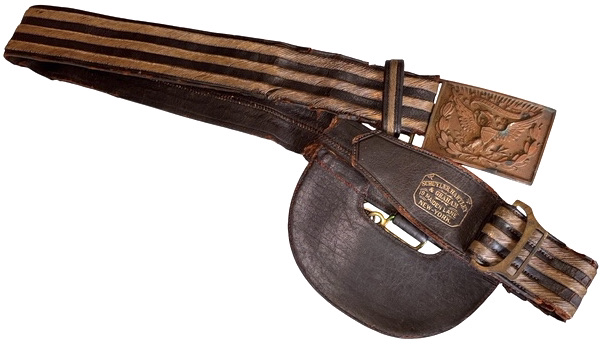
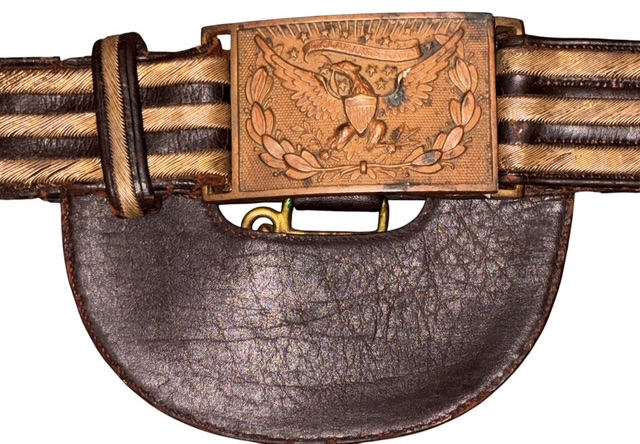
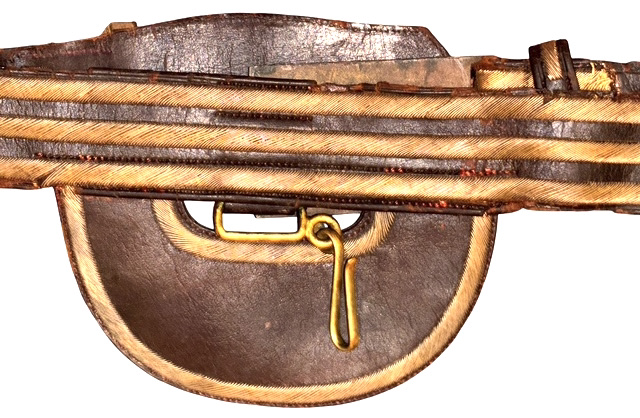
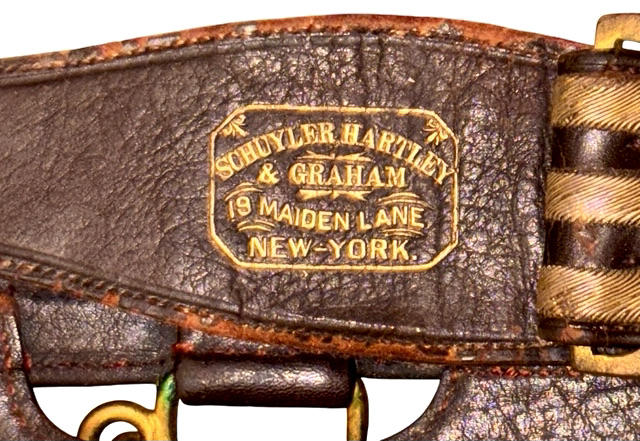
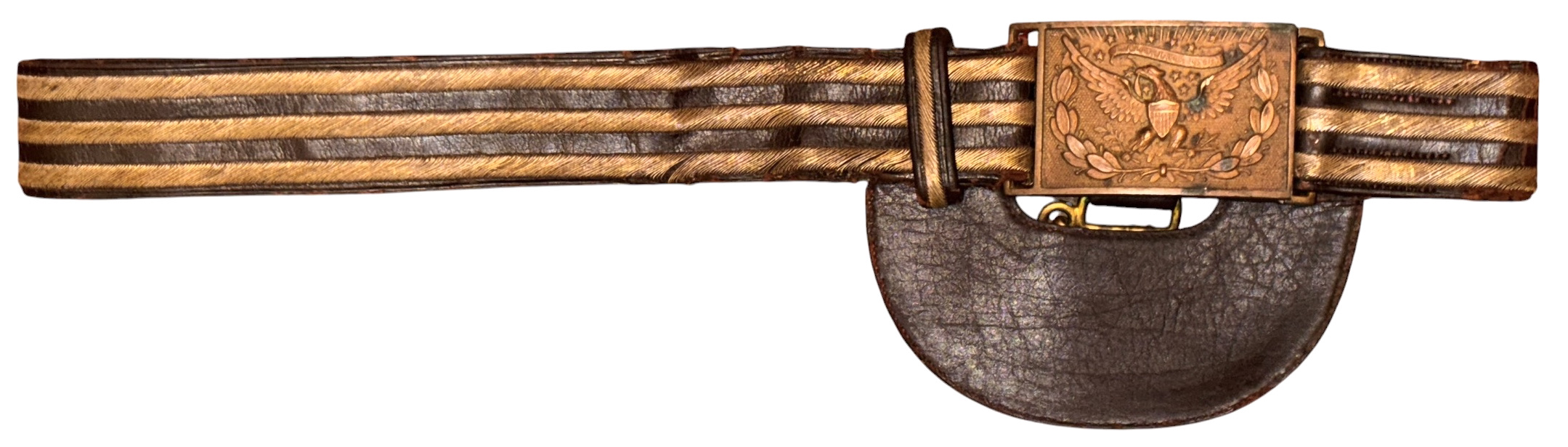
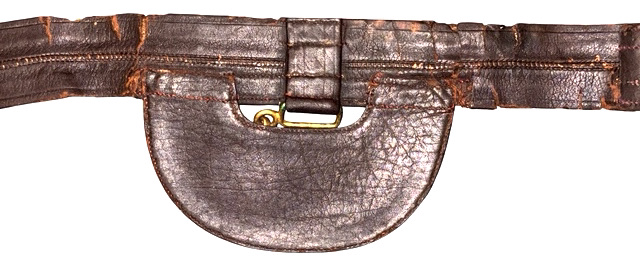
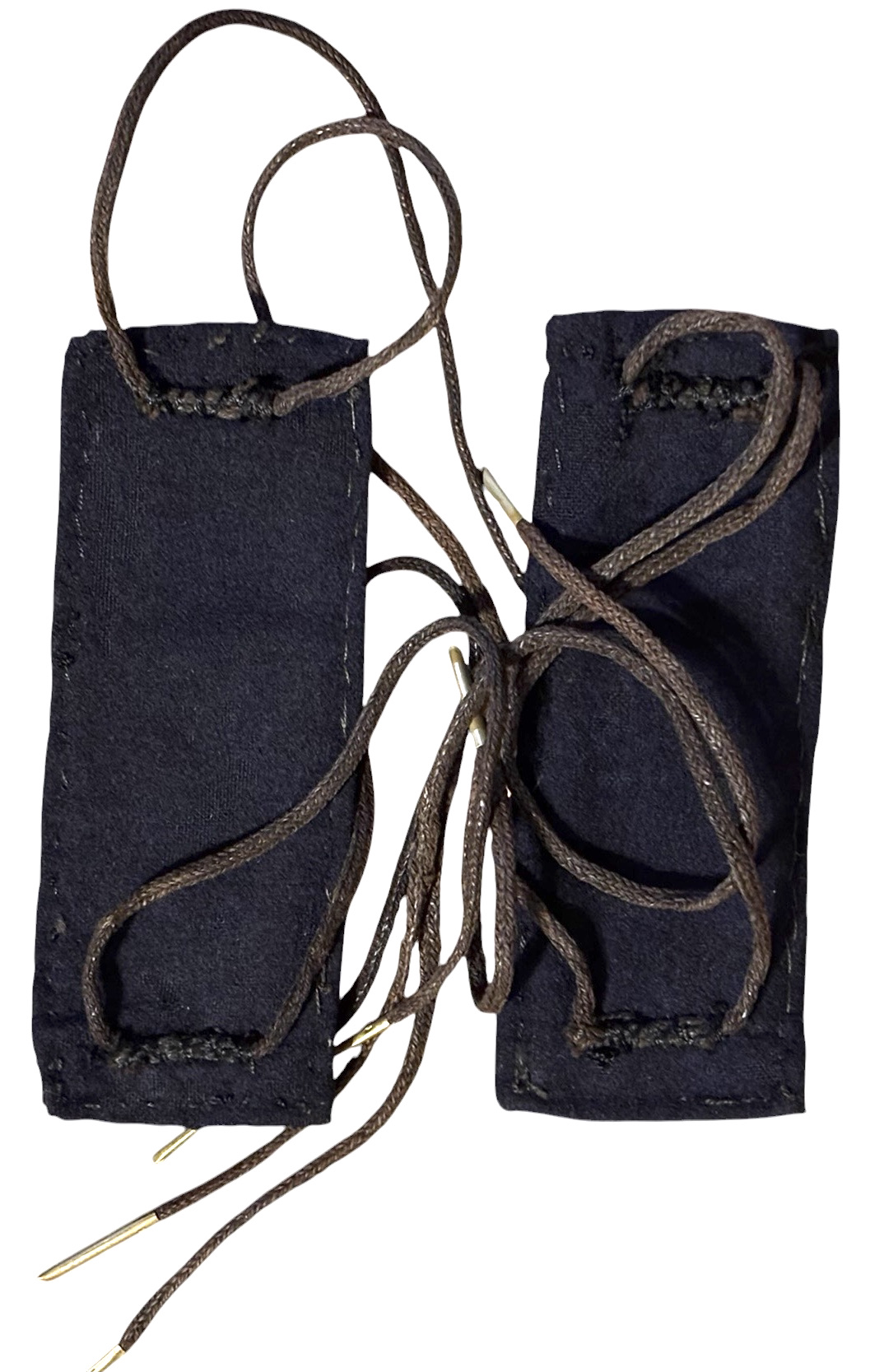
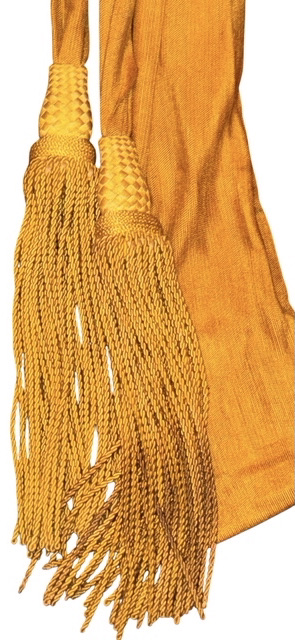
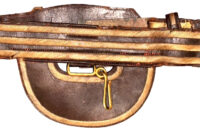
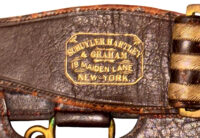
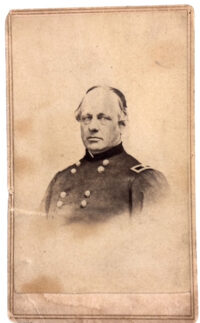
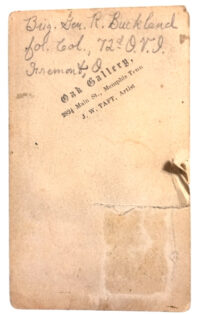
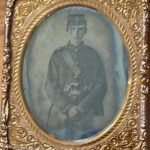
This grouping of Gen. Buckland’s wartime possessions include: his rare, General’s silk sash which remains in excellent condition; his gilded bullion enhanced sword belt, with a gold embossed label of the military purveyor “Schuyler, Hartley & Graham” on the belt plate safe; a period CDV of Gen. Buckland, in uniform; a pair of Buckland’s Brigadier General’s rank straps retaining their original “shoestring” ties for mounting on an officer’s frock coat. All elements of this grouping remain in excellent condition; there is a slight tear in the paper backing of the CDV. This grouping was sold to a collector over 30 years ago by the well-known dealer/collector James Frasca.
Ralph Pomeroy Buckland 1812 – 1892
Born: 1/20/1812 in Leyden (or Ravenna, OH), MA
Died: 5/27/1892 in Fremont, OH
Promotions
| Date | To rank | Full/Brevet | Army/Vol | Comments |
| 1/10/1862 | Colonel | Full | Vol | 72nd OH Inf |
| 11/29/1862 | Brig-Gen | Full | Vol | |
| 3/13/1864 | Major-Gen | Brevet | Vol |
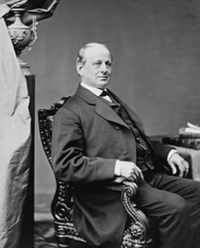
RALPH P. BUCKLAND Buckland, Ralph P., brigadier-general, was born at Leyden, Mass., Jan. 20, 1812, was educated in Ohio, admitted to the bar there in 1837, and began the practice of law in Fremont, that state. He was in 1848 a delegate to the national Whig convention, and in 1855 became state senator, holding that office until 1859. At the outbreak of the Civil war he enlisted a regiment which became the 72nd Ohio volunteers, and was elected its colonel. For gallantry at the battle of Shiloh, where he commanded the 4th brigade of Sherman’s division, he was promoted brigadier-general of volunteers, Nov. 29, 1862. He commanded a brigade of the 15th army corps at Vicksburg, was later assigned to the command of the district of Memphis, and on March 13, 1865, was brevetted major-general of volunteers. He resigned from the army in Jan., 1865, to accept a seat in Congress to which he had been elected while in the field, and was re-elected in 1866. He was president of the board of managers of the Ohio soldiers, and sailors, orphans, home from 1867 to 1873, and government director of the Union Pacific railroad from 1877 to 1880. Gen. Buckland was a delegate to the Philadelphia loyalists, convention in 1866, to the Pittsburg soldiers, convention, and to the Republican national convention of 1876. He died at Fremont, Ohio, May 28, 1892.
| Ralph Pomeroy Buckland | |
| Hon. Ralph Pomeroy Buckland of Ohio | |
| Member of the U.S. House of Representatives from Ohio’s 9th district |
|
| In office March 4, 1865 – March 4, 1869 |
|
| Preceded by | Warren P. Noble |
| Succeeded by | Edward F. Dickinson |
| Member of the Ohio Senate from the 30th district |
|
| In office January 7, 1856 – January 1, 1860 |
|
| Preceded by | A. G. Sutton |
| Succeeded by | F. D. Parish |
| Personal details | |
| Born | January 20, 1812 |
| Died | May 27, 1892 (aged 80) |
| Resting place | Oakwood Cemetery, Fremont, Ohio |
| Party | Whig Republican |
| Alma mater | Kenyon College |
| Signature | |
| Military service | |
| Allegiance | United States of America Union |
| Branch/service | United States Army Union Army |
| Years of service | 1862–1865 |
| Rank | Brigadier General Brevet Major General |
| Unit | Army of the Tennessee |
| Commands | 72nd Ohio Infantry |
| Battles/wars | |
Ralph Pomeroy Buckland (January 20, 1812 – May 27, 1892) was a U.S. representative from Ohio, as well as a brigadier general in the Union Army during the American Civil War and an executive of the Union Pacific Railroad following the war.
Early life and career
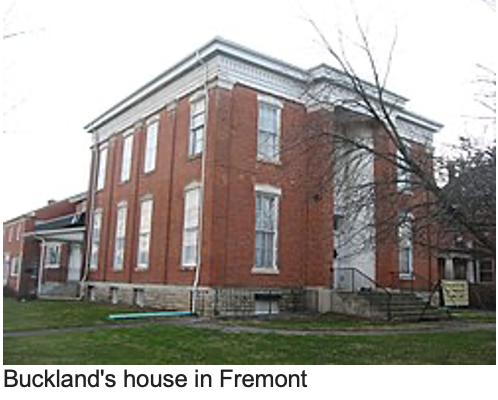
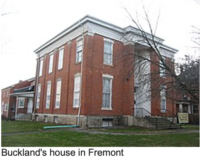
Born in Leyden, Massachusetts Buckland moved with his parents to Ravenna, Ohio, the same year. He attended the country schools, Tallmadge (Ohio) Academy, and Kenyon College in Gambier, Ohio. After studying law, he was admitted to the bar in 1837 and commenced practice in Fremont, Ohio. He served as the mayor of Fremont from 1843 to 1845 and was a delegate to the Whig National Convention in 1848. He served as a member of the Ohio State Senate from 1855 to 1859.
Civil War service
With the outbreak of the Civil War, Buckland entered the Union Army as the colonel of the 72nd Ohio Infantry on January 10, 1862. Buckland commanded the Fourth Brigade in William T. Sherman‘s 5th Division of the Army of the Tennessee at the Battle of Shiloh in April. He was commissioned as a brigadier general of volunteers on November 29, 1862. During the Siege of Vicksburg in the spring and early summer of 1863, Buckland commanded a brigade in Sherman’s XV Corps.
He resigned from the army on January 6, 1865, and returned to Ohio after winning election to the United States Congress. In the omnibus promotions following the surrender of the Confederate armies, he was brevetted as a major general dating from March 13, 1865.[1]
Postbellum career
Buckland was elected as a Republican to the Thirty-ninth and Fortieth Congresses (March 4, 1865 – March 4, 1869). He was not a candidate for renomination in 1868 to the Forty-first Congress. He resumed the practice of law and served as a delegate to the Philadelphia Loyalists’ Convention in 1866 and to the Pittsburgh Soldiers’ Convention.
He served as a delegate to the 1876 Republican National Convention. He spent his later years involved in the railroad industry, serving as government director of the Union Pacific Railroad from 1877 to 1880. Presidential elector in 1884 for Blaine/Logan.
On December 1, 1879, along with Attorneys E.F. Dickinson, Basil Meek, Homer Everett, William Ross and others, Buckland helped establish the Sandusky County Bar Association, serving as its first president for many years.
Buckland was one of the most prominent members of St. Paul’s Episcopal Church in downtown Fremont. He died in Fremont on May 27, 1892, and was interred in Oakwood Cemetery.
Ralph Buckland came to Sandusky County at the age of twenty-five to open a law practice in Fremont. He married Charlotte Boughton of Canfield, Ohio. Only four of their eight children reached adulthood. In the fall of 1861, William Dennison appointed him lieutenant colonel. Buckland began recruiting for the 72nd Ohio Volunteers. On January 10, 1862, Buckland was mustered into the service as colonel of the regiment. The following month, he reported to General William T. Sherman at Paducah, Kentucky.
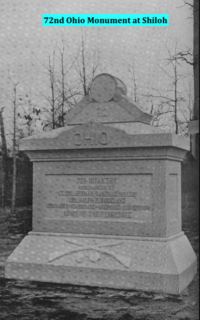
Though Buckland had no previous military experience, Sherman placed him in command of the Fourth Brigade of his Fifth Division of the Army of the Tennessee. The brigade, composed of the 70th, 72nd, and 48th Ohio regiments, met its first test at the battle of Shiloh, where all of the 72nd’s field officers were killed or captured. Of Sherman’s divisions, only Buckland’s brigade was functioning as a unit on the morning of the second day.
Following the Siege of Corinth, General-in-Chief Henry Halleck ordered the occupation of Confederate territory rather than the destruction of the enemy’s army. Halleck assigned Sherman and Grant to west Tennessee and northern Mississippi. Buckland’s brigade took part in protecting railroads connecting the western Confederacy with Richmond. Buckland’s performance at Shiloh gained him the trust and confidence of both Grant and Sherman. On November 29, 1862, Buckland was promoted to brigadier general.
In March, General Buckland and his troops joined Sherman at Vicksburg, where they took part in the battles at Brandon and Jackson, the assaults on and Siege of Vicksburg. Following the surrender of Vicksburg, Buckland commanded Sherman’s Third Division. and then assumed command of the District of Memphis. At Memphis, he organized militia to protect the city and surrounding railroads from General Nathan Bedford Forrest’s guerrilla raids. His uncommon fairness and integrity won the respect of all Memphians.
On January 6, 1865, General Buckland resigned his commission to serve in the U. S. Congress. After serving two terms, General Buckland returned to his Fremont law practice. He not only held the office of Mayor of Fremont, Ohio but he also served as President of the Ohio Soldiers’ and Sailors’ Orphans Home in Xenia, Ohio. Buckland reentered politics to support his former law partner, Rutherford B. Hayes, during Hayes’ presidential campaign. In 1892, Ralph Buckland died at his home on Park Avenue in Fremont.
Ralph Pomeroy Buckland
Born: January 20, 1812
Birthplace: Leyden, Massachusetts
Father: Ralph Buckland 1781 – 1813
Mother: Ann E. Kent 1788 – 1858
Wife: Charlotte Broughton 1817 – 1901
(Buried: Oakwood Cemetery, Fremont, Ohio)
Stepbrother: U.S. Congressman Luther Hanchett, Jr. 1825 – 1862
(Buried: Plover Cemetery, Plover, Wisconsin)
Children:
Ralph Broughton Buckland 1839 – 1880
(Buried: Oakwood Cemetery, Fremont, Ohio)
Ann Kent Buckland Dillon 1841 – 1930
(Buried: Oakwood Cemetery, Fremont, Ohio)
Thomas Stilwell Buckland 1845 – 1846
(Buried: Oakwood Cemetery, Fremont, Ohio)
Caroline Nichole Buckland 1848 – 1864
(Buried: Oakwood Cemetery, Fremont ,Ohio)
Horace Stephen Buckland 1851 – 1917
(Buried: Oakwood Cemetery, Fremont, Ohio)
Mary Jerusha Buckland 1854 – 1860
(Buried: Oakwood Cemetery, Fremont, Ohio)
Alson Kent Buckland 1856 – 1858
(Buried: Oakwood Cemetery, Fremont, Ohio)
George Buckland 1859 – 1939
(Buried: Spring Grove Cemetery, Cincinnati, Ohio)
Education:
Attended Tallmadge Academy in Ohio
Attended Kenyon College
Occupation before War:
Attorney in Fremont, Ohio
1843 – 1845: Mayor of Fremont, Ohio
1848: Ohio Delegate to Whig Party National Convention
1855 – 1859: Ohio State Senator
Civil War Career:
1862: Colonel of 72nd Ohio Volunteers Infantry Regiment
1862: Served under Sherman during the Battle of Shiloh, Tennessee
1862 – 1865: Brigadier General, Union Army Volunteers
1863: Brigade Commander during the Siege of Vicksburg, Mississippi
1863: Received a fracture of right forearm, right hip and side when his horse was frightened
1864 – 1865: District Commander in Memphis, Tennessee
1865: Brevetted Major General in the Union Army
1865: Resigned as Brigadier General on January 6th
Occupation after War:
1865 – 1869: U.S. Congressman from Ohio
Attorney in Fremont, Ohio
1866: Delegate to Philadelphia Loyalists Convention
Delegate to Pittsburgh, Pennsylvania Soldiers Convention
1876: Ohio Delegate to Republican Party National Convention
1877 – 1880: Government Director of Union Pacific Railroad
Had no full usage of his right arm due to his war fracture
Died: May 27, 1892
Place of Death: Fremont, Ohio
Cause of Death: Aneurysm
Age at time of Death: 80 years old
Burial Place: Oakwood Cemetery, Fremont, Ohio
General Buckland Explains the Battle of Shiloh
| Brigadier General Ralph Pomeroy Buckland (Ohio MOLLUS album) |
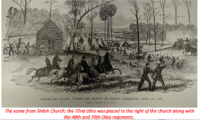
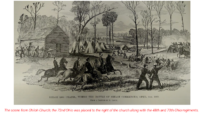
In a postwar article written by Brigadier General Ralph P. Buckland, formerly of the 72nd Ohio Infantry, Buckland tries to correct some of the “false history” and lore that grew up concerning the beginning of the Battle of Shiloh. In particular it was the sensational reporting by Whitelaw Reid of the Cincinnati Gazette that put Buckland and his men in a very unsavory light, claiming that they were surprised in their tents and bayonetted before they had a chance to prepare for battle. Buckland argued that there wasn’t “an article of truth” in Reid’s account (at least concerning his brigade) and set forth to give his perspective.
At the reunion of the Society of the Army of the Tennessee in Cincinnati on April 6, 1881, Gen. Sherman read a paper on the Battle of Shiloh and submitted a map (made by himself) of the battlefield and the location of Union troops on Sunday morning and at the close of the fighting at night. This map he sent to my seat and requested my opinion as to its correctness. From a cursory examination, I expressed the opinion that it was substantially correct. At the same time I said that the commencement of the battle of Shiloh had been grossly misrepresented and the truth about it had never been properly understood by the public. That the first accounts published in the Northern papers from their correspondents, particularly the account of “Agate” (Whitelaw Reid), correspondent of the Cincinnati Gazette, stated that officers and men of my brigade among others were surprised in their tents, etc. and these accounts have been adopted by historians, whereas there is not one word of truth in such statements. I then made a brief statement of the events which occurred within my own knowledge in front of Sherman’s division during the three days preceding the battle and the circumstances of the commencement of the battle Sunday morning and the position of my brigade at the close of the fighting at night.
My remarks were very imperfectly reported in the papers and have been criticized by the Gazette’s correspondent “H.V.B.” I had not read Agate’s account for several years. Upon examination of it as published in The Record of the Rebellion by Frank Morse, I find that he says that the men of my brigade were surprised in their tents, but as this account of Agate has been quoted for history, I will give here the following extract:
“Almost at dawn, Sherman’s pickets were driven in, a very little later, Prentiss’s were; and the enemy were into the camps almost as soon as were the pickets themselves. Here began scenes which, let us hope, will have no parallel in the remaining annals of the war. Many, particularly the officers, were not yet out of bed. Others were dressing, others washing, others cooking, a few eating their breakfast. Many guns were unloaded, accoutrements lying pell-mell, ammunition was ill supplied- in short, the camps were completely surprised- disgracefully might be added, unless someone can hereafter give some yet undiscovered reason to the contrary. The wild cries from pickets rushing in and the few scattering shots that preceded their arrival aroused the regiments to a sense of their peril; an instant afterwards, rattling volleys of musketry poured through the tents, while before there was time for thought of preparation, there came rushing through the woods with lines of battle sweeping the whole fronts of division camps and bending down on either flank, the fine, dashing, compact columns of the enemy.
Into the just aroused camps thronged the Rebel regiments, firing sharp volleys as they came and springing forward upon our laggards with the bayonet, for while their artillery already in position, was tossing shells to the further side of the encampments, scores were shot down as they were running, without weapons, hatless, coatless, toward the river. The searching bullets found other poor unfortunates in their tents, and there, all unheeding now, still they slumbered, while the unseen foe rushed on. Others fell, as they were disentangling themselves from the flaps that formed the doors to their tents; others as they were buckling on their accoutrements others as they were trying to impress on the cruelly exultant enemy their desire to surrender. Officers were bayonetted in their beds and left for dead, who through the whole two days’ fearful struggle, lay in their agony and on Monday were found in their gore, inside their tents, and still able to tell the tale. Such were the fearful disasters that opened the Rebel onset on the line of Prentiss’ division. Similar were the fates of Hildebrand’s brigade in Sherman’s division.
Falling rapidly back through the heavy woods till they gained a protecting ridge, firing as they ran, and making what resistance men thus situated might, Sherman’s men succeeded in partially checking the rush of the enemy, long enough to form their hasty line of battle. Meantime, the other two brigades of the division (to the right) sprang hastily to their arms and had barely done so when the enemy’s line came sweeping up against their fronts, too, and the battle thus opened fiercely along Sherman’s whole line on the right.”
This is certainly a most sickening account and if true, would be a disgraceful picture of a great army surprised and slaughtered by its enemy, but I aver that as to the three brigades of Sherman’s division camped near Shiloh Church, there is not a particle of truth in this story of surprise on Sunday morning. I have no personal knowledge as to Prentiss’ division, but I have good reason to believe that the story as to that division is equally false.
Again Agate writes to the Cincinnati Gazette under the date of April 15, 1862 and after saying that other troops besides Ohio’s ran on Sunday, he says: “The amount of that disgraceful running of Ohio troops on Sunday morning is substantially this: the men were completely surprised; some of their officers were bayonetted in their beds; other were shot in their tents while sleeping, all were under heavy fire from an enemy fairly in their camps before they had an instant for seeking and grasping their weapons. There may have been Spartan veterans who, under the circumstances, would have stood to be shot down rather than disgracefully run, but I suspect that modern armies do not contain many of them.”
In Headley’s History of the Great Rebellion, among other equally absurd and false statements about the surprise at Shiloh, I find this:
“The on-pouring of thousands swept the camps of the front division like an inundation, and the dreadful spectacle of a vast army in disorderly flight before it had time to form a line of battle was presented. So swift was the onset on Buckland’s brigade of Sherman’s division that between the long roll of the drum and the actual presence of the shouting foe in the camp, the officer not yet up and had not time to dress and the troops seizing their muskets as they could, fled like a herd of sheep toward the rest of the division.”
Such are the first reports of the commencement of the Battle of Shiloh given by newspaper correspondents who must have obtained their information from the cowards who sneaked away to the rear on the first appearance of danger. These widely published newspaper reports have been adopted by several historians as true and are still believed by some people. The facts which I shall give will show how utterly false and groundless are all such statements regarding Sherman’s division.
Sherman’s division was organized at Paducah, Kentucky about the 1st of March 1862 and contained four brigades, each of three regiments of infantry as follows:
1) First Brigade- Col. McDowell, commanding. 6th Iowa Infantry; 46th Ohio Infantry (Col. Worthington), 40th Illinois Infantry (Col. Hicks)
2) Second Brigade- Col. Stewart, commanding. 55th Illinois Infantry, 54th Ohio Infantry (Col. Smith), and 71st Ohio (Col. Mason)
3) Third- Col. Hildebrand, commanding. 77th Ohio Infantry, 53rd Ohio Infantry (Col. Appler), and 57th Ohio Infantry (Col. Mungen)
4) Fourth Brigade- Col. Buckland, commanding. 72nd Ohio Infantry (Lt. Col. Canfield), 48th Ohio Infantry (Col. Sullivan), and 70th Ohio Infantry (Col. Cockerill)
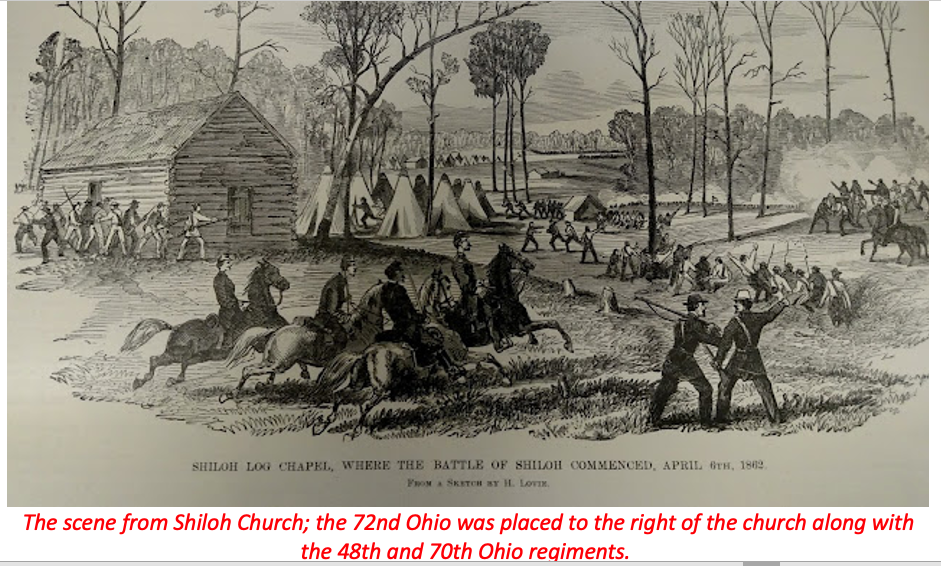
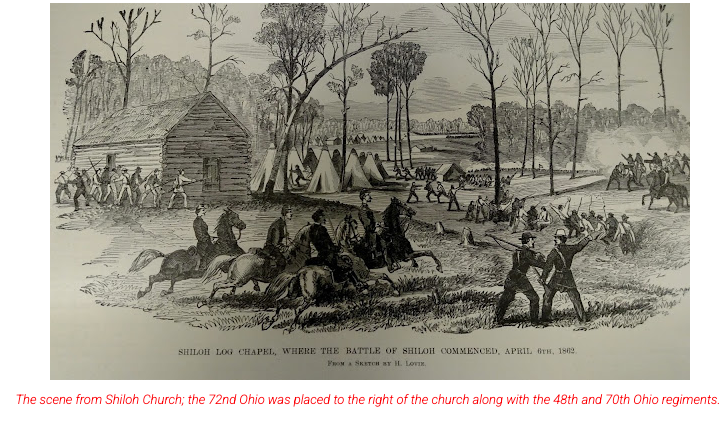
Most of these regiments were new and reported at Paducah mostly unarmed. My brigade embarked on the steamers on the 6th of March and our arms were sent on board in boxes and were distributed to the men on the boats after we left Paducah. We left Paducah on the morning of the 7th of March in advance of Gen. Sherman with orders to report to gen. C.F. Smith near Ft. Henry, he then being in chief command. I reported to Gen. Smith, who ordered me to remain there until further orders. After some delay, we steamed up to Savannah, then up to the mouth of Yellow Creek, above Pittsburg landing, for the purpose of cutting the Memphis & Charleston Railroad, but the extreme high water prevented the accomplishment of that purpose, and we came back to Pittsburg Landing. On the 18th of March, we commenced disembarking at that point and on the 20th we took our position at Shiloh Church fronting towards Corinth. The road leading from Pittsburg Landing to Corinth passes close to and on the left of the church. The right of Hildebrand’s brigade rested on the road and the left of mine at the church, there being only a few rods between the two brigades. The 70th Ohio was on the left, 72nd Ohio on the right, and 48th Ohio in the center. McDowell’s Brigade was some 30 rods to the right of mine, there being a considerable ravine or valley between the two. Stewart’s Brigade was located, as I understood, about one mile to the left of Hildebrand’s and to the left of Prentiss’ Division to guard an important crossing of Lick Creek.
In front of our line was Owl Creek which is a crooked stream and ran nearer our line at the church than at any other point. According to my recollection, the creek was about 30 rods from the left of my brigade and about twice that distance from the right. The space between my color line and the creek was covered with woods and underbrush and not very thickly. Along the creek it and beyond it was densely wooded. There was a bridge across the creek on the Corinth Road and we built a bridge about in front of the center and another to the front and right of the brigade. It seems to me that this latter bridge was near a half mile from the right of my brigade. Something like a mile in front of our line were large open fields, beyond which our picket line was established and beyond these fields were dense woods for several miles. I don’t know whether any regular cavalry pickets were established in front of our picket line or not, but the 5th Ohio Cavalry were out in front of us frequently and had frequent skirmishes with the Rebel cavalry for 10 days or two weeks before the battle.
On Thursday April 3, Gen. Sherman ordered me to take my brigade to the front on the Corinth Road four or five miles, send out scouting parties, and see what I could discover, but cautioned me not to be drawn into a fight with any considerable force of the enemy. I marched my brigade to the forks of the road about five miles from our line where I halted and formed the brigade in line between the two roads facing towards Corinth. Both roads, as I understood, led to Monterey, about two miles farther towards Corinth. I then sent two companies of the 70th Ohio under Major McFarran forward on the left hands and two companies of the 72nd Ohio under Major Crockett on the right hand road. They both encountered Rebel cavalry pickets within less than half a mile and commenced skirmishing with them. Major Crockett soon after sent word to me that there was a large force of cavalry in sight and that he would need reinforcements. In accordance with my instructions not to be drawn into a fight, I ordered Majors Crockett and McFarran to return to the brigade. While there, several of the soldiers reported to me that they distinctly heard the long roll in the direction of Monterey. I did not. Soon after the scouting companies returned, we commenced our march back to camp when we arrived a little before dark and I reported immediately to Gen. Sherman.
The next day, April 4, about 2:30 in the afternoon, a considerable force of Rebel cavalry attacked the left of m picket line, capturing a lieutenant and seven men of the 70th Ohio. Happening at the time to be near the right of the line where the 72nd Ohio was drilling under Major Crockett, I rode in the direction of the firing, directing Major Crockett to follow with the regiment. On ascertaining what occurred, I sent Lt. Geer of the 48th Ohio, acting as my aide, to inform Gen. Sherman who soon returned with word that Gen. Sherman would send 150 cavalry to pursue the enemy. In the meantime, on learning from Major Crockett that he had sent Co. B of the 72nd Ohio to scout outside the picket line, I told him that was wrong; the officers and men being inexperienced, I feared they would get into trouble and directed him to take Co. H and find Co. B and return with them to the regiment as soon as possible. Soon after, we began to hear musketry firing in front. Col. Cockerill arrived on the picket line with several companies of the 70th Ohio. The firing in our front became constant and more regular. We therefor concluded that our men were intercepted and unable to return as ordered. I took three companies of the 72nd Ohio (A,D,I) and started into the woods in the direction of the firing, directing Col. Cockerill to come to my aid if he heard heavy firing. We had not gone far when we met some of Major Crockett’s men and learned that they had been intercepted and attacked before reaching Co. B, the Major either killed or captured, and that Co. B was surrounded by a large force of Rebel cavalry. About the same time there came upon us one of the severest rain and thunderstorms I ever witnessed. My boots, worn outside of my pants, filled with water and ran over the tops. The storm stopped us and the firing for a time, but as soon as the storm was over, the firing commenced again and we pushed on with as much speed as possible, my men being deployed in line and I riding 8-10 rods in front.
About two miles from the picket line, on reaching near the top of something of a hill, I discovered through the thick underbrush that I was nearer a line of Rebel cavalry faced from me than I was to my own line, and the Rebels just at that moment gave a cheer evidently preparatory to charging on Co. B. I waved my hand to my men, indicated that I desired them to hurry up. As they came in sight of the Rebel line, distant only a few rods, they opened a destructive fire, taking the enemy completely by surprise, and threw them into such confusion that they made but a short stand. My men charged upon them and drove them from the field, killing a considerable number of men and horses and capturing several prisoners, and Co. B was saved. I soon discovered that the enemy was reforming in great force with the evident intention of charging back upon us, and whilst I was getting my men in position to meet the charge, Major Ricker came up with his 5th Ohio Cavalry and inquired where the enemy was. I pointed them out to him and he immediately charged them, dispersing them and capturing several prisoners. I followed him as rapidly as I could. We pursued about a mile when the enemy commenced firing artillery at us. Some of Major Ricker’s men charged right into a Rebel battery and one of his men was killed at the battery. We discovered that the enemy had a large force of infantry and artillery in line. We thereupon deemed it prudent to retire to our own lines with as little delay as possible.
When we reached our picket line, Gen. Sherman was there with several regiments in line of battle. When I rode up to him at the head of my column with about 15 prisoners close behind me, the General asked me what I had been doing. His manner indicated that he was not pleased. I replied that I had accidentally got into a little fight and here was some of the fruits of it, pointing to the prisoners. He answered that I might have drawn the whole army into a fight before they were ready and directed me to take my men to camp. I knew enough to know that my proceedings were irregular but consoled myself that I had saved one of my companies from annihilation whatever may be the consequences to me. Soon after reaching camp, one of Gen. Sherman’s aides came and said “The General desires you to send him a written statement of what you have done and seen today,” which I did that same evening. Gen. Sherman afterward informed me that he send my statement to Gen. Grant that same night.
On Saturday April 5th, I was along the picket line several times during the day and saw Rebel cavalry at different points in front of the line. The pickets reported seeing infantry and artillery. I saw Lt. Col. Canfield, commanding the 72nd Ohio, Col. Hildebrand, and several other officers of the division on the picket line watching the movements of the enemy in our front. I talked with Col. Hildebrand and other officers about the situation and it was the belief of all that the enemy intended to attack us, either during the night or early in the morning and I talked with Col. Hildebrand particularly about the measures we ought to take to prevent a surprise. Col. Hildebrand went with me to Gen. Sherman’s headquarters and we told him what we had seen and that we apprehended an attack. I saw Gen. Sherman several times during the day and talked with him about the matter. He said we must strengthen our pickets and instruct them to be vigilant and keep our commands in readiness for an attack at any time. He said he was embarrassed for want of cavalry, and that his cavalry had been ordered away that morning and that the cavalry he was to have in their place had not arrived and that, as soon as his cavalry reported, he would send them to the front and find out what was there. My understanding was that, by order of Gen. Grant, there had been a reassignment of both cavalry and artillery which was being carried into effect on Saturday.
Late in the afternoon, I had a consultation with the commanders of my regiments and it was agreed that several additional companies should be sent forward to strengthen and sustain the picket line which was done accordingly. I also established a line of sentinels from my camp to the reserve of the pickets under the command of an officer with instructions to notify me instantly of any alarm on the picket line. Officers and men of my brigade were all aware of the near approach of the enemy, all were expecting an attack and such precautions were taken that a surprise was impossible. The same must have been true in Hildebrand’s and McDowell’s brigades for there could hardly have been an officer or soldier in the three brigades ignorant of the fight on Friday or of the presence of the enemy in our front on Saturday. Officers of my brigade were instructed on Saturday evening to be prepared for a night attack, and to have their men up and at breakfast as soon as daylight or before.
As well may be imagined, I was very uneasy during the night and slept very little. I was up before daylight and ordered my horse fed and saddled. Soon after daylight, before I had quite finished my breakfast, word was brought that the enemy was advancing in strong force. I immediately ordered the long roll, mounted my horse and rode toward the picket line. I found the reserve of the pickets had fallen back across the bridge in front of the right of my brigade and the pickets were skirmishing with the enemy’s advance and slowly falling back. I instructed the reserve of the pickets to make a stand at the bridge, take to the trees and keep the enemy back as long as they could. I then returned and found my brigade formed on the color line, awaiting orders. I rode through and along the line and spoke to Cols. Sullivan and Cockerill and to Lt. Col. Canfield and others in passing, telling them that the Rebels were coming and that we should soon have a big fight, and cautioned them to be ready.
I rode to Gen. Sherman’s headquarters 80 to 100 rods to the left and rear of my camp and about in the rear of the right of Hildebrand’s Brigade. I informed Gen. Sherman that I had been to the front and found the enemy advancing in strong force, and my pickets falling back; that my brigade was in line, ready for orders. He answered, “You must reinforce the pickets. Send a regiment forward to keep them back.” I returned and met Col. Sullivan and Lt. Col. Parker on their horses in the rear of the 48th Ohio. I told them what Gen. Sherman’s orders were. They both requested me to send their regiment which I designed to do as speedily as possible across the bridge in his front, take position in the woods beyond with the pickets and keep the enemy back as long as possible. When the head of his column reached the bridge, he discovered that the enemy was forming in line of battle under the bank on our side of the creek to the right. He fell back a short distance and reported the fact to me. I first orders Companies A and B of the 72nd forward as skirmishers and in a few minutes ordered the 72nd and 70th to advance, and the 48th to form on the advanced line. We advanced from 30-40 rods to within full view and short musket range of the enemy’s line and the fight commenced simultaneously on both sides.
The right of the brigade was considerably in advance of the left to take advantage of the formation of the ground, the creek being much nearer to the left than the right of the brigade color line. Up to this time there had been no artillery firing or heavy musketry on any part of the line. My brigade had been in line awaiting orders full one hour before it advanced and before any fighting anywhere within our hearing, except skirmishing by the pickets, and the brigade fought with great bravery in this position for more than two hours, driving the enemy back under the bank of the creek as often as they attempted to advance; and the right of the brigade was advanced considerably forward during the fighting to obtain a better position which widened the space between my right and the left of Col. McDowell’s brigade. I sent an officer to say to Col. McDowell that I feared the enemy would turn my right and get in between the brigades and asked him to look to it. Col. McDowell sent Col. Hicks with the 40th Illinois who took position on the right and rear of my right flank where he remained at least one hour. I remember riding up to Col. Hicks and speaking with him twice during the time he was there. The first time I asked if he did not think my men were fighting bravely. He replied, “Yes, they are doing splendidly.” The second time was after we had been fighting about two hours and I found the 72nd was getting out of ammunition. I asked Col. Hicks if he could hold my position until the 72nd could replenish their ammunition. He replied that he was ordered not to engage in the fight unless attacked in his position.
After we had been fighting for about one hour, one of Gen. Sherman’s aides came to me and said, “The General desires to know whether you can hold your position.” I replied, “Tell Gen. Sherman that my men are fighting bravely and I will hold my position.” At that time I had not the least idea that we would be compelled to go back, although Lt. Col. Canfield, commanding the 72nd, had been mortally wounded and carried from the field, leaving the 72nd without a field officer, and many company officers and men had been killed and wounded. My adjutant’s horse was killed and my own horse wounded just in front of the saddle was bleeding profusely. As I rode along the line, speaking to officers and men, I found them everywhere standing up the work bravely and when I saw that my brigade was making a glorious fight and beating back every attempted advance of the enemy, I felt highly gratified and full of confidence. As the 72nd was without a field officer to command, the senior captains of both Companies A and B were both sick and unable to command their companies, Capt. Wegstein of Co. H was killed early in this fight, and other company officers had been wounded, so I with the efficient aid of Adjutant Eugene Rawson, who displayed great courage from the beginning to the end of the battle, having to command the 72nd, as well as the brigade, spent most of my time on the right of the line, the 48th and 70th having all of their field officers. Consequently I did not know what was going on in Hildebrand’s Brigade on my left. I discovered, however, that the enemy was bringing up heavy reinforcements in my front and after we had been fighting for about an hour and a half, I sent word to Gen. Sherman that the enemy was being heavily reinforced and that I would need help. He returned for answer that he could not send me any reinforcements and that I must do the best I could. This answer convinced me that matters were going wrong somewhere and that sooner or later I would be compelled to fall back, and so I informed my quartermaster Lt. Daniel M. Harkness and my surgeon Dr. John B. Rice, and directed them to make arrangements to take the sick and wounded to the rear as speedily as possible.
We maintained our position along the whole line for more than two hours, when the 72nd was compelled to fall back for ammunition, finding it impossible to distribute it along the line under the fire of the enemy; but the enemy did not advance at that point. The 72nd quickly refilled their cartridge boxes and were advanced into line again and were about ready to renew the fight when I received an order from Gen. Sherman to fall back to the Purdy Road. The 72nd marched by the right of companies to the rear through their camps. In the meantime, Hildebrand’s Brigade had been fiercely attacked and given way so that my left flank was completely turned and Col. Cockerill was compelled to face his regiment to the left. We fell back in good order to the Purdy Road and were ready to renew the fight when we were shoved out of the road and thrown into confusion by Behr’s battery of artillery which came rushing along the road at full speed from the right and a mass of flying men from Hildebrand’s Brigade on the left. The enemy was so close upon us that it was impossible to form again along the Purdy Road. Back of the road was all woods and thick underbrush and I found great difficulty in riding through it. Farther back, some 40 rods, it was more open and I succeeded in forming a new line, but in the confusion the 70th Ohio became separated from the rest of the brigade, but was constantly engaged in the fight farther to the left, and rejoined me later in the day. Soon after leaving the Purdy Road I received an order from Gen. Sherman to go to the left and as soon as I had succeeded in rallying my men, I attempted to obey the order, but encountered a superior force of the enemy and was compelled to fall back again. We were all day contending against superior numbers and resisting their advance at every point as long as we could.
Late in the afternoon, after the last repulse of the right of our line, my brigade was near a bridge across Snake Creek which, I was informed by some staff officer whom I did not know, it was very important to protect, as Gen. Wallace would have to cross his division over it coming from Crump’s Landing. I placed my brigade in position to defend the bridge but after remaining there for some time and no enemy appearing, I was not satisfied that I was where I ought to be, and rode to the left to find Gen. Sherman and get his orders. I had not gone far when I found a new line being formed and not finding Gen. Sherman, I said to the officer in command that if desired, I would form my brigade on the right of his line, which he said he would be glad to have me do.
When I returned to my brigade, to my surprise, I learned that the 48th Ohio had marched away toward the Landing. I immediately formed the 70th and the 72nd on the right of the new line about one and a half miles from the Landing. Soon after my line was formed, Gen. Sherman came along our front and said to me “You are just where I want you. Remain where you are until further orders.” About dark, Gen. Wallace’s division commenced arriving and formed to the right of my brigade. About 10 o’clock, my quartermaster, Lt. Harkness, came to us from the Landing. I learned from him that the 48th Ohio was at the Landing, and had been ordered by Gen. Grant in position to defend his batteries and that the regiment had done good service there. I sent orders by Lt. Harkness to Col. Sullivan to join me with his regiment forthwith, but owing to the rain and darkness he did not arrive until just after daylight. Cols. Cockerill and Hildebrand and myself tied our horses to trees and lay down together for the night in the rear and close to my brigade line. The Rebels’ line was only a short distance from us on the other side of a ravine.
Gen. Wallace opened his batteries on the enemy early Monday morning and the three regiments of my brigade were formed in line of battle, with all of the field officers present except Lt. Col. Canfield and Major Crockett of the 72nd. Sherman’s division during the day occupied a position on the left of Wallace’s division and we kept steadily up with his left, frequently under very severe fire from the enemy. Gen. Wallace in his report says that at one time “the right of Sherman’s division hastily fell back.” I think Gen. Wallace is mistaken. I know that my brigade was not driven back one rod on Monday. On one occasion when Gen. Sherman ordered an advance under a heavy fire of musketry and artillery, I gave the order, but at that moment, the men seemed to hesitate. I immediately rode to the color bearer of the 72nd Ohio, took hold of the flagstaff, and conducted the bearer to the point indicated. The whole brigade quickly advanced and was on the desired advanced line as soon as I was. Col. Sullivan was wounded and taken to the rear.
Our forces drove the enemy back over the same ground that they drove us the day before. The fighting was severe but not so destructive, at least to our troops, as on Sunday. We drove them back more rapidly than they drove us. About 4 P.M. the enemy was in full retreat, and about 5 P.M. my brigade took possession of its camps at Shiloh Church. The Rebels took such articles as they could on their hasty retreat, but my tents and bed I found in good condition and I enjoyed a good sleep Monday night.
So it seems, misunderstanding, misinterpretation, misdirected belief, and so-on can often lead to false reporting and sharing of a story. The story or the tale, if told enough times, however, becomes perceived truth, though it is not truth.
Clearly, from Buckland’s written account of the beginning of the battle in his sector on Sunday morning, April 6, they we’re not caught off guard and loafing. They were aware and ready on Saturday evening, the eve before the battle, and were poised and prepared on Sunday morning as well.
This is why the written word, whether from a newspaper, book or etc. should not always be accepted at face value, but should be examined and contrasted in the light of other primary and secondary sources. Good blog here!
Related Items
-
Civil War Period Silver Card Case Brought Home by F.M. Gibson, 40th Mass. Infantry
$625Civil War Period Silver Card Case Brought Home by F.M. Gibson, 40th Mass. InfantryMay 2, 2020 -
Renown Richmond Sculptor Edward V. Valentine’s Personal Photographs of General Robert E. Lee Utilized by Valentine When Sculpting a Statuette of Lee
$4,200Renown Richmond Sculptor Edward V. Valentine’s Personal Photographs of General Robert E. Lee Utilized by Valentine When Sculpting a Statuette of LeeMarch 29, 2024 -
Id’d Civil War Camp Mirror – Lt. and Quartermaster John S. Ives 25th Connecticut Infantry
$750Id’d Civil War Camp Mirror – Lt. and Quartermaster John S. Ives 25th Connecticut InfantryDecember 24, 2021 -
Rare Civil War Officer’s Cloak Possibly Id’d to Gen. Horace Porter
$6,500Rare Civil War Officer’s Cloak Possibly Id’d to Gen. Horace PorterMarch 22, 2023