
Id’d Pair of Civil War Field Glasses in their Original Case – Major R.B. Browne Surgeon U.S. VolunteersDecember 13, 2025




 Civil War U.S. Regul...$1,500
Id’d Pair of Civil War Field Glasses in their Original Case – Major R.B. Browne Surgeon U.S. Volunteers
$950
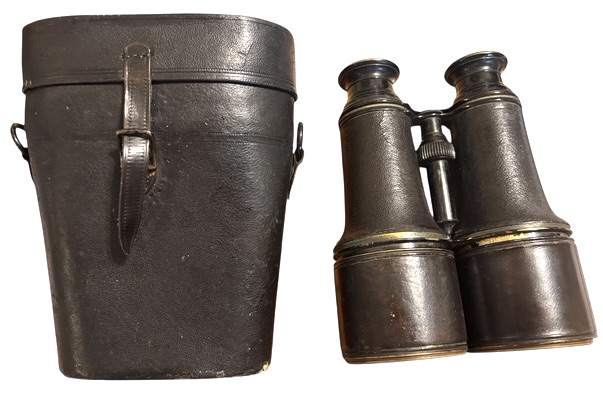
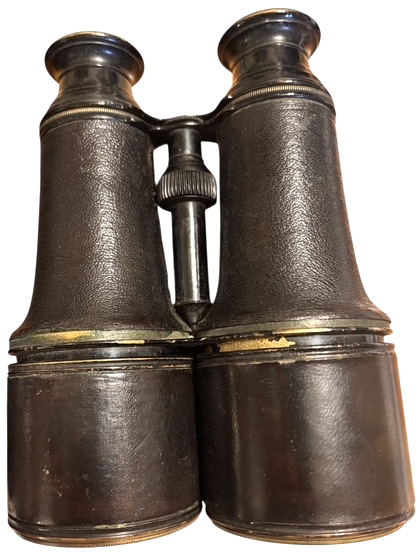
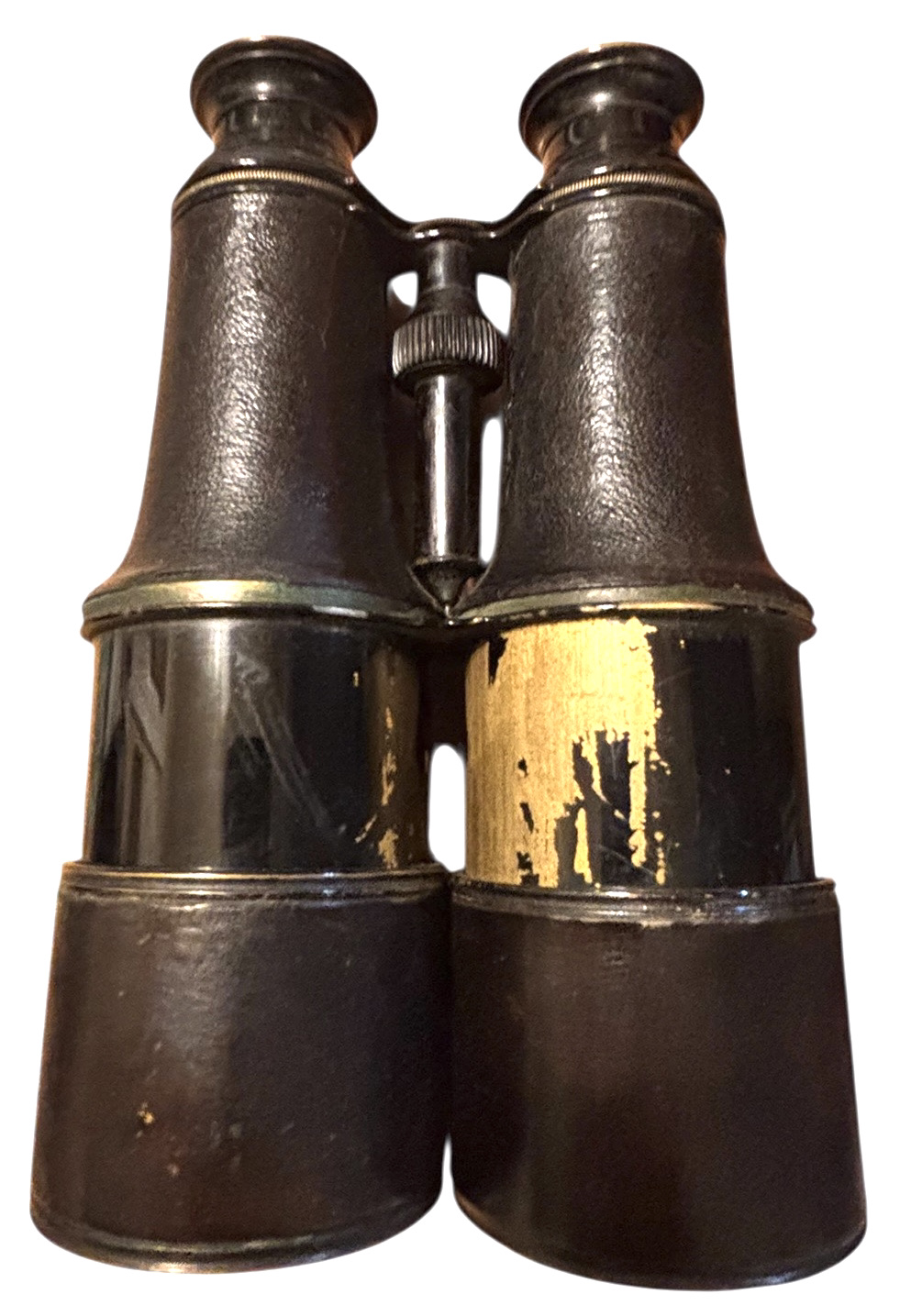
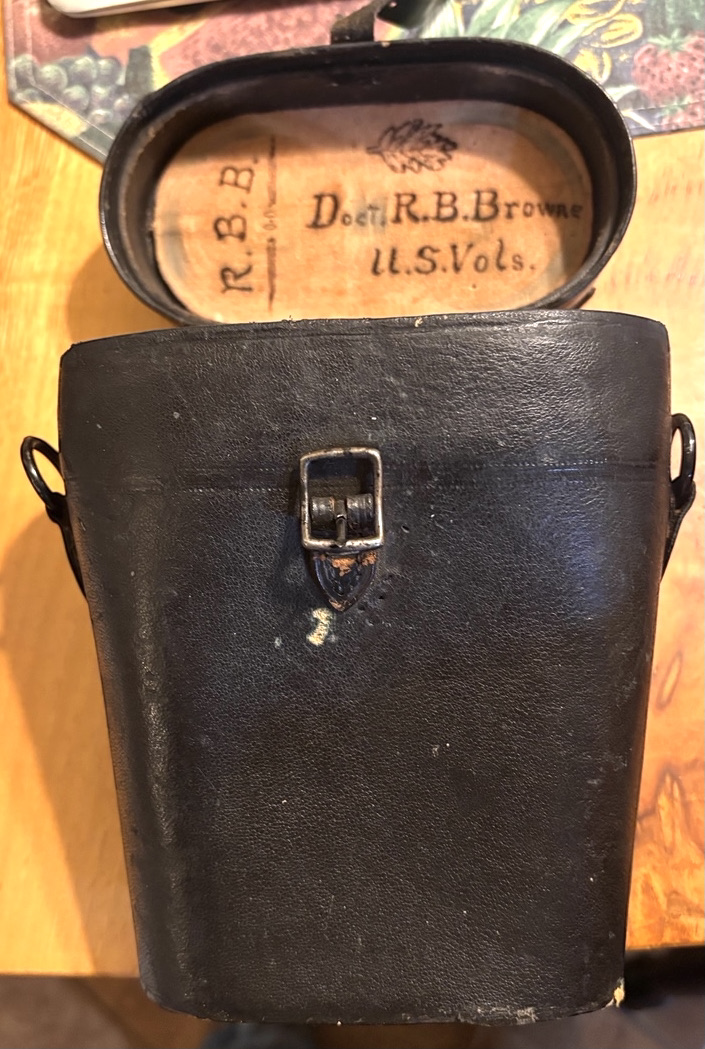
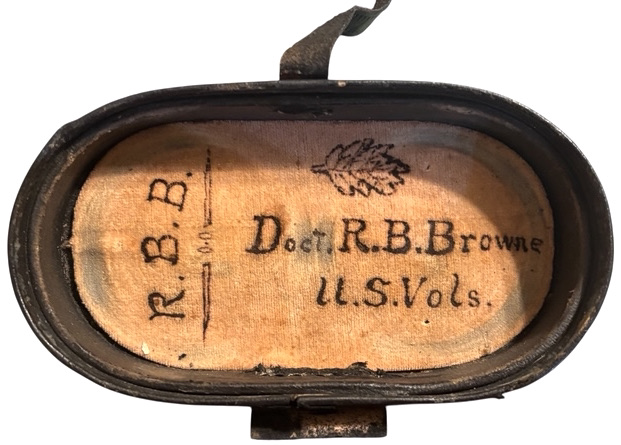
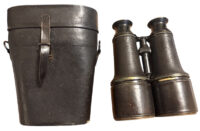
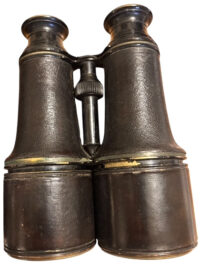
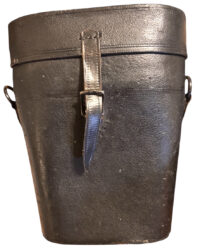
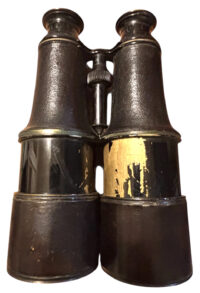
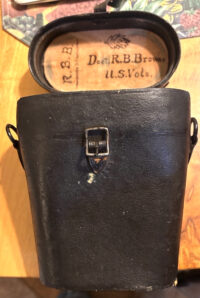
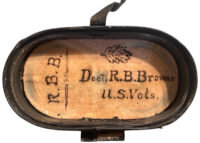
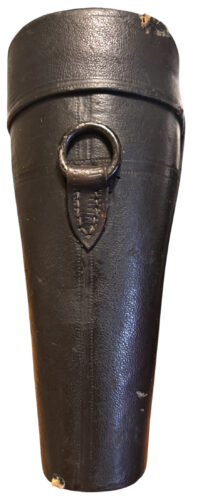
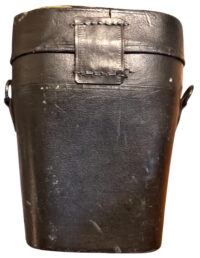
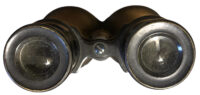
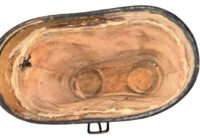
Id’d Pair of Civil War Field Glasses in their Original Case – Major R.B. Browne Surgeon U.S. Volunteers – We have had numerous Civil War field glasses, but only a few that still retained their original cases; additionally, we have only had one or two pairs that are definitively id’d – this exceptional example has the following hand-inked on the interior of the underside of the cover flap:
“Doct. R. B. Browne
U.S. Vols.
B. B.”
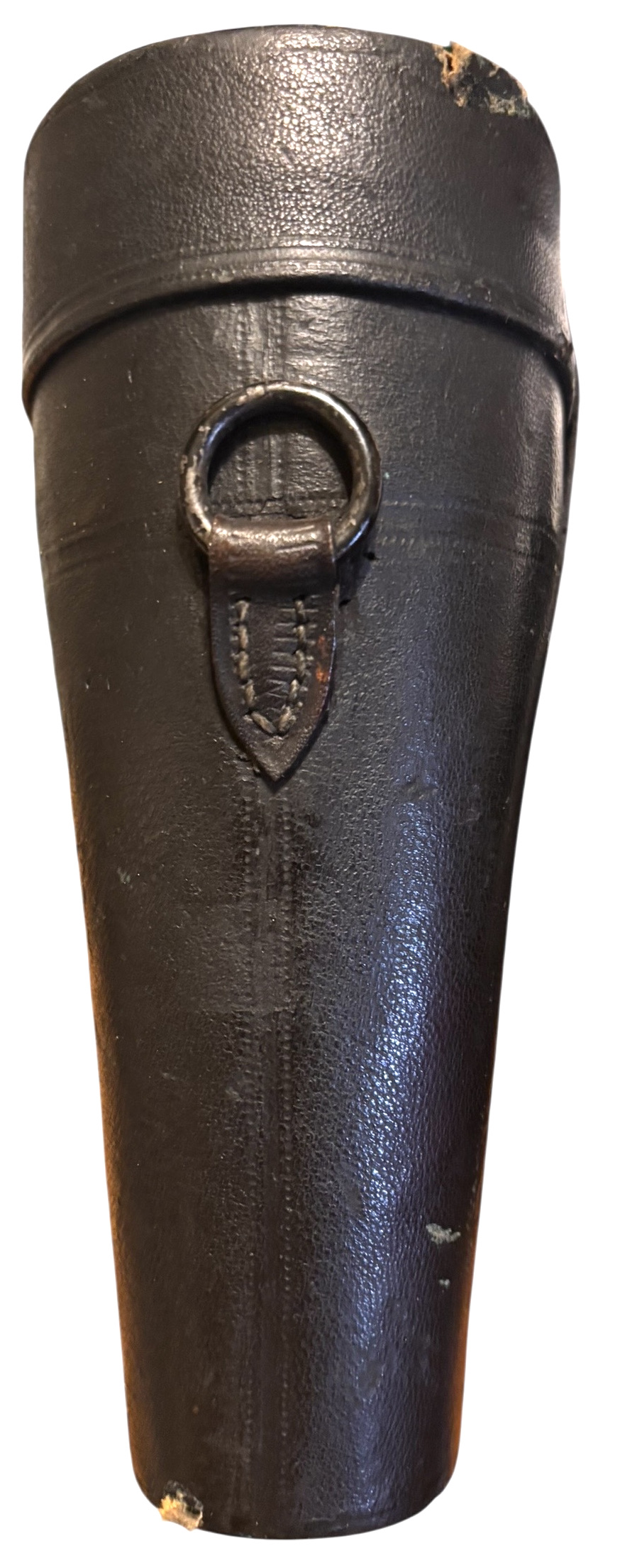
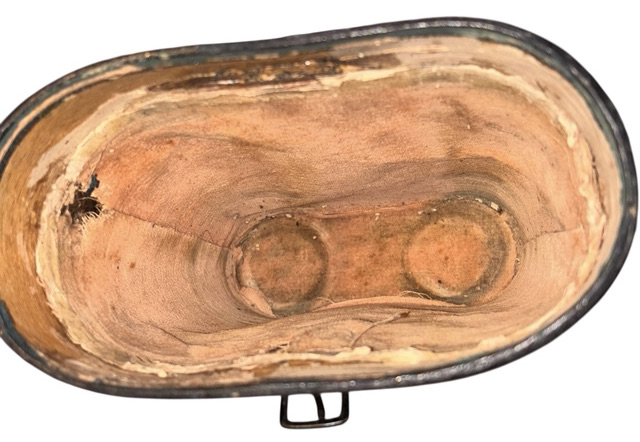
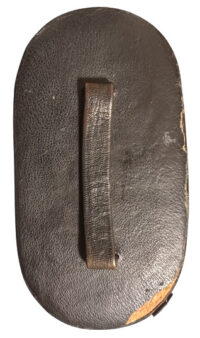
Additionally, Dr. Browne inked an oakleaf above his name, indicative of his military rank of Major. We have only found a cursory listing for Dr. Browne, enumerated below, so currently we are unsure of his military enlistment dates and wartime activities. The field glasses remain in excellent shape, with good optics; they conform to war period construction with a “straight” bridge between the two eyepiece lenses; the eyepiece lens holders are japanned brass; the barrels retain their original, pebble-grain leather; the focus stem functions and is constructed of gutta percha or a composite amalgam; both sunshades are in place and functional. The case also remains in superb condition, with the cover in place, with a closure strap and japanned buckle; japanned rings for attachment of a shoulder strap, are affixed to both sides of the case; the interior is lined with a thin layer of beige velvet. This is an excellent and rare set of identified field glasses. Dr. Brown’s name, as often the case in the army annals, omits the letter “e” at the end of his last name.
Robert Brown
Residence was not listed.
Enlisted as a Major (date unknown).
He was commissioned into US Regular Army Medical Staff Vols.
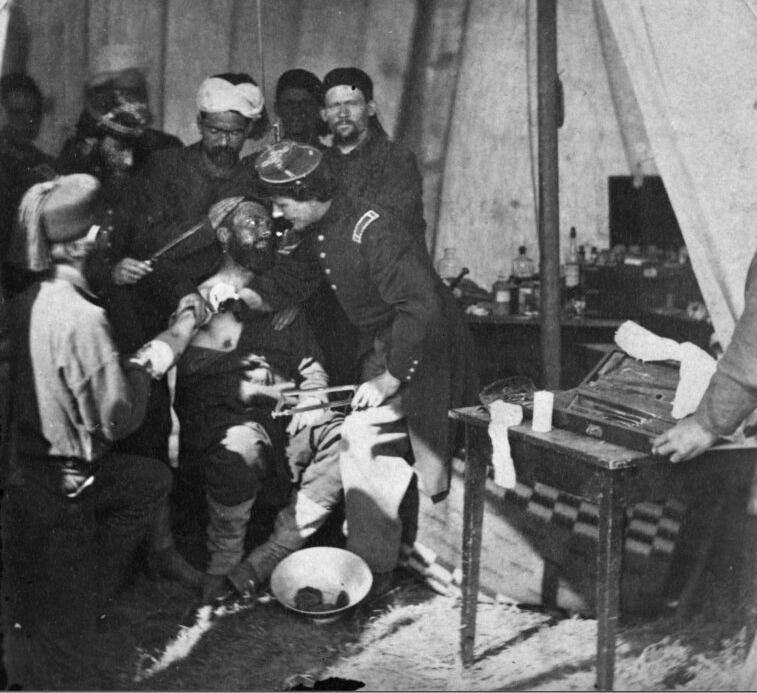
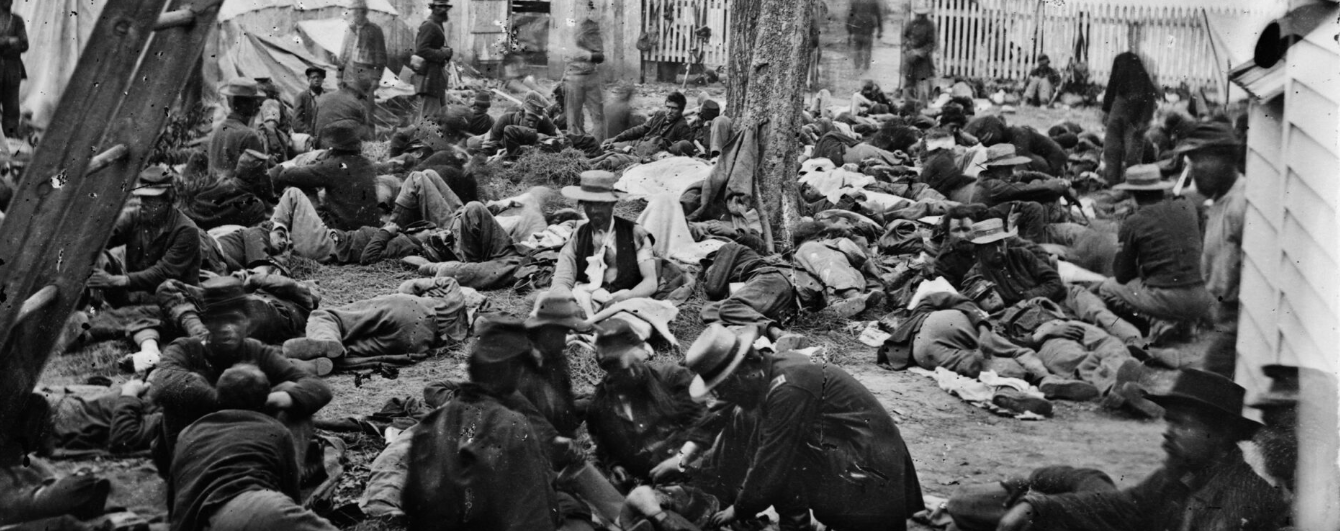
The U.S. Regular Army Medical Staff during the Civil War was the small, pre-war corps, vastly expanded by volunteers (state-commissioned) and contract “acting” surgeons, plus enlisted personnel like Hospital Stewards, all serving under a reformed Medical Department led by a Surgeon General, creating a large, complex system to treat millions of wounded soldiers despite initial chaos and lack of resources, with surgeons often working with quick, battlefield-focused methods like amputations.
Key Personnel & Roles:
- Regular Army Medical Corps: The small, professional core of doctors (surgeons, assistant surgeons) present when the war began, expanded significantly.
- Surgeons & Assistant Surgeons of Volunteers: State-appointed doctors attached to regiments, numerous by war’s end (over 500 surgeons, 3,800+ assistant surgeons).
- Acting Assistant Surgeons (Contract Surgeons): Civilian physicians hired to fill gaps, especially in general hospitals, paid like first lieutenants but without commissions.
- Hospital Stewards: Crucial enlisted men with pharmacy/chemistry skills, serving as pharmacists, nurses, and managers in hospitals.
- Enlisted Men: Male nurses (often convalescents), orderlies, and attendants provided essential care.
- Nurses: Female volunteers and religious sisters (e.g., Sisters of Charity) also served, filling critical needs.
Medical Department Structure (Union):
- Reorganization: Congress reformed the system in 1862, elevating the Surgeon General and creating better control over patient care.
- Field vs. Hospital: Regulars and volunteers served in regiments; contract surgeons often in general hospitals; stewards and enlisted men in both.
- Challenges: Inadequate supplies, lack of ambulance corps, and overwhelming casualty numbers forced rapid, sometimes crude, medical practices, with amputations common.
Insignia: Medical officers and stewards wore green insignia, distinguishing them, though the system was initially chaotic.
https://www.medicalantiques.com/civilwar/Civil_War_Articles/USA_Medical_Department_History.htm
It is seen, therefore, that during this great war the work of the Medical Department was performed by the regular medical officers and the corps of volunteer surgeons and assistant surgeons, both commissioned by the President, and by the large body of regimental medical officers commissioned by the Governors of States. In addition to these, civil physicians, known as acting assistant surgeons, were employed under contract, mostly in the wards of the general hospitals established in the vicinity of the national capitol and many of the large cities. Just before the close of the war another class of medical officers was authorized. Regimental surgeons whose regiments had been mustered out on account of the expiration of their terms of service were offered the position of acting staff surgeons as an inducement for them to continue in service; and a few were thus led to return, for assignment in the field or base hospitals. The ambulance corps must also be mentioned as a part of the machinery of the Medical Department. An ambulance service consisting of men specially enlisted and under the command of medical officers was urged by General Hammond, but no action was taken at the time on his suggestion. Somewhat later, however, a corps was organized from detailed men, with lieutenants as brigade and division officers, and a captain on the staff of the commanding general as chief of ambulances of the army corps. These officers were practically acting quartermasters for the Medical Department so far as related to the transportation of the sick and wounded.
Related Items
-

1845 – 1855 Rollup Traveling Surgeon’s Kit
1845 – 1855 Rollup Traveling Surgeon’s KitSeptember 17, 2025 -
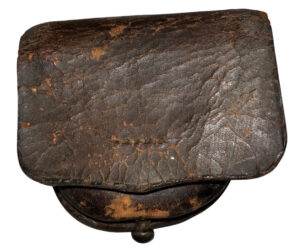
Confederate Cap Box with Lead Finial and Soldier’s Name Scratched Inside the Cover Flap
$850Confederate Cap Box with Lead Finial and Soldier’s Name Scratched Inside the Cover FlapSeptember 8, 2025 -
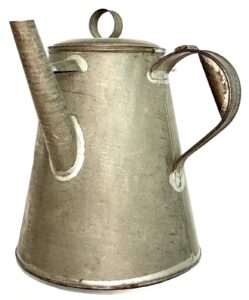
Civil War Period Tinned Side Spout Coffee Pot
$110Civil War Period Tinned Side Spout Coffee PotSeptember 17, 2024 -
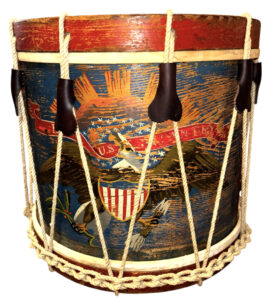
Original Civil War Regulation Eagle Drum
Original Civil War Regulation Eagle DrumSeptember 27, 2025