
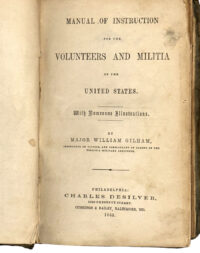
Id’d Confederate Officer’s Military Manual – “Manual of Instruction for the Volunteers and Militia of the United States” Major William Gilham, Published in 1861 – Inked and Written inside the Manual – 1st Lt. E.F. Cowherd Adj. 13th Va. InfantryJanuary 14, 2026
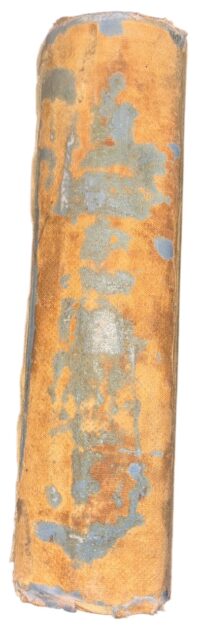
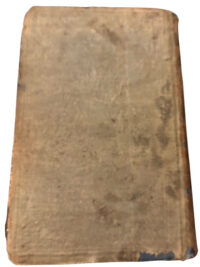
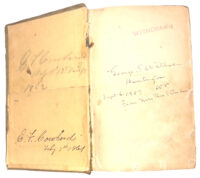
Id’d Confederate Officer’s Military Manual – “Manual of Instruction for the Volunteers and Militia of the United States” Major William Gilham, Published in 1861 – Inked and Written inside the Manual – 1st Lt. E.F. Cowherd Adj. 13th Va. Infantry
$750
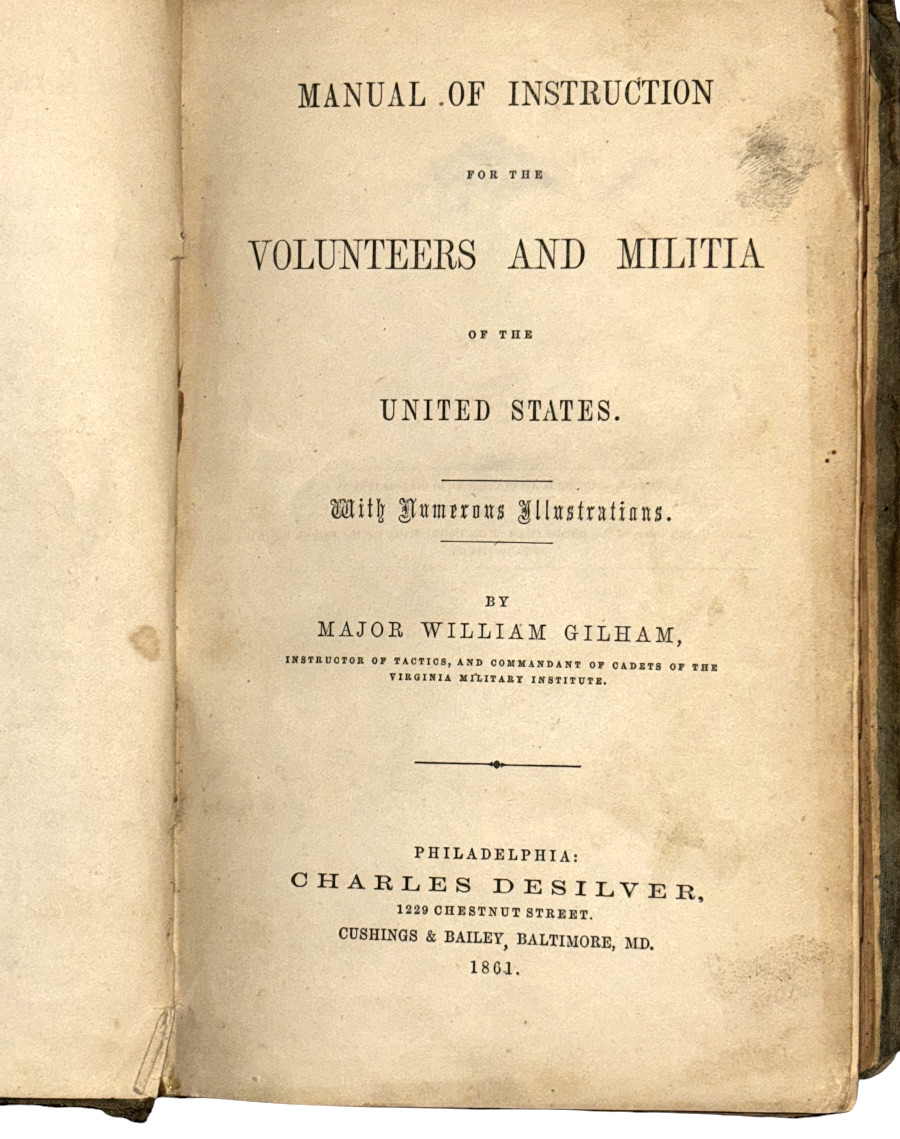
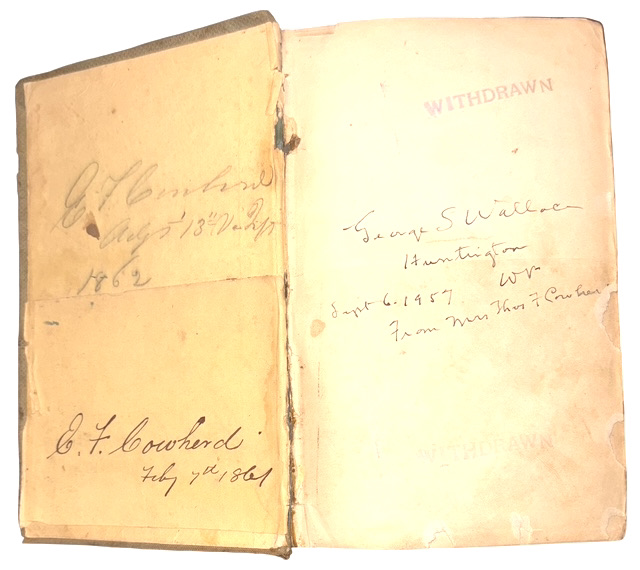
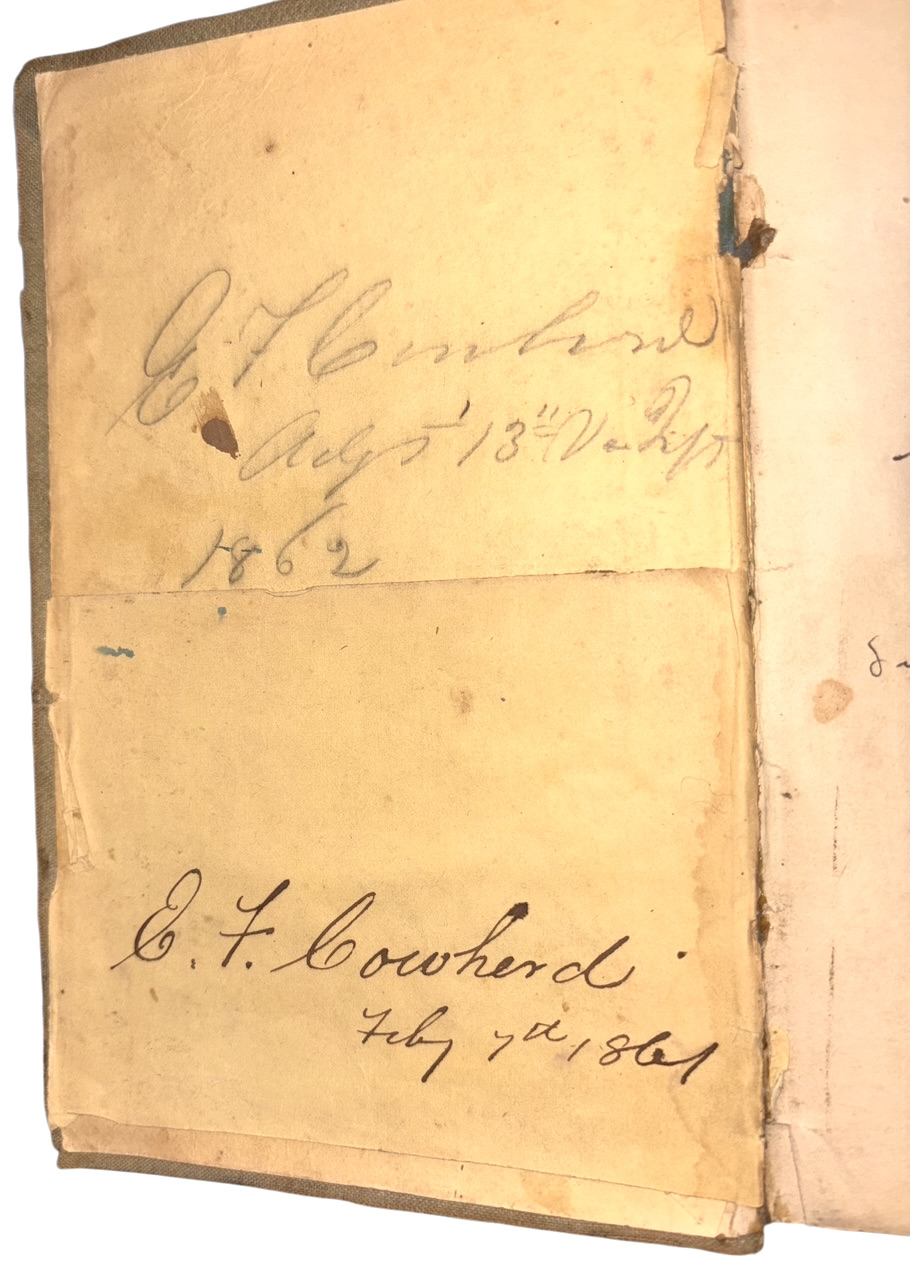
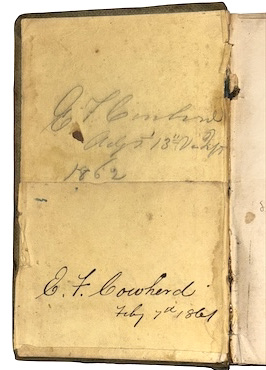
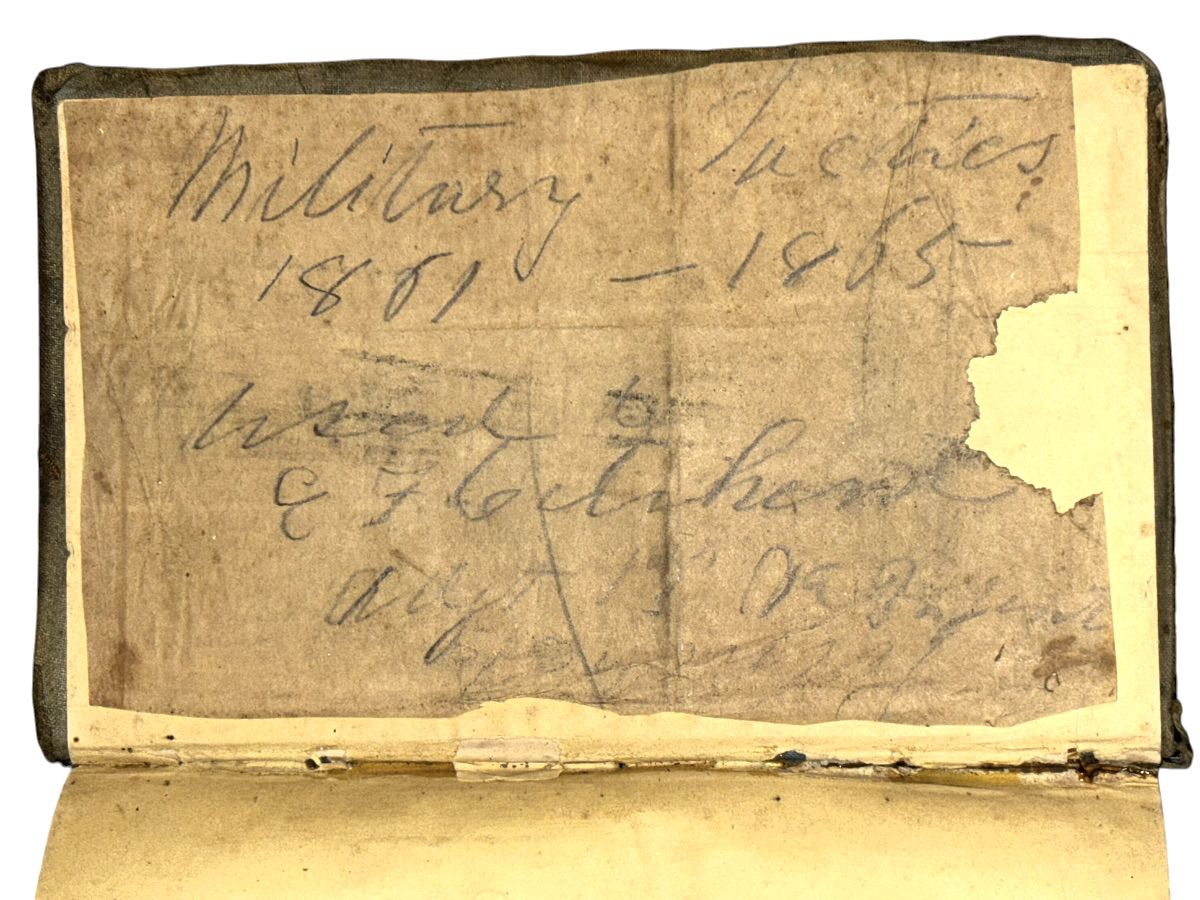
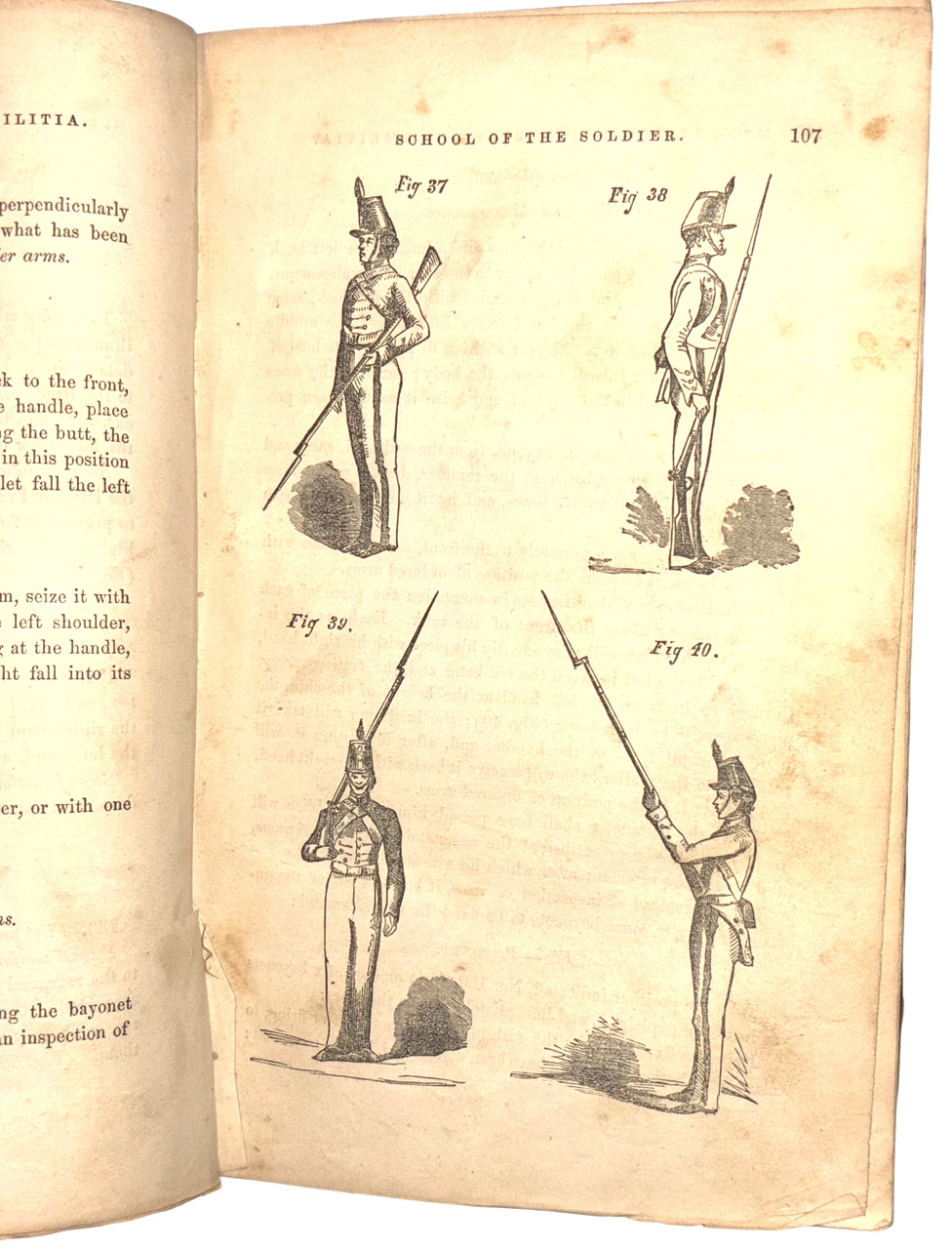
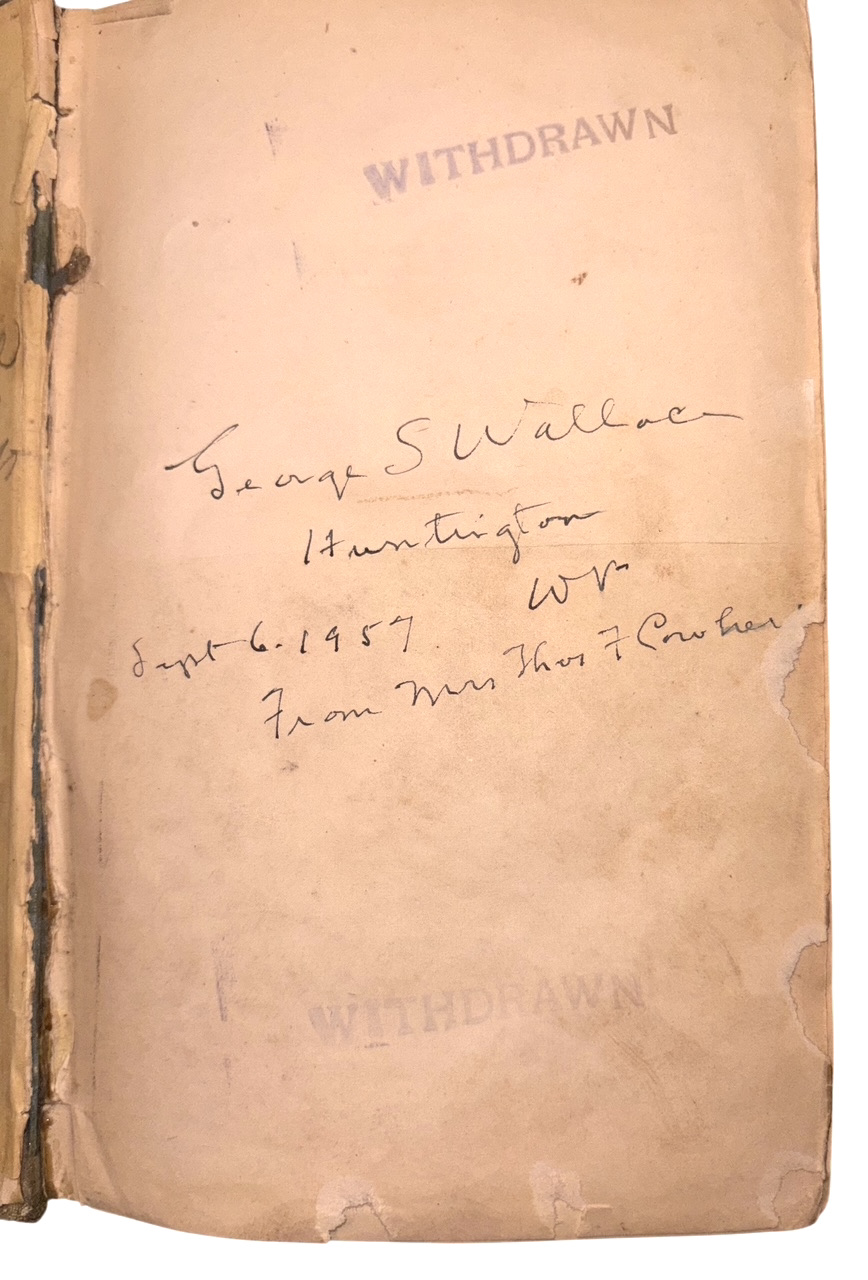
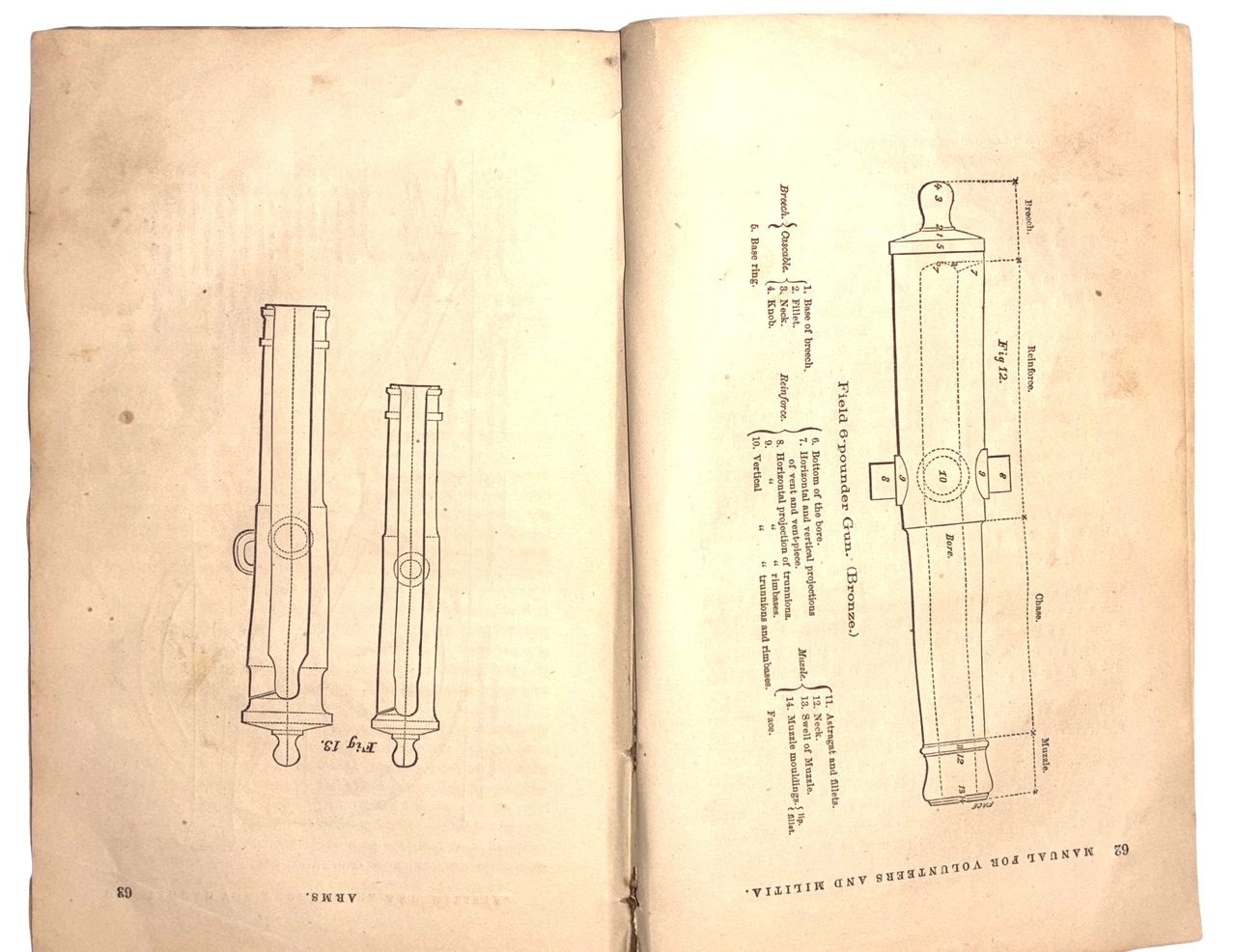
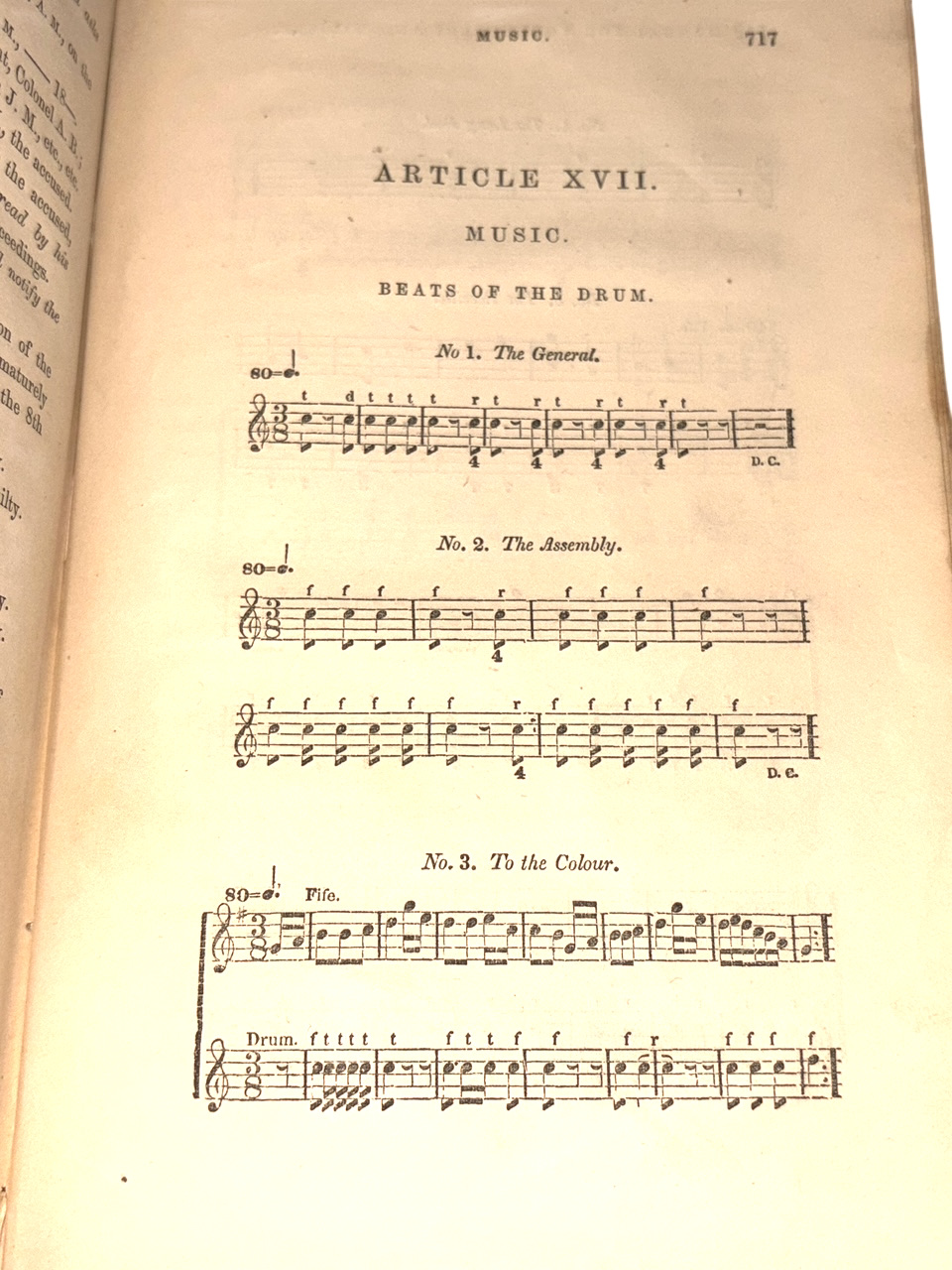
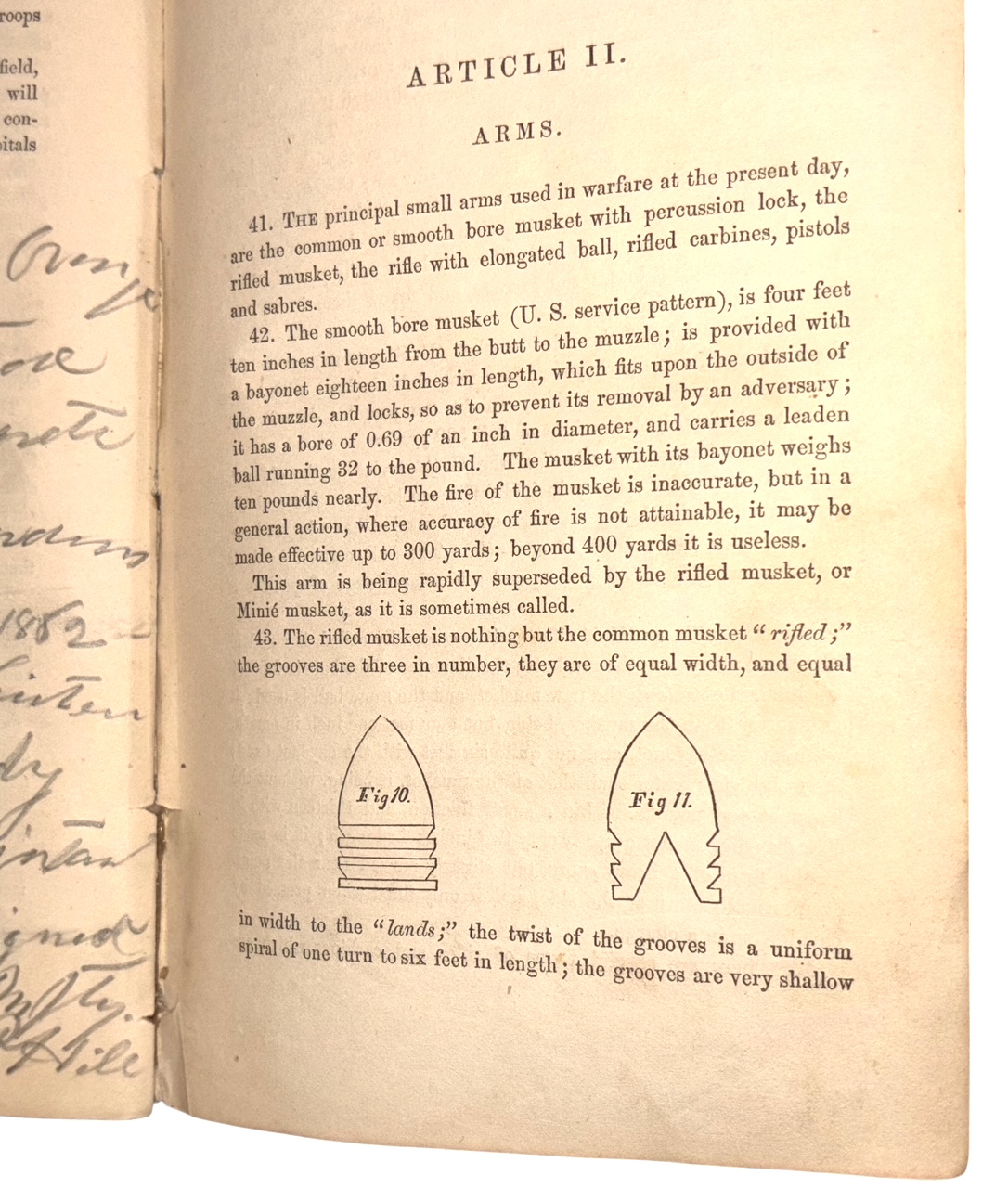
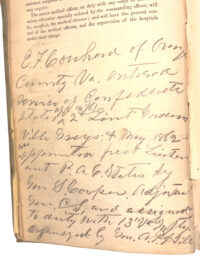
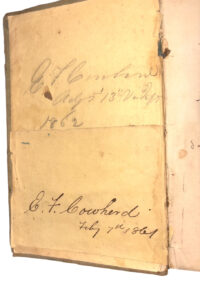
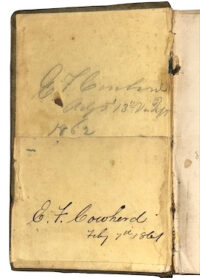
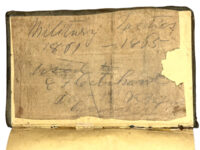
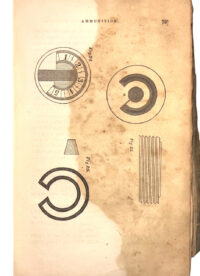
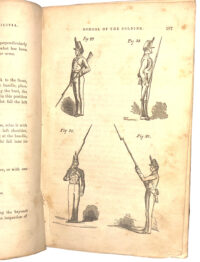
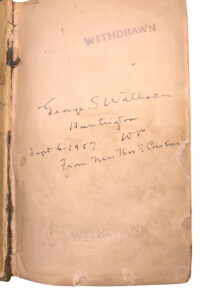
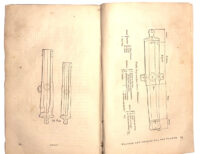
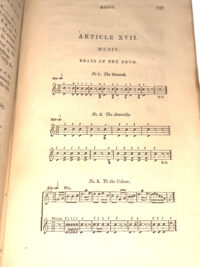
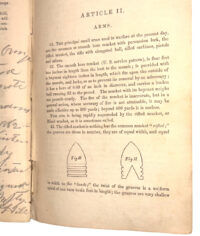
Id’d Confederate Officer’s Military Manual – “Manual of Instruction for the Volunteers and Militia of the United States” Major William Gilham, Published in 1861 – Inked and Written inside the Manual – 1st Lt. E.F. Cowherd Adj. 13th Va. Infantry – This well known, early war military manual is a comprehensive guidebook written by William Gilham, a colonel in the Confederate army during the American Civil War. The book was originally published in 1861 and was intended to provide guidance and instruction to the Confederate volunteers and militia who were fighting in the war. The book covers a wide range of topics related to military tactics and strategy, including the organization of troops, the use of firearms, and the construction of fortifications. It also includes detailed instructions on how to drill and train soldiers, as well as information on the proper care and maintenance of weapons and equipment. In addition to its practical advice, the Manual of Instruction also provides historical context and analysis of the military tactics used in previous wars, including the Napoleonic Wars and the American Revolution. The book is written in a clear and concise style, making it accessible to both experienced soldiers and those who are new to military service. As a result of John Brown’s raid on Harpers Ferry, Virginia Governor Henry Wise asked William Gilham to write a manual for the instruction of militia. Gilham, at the time, was a professor at the Virginia Military Institute, along with Thomas Jackson. This specific example was published in 1861, just prior to the onset of the Civil War and Gilham’s entry into the Confederate Army. In several areas of the beginning, frontispiece pages of the book is the name, inked and in pencil , of 1st Lt. F. S. Cowherd, adjutant of the 13th Va. Infantry; in the very back of the book is an old piece of paper with this penciled inscription:
“Military Tactics
1861 – 1865
Sent to
E F Cowherd
Adgt 13th Va Infantry
Regiment”
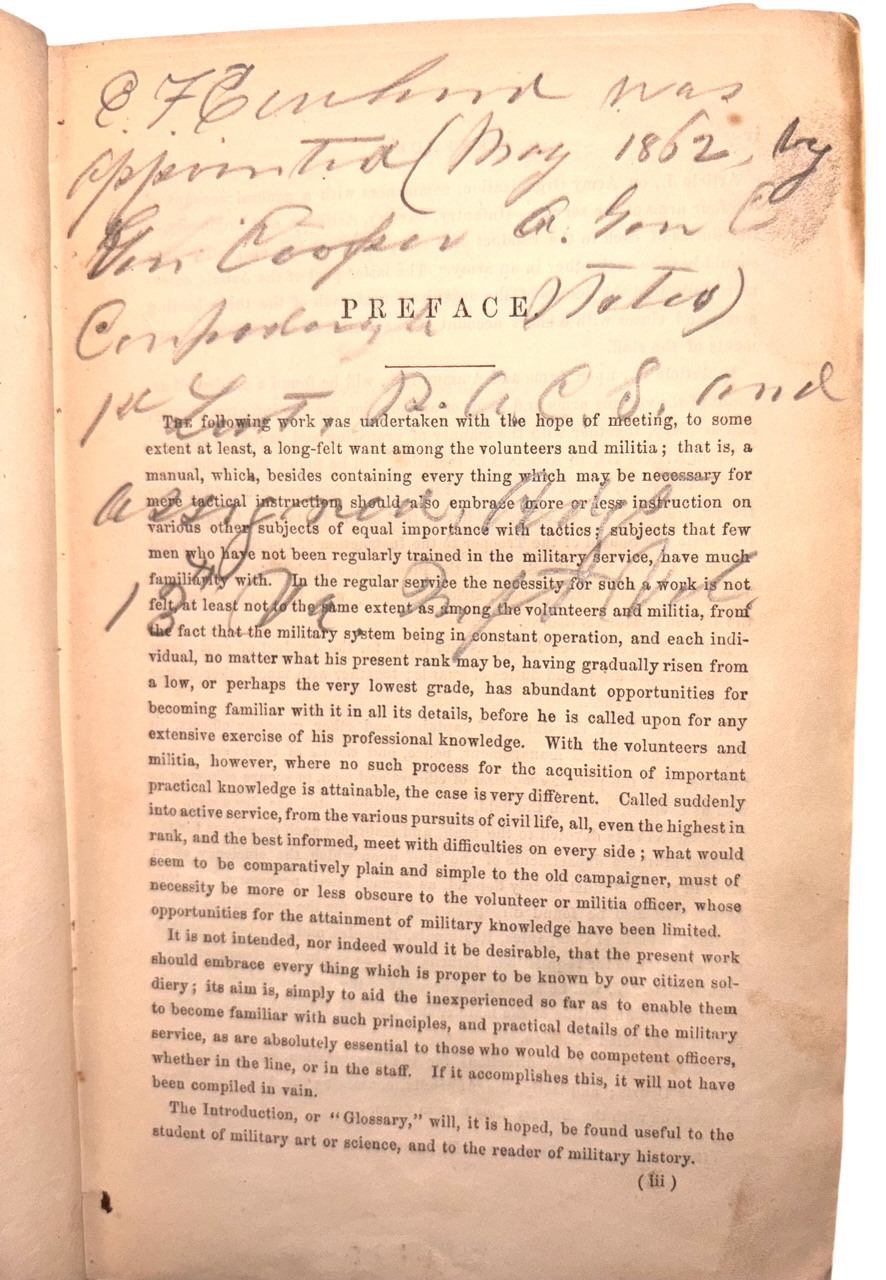
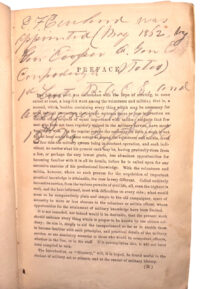
On the first page of the preface is penciled the following:
“E. F. Cowherd was
Appointed (May 1862 by
Gen Cooper a Gen ?
Confederate States)
1st Lieut. ? A C S and
Assigned Regt Inft Vols
13th Va”
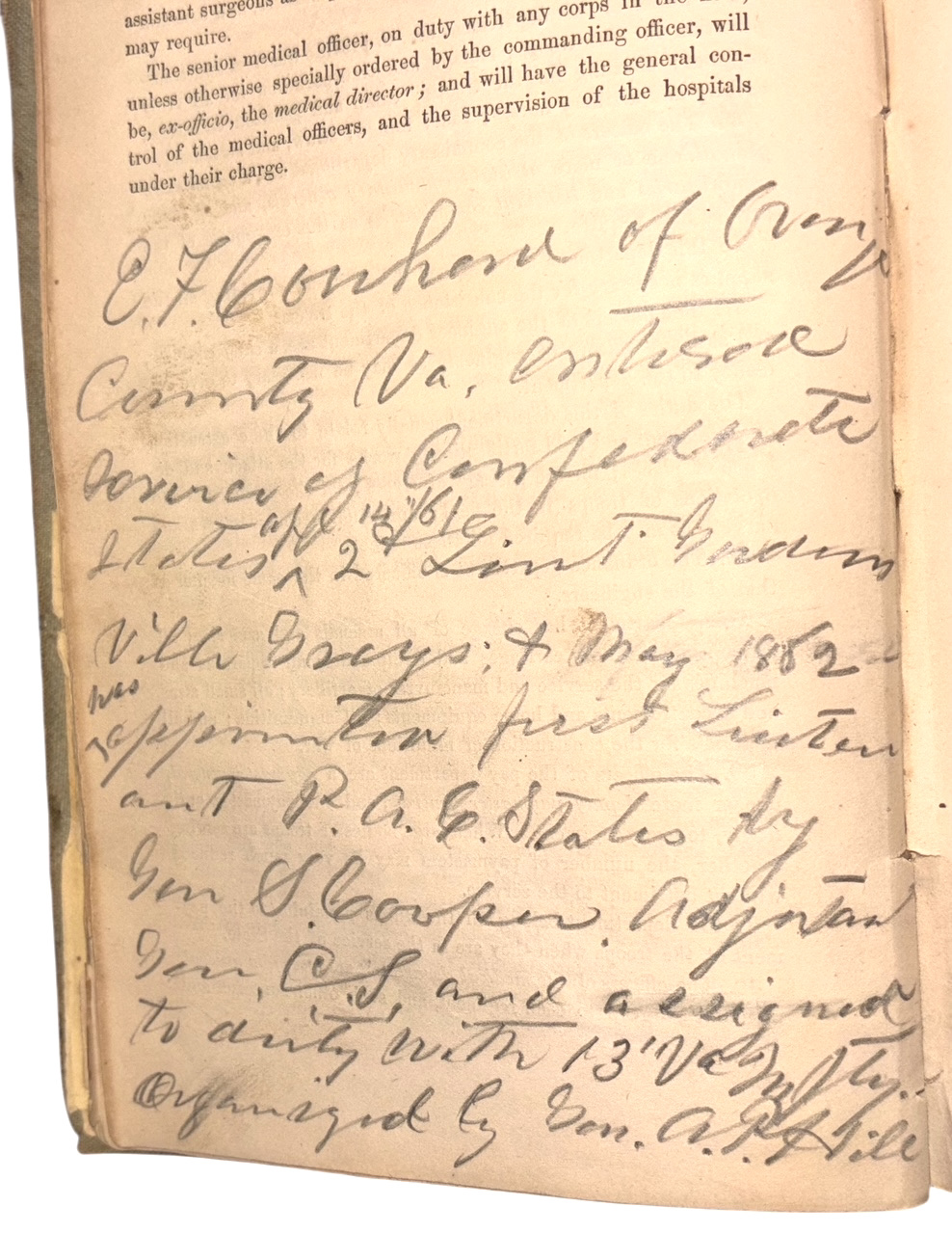
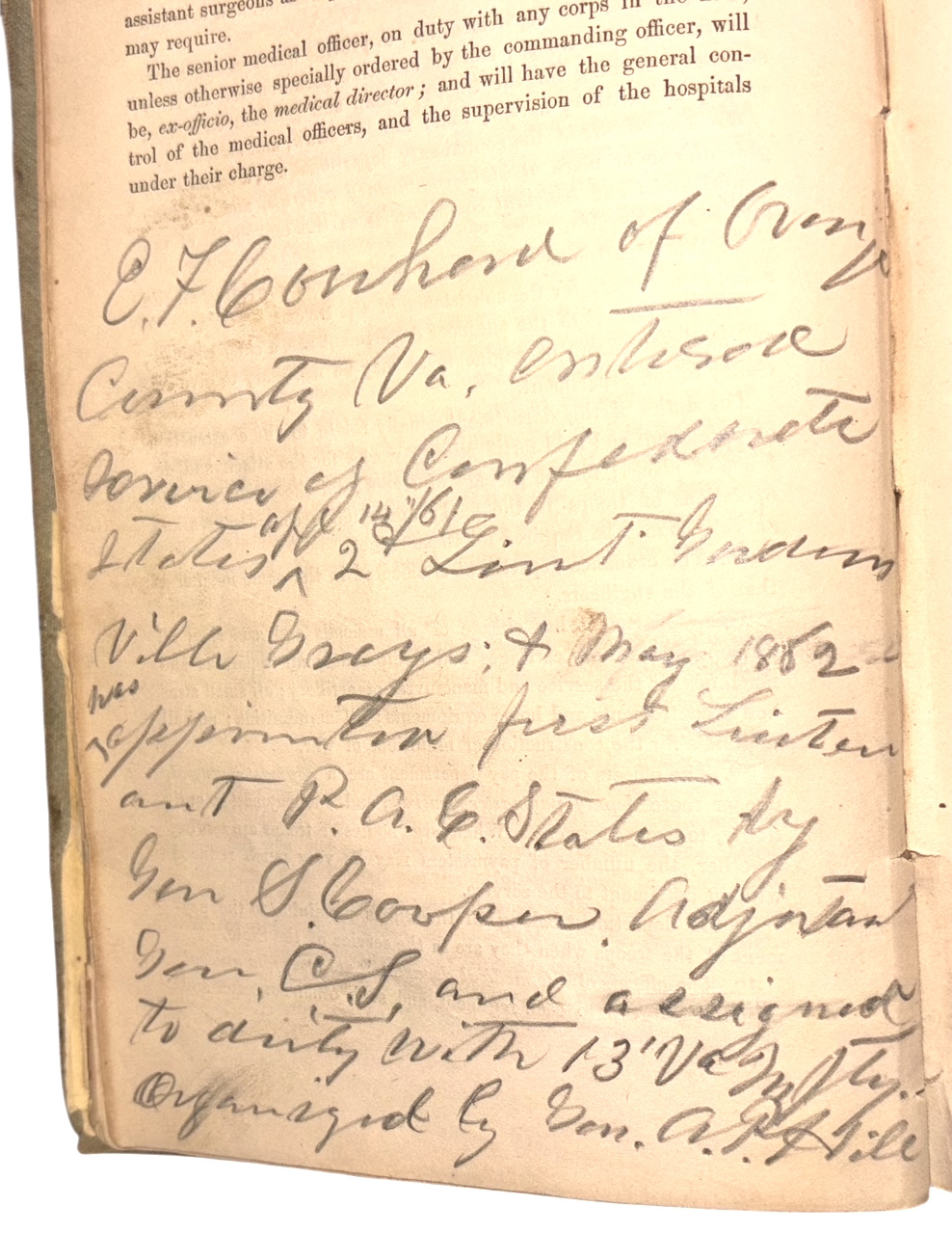
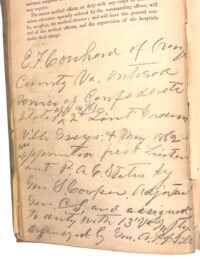
A few pages after the above, additionally penciled is the following:
“E. F. Cowherd of Orange
County Va entered
service of Confederate
States as 2nd Lieut Gordons
ville Grays & May 1862
was appointed first Lieuten
ant ? A.C. States by
Gen S Cooper Adjutant
Gen CS and assigned
to duty with 13th Va Infty
Organized by Gen A.P. Hill”
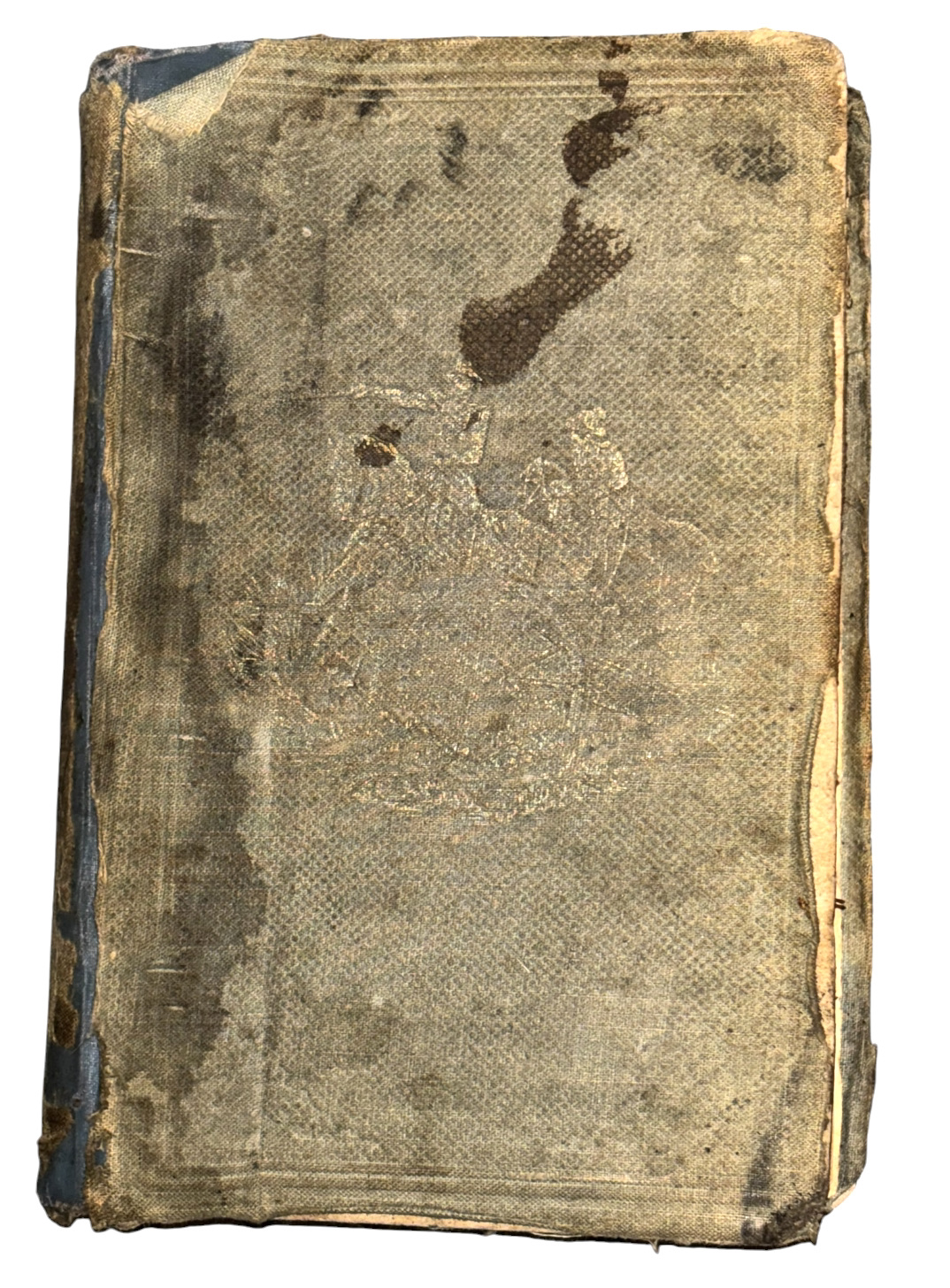
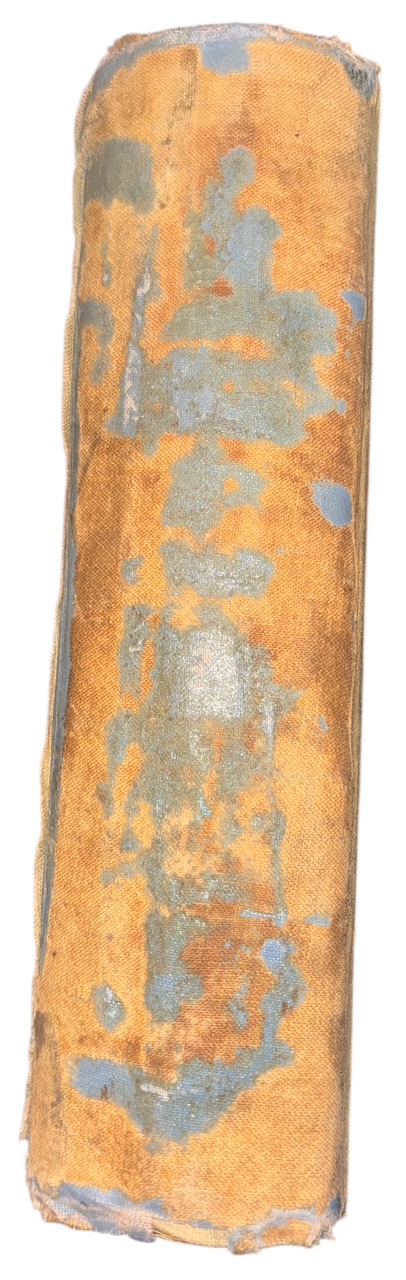
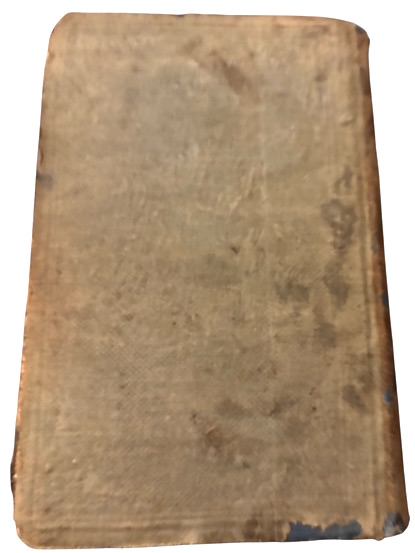
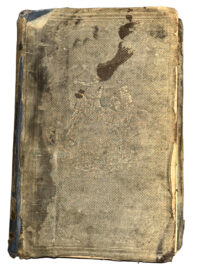
The book remains in overall fair to good condition, retaining all interior pages and plates. The blue cloth covered boards exhibit fading and extensive field use; both boards remain intact and attached to the book’s spine; there is some minor foxing on many pages from field use.
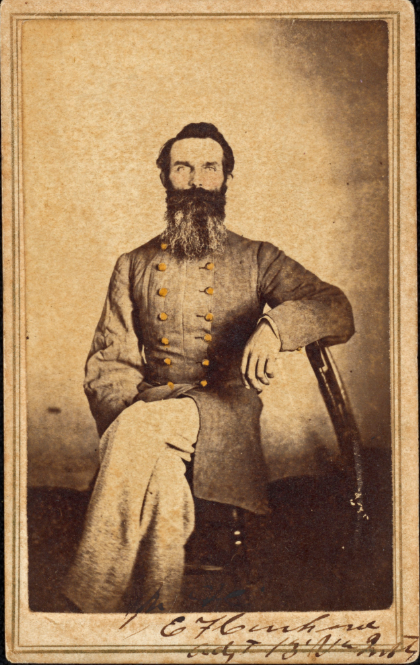
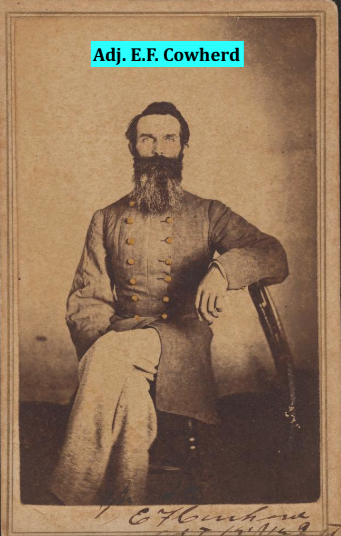
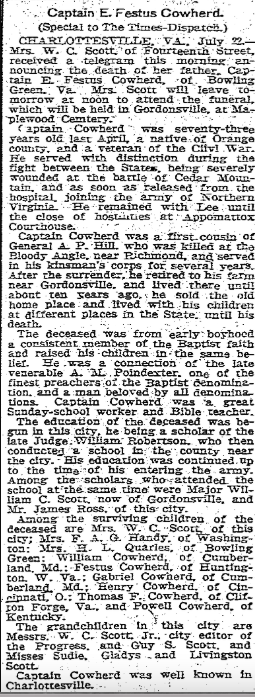
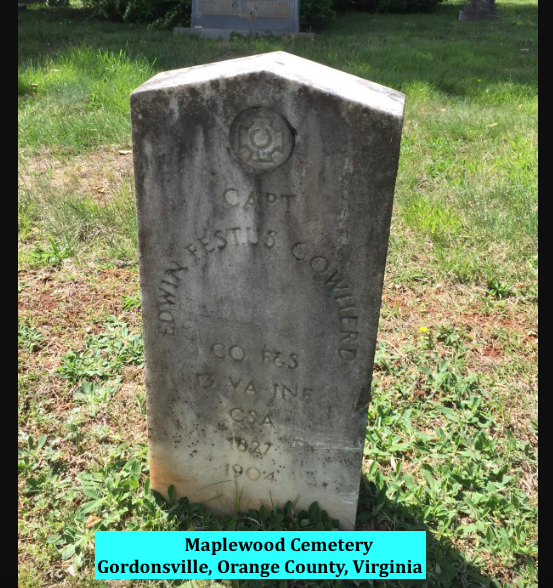
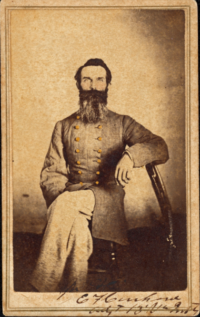
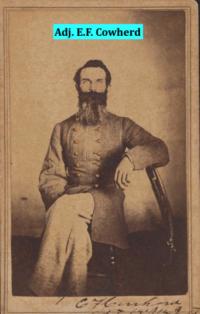
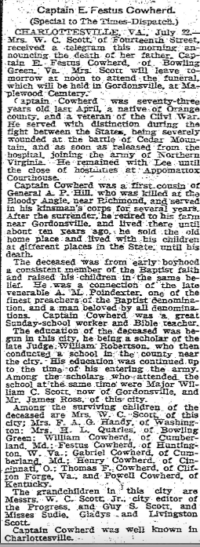
Edwin Festus Cowherd
Residence was not listed; years old.
Enlisted on 4/17/1861 at Gordonsville, VA as a Lieutenant.
On 4/17/1861, he was commissioned into “C” Co. Virginia 13th Infantry.
He was Surrendered on 4/9/1865 at Appomattox Court House, VA
He was listed as:
- Relieved for illness 11/20/1862 (place not stated)
- Returned 2/7/1863 (place not stated)
- Returned 1/15/1864 (place not stated) (Estimated day)
- Absent, sick 9/15/1864 (place not stated)
- Relieved, for illness 12/27/1864 (place not stated)
Promotions:
- Adjutant 4/25/1862
Born 4/2/1827
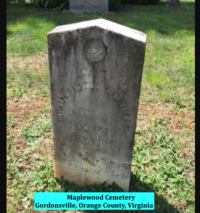
Died 7/21/1904
(Wife; Susan Latham Freeman)
After the war, he lived in Hay Farm, Orange County, VA
| Name: | Edwin F. Cowherd |
| Side: | Confederate |
| Regiment State/Origin: | Virginia |
| Regiment: | 13th Regiment, Virginia Infantry |
| Company: | C |
| Rank In: | Lieutenant |
| Rank Out: | First Lieutenant/Adjutant |
The “Gordonsville Grays” Company C, Virginia 13th Infantry Regiment
The Gordonsville Greys were originally organized in Orange County, Virginia in 1859 when the Governor of Virginia, John Letcher, called for 50 State Militia units to be mustered into temporary service as a consequence of John Brown’s raid at Harper’s Ferry. This terrifying experience showed the lack of military preparedness in Virginia. As a result, new militia companies started springing up all over Virginia.
A Military Convention convened in January of 1860 to advise Virginia’s General Assembly on how to improve the 1858 Militia Law. Legislation was passed on March 30, 1860 that incorporated many of the Military Council’s suggestions, particularly those in regards to supply and logistics. Less than three months later, the Gordonsville Grays were organized and received the above flag from the ladies of the community.
The Gordonsville Greys, along with two other organized militia companies comprised of Orange County men, the Montpelier Guard and Barboursville Guards, proceeded to Harper’s Ferry and were enrolled into the service of the State of Virginia on May 9, 1861.
13th Virginia Infantry Regiment
| 13th Virginia Infantry Regiment | |
| Flag of Virginia, 1861 | |
| Active | Summer 1861 – Spring 1865 |
| Disbanded | April 1865 |
| Country | Confederacy |
| Allegiance | Confederate States of America |
| Branch | Confederate States Army |
| Type | Infantry |
| Engagements | American Civil War |
| Commanders | |
| Notable commanders |
Colonel A.P. Hill Colonel James A. Walker |
The 13th Virginia Infantry Regiment was an infantry regiment raised in central and western Virginia for service in the Confederate States Army during the American Civil War. It fought mostly with the Army of Northern Virginia.
Its commanders were Colonels George A. Goodman, Ambrose P. Hill, James B. Terrill, and James A. Walker; and Majors Charles T. Crittenden and John B. Sherrard.
| Sortable table | |||
| Company | Nickname | Recruited at | Commanding Officers |
| A | Montpelier Guard | Orange County | Champ G. Cooke, George Cullen, Benjamin F. Naile Weisiger |
| B | Culpeper Minute Men | Culpeper County | Charles T. Crittenden, Williamson G. George, Waller T. Patton, Zephaniah T. Ross |
| C | Gordonsville Grays | Orange County | George A. Goodman, Charles H. Richards, William C. Scott |
| D | Louisa Blues | Louisa County | John W. Hibbs, Henry W. Murray, Frank V. Winston |
| E | Culpeper Riflemen Brandy Rifles |
Culpeper County | Stockton Heth, William A. Ashby, John L. Brooks, Daniel Field |
| F | Barboursville Guards | Orange County | Andrew J. Eheart, Charles L. Graves, Conway Newman, William S. Parran |
| G | Lanier Guard | Maryland | Frank T. Hill, Alexander G. Taliaferro |
| H | Fort Loudoun Guards Winchester Boomerangs |
Winchester Frederick County |
Samuel D. Buck, William H. Harrison, Lewis N. Huck, William H. Sherer |
| I | Frontier Rifles Hampshire Guard |
Hampshire County | Job N. Cookus, Abraham Smith, Robert White, Felix Heiskell, John B. Sherrard |
The 13th Virginia completed its organization during the summer of 1861 with men from Winchester and Culpeper, Orange, Louisa, and Hampshire counties, and one company from Maryland. The original Companies B and E enlisted only for 6 months, the others for one year. At the end of that year, their service was extended for the duration of the war.
Kennedy Palmer, Co. H. 13th Va. Inft., 1861
After fighting at First Manassas and in Jackson’s Valley Campaign, it served in General Early’s, W.Smith’s, Pegram’s, and J.A. Walker’s Brigade. The 13th was prominent in the campaigns of the Army of Northern Virginia from the Seven Days’ Battles to Cold Harbor, then it moved with Gen. Jubal Early to the Shenandoah Valley and later was involved in the Appomattox operations.
It reported 16 casualties at Cross Keys and Port Republic, 111 at Gaines Mill, 34 at Cedar Mountain, 46 at Second Manassas, 22 at Fredericksburg, and 36 at Chancellorsville. During the Gettysburg Campaign it was left at Winchester as provost guard. The unit sustained heavy losses at the Battle of Cedar Creek and surrendered at Appomattox Court House with 10 officers and 52 men.
13th Virginia Infantry Regiment
| 1861 | |
| May | Organized at Harpers Ferry under Colonel Ambrose Powell Hill, Lieutenant Colonel James A. Walker and Major James B. Terrill. |
| July 1 | Mustered into Confederate service |
| July 21 | Battle of Manassas (Bull Run)
The regiment moved by train to Manassas but was stationed on the unengaged right flank during the battle. |
| July 23 | In the evening moved to Camp Blair at Fairfax station with the Newtown Artillery and the 10th Virginia Infantry. |
| 1862 | |
| February 26 | Colonel Hill was promoted to brigadier general. Lieutenant Colonel Walker was promoted to colonel and Major Terrill was promoted to lieutenant colonel. |
| April 25 | Captain John B. Sherrard of Company K was promoted to major. |
| May 8 | Battle of McDowell |
| May-June | Jackson’s Shenandoah Valley Campaign
Attached to Elzey’s Brigade, Ewell’s Division, Army of the Northwest |
| June 8-9 | Battles of Cross Keys-Port Republic |
| June | Attached to Elzey’s, Walker’s, Early’s Brigade, Ewell’s Division, Jackson’s Command, Army of Northern Virginia |
| June 27 | Battle of Gaines’ Mill
Captain Charles Crittenden was wounded. |
| June 30 | White Oak Swamp |
| July 1 | Malvern Hill |
| August 9 | Battle of Cedar Mountain |
| August 26-27 | Bristoe and Manassas Junction |
| August 28-30 | Second Battle of Manassas (Bull Run) |
| September 1 | Chantilly |
| September 12-15 | Siege of Harpers Ferry |
| September 17 | Battle of Sharpsburg (Antietam)
The regiment was commanded by Captain Frank V. Winston. At the beginning of the battle it was detached from the brigade to support Stuart’s Horse Artillery near the Poffenberger Farm at the extreme left of the Confederate line. Serving as a skirmish line in front of the horse artillery they drove back three advances by Gorman’s Union Brigade from the West Woods. In spite of the heavy fighting the regiment lost only one man killed and five wounded. |
| October 30 | Major Sherrard resigned, apparently due to problems with Colonel Walker. Captain George A. Goodman of Company C was promoted to major. |
| November | Attached to Early’s Brigade, Ewell’s Division, Second Corps , Army of Northern Virginia |
| December 13 | Battle of Fredericksburg |
| 1863 | |
| May 1-4 | Battle of Chancellorsville |
| May 15 | Colonel Walker was promoted to brigadier general. Lieutenant Colonel Terrill was promoted to colonel. Major Goodman was promoted to lieutenant colonel, and Captain Charles T. Crittenden of Company B was promoted to major. When Colonel Walker left the regiment former Major Sherrard sought to be reinstated but was turned down. |
| June 14 | Gettysburg Campaign
The regiment was commanded by Lieutenant Colonel James B. Terrill. Ir was detached from the brigade along with the 58th Virginia and left in Winchester, missing the Battle of Gettysburg. |
| July 6 | Williamsport
Marched to Williamsport escourting an ammunition train and helped defend the Imbodens wagon train of wounded. |
| July 12 | Retreat to Virginia |
| October | Bristoe Campaign |
| November-December | Mine Run Campaign |
| 1864 | |
| May 5-6 | Battle of The Wilderness |
| May 8-21 | Battle of Spotsylvania Court House |
| May 22-26 | North Anna |
| June 1 | Battle of Cold Harbor
Major Crittenden was shot “through the breast.” Colonel Terrill was promoted to brigadier general. |
| June 17-18 | Battle of Lynchburg |
| June 19-21 | Pursuit of Hunter |
| June 22 | Day of rest at Salem |
| June 23-26 | Advance into the Shenandoah Valley to Staunton |
| June 28-July 2 | Advance from Staunton to near Harpers Ferry |
| July 5-6 | Crossed the Potomac at Boteler’s Ford and advances to west of Frederick |
| July 9 | Battle of Monocacy |
| July 10 | The advance on Washington continued through an extremely hot day. |
| July 11-12 | Battle of Fort Stevens |
| July 13-15 | Left Washington, crossed the Potomac at White’s Ford, and marched across Loudon County. |
| July 16 | Crossed the Blue Ridge at Snickers Gap to Berryville |
| July 19 | Moved to Strasburg |
| July 24 | Second Battle of Kernstown |
| August 8 | At Bunker Hill |
| August 10 | To Winchester |
| August 12 | To Fisher’s Hill |
| August 17 | Returned to Winchester and Bunker Hill. |
| August 22 | To Charles Town |
| August 25-26 | Feint toward Williamsport and return to Bunker Hill. |
| September 5 | To Winchester |
| September 19 | Third Battle of Winchester
Lieutenant Colonel Goodman was captured. |
| September 22 | Battle of Fisher’s Hill |
| October 19 | Battle of Cedar Creek
The regiment’s battle flag was captured by Quartermaster Sergeant David H. Scofield of the 5th New York Cavalry Regiment. |
| 1865 | |
| January | Captain George Cullen was reported to be in command of the regiment to the end of the war. |
| February 5 | Battle of Hatcher’s Run |
| March 25 | Assault on Fort Stedman |
| April 6 | Battle of Sayler’s Creek
Most of the regiment was captured or scattered when nearly a quarter of Lee’s army was lost as Union pursers caught up with the struggling Confederate columns near Farmville. |
| Aptil 9 | Appomattox Court House
The 13th Virginia Infantry Regiment surrendered 65 men |
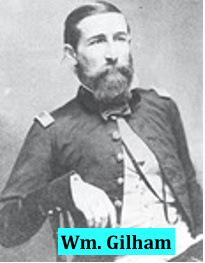
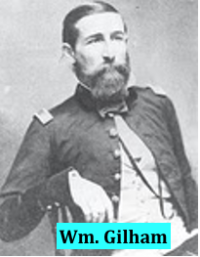
William Gilham
| William Henry Gilham | |
| Born | January 13, 1818 |
| Died | November 16, 1872 (aged 54)
Vermont, US |
| Allegiance | United States Confederate States of America |
| Branch | United States Army Confederate States Army |
| Years of service | 1840–1846 1861–1863 |
| Rank | 1st Lieutenant (USA) Colonel (CSA) |
| Battles / wars | Seminole War Mexican–American War American Civil War |
| Spouse | Cordelia Adelaide Hayden |
William Henry Gilham (January 13, 1818 – November 16, 1872) was an American soldier, teacher, chemist, and author. A member of the faculty at Virginia Military Institute, in 1860, he wrote a military manual which was still in modern use 145 years later. He served in the Confederate Army during the American Civil War, and became president of Southern Fertilizing Company in Richmond after the War.
Childhood, education, military service
William Henry Gilham was born in Vincennes, Indiana on January 13, 1818. his father’s family came from Virginia. He was appointed to the United States Military Academy at West Point, New York, where he graduated 5th in the Class of 1840.
He became a lieutenant in the 3rd Artillery in the United States Army and fought in the Seminole War in Florida. From September 1841 to August 1844, he was Assistant Professor of Natural and Experimental Philosophy at the U.S. Military Academy (West Point). He served in the Mexican–American War in 1846. The degree of A. M. was conferred upon him by College of William and Mary in Williamsburg, Virginia in 1852.
Virginia Military Institute
In 1846, he became a professor at Virginia Military Institute (VMI), then a recently founded state military college in Lexington, Virginia. During the next five years, he developed VMI’s departments of Chemistry and Agriculture, taught infantry tactics and served as the Commandant of Cadets. To lighten the load on Major Gilham, in 1851, VMI hired another professor, Major Thomas Jonathon Jackson, later better known as “Stonewall” Jackson, who was also a graduate of West Point, and a veteran of the conflicts in Florida and Mexico.
As a professor, Gilham was interested in geological matters. In 1857, his Report on the Soil of Powhatan County, Virginia was published in Richmond by Ritchie & Dunnavant. A copy of a request he made to the same year for the legislature to fund acquisition of “a complete collection of minerals and fossils for the use of my classes” is in the collection of the Virginia Historical Society in Richmond.
Majors Gilham and Jackson taught together at VMI for the rest of the decade. In November 1859, at the request of the Virginia Governor Henry A. Wise, Major Gilham led a contingent of the VMI Cadets Corps to Charles Town to provide an additional military presence for at the execution by hanging on December 2, 1859, of militant abolitionist John Brown following his raid on the federal arsenal at Harper’s Ferry. Major Jackson was placed in command of the artillery, consisting of two howitzers manned by 21 cadets.
In response to the raid on Harper’s Ferry, Governor Wise ordered Gilham to write a manual to train volunteers and militia. Finished in the fall of 1860, it was entitled Manual of Instruction for the Volunteers and Militia of the United States and was initially published in Philadelphia.
Family life
According to VMI records, while residing in Lexington, Major Gilham and his wife Cordelia Adelaide Hayden Gilham (1826–1913) had 7 children, 3 born after moving to Virginia. Their daughter Emma Hayden Gilham (b. 1855) married William Nelson Page, a civil engineer who became co-founder of the Virginian Railway.
American Civil War
In 1861, as the American Civil War broke out, the Confederate Army had a lot of new recruits. Promoted to the rank of colonel, Gilham became the Commandant of Camp Lee, at Richmond, Virginia, the camp of instruction for thousands of Virginians. Gilham’s manual proved to be the ideal book for the training of these young men.
Col. Gilham briefly commanded a brigade in the field in 1861 and 1862, but returned to teaching at VMI. On May 15, 1864, the VMI cadets participated in the Battle of New Market. Gilham was present, but did not command the young troops during the battle. After Union troops led by Union General David Hunter raided Lexington, and burned buildings at VMI, the VMI cadets were stationed at Richmond for the remainder of the War. Major Gilham’s house, a campus landmark, was later rebuilt to original specifications after the War.
Post-war
After the War, VMI had no money to pay its instructors. Gilham went to work in Richmond for Southern Fertilizer Company, which occupied the former Confederate Libby Prison facility near Richmond’s Tobacco Row. One of the company’s products, Gilham’s Tobacco Fertilizer, was manufactured there.
William Gilham died in Vermont on November 16, 1872, aged 54.
William Gilham is said to be the son of Henry Miller Gilham and Fanny Badollet who married 1 Apr 1815 in Knox County, Indiana and the grandson of William Gilham of Woodstock, Shenandoah County, VA and later merchant of the Town of Alexandria, VA.
William GILHAM (January 13, 1818-November 16, 1872) was an American soldier, teacher, chemist, and author. A member of the faculty at Virginia Military Institute, in 1860, he wrote a military manual which was still in modern use 145 years later. He served in the Confederate Army during the American Civil War, and became president of a fertilizer company after the War.
Childhood, education, military service
William GILHAM was born in Vincennes, Indiana, His father’s family came from Virginia. He was appointed to the United States Military Academy at West Point, New York, where he graduated 5th in the class of 1840.
He became a lieutenant in the 3rd Artillery in the United States Army and fought in the Seminole War in Florida. From September 1841 to August 1844, he was Assistant Professor of Natural and Experimental Philosophy at the U.S. Military Academy (West Point). He served in the Mexican War in 1846. The degree of A. M. was conferred upon him by College of William and Mary in Williamsburg, Virginia in 1852.
Virginia Military Institute
In 1846, he became a professor at Virginia Military Institute (VMI), then a recently-founded state military college in Lexington, Virginia. During the next five years, he developed VMI’s departments of Chemistry and Agriculture, taught infantry tactics and served as the Commandant of Cadets. To lighten the load on Major GILHAM, in 1851, VMI hired another professor, Major Thomas Jonathon Jackson, later better known as “Stonewall” Jackson, who was also a graduate of West Point, and a veteran of the conflicts in Florida and Mexico.
Majors GILHAM and Jackson taught together at VMI for the rest of the decade. In November 1859, at the request of the Virginia Governor Henry A. Wise, Major GILHAM led a contingent of the VMI Cadets Corps to Charles Town to provide an additional military presence for at the execution by hanging on December 2,1859 of militant abolitionist John Brown following his raid on the federal arsenal at Harper’s Ferry. Major Jackson was placed in command of the artillery, consisting of two howitzers manned by 21 cadets.
In response to the raid on Harper’s Ferry, Governor Wise ordered GILHAM to write a manual to train volunteers and militia. Finished in the fall of 1860, it was entitled Manual of Instruction for the Volunteers and Militia of the United States and was initially published in Philadelphia.
Family life
According to VMI records, while residing in Lexington, Major GILHAM and his wife Cordelia A. GILHAM (1826-1913) had 7 children, 3 born after moving to Virginia. Their daughter Emma Hayden GILHAM, born in 1855, was later one of Richmond’s débutantes at the city’s social “Germans” and married William Nelson Page, a civil engineer who became co-founder of the Virginian Railway. One of the GILHAM’s sons, Julius Hayden GILHAM (April 6,1852 – March 10, 1936), is buried in Richmond’s Hollywood Cemetery, as are Emma and William Page.
American Civil War
In 1861, as the American Civil War broke out, the Confederate Army had a lot of new recruits. Promoted to the rank of colonel, GILHAM became the Commandant of Camp Lee, at Richmond, Virginia, the camp of instruction for thousands of Virginians. GILHAM’s manual proved to be the ideal book for the training of these young men.
Col. GILHAM briefly commended a brigade in the field during 1861 and 1862, but returned to teaching at VMI. On May 15, 1864, the VMI cadets participated in the Battle of New Market. GILHAM was present, but did not command the young troops during the battle. After Union troops raided Lexington, the VMI cadets were stationed at Richmond for the remainder of the War.
Post-war
After the War, VMI had no money to pay its instructors. GILHAM went to work in Richmond for Southern Fertilizer Company, which occupied the former Confederate Libby Prison facility near Richmond’s Tobacco Row.
William GILHAM died in Vermont on November 16,1872 at the age of 53. He is buried at Lexington, Virginia in the Stonewall Jackson Memorial Cemetery, just a few yards from his friend and colleague for whom the cemetery was renamed.
Related Items
-
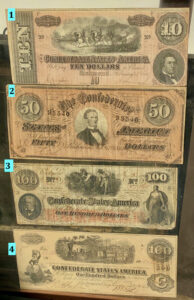
Civil War Period Confederate Currency
Civil War Period Confederate CurrencyFebruary 8, 2022 -
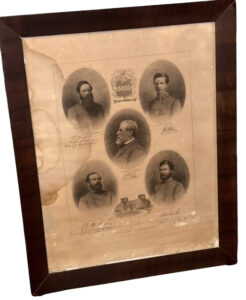
Rare C. 1898 Lithograph of Virginia’s Lee Family Participants in the Confederate Army in its Original Frame Behind Original Glass
$350Rare C. 1898 Lithograph of Virginia’s Lee Family Participants in the Confederate Army in its Original Frame Behind Original GlassMarch 6, 2026 -
Id’d Civil War Period Pocket Bible – Lewis S. Tuttle Co. F 32nd Maine Infantry – POW and Died at Andersonville
$650Id’d Civil War Period Pocket Bible – Lewis S. Tuttle Co. F 32nd Maine Infantry – POW and Died at AndersonvilleJanuary 22, 2026 -
Rare 1st Edition Civil War Medical Book Entitled: A Manual of Etherization : Containing Directions for the Employment of Ether, Chloroform, and Other Anæsthetic Agents, by Inhalation, in Surgical Operations; with Instructions for the Preparation of Ether and Chloroform, and for Testing Them for Impurities. Comprising, also, a Brief History of the Discovery of Anæsthesia – By Charles T. Jackson
$850Rare 1st Edition Civil War Medical Book Entitled: A Manual of Etherization : Containing Directions for the Employment of Ether, Chloroform, and Other Anæsthetic Agents, by Inhalation, in Surgical Operations; with Instructions for the Preparation of Ether and Chloroform, and for Testing Them for Impurities. Comprising, also, a Brief History of the Discovery of Anæsthesia – By Charles T. JacksonJanuary 24, 2026