
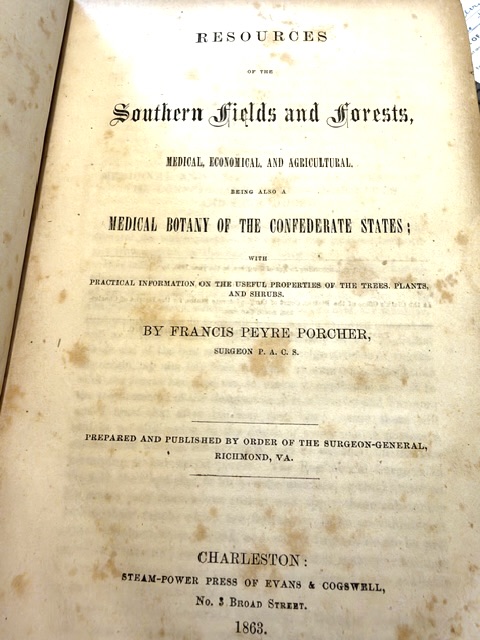
Rare Id’d Confederate Medical Manual – “Resources of the Southern Fields and Forests; Medical, Economical and Agricultural. Being Also A Medical Botany of the Confederate States with Practical Information on the Useful Properties of the Trees, Plants, and Shrubs.” By Francis Peyre Porcher, Surgeon P.A.C.S. – Personal Copy of Lynchburg Virginia’s Confederate Hospitals’ Chief Surgeon Dr. William Otway OwenNovember 20, 2026
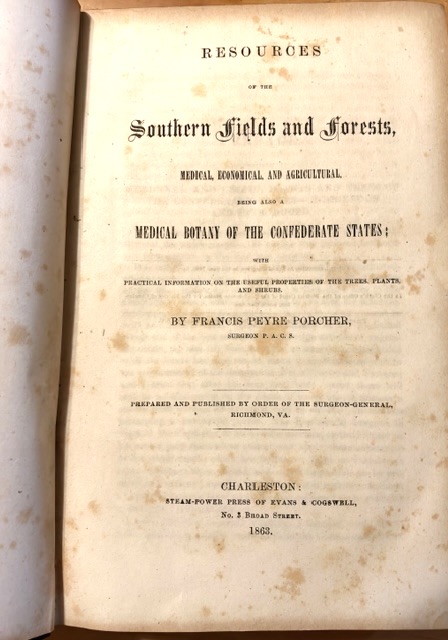
Rare Id’d Confederate Medical Manual – “Resources of the Southern Fields and Forests; Medical, Economical and Agricultural. Being Also A Medical Botany of the Confederate States with Practical Information on the Useful Properties of the Trees, Plants, and Shrubs.” By Francis Peyre Porcher, Surgeon P.A.C.S. – Personal Copy of Lynchburg Virginia’s Confederate Hospitals’ Chief Surgeon Dr. William Otway Owen
SOLD
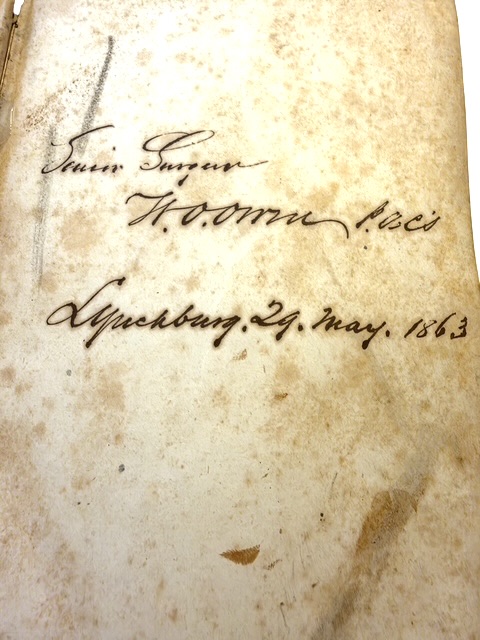
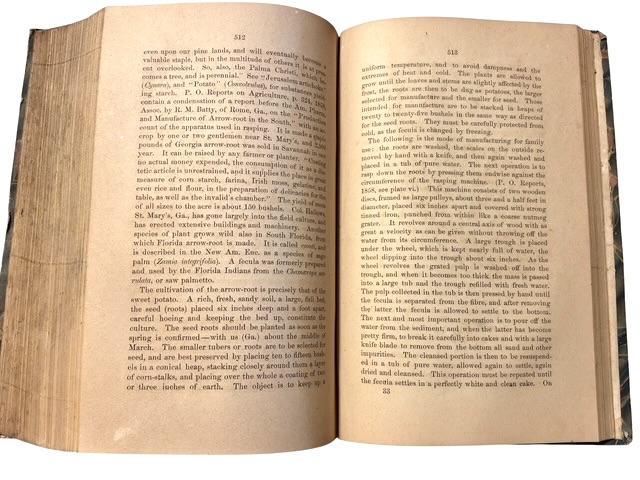
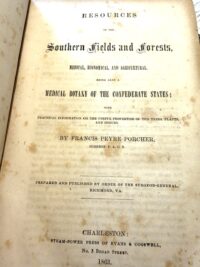
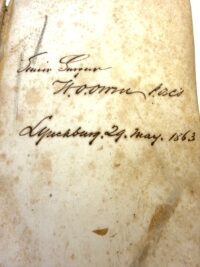
Rare Id’d Confederate Medical Manual – “Resources of the Southern Fields and Forests; Medical, Economical and Agricultural. Being Also A Medical Botany of the Confederate States with Practical Information on the Useful Properties of the Trees, Plants, and Shrubs.” By Francis Peyre Porcher, Surgeon P.A.C.S. – Personal Copy of Lynchburg Virginia’s Confederate Hospitals’ Chief Surgeon Dr. William Otway Owen – This extremely rare book was published in Charleston, SC by Evans & Cogswell, in 1863. Inked on the first flyleaf page is the following:
“Senior Surgeon
W.O. Owen P.A.C.S.
Lynchburg. 29. May. 1863”
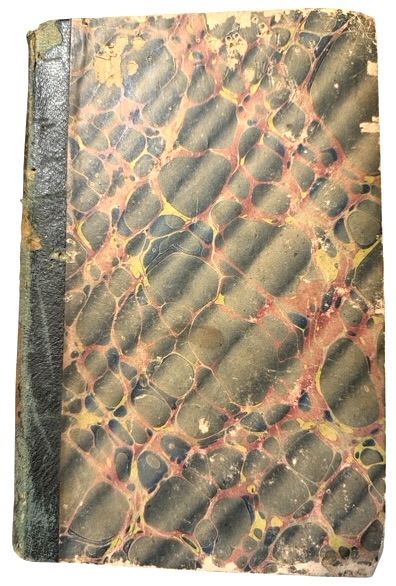
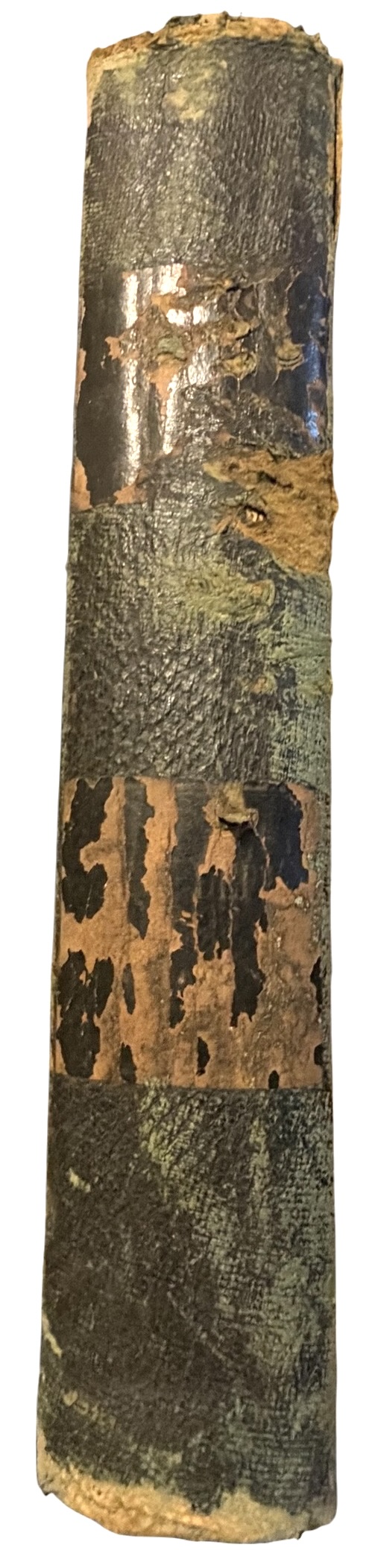
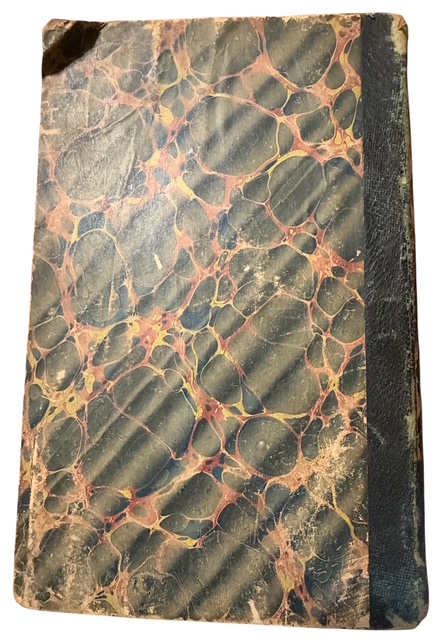
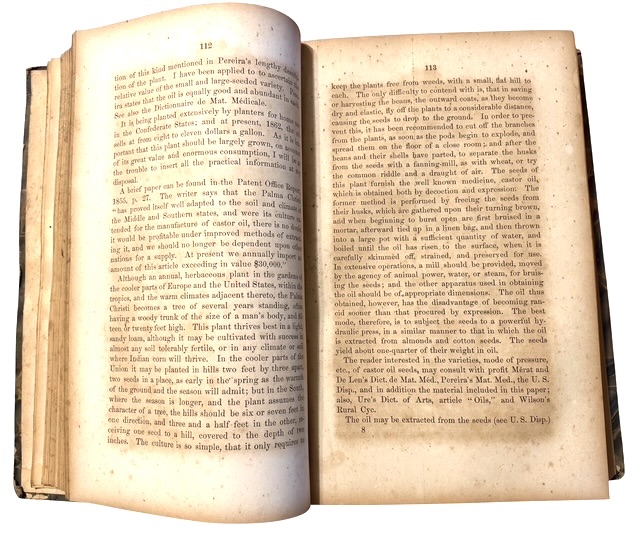
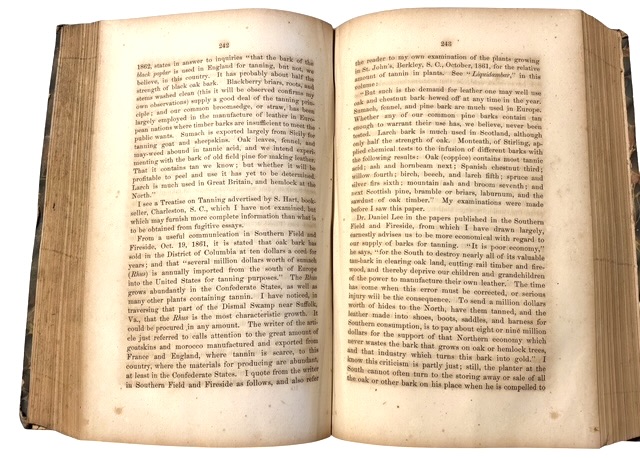
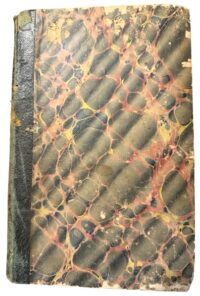
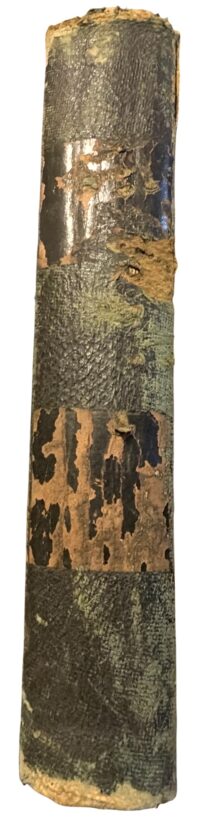
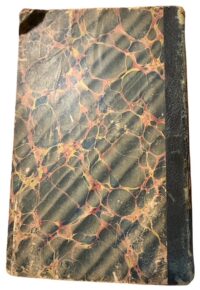
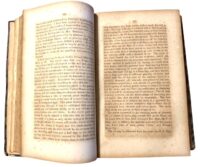
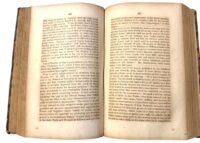
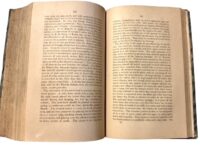
This rare Confederate medical manual was the personal copy of Dr. William Otway Owen who was appointed as chief surgeon of the Lynchburg wartime hospitals. The book remains in overall fair to good condition – the marbled boards are both firmly affixed to the leather spine, which does show some age scuffing, but remains intact. The book retains all of its original pages which are somewhat browned or foxed, but all remain completely legible.
This book is the first edition of the work that we have encountered and was the personal copy of a significant Confederate surgeon.
The following description is from the very impressive and highly erudite website “American Civil War Medicine & Surgical Antiques” – https://www.medicalantiques.com/civilwar/Medical_Authors_Faculty/Porcher_Frances.htm
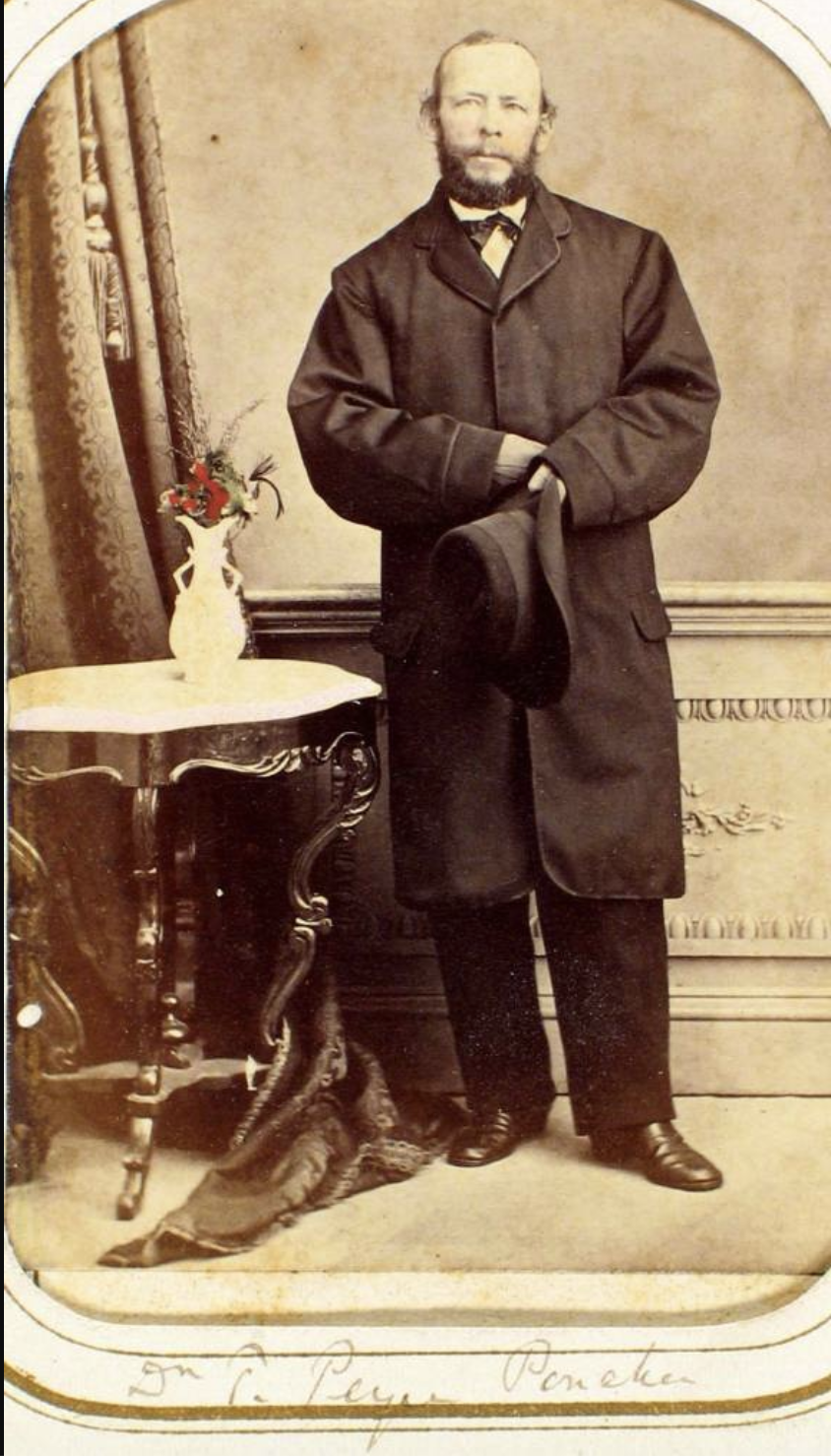
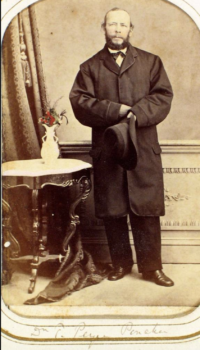
Francis Porcher, valedictorian of his 1847 graduating class at the Medical College of the State of South Carolina and well-respected writer of several works on the medicinal properties of plants, was the ideal person for Confederate Surgeon General Samuel Moore to assign the important project of preparing a treatise on the indigenous plants of the South for the Army. Porcher was born and educated in South Carolina. After his graduation from medical school, he continued his education in Paris and Florence, and returned to this country in 1849. During the next few years, he published several works on the subjects of botanicals and medicine, maintained a private practice, co-founded the Charleston Preparatory Medical School in 1852, and traveled again to Europe, visiting many hospitals along the way. Later in the 1850s, he became professor of clinical medicine and materia medica and therapeutics at his alma mater. He was an editor of the “Charleston Medical Journal and Review” for five years and an attending physician at the Marine Hospital in Charleston. Despite all his pre-war responsibilities, Porcher joined the Confederate Army at the war’s start, and remained in military service until the end (Atkinson 58; Kelly & Burrage 975; Rutkow, Resources of the Southern Field, v-vii).
Porcher started out the war as surgeon to the Holcombe Legion, later moving to the Naval Hospital at Norfolk, Virginia, and concluding at the South Carolina Hospital in Petersburg, Virginia. Shortly after the outbreak of war, a Northern blockade of Confederate ports prevented access to European medicines. Aware of Porcher’s background in botany, Surgeon General Samuel Preston Moore asked him to survey the plants of the South in an effort to find local medicines for the Confederate troops. He was temporarily excused from field and hospital duty to work on this project. The Reynolds Historical Library has a first edition of the resulting 1863 publication, Resources of the southern fields and forests, a comprehensive listing of all regional plant life, with an analysis of uses (Freemon 112). It was the first extensive study of Southern indigenous plants, and it was the only regional materia medica resource available to the Confederacy. But most importantly, even given the doubtful efficacy of its medicinal recommendations, it provided the Southern states with necessary information for surviving off their homeland during the war with a valuable listing of economically useful botanicals (Norman 1865.1).
When peace returned, Porcher went back to South Carolina and worked for the City Hospital for the next twenty-one years. He also resumed his academic positions and made many written contributions to the medical field, especially on the topic of yellow fever. Porcher was president of the South Carolina Medical Association in 1872, vice president of the American Medical Association in 1879, and an associate fellow of the College of Physicians of Philadelphia. He was one of a select few physicians chosen to represent the United States at international medical conferences in Berlin and Rome, and he served as president of the general medicine section of the Pan-American Congress in 1892 (Atkinson 58; Kelly & Burrage 975; Rutkow, Resources of the Southern Field, viii).
Source: Reynolds Historical Library Major Figures in Civil War Medicine
In an attempt to blunt the effects of the Northern blockade, the Surgeon General of the Confederate States enlisted the services of Dr. Francis Porcher in the war effort. Dr. Porcher was commissioned to develop a list of all potential resources to be found indigenous to the Southern States. This list was to cover everything from the manufacture of gun powder from bat guano and saltpeter found in the thousands of caves dotting the South to the production of paper from native reeds and yes – MEDICINE.
You see, Dr. Porcher was a doctor of medicine a well as a large land owner and planter in the Charleston, S.C. area. He was well respected among medical circles of his time and presented many scholarly papers to the AMA both before and after the war.
Dr. Porcher, being the true patriotic son of the South that he was, set forth with a zeal to produce this list in time for it to be of use in the war effort. In the course of researching and preparing this list to be presented to the Confederate High Command, he wrote an immense tome titled, “Resources of Southern Fields and Forests.” The 700 page manuscript was the most comprehensive of it’s time to be found in the South or North. To this day, its scope and magnitude have not been excelled.
Being a physician, Dr. Porcher was particularly interested in native substitutes for the medicines failing to make it through the Yankee blockade. What few medicines, such as Cinchona bark used to treat malaria, made it through the gauntlet of Yankee warships, usually ended up on the black market at prices out of the reach of the average person.
Dr. Porcher’s work proved to be a life saver to Confederate soldiers, many who had resorted to using old home remedies in a desperate attempt to both prevent and treat the multitude of attacking diseases.
One interesting approach to the prevention and treatment of disease of this time was the use of “BITTERS”. The general belief was that the more bitter a tonic was, the better it was for you. Herbs such as Gentian, Goldenseal, Chicory, Boneset, Yellowroot and Dogwood gained much popularity among the troops due to their extreme bitterness. Many a soldier imbibing these bitter witches brews soon developed a liking for the taste and drank them liberally as a substitute for coffee which more often than not had been unavailable for months and years.
Source: The Southern Herbalist, Medicinal Plants of the Confederacy
Peyre Francis Porcher, Charleston, S.C., was born Dec. 14th, 1824, at St. John’s, Berkely co., S.C. He is a descendant of a Huguenot family, who came from France in 1696. His early education was obtained at the South Carolina coll., Columbia, from which he graduated A.B., and his medical education at the med. coll. of the State of S.C., graduating from this institution M.D., in 1847, and settling in Charleston. He is prof. of mat. med. and therapeutics, and of clinical med. in med. coll. of State of S.C., corres. member of the acad. of nat. sciences of Philadelphia, and fellow of the coll. of phys. of the same city; author of…….He is phys. to the Charleston city hosp; ex-president of S.C. med. asso., and during the war was surg. in charge of the Confederate hosps. at Norfolk and Petersburg. He married, in 1855, Virginia, daughter of Hon. Benjamin Watkins Leigh and Julia Wickham, of Richmond, Va., and, in second marriage, the daughter of the late Col. I. I. Ward, of Waccamaw, S.C.
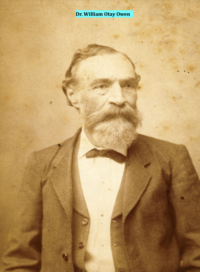
Dr. William Otway Owen was a prominent 19th-century physician in Lynchburg, Virginia, best known for serving as Surgeon-in-Charge of Lynchburg’s Confederate hospital complex during the Civil War.
Key Historical Details
- Civil War Role: Appointed by the Confederate War Department as Surgeon-in-Charge of Lynchburg’s medical complex, which grew to include more than 30 converted tobacco warehouses, private homes, and facilities and admitted over 20,000 patients.
- Medical Staff: Overseeing a complex staffed by over 50 military surgeons, alongside local physicians such as Dr. Edward A. Craighill and Dr. John Jay Terrell.
- Ladies’ Relief Hospital: Initially opposed admitting women into local hospitals, prompting Lucy Mina Otey and Catherine Waller Speed to petition President Jefferson Davis and open the independent Ladies’ Relief Hospital in August 1861.
- Family: His brother was Robert Latham Owen Sr., who served as president of the Virginia and Tennessee Railroad during the Civil War.
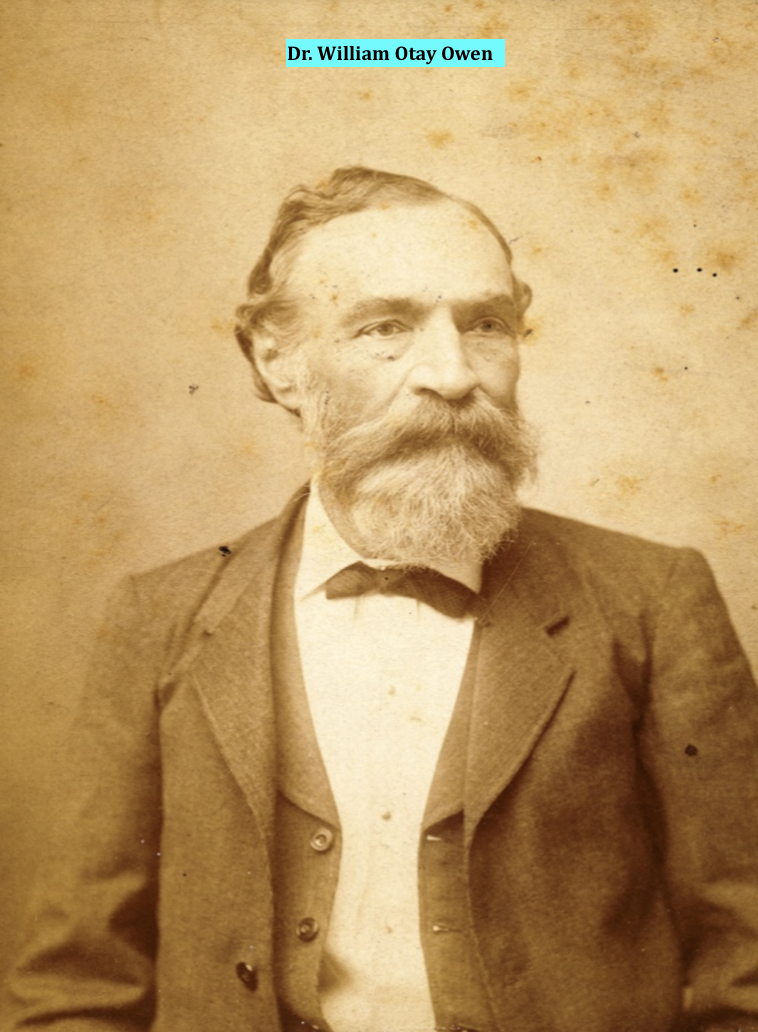
Dr. William Otway Owen
An undated studio portrait of Dr. William Otway Owen, wearing a dark suit, white shirt, and dark bow tie. His hair is short and wavy on top, full beard, and mustache. Condition of this photograph is excellent. It was made by and is inscribed Edwards, 804 Main St. Lynchburg, VA. Dr. Owen was the Surgeon-in-Charge of Lynchburg’s Confederate Medical Department. His brother was Robert Latham Owen Sr., president of the Virginia and Tennessee railroad during the Civil War.
Lynchburg’s Confederate Surgeons
Lynchburg’s Confederate Surgeons Marker
Lynchburg’s hospital center was staffed with over 50 military surgeons reporting for duty from all parts of the Confederacy.
The War Department appointed Lynchburg physician, William Otway Owen, as Surgeon-in-Charge of Lynchburg’s large medical complex.
Another Lynchburg physician, Dr. Edward A. Craighill, entered the Army at seventeen becoming the Medical Department’s youngest physician to serve. Craighill, who worked in the College Hospital, wrote of his incredible experiences after the War.
Dr. John J. Terrell, a Quaker from Bedford County, Virginia, served in Burton’s Hospital, reformed conditions in the infamous Pest House hospital (recreated nearby), and with Dr. Craighill, cared for the many wounded Union soldiers who had been left behind at Sandusky after General Hunter’s retreat following the Battle of Lynchburg.
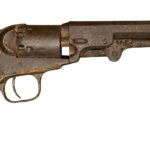
William Otway Owen, M.D. (1820-1892) of Lynchburg, Virginia, who was a distinguished surgeon with the Confederacy as documented by the records and was the surgeon in charge of the Lynchburg General Hospital during the Civil War. Wilson notes that the inscription is “contemporary with the service of the revolver, and was likely executed by a jewelry or firearms engraver…It is entirely possible the inscription was done at the Colt factory. The serial number record for that revolver has yet to be discovered. It is likely that shipment from Hartford took place late in the 1850s, prior to the outbreak of the Civil War.” Dr. William Otway Owen was born on October 20, 1820, to Dr. William Owen (1788-1875) and Jane Latham Owen (1795-1827). His step-mother, Otway Anna Carter (1805-1852) was the great-niece of George Washington and once owned the famous John Ramage miniature portrait of Washington. Owen was thus born into one of the prominent families in Lynchburg, Virginia. After his education Dr. W. O. Owen initially worked as a civil engineer on the James River and Kanawha Canal before turning his attention to medicine and studied in the medical department of the New York University, graduating in 1842. He was noted both as a general practitioner and an especially skilled surgeon. His brother Colonel Robert Latham Owen Sr. was also a civil engineer and surveyor and was the president of the Virginia and Tennessee Railroad during the Civil War and thus took an active role in the movement of Confederate troops and supplies. Colonel Owen and his wife Narcissa (granddaughter of Cherokee Chief John D. Chisholm) owned the famous Point of Honor in Lynchburg. After the war, he served as a state senator during reconstruction. Wilson indicates that Dr. Owen served as a private and sergeant early in the Civil War in B Company of the 14th Regiment of Virginia Volunteers known as the Bedford Rifle Greys and Captain Thomas Leftwich’s Company of Riflemen. He enlisted for a 12 month term on April 24, 1861, shortly after the beginning of hostilities. National Archive records indicate that he was appointed to the Medical Department on June 29, 1861, and was confirmed on April 4, 1863. Other entries indicate he was appointed surgeon in Virginia on May 3, 1861. He was posted in Lynchburg where he became the surgeon in charge of General Hospital No. 1 by May 1862. He was off duty sick starting on March 22, 1864, and returned to work on May 5th. He was noted as “absent from 6 to 23 May with A. N. V. as member of Reserve Surgeon Corps. Resumed his duties at this post 23 May…” He was also absent from December 9-12, 1862, to appear before the Army Medical Board and then the 12th through the 23rd to serve as temporary operating surgeon for the Army of Northern Virginia.” This would be during and just following the Battle of Fredericksburg. During the war, he came to be surgeon-in-chief for the thirty Confederate hospitals in Lynchburg carrying for the large number of sick and wounded. Near the end of the war, Lynchburg served as the capital of Virginia after the fall of Richmond. Dr. Owen was paroled on April 9, 1865, at Appomattox Court House with Lee and the Army of Northern Virginia just twenty miles from Lynchburg. The city was surrendered on April 12, 1864, and Dr. Owen was paroled again on April 16, 1865, Dr. Owen married Alice Lynde during the war in 1863, and they had four sons and two daughters and were active members of their community after the war. He returned to his medical practice and was a member of the Lynchburg Medical Association and Medical Society of Virginia. He taught his nephew, also W. O. Owen, medicine, and the younger Dr. Owen became a physician and colonel in the U.S. Army. One of his own sons, Dr. Robert O. Owen, also became a physician, and his son William Owen became a businessman in Indian Territory and worked with his cousins Robert L. Owen Jr. who was the agent and worked in various business ventures in Indian Territory with Robert who later became one of the first senators for Oklahoma as well as another cousin, Dr. W. O. Owen of the U.S. Army. He married Mary H. Severs, daughter of prominent businessman Captain Frederick B. Severs. The Daily Virginian of Lynchburg on February 16, 1892, an obituary on the front page with the headline reading “Death of Dr. W. O. Owen Lynchburg’s Leading Physician Passes.” He died at the age of 72 from complications from influenza and is noted as beloved by the community. “During the war his skill in this specialty made him prominent in the medical service of the Confederacy, and he was made surgeon-in-chief of the hospitals of this city, a position which he filled with signal ability.”
Related Items
-

Early Civil War Commission of Lt. Charles P. Herring (Later a Brig. General) in the Gray Reserves of Philadelphia Signed by Pennsylvania Wartime Governor Andrew Curtin
$375Early Civil War Commission of Lt. Charles P. Herring (Later a Brig. General) in the Gray Reserves of Philadelphia Signed by Pennsylvania Wartime Governor Andrew CurtinDecember 18, 2022 -
Rare 1st Edition Civil War Medical Book Entitled: A Manual of Etherization : Containing Directions for the Employment of Ether, Chloroform, and Other Anæsthetic Agents, by Inhalation, in Surgical Operations; with Instructions for the Preparation of Ether and Chloroform, and for Testing Them for Impurities. Comprising, also, a Brief History of the Discovery of Anæsthesia – By Charles T. Jackson
$850Rare 1st Edition Civil War Medical Book Entitled: A Manual of Etherization : Containing Directions for the Employment of Ether, Chloroform, and Other Anæsthetic Agents, by Inhalation, in Surgical Operations; with Instructions for the Preparation of Ether and Chloroform, and for Testing Them for Impurities. Comprising, also, a Brief History of the Discovery of Anæsthesia – By Charles T. JacksonJanuary 24, 2026 -
Large Format Salt Print of Captain Robin Jones 1st SC Cavalry KIA at Brandy Station
$3,000Large Format Salt Print of Captain Robin Jones 1st SC Cavalry KIA at Brandy StationMay 26, 2024 -
Large Collection of Civil War Period Newspapers – Southern and Northern Wartime Editions
Large Collection of Civil War Period Newspapers – Southern and Northern Wartime EditionsOctober 28, 2025