Civil War Model 1860 Spencer CarbineDecember 28, 2025






Civil War Model 1860 Spencer Carbine
$2,650
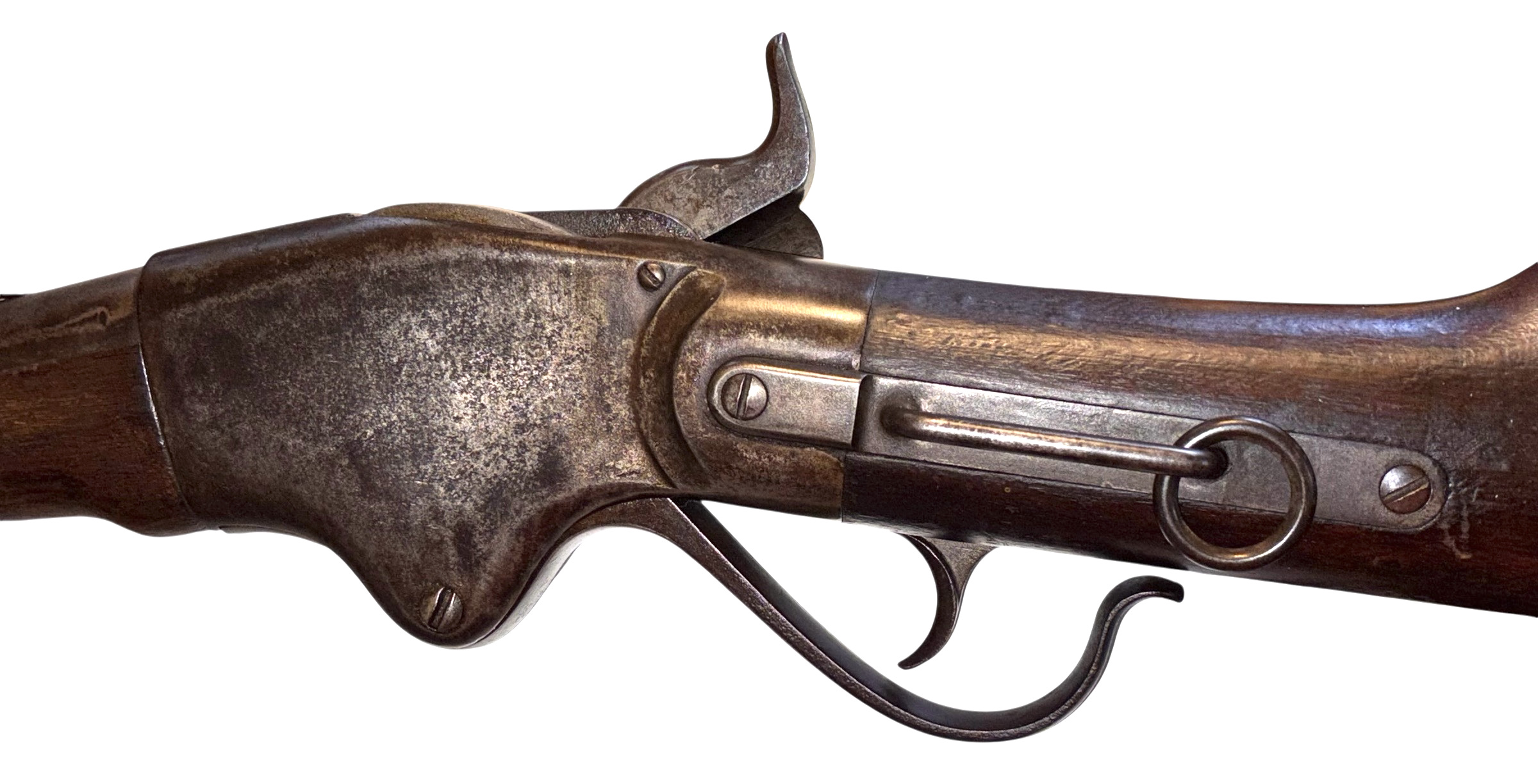
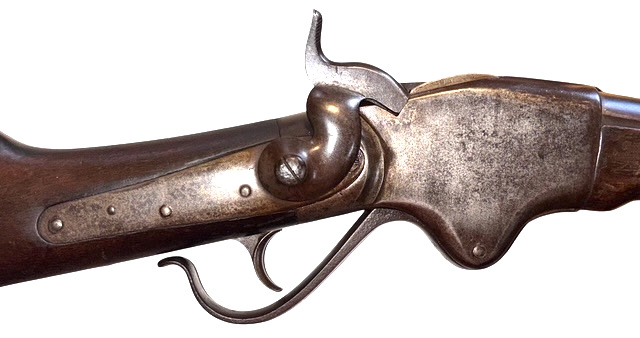
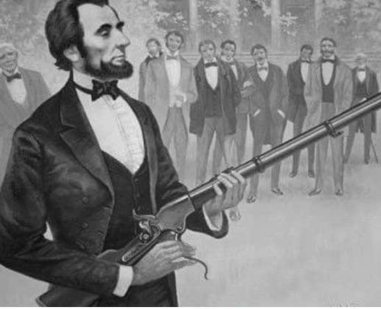
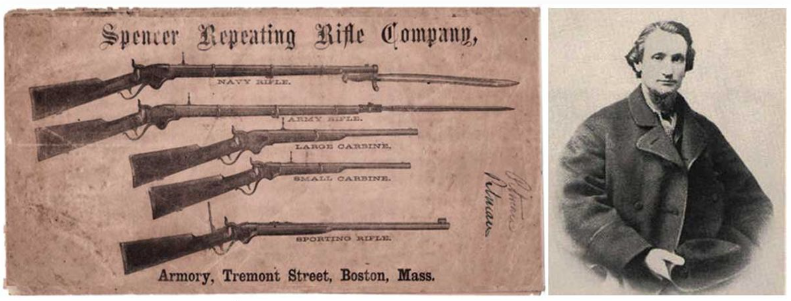
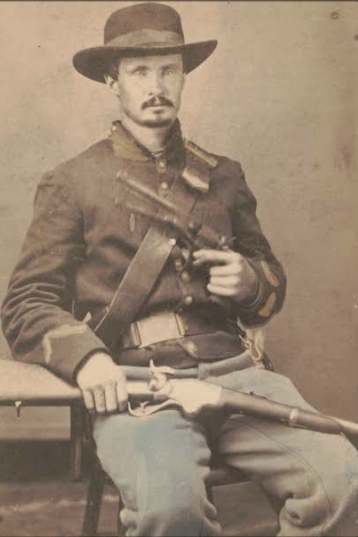
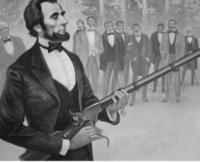
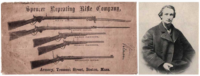
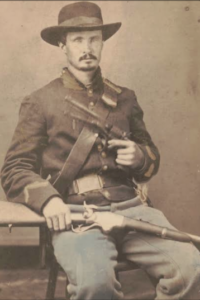
Civil War Model 1860 Spencer Carbine – These revolutionary carbines and rifles were manufactured by the Spencer Repeating Rifle Company of Boston, with some later versions manufactured by the Burnside Rifle Company of Rhode, Island; of the total number of rifles and carbines manufactured (approximately 144,500), 107,372 were purchased by the U.S. Government – they would see use during the mid-Civil War years, as well as during the early Indian War period. Invented by Connecticut resident, Christopher Miner Spencer, who had gained firearms manufacturing experience working at Colt Firearms, in Hartford. The rifle was famously test fired by President Abraham Lincoln in early August 1863, firing at a target on the National Mall; Lincoln would almost immediately suggest the approval of the Army’s purchase of the weapons, initially the rifles and shortly thereafter, the carbines, over the objection of the General in charge of the Ordnance Department, who Lincoln dismissed. By the cessation of hostilities in 1865, the Spencer rifle and carbine were established as the main firearm of the Union cavalry, gaining wide use, after the Civil War and during the early Indian War period. Famously, a somewhat incredulous Confederate soldier after being captured by Custer’s 5th Michigan Cavalry at Gettysburg, stated: “(Spencers) load in the morning and fire all day!” At that point in the war, the 5th Michigan Cavalry was actually armed with Spencer rifles, as the carbines had yet to be issued.
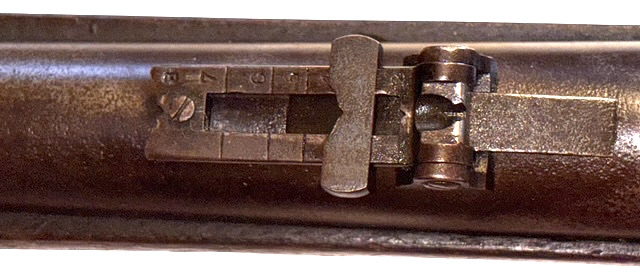
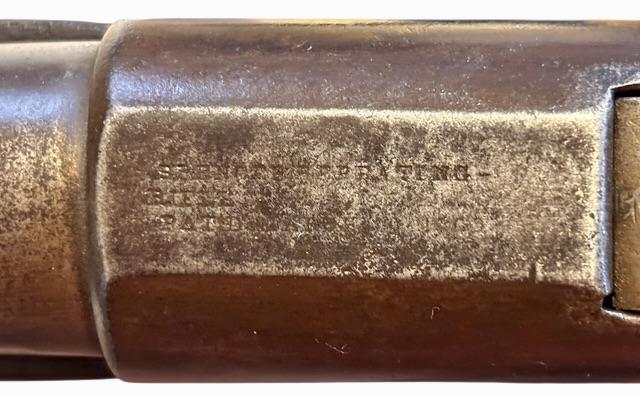
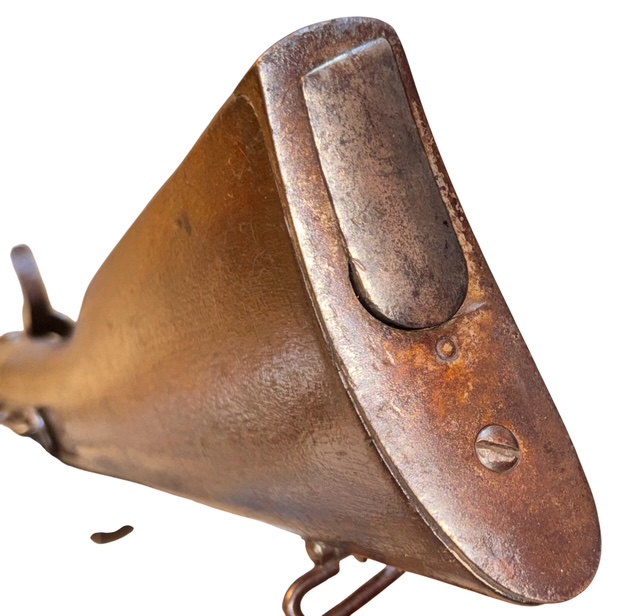
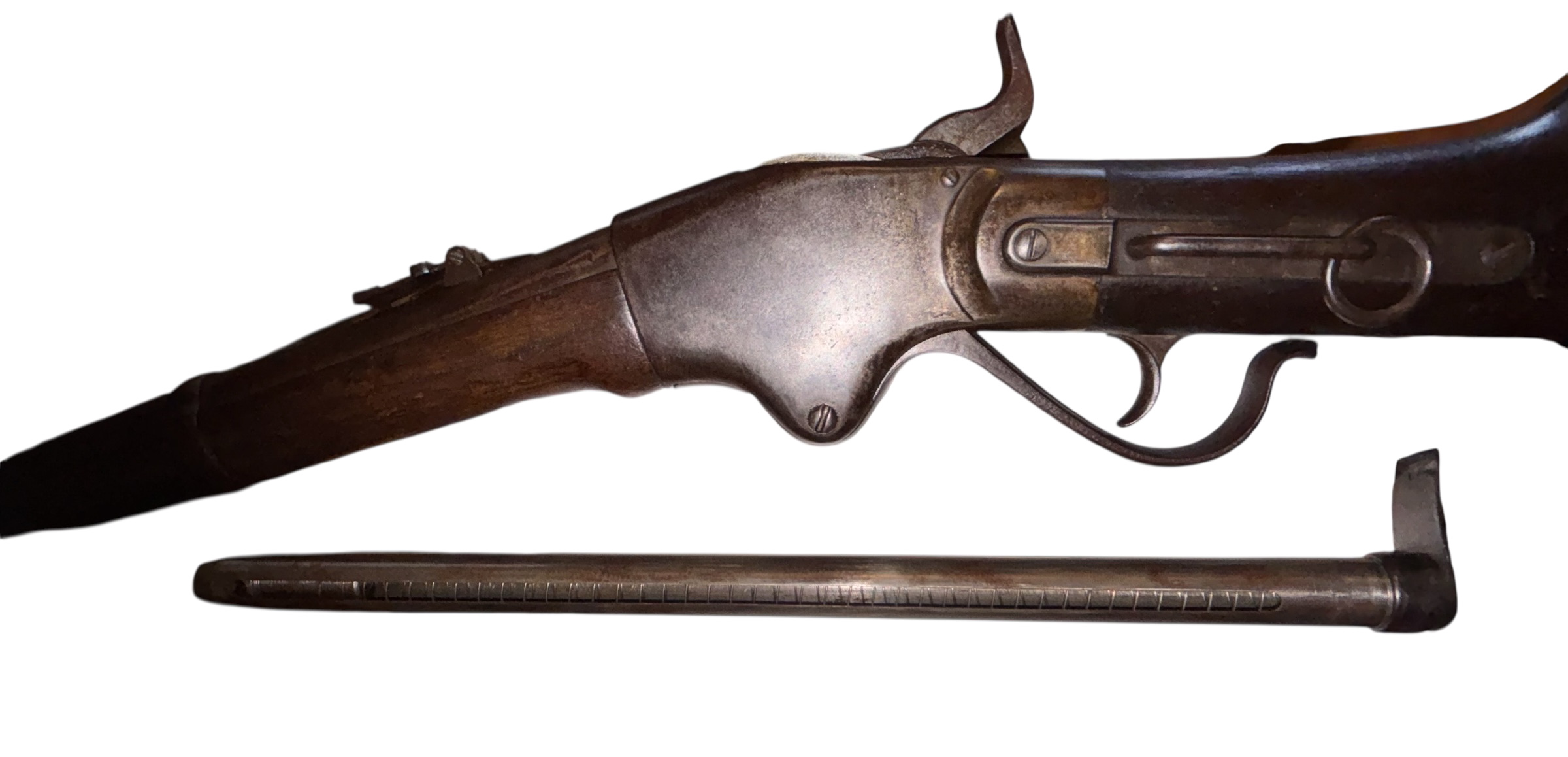
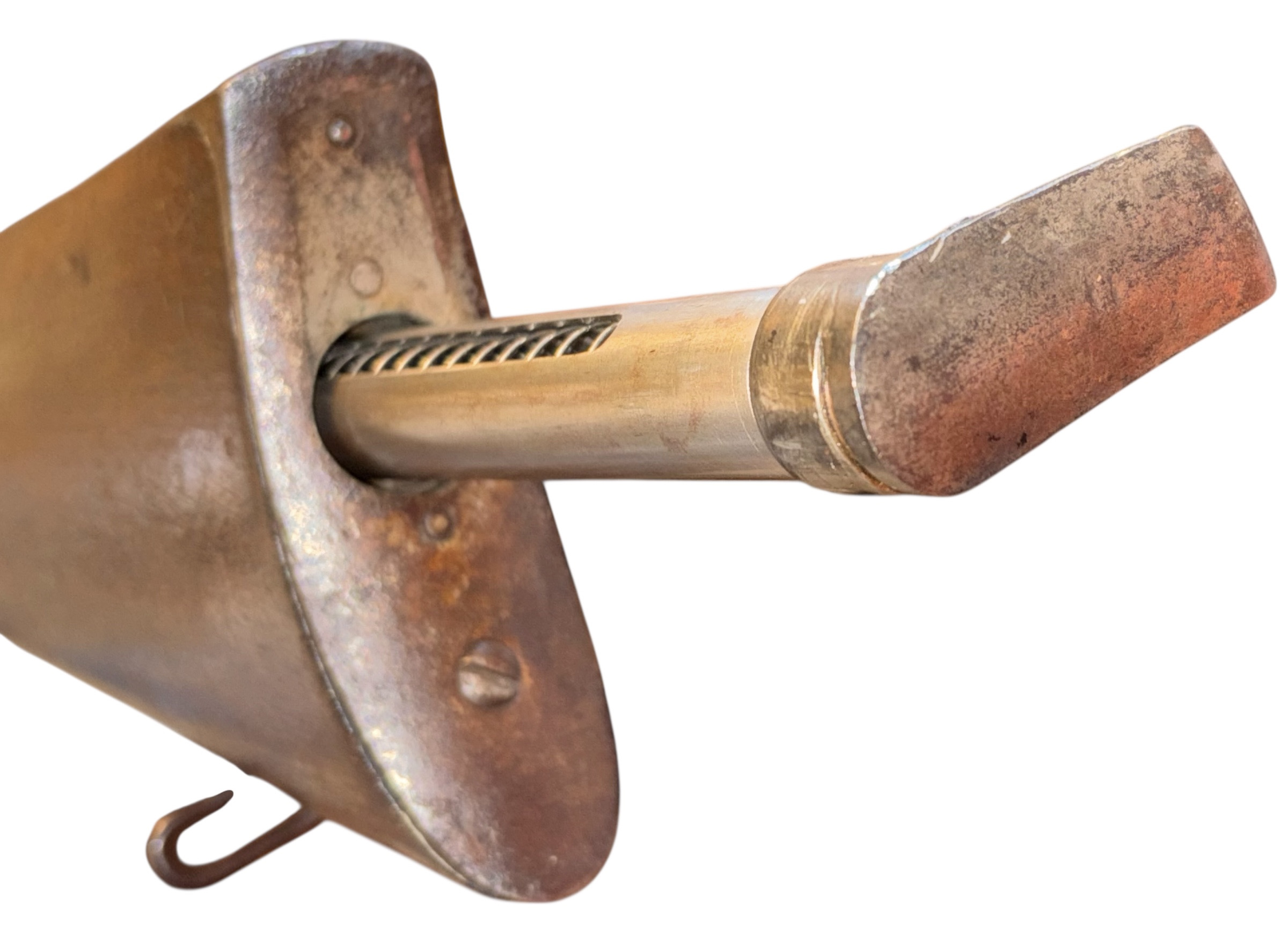
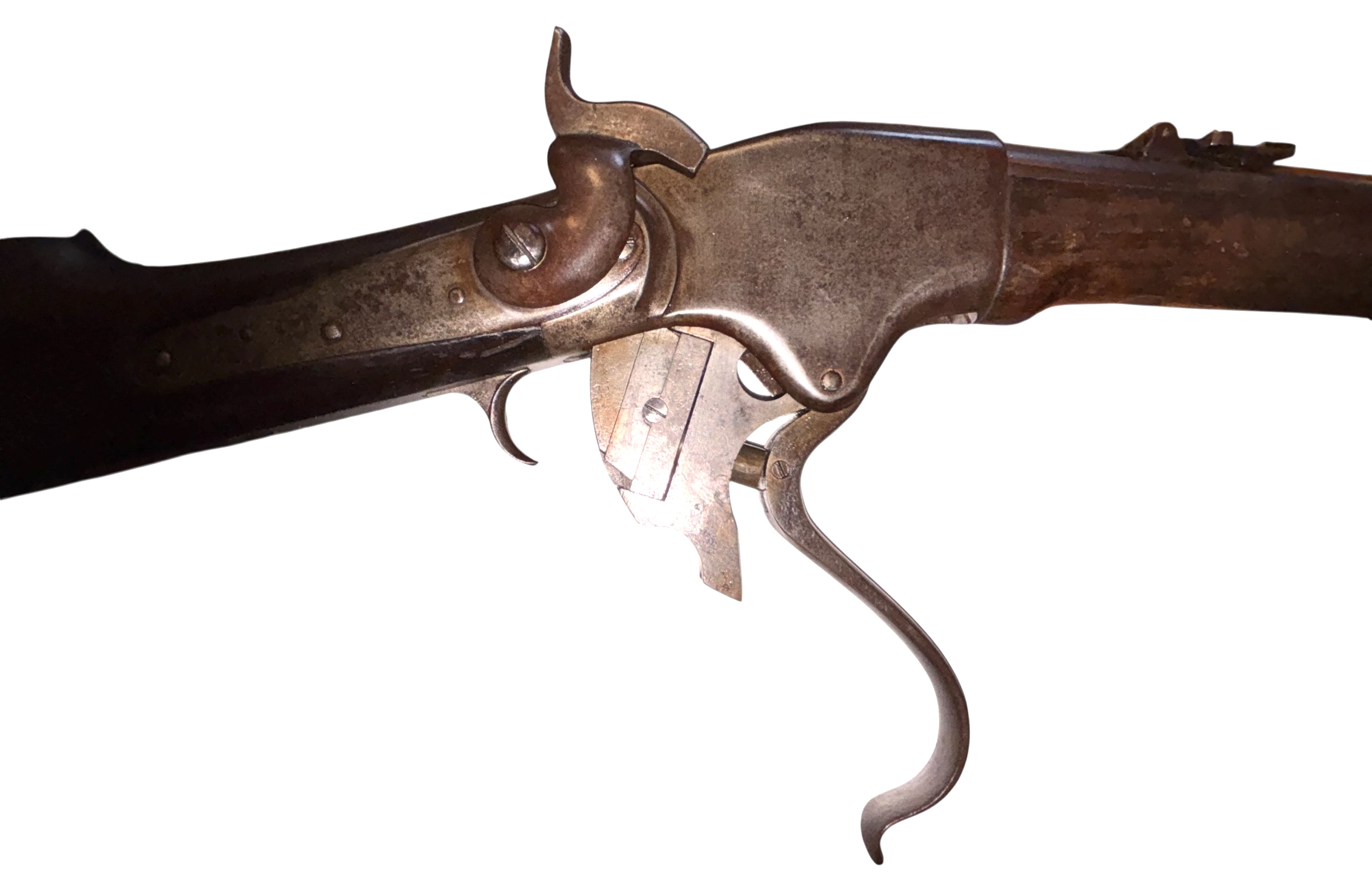
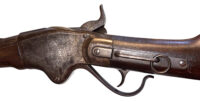
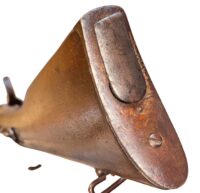
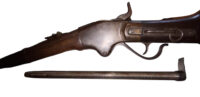
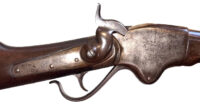
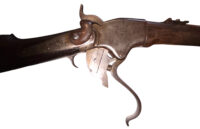
This .52 cal. Spencer carbine remains in overall very good condition; the metal exhibits a gray appearance, with some areas of minor blemishes and minor pitting; its loading and firing action are crisp and functional. The unique tubular, seven cartridge magazine is in place in the butt plate, and its spring is functional. The carbine retains its heavy gauge sling bar and ring; the oiled walnut stock is in good condition, exhibiting a few minor, period dings. The bore is clean, with a modest remainder of 6-groove rifling. On top of the receiver is the stamping:
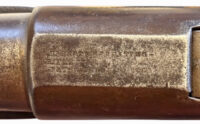
“SPENCER REPEATING
RIFLE CO. (rest is obscured)
PAT’D MARCH 6, 1860”
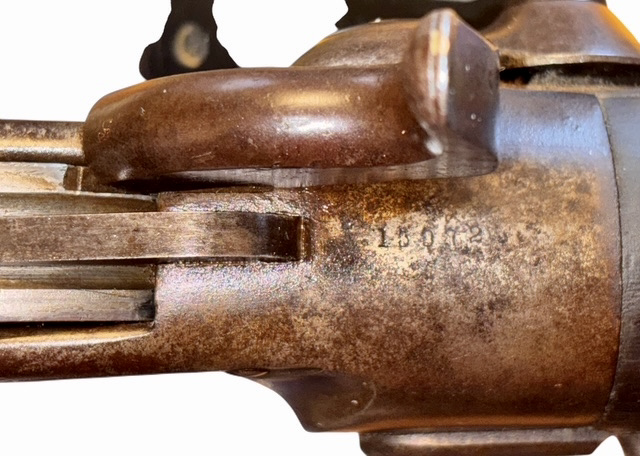
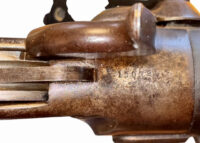
On the distal area of the receiver is the serial number – 15072 – this number is indicative of a date of manufacture between 1863 and 1865 (serial numbers for that period range from 11000 to 61000). The barrel is 22” in length.
The Spencer rifle combined a rolling breechblock with a seven-shot tubular magazine in the buttstock that was cycled with a lever action, a truly advanced design in an era where two to three shots per minute was the norm for a typical infantry muzzleloader. Though some Union officials noticed the advantages of the Spencer rifle, the gun’s road to mass production was obstructed by skeptics in the War Department. An American inventor from Manchester, Connecticut, Christopher Miner Spencer learned tooling and machinery from an early age. Spencer gained experience in the field of firearms production working at Colt Firearms in Hartford. In his free time, Spencer began developing a concept for a breechloading repeating rifle using internally primed rimfire metallic cartridges. In February 1863, Major General William S. Rosecrans established a cavalry brigade under the command of Colonel John T. Wilder, a forward-thinking officer who understood the advantages of speed and superior firepower. Wilder originally commissioned 900 Henry rifles from Spencer’s competitor, the New Haven Arms Company. New Haven Arms was unable to fulfill the order at the cost Wilder requested, so he struck up a deal with Christopher Spencer instead. Frustrated with the Ordnance Department, Christopher Spencer took matters into his own hands and marched into the White House in August of 1863 carrying one of his rifles.
In the December 1921 issue of ‘Scientific American’, Spencer recalls, “On my arrival at the White House, I was ushered immediately into the reception room, with my repeating rifle in my hand, and there I found the President alone. I took the rifle from its cloth case and I handed it to him. He examined it carefully and handled it like one familiar with firearms. He requested me to take it apart and show the ‘inwardness of the thing.’ Approving the gun, he asked me if I had any engagement for the following day, and requested me to come over about 2 o’clock, when, he said, ‘We will go out and see the thing shoot.’” The next day, on the National Mall, President Lincoln sank seven shots into a 3 x 6-inch target board from a distance of 40 yards, including a bull’s eye. Impressed with the design, Lincoln pressured the Ordnance Department over the next few months to adopt the new rifle.
Related Items
-
Civil War Issued 4th / 5th Model .54 Cal. Burnside Carbine
Civil War Issued 4th / 5th Model .54 Cal. Burnside CarbineSeptember 17, 2025 -
Colt Special Model 1861 Rifled Musket
Colt Special Model 1861 Rifled MusketMarch 15, 2025 -
Original Civil War Period Box of Sharps Carbine and Rifle Cartridges Containing Three Remaining Sharps Linen Cartridges
$575Original Civil War Period Box of Sharps Carbine and Rifle Cartridges Containing Three Remaining Sharps Linen CartridgesDecember 19, 2025 -
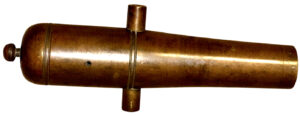
Mid-19th Century Civil War Period Cast Brass Diminutive Cannon Tube (Model)
$275Mid-19th Century Civil War Period Cast Brass Diminutive Cannon Tube (Model)June 5, 2025