Carved Bone Shield with Lettering for the Confederate Co. B 1st Maryland Cavalry from the Home of Capt. Oswald Tilghman, Terry’s Texas Rangers and the Norfolk Light ArtilleryJuly 30, 2026
Carved Bone Shield with Lettering for the Confederate Co. B 1st Maryland Cavalry from the Home of Capt. Oswald Tilghman, Terry’s Texas Rangers and the Norfolk Light Artillery
SOLD
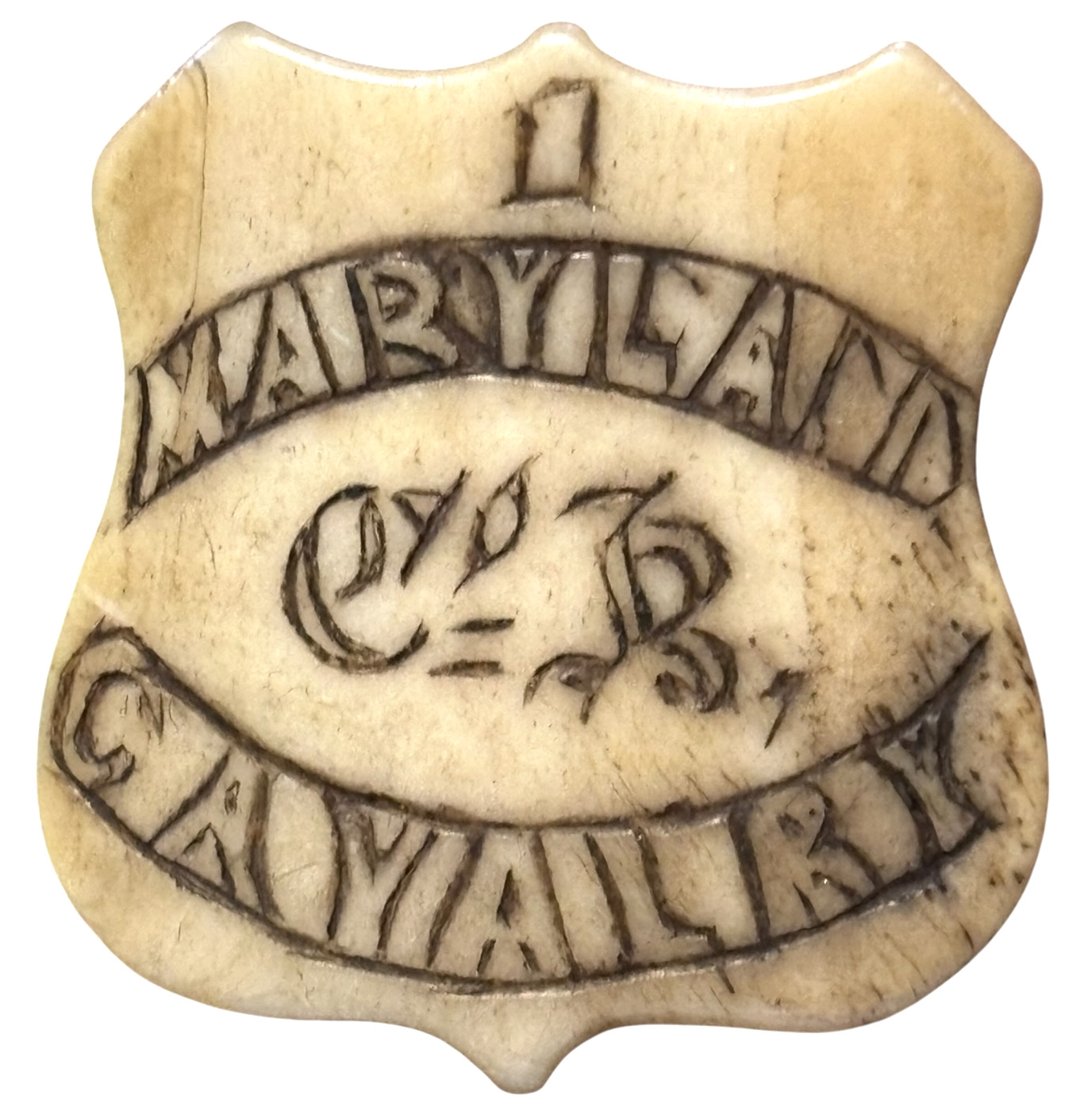
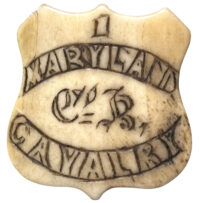
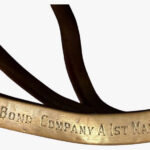
Carved Bone Shield with Lettering for the Confederate Co. B 1st Maryland Cavalry from the Home of Capt. Oswald Tilghman, Terry’s Texas Rangers and the Norfolk Light Artillery – We have had several Union carved, lettered bone neckerchief slides, pendants or watch fobs, but this is only the second Confederate example we have had or even encountered. Skillfully created, this bone shield has the following carved and highlighted on the front of the shield:
“1
MARYLAND
CYO B
CAVALRY”
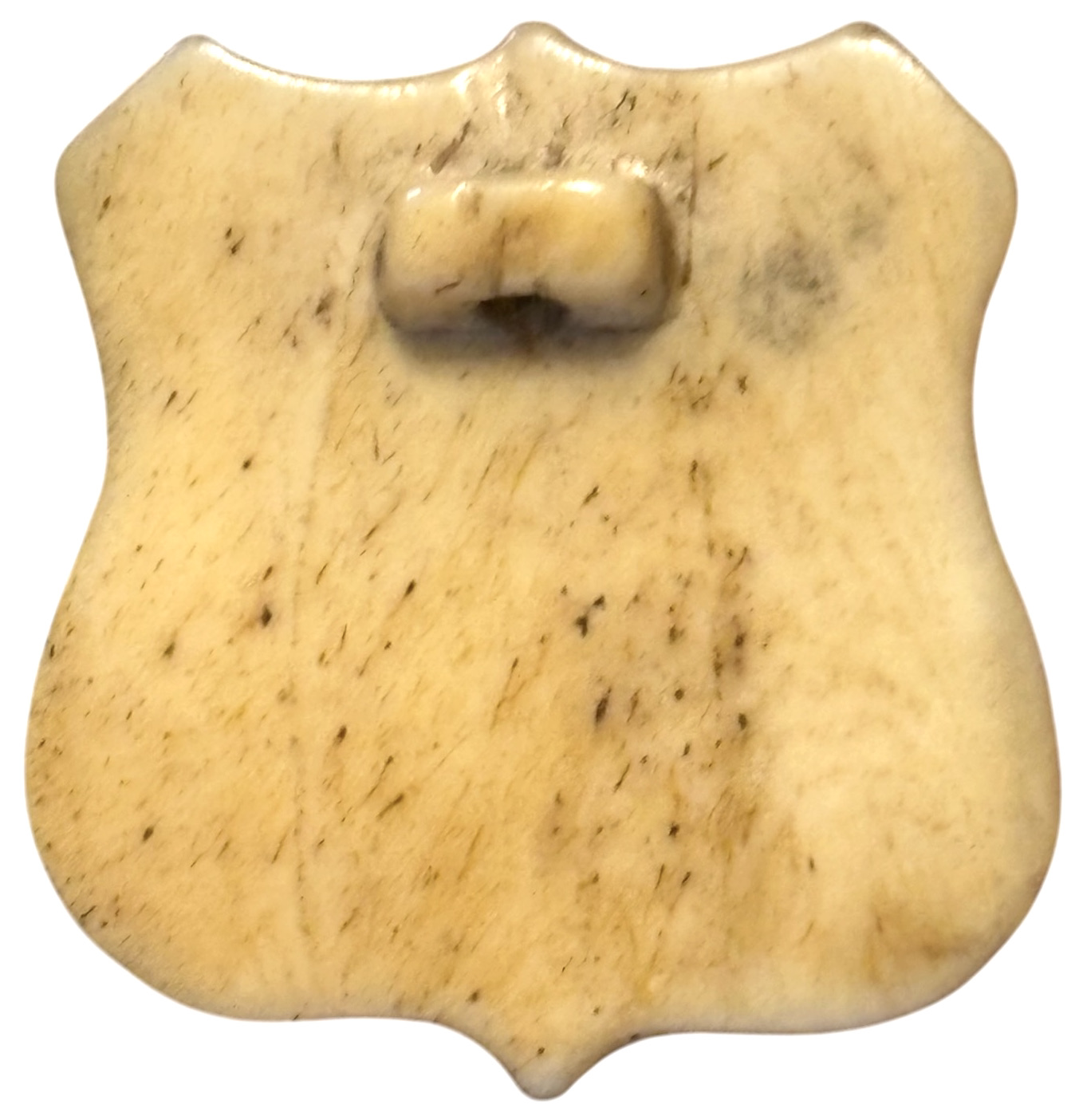
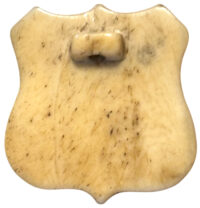
On the back of the shield is a raised stub with a small hole through it, indicating the shield’s possible use as a hat insignia, ID tag or watch fob. The shield could be prisoner art or camp work. The shield measures approximately – 1.25” x 1.25” and is in excellent condition.
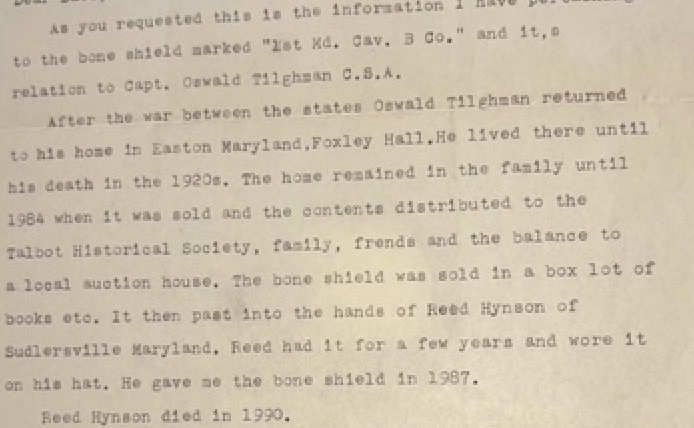
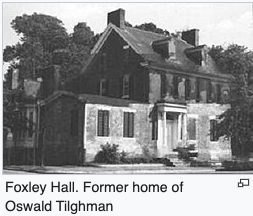
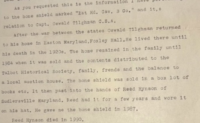
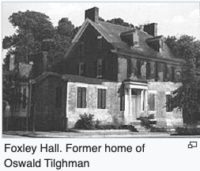
When we obtained this shield, it was accompanied by a typed letter of provenance, dated March 15, 1995 (we will provide the buyer with that letter); the letter stated that the shield had been part of the contents of a house in Easton, Maryland, called Foxley Hall, that was auctioned off in 1984. The house had been the Tilghman family estate and had been occupied by Captain Oswald Tilghman***, a Confederate officer, until his death in 1925. Captain Tilghman, cousin of Confederate General Lloyd Tilghman of Maryland, was initially in a Texas Cavalry regiment, then, shortly into the war, transferred to the Norfolk Light Artillery – his significant war record is enumerated below. The shield was obtained by two or three collectors in the 1980s and 90s. There is no additional information as to how or why Capt. Tilghman had the shield.
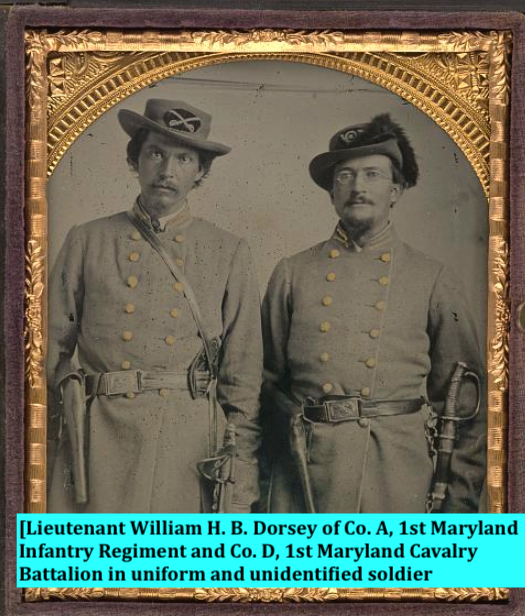
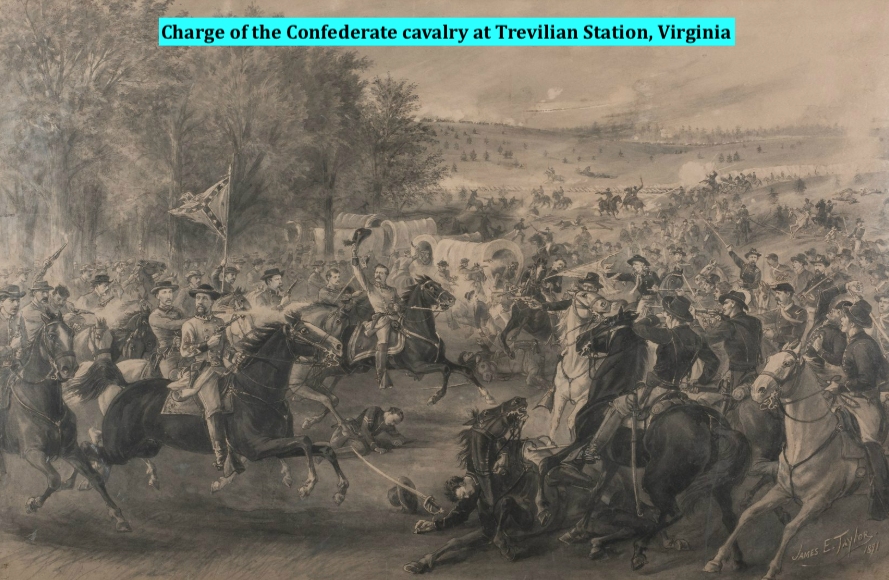
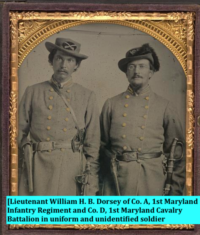
Confederate Company B of the 1st Maryland Cavalry Battalion was composed of Maryland volunteers, formed in November 1862 at Winchester, Virginia. Initial formation was under Major Ridgely Brown, with service in Stonewall Jackson’s Corps, as well as participation under Captain Harry Gilmor. Company B, formed in late 1862, along with Companies C and D, joined Company A, to create the complete battalion of the 1st Maryland Cavalry. Commanded overall by Captain (later Major) Ridgely Brown, the battalion would ultimately be associated with prominent partisan leader Harry Gilmor, who commanded elements including Company B during scouting and raiding operations.Campaigns and engagements would include service in the Shenandoah Valley performing demanding picket, scouting, and messenger assignments, the Gettysburg Campaign, a late war invasion into the North when attached to Ewell’s Corps, acting as scouts and helping guard Confederate lines and wounded soldiers and the Appomattox Campaign. Additional action would include various cavalry engagements across Virginia, including operations around Trevillian’s Station and the defense lines of the Shenandoah Valley until the final phases of the war
1st Maryland Cavalry Battalion
Active May, 1862–April, 1865
Maryland campaign
Gettysburg campaign
Valley campaigns of 1864
Overland Campaign
Commanders
Notable
Commanders:
Colonel Harry Gilmor
William E. Jones (general)
Gus Dorsey
C. Irving Ditty
History
On May 15, 1862, a group of Marylanders who had been attached to the 1st Virginia Cavalry formed what would formally become the 1st Maryland under Ridgely Brown of Montgomery County. The group was attached to Stonewall Jackson’s Corp and participated in Valley Campaign. It served with the 2nd Virginia Cavalry Regiment under Thomas T. Munford. On September 4, it crossed the Potomac River at Edward’s Ferry participated in the Maryland Campaign. But did not actively fight at Antietam. The unit served under George H. Steuart in the Maryland Line. It formally was organized at Winchester on November 25, 1862, and staff officers were appointed. In spring 1863, the unit was part of the Jones–Imboden Raid under Grumble Jones. Summer 1863 saw it invade the North with the Army of Northern Virginia. It was attached to Ewell’s Corps and acted as scouts and messengers. After the Battle of Gettysburg a portion of the unit, served with John Imboden’s men escorting the wounded. Members of the unit also fought at Monterey Pass. On July 6, it participated at the Battle of Hagerstown.
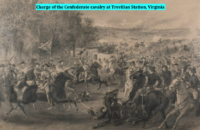
In early May 1864 a portion of the unit “annoyed” a group of George Custer’s Michigan cavalry. Then Colonel Brown was killed on June 1, near the South Anna River. It participated at the Battle of Trevilian Station In July 1864, it again encountered the Michigan cavalry and it drove the unit to Hanover Town, Virginia.In 1864 a section of the unit, as part of the Valley Campaigns of 1864, invaded Maryland and took part in Gilmor’s Raid across Maryland.July 30 saw it engage, along with the other troops under John McCausland, in the burning of Chambersburg, Pennsylvania. In August, it raided Moorefield, West Virginia.
In 1865, it served in the Appomattox campaign. It was again attached to Munford. At the very end of the war it dispersed and the men returned to their homes rather than surrender to the Union. This after receiving a letter in late April, from Munford near Lynchburg.
1st Maryland Cavalry, CSA
History
The history of the 1st Maryland Cavalry begins with the decision of 18 members of Co. K., 1st Va Cavalry not to re-enlist on May 15, 1862, after serving a year in the Confederate Army. Co. K. was predominatly Marylanders and had served with Stuart’s 1st Va almost from the outset of the war. These men believed that Maryland should have it’s own Cavalry Regiment and so they set out to raise it. Recruiting was brisk, and Co. A. was quickly formed with CPT Ridgely Brown at it’s helm. Co. A. would provide the nucleus around which the regiment would be built, but it would have to be built in the field. Co. A. was ordered to the Valley and attached to Colonel Munford’s 2nd Va until a full battalion of cavalry could be raised.
The 1st Md’s initial history is one and the same as the 2nd Va’s. It participated in Jackson’s Valley Campaign, distinguishing itself at Harrisonburg against the 1st N.J. Cavalry. It supported the 1st Maryland Infantry at Cross Keys. Was with Jackson at Richmond, Manassas and Antietam. Gradually the small command took shape. Co. A. was soon joined by B., C. & D. On Nov 25th at Winchester the battalion was officially formed. CPT Brown was promoted to Major and placed in command of the battalion. Shortly afterwards two additional companies were formed.
The 1st Md. spent the winter of 62/63 at various points in the Valley performing mostly picket duty. On Jan 2nd they accompanied General Grumble Jones on an expedition to Moorefield that amounted to little more than a patrol en masse. On February 25th while on picket duty near Strasburg, Cpt’s Bond and Dorsey, commanding Co’s A. & D. took it in their heads to probe the Federal position near Winchester. Two miles out of town on the Cedar Creek road they ran through a Federal picket. They did it again at the Staunton Road junction. They shot up a third picket in a nearby house. At Kernstown they attacked a mounted picket, capturing 15 horses and 14 men, while only loosing one man. As Bond smugly returned to Strasburg with his booty, General Milroy dispatched the 1st N.Y. and 13th Pa Cavalry to intercept him. Co’s B. & G. were sent out on the morning of the 26th to relieve Co’s A & D. Instead they ran smack into the Federal cavalry. Fortunately General Jones, at the head of Colonel Funston’s 11th Va was near by. A full out cavalry battle soon ensued. Eventually the Federal cavalry was successfully driven off. Bond and Dorsey’s little adventure though resulted in the capture of over 200 Federal troops and horses.
On Apr 21st Jones left Lacey Springs on a raid into W.Va. At Greenland Pass, the command was held up by a garrison which had occuppied a church that had complete command of the pass. The cavalry was unable to carry the church. Fighting dismounted, elements of the 1st Md attacked the church after dark and set it on fire. Jones divided his command and the 1st Md. rode with the 12th Va. and McNeil’s Partisan Rangers to Oakland, where 40 prisoners were taken and the railroad bridge was damaged. That night Morgantown was captured. Soon after the command reunited and began retracing it’s steps back to Virginia. On the 29th, with Co. E. fighting dismounted to hold the attention of Federal infantry, the remainder of the battalion encircled approx 300 Federal troops. On the 30th the battalion captured a company of Federal cavalry at Bridgeport. Jones then moved to Oiltown and destroyed a large quanity of oil and machinery. Then Jones moved back to his base in the Valley.
Back in the Valley, the 1st Md. was directed to join the 2nd Maryland Inf. and Baltimore Light Artillery at Fisher’s Hill. General Jenkins arrived there several days later and assumed command of the lot. On Jun 10th he moved his command to Cedar Creek. On the 12th, Co. E., riding with Harry Gilmor and eight of his men, and a party from the 14th Va Cavalry, ran into a superior force of combined arms, artillery, infantry and cavalry. In the skirmish that followed Co. E. suffered 5 dead, and the wounding and capture of 30 others. On Jun 12th Jenkins moved toward Front Royal. He left behind his Md. infantry and artillery, and Co. A., 1st Md. Cavalry, who were directed to join General Ewell at Winchester. Through out the remainder of the Gettysburg Campaign, Co. A. served as Ewell’s recon arm and as couriers. The remainder of the battalion was temporarily placed under the command of Major Harry Gilmor, who was instructed to strike out ahead of Ewell’s Corps and attempt to secure the bridge over the Monocacy River near Frederick. Finding the bridge to strongly guarded, Gilmor moved to South Mountain, then to Hagerstown. Here he was directed to support George Hume Steuart’s Brigade on its expedition to Chambersburg and Carlisle via McConnellsburg, to collect horses, cattle and shoes.
Just short of Carlisle, Gilmor was directed to report to General Ewell somewhere south near a town called Gettysburg. Upon his arrival on the 1st, Gilmor was directed to provide support to Pogue’s and Carter’s batteries. Co. A., was placed on provost duty in the town, and saw no action. As the battle progressed the 1st Md. was used exclusively as couriers and to support artillery. They saw no mounted action, despite what some historians write about their taking part in the great cavalry battle east of Gettysburg on the third day.
Though their role at Gettysburg was less than glamour, Lee’s trek back to Virginia would provide some of the 1st Md. most stelar moments. The battalion was scattered out along Ewell’s trains to provide protection from marauding Federal cavalry. Cpt Emack, Co. B. was directed to picket the Emmitsburg Road near Monterey. Emack’s stand there against the full might of General Kilpatrick’s Cavalry has become legendary, and has been presented in such fine magazines as Civil War Times. With 50 men and a single gun, Emack held off numerous attacks by Kilpatrick. He was eventually joined by Co. G. This small band of spartans valiantly held their Thermoplye until the bitter end, when a charge by Kilpatrick, shortly after 3:00 A.M. swept the Marylanders aside. On the 6th, the 1st Md. played a prominent role in the cavalry battle that rolled back and forth through the streets of Hagerstown.
After it’s return to Virginia, the 1st Md. was assigned to the Brigade of General Lomax. It remained near Leetown until Oct 11th performing picket duty and the occassional skirmish. On the 11th the 1st moved with Fitzhugh Lee’s division toward the Rappahannock, where it participated in the engagement at Morton’s Ford and later in the day at Brandy Station. They participated in several skirmishes while Lee and Meade attempted to manuver around one another. When the two armies settled into winter quarters, the 1st Md was directed to move to Hanover Junction, where Colonel Bradley Johnson was forming the “Maryland Line.” Here they joined the Maryland Artillery units, 1st, 2nd and 4th, as well as the 2nd Md Infantry.
In the spring of 1864 Judson Kilpatrick attempted a cavalry raid on Richmond. On Mar 1st Colonel Johnson received a telegram from Lee’s HQ, informing him that a large body of cavalry was passing his right flank. Most of the 1st Md. was out on patrol. Scouts from the 1st Md. found two columns, one of a bout 500 riders moving fast toward the James about 20 miles above Richmond; and one of aprrox 3500 sabers. Having only 60 men at his disposal,Johnson was unable to directly atttack Kilpatrick. Instead he kept snapping at his rear and flanks, capturing a number of men. After capturing a courier from Colonel Ulric Dahlgren, commanding the smaller column, which announced his plan to attack Richmond, Johnson deliberately charged into Kilpatrick’s rear guard, creating such a havoc that Kilpatrick believed he was being attacked by a superior force. Distracted, Kilpatrick was unable to asit Ulric, whose attack became a disaster. Johnson then dogged Kilpatrick for the next day. When Kilpatrick would draw up his forces to do battle Johnson would melt away. He took care never to reveal his true strength, and kept Kilpatrick at bay until Hampton’s cavalry came up the following day. It was during this action that the infamous orders of Dalgren’s to kill President Davis were found.
Again in May, when Sheridan struck for Richmond, the plucky 1st Md found itself dogging Sheridan’s column. Shortly after 11:00 P.M. on the night of the 9th Colonel Ridgely Brown with 150 sabers came upon the came of what they had supposed was a small raiding party. Brown dismounted, formed a skirmish line and attacked the camp. He soon became embroiled in a hot fire fight. From his prisoners he learned that he had taken on a portion of Sheridan’s column. He held his ground against counter-attacks until daylight. Then he received a dispatch from JEB Stuart who was massing his cavalry in an order to intercept Sheridan. Stuart asked Brown to delay Sheridan as long as he could. Through out the morning Brown repeatedly pushed in Sheridan’s pickets. The Federals responded by mounting a charge, which the Marylanders repulsed. For some time the two forces eyed one another, neither able to determine the other’s size due to the dense woods. Sheridan’s men attempted to charge the Marylanders, but they, slipped away and returned to Hanover Junction.
In the later part of May Johnson led the 1st Md on a scout of Grant’s flank and reported back to General Lee that they had encountered columns of infantry moving down from Bowling Green. Johnson was then directed to join Fitz Lee at Hanover Court House. Enroute, the 1st Md. encountered the 5th N.C. Infantry engaged with Federal troops near Dabney’s Ferry. In the hand to hand fighting that quickly ensued, the 1st Md found itself pinned in a fenced area and unable to manuver. Johnson’s horse was shot out from under him, and the beloved Colonel Brown was wounded. The regiment lost nearly 50 men in this, the battle of Pollard’s Farm. Due to the Marylanders’ sacrifice the North Carolinians were able to extract themselves from their melee with Custard’s Brigade.
The battalion was hotly engaged in minor skirmishes over the next couple of days. On Jun 1st it fought a six hour struggle to defend the South Anna Bridge, during which Colonel Brown was killed. Again Sheridan moved toward Richmond. Wade Hampton moved to intercept. The 1st Md joined Hampton at Trevallion Station and fought on the right of his line. Custer broke through Hampton’s line at one point, but General Rosser drove him back to his own wagons, and the 1st Maryland was with Rosser and avenged themselves for their losses at Pollard’s Farm.
During the winter of 63/64 Johnson had formed a plan to kidnap President Lincoln. After Trevallion Station Hampton gave him leave to attempt it. Johnson moved his battalion into the Valley to collect fresh horses and rest his men and animals before they set off for Maryland. It was at this time that Jubal Early began his move toward Maryland. Early added the 1st Md it to his command. Johnson was promoted to General and both Gilmor’s Partisans and the remnants of Grumble Jones’ Brigade were added to Johnson’s cavalry giving him a full brigade.
As Early advanced on Harper’s Ferry he divided his command to secure Martinsburg and Leetown.Johnson led Early’s advance to Leetown and on Jul 3rd encounter a strong Federal cavalry force near Leetown. A severe engagement followed. Johnson was driven back on his reserves, then pressed forward driving the Federals through the town. Johnson crossed the Potomac on the 5th. At this time General McCausland moved to take Hagerstown and Johnson pressed across South Mountain toward Frederick. On the 8th he encountered Clendenin’s Illinois Cavalry and pushed it back towards Frederick. In front of Frederick he brought up the Baltimore Light, which engaged the _______in a cannon duel.
On the evening of the 8th Johnson was called to Early’s HQ and informed that he would lead a daring raid around Baltimore and Washington to rescue the Confederate POWs held at Point Lookout Prison. Click here to learn about the raid. When Early was unable to take Washington, Johnson was recalled to the army and served as it’s rear guard as it moved back into Virginia. Early and his command had been shocked as they had moved north through the Shenandoah. The North was palying a new game, burning farms, homes, mills, leaving women and children destitute. He directed McCausland and Johnson to capture and ransom Chambersburg, Pennsylvannia, for $100,000 in gold, or $500,000 in U.S. currency. When the citizens of Chambersburg refused to pay the ransom, the Confederates, including the 1st and 2nd Md, burned the town to the ground. Colonel Gilmor and General Johnson were not happy with their role in this operation. Nor were they happy with the way McCausland’s men carried themselves through out the entire operation. Johnson would later say of them that they had commited every crime known to man during that expedition. With Chambersburg in flames the Confederates moved back through Maryland. McCausland wanted to recoupe some of the ransom. At Hancock he ordered the town to be ransomed. Both Gilmor and Johnson argued against it. Hancock was a Southern town and had supported the cause throughout the war with men, money and supplies. McCausland would not change his mind. Johnson ordered Gilmor to ride into Hancock with the 1st and 2nd Md and post two men at every building. They were to shoot any of McCausland’s men who attempted to enter the town. Before Gilmor could obey, General Averill’s cavalry struck McCausland’s pickets. McCausland abandoned Hancock, but did not forget it. At Oldtown the 1st and 2nd Maryland engaged a well armed blockhouse supported by an iron clad gun battery mounted on a train. The Confederates moved on to Moorefield, West Virginia and there went into camp. The following morning Federal cavalry swept through the encampment. The 1st and 2nd Md’s losses were heavy. The cavalry was forced to disperse into the hills and make their way by ones and twos back to Early’s main body. There, McCausland accused Johnson of negligence. Johnson accussed his attacker of being negligent as well, and demanded a trial, which was never held.
After the Moorefield incident the 1st Md. particiapted in Early’s Valley campaign against Sheridan. It’s number’s were quickly reduced to the point that Early ordered the 1st to consolidate with the 2nd Md. The men raised a protest and sent a plea to the War Dept that Early’s order be revoked. It was and the 1st Md. retained it’s individuality. Shortly afterwards Co. K. 1st Va Cavalry transfered to the 1st Md, beefing up it’s ranks, and it’s commander Cpt Gustavus Dorsey was promoted to Lieutenant Colonel and given command of the 1st Maryland.
During the Battle of Fisher’s Hill on Sep 22, the regiment suffered greatly when it charged dismounted Federal cavalry. Dorsey was severely wounded as well. In Nov of 1864, now in General Davidson’s Brigade of Lomax’s Division, the 1st Md crossed the mountains into Rappahannock County to forage. Here they became engaged in a running battle with Jackson’s Cavalry C.S.A. and Breathed’s Horse Artillery against a portion of Custer’s Michigan Troopers.
The 1st Md next saw action in Mar of 1865 when the regiment was instructed to make quick hit and run attacks on Sheridan’s flank as he moved from Charlottesville to White House on the York River, setting the stage for the final chapter in their gallant history. From White House the 1st Md made their way to Richmond where they rested for several days. They were then ordered to rejoin Lomax in W.Va and set out to join him. Two days later they were recalled to Richmond and ordered to report to General Fitzhugh Lee, some 20 miles from Petersburg. They arrived in Richmond on Apr 2nd, and went into camp. The following morning they rode through the sombre city. Its streets were filled with anxious crowds. Something was happening, but the Marylanders were not a part of it. They continued south to Petersburg. There they encamped for the night.
Early in the morning the were roused from their slumber, they had new orders, to fall in behind Mahone’s Division and serve as it’s rear guard. The night sky was lit up by fires and explosions. Provisions that could not be carried away were being burned. Wagons and men were heading west. the Army of Northern Virgina was moving out of the Petersburg defenses. Over the next couple of days the Marylanders found themselves constantly engaged attempting to repel Federal cavlary which kept striking the column and trains. Their provsions soon ran out. There was little to be had from the trains. They fried dough in fat to subsist. Eventually they captured some raw pork and corn and lived on this from the time the army passed through Amelia Springs to Lynchburg. They were engaged in a skirmish at Amelia Springs and participated in the battle at High Bridge over the Appomattox, and assisted General Munford in his rear guard action near Farmville.
On the morning of Apr 9th Munford passed ahead of the army through Appomattox Court House and skirmished with Federal troops. Fighting was not heavy. There was sporadic firing between the infantry of both armies. Then the field became silent. A heavy column of Federal cavalry was seen rapidly approaching along Munford’s front. At one point the couln divided, and a portion of the column advanced through the fields toward Munford, driving his skirmishers back.
Designing the Federal intention, Colonel Dorsey orderedthe 1st Maryland to draw sabers and charge. Twice they charged the Federal cavalry, twice driving it back. During the second charge William C. Price fell mortally wounded. Moments later a Federal officer rode up with a white flag and announced that General Lee was about to surrender his army.
General Munford called a council of war. It was decided that the cavlary could make a break for it and maybe join Johnston in N.C. The cavalry squadrons split up to forage and await word concerning the disposition of Johnston situation. Several days later Munford recalled the 1st Maryland to Cloverdale in Botetourt County and informed them that Johnston had surrendered.
According to their chronicler, W.W. Goldsborough, the 1st Maryland Cavalry never surrendered. The men disperesed and in twos and threes made their way back home to Maryland. With little money and food they were each and every one dependent on the hosbitality of the people of Virginia to provide for their needs during their final ride.
***Oswald Tilghman
Oswald Tilghman
Residence was not listed.
Enlisted as a Priv(date unknown).
On 9/1/1861, he mustered into “B” Co. Texas 8th Cavalry.
He was disch on 5/1/1862
(Estimated date of enlistment & discharge)
On 6/1/1862, he mustered into Virginia Norfolk Light Artillery.
(Date and method of discharge not given.)
(Estimated date of enlistment, Served with brother)
He was listed as:
Was present 6/1/1862 Seven Pines, VA
POW 7/5/1863 Fort Hudson, LA (Estimated day)
Appointed (date and place not stated) (Summer 1862, General Tilghman’s staff)
Confined Johnson’s Island, OH (date not stated) (If confined here, he must be an officer)
Died 6/17/1932 in Easton, MD
(Postwar: Lawyer, State Representative, Historian, Commander of Charles S. Winder Camp UCV.)
After the war, he lived in 32 Foxley Hall, Easton, MD
Secretary of State of Maryland
In office
1904–1908
Governor Edwin Warfield
Preceded by Wilfred Bateman
Succeeded by N. Winslow Williams
Member of Maryland State Senate
In office
1894–1896
Personal details
Born March 7, 1841
near Oxford, Maryland, U.S.
Died June 17, 1932 (aged 91)
Easton, Maryland, U.S.
Resting place Spring Hill Cemetery
Easton, Maryland, U.S.
Relatives John Leeds Kerr (grandfather)
John Bozman Kerr (uncle)
Lloyd Tilghman (cousin)
Military career
Allegiance Confederate States of America
Service years 1861–1865
Rank Colonel
Unit Terry’s Texas Rangers,
Company B
Conflicts
Battle of Shiloh
Siege of Port Hudson (POW)
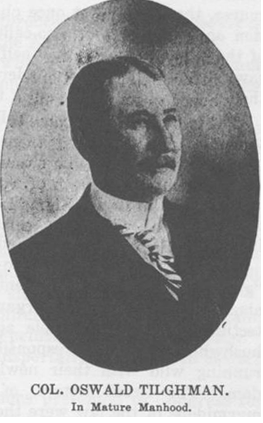
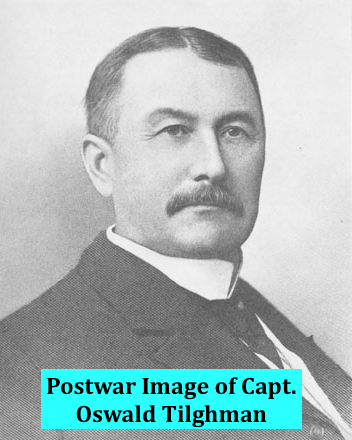
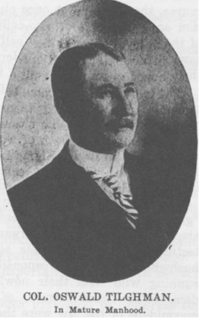
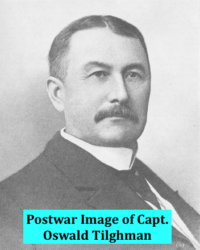
Oswald Tilghman (March 7, 1841 – June 17, 1932) was an officer of the Confederate States Army during the American Civil War; a lawyer; Maryland politician; Maryland Senator, Talbot County, (1894–96); Secretary of State of Maryland (1904–08); affiliate of the Maryland Democratic Party; author; and was active in veteran affairs. Native of Talbot County, Maryland.
Early life and ancestry
Col. Oswald Tilghman, Esq. was born on March 7, 1841, on a colonial Talbot County plantation known as Plimhimmon, near Oxford, Maryland, on March 7, 1841. His father, General Tench Tilghman (a graduate of West Point military academy), and his mother was a daughter of John Leeds Kerr, United States Senator of Maryland from 1841 to 1843. Matthew Tilghman, an ancestor, was a member of the Continental Congress at the time of the Declaration of Independence, and Colonel Tench Tilghman, another ancestor, served as aide-de-camp to General George Washington in the Continental Army.
Oswald Tilghman was educated at the Maryland Military Academy in Oxford, Maryland. After his education, he moved to Texas in 1859 and settled in Washington County.
As a descendant of Colonel Tench Tilghman, Oswald was admitted as a hereditary member of The Society of the Cincinnati in the state of Maryland in 1882. He later served as president of the Maryland Society from 1907 to 1931.
U.S. Civil War
When the American Civil War began in 1861, he volunteered as a private in Company B, in Terry’s Texas Rangers, of the Confederate States of America army. On April 6–7, 1862, he participated in the Battle of Shiloh in Tennessee and in the campaigns about Richmond, Virginia. He became a Lieutenant and served as an aide on the staff of his cousin, General Lloyd Tilghman (who was killed in front at the Battle of Champion Hill). On March 14, 1863, Oswald took active part, with his battery, in that led to the destruction of the United States steam frigate USS Mississippi (1841), of which Admiral George Dewey was then executive officer, when Admiral Farragut’s fleet attempted to pass the Confederate batteries. For his bravery on this occasion, he was commended by Lieutenant Colonel de Gournay, who commanded the left wing of the Confederate batteries. During the Siege of Port Hudson in Louisiana, Lieutenant Oswald Tilghman commanded the Rock City artillery of Nashville, Tennessee, a heavy battery on the banks of the Mississippi River and was the only one of the four officers of that battery who survived the siege. Lieut. Oswald Tilghman was taken captive during May 22 – July 9, 1863, at the Siege of Port Hudson, then was held prisoner at Johnson’s Island in Sandusky, Ohio, for 23 months until the conclusion of the war.
Later life
This section needs more citations. Please help improve this section by adding citations to reliable sources. Unsourced material may be challenged and removed. (July 2025) (Learn how and when to remove this message)
Return to Talbot County
When the conflict between North and South had been brought to a close in 1865, Tilghman returned to native area of Talbot County, Maryland, and began his preparation for the legal profession. He read law with Maryland Senator, Charles H. Gibson, was admitted to the bar in 1875, and engaged in the practice of law and in the real estate business. He resided at Foxley Hall, in Easton, Maryland, a colonial brick mansion built in 1801 by Henry Dickinson, whose son, Charles Dickinson, was killed by General Andrew Jackson in a duel in Logan County, Kentucky., in 1806. In 1882 he became a member of the Maryland Society of the Cincinnati.
Family
He was married in 1884 to Belle Harrison, daughter of Dr. Samuel A. Harrison, the local annalist of Talbot County. They had two children, Mary Foxley Tilghman (1886–1976) married John Frazer, PhD.,[6] and a son, Samuel Harrison Tilghman, a graduate in civil engineering of Lehigh University, class of 1907.
Post-Civil War activity
Maryland Governor William Thomas Hamilton, appointed Oswald Tilghman, in 1881, as one of the two commissioners, with the rank of colonel, to represent the state at the Centennial Celebration of Cornwallis’s surrender at Yorktown. On this occasion he wore the sword presented to Colonel Tench Tilghman by congress in 1781 for his especial service in bearing to the Continental Congress in Philadelphia, Pennsylvania, the official announcement from General George Washington of the surrender of the British garrison at Yorktown. Colonel Tilghman owned a valuable collection of Revolutionary relics and papers and was affiliated with many patriotic and fraternal societies such as:
Memberships
Maryland Historical Society
Vice-president of the Society of the Cincinnati of Maryland (It is the oldest hereditary society in North America)
Represented the Maryland State Society in the General Society of the Cincinnati
Member of the Maryland Society of Colonial Wars
Commander of Charles S. Winder Camp, United Confederate Veterans
Brigadier General of the 1st Brigade, 2nd Maryland Division of the United Confederate Veterans
Member of the Freemasonry
Member of the Odd Fellows
President of the Board of Development of the Eastern Shore of Maryland
Auditor of the Circuit Court of Talbot County for over twenty years
Political activity
Elected on the Democratic ballot, Senator Oswald Tilghman represented Talbot County in the Maryland Senate, 1894–96.
Member of the Maryland Democratic Party
Chairman, Committee on Public Buildings in Annapolis, Maryland
Member of Committee on Judicial Proceedings
Member of Committee on Pensions
Member of Committee on Chesapeake Bay and Tributaries
Member of Amendments to the Maryland Constitution of 1867
President of the Board of Development of the Eastern Shore of Maryland
Auditor of the Circuit Court of Talbot County, 1886–1906
Commissioner to represent Maryland at the Pan-American Exposition in Buffalo, New York, in 1901
Commissioner to represent Maryland at the exposition at Charleston, South Carolina, in 1902
The State Bureau of Immigration in 1896 was established largely through his efforts
From 1904 to 1908 he was appointed, Maryland’s Secretary of State by Governor Edwin Warfield. who was a long personal friend.
Publishing activity
He was the author of several historical topics, genealogical papers, and addresses.
Related Items
-
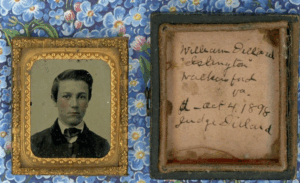
1/16 PLATE RUBY AMBROTYPE OF VMI CADET WILLIAM T. DILLARD WOUNDED IN THE BATTLE OF NEW MARKET
$1,8501/16 PLATE RUBY AMBROTYPE OF VMI CADET WILLIAM T. DILLARD WOUNDED IN THE BATTLE OF NEW MARKETDecember 18, 2023 -
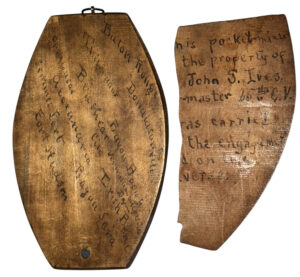
Id’d Civil War Camp Mirror – Lt. and Quartermaster John S. Ives 25th Connecticut Infantry
$750Id’d Civil War Camp Mirror – Lt. and Quartermaster John S. Ives 25th Connecticut InfantryDecember 24, 2021 -
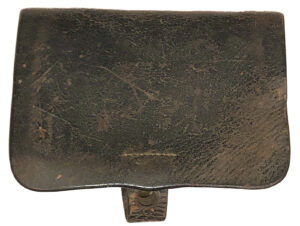
Id’d Civil War .44 Cal. Pistol Cartridge Box
$425Id’d Civil War .44 Cal. Pistol Cartridge BoxJanuary 4, 2024 -
Large Format Albumen from Glass Plate Negative by Andrew J. Russell of Confederate Fort Mahone (“Fort Damnation”) – April, 1865
$650Large Format Albumen from Glass Plate Negative by Andrew J. Russell of Confederate Fort Mahone (“Fort Damnation”) – April, 1865July 3, 2022