Confederate Cavalry Bugle of the 1st Maryland Cavalry Battalion CSA with Silver Presentation Escutcheon – Presented to Lt. Col. Harry Gilmor by the Survivors Association of the 1st Md. Cavalry, C.S.A.July 28, 2026
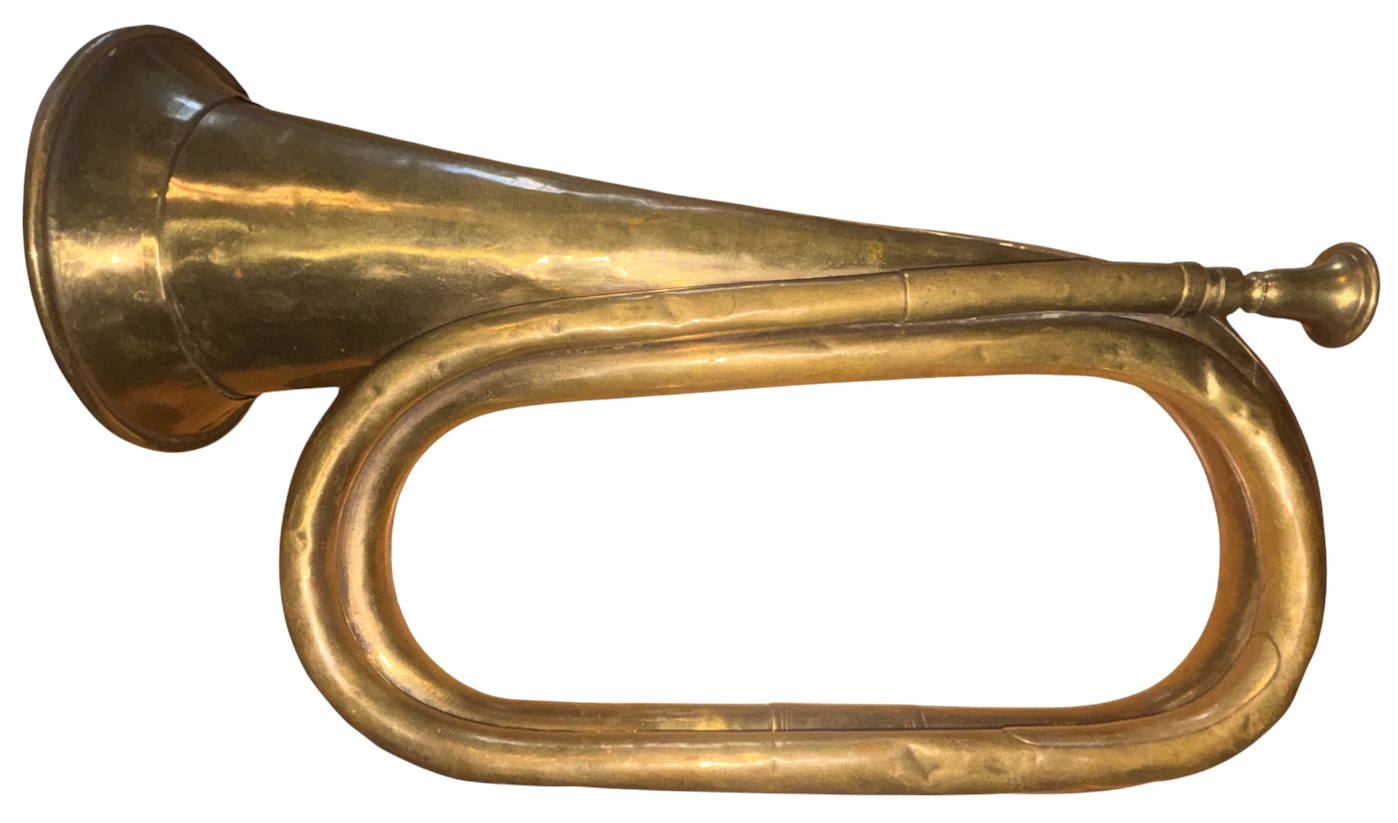
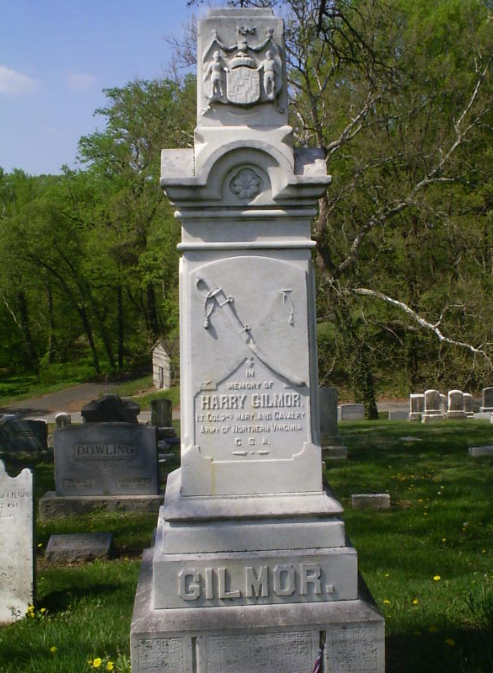
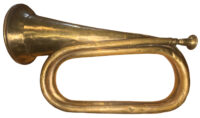
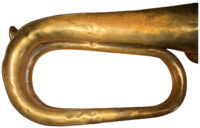
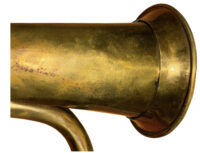
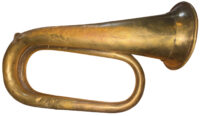
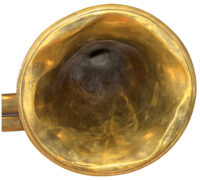
Confederate Cavalry Bugle of the 1st Maryland Cavalry Battalion CSA with Silver Presentation Escutcheon – Presented to Lt. Col. Harry Gilmor by the Survivors Association of the 1st Md. Cavalry, C.S.A.
SOLD
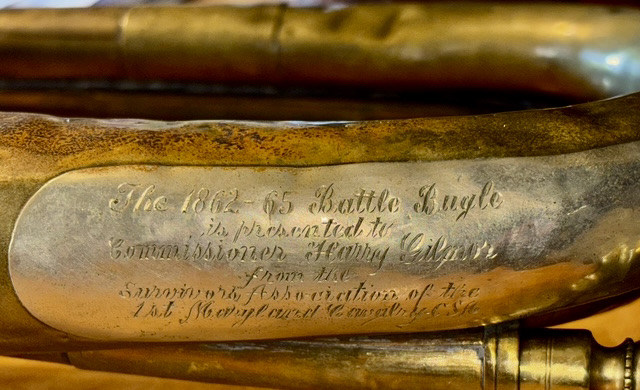
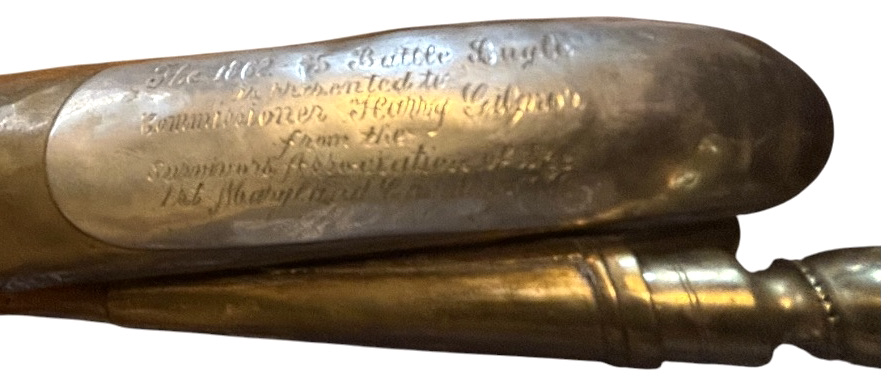
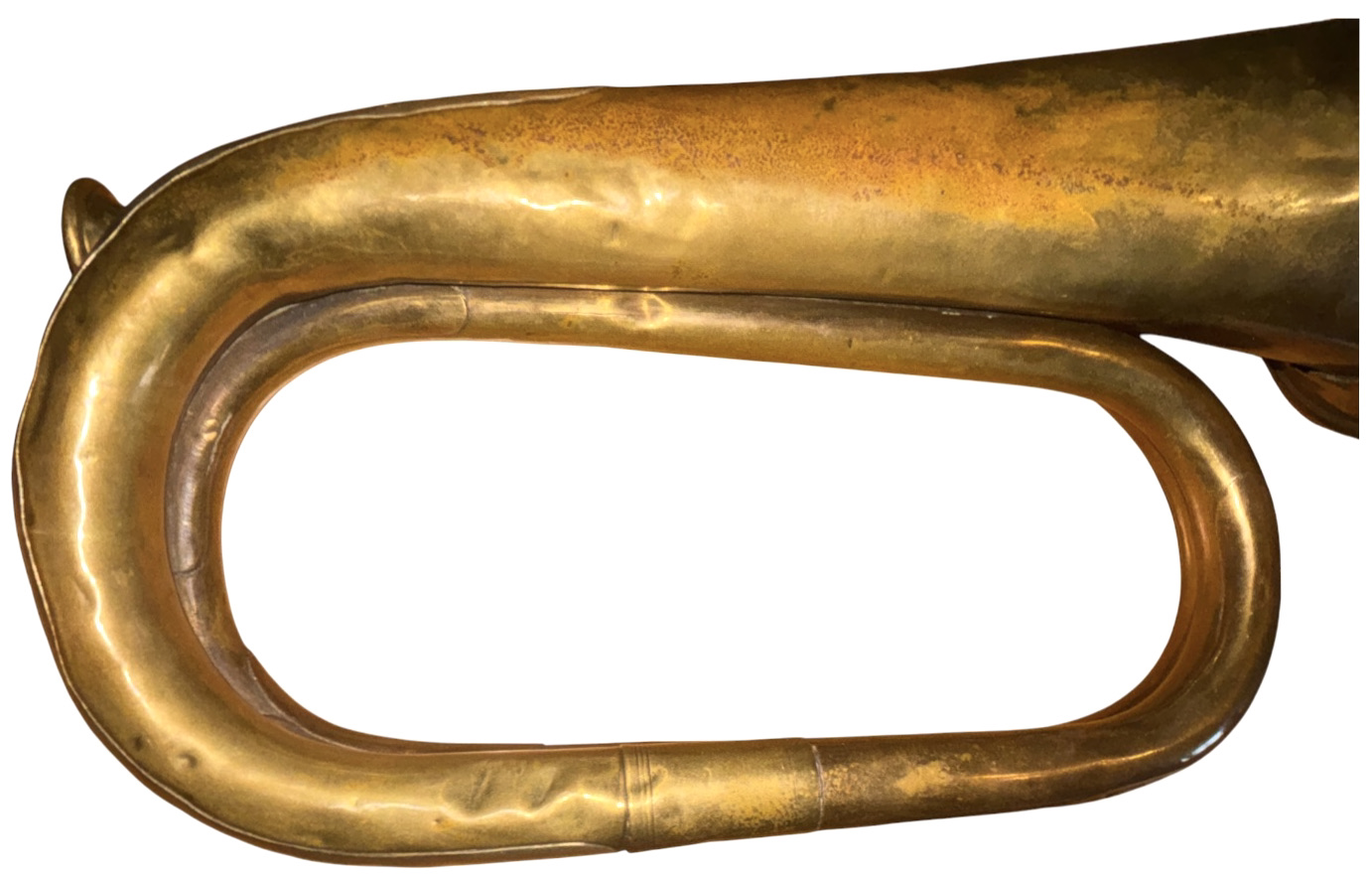
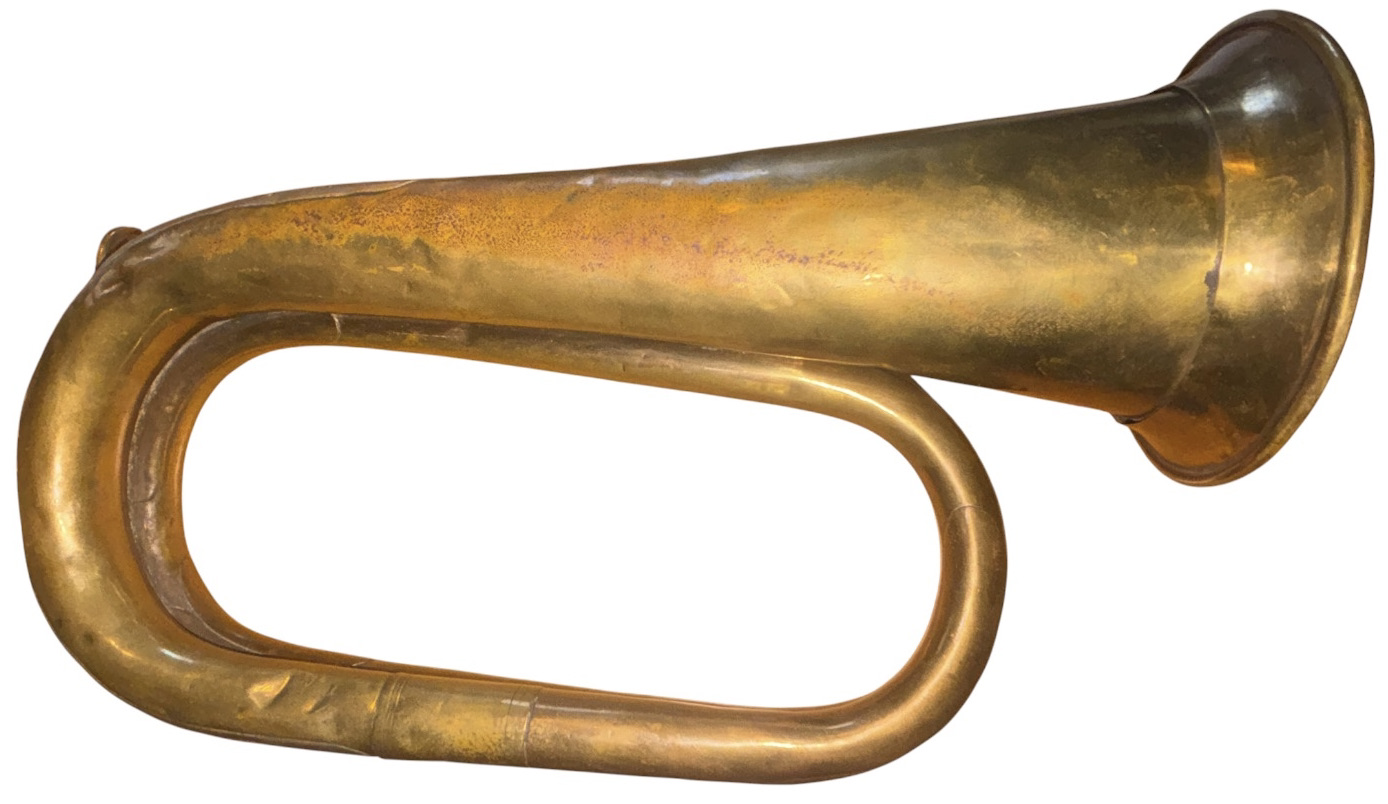
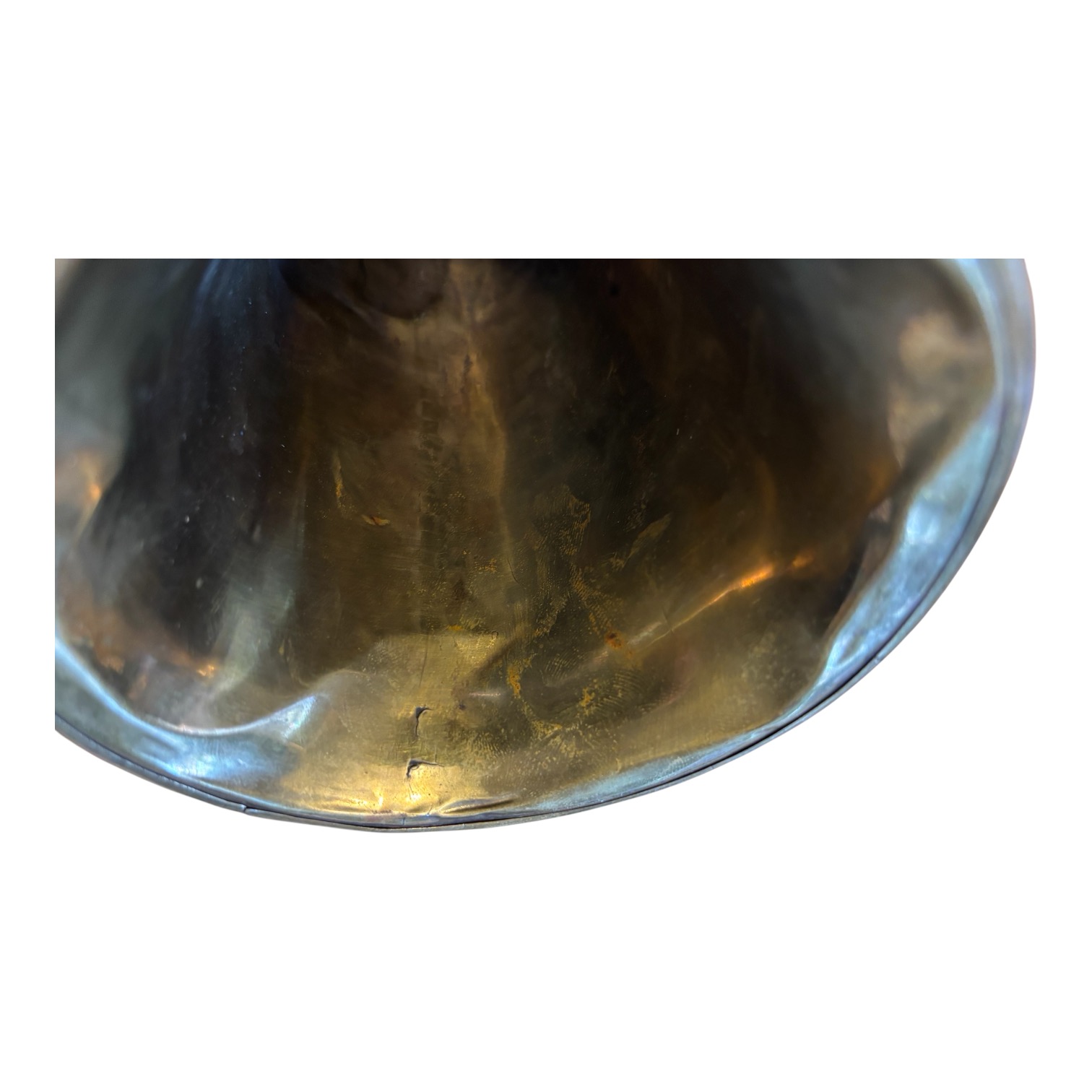
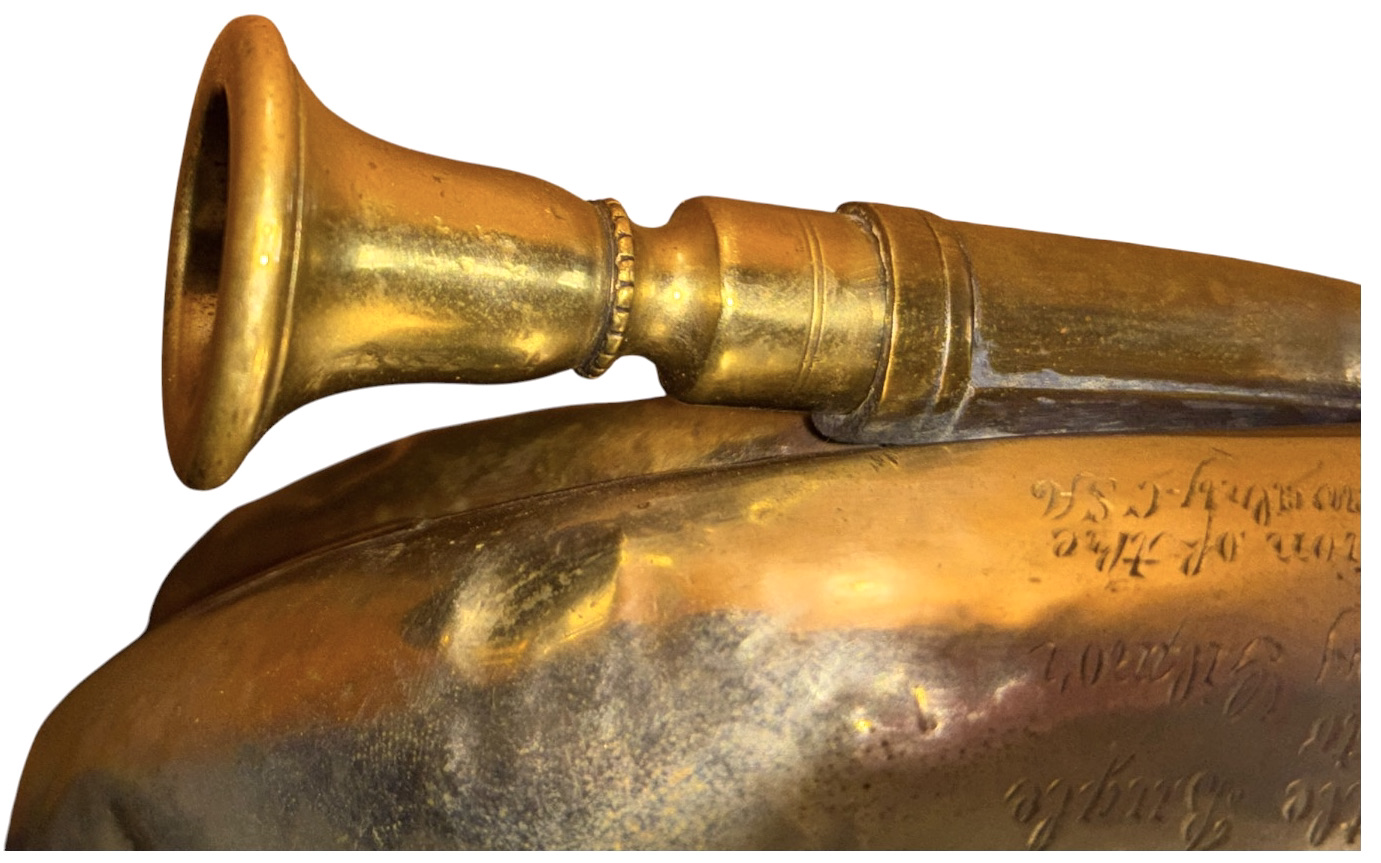
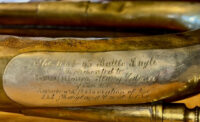
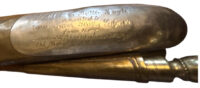
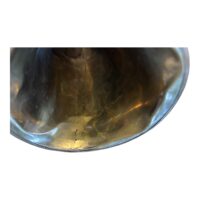
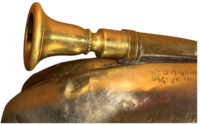
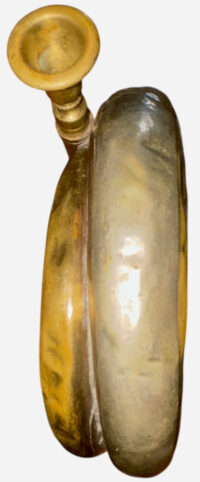
Confederate Cavalry Bugle of the 1st Maryland Cavalry Battalion CSA with Silver Presentation Escutcheon – Presented to Lt. Col. Harry Gilmor by the Survivors Association of the 1st Md. Cavalry, C.S.A. – This extremely rare bugle has a finely engraved, silver escutcheon that reads as follows:
“The 1862-65 Battle Bugle
is presented to
Commissioner Harry Gilmor
from the
Survivors Association of the
1st Maryland Cavalry CSA”
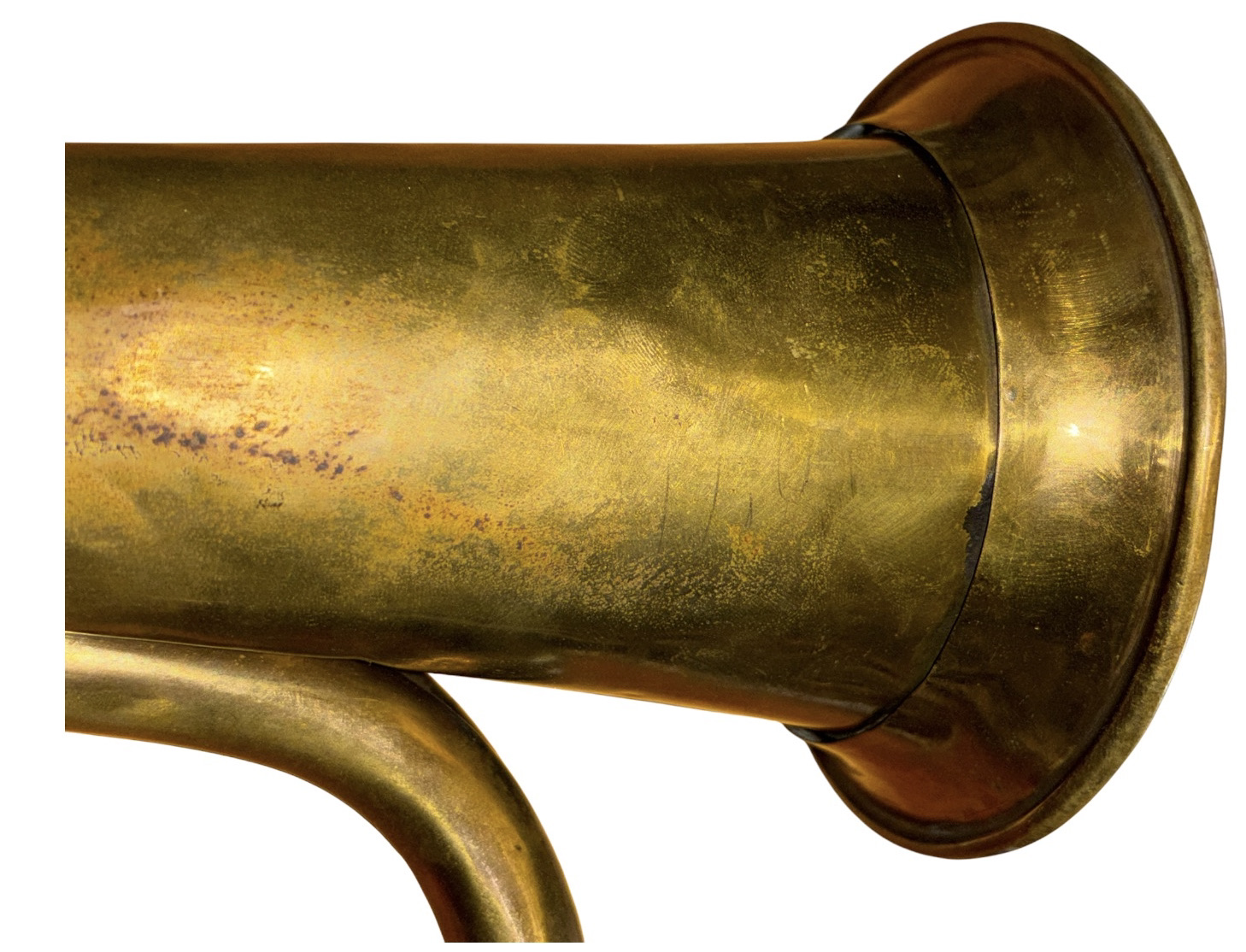
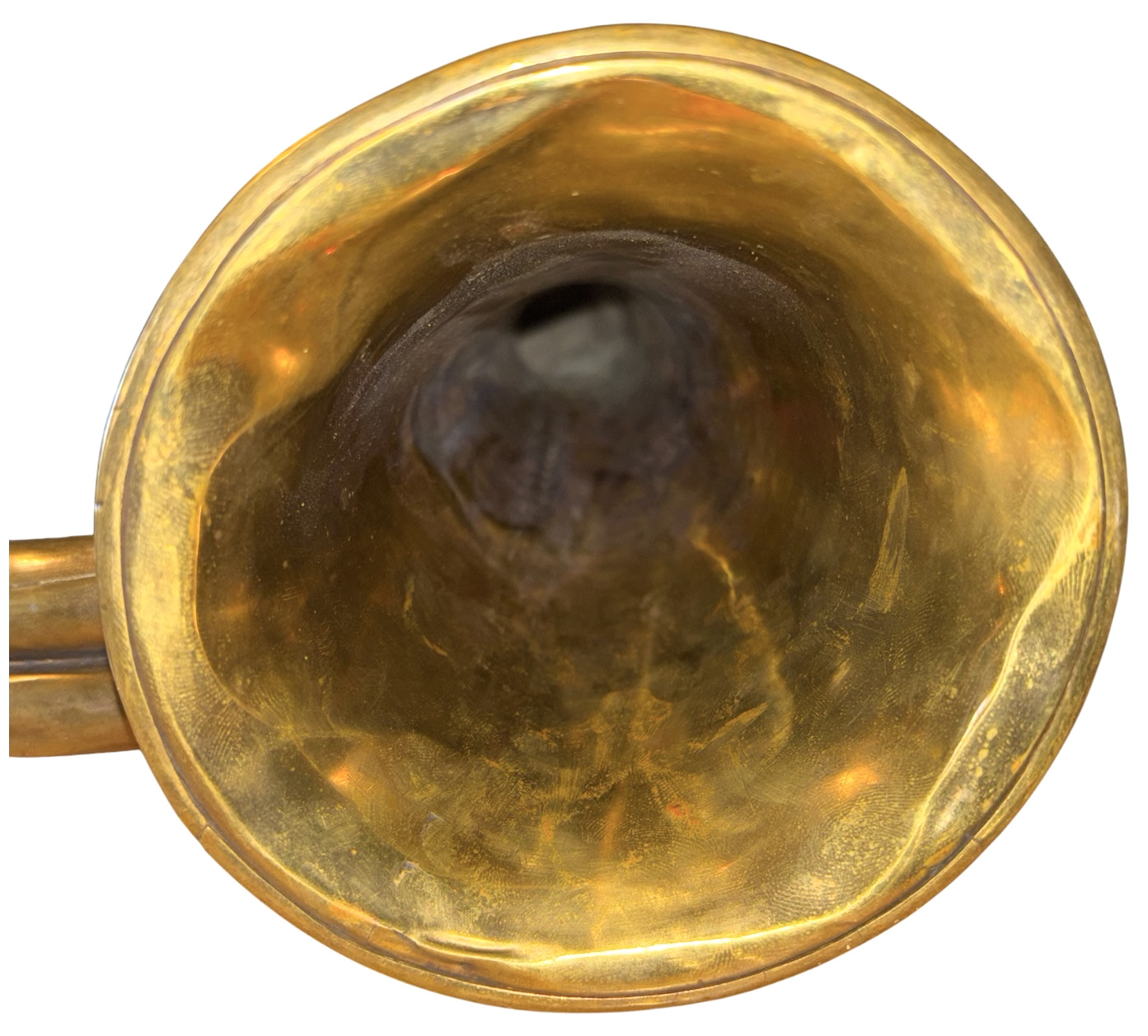
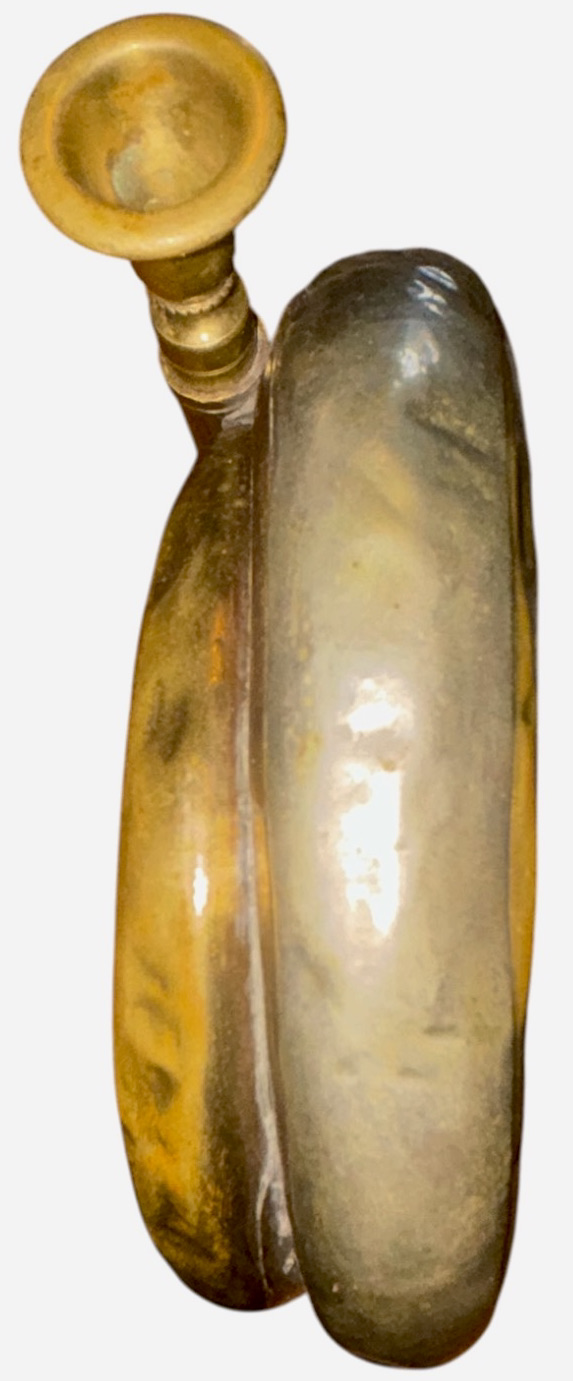
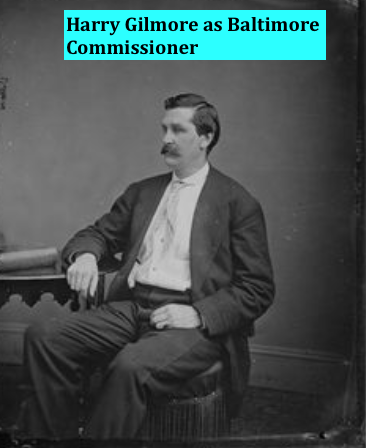
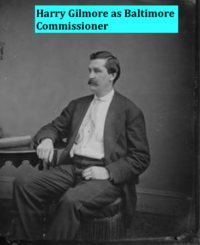
The bugle is a double twist type, with a dovetailed construction and floating garland around the bell; the bugle remains in overall very good condition, exhibiting a few small, period, field use dings; the original mouthpiece remains in place. The bugle measures, from mouthpiece to bell – 12”. The Survivors Association of the 1st Maryland Cavalry, C.S.A., was a post-war veteran fraternal organization formed by men who served in the 1st Maryland Cavalry Regiment during the Civil War. These regional associations provided camaraderie, aided aging veterans, and organized commemorative events and monument dedications. This bugle was apparently presented to Gilmore in the 1870s during his tenure as the Police Commissioner of Baltimore. (Harry Ward Gilmor (January 24, 1838 – March 4, 1883) served as the Baltimore City Police Commissioner, head of the Baltimore Police Department in the 1870s.)
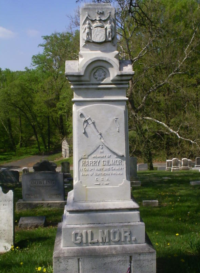
Harry W. Gilmor
Residence was not listed.
Enlisted on 8/31/1861 as a Priv.
On 8/31/1861, he mustered into “G” Co. Virginia 7th Cavalry.
He transferred out (date not stated)
(Raised a Partisan Co. from MD 2nd Battn Cavalry)
He was listed as:
Wounded 2/15/1862 Winchester, VA (Accident, shot in hip breaking up fight)
Promotions:
Major
Lt Col
Sergt Major 12/15/1861 (Estimated day)
Capt 3/7/1862
Intra-regimental company transfers
From company F to Field & Staff (Transferred while in 12th Cavalry)
He also transferred into “F” Co. Virginia 12th Cavalry.
He was described at enlistment as:
6′ 3″, dark complexion, blue eyes, brown hair
Born 1/24/1838 in Glen Ellen, Baltimore Co., MD
Died 3/4/1883 in Baltimore, MD
Buried: Confederates Hill, Loudoun Park Cem, Baltimore, MD
(Prewar service: Baltimore Co. Horse Guards. Col. of Cav, MD Nat’l Guard. Author, “4 Years in the Saddle.” Baltimore PD Comm.)
After the war, he lived in Baltimore, MD
Harry W. Gilmore
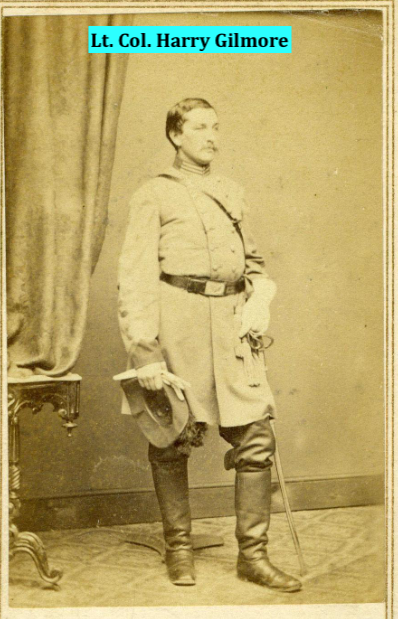
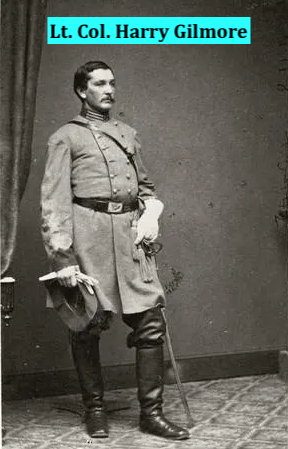
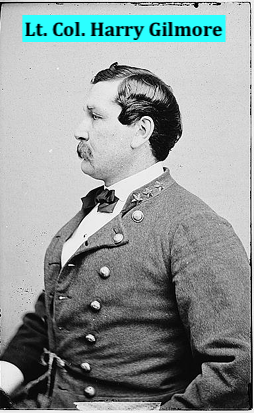
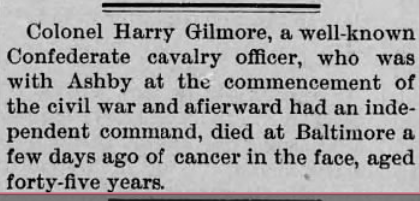
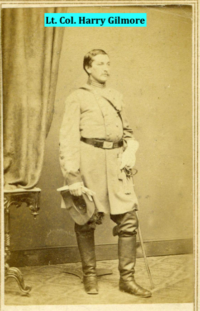
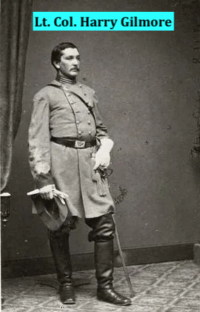
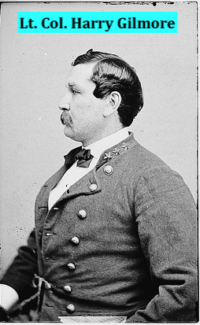
Confederate Army Officer, Author. He reached the rank of Colonel during the American Civil War while commanding the 1st Maryland Cavalry of the Confederate Army. He also served as the Baltimore Police Commissioner from 1874 to 1879. He was born on his family’s plantation, “Glen Ellen”, in Baltimore County, Maryland. In the 21st century, his family’s home, “the Castle,” and outbuildings remain on the shore of Loch Raven Reserve but portions of land have been sold to the city. He received a private tutored education. As a young man, he traveled west to Wisconsin and Nebraska in hope of homesteading but returned to Baltimore knowing of civil unrest. He was arrested as a spy and imprisoned in Fort McHenry following the “Pratt Street Riots” of April 19, 1861. Upon his release in August, he traveled to Charleston, Virginia joining Confederate forces under Colonel Ashby Turner. By December 15, 1861 he was made a full sergeant. Within two years he had earned the rank of major and organized his own 200-men unit,”Gilmor’s Raiders”. They were a rowdy group with Gilmor answering to their mischief more than once. Their most documented action was the raid in July of 1864 of Magnolia Train Station. By 1864, he was seriously wounded twice with one wound being in his right jaw, which became a chronic health problem. During the Maryland Campaign, he was recaptured while visiting his home in Baltimore spending five months more in prison. Colonel Gilmor was ordered to West Virginia where he was finally captured in Hardy County, on February 4, 1865. He remained a prisoner at Fort Warren at Boston Harbor until July 24, 1865. As a dashing, well-dress officer at 6 foot 3 inches, he had several photographs of himself made in full uniform with some were done by noted photographer Mathew Brady. He was an excellent horseman. Two of his brothers, Howard and Arthur, died in the war as young men. Following the Civil War, he relocated to New Orleans, Louisiana where he married a Floridian, Mentoria Nixon Strong. After traveling to Europe, he owned a farm in Mississippi by 1869 with two of his brothers, Graham and Charles. After a 14-year marriage, he became a widower with three young children: Alice, Harry, and Elsie. At this point, he returned to Baltimore, where he was recognized as a war hero. He served as an officer in the Maryland National Guard and as the Baltimore Police Commissioner. After his death, all Baltimore Police stations flew their flag at half-staff. In 1866, his war memoirs, “Four Years in the Saddle”, were published. Written mostly while he was a prisoner of war, his memoirs are still in print and considered by Civil War scholars as an accurate, yet colorful, account of the war. There are historical markers on Civil War battlefields in which the description of the battle includes his name. A street in West Baltimore was named “Gilmore Street” in his honor. Baltimore’s chapter of the Sons of the Confederacy was also named in his honored, the Colonel Harry W. Gilmor Camp #1318. A memorial ceremony is held at his grave side each year.
Harry W. Gilmor
Residence was not listed.
Enlisted on 5/27/1863 as a Major.
On 5/27/1863, he was commissioned into Field & Staff Maryland 2nd Battn Cavalry.
(Date and method of discharge not given.)
(Estimated date of enlistment)
Promotions:
Lt Col
Harry Gilmor(e)
He had been a homesteader in Wisconsin and Nebraska, but returned to his native Baltimore and joined the Baltimore Horse Guards (militia) by 1861. He was arrested (April 1861?) and imprisoned in Ft. McHenry in May 1861. He was released and travelled south in August 1861, and joined Colonel Turner Ashby’s 7th Virginia Cavalry. He was a scout for General Jackson in the Spring of 1862 and was commissioned Captain, Company F, 12th Virginia Cavalry in March 1862.
On the Campaign
He crossed the Potomac with his Regiment on the Maryland Campaign. He was on the way to visit a family friend when he was captured about 7 miles outside Baltimore on 12 September 1862.
The rest of the War
He was again held at Ft. McHenry, then at Ft. Norfolk, VA. He was exchanged at Fortress Monroe, VA on 13 February, transferred to City Point (about the 16th) and then went to Richmond. He returned to his Regiment, then in the Valley of Virginia in March. He was in action at Brandy Station and promoted to Major on 27 May 1863. He was in command of the First and 2nd Maryland Cavalry for the Gettysburg Campaign, then raised an independent battalion of cavalry – partisan rangers – was their Colonel, and operated in the Valley and western Virginia. He was on raids around Baltimore and Washington in 1864 and 1865. He was captured in Hardy County, (West) VA on 4 February 1865, and held at Ft. Warren, Boston Harbor to 24 July.
After the War
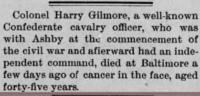
He lived in New Orleans, and married there, but returned to Baltimore. He was a Colonel in the Maryland National Guard, and Baltimore City Police Commissioner (1874-79). He died relatively young at age 45.
References & notes
Basic information from Gilmor’s own Four Years in the Saddle (1866). His gravesite is on Findagrave. His picture here from a photograph at the US National Archives.
Birth
01/24/1838; Baltimore County, MD
Death
03/04/1883; Baltimore, MD; burial in Loudon Park Cemetery, Baltimore, MD
7th Regiment, Virginia Cavalry (Ashby’s)
Overview:
7th Cavalry Regiment was organized during the late spring of 1861. In October authority was given to increase its size, and by the summer of 1862 the regiment contained twenty-nine companies. In June it was reduced to ten companies. Ten companies formed the 12th Regiment Virginia Cavalry, seven became the 17th Battalion Virginia Cavalry, one transferred to the 14th Regiment Virginia Cavalry, and one became J.W. Carter’s Battery. The unit served in W.E. Jones’, Rosser’s, and J. Dearing’s Brigade in the Army of Northern Virginia. It took part in Jackson’s Valley Campaign and the conflicts at Cedar Mountain, Second Manassas, Sharpsburg, Upperville, Fairfield, Bristoe, Mine Run, The Wilderness, Spotsylvania, and Cold Harbor. Later the regiment was involved in Early’s Shenandoah Valley operations and disbanded in mid-April, 1865. None of its members were at Appomattox on April 9. The field officers were Colonels Turner Ashby, Richard H. Dulany, William E. Jones, and A.W. McDonald; Lieutenant Colonel Thomas Marshall; and Majors O.R. Funsten, Daniel C. Harcher, and Samuel B. Myers.
7th Virginia Cavalry Regiment
Active May 1861 to April 1865
Country Confederate States of America
Allegiance Confederate States Army
Branch Cavalry
Engagements Skirmish at Hanging Rock Pass
Jackson’s Valley Campaign
Battle of Harpers Ferry
Battle of Brandy Station
Gettysburg campaign
Valley Campaigns of 1864
Battle of Five Forks
Commanders
1st Angus William McDonald
2nd Turner Ashby
3rd Richard Henry Dulany
Turner Ashby
Private David Bowman of Company I, 7th Virginia Cavalry Regiment
The 7th Virginia Cavalry Regiment also known as Ashby’s Cavalry[1] was a Confederate cavalry regiment raised in the spring of 1861 by Colonel Angus William McDonald[2] The regiment was composed primarily of men from the counties of the Shenandoah Valley as well as from the counties of Fauquier and Loudoun. Two companies contained men from the border counties of Maryland.
History
The regiment was initially assigned to guarding the upper Potomac and was attached to the command of Thomas “Stonewall” Jackson in the Valley. In the spring of 1862 the regiment took part in Jackson’s Valley Campaign,[3] where the exploits of the unit and its commander, Turner Ashby, became famous on both sides of the war. Near the conclusion of the campaign, Ashby was mortally wounded and Col. Richard Henry Dulany took command of the regiment, which had swelled to 29 companies. The regiment was reorganized at the end of the campaign, with the original 10 companies remaining and the excess 19 forming the 12th Regiment and 17th Battalion of Virginia Cavalry. Together with these two regiments, the 7th would become the nucleus of the famed Laurel Brigade.
As part of the brigade, the 7th saw major action during the Gettysburg campaign in 1863 and was at the famed cavalry Battle of Brandy Station that same year. They took part in Jubal A. Early’s ill-fated Valley Campaigns of 1864 and were at Appomattox Courthouse, though much of the unit escaped through federal lines and returned home to disband rather than taking parole with the rest of the Army of Northern Virginia.
Related Items
-
Civil War Period Silver Card Case Brought Home by F.M. Gibson, 40th Mass. Infantry
$625Civil War Period Silver Card Case Brought Home by F.M. Gibson, 40th Mass. InfantryMay 2, 2020 -
M1858 Smoothside Canteen and Cartridge Box Tin Picked up at the Bloody Angle after the Battle of Spotsylvania and Given to Col. Clark S. Edwards 5th Maine Infantry
M1858 Smoothside Canteen and Cartridge Box Tin Picked up at the Bloody Angle after the Battle of Spotsylvania and Given to Col. Clark S. Edwards 5th Maine InfantryJanuary 14, 2024 -
Large Format Salt Print of Captain Robin Jones 1st SC Cavalry KIA at Brandy Station
$3,000Large Format Salt Print of Captain Robin Jones 1st SC Cavalry KIA at Brandy StationMay 26, 2024 -
High Quality Civil War Id’d Officer’s Traveling Mess Utensils in Original Case
$1,150High Quality Civil War Id’d Officer’s Traveling Mess Utensils in Original CaseSeptember 25, 2022