
Extremely Rare Large Albumen by Mathew Brady of Five Confederate Cavalry Generals c. 1870 – Brig. Gen. H.F. Payne, Maj. Gen. Pierce M.B. Young, Maj. Gen. Fitzhugh Lee, Brig. Gen. Beverly H. Robertson and Maj. Gen. Thomas L. RosserJuly 22, 2026
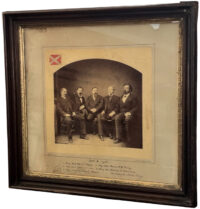
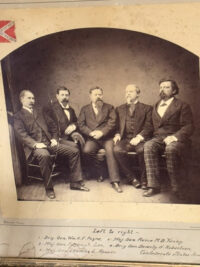
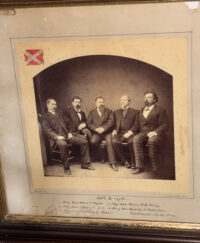
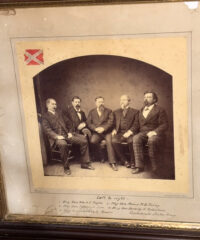
Extremely Rare Large Albumen by Mathew Brady of Five Confederate Cavalry Generals c. 1870 – Brig. Gen. H.F. Payne, Maj. Gen. Pierce M.B. Young, Maj. Gen. Fitzhugh Lee, Brig. Gen. Beverly H. Robertson and Maj. Gen. Thomas L. Rosser
$7,850
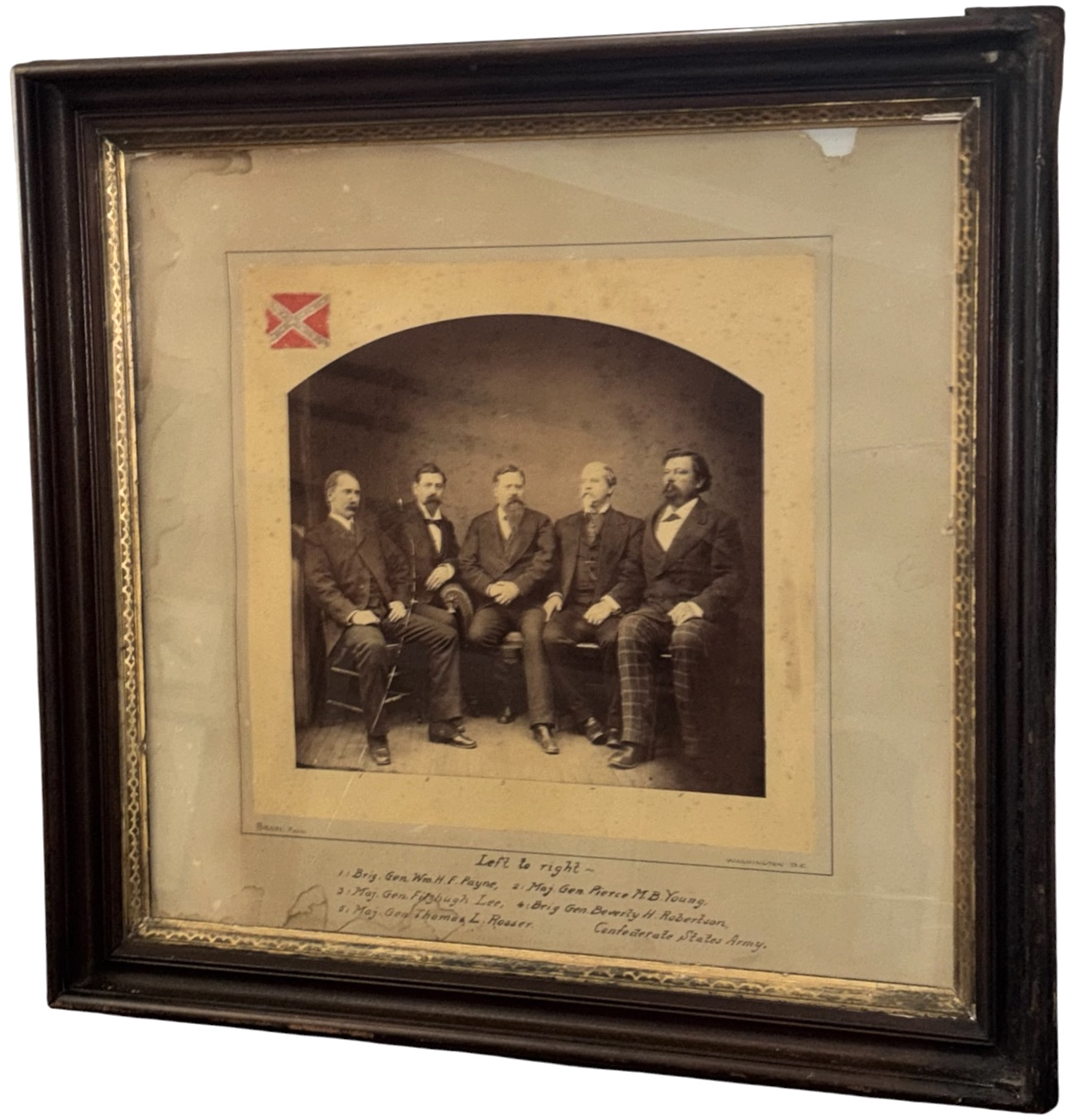
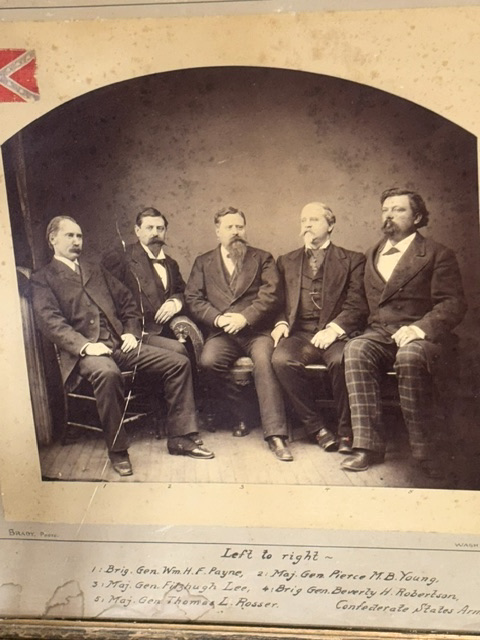
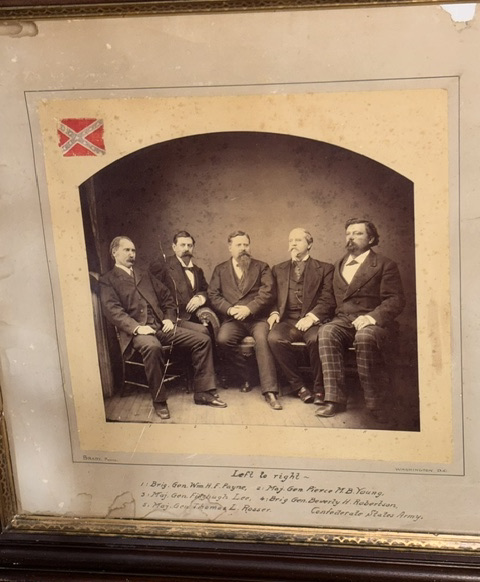
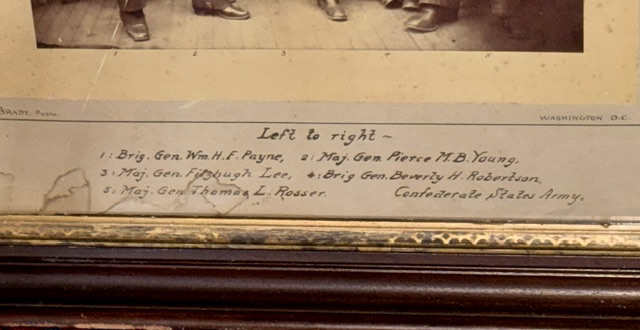
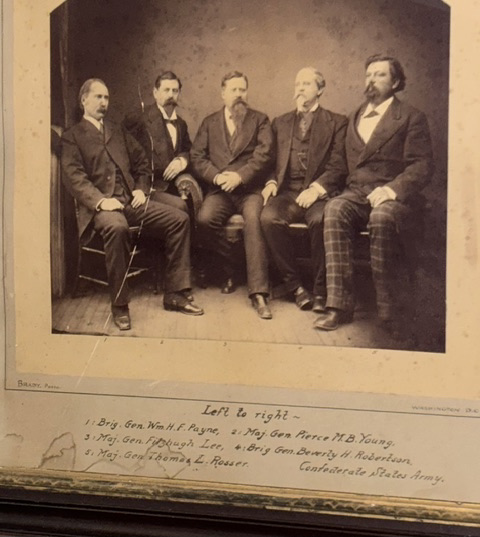
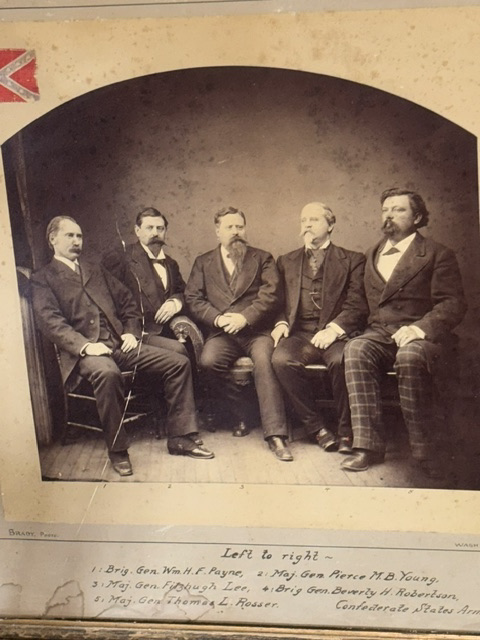
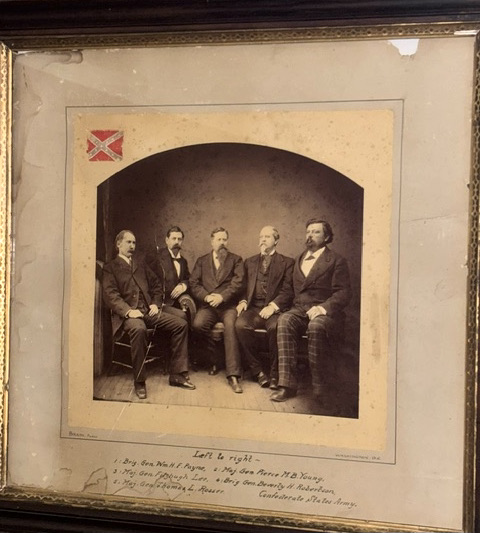
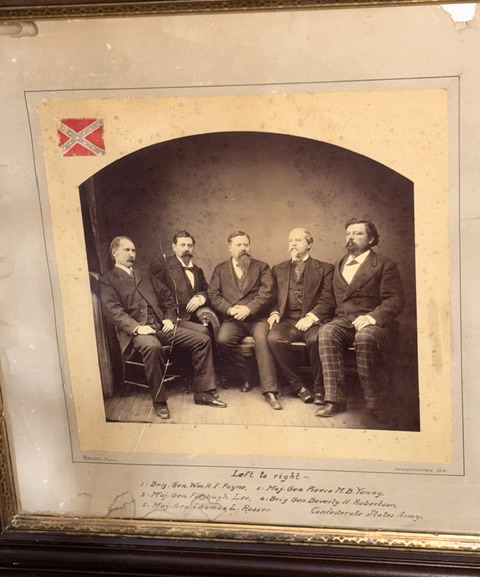
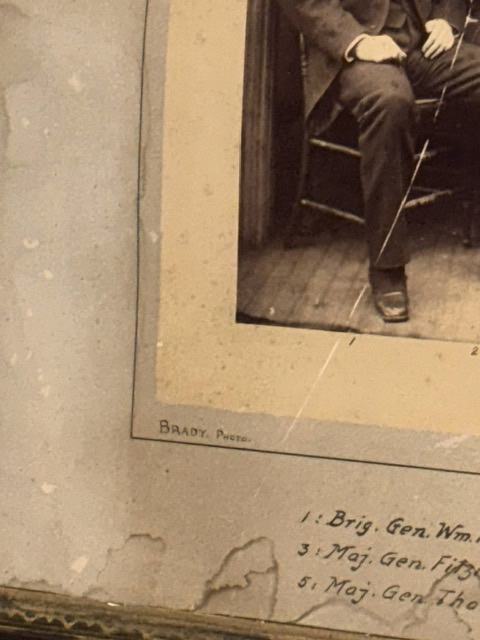
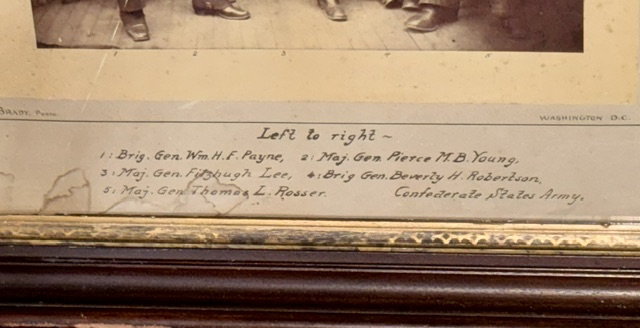
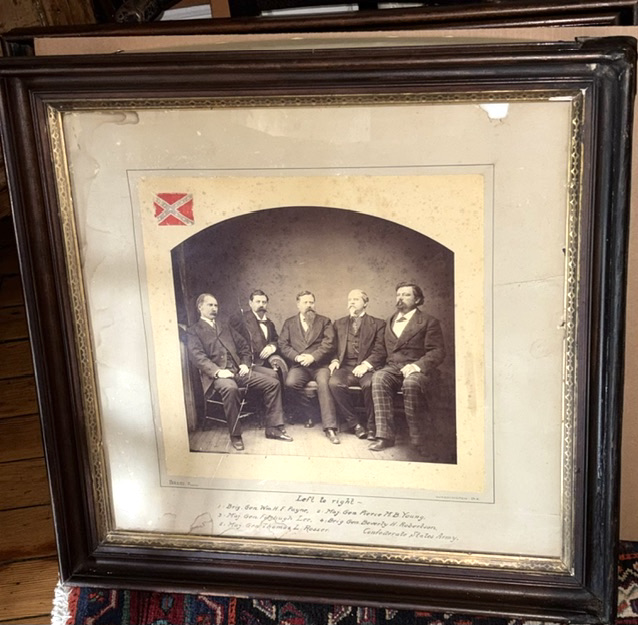
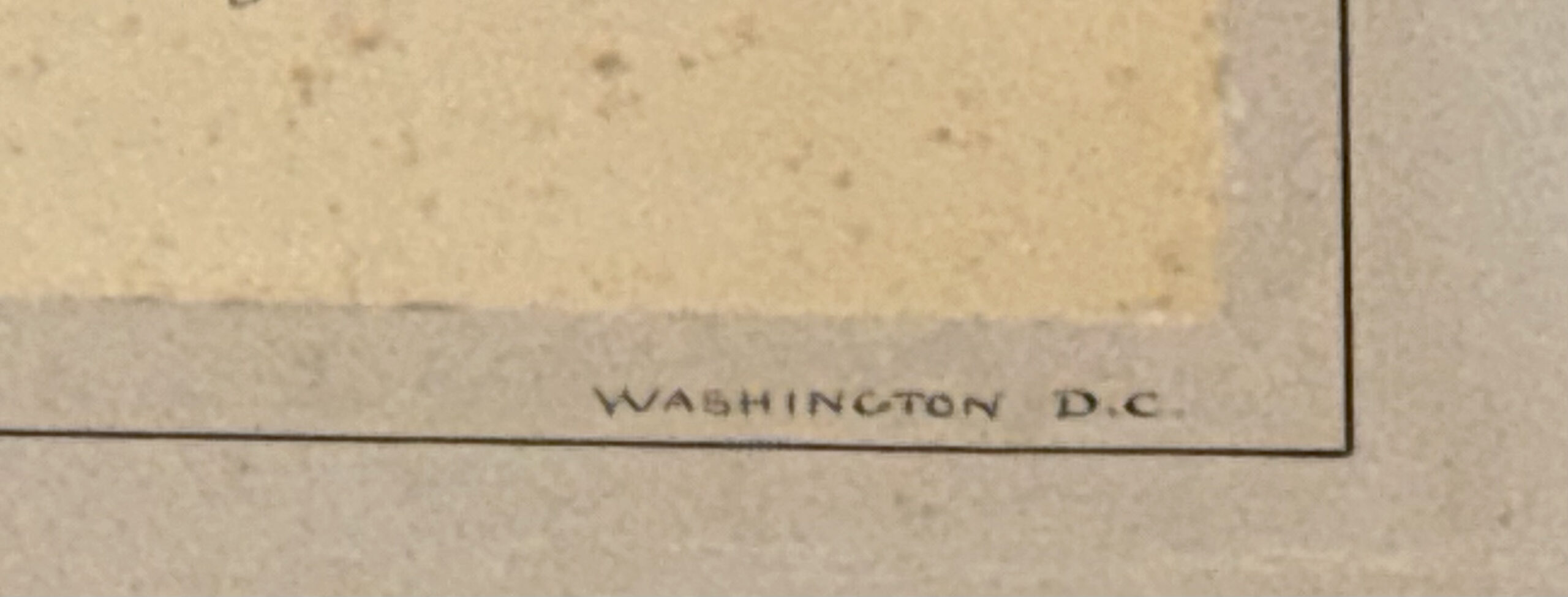
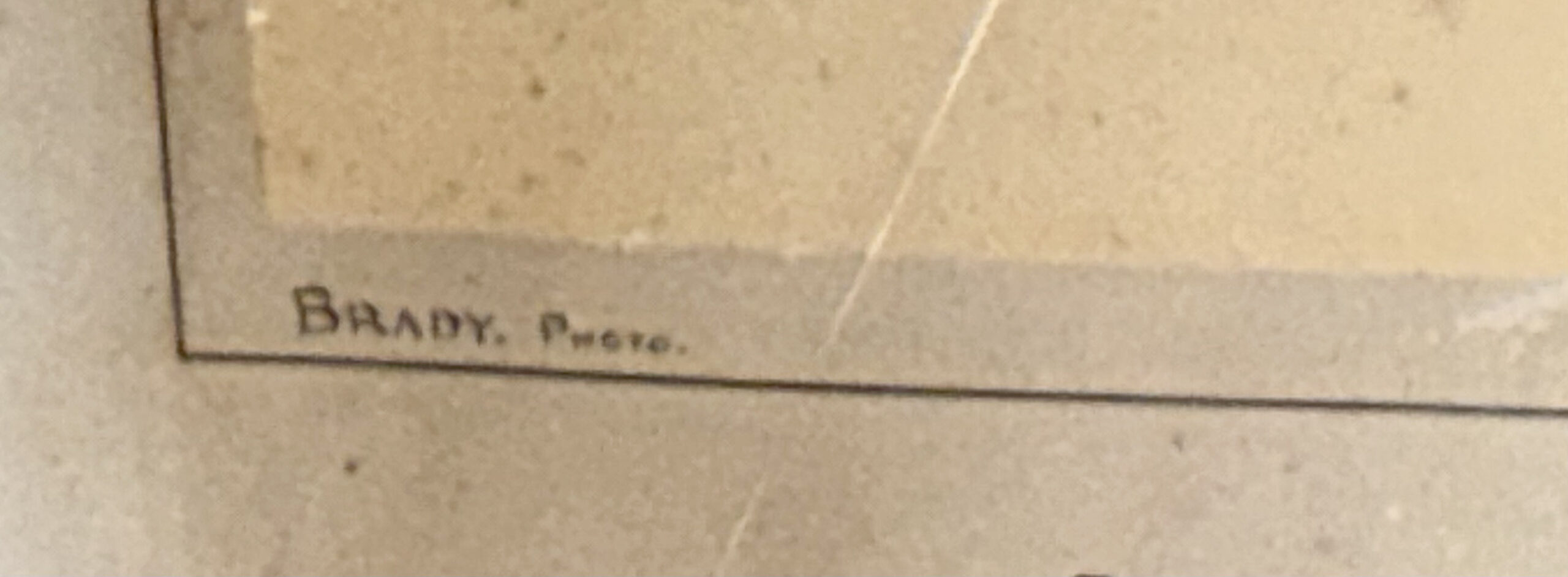
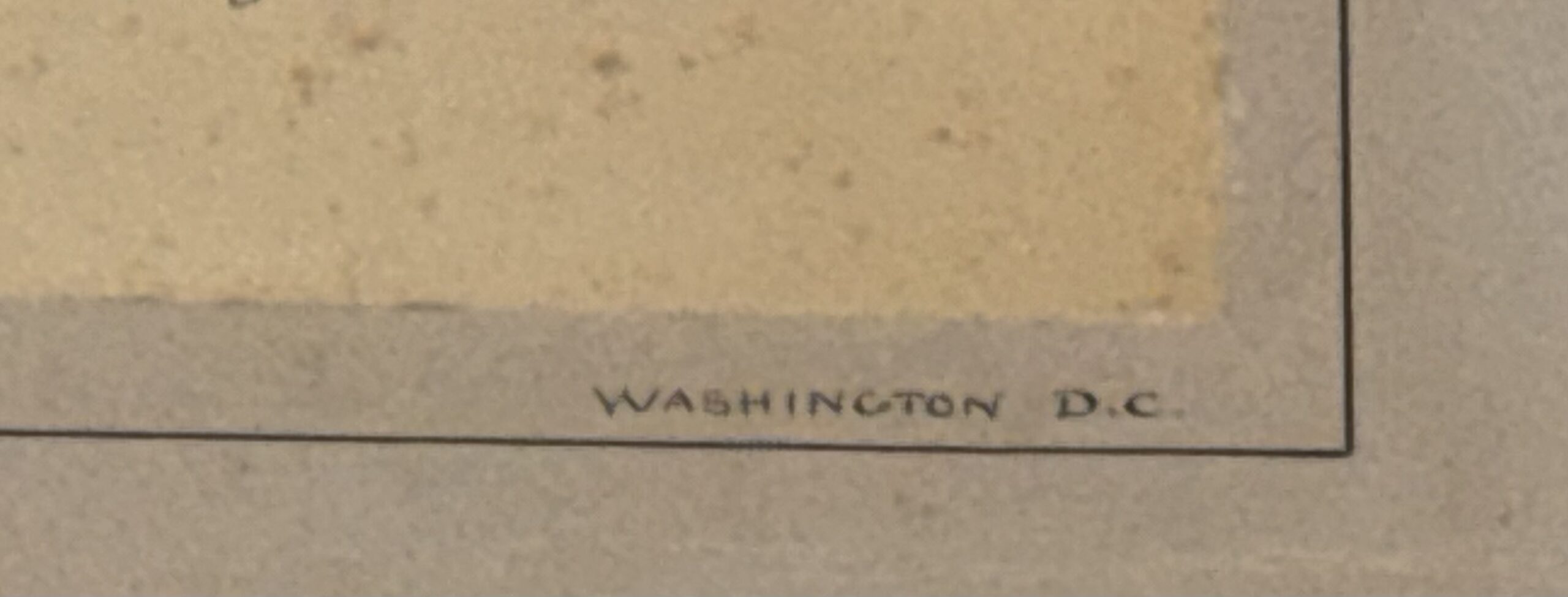
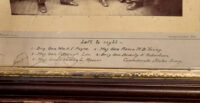
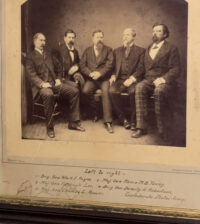
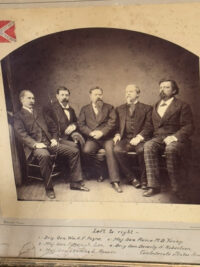
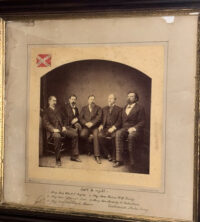
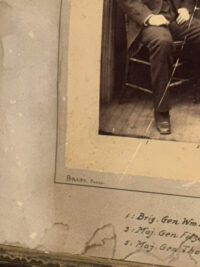
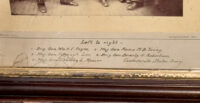
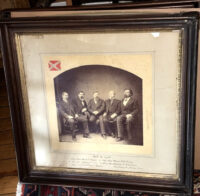
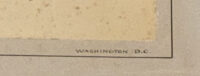
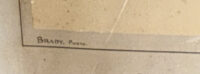
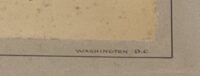
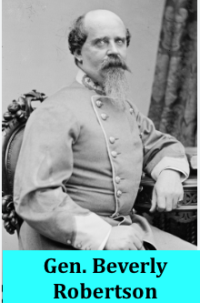
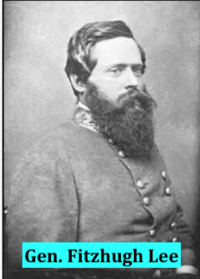
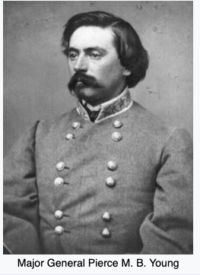
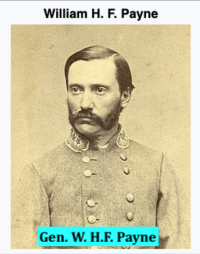
NEW PRICING! Extremely Rare Large Albumen by Mathew Brady of Five Confederate Cavalry Generals c. 1870 – Brig. Gen. H.F. Payne, Maj. Gen. Pierce M.B. Young, Maj. Gen. Fitzhugh Lee, Brig. Gen. Beverly H. Robertson and Maj. Gen. Thomas L. Rosser – This large size albumen was taken by famed photographer Mathew Brady in Washington, D.C. around 1870. The Confederate Generals in the image were all significant, Confederate Cavalry commanders during the war. The albumen is affixed to an off-white pasteboard, which is surrounded by a gray mat. Immediately beneath the left side of the image, on the mat, is hand written, in ink :“BRADY, Photo”; to the far right, beneath the image, also on the mat, is inked: “WASHINGTON, D.C.” On the pasteboard backing, just below the image, are hand-inked numbers 1 through 5, corresponding to the name key beneath the image proper. Also on the mat, directly below the image is handwritten in ink, the following:
“Left to right –
1: Brig. Gen. Wm. H. F. Payne, 2: Maj. Gen. Pierce M. B. Young,
3: Maj. Gen. Fitzhugh Lee, 4: Brig. Gen. Beverly H. Robertson,
5: Maj. Gen. Thomas L. Rosser. Confederate States Army.”
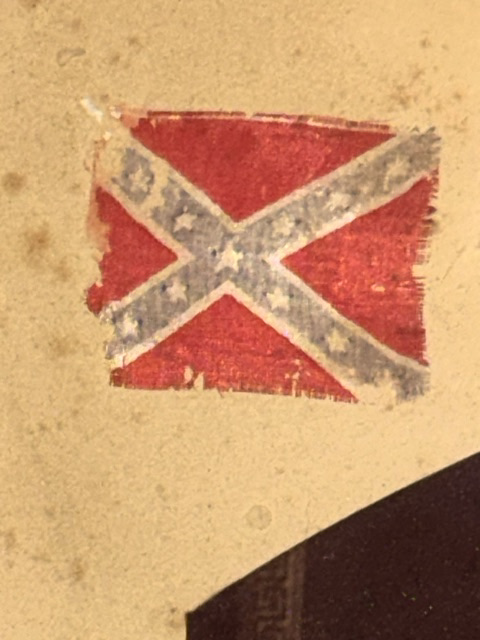
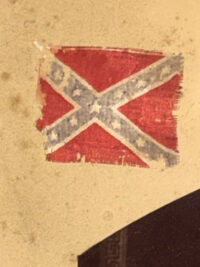
All five of the generals in the image are dressed in period, civilian clothes. In the upper left corner of the pasteboard on which the image is affixed, there is a silk, diminutive, Army of Northern Virginia battle flag, perhaps a war period Bible flag. The image and mat are within the original, walnut frame that has a decorative, gilded liner; the frame is in overall good condition, with two corners evidencing old, somewhat crude repairs. The image remains in very good condition, with one small vertical scratch (may have been in the original glass plate negative) coursing through; there is some “foxing” on the image and mat, although this does not detract from the overall appearance of the image. There is some age staining to the mat and pasteboard backing, with some minor loss to the pasteboard backing in two or three margins. This is an extremely rare Brady ; image that has never been published; we obtained it directly from a Rosser descendant.
Measurements:
Sight size – approx. 13” x 13”
Frame size – H – 26.5”; W – 27.5”
William H. F. Payne
Member of the Virginia House of Delegates for Loudoun and Fauquier
In office
December 3, 1879 – December 7, 1881
Succeeded by R. Taylor Scott
Personal details
Born January 27, 1830
Fauquier, Virginia, U.S.
Died March 29, 1904 (aged 74)
Washington, D.C., U.S.
Spouse Mary Elizabeth Winston Payne
(m. 1852)
Children 10
Relatives William Winter Payne (half-cousin; father-in-law)
Education
Virginia Military Institute
University of Virginia
Occupation
Lawyer, politician
Military service
Allegiance Confederate States
Branch/service Confederate States Army
Years of service 1861–1865
Rank Brigadier general
Battles/wars American Civil War
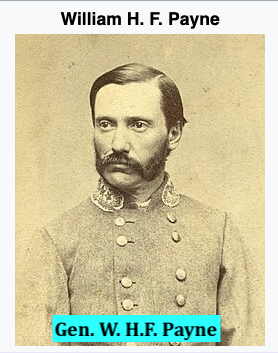
William Henry Fitzhugh Payne (January 27, 1830 – March 29, 1904) was a Confederate brigadier general during the American Civil War.
Early life
William Payne was born in Fauquier County, Virginia to Arthur Alexander Morson Payne and Mary Conway Mason Fitzhugh. He attended the Virginia Military Institute in 1846-47, but left school after only one year. He was declared an honorary graduate by the Board of Visitors in 1873.
Payne studied law at the University of Virginia and established a law practice in Warrenton, Virginia in 1851. The following year, he married his cousin, Mary Elizabeth Winston Payne, a daughter of William Winter Payne; the couple would have ten children. He served as the Commonwealth’s Attorney for Fauquier County for several years.
Civil War
Payne enrolled in early 1861 as a private and participated in the occupation of Harpers Ferry in April. Later in the year, he became a captain in the famed Black Horse Cavalry, serving as under J.E.B. Stuart. He was promoted to major of the 4th Virginia Cavalry and commanded the regiment at the Battle of Williamsburg during the Peninsula Campaign. He was severely wounded and captured by Union forces.
After being exchanged, he returned to duty as the lieutenant colonel of the 2nd North Carolina Cavalry and fought in the Chancellorsville Campaign. During the subsequent Gettysburg campaign, he was captured at the Battle of Hanover in 1863 after being dehorsed and falling into an open vat of tanning liquid.
After being imprisoned at Johnson’s Island, Ohio, he was promoted to brigadier general in November 1864 and led a brigade in Early’s Valley Campaigns of 1864, where he fought in the battles of Opequon, Fisher’s Hill, and Cedar Creek. He was badly wounded at the Battle of Five Forks. During the final operations in early 1865 around Richmond, he commanded a cavalry brigade under Fitzhugh Lee.
Postbellum
Graves of William H. F. and Mary E. Payne in the Warrenton Cemetery
After the war, Payne returned to his Virginia law practice. He was the general counsel for the Southern Railway Company. Payne served in the legislature of Virginia in the session of 1879–80.
He died in Washington, D.C.
Pierce M. B. Young
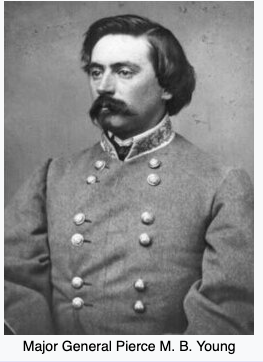
Pierce Manning Butler Young (November 15, 1836 – July 6, 1896) was an American soldier, politician, diplomat, and slave owner. He was a major general in the ..
Pierce M. B. Young (1836–1896) was a Confederate major general, U.S. Congressman, and diplomat. A West Point cadet who resigned just before graduation to join the Confederacy, he quickly rose to command cavalry in the Army of Northern Virginia. Post-war, he served in the U.S. House (1868–1878) and held various diplomatic posts.
Military Career
Born in Spartanburg, South Carolina, and raised in Bartow County, Georgia, Young attended the Georgia Military Institute and entered West Point in 1857. Resigning two months before his graduation, he joined the Confederate army as a lieutenant and rose to the rank of brigadier general by 1863. He later led Wade Hampton’s cavalry brigade and division. In December 1864, at age 28, he was promoted to major general, making him one of the youngest to hold that rank in the Confederate Army.
Political & Diplomatic Career
Following the Civil War, Young became a prominent political figure and was the first Georgian allowed to take a seat in the U.S. Congress after Reconstruction. He served as a Democratic Representative in the House from 1868 to 1878. He later expanded his career into international diplomacy, serving as Consul General to St. Petersburg, Russia (1885–1887), and as Minister to Guatemala and Honduras (1893–1896). He died in New York City in 1896 and is buried in Cartersville, Georgia.
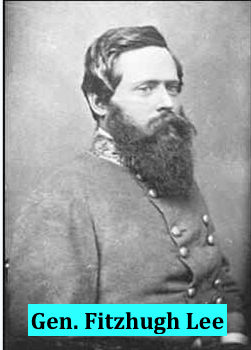
Fitzhugh “Fitz” Lee (1835–1905) was a Confederate cavalry general during the Civil War, the 40th Governor of Virginia, and a United States Army general. Nephew of Robert E. Lee, he achieved fame as a spirited cavalry commander under J.E.B. Stuart before building a postwar career in national reconciliation and military diplomacy.Military CareerCivil War: Graduating from West Point in 1856, Fitzhugh Lee served on the frontier before resigning to join the Confederacy. Rising rapidly to major general, he led a brigade and division of the Army of Northern Virginia at major engagements including Antietam, Chancellorsville, and Gettysburg. He was severely wounded at the Third Battle of Winchester in 1864.Spanish-American War: Following the war, Lee became a key figure in reuniting the country. Appointed Consul General in Havana by President Grover Cleveland in 1896, he aided American interests on the eve of the Spanish-American War. He later served as a major general of United States Volunteers, commanding the Seventh Army Corps.Political OfficeReturning to Virginia, Lee was elected the 40th Governor of the state, serving from 1886 to 1890. His administration focused on the financial settlement of the state debt and navigating postbellum reconstruction.Historical LegacyKnown affectionately as “Our Dear Old Fitz,” he became a celebrated symbol of post-Civil War national reunification. He also authored military histories, most notably a biography of his uncle, Robert E. Lee.
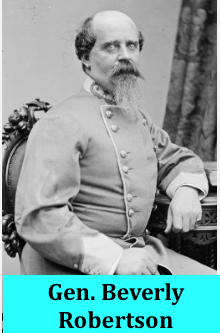
General Beverly H. Robertson, one of the distinguished cavalry officers of the Army of Northern Virginia, died at his residence in Washington, November the 12th. He was one of the type of military men whose education and training beginning with West Point, prolonged by campaigns and skirmishing with the red men of the western plains, concluded his military career with the stirring scenes of the Civil War.º
Son of Dr. William H. Robertson, he was born at The Oaks in Amelia County, Virginia, June 5, 1827. He graduated at West Point in the Class of ’49 and was assigned as Second Lieutenant to Col. Chas. A. May’s Company E, Second Dragoons, stationed at Socorro, New Mexico. After six months at the Carlisle Cavalry School, he joined his regiment in 1850 in the Territory of New Mexico, where he remained three years, scouting and skirmishing among the Apache, Comanche and Navajo Indians. In the summer of 1855, he commanded Company E, Second Dragoons, in an expedition against the Sioux. He saw active engagements with the Sioux, Apaches and Ute Indians along the La Platte River and was commended for gallantry on more occasions than one. He was mentioned for exhibiting marked bravery in the Battle of Ash Hollow, when, with 300 soldiers, he held at bay a band of Indians numbering over 3,000 till reinforcements arrived.
General Robertson took part in the Battle of Blue Water (Meme-to-nak‑pala) fought September 3rd, against the Brule Sioux under Little Thunder. An incident of this portion of his western military life is related by Patrick McEneany of this city, who served General Robertson in the Nebraska p92 campaigns, and who states on one occasion the Brules to the number of thousands put the members of Troop E on their mettle. The battle was one no member of the Second Dragoons ever forgot. They fought the Indians stubbornly from four o’clock in the morning till five o’clock at night. The Indians persisted, but the overwhelming number of hostiles finally had to yield to the tactful, well-organized charges of Company E on the firing line.
Colonel Indicates a West Point graduate, Class of 1827: a link to his biographical entry in Cullum’s Register.Philip St. George Cooke in immediate command of all the mounted troops, in his orders, especially complimented Company E, Second Dragoons, in the battle with Little Thunder, and General Robertson was made adjutant of the regiment till promoted to Captain in 1861. When Colonel Cooke received orders to relieve Indicates a West Point graduate, Class of 1835: a link to his biographical entry in Cullum’s Register.Albert Sydney Johnston in Utah in 1860, General Robertson accompanied him as Assistant Adjutant-General, remaining in that Department until early in June, 1861, when he resigned from the U. S. Army, and was commissioned Colonel of Cavalry in the Volunteer and Captain in the Adjutant-General’s Department of the Confederate States Service. He organized the Fourth Virginia Cavalry, which he commanded till the death of Turner Ashby, whom he succeeded as Brigadier-General, relieving Indicates a West Point graduate, Class of 1846: a link to his biographical entry in Cullum’s Register.Stonewall Jackson in the Shenandoah Valley.
General Robertson commanded Jackson’s Cavalry in the fight with Indicates a West Point graduate, Class of 1842: a link to his biographical entry in Cullum’s Register.Pope at Slaughter’s Mountain, was in the raid which captured Pope’s Hd. Qr. wagon train at Catlett’s Station, commanded a brigade at the Second Battle of Manassas, and fought the Battle of White Hall. He has left interesting notes of the battles in which he participated from this time on (for which I wish I had space) till the Gettysburg Campaign, where he did able service against General Indicates a West Point graduate, Class of 1844: a link to his biographical entry in Cullum’s Register.Pleasonton, and later in the war commanded the coast line assigned to him between Charleston and Savannah, also interesting facts in regard to the engagements on John’s Island and at Honey Hill.
At the close of the Civil War, or a few years after his return from Memphis, General Robertson came to Washington and engaged in the real estate business. He held a high and honored position for many years among men of business and of affairs of this city and socially was one of the most loved and popular of men. He died very quietly in his own home, his body returned to its own in Amelia County, Virginia. His wife, who was Miss Virginia Neville Johnston, a cousin of General Indicates a West Point graduate, Class of 1829: a link to his biographical entry in Cullum’s Register.Joseph E. Johnston, and a famous southern beauty, left him four sons. Two, Lieut. Churchill Robertson, U. S. A., and Julius Robertson dying some years ago; two, Henry Robertson, at present Consul-General to Peru, and John C. Robertson, professor of languages at St. Stephen’s College, Annandale, New York.
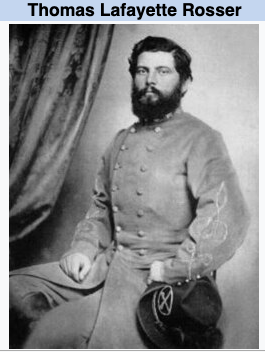
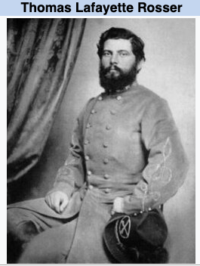
Thomas Lafayette Rosser was a West Point student who resigned from the academy two weeks before graduation when his adopted state of Texas seceded from the Union. He began the war as an instructor for New Orleans’ Washington Artillery and commanded its Second Battery in the First Battle of Manassas. He was promoted to captain as a reward for shooting down a Union observation balloon.
He was severely wounded at the Battle of Mechanicsville on June 26, 1862 but recovered and was promoted to colonel of the 5th Virginia Cavalry. He then commanded the advance of Jeb Stuart’s expedition to Catlett’s Station in August 1862 and participated in the Second Battle of Bull Run, where he captured Union commander John Pope’s orderly and horses.
He fought at Crampton’s Gap at the Battle of South Mountain where, with help from John Pelham’s artillery, his cavalry delayed the advance of William B. Franklin’s VI Corps. At Antietam, his men screened Robert E. Lee’s left flank. He temporarily assumed command of Fitzhugh Lee’s brigade during the subsequent fighting against Alfred Pleasonton and was wounded again at the Battle of Kelly’s Ford in March 1863.
After Gettysburg, Rosser was promoted to brigadier general of the “Laurel Brigade,” and during the Battle of the Wilderness, promoted to brigadier general. He was again wounded at Trevilian Station, the bloodiest and largest all-cavalry battle of the war. For distinguished service in the Shenandoah Valley, he was promoted to major general in November 1864. In January 1865, he conducted a successful raid on New Creek, West Virginia where he seized hundreds of prisoners and tons of supplies. He commanded a cavalry division during the Siege of Petersburg and took part in the Appomattox Campaign. His commanded escaped encirclement at Appomattox but was finally captured on May 4, 1865 near Staunton, Virginia.
After the war, Rosser became superintendent of the National Express Company and later chief engineer of the Northern Pacific and Canadian Pacific Railroads. In 1886, he bought a plantation near Charlottesville, Virginia and became a gentleman farmer. Rosser returned to the military briefly in 1898 when he was appointed a brigadier general of the volunteers during the Spanish-American War.
Related Items
-
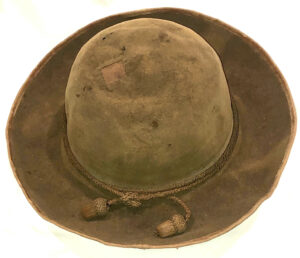
Superior Example of an Identified Confederate Beehive Style Slouch Hat – Capt. Willis C. Bright Co. E 8th Tennessee Infantry
$25,000Superior Example of an Identified Confederate Beehive Style Slouch Hat – Capt. Willis C. Bright Co. E 8th Tennessee InfantryJanuary 13, 2025 -
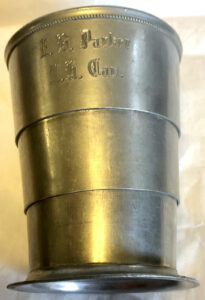
Civil War Pewter Collapsible Cup in its Original Japanned Case – Id’d to Capt. Ezra B. Parker, 1st New Hampshire Cavalry – POW at Libby Prison
$750Civil War Pewter Collapsible Cup in its Original Japanned Case – Id’d to Capt. Ezra B. Parker, 1st New Hampshire Cavalry – POW at Libby PrisonMarch 12, 2022 -
Renown Richmond Sculptor Edward V. Valentine’s Personal Photographs of General Robert E. Lee Utilized by Valentine When Sculpting a Statuette of Lee
$4,200Renown Richmond Sculptor Edward V. Valentine’s Personal Photographs of General Robert E. Lee Utilized by Valentine When Sculpting a Statuette of LeeMarch 29, 2024 -
Large Format Salt Print of Captain Robin Jones 1st SC Cavalry KIA at Brandy Station
$3,000Large Format Salt Print of Captain Robin Jones 1st SC Cavalry KIA at Brandy StationMay 26, 2024