
Identified Civil War Colonel’s Frock Coat – Col. Henry Lawrence Burnett 2nd Ohio Cavalry, Judge Advocate General’s Corps Department of Ohio and U.S. Army; One of Three Judges at the Trial of the Lincoln Assassination ConspiratorsMarch 13, 2026
 Dug Richmond or Virg...$2,150
Identified Civil War Colonel’s Frock Coat – Col. Henry Lawrence Burnett 2nd Ohio Cavalry, Judge Advocate General’s Corps Department of Ohio and U.S. Army; One of Three Judges at the Trial of the Lincoln Assassination Conspirators
SOLD
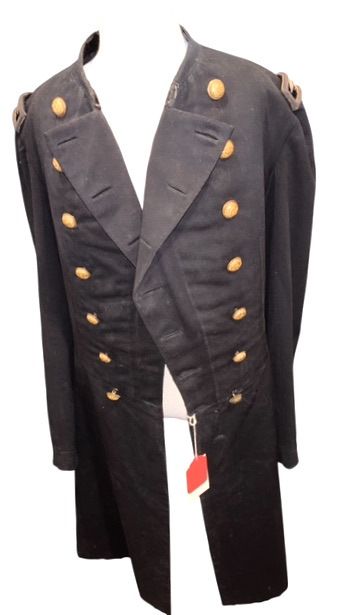
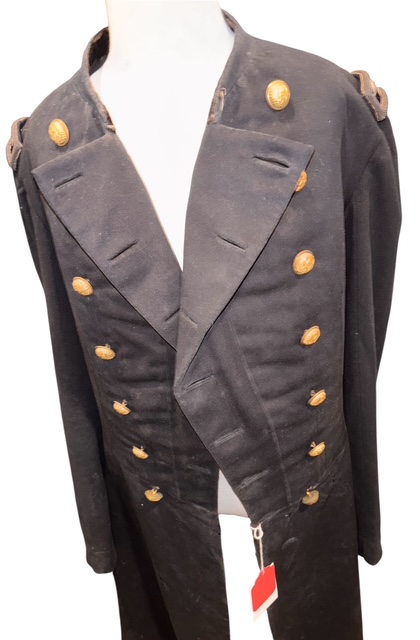
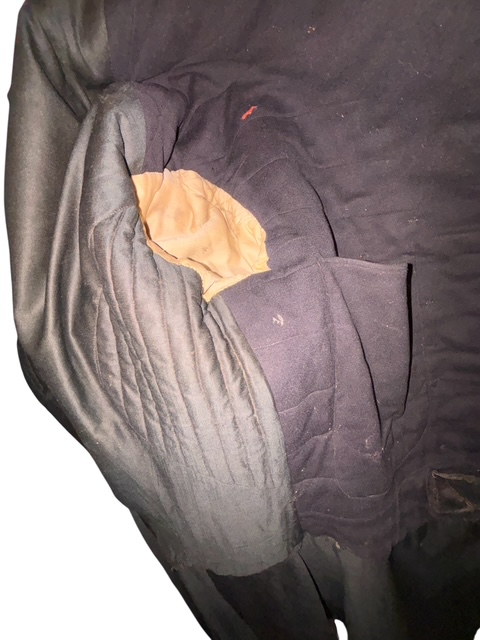
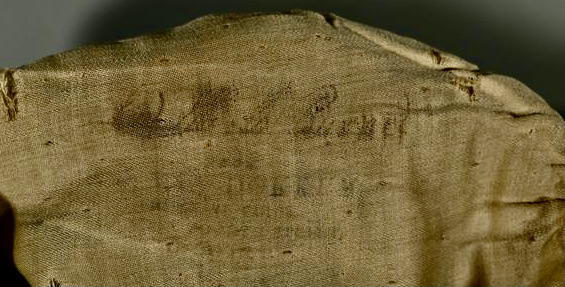
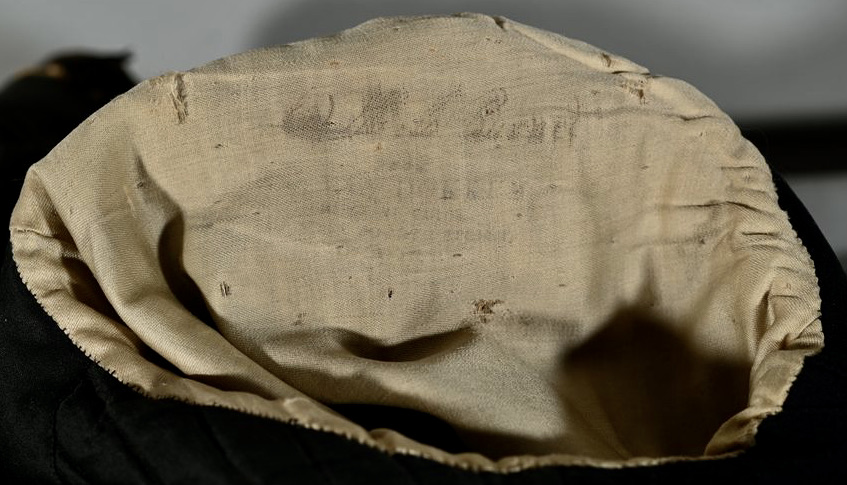
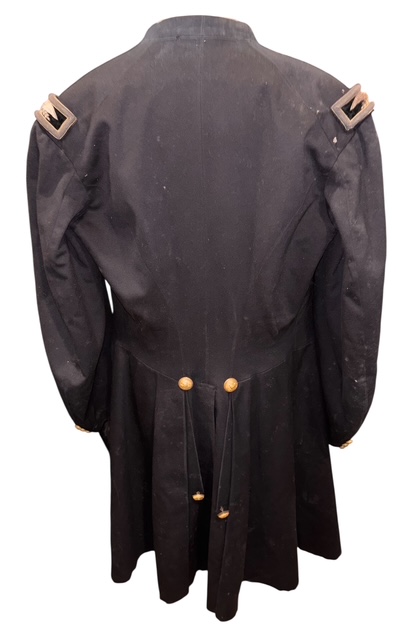
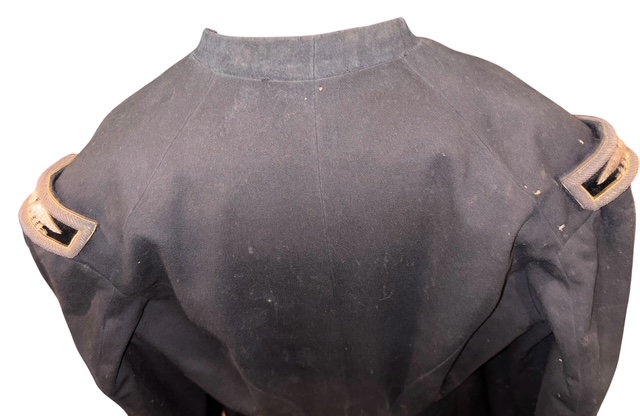
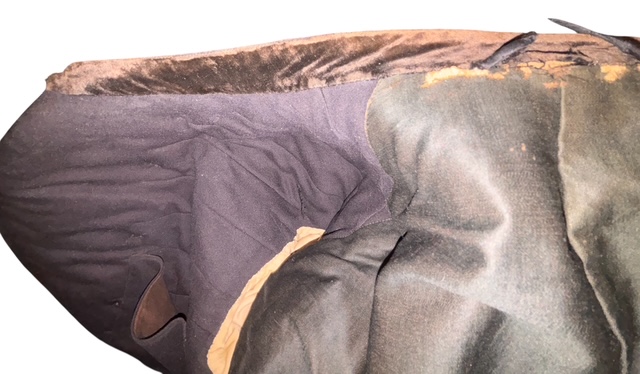
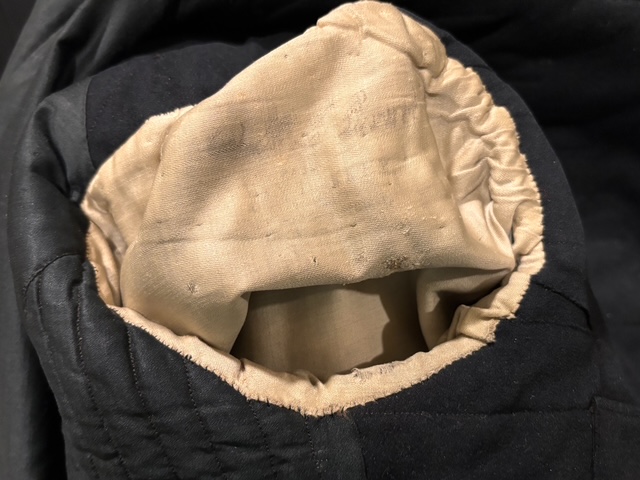
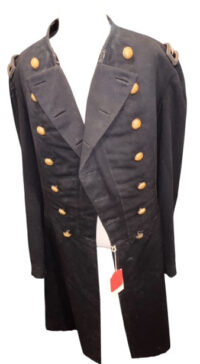
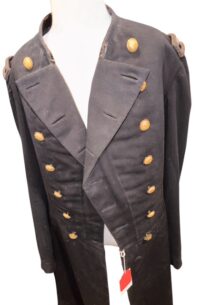
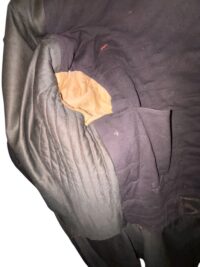
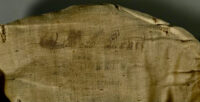
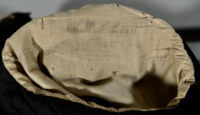
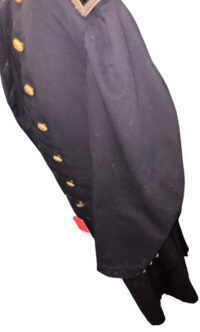
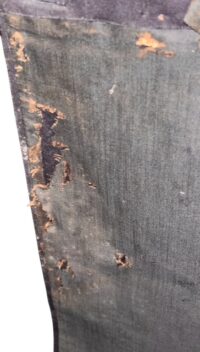
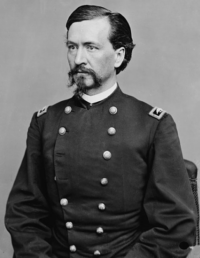
Identified Civil War Colonel’s Frock Coat – Col. Henry Lawrence Burnett 2nd Ohio Cavalry, Judge Advocate General’s Corps Department of Ohio and U.S. Army; One of Three Judges at the Trial of the Lincoln Assassination Conspirators – This war period, Colonel of the Staff frock coat has the name “Col. H. L. Burnett” inked in the left shoulder area of the left arm’s sleeve lining; beneath this name, are additional stampings, although they are not discernible. When we obtained the coat recently, from an old collection, we noticed, upon thorough examination, that there was writing in the sleeve lining of the left shoulder; unable to read any of the writing, stamped and handwritten, we took the coat to art conservation colleagues who have ultraviolet and infrared camera capability. Numerous images were taken of the writing, with the resulting images revealing the name of Col. H. L. Burnett. We have included Burnett’s biographical information below – in summary, he enlisted as an officer, at the onset of the war, in Co. C of the 2nd Ohio Cavalry as a Captain; after serving in Missouri, Burnett would serve in the Oklahoma Territory, now as a Major, but be seriously injured when thrown from his horse; no longer able to serve on horseback, Burnett was appointed to the Judge Advocate General’s Corps for the State of Ohio and under Joseph Holt for the Judge Advocate entity for the U.S. Army. Burnett, with Holt, would be one of the three supervising judges, in May 1865, for the lengthy trial of the Lincoln assassination conspirators. After the trial and resultant execution of the conspirators, Burnett would resume his career as an attorney in Buffalo and New York City, later publishing several works about the assassination conspirators’ trial.
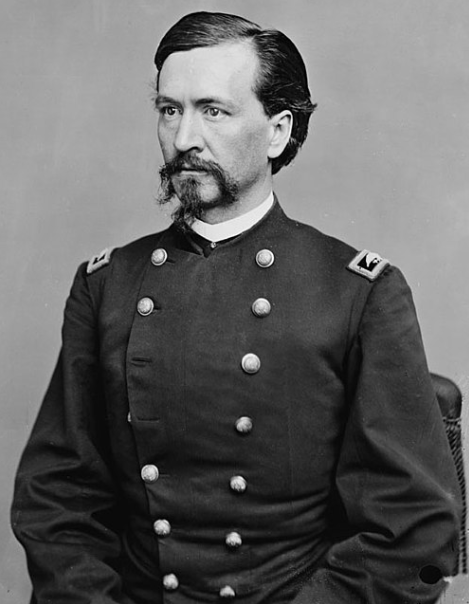
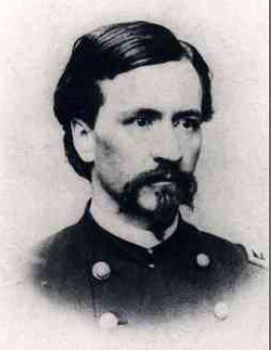
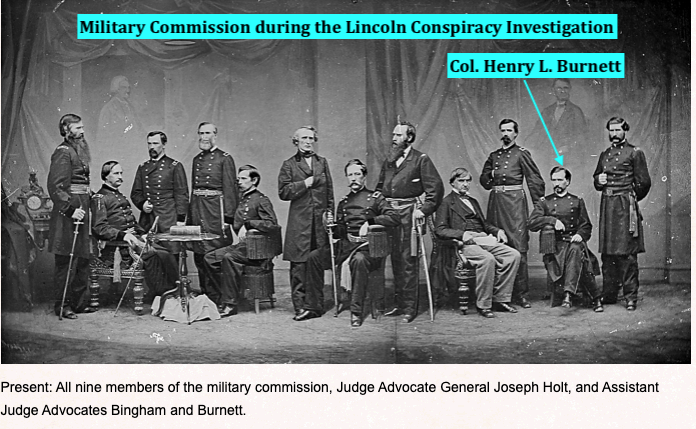
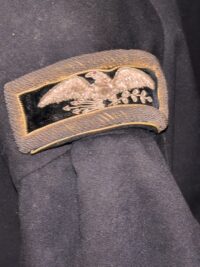
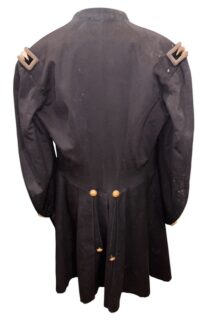
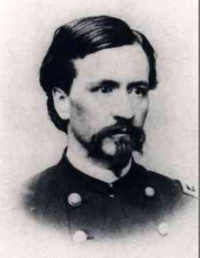
We firmly believe that this frock coat is the coat worn by Col. Burnett during his service in the assassination conspirators’ prosecution process. Burnett was breveted to the rank of Colonel in the beginning of March 1865 and later, in the same month, he was breveted to the rank of Brigadier General. For unknown reasons, Burnett did not assume the Brig. General’s rank until after the conspirators’ trial, as all of the images taken of him during the trial show him wearing a Colonel’s frock coat with Colonel’s rank straps.
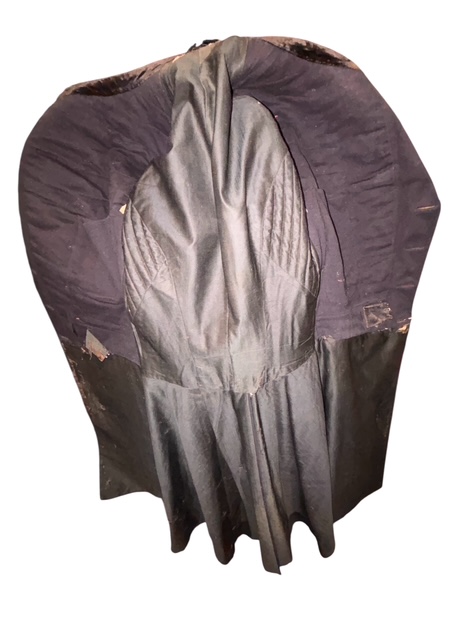
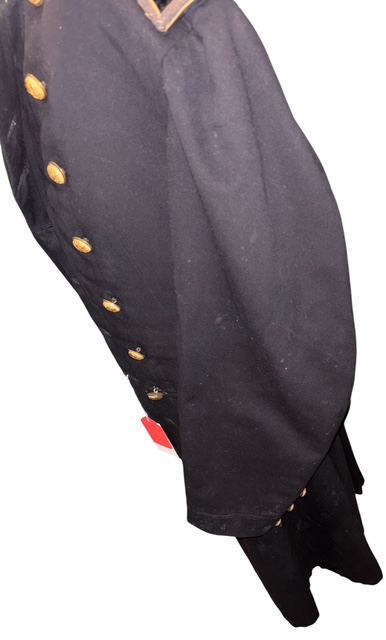
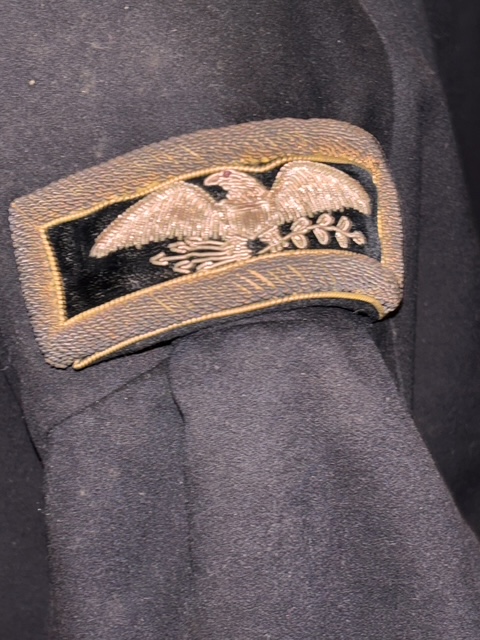
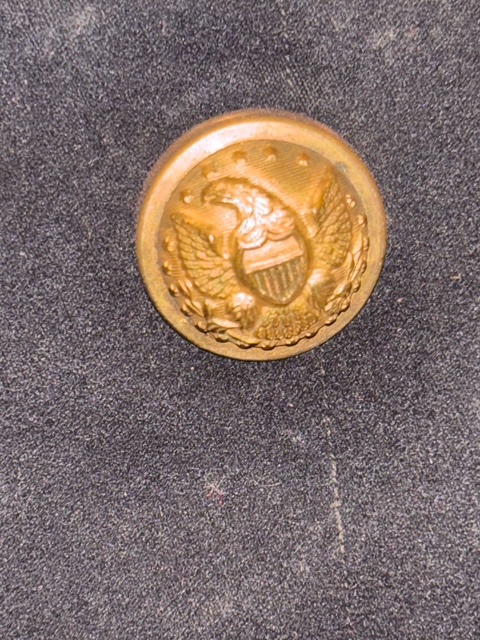
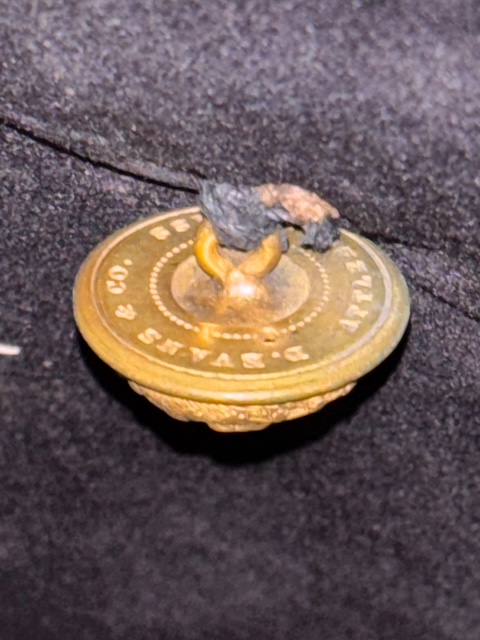
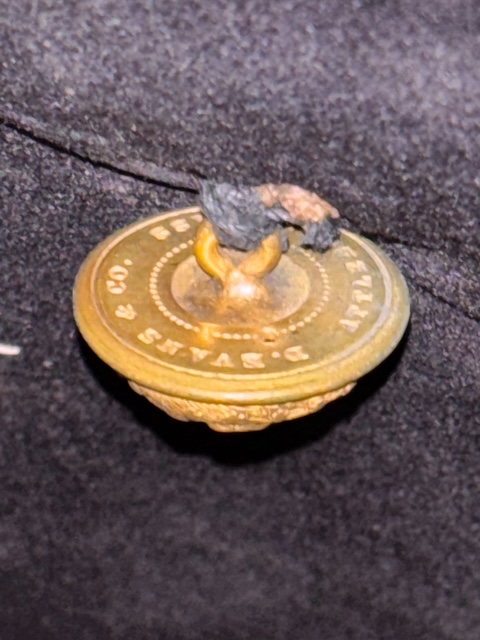
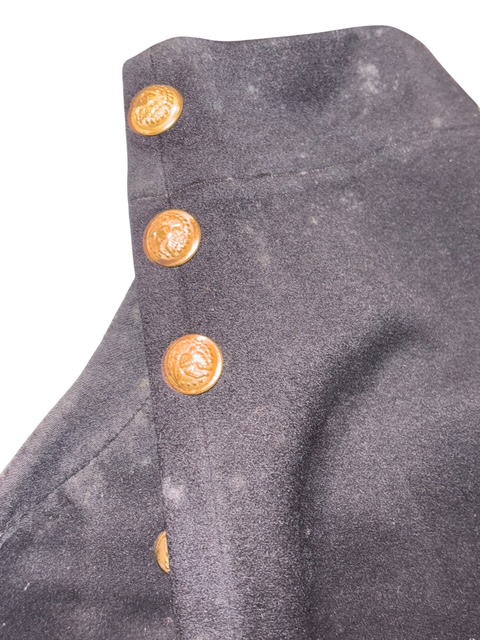
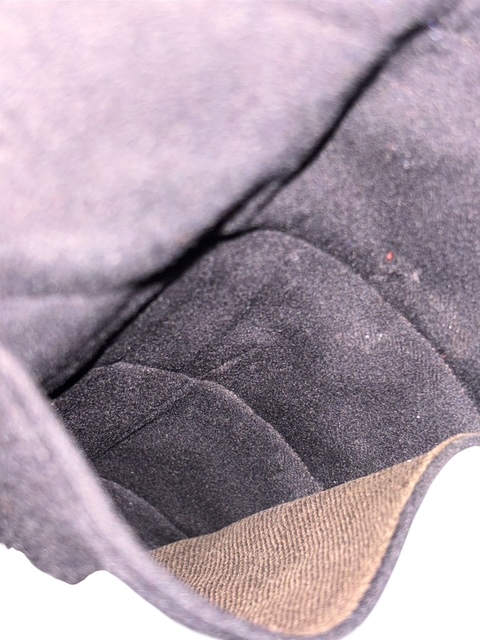
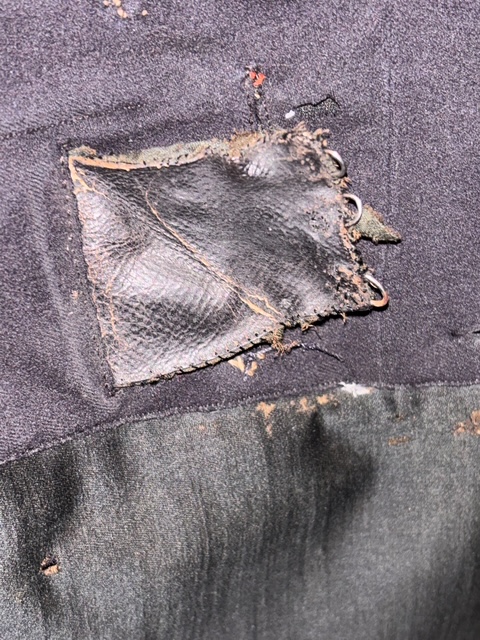
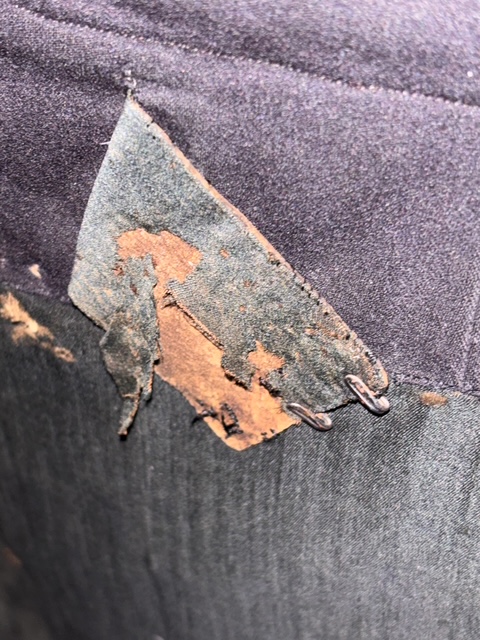
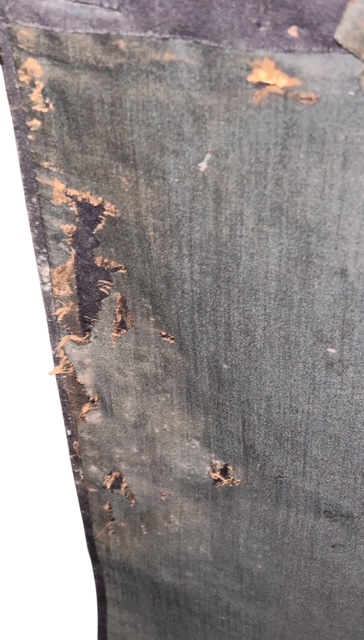
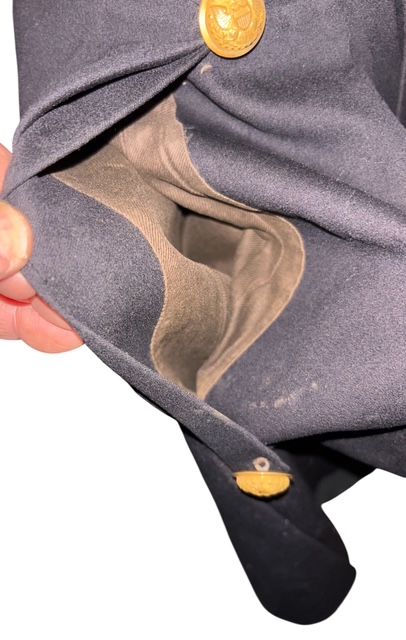
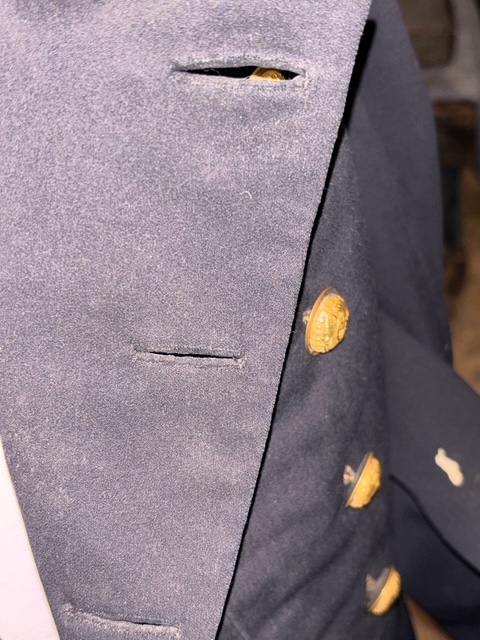
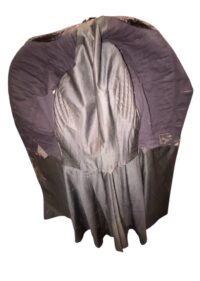
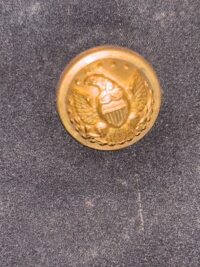
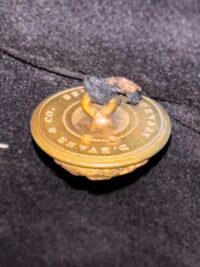
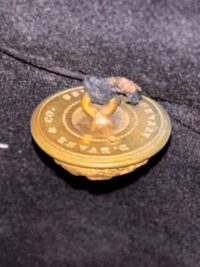
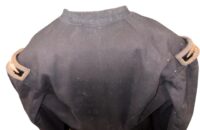
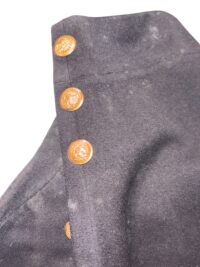
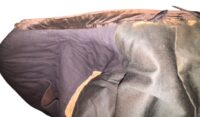
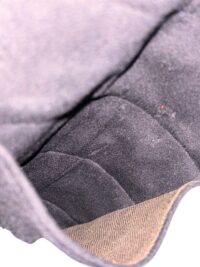
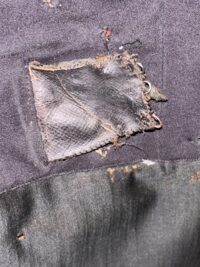
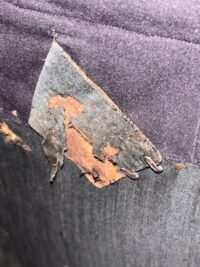
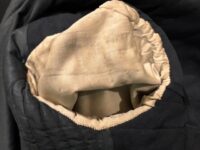
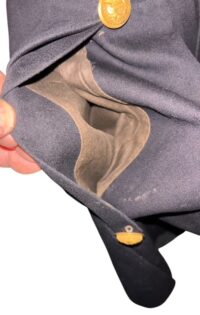
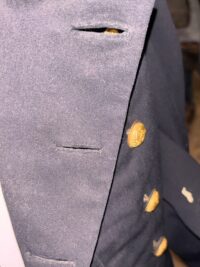
This coat exhibits all of the appropriate characteristics of a Civil War period, Colonel of the Staff frock coat: constructed of fine quality, indigo-dyed, English broadcloth wool; “balloon elbows”; unhemmed ends of skirts; blackish-green, satinette lining; quilted breast area; polished brown cotton lined tail pockets; regulation, full Colonel rank straps with black velvet (Staff) interiors; Civil War period, staff officer buttons – all with D. Evans back marks; black velvet lined collar interior; interior of coat size adjustment belt bases. The coat remains in overall excellent condition with some minor insect nips; the interior satinette lining has some areas of deterioration isolated to a low number of locations.
This frock coat belonged to a courageous officer who would serve as one of the principal judges during the trial of the Booth-led conspirators; the coat appears to be the same one he wore during the trial proceedings.
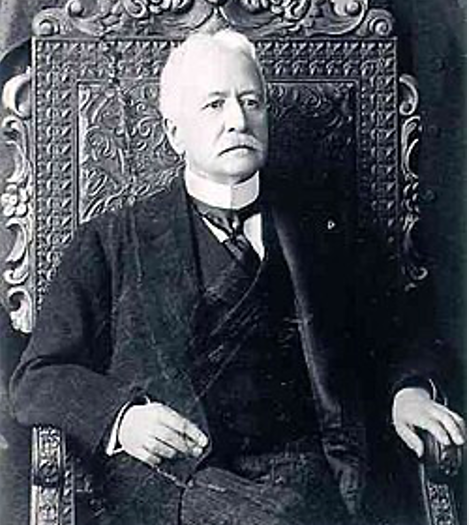
Henry Lawrence Burnett
Residence Cincinnati, OH; a 24-year-old Lawyer.
Enlisted on 8/22/1861 as a Captain.
On 8/22/1861, he was commissioned into “C” Co. Ohio 2nd Cavalry.
He was discharged for promotion on 8/10/1863
On 8/10/1863, he was commissioned into US Volunteers Adjutant Genl Dept.
He was Mustered Out on 12/1/1865
Promotions:
- Major 3/10/1862
- Major 8/10/1863 (Major & Judge Advocate)
- Brig-General 3/13/1865 by Brevet
Intra-regimental company transfers
- 3/10/1862 From company C to Field & Staff
Born 12/26/1838 in Youngstown, OH
Died 1/4/1916 in New York City, NY
GENERAL HENRY LAWRENCE BURNETT
Dictionary of American Biography
Vol. II, page 298
Brigadier-General Henry Lawrence Burnett. Union soldier, lawyer was born in Youngstown, Ohio, the son of Henry and Nancy Jones Burnett, and a descendant of William Burnet, colonial governor of New York.
At fifteen, determined upon getting an education, he stole away from home, equipped with a bundle of clothing, forty-six dollars, and copies of Thaddeus of Warsaw and the Lady of Lyons, and walked about one hundred miles to Chester Academy. Admitted to the school, he remained for two or three years, when he entered the Ohio State National Law School, from which he graduated in 1859. In the same year he began the practice of law at Warren. On the outbreak of the Civil War he became active in support of the Union. At one of these meetings he was challenged by a man in the audience with the question, “Why don’t you enlist?” “I will,” he promptly replied.
He at once volunteered in Company C of the 2nd Ohio Cavalry, of which he was chosen captain on August 23. With his regiment he was sent to Missouri and saw service in the actions at Carthage (near Joplin in the southwest of the state) , Fort Wayne, and Gibson, later taking part in the campaigns in Southern Kentucky. In the fall of 1863, with the rank of major, he was appointed judge-advocate of the Department of the Ohio. A year later at Governor Morton’s request, he was sent to Indiana to prosecute members of the Knights of the Golden Circle and later took part in the cases growing out of the Chicago conspiracy to liberate the Confederate prisoners at Camp Douglas.
In these trials, he obtained seven convictions. He was also prominent in the trial of L.P. Milligan for treason before a military commission. He was brevetted a colonel of volunteers March 8, 1865, and in the omnibus promotions of March 13 was brevetted a brigadier-general.
In the prosecution of the assassins of Lincoln Burnett served under Judge-Advocate Joseph Holt with General John A. Bingham as a special assistant, and seems to have borne a major part of the preparation of the evidence. The military commission trial of the Lincoln conspirators officially began on May 9, 1865, with testimony starting on May 12, 1865. The proceedings were held at the Old Arsenal Penitentiary in Washington, D.C., to try eight individuals accused of conspiring with John Wilkes Booth.
Key details regarding the trial:
- Start Date: May 9, 1865.
- Duration: The trial lasted roughly seven weeks, concluding with verdicts on June 30, 1865.
- Location: Third floor of the Old Arsenal Penitentiary, Southwest Washington, D.C..
- Defendants: Eight people were charged: David Herold, George Atzerodt, Lewis Powell, Mary Surratt, Michael O’Laughlen, Samuel Arnold, Dr. Samuel Mudd, and Edman Spangler.
- Outcome: Four were sentenced to hang (Herold, Atzerodt, Powell, Surratt), while the others received prison sentences.
After the trials he moved to Cincinnati, where he practiced law with Judge T.W. Bartley until 1869, and then with Ex-Governors J.D. Cox and John F. Follett until 1872.
He then moved to New York, where at various times he was in partnership with E.W. Stoughton, with B.H. Bristow, William Peet, and W.S. Opdyke, and with Judge James Emott. He was for a time counsel for the Erie railroad, and was engaged in many noted cases, including the litigation over the Emma mine, in which he acted as attorney for the English bondholders.
Probably his greatest case was that of the Rutland Railroad Company against John B. Page: in the closing argument he spoke for sixteen hours with a “consummate ability” that stamped him “the peer of the greatest advocate of the age” (D. McAdam and others, Bench and Bar of New York, 1899, II, 64). He was an organization Republican, a participant in the party councils, and was on especially close terms with McKinley who used to call him “Lightning Eyes Burnett.”
In January 1898 McKinley appointed him federal district attorney for the southern district of New York, and on the completion of his four-year term he was reappointed by Roosevelt.
Burnett married three times.
His first wife was Grace (Kitty) Hoffmann died about age 26:
Grace Hoffmann Burnett [von Oertzen] Major General von Oertzen ran
WWI concentration camp in Germany
Katherine Cleveland Burnett
his second, Sarah Lansing died age 29:
Lansing Burnett died unmarried age 24
Catharine Olivia Gibson Burnett [Van Deusen] 1st female newspaper
publisher in Colorado
His last wife was Agnes Suffern Tailer, of a prominent New York family, who survived him.
Edward N.T. Burnett Yale ’09, date grove owner
Henry Lawrence Burnett, Jr. institutionalized, unsound mind
In his later years he spent much of his time at his country home, Hillside Farm, Goshen, NY, where he kept a large stable of harness horses which he drove on the track of the Goshen Driving Club.
In the middle of November 1915, while at the farm, he was taken ill with pneumonia. Despite his serious condition he insisted on being taken by train to his city home, where, two months later, he died. [He was buried in Goshen, NY.]
(Burnett’s article, “Assassination of President Lincoln and the Trial of the Assassins,” in History of the Ohio Society of New York (1906); David Miller DeWitt, The Assassination of Abraham Lincoln (1909); The Conspiracy Trial (3 volumes, 1865-1866), ed. by Benj. Perley Poor; Official Records (Army); Who’s Who in America, 1912-13; obituaries in the New York Times and New York Tribune, January 5, 1916.)
| Henry Lawrence Burnett | |
| U.S. Attorney for the Southern District of New York | |
| In office January 1898 – January 1906 |
|
| President | William McKinley Theodore Roosevelt |
| Preceded by | Wallace Macfarlane |
| Succeeded by | Henry L. Stimson |
| Personal details | |
| Born | December 26, 1838
Youngstown, Ohio, U.S. |
| Died | January 4, 1916 (aged 77)
New York City, New York, U.S. |
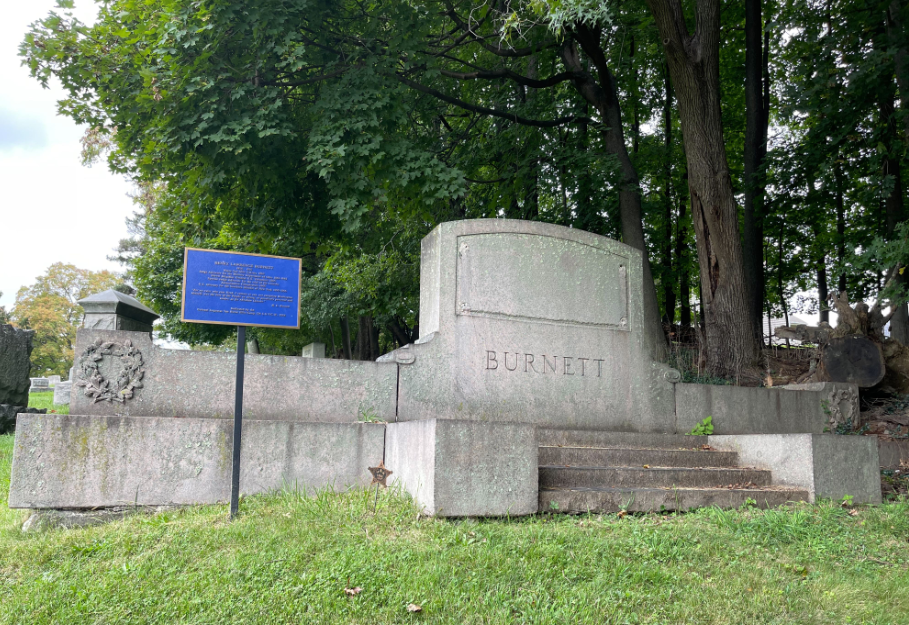
| Resting place | Slate Hill Cemetery Goshen, New York |
| Spouses |
Grace Hoffman (m. 1858; died 1864) Sarah Gibson Lansing (m. 1867; died 1877) (m. 1882) |
| Education | Chester Academy Hiram Academy |
| Alma mater | Ohio State National Law School |
| Signature | |
| Military service | |
| Allegiance | United States of America Union |
| Branch/service | United States Army Union Army |
| Years of service | 1861–1865 |
| Rank | Major Brevet Brigadier General |
| Battles/wars | |
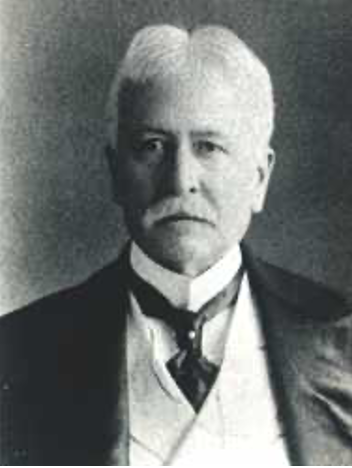
Henry Lawrence Burnett (December 26, 1838 – January 4, 1916) was an American lawyer and, after serving as a major in the Cavalry Corps (Union Army), he was a colonel and Judge Advocate in the Union Army during the American Civil War. He was a prosecutor in the trial that followed the assassination of Abraham Lincoln. He was appointed to the grade of brevet brigadier general of volunteers in 1866, to rank from March 13, 1865.
Early life
Burnett was born in Youngstown, Ohio, in 1838. He was the son of Henry Burnett (1801–1876), an abolitionist, and Nancy (née Jones) Burnett (d. 1880). His paternal grandfather, Samuel Burnett, a native of Morristown, New Jersey, was well educated and at one time was prominent and influential. He had a considerable fortune, but lost most of his property during the Revolutionary War, along with Robert Morris, and emigrated west to Ohio around 1798. He was also a descendant of William Burnett, a colonial governor of New York and New Jersey.
Determined not to become a farmer, he ran away from home to get an education. He attended Chester Academy and, later, Hiram College where he was taught by later President James A. Garfield.
In 1855, he began his studies at Ohio State National Law School, in Poland, Ohio, graduating in 1859.[1] Following his graduation, he began reading law with Judge Benjamin F. Hoffman, law partner of David Tod, who later served as Governor of Ohio. He was admitted to the bar in 1860, and began practicing in Warren, Ohio.
Career
In 1861 when the Civil War broke out, Burnett joined the 2nd Ohio Cavalry, where he rose to the rank of major in 1862. In this capacity he commanded 400 cavalry soldiers during an operation into the Oklahoma Territory, and defended the actions of a colonel who placed General James Blunt under arrest. After being trampled by a horse and seriously injured in 1863, however, he transferred to the Judge Advocate General’s Corps of the Department of the Ohio, working for Joseph Holt, the Judge Advocate General of the U.S. Army.
In 1865, he was appointed brevet colonel in the Judge Advocate Corps.
Lincoln assassination trial
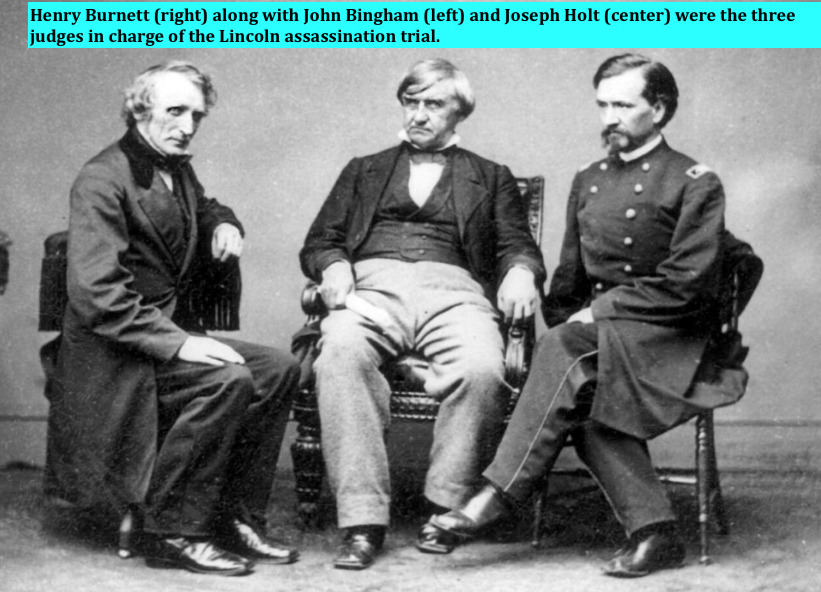
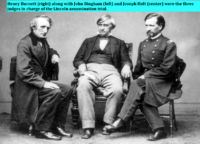
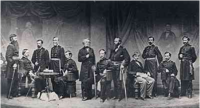
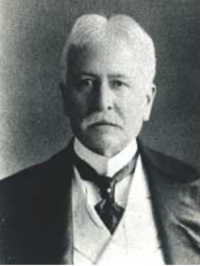
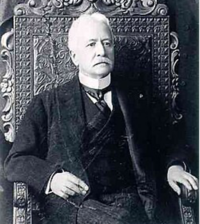
Henry Burnett (right) along with John Bingham (left) and Joseph Holt (center) were the three judges in charge of the Lincoln assassination trial.Brig. Gen. Henry Lawrence Burnett
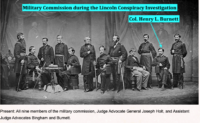
After the assassination of President Abraham Lincoln in 1865, Burnett was called upon by Secretary of War Edwin Stanton to be an Assistant Judge Advocate General. Along with him were John Bingham and Joseph Holt, the Judge Advocate General. The accused conspirators where George Atzerodt, David Herold, Lewis Powell, Samuel Arnold, Michael O’Laughlen, Edman Spangler, Samuel Mudd and Mary Surratt.
The trial began on May 10, 1865. The three spent nearly two months in court, awaiting a verdict from the jury. Holt and Bingham attempted to obscure the fact that there were two plots. The first plot was to kidnap Lincoln in exchange for the Confederate prisoners the Union had. The second was to assassinate Lincoln, Vice President Andrew Johnson and Secretary of State William H. Seward to throw the government into chaos.
It was important for the prosecution not to reveal the existence of a diary taken from the body of Lincoln’s assassin John Wilkes Booth. The diary made it clear that the assassination plan dated from April 14. The defence surprisingly did not call for Booth’s diary to be produced in court. Holt was accused of withholding evidence, but it was never proven.
On June 29, the eight were found guilty for their involvement in the conspiracy to kill Lincoln. Arnold, O’Laughlen and Mudd were sentenced to life in prison, Spangler six years in prison and Atzerodt, Herold, Paine and Surratt were to hang. They were executed July 7, 1865. Surratt was the first woman in American history to be executed. O’Laughlen died in prison in 1867. Arnold, Spangler, and Mudd were pardoned by Andrew Johnson in early 1869.
Following the completion of the trial, in October 1865, Burnett asked to be mustered out on December 1, 1865, which was granted. Senator John Sherman and Holt asked for him to be appointed a brevet brigadier general, which he accepted in May 1866. On January 13, 1866, President Andrew Johnson nominated Burnett for appointment to the grade of brevet brigadier general of volunteers, to rank from March 13, 1865, and the United States Senate confirmed the appointment on March 12, 1866.
Post-Civil War career
In late 1865, he moved to New York City, where he resumed the practice of law with Judge Thomas W. Bartley, former Justice of the Ohio Supreme Court and governor of Ohio, until 1869. Following his practice in New York, Burnett and his second wife moved back to Ohio, where he then practiced law with Jacob Dolson Cox, another former governor, and John F. Follett, who later served as a U.S. Representative, until 1872, when he started a practice in New York with Edwin W. Stoughton.
Burnett again moved to New York, this time in Buffalo, where he served as counsel to the Buffalo and Erie Railroad (where his father-in-law was treasurer), until 1874. After the railroad, he formed several law practices in New York with various prominent men, including Emott, Burnett & Hammond (with former judge James Emott, Henry B. Hammond, and Charles C. Emott in 1875), which litigated for and against the Railways, Emott, Burnett & Kidder (with Camillus George Kidder in 1877), Bristow, Peet, Burnett, & Opdyke (with Benjamin Bristow, a former Secretary of the Treasury, William Peet, and W. S. Opdyke in 1878), and Burnett & Whitney (with Edward Baldwin Whitney in 1883). He was notably involved in representing the English bondholders in the Emma Silver Mine litigation.
In 1898, President William McKinley, his close friend, appointed Burnett federal district attorney for the southern district of New York. Upon completion of his four-year term, he was reappointed by McKinley’s successor, Theodore Roosevelt, for another four-year term in 1901, which he served in until his retirement in 1906.
Personal life
On October 27, 1858, Burnett married Grace “Kitty” Hoffman (1842–1864), the daughter of Benjamin F. Hoffman, a judge. Together, they were the parents of:
- Grace Hoffman Burnett (1860–1945), who married Baron Victor Siegmund von Oertzen(1854–1934), a Gen. in the Imperial German army, in 1878. (His sister, Baroness Felicioas von Oertzen was married to William H. Barber in 1890.) She died, childless, in Bad Doberan.
- Catharine “Kitty” Cleveland Burnett (b. 1864),
After his first wife’s death in 1864, he married Sarah Gibson Lansing (1846–1877), the daughter of Brig. Gen. Henry Livingston Lansing (1818–1889), treasurer of the Buffalo and Erie Railroad, and Catharine Olivia (née Gibson) Lansing (1818–1897), on September 4, 1867. Her paternal grandfather was Barent Bleecker Lansing and her maternal grandparents were Henry Bicker Gibson (1783–1863), banker and president of the Rochester and Syracuse Railroad, and one of the richest men in Western New York, and Sarah (née Sherman) Gibson (herself the aunt of William Watts Sherman). Before her death in 1877, they were the parents of:
- Catherine Olivia Gibson Burnett (1873–1934), who married Robert Jewett Mercur (1854–1929) in 1895. They divorced and she married John Evans Bell (1864–1952). Her last marriage was to Robert Meade Van Deusen.
- Lansing Burnett (1869–1893), who died unmarried.
After his second wife’s death and burial at Forest Lawn Cemetery in Buffalo in 1877, he married for the third and final time to Agnes Suffern Tailer (1858–1932) on January 31, 1882, at the Church of the Ascension at Fifth Avenue and 10th Street in Manhattan. She was the daughter of Edward Neufville Tailer, a prominent New York merchant and banker, and the granddaughter of Thomas Suffern and Edward Neufville Tailer Sr. (descendants of William Tailer, colonial governor of Massachusetts). The guests at their wedding included Mr. and Mrs. William H. Vanderbilt, William and Alva Vanderbilt, Cornelius and Alice Claypoole Vanderbilt, William Seward and Eliza Vanderbilt Webb, Gen. James Watson Webb, Ogden and Mary Wilson Goelet, Col. and Mrs. Delancey Kane, and others.[25] Together, they were the parents of:
- Henry Lawrence Burnett Jr. (1882–1918), a Columbia Universitygraduate who served as a S. Marine aboard the USS Connecticut and died after a fall down the stairs at his home.
- Edward Neufville Tailer Burnett (1885–1966), a Yale Universitygraduate who moved to Coachella, California.
- Robert Suffern Tailer Burnett (1895–1895), who died young.
He died on January 4, 1916, at his home, 7 East 12th Street, in New York City. He had been ill for the previous year with pneumonia, traveling between his city home and country home. After a large funeral, he was interred in Slate Hill Cemetery in Goshen.
Society life
In 1892, both Burnett and his wife Agnes were included in Ward McAllister‘s “Four Hundred“, purported to be an index of New York’s best families, published in The New York Times. Conveniently, 400 was the number of people that could fit into Mrs. Astor’s ballroom.
He was a member of the Metropolitan Club, the Century Association, Union Club, the Colonial Club, and the Goshen Driving Club. He also served as past president of the Ohio Society of New York, for four years, and the Loyal Legion.
Seeking a country home away from the city, Burnett and his wife purchased a horse-breeding farm in Goshen, New York, known as “Hillside Farm,” where he raced his stock on the amateur circuit. The 193-acre estate was sold in 1917.
Published works
- Some Incidents in the Trial of President Lincoln’s Assassins(1888)
- Hancock’s Relation to the Trial and Execution of Mrs. Surratt(1888)
- The Controversy between President Johnson and Judge Holt(1889)
Civil War Union Brevet Brigadier General. Born in Youngstown, Ohio, he was admitted to the bar in 1859 and established a law practice in Warren, Ohio. When the Civil War began, he enlisted and was commissioned a Captain in Company C, 2nd Ohio Volunteer Cavalry. With the 2nd Ohio, he saw actions in Missouri and the campaigns in Southern Kentucky. In 1863, he was assigned as a Major, judge-advocate of the Department of the Ohio and in 1864, he was sent to Indiana as a prosecutor on the military commission, serving until the end of the war. For distinguished service, he was brevetted Brigadier General of US Volunteers on March 13, 1865. After the war, he served as Special Judge Advocate for the Lincoln Assassination Trial. In 1872, he moved to New York practiced law and was appointed Federal District Attorney, southern district of New York by President William McKinley in 1898. After this term expired he retired to his Hillside Farm, Goshen, New York.
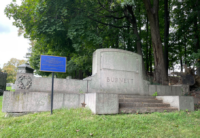
Henry Lawrence Burnett VVeteran memorial
Birth
26 Dec 1838
Youngstown, Mahoning County, Ohio, USA
Death
4 Jan 1916 (aged 77)
New York, New York County, New York, USA
Burial
Goshen, Orange County, New York
Related Items
-
Civil War Pewter Collapsible Cup in its Original Japanned Case – Id’d to Capt. Ezra B. Parker, 1st New Hampshire Cavalry – POW at Libby Prison
$750Civil War Pewter Collapsible Cup in its Original Japanned Case – Id’d to Capt. Ezra B. Parker, 1st New Hampshire Cavalry – POW at Libby PrisonMarch 12, 2022 -
Civil War Period Leather Satchel Id’d to a Connecticut Citizen
$375Civil War Period Leather Satchel Id’d to a Connecticut CitizenMay 18, 2024 -

Large Format Albumen from Glass Plate Negative by Andrew J. Russell of Confederate Fort Mahone (“Fort Damnation”) – April, 1865
$650Large Format Albumen from Glass Plate Negative by Andrew J. Russell of Confederate Fort Mahone (“Fort Damnation”) – April, 1865July 3, 2022 -

Original Regimentally Painted, Civil War Knapsack – Co. F 5th U.S. Infantry
$550Original Regimentally Painted, Civil War Knapsack – Co. F 5th U.S. InfantryDecember 10, 2021