
Id’d Original Civil War Period Shirt – Capt. George Fordham Co. D 3rd NY InfantryMarch 23, 2026
Id’d Original Civil War Period Shirt – Capt. George Fordham Co. D 3rd NY Infantry
$750
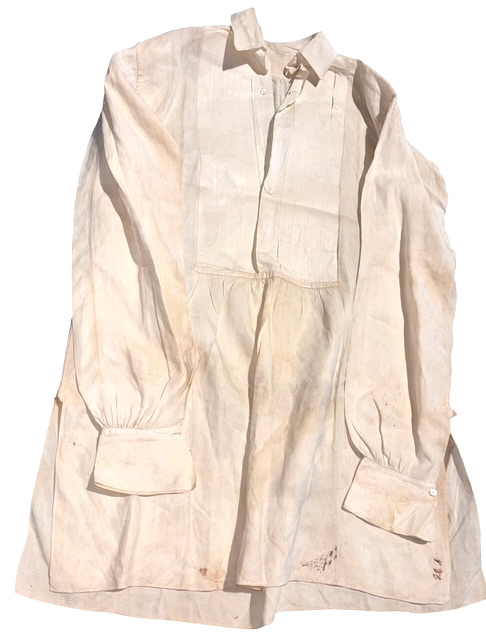
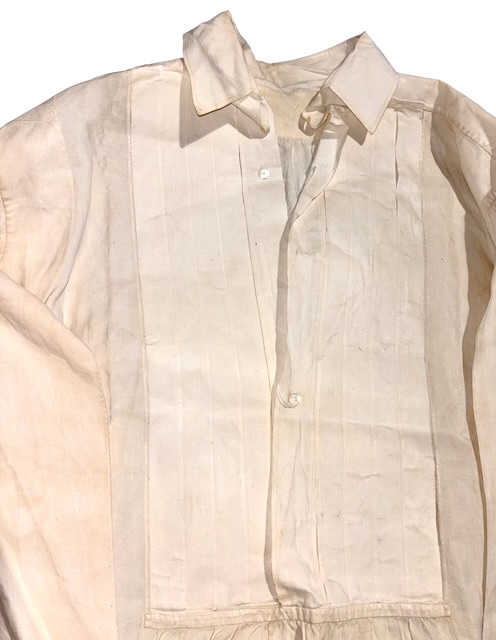
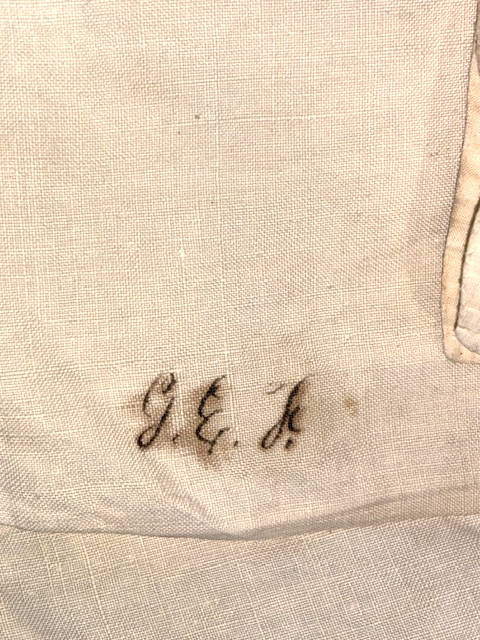
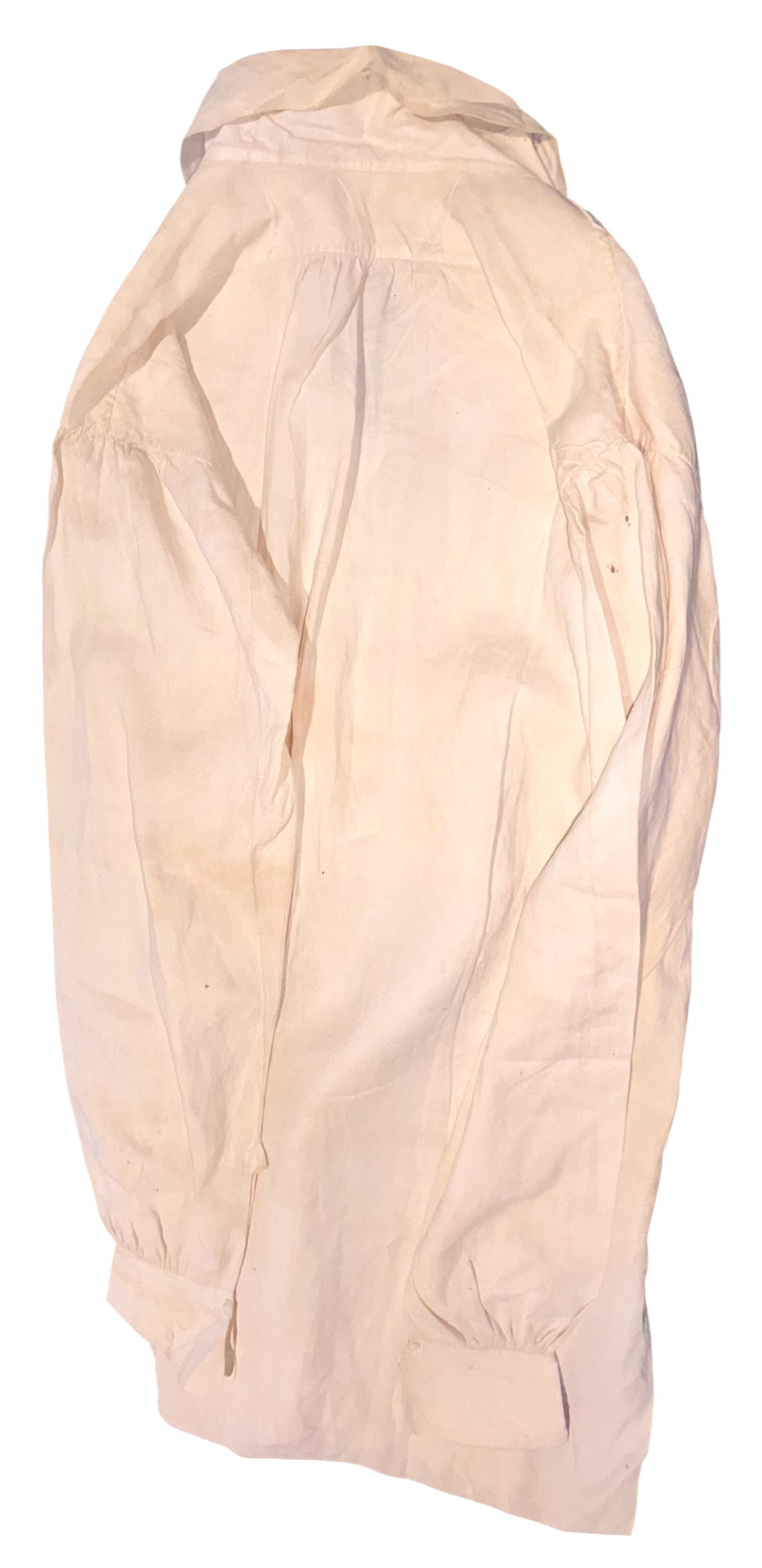
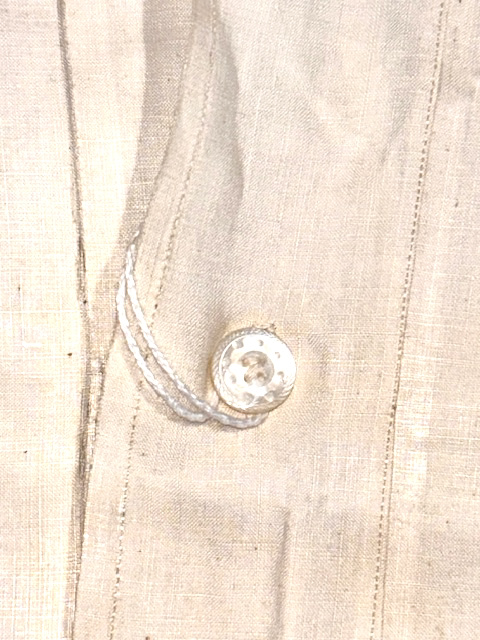
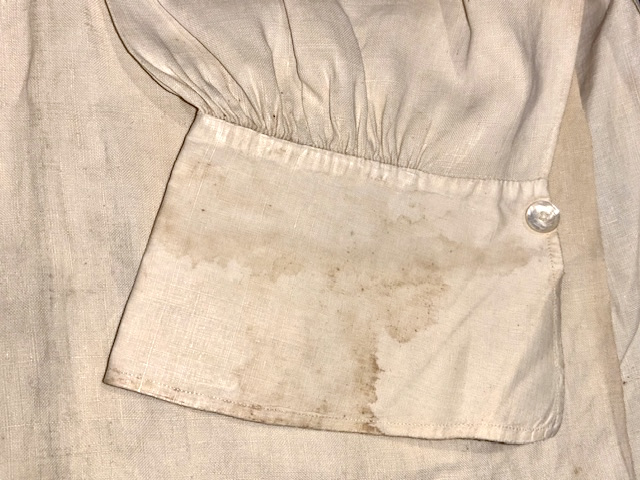
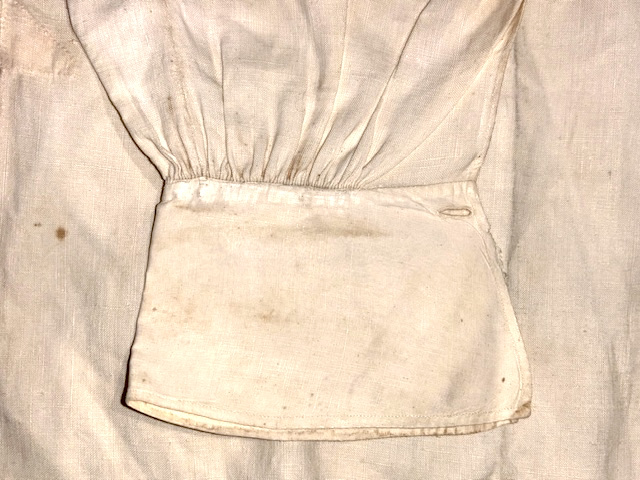
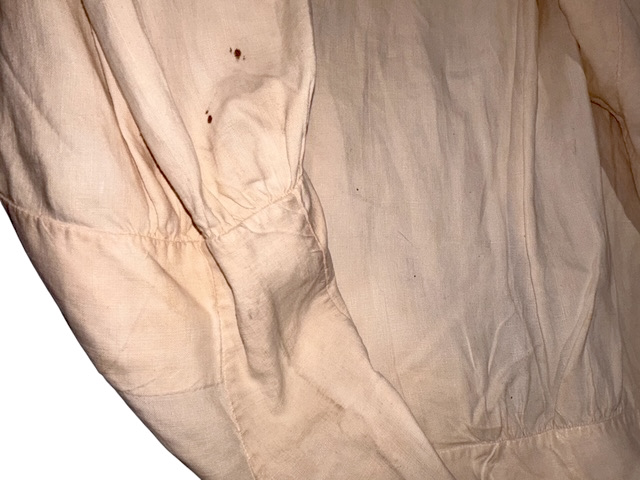
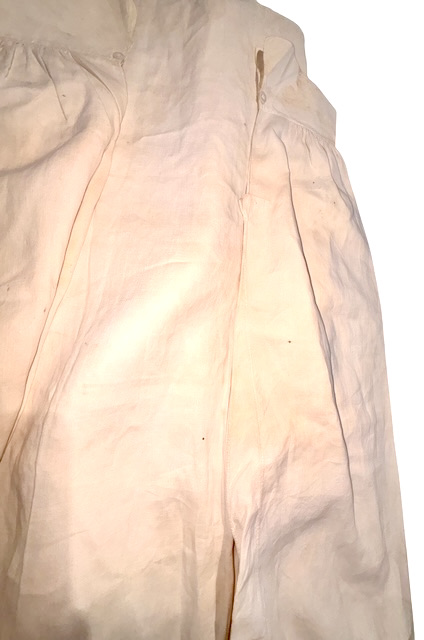
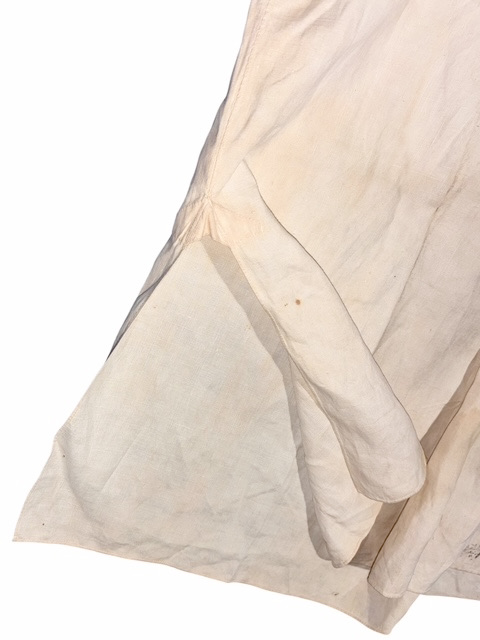
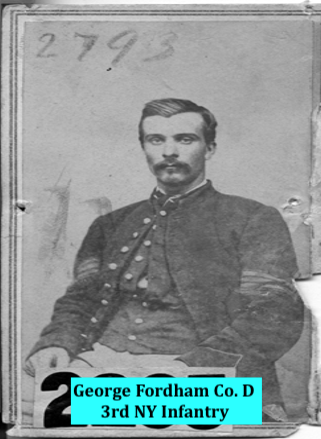
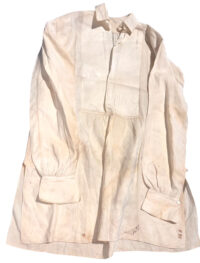
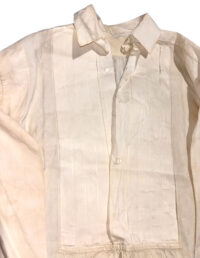
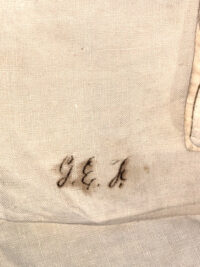
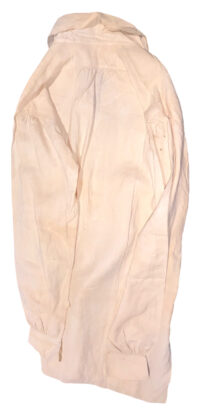
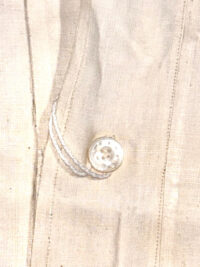
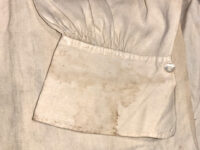
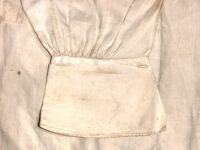
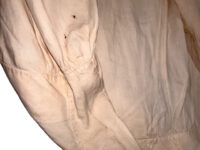
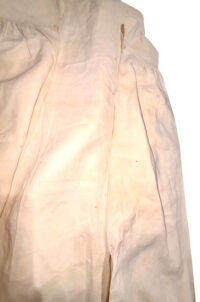
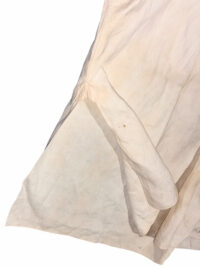
Id’d Original Civil War Period Shirt – Capt. George Fordham Co. D 3rd NY Infantry – This Civil War period, white linen shirt is a pull-over style, with a roll collar and pleated, four-button front; the sleeves are gathered at the shoulders and cuffs; all of the original mother-of-pearl buttons remain in place. The shirt, heavily starched in the pleated front and cuffs, remains in excellent condition, exhibiting some minor stains. The shirt descended through the Fordham family; Captain Fordham’s initials “GEF” are inked near the bottom, front edge of the shirt. The shirt remains in overall, fine condition.
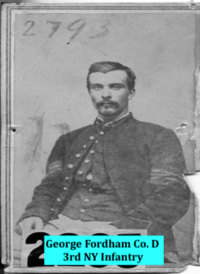
George E. Fordham
Residence was not listed; 20 years old.
Enlisted on 4/23/1861 at Albany, NY as a Priv.
On 5/14/1861, he mustered into “D” Co. New York 3rd Infantry.
He re-enlisted on 5/14/1863.
He was Mustered Out on 8/28/1865 at Raleigh, NC
Promotions:
- Sergt
- 1st Sergt
- 1st Lieut 11/1/1864
- Capt 12/1/1864
- 2nd Lieut 5/25/1863
3rd NY Infantry
Organized: Albany, NY on 4/25/1861
Mustered out: 8/28/1865
3rd NY Infantry
Organized: Albany, NY on 4/25/1861
Mustered out: 8/28/1865
NEW YORK THIRD INFANTRY (Two Years) Third Infantry.-Cols., Frederick Townsend, Samuel M. Alford, Eldridge G. Floyd, John E. Mulford; Lieut.-Cols., Samuel M. Alford, Henry P. Hubbell, Eldridge G. Floyd, John E. Mulford, George W. Warren; Majs., Abel Smith, Jr., John E. Mulford, Eldridge G. Floyd, George W. Warren, T. Ellery Lord. The 3d, organized at Albany, was known as the 1st Albany regiment and was mustered into the U. S. service there on May 14, 1861, for two years. Four days later it left for New York and on June 3 arrived at Fortress Monroe. It shared in the engagement at Big Bethel, losing 2 men killed and 27 wounded, and returned to Fortress Monroe. On July 30 it was ordered to Baltimore and quartered at Fort McHenry until April 1, 1862. The summer of 1862 was spent at Suffolk and on Sept. 12, the 3d was again ordered to Fortress Monroe. The original members not reenlisted were mustered out in May, 1863, but the regiment remained in the field, composed of 162 recruits, 200 veterans and the veterans and recruits of the 9th N. Y., and subsequently received many more recruits and the veterans of the 112th N. Y. Vols. The 3d was present during the siege of Suffolk, after which it was ordered to Folly island, where it took an active part in the operations against Fort Wagner, the bombardment of Fort Sumter and attacks on Charleston in the summer and autumn of 1863, as part of Alford’s brigade of the 18th corps. In Oct., 1863, it was attached to the 3d brigade, 2nd division, 10th corps and returned to Virginia, where it was active in the advance under Gen. Butler in May, 1864, losing 5 killed, 50 wounded and 7 missing. It fought in the battle of Drewry’s bluff and was then transferred to the 3d brigade, 3d division, 18th corps, which moved to Cold Harbor, where it was active until June 12, when it returned to Bermuda Hundred. The regiment rejoined the 10th corps on June 15, and formed part of the 1st brigade, 2nd division, with which it was engaged in the assaults at Petersburg in June, the mine explosion of July 30, Fort Harrison and the Darbytown road. On Dec. 3, 1864, the 3d was attached to the 1st brigade, 2nd division, 24th corps and sent to North Carolina where it was engaged at Fort Fisher, Sugar Loaf battery, Fort Anderson and Wilmington. It remained in North Carolina performing picket and garrison duty until Sherman’s arrival and the close of the war, and was mustered out of the service at Raleigh, Aug. 28, 1865. During the term of service the total loss of the organization was 37 deaths from wounds and 85 from other causes.
3rd Infantry Regiment
Nickname: Albany Regiment
Mustered in: May 14,1861
Mustered out: August 28,1865
The following is taken from New York in the War of the Rebellion, 3rd ed. Frederick Phisterer. Albany: J. B. Lyon Company, 1912.
This regiment was accepted by the State April 25, 1861; received its numerical designation May 7, 1861; was organized at Albany, and there mustered in the service of the United States for two years May 14, 1861. In April, 1863, a number of the members of the regiment re-enlisted for one and two years; these and the three years’ men of the regiment were formed into a battalion May 18, 1863, and retained in the service, while those whose term of service had expired had been sent to Albany, where they were honorably discharged May 21, 1863. The three years’ men of the 9th Infantry, and sufficient drafted men were assigned to the battalion, and the latter brought up to a regimental standard. June 13, 1865, the men of the 112th Infantry, not discharged with their own regiment, were transferred to this.
The original companies were recruited principally: A — Williamsburgh Volunteers— at Williamsburgh and Brooklyn; B at Newburgh, Cornwall, Fishkill and Matteawan; C at Albany, Cohoes, Otsego, Schoharie and Troy; D at Albany; E — Syracuse Zouaves — at Syracuse, Baldwinsville, Geddes, Salina and Skaneateles; F at Albany, Cohoes and Stockport; G at Albany, Bethlehem, Greenbush, Pittsfield, Sand Lake, Schenectady, Stillwater, Sudbury, Syracuse and Troy; H at Owego, Halsey Valley, Ridgeford, Spencer and Tioga; I at Oneida, Albany, Augusta, Brooklyn, Hampton, New York city, Syracuse, Vernon, Walesville and Westmoreland; and K at Havana, Alpine, Beaver Dams, Benton, Burdette, Branchport, Catherine, Dix, Monterey, Odessa, Orange, Penn Yan, Millport and Starkey.
The regiment, Col. Frederick Townsend, left the State May 31, 1861, and served at and near Fort Monroe, Va., from June, 1861; at and near Baltimore, Md., from July 30, 1863, at Suffolk, Va.; in Mansfield’s Division from June 6, 1862; at Fort Monroe, Va., Department of Virginia, from September, 1862; at Suffolk, Va., 7th Corps, from April 19, 1863; in 1st Brigade, 2d Division, 7th Corps, from June, 1863; at Fort Monroe, Va., from July, 1863; on Folly island and in Charleston harbor in Alford’s Brigade, 18th Corps, from July, 1863; in the 3d Brigade, 2d Division, 10th Corps, from October, 1863; in the 1st Brigade, 2d Division, 10th Corps, Army of the James, from April, 1864; in the 3d Brigade, 3d Division, 18th Corps, from May 30, 1864; in the 1st Brigade, 2d Division, 10th Corps, from June 15, 1864; in the same brigade and division, 24th Corps, from December 3, 1864; in the Provisional Corps, from March, 1865; and again in the 10th Corps, from April 2, 1863; in the First Brigade, 2d Division, 10th Corps, from July, 1865; and, commanded by Lieut.-Col. George W. Warren, it was honorably discharged and mustered out August 28, 1865, at Raleigh, N. C.
During its service, the regiment lost by death, killed in action, 1 officer, 23 enlisted men; of wounds received in action, 1 officer, 14 enlisted men; of disease and other causes, 2 officers, 83 enlisted men; total, 4 officers, 120 enlisted men; aggregate, 124; of whom 1 enlisted man died in the hands of the enemy.
The following is taken from The Union army: a history of military affairs in the loyal states, 1861-65 — records of the regiments in the Union army — cyclopedia of battles — memoirs of commanders and soldiers. Madison, WI: Federal Pub. Co., 1908.
Third Infantry.—Cols., Frederick Townsend, Samuel M. Alford, Eldridge G. Floyd, John E. Mulford; Lieut.-Cols., Samuel M. Alford, Henry P. Hubbell, Eldridge G. Floyd, John E. Mulford, George W. Warren; Majs., Abel Smith, Jr., John E. Mulford, Eldridge G. Floyd, George W. Warren, T. Ellery Lord. The 3d, organized at Albany, was known as the 1st Albany regiment and was mustered into the U. S. service there on May 14, 1861, for two years. Four days later it left for New York and on June 3 arrived at Fortress Monroe. It shared in the engagement at Big Bethel, losing 2 men killed and 27 wounded, and returned to Fortress Monroe. On July 30 it was ordered to Baltimore and quartered at Fort McHenry until April 1, 1862. The summer of 1862 was spent at Suffolk and on Sept. 12, the 3d was again ordered to Fortress Monroe. The original members not re-enlisted were mustered out in May, 1863, but the regiment remained in the field, composed of 162 recruits, 200 veterans and the veterans and recruits of the 9th N. Y., and subsequently received many more recruits and the veterans of the 112th N. Y. Vols. The 3d was present during the siege of Suffolk, after which it was ordered to Folly island, where it took an active part in the operations against Fort Wagner, the bombardment of Fort Sumter and attacks on Charleston in the summer and autumn of 1863, as part of Alford’s brigade of the 18th corps. In Oct., 1863, it was attached to the 3d brigade, 2nd division, l0th corps and returned to Virginia, where it was active in the advance under Gen. Butler in May, 1864, losing 5 killed, 50 wounded and 7 missing. It fought in the battle of Drewry’s bluff and was then transferred to the 3d brigade, 3d division, l8th corps, which moved to Cold Harbor, where it was active until June 12, when it returned to Bermuda Hundred. The regiment rejoined the l0th corps on June 15, and formed part of the 1st brigade, 2nd division, with which it was engaged in the assaults at Petersburg in June, the mine explosion of July 30, Fort Harrison, and the Darbytown road. On Dec. 3, 1864, the 3d was attached to the 1st brigade, 2nd division, 24th corps and sent to North Carolina, where it was engaged at Fort Fisher, Sugar Loaf battery, Fort Anderson and Wilmington. It remained in North Carolina performing picket and garrison duty until Sherman’s arrival and the close of the war, and was mustered out of the service at Raleigh, Aug. 28, 1865. During the term of service the total loss of the organization was 37 deaths from wounds and 85 from other causes.
Third New York Infantry Regiment
The Third New York Infantry Regiment lost 1 officer and 36 enlisted men killed or mortally wounded and 2 officers and 83 enlisted men to disease during the Civil War.
| 1861 | |
| April 25 | Organized at Albany, N.Y., and accepted for state service |
| May 7 | Designated as the Third New York Infantry Regiment. |
| May 14 | Mustered in for two years United States service under the command of
Colonel Frederick Townsend, Lieutenant Colonel Samuel M. Alford and Major Abel Smith |
| May 31 | Left New York for Fortress Monroe, Virginia and duty there. Attached to |
| June 10 |
Action at Big Bethel, VirginiaThe regiment lost 2 men killed and 27 wounded |
| June 26 | Colonel Townsend resigned to accept a commission as major of the 18th
United States Infantry |
| July 30 | Moved to Baltimore, Maryland and duty there quartered at Fort McHenry.
Attached to Dix’s Command. |
| 1862 | |
| June 6 | Moved to Suffolk, Virginia and duty there. Attached to |
| July | Attached to
Weber’s Brigade, Division at Suffolk, 7th Corps, Department of Virginia |
| August 26 | Lieutenant Colonel Alford was promoted to colonel and Henry P. Hubbell
commissioned lieutenant colonel. |
| September | Moved to Fortress Monroe, Virginia, Department of Virginia, and duty there. |
| November 29 | Captain Floyd Eldridge of Company C was promoted to major. |
| 1863 | |
| April 19 | Moved to Suffolk, Virginia, and attached to |
| April 19-May 4 |
Siege of Suffolk |
| May 4 | Siege of Suffolk raised |
| May 21 | 2 years men mustered out |
| May 23 | Lieutenant Colonel Hubbell resigned and Major Eldridge G. Floyd was
promoted to lieutenant colonel. |
| June 10 | Captain John E. Mulford of Company K was promoted to major |
| June 24 |
Dix’s Peninsula Campaign |
| July 1-7 | Expedition from White House to South Anna River |
| July | Ordered to Folly Island, South Carolina, attached to Alvord’s Brigade,
Vodges’ Division, Folly Island, S.C.. 10th Army Corps, Dept. of the South |
| August 3 | Action at Morris Island, South Carolina. |
| August 9- September 7 |
Siege operations at CharlestonAgainst Forts Wagner and Gregg, Morris Island, South Carolina, and against Fort Sumter. |
| August 17-23 | Bombardment of Fort Sumter |
| September 7 |
Capture of Forts Wagner and Gregg |
| September 8 – December 21 |
Operations in Charleston HarborAgainst Forts Sumter and Charleston. |
| October 27- November 9 |
Bombardment of Fort Sumter |
| November | Duty on Folly Island, South Carolina. |
| 1864 | |
| February | Attached to 2nd Brigade, Vodges’ Division, Northern District Folly Island,
10th Army Corps |
| April | Attached to 3rd Brigade, 2nd Division, 10th Corps, Army of the James |
| May 4-28 | Moved to Gloucester Point, Virginia. Butler’s operations on south side of
James River and against Petersburg and Richmond, attached to |
| May 7 | Port Walthall |
| May 9-10 | Swift Creek or Arrow field Church |
| May 12-16 | Operations against Fort Darling |
| May 14-16 |
Battle of Drury’s BluffThe regiment lost 5 men killed or mortally wounded. Lieutenant Colonel Eldridge was wounded. |
| May 16-28 |
Bermuda Hundred |
| May 28-31 | Moved to White House, then to Cold Harbor |
| June 1-12 |
Battle of Cold HarborThe regiment lost 1 officer and 4 enlisted men wounded |
| June 14 | Colonel Alford was dismissed. |
| June 15-18 |
Before PetersburgAttached to 1st Brigade, 2nd Division, 10th Corps, Army of the James |
| June 16 |
Siege operations against Petersburg and Richmond |
| July 30 |
Mine Explosion, Petersburg |
| August | Duty in the trenches before Petersburg and on the Bermuda front |
| September 28-30 |
Chaffin’s Farm, New Market HeightsThe regiment lost 6 men killed or mortally wounded, 15 men wounded and 5 men missing |
| October 27-28 |
Battle of Fair Oaks |
| November | In trenches before Richmond |
| December 7 | Lieutenant Colonel Eldridge was discharged for his Drury’s Bluff wound and
Major Mulford was promoted to lieutenant colonel |
| December 7-27 | Expedition to Fort Fisher, North Carolina. Attached to |
| December 8 | Captain George Warren of Company C was promoted to major. |
| 1865 | |
| January 3-15 | 2nd Expedition to Fort Fisher, North Carolina; attached to 1st Brigade,
2nd Division, Terry’s Provisional Corps |
| January 15 |
Capture of Fort Fisher, North Carolina |
| February 11 |
Sugar Loaf Battery |
| February 18-20 |
Fort Anderson |
| February 22 |
Capture of Wilmington |
| March | Advance on Kinston and Goldsboro |
| March-August | Duty in the Dept. of North Carolina |
| April 9 | Lieutenant Colonel Mulford was promoted to colonel. |
| May 21 | Major Warren was promoted to lieutenant colonel. |
| June 30 | Colonel Mulford resigned. |
| August 28 | The Third New York Infantry Regiment was mustered out under the
command of Lieutenant Colonel George W. Warren. |
3rd Regiment, New York Infantry
Overview:
Organized at Albany, N. Y., and mustered in May 14, 1861, for two years’ service. Reorganized May, 1863. Left State for Fortress Monroe, Va., May 31, 1861, and duty there till July 30. Moved to Baltimore, Md., July 30, and duty there till June 6, 1862. Attached to Fort Monroe and Camp Hamilton, Va., Dept. of Virginia. to July, 1861. Dix’s Command, Baltimore, Md., to June, 1862. Mansfield’s Division, Newport News, Va., Dept. of Virginia, to July, 1862. Weber’s Brigade, Division at Suffolk, 7th Army Corps, Dept. of Virginia, to September, 1862. Fortress Monroe, Va., Dept. of Virginia, to April, 1863. Suffolk, Va., 1st Division, 7th Army Corps, Dept of Virginia, to July, 1863. Alvord’s Brigade, Vodges’ Division, Folly Island, S. C., 10th Army Corps, Dept. of the South, to February, 1864. 2nd Brigade, Vodges’ Division, Northern District Folly Island, 10th Army Corps, to April, 1864. 3rd Brigade, 2nd Division, 10th Army Corps, Army of the James, to May, 1864. 1st Brigade, 2nd Division, 10th Army Corps, to May, 1864. 3rd Brigade, 3rd Division, 18th Army Corps, to June, 1864. 1st Brigade, 2nd Division, 10th Army Corps, to December, 1864. 1st Brigade, 2nd Division, 24th Army Corps, to January, 1865. 1st Brigade, 2nd Division, Terry’s Provisional Corps, to March, 1865. 1st Brigade, 2nd Division, 10th Army Corps, Army of the Ohio, to August, 1865.
Service:
Action at Big Bethel, Va., June 10, 1861. Moved to Baltimore, Md., July 30, and duty there till June 6, 1862. Moved to Suffolk, Va., June 6, and duty there till September. Moved to Fortress Monroe, Va., and duty there till April, 1863. Moved to Suffolk April 19. Siege of Suffolk April 19-May 4. Siege of Suffolk raised May 4. (2 years’ men mustered out May 21, 1863.) Dix’s Peninsula Campaign June 24-July 7. Expedition from White House to South Anna River July 1-7. Ordered to Folly Island, S. C. Action at Morris Island, S. C., August 3. Siege operations against Forts Wagner and Gregg, Morris Island, S. C., and against Fort Sumpter and Charleston August 9-September 7. Bombardment of Fort Sumpter August 17-23. Capture of Forts Wagner and Gregg September 7. Operations in Charleston Harbor against Forts Sumpter and Charleston September 8 to December 21. Bombardment of Fort Sumpter October 27-November 9. Duty on Folly Island, S. C., till April, 1864. Moved to Gloucester Point, Va. Butler’s operations on south side of James River and against Petersburg and Richmond May 4-28. Port Walthall May 7. Swift Creek or Arrowfield Church May 9-10. Operations against Fort Darling May 12-16. Battle of Drury’s Bluff May 14-16. Bermuda Hundred May 16-28. Moved to White House, thence to Cold Harbor May 28-31. Cold Harbor June 1-12. Before Petersburg June 15-18. Siege operations against Petersburg and Richmond June 16 to December 12, 1864. Mine Explosion, Petersburg, July 30. Duty in the trenches before Petersburg and on the Bermuda front till September 27. Chaffin’s Farm, New Market Heights, September 28-30. Battle of Fair Oaks October 27-28. In trenches before Richmond till December 7. Expedition to Fort Fisher, N. C., December 7-27. 2nd Expedition to Fort Fisher, N. C., January 3-15, 1865. Assault on and capture of Fort Fisher, N. C., January 15. Sugar Loaf Battery February 11. Fort Anderson February 18-20. Capture of Wilmington February 22. Advance on Kinston and Goldsboro March 6-21. Duty in the Dept. of North Carolina till August. Mustered out August 25, 1865.
Regiment lost during service 1 Officer and 36 Enlisted men killed and mortally wounded and 2 Officers and 83 Enlisted men by disease. Total 122.
Related Items
-

Early Civil War Commission of Lt. Charles P. Herring (Later a Brig. General) in the Gray Reserves of Philadelphia Signed by Pennsylvania Wartime Governor Andrew Curtin
$375Early Civil War Commission of Lt. Charles P. Herring (Later a Brig. General) in the Gray Reserves of Philadelphia Signed by Pennsylvania Wartime Governor Andrew CurtinDecember 18, 2022 -
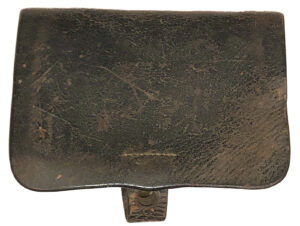
Id’d Civil War .44 Cal. Pistol Cartridge Box
$425Id’d Civil War .44 Cal. Pistol Cartridge BoxJanuary 4, 2024 -
Civil War Period Silver Card Case Brought Home by F.M. Gibson, 40th Mass. Infantry
$625Civil War Period Silver Card Case Brought Home by F.M. Gibson, 40th Mass. InfantryMay 2, 2020 -
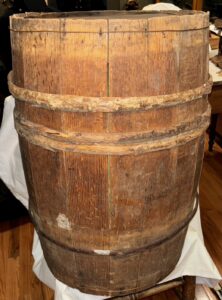
Civil War Period Flour Barrel from Richmond, Virginia Mill
$750Civil War Period Flour Barrel from Richmond, Virginia MillMay 17, 2024