
Civil War Period Soldier Drawn Pencil Sketch of Camp “Misery” Barracks and Fortifications in Provincetown, MassachusettsMarch 27, 2026
Civil War Period Soldier Drawn Pencil Sketch of Camp “Misery” Barracks and Fortifications in Provincetown, Massachusetts
SOLD
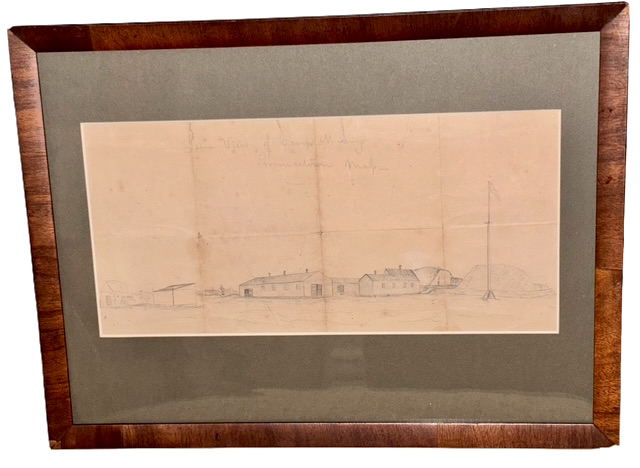
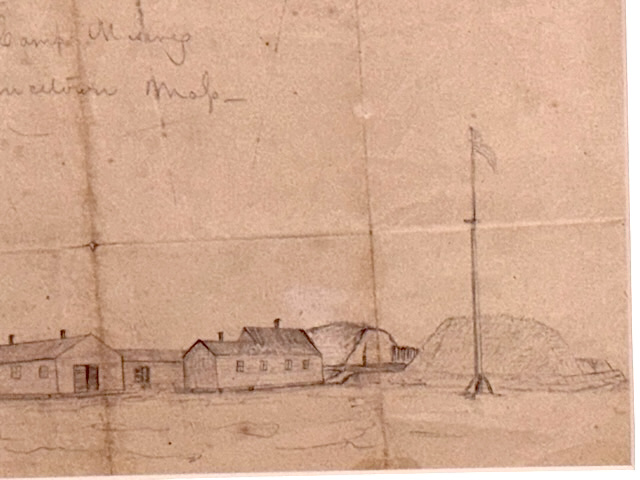
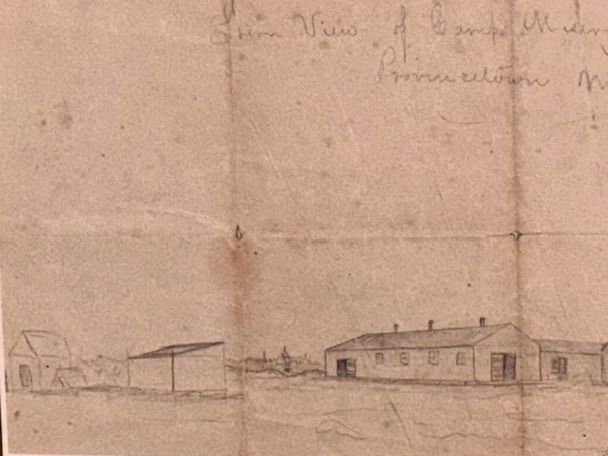
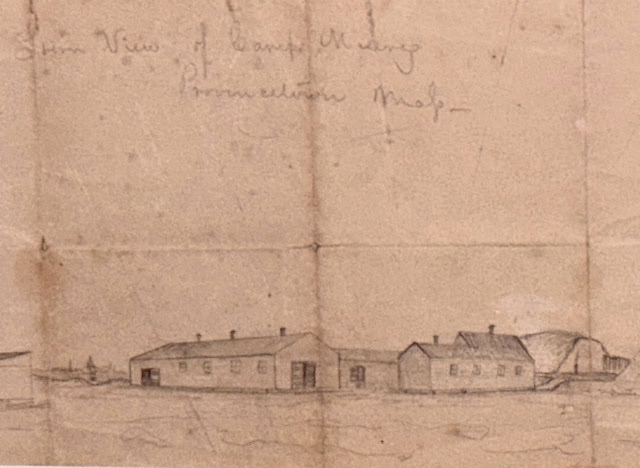
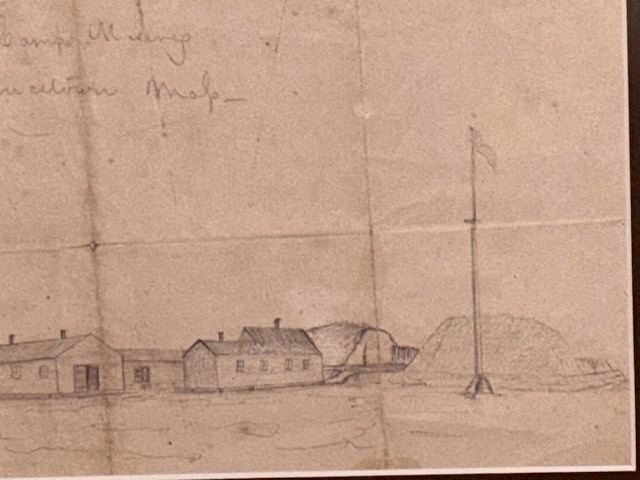
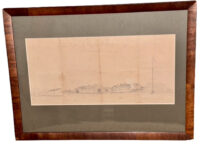
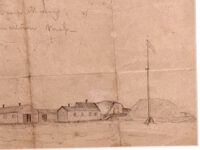
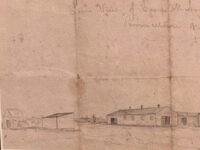
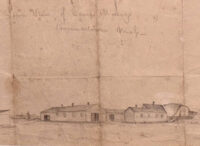
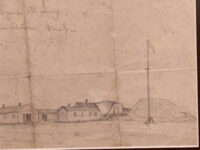
Civil War Period Soldier Drawn Pencil Sketch of Camp “Misery” Barracks and Fortifications in Provincetown, Massachusetts – This well drawn sketch is entitled, at the top of the sketch:
“? View of Camp Misery
Provincetown Mass”
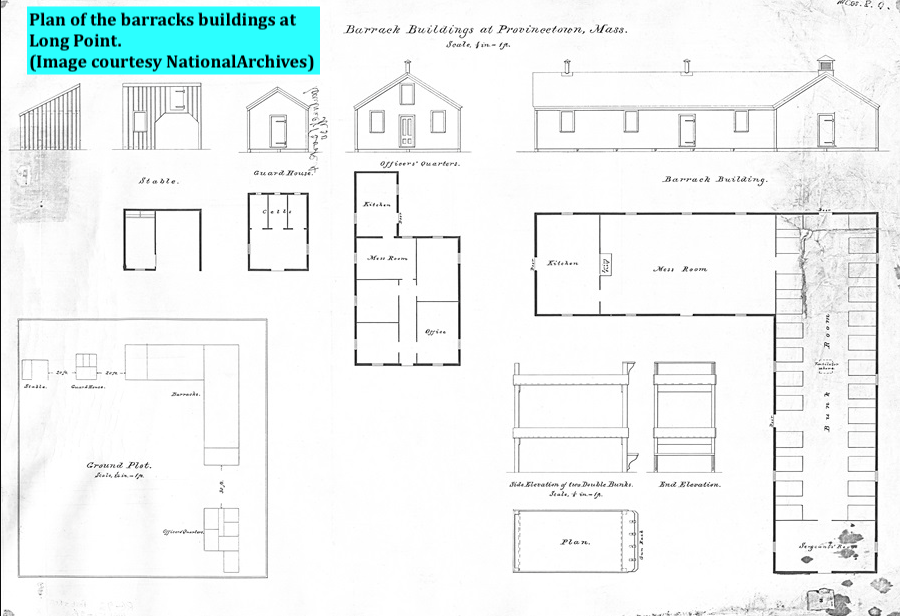
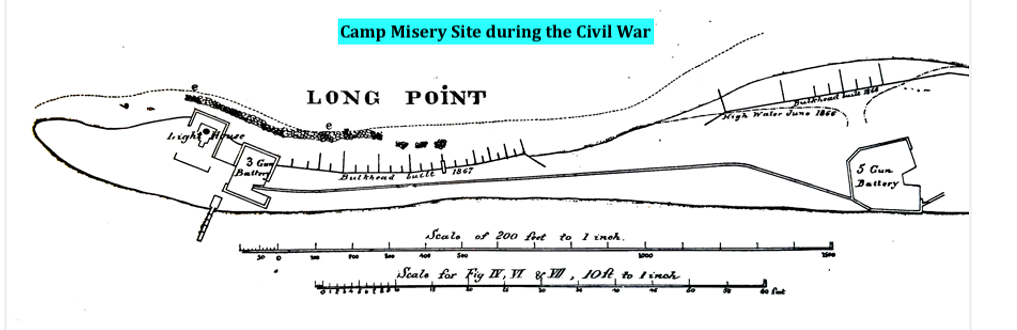
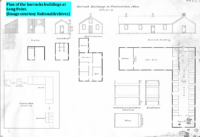
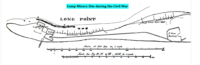
The following is from an article written by Amy Whorf McGuiggan: “On March 5, 1864, Massachusetts ceded jurisdiction of Provincetown’s Long Point to the United States for a military reservation. People in town didn’t like the idea much, although they did become fond of the officer in charge of the artillery there. But it was not until 1862 that it was determined that the protection of the harbor from predatory expeditions of Confederate cruisers could no longer be postponed. The reservation consisted of two earthworks batteries, one mounting five 32-pound smooth-bore guns (model 1829-41, 6.4-inch bore), the other mounting three guns of the same size and model, all on wooden carriages. A barracks, guardhouse, and stable were also constructed. The three commissioned officers assigned to the battery occupied one of the last buildings that remained from the Long Point fishing community that had been abandoned in the years before the Civil War began. During the Civil War years, when Provincetown’s fishing and whaling fleets plied the Atlantic, mariners had become all too familiar with the reputation of the Confederate commerce raiders. At least six Provincetown schooners were captured and burned, and the formidable CSS Alabama, responsible for two of those captures, had cruised the waters off New England. The Confederate privateer Tacony was also harassing shipping along the coast. Undaunted, Provincetown vessels continued to go to sea, and unfazed residents mocked the batteries, calling them Forts Useless and Ridiculous.” This sketch depicts the wartime structures and gun emplacements at Provincetown; today, nothing remains of the fort with the exception of wells, cellar holes and trash pits. This sketch, in consideration that the fort was dismantled and decommissioned shortly after the war ended, must have been executed by one of the soldiers stationed at the fort, during the war; Provincetown is visible in the background of the drawing. The drawing remains in good condition exhibiting creasing from period folding and two very small wear holes; it is archivally housed in a period frame.
Measurements: Frame: W – 17.25”; H – 13”; Sight: W -13.5”; H – 6.5”
Forts Useless and Ridiculous
Life was tedious at the Civil War fortifications on Long Point
By Amy Whorf McGuiggan Jul 9, 2025
On March 5, 1864, Massachusetts ceded jurisdiction of Provincetown’s Long Point to the United States for a military reservation. People in town didn’t like the idea much, although they did become fond of the officer in charge of the artillery there.
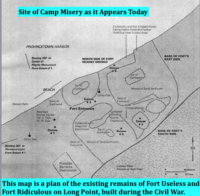
As early as 1821, an examination of the state’s coastline by the Office of the Chief of Engineers concluded that, owing to Provincetown’s geographical situation with respect to Massachusetts Bay, the harbor should “unquestionably be secured by sufficient batteries.” Then, in 1835, Major James Graham of the Corps of Topographical Engineers submitted a military and hydrographical chart of Provincetown “to aid in the projection of military defense works.” But it was not until 1862 that it was determined that the protection of the harbor from predatory expeditions of Confederate cruisers could no longer be postponed. The reservation consisted of two earthworks batteries, one mounting five 32-pound smooth-bore guns (model 1829-41, 6.4-inch bore), the other mounting three guns of the same size and model, all on wooden carriages. A barracks, guardhouse, and stable were also constructed. The three commissioned officers assigned to the battery occupied one of the last buildings that remained from the Long Point fishing community that had been abandoned in the years before the Civil War began. During the Civil War years, when Provincetown’s fishing and whaling fleets plied the Atlantic, mariners had become all too familiar with the reputation of the Confederate commerce raiders. At least six Provincetown schooners were captured and burned, and the formidable CSS Alabama, responsible for two of those captures, had cruised the waters off New England. The Confederate privateer Tacony was also harassing shipping along the coast. Undaunted, Provincetown vessels continued to go to sea, and unfazed residents mocked the batteries, calling them Forts Useless and Ridiculous.
The reservation consisted of two earthworks batteries, one mounting five 32-pound smooth-bore guns (model 1829-41, 6.4-inch bore), the other mounting three guns of the same size and model, all on wooden carriages. A barracks, guardhouse, and stable were also constructed. The three commissioned officers assigned to the battery occupied one of the last buildings that remained from the Long Point fishing community that had been abandoned in the years before the Civil War began.
Provincetown residents scoffed at the notion that a fortification was necessary on Long Point even though the harbor, with its superb anchorage and shelter from storms, had been an important rendezvous point for enemy vessels during the Revolutionary War and War of 1812.
During the Civil War years, when Provincetown’s fishing and whaling fleets plied the Atlantic, mariners had become all too familiar with the reputation of the Confederate commerce raiders. At least six Provincetown schooners were captured and burned, and the formidable CSS Alabama, responsible for two of those captures, had cruised the waters off New England. The Confederate privateer Tacony was also harassing shipping along the coast. Undaunted, Provincetown vessels continued to go to sea, and unfazed residents mocked the batteries, calling them Forts Useless and Ridiculous.
For the 100 soldiers stationed on Long Point’s silent shore, life was no doubt tedious. A description of the batteries from the Department of the East notes that the nearest supply depot was Boston, that water was obtained in cisterns and fuel brought in from Provincetown, two miles north. A description of the “country” noted that it was “barren and sandy; no timber, or grass; no water, except rainwater; locality, healthy.”
The garrison of soldiers were members of Unattached Companies of Massachusetts Volunteer Militia, units of the infantry that were raised for the defense of the seacoast. Soldiers initially served 90 days, after which the battery was occupied by recruits serving 100 days until November 1864. They were subsequently replaced by one-year re-enlistments, who mustered out early at the conclusion of the war in May 1865.
Post returns from Long Point began in May 1864 and continued monthly until May 1865. Each return detailed the makeup of the garrison of soldiers as well as official communications received during the month. Most correspondence was routine, relating day-to-day business, but on May 15, 1865, the commanding officer noted receipt of two communications dated April 16 — the first announcing the death of President Abraham Lincoln and the second announcing that Andrew Johnson had taken the oath of office.
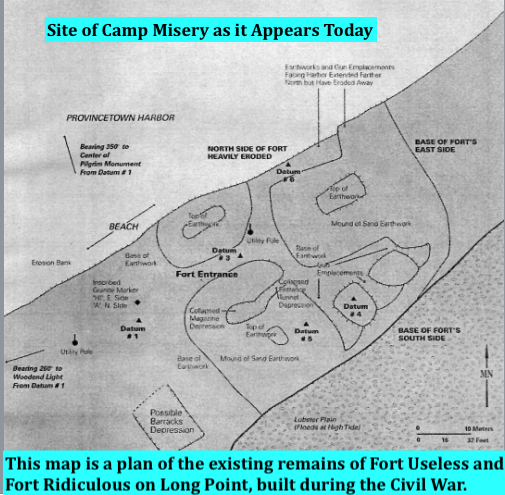
When the forts were decommissioned in 1873, the wood used to build this place was brought across the harbor on skows to be reused as Cape Codders were wont to do out of necessity at the time. Torn down were the big platforms used to support the gun carriages, the barracks, and the wood bulkhead surrounding the guns to retain the sand and hold back the sea. The only structures remaining of these forts are the wells, cellar holes, and trash pits.
Related Items
-

Rare Incomparable Research Book – C.S. Armory Richmond Deluxe Edition
$925Rare Incomparable Research Book – C.S. Armory Richmond Deluxe EditionMay 15, 2020 -

Archive of 55 Letters with Covers Written by Private William J. Dinsmore Co. H 1st Massachusetts Infantry – Accompanied by Images of Dinsmore and His Wife; Dinsmore Was Mortally WIA at Second Bull Run
Archive of 55 Letters with Covers Written by Private William J. Dinsmore Co. H 1st Massachusetts Infantry – Accompanied by Images of Dinsmore and His Wife; Dinsmore Was Mortally WIA at Second Bull RunAugust 23, 2025 -
Civil War Period Confederate Currency
Civil War Period Confederate CurrencyFebruary 8, 2022 -
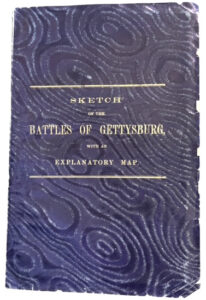
Rare Early Edition of “Sketch of the Battles of Gettysburg, July 1st, 2d, and 3d, 1863… Accompanied by an Explanatory Map” by T. Ditterline – Published in New York by C.A. Alvord, 1864; copyright dated 1863
Rare Early Edition of “Sketch of the Battles of Gettysburg, July 1st, 2d, and 3d, 1863… Accompanied by an Explanatory Map” by T. Ditterline – Published in New York by C.A. Alvord, 1864; copyright dated 1863April 14, 2026