
Quarter Plate Tintype, New Jersey Civil War Service Medal, Reunion Ribbon and GAR Medals of John J. Megill 14-Year-Old Drummer in Co I 26th and Co I 33rd New Jersey InfantryApril 2, 2026
 1865 Sketchbook with...$1,450
Quarter Plate Tintype, New Jersey Civil War Service Medal, Reunion Ribbon and GAR Medals of John J. Megill 14-Year-Old Drummer in Co I 26th and Co I 33rd New Jersey Infantry
SOLD
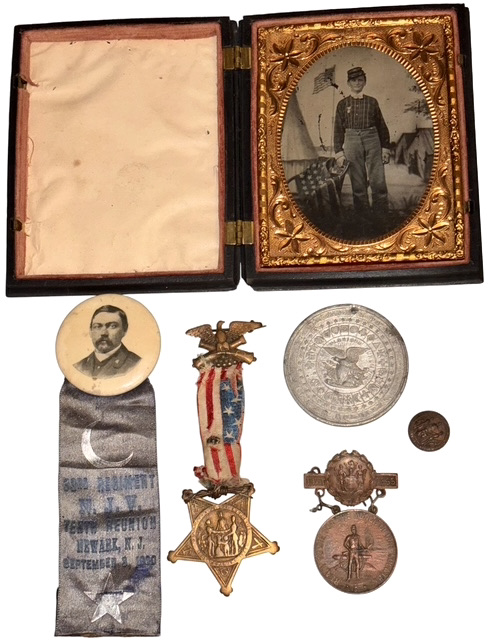
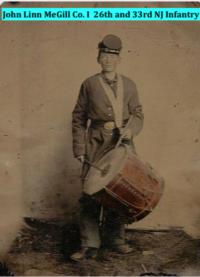
Quarter Plate Tintype, New Jersey Civil War Service Medal, Reunion Ribbon and GAR Medals of John J. Megill 14-Year-Old Drummer in Co I 26th and Co I 33rd New Jersey Infantry – “On 3 September 1862 John Linn Megill enlisted in the 26th New Jersey Infantry Regiment, Company I as a drummer boy; he was 14 years old. Like all drummer boys he had other jobs. One of the most important was as a stretcher bearer. After each battle the boys walked around the battlefield looking for the wounded and brought them to medical care. The 26th Regiment was organized and trained at Camp Frelinghuysen, Newark, New Jersey, and was officially mustered in September 18, 1862. The 26th Regiment was one of a number New Jersey infantry regiments raised for nine months service. During his nine months of service he saw the effect of battle as he participated in the Battle of Fredericksburg (December 11-15, 1862) and then again at Chancellorsville (April 30 to May 6, 1863) retrieving the wounded and dying. The regimental records of the 26th reflect John Linn Megill served as musician with the regimental drum corps. Men who served with him stated he was very young, was a popular soldier who did his duty, and was known as “Linn” to his comrades. After nine months active service with participation in two major battles Linn was discharged in Newark with his company on 27 June 1863.
After returning to Newark, Pvt. John Linn Megill reenlisted as a veteran volunteer with the 33rd New Jersey Infantry Regiment on 19 August 1863 in Newark, New Jersey. His motivation may have been financial for the Federal Government and State of New Jersey were experiencing grave difficulty in recruiting, especially as the war deaths and casualties increased. Though only 15 years of age at his reenlistment, John Megill’s own war record reflects he was a good soldier. He participated with the 33rd Regiment at the bloody battles of Chattanooga-Ringgold (Nov 1863), Resaca (May 1864), Atlanta (August 1864), and later at Bentonville, North Carolina (March 1865). On 23 and 24 May 1865 at the wars end, he marched with the 33rd New Jersey in the Grand Review of the Union Army down Pennsylvania Ave. After the Grand Review in Washington DC, the troops were given a ride home by train to Newark. For Newark and the regiment, it was a day of Jubilation; the 33rd Regiment formed up proudly for one last time under their battle-scarred flag. During their two years of battle the 33rd Regiment lost 163 of its members.” (Text from an article by John Sharp)
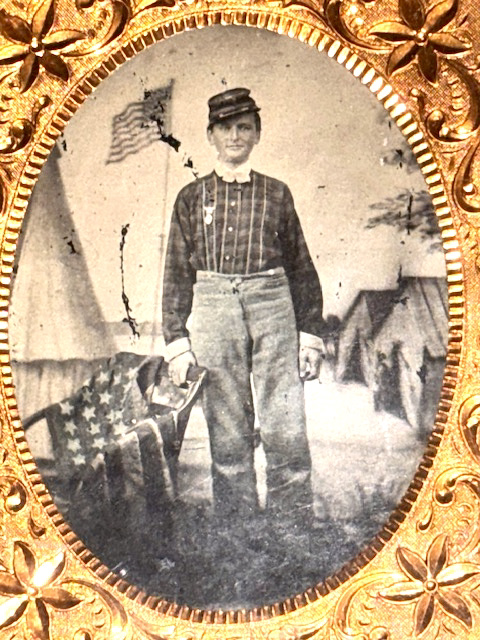
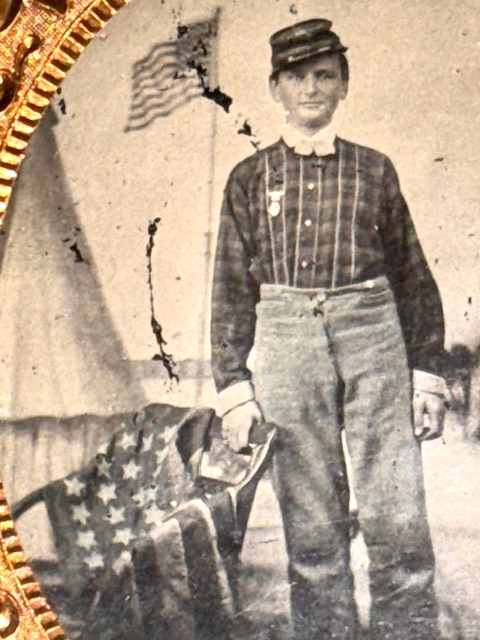
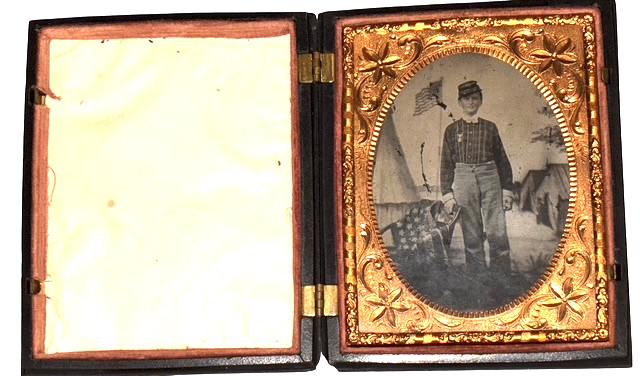
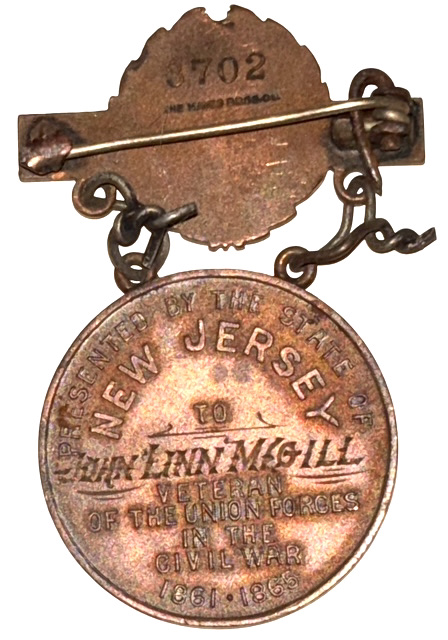
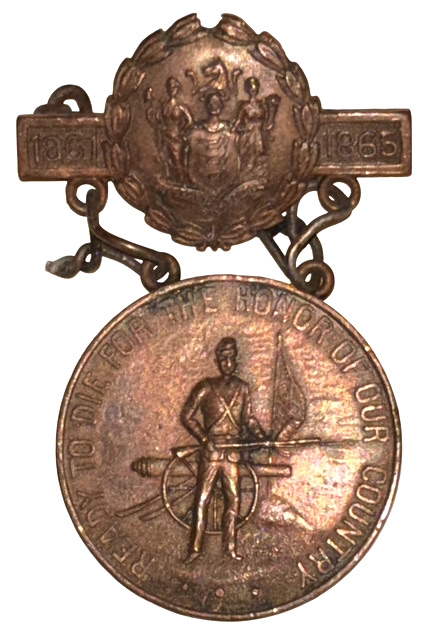
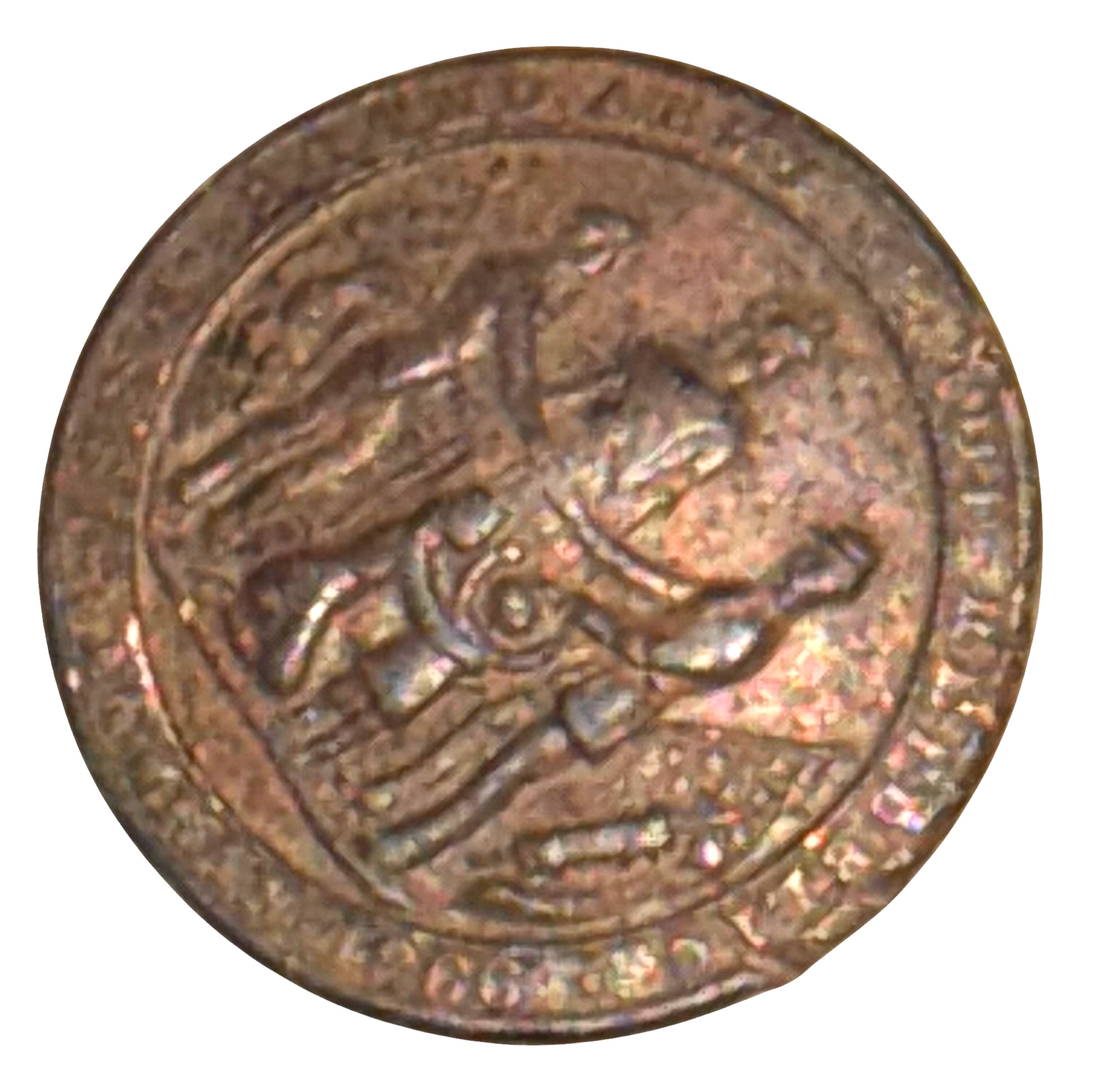
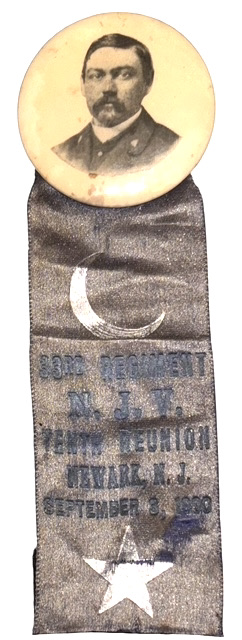
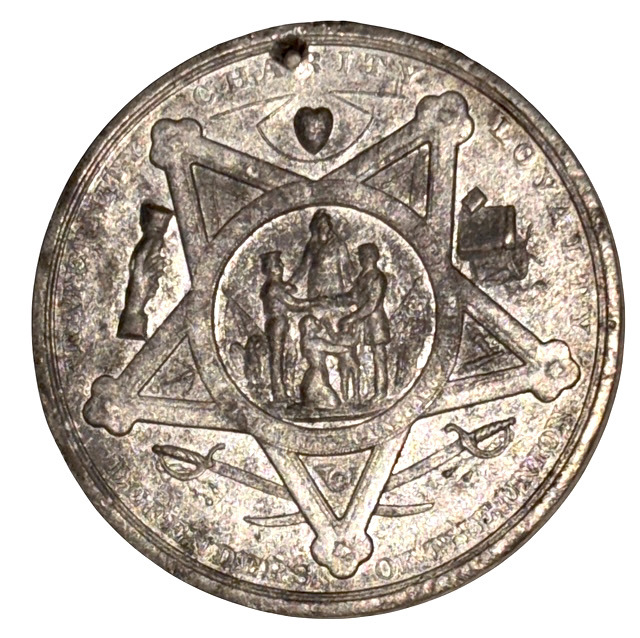
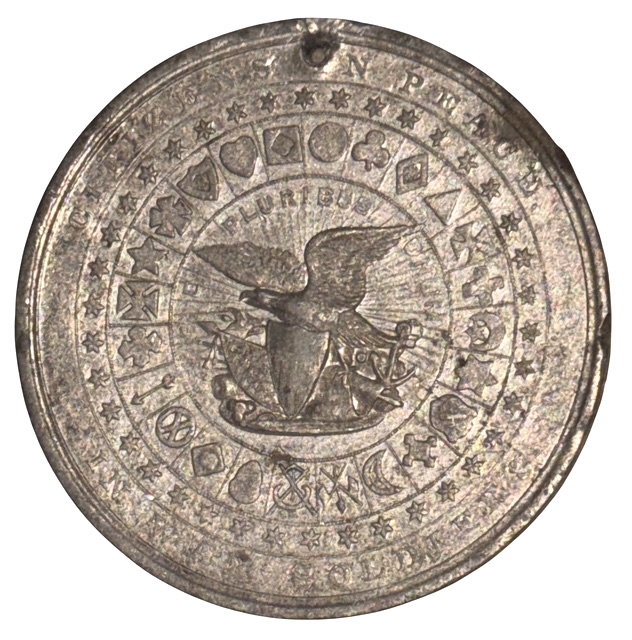
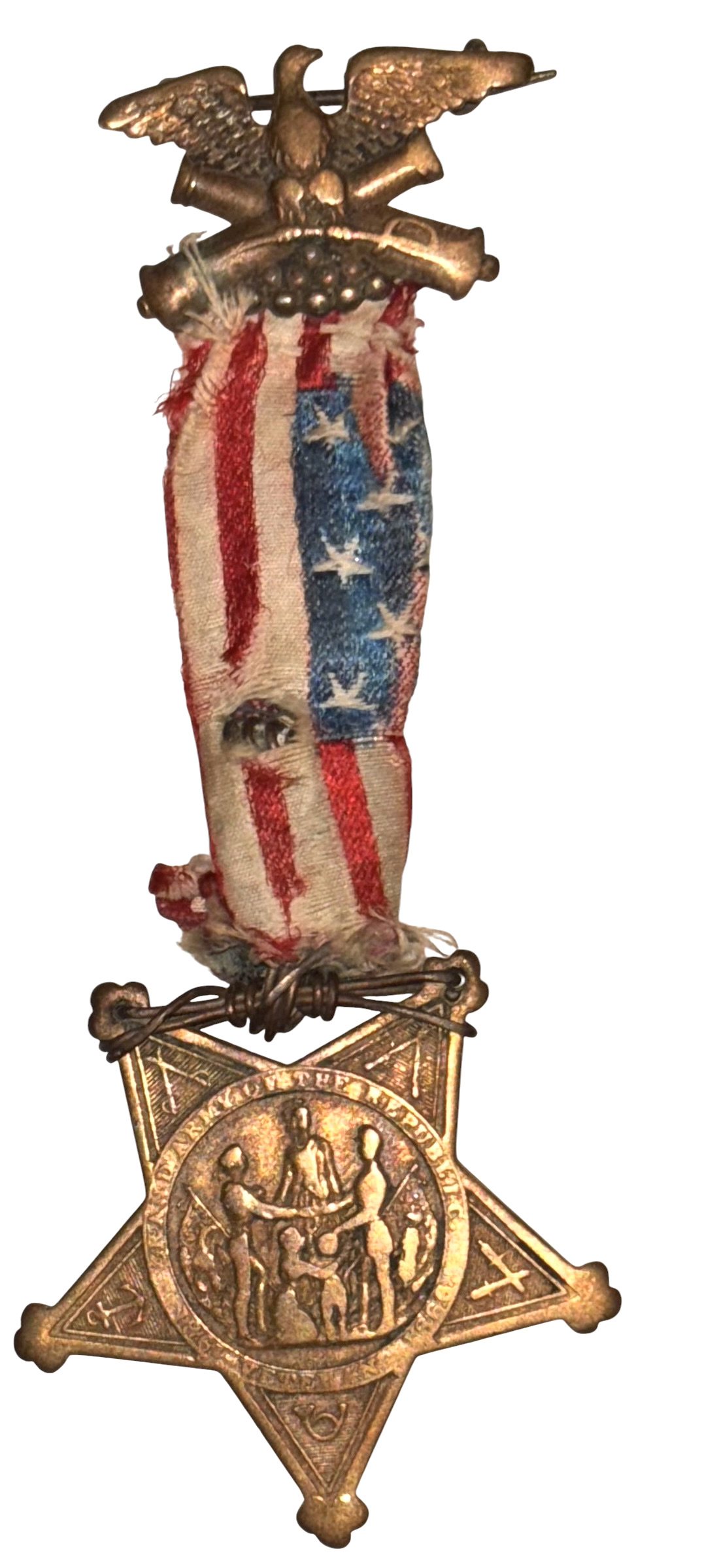
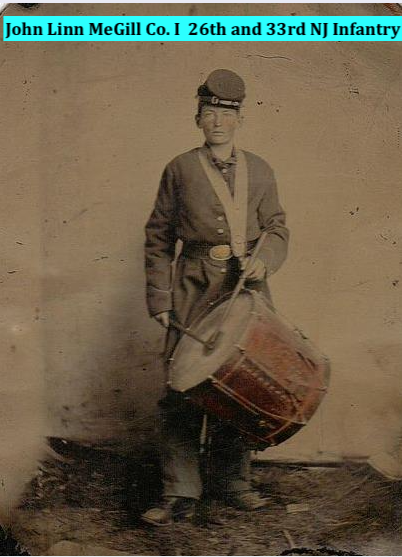
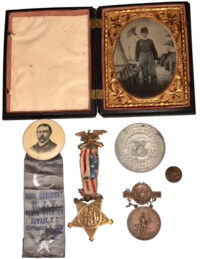
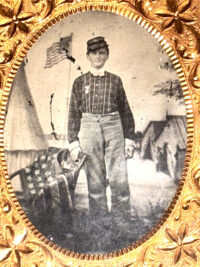
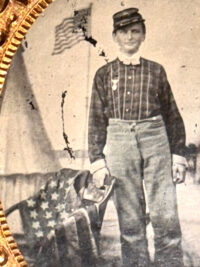
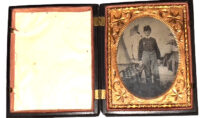
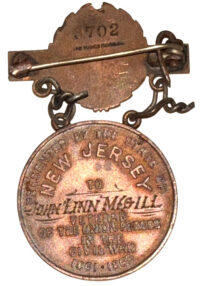
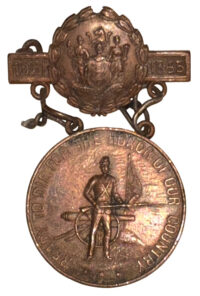
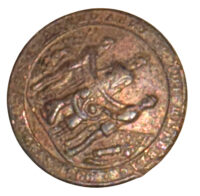
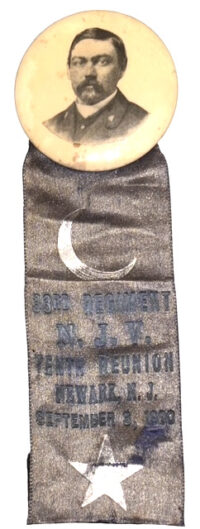
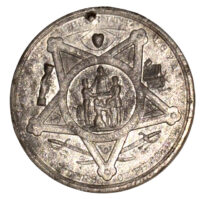
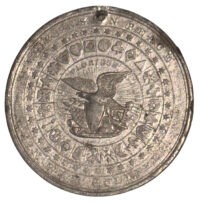
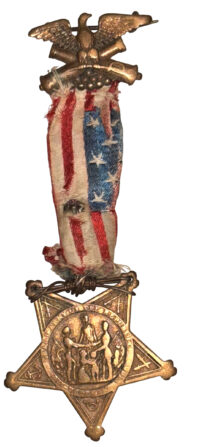
This grouping includes: ¼ plate tintype of John Linn McGill in uniform standing in front of a faux camp backdrop, with his hand on a draped, U.S. Flag – in the image, McGill appears to be wearing his New Jersey Civil War service medal (a component of this grouping) – the image is housed in a complete, floral motif, thermoplastic case – both the image and case remain in very good condition; McGill’s copper, State of New Jersey Civil War service medal inscribed on the back of the medal with his name; a 33rd New Jersey reunion ribbon and celluloid disk / pin depicting a regimental officer; a GAR medal with a flag fabric suspending ribbon; a GAR lapel stud; a large, GAR metallic disk depicting an American eagle encircled by raised corps badges on one side and a GAR five-pointed star on the opposite side.
John L. Megill
Residence was not listed.
Enlisted on 9/3/1862 as a Musician.
On 9/18/1862, he mustered into “I” Co. New Jersey 26th Infantry.
He was Mustered Out on 6/27/1863 at Newark, NJ
26th NJ Infantry
Organized: Newark, NJ on 9/18/1862
Mustered out: 6/27/1863
NEW JERSEY 26TH INFANTRY (9 MONTHS) Twenty-sixth Infantry.-Col., Andrew J. Morrison; Lieut.- Cols., Thomas A. Colt, Edward Martindale; Majs., Jonathan W. DeCamp, William W. Morris. This regiment, like all the 9- months regiments, was hastily formed. It was composed of men from Newark and the adjoining towns of Orange, South Orange, Bloomfield and Caldwell, each furnishing one company, while Newark filled the remaining six. The regiment was mustered into the state service at Camp Frelinghuysen on Sept. 3, 1862, and some three weeks later, being officered and equipped, proceeded to Washington, arriving there the day following and going into camp on Capitol hill. There it was assigned to Gen. Briggs’s brigade. Sumner’s corps, and remained until Oct. 1, when it was ordered to Frederick, Md., making the journey in open cars on which any degree of comfort was altogether impossible. It stood in line during the battle of Fredericksburg, not being actually engaged, but on the same ground in the early part of the following May it fought its first battle, doing so well and courageously. The total loss of the regiment in that series of operations, known as Hooker’s Chancellorsville campaign, and in which it displayed a heroism worthy of veterans, was 7 killed, 65 wounded and 51 missing. At Franklin’s crossing the regiment suffered heavily, for in the 10 or 15 minutes it was under fire it lost 14 killed or wounded among whom was Capt. S. Uzal Dodd, of Co. H. One week after this handsome achievement, the regiment broke camp at Falmouth and marched to Washington, where it arrived on June 17. Thence it proceeded by rail to Newark, reaching that city on the afternoon of the 19th, and being greeted by a grand demonstration of welcome, in which the military, firemen, municipal authorities and populace alike participated. It was mustered out at Newark, N. J., June 27, 1863. The total strength of the regiment was 1,031, and it lost during its term of service by resignation 14, by discharge 28, by promotion 14, by death 36, by desertion 26, by dismissal 1, not accounted for 1, mustered out 911.
John L. Megill
Residence was not listed.
Enlisted on 8/15/1863 as a Musician.
On 8/29/1863, he mustered into “I” Co. New Jersey 33rd Infantry.
He was Mustered Out on 7/17/1865 at Washington, DC
33rd NJ Infantry
Organized: Newark, NJ on 8/14/1863
Mustered out: 7/17/1865
NEW JERSEY 33rd INFANTRY Thirty-third Infantry.-Col., George W. Mindil; Lieut.- Col., Enos. Fourat; Majs., David A. Peloubet, Thomas O’Connor. This regiment was raised in the summer of 1863, under an authorization issued to Col. Mindil, formerly of the 27th, being the first veteran regiment raised in conformity to the conditions of the new system, permitting the recruiting of “veteran volunteers.” A call for extra troops being made about the same time, Col. Mindil was directed to recruit mainly in the northern part of the state and when completed the regiment represented almost exclusively the counties of Essex, Morris, Passaic and Hudson, fully three-fourths of the men being credited to the quota of Newark. Liberal bounties being offered at this time, the work of recruiting made rapid progress, the regiment being mustered into the service of the United States on Sept. 3, only 55 days after the rendezvous at Newark was opened. The command was in all respects a superior one, seven-eighths of the officers and three-fourths of the men having already seen service in the field. Lieut.-Col. Fourat had participated in all the battles of the 1st N. J. brigade; the adjutant had served acceptably with the 27th, while the entire field and staff, and most of the officers of the line, had previously held commands equal in importance and responsibility to those now filled. The regiment was uniformed in the Zouave dress and armed with the best Springfield rifles. On Sept. 8, under orders from the war department, the 33d broke camp and the next morning embarked on transports lying in the Passaic for Washington, crossing on the 13th into Virginia and two days afterward marching for Warrenton, having in charge a train of 30 wagons loaded with supplies and ammunition. Being transferred to the Army of the Cumberland it fought its first battle at Chattanooga, Tenn., in Nov., 1863, at which time the aggregate loss of the regiment, considering the work accomplished, was not large, amounting to 1 officer killed and 2 wounded, and 1 private killed and 12 wounded. The regiment also took a prominent part in the following two days’ heavy fighting of the ever- memorable battle of Chattanooga, where the men with but little experience acquitted themselves with the bravery and tenacity of their older, veteran comrades. Entering upon. Sherman’s Atlanta campaign it performed valiant service at Mill Creek gap, losing 2 officers and 4 enlisted men killed, and 2 officers and 23 men. wounded, several of the wounded subsequently dying. At Resaca the loss of the regiment was 3 men killed, 1 officer and 24 enlisted men wounded. In the eight days’ fighting about New Hope Church the 33d lost 1 officer and 5 men killed and 27 men wounded. It lost in the battle of Pine Knob 1 officer and 13 men killed, and 1 officer and 43 men wounded, the total casualties of the regiment during the campaign thus far being 8 officers and 139 enlisted men. After this engagement the regiment participated in the skirmishes of Nancy’s creek and Muddy creek,and in protecting the flank of the assaulting columns of the 4th corps at Kennesaw mountain. At the battle of Peachtree creek the loss of the regiment was over 70 in killed and wounded, Lieuts. Downes, Aspen and Warren being taken prisoners by the foe, Aspen being badly wounded. Heavy works were now constructed and the regiment was under constant fire for over a month, performing the heavy duty of the trenches and the dangerous one of picket. It left Chattanooga with over 500 muskets, and entered Atlanta with a few over 100, having lost 300 in killed or wounded. The small remnant marched to the sea with Sherman, participating in the siege of Savannah, and then after a month’s rest continued the march up through the Carolinas. At Averasboro, N. C., a few divisions of the Confederate army engaged the 1st and 3d divisions of the 20th corps, but after a brilliant fight were compelled to retire, when the army was advanced cautiously on near and parallel roads and the trains heavily guarded. The regiment participated in the battle of Bentonville and Johnston’s surrender followed in due time, after which the homeward march commenced by way of Weldon, Five Forks, Richmond and Fredericksburg, the regiment reaching Washington in time to participate in the grand review of the armies of the Republic. It was retained in service until Aug. 2, lying near Alexandria, and was then mustered out and proceeded to Newark. The total strength of the regiment was 2,184, and it lost, by resignation 12, by discharge 59, by promotion 41, by transfer 223, by death 147, by desertion 582, dismissed 2, unaccounted for 79, mustered out 1,039.
| New Jersey Drummer Boy: Pvt. John Linn Megill, Musician, 26th New Jersey Volunteer Infantry Regiment, Company I and 33rd New Jersey Volunteer Infantry Regiment, Company I.by John Sharp The American Civil War is sometimes called “The Boys’ War,” because so many soldiers, like 14 year old John Linn Megill (1847-1910), were still in their teens. Officially the Union army required recruits be 18 to join, but in an era with few reliable written records, simply stating: “I’m over 18, sir,” to the recruiter was often sufficient. In the army, musician was the most common job for boys. In infantry units drummers were used, while in cavalry regiments buglers marked the daily routine of the camp by signaling reveille, assembly, officer’s call, sick call, taps, and learned more than 40 distinctive calls to be used in battle. Their music also provided a source of entertainment for the troops, as well as a festive flair for parades or regimental reviews. In battle amongst the cannon roar, rifle fire and confusion, it was often impossible to hear the officers’ orders, so each command was given by a series of drumbeats to represent it. Both soldiers and drummers had to learn which drumroll meant “meet here,” which meant “attack now,” which meant “retreat,” and all the other commands of battlefield and camp. The most exciting drum call was “the long roll,” which was the signal to attack. The drummer would just beat-beat-beat – and every other drummer in hearing distance would beat-beat-beat – until all that could be heard was an overwhelming thunder pushing the army forward. John Linn Megill was born in December 1847 in Elizabeth, New Jersey. His father, Christopher Megill, was a laborer age 32, and his mother, Margaret Birmingham, was a Canadian immigrant, age 25. His father died sometime prior to 1860 and the Megill family financial circumstances were dire. In the 1860 census of Newark, New Jersey, the family consisted of Margaret Birmingham Megill (no occupation noted), her daughter Johanna Elisabeth Megill (age 18) occupation: “Tailoress,” and the two boys William Sebring Clay Megill (age 16), and John Linn Megill (age 13). Neither of the Megill brothers is enumerated as in school or employed. Most likely their formal schooling ended early and their employment was sketchy and casual. The 1861 election of President Abraham Lincoln was not popular in New Jersey, which gave its electoral votes to Stephen Douglas, yet it raised a total of 52 regiments during the Civil War. War at least to the young is often looked on as great adventure and many young New Jersey men rushed to the colors for an opportunity to serve their country and for those unemployed a chance to earn some money. On 20 April 1861, John’s older brother, William Sebring Clay Megill (age 15), took the ferry to New York City and enlisted in the 72nd New York Volunteer Infantry Regiment, Company F. as a drummer for three years. |
| On 3 September 1862 John Linn Megill enlisted in the 26th New Jersey Infantry Regiment, Company I as a drummer boy; he was 14 years old. Like all drummer boys he had other jobs. One of the most important was as a stretcher bearer. After each battle the boys walked around the battlefield looking for the wounded and brought them to medical care. The 26th Regiment was organized and trained at Camp Frelinghuysen, Newark, New Jersey, and was officially mustered in September 18, 1862.
The 26th Regiment was one of a number New Jersey infantry regiments raised for nine months service. During his nine months of service he saw the effect of battle as he participated in the Battle of Fredericksburg (December 11-15, 1862 ) and then again at Chancellorsville (April 30 to May 6, 1863) retrieving the wounded and dying. The regimental records of the 26th reflect John Linn Megill served as musician with the regimental drum corps. Men who served with him stated he was very young, was a popular soldier who did his duty, and was known as “Linn” to his comrades. After nine months active service with participation in two major battles Linn was discharged in Newark with his company on 27 June 1863. After returning to Newark, Pvt. John Linn Megill reenlisted as a veteran volunteer with the 33rd New Jersey Infantry Regiment on 19 August 1863 in Newark, New Jersey. His motivation may have been financial for the Federal Government and State of New Jersey were experiencing grave difficulty in recruiting, especially as the war deaths and casualties increased. The war was becoming deeply unpopular in many of the large Eastern cities. In New York City the Federal government actually had to recall a Union regiment from Gettysburg to suppress a draft riot. To attract new recruits and to encourage experienced veterans to reenlist, large bounties of up to five hundred dollars were offered. The 33rd Regiment was established as a Zouave unit with bright colorful uniforms to enhance the regimental image and assist recruitment. Enlisted men wore dark blue pants and short blue jackets trimmed with red. The jackets were worn over a vest trimmed with red and brass buttons. When on parade the men wore a red sash. The overall effect was an imitation of the then popular French army uniforms. Even boy veterans like John Megill, probably by hard won knowledge, knew these Zouave uniform also made men easy targets for Confederate troops. Once on the field he and most of the 33rd discarded their bright vest and sash and substituted a conventional Union army uniform. For some new soldiers the Zouave uniform was enticing; for veterans it was the recruitment bounty that really mattered. For a working class boy like John Megill this bounty represented over a year’s wages. The new 33rd Regiment included many draft dodgers and other unsavory types lured by these big local bounties. They began to disappear from the regiment’s Newark, N.J., camp as soon as they received their enlistment bonuses. The situation became so severe that Union troops were ordered in to prevent the men from escaping. Altogether about a quarter of the rank and file deserted – 244 of 902 men – according to the historian John G. Zinn. The regiment became known as the “mutinous” 33rd. Once on the road south with Sherman’s army the 33rd began to maintain discipline and established a credible reputation. Though only 15 years of age at his reenlistment, John Megill’s own war record reflects he was a good soldier. He participated with the 33rd Regiment at the bloody battles of Chattanooga-Ringold (Nov 1863), Resaca (May 1864), Atlanta (August 1864), and later at Bettonsville, North Carolina (March 1865). On 23 and 24 May 1865 at the wars end, he marched with the 33rd New Jersey in the Grand Review of the Union Army down Pennsylvania Ave. After the Grand Review in Washington DC, the troops were given a ride home by train to Newark. For Newark and the regiment, it was a day of Jubilation; the 33rd Regiment formed up proudly for one last time under their battle scarred flag. During their two years of battle the 33rd Regiment lost 163 of its members. As Linn and other musicians played their drums and fifes the men marched smartly up Market St with sidewalks alive with spectators and balconies overflowing with a welcoming and cheering crowd. At the town hall they received a hero’s reception as thousands of citizens greeted them with three cheers. Mayor Runyon than gave a rousing speech lauding their service and honoring their accomplishments. The excited crowds cheered and cheered. This was probably the greatest day of Linn’s life. The young drummer must have taken quiet satisfaction in knowing his long war was over. He had fought in two Union army regiments, survived major battles and was at last home. After the war Linn remained in Newark, New Jersey where he resided with his widowed mother Margaret Birmingham Megill, who worked as nurse. In Newark, Linn became a baker and candy maker working on Boston Street. Following his mothers’ death in December 1884, Linn moved west where he married Mary Elizabeth Seagar on 14 February 1893 in Denver, Colorado. Together the couple had six children. Linn died on June 19, 1910, in Denver, Colorado, at the age of 62 and is buried at the Riverside Cemetery. |
Related Items
-
Civil War Period Leather Satchel Id’d to a Connecticut Citizen
$375Civil War Period Leather Satchel Id’d to a Connecticut CitizenMay 18, 2024 -

Original Regimentally Painted, Civil War Knapsack – Co. F 5th U.S. Infantry
$550Original Regimentally Painted, Civil War Knapsack – Co. F 5th U.S. InfantryDecember 10, 2021 -
Id’d Carved Bone 24th Corps Badge – Private James E. Lewis Co. B 206th Pa. Infantry
$650Id’d Carved Bone 24th Corps Badge – Private James E. Lewis Co. B 206th Pa. InfantryAugust 14, 2023 -
Id’d Civil War .44 Cal. Pistol Cartridge Box
$425Id’d Civil War .44 Cal. Pistol Cartridge BoxJanuary 4, 2024