
Wallpaper from Clara Barton’s Missing Soldiers OfficeMay 12, 2026
Wallpaper from Clara Barton’s Missing Soldiers Office
$450
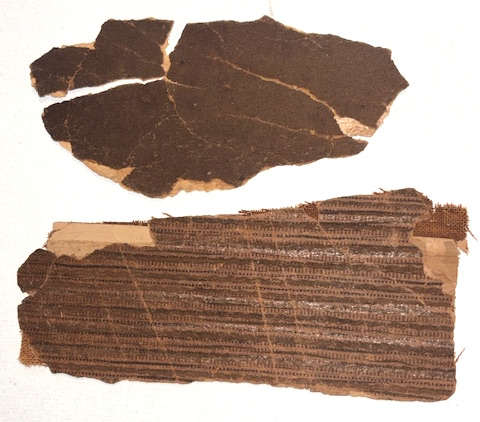
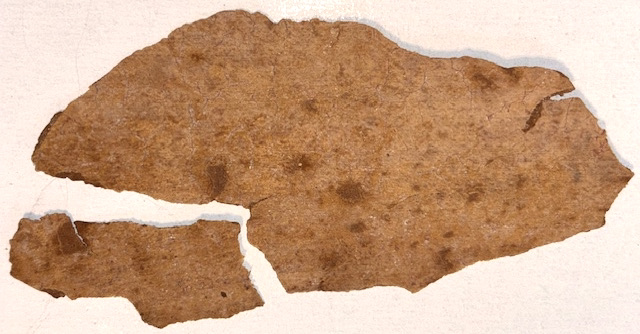
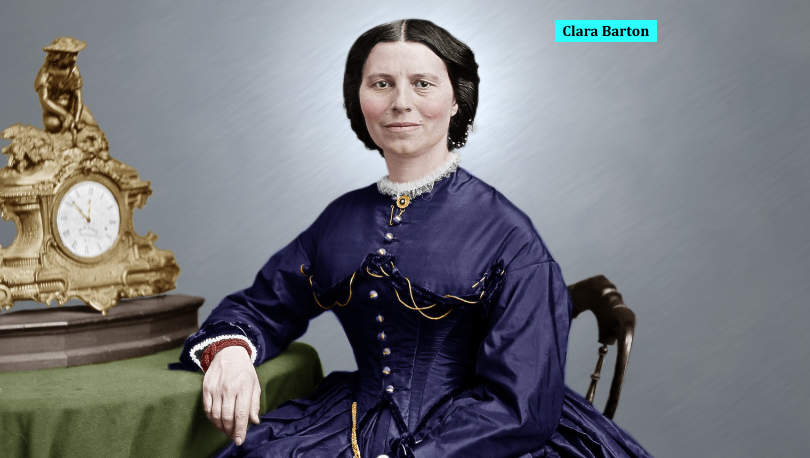
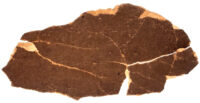
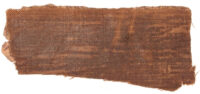
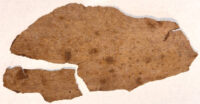
Wallpaper from Clara Barton’s Missing Soldiers Office – In early 1865, Clara Barton, well known for her impressive nursing activities during the Civil War, was authorized by President Lincoln to establish a service to assist families of missing soldiers in an attempt at learning the fate of their missing soldier. Utilizing interviews with surviving soldiers and in-depth reviews of prison records, Barton attempted to make an extensive list of soldiers killed and subsequently buried on the battlefield or those interred at prison camps. Creating a “Missing Soldiers Office” on the third floor of a building in Washington, D.C., Barton and a small staff worked diligently for 3 years in an attempt to inform families of the fates and possible whereabouts of their missing soldiers. Ultimately, Barton’s efforts led to the identification of the graves of over 22,000 formerly unaccounted for soldiers.
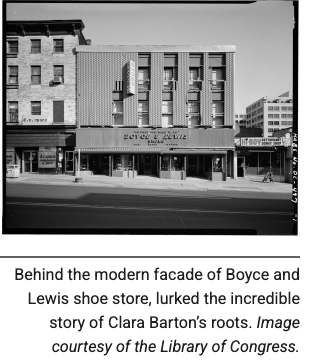
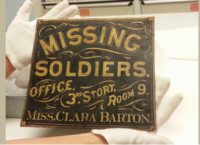
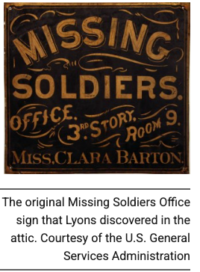
In 1996, a GSA employee was inspecting an old building located at 437 7th St. in Washington, D.C. for the purpose of impending demolition; since 1911, the third floor of this building had been boarded up and unused; during the process of examining this floor of the building, government inspectors discovered a wealth of Civil War period artifacts to include a sign that signified that this floor had housed Clara Barton’s Office of Missing Soldiers. With this impressive discovery, the GSA decided to spare the building and restore it; the building now houses a museum that relates the story of Barton’s nursing work and efforts to determine the fates and locations of missing soldiers.
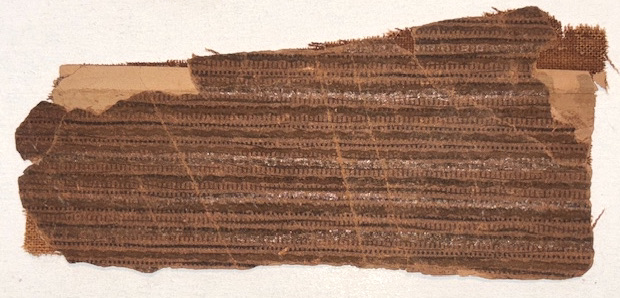
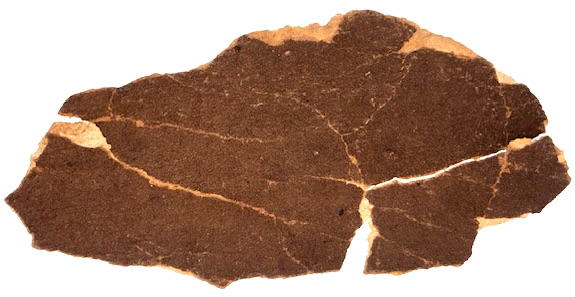
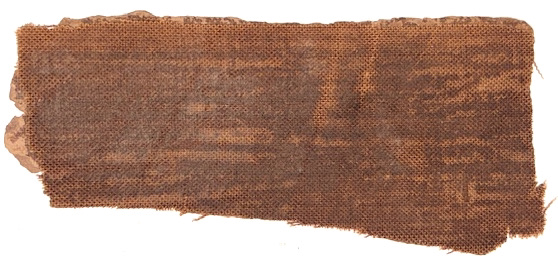
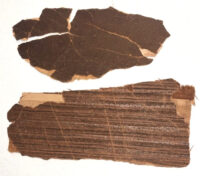
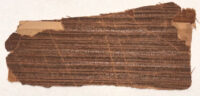
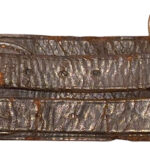
In 2022, Heritage Auctions placed for sale, in a single lot, pieces of wallpaper from Clara Barton’s Office of Missing Soldiers, removed during the restoration process; these wallpaper pieces had been owned by long-time, well-known Lincoln collector, Dr. Blaine Houmes. These wallpaper sections originally were contained in a large envelope, labeled by Dr. Houmes as “Original Wallpaper / Clara Barton Office / 2010 / Washington, DC”. The two pieces offered here were obtained from the collector who had obtained elements of Dr. Houmes’ collection. There are two pieces of wallpaper, both are somewhat fragile; the larger piece is a dark, striped section measuring about 47/8” in length and about 2.25” in width; the smaller, brownish colored section measures approximately 41/8 in length and about 2.25” in width; both wallpaper pieces are somewhat fragile.
Additional Background Information
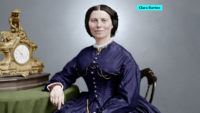
After working on battlefields and in hospitals of the Civil War, Clara Barton found a new calling in the early months of 1865. She became keenly aware of the need to provide information to the families of missing Union soldiers. In response, she opened a Missing Soldiers Office to offer this invaluable service to grieving families.
After opening an office on the third floor of her boardinghouse on 7th Street in Washington, Barton received thousands of letters from relatives looking for lost loved ones. Over three years, the office received more than 60,000 inquiries for information about missing soldiers, sometimes more than 150 letters in a single day. She and a team of clerks compiled lists of names to publish five separate “Rolls of Missing Men” in newspapers across the country. When Barton closed the Missing Soldiers Office after 1868, she and her team had accomplished a tremendous feat. Their work had revealed the whereabouts of more than 22,000 missing soldiers, providing closure for families devastated by the loss of their loved ones.
The Missing Soldiers Office marks an important transition in Barton’s humanitarian career. She no longer wanted for organizational support to provide humanitarian aid. In her third-floor office, she practiced the art of administration and organization with a devoted team of workers, backed by enthusiastic donors. These skills, combined with a reputation built during her national speaking tour, put Clara Barton on the path toward becoming the nation’s foremost humanitarian and founder of the American Red Cross.
Visit the Clara Barton Missing Soldiers Office Museum (opens in a new window) and discover together how Clara Barton, her friends, and her colleagues pulled together to make a difference on the battlefield and in the aftermath of the American Civil War. Walk-in visitors welcome anytime during operating hours; group tours available by reservation.
.
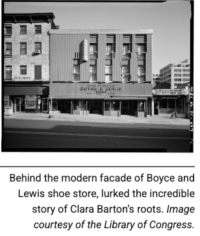
In 1996, Richard Lyons, an employee of the General Services Administration (GSA), and his partner were on a routine inspection of 437 7th Street, a rundown building slated for demolition.
While exploring the third floor, Richard felt something (or someone) tap his shoulder. He turned around and saw an envelope hanging out of the slats of the ceiling.
The envelope, addressed to Edward Shaw, was clearly very old and caught Lyons’ interest. He grabbed a ladder in order to explore the attic and see what else might be lurking there.
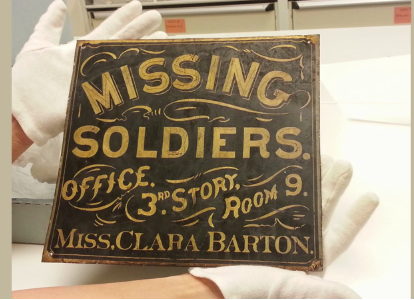
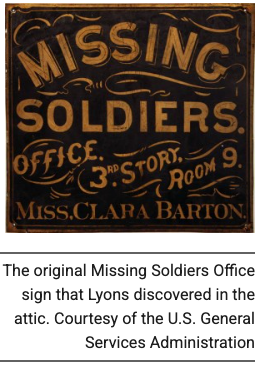
What Lyons found was a treasure trove of artifacts—over a thousand objects in all. Among them was a sign that read “Missing Soldiers Office, Office 3rd Story Room 9, Miss Clara Barton.” These were the rooms where Clara Barton had lived and worked during the Civil War.
Lyons’ discovery sparked two decades of hard work and collaboration to save the building and turn it into the Clara Barton Missing Soldiers Office Museum.
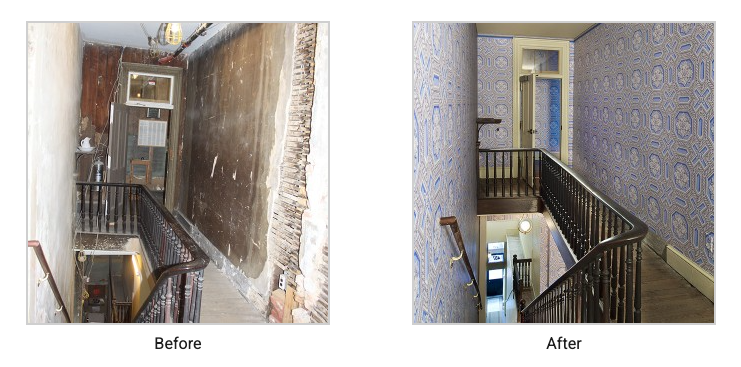
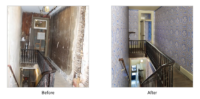
The third floor rooms had gone unchanged for almost a hundred years. In 1911, reactions to the Triangle Shirtwaist Fire ushered in a new wave of fire safety legislation. At the time, rather than pay to get the entire building up to code, the landlord simply boarded up the third floor and continued to rent the first two floors as commercial and professional spaces. While the stores below occasionally used the third floor for extra storage, the rooms went both unaltered and uncared for until Lyons discovered them. The GSA worked with experts and artisans to restore the third floor to how Clara would have seen it.
In 2007, the National Museum of Civil War Medicine (NMCWM) partnered with the GSA. While the GSA owns the building, the NMCWM runs the museum.
In July 2015, the museum officially opened to the public. Visitors will have the opportunity to take a guided tour through the preserved rooms where they will discover how Miss Clarissa Barton, Patent Office employee, became the Clara Barton, a household name and the “Angel of the Battlefield.”
Related Items
-
Letter Written by a Member of Berdan’s Sharpshooters from Col. Berdan’s Camp of Instruction in 1862 – Letter Discusses Merits of the Colt Revolving Rifle vs. the Sharps Rifle
$675Letter Written by a Member of Berdan’s Sharpshooters from Col. Berdan’s Camp of Instruction in 1862 – Letter Discusses Merits of the Colt Revolving Rifle vs. the Sharps RifleApril 19, 2025 -
Rare Civil War Period 1st Edition Surgical Anatomy Folio Treatise – “Surgical Anatomy” by Joseph Maclise Published in 1855
$550Rare Civil War Period 1st Edition Surgical Anatomy Folio Treatise – “Surgical Anatomy” by Joseph Maclise Published in 1855April 13, 2026 -
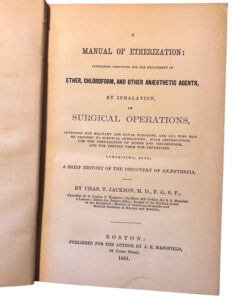
Rare 1st Edition Civil War Medical Book Entitled: A Manual of Etherization : Containing Directions for the Employment of Ether, Chloroform, and Other Anæsthetic Agents, by Inhalation, in Surgical Operations; with Instructions for the Preparation of Ether and Chloroform, and for Testing Them for Impurities. Comprising, also, a Brief History of the Discovery of Anæsthesia – By Charles T. Jackson
$850Rare 1st Edition Civil War Medical Book Entitled: A Manual of Etherization : Containing Directions for the Employment of Ether, Chloroform, and Other Anæsthetic Agents, by Inhalation, in Surgical Operations; with Instructions for the Preparation of Ether and Chloroform, and for Testing Them for Impurities. Comprising, also, a Brief History of the Discovery of Anæsthesia – By Charles T. JacksonJanuary 24, 2026 -
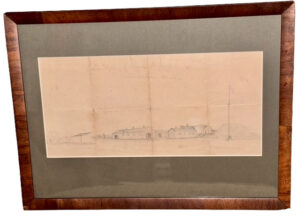
Civil War Period Soldier Drawn Pencil Sketch of Camp “Misery” Barracks and Fortifications in Provincetown, Massachusetts
Civil War Period Soldier Drawn Pencil Sketch of Camp “Misery” Barracks and Fortifications in Provincetown, MassachusettsMarch 27, 2026