
Civil War Duffle Bag – Id’d to Private Abram J. Hegeman Co. I 2nd New York Veteran CavalryMay 11, 2026




Civil War Duffle Bag – Id’d to Private Abram J. Hegeman Co. I 2nd New York Veteran Cavalry
$350
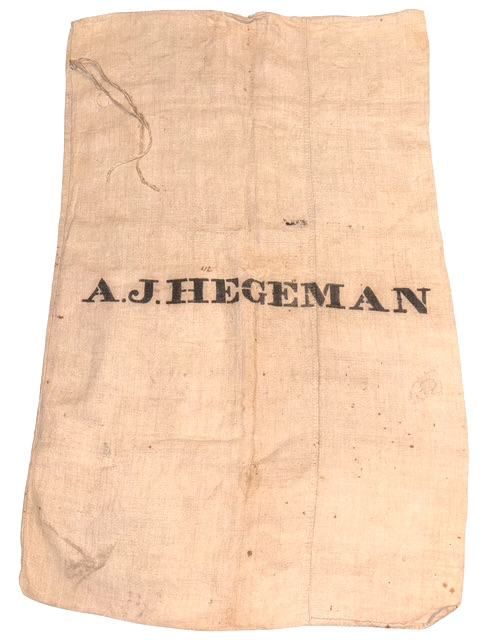
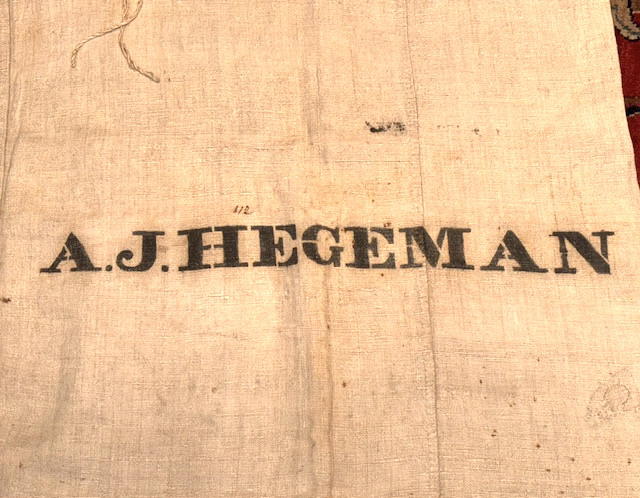
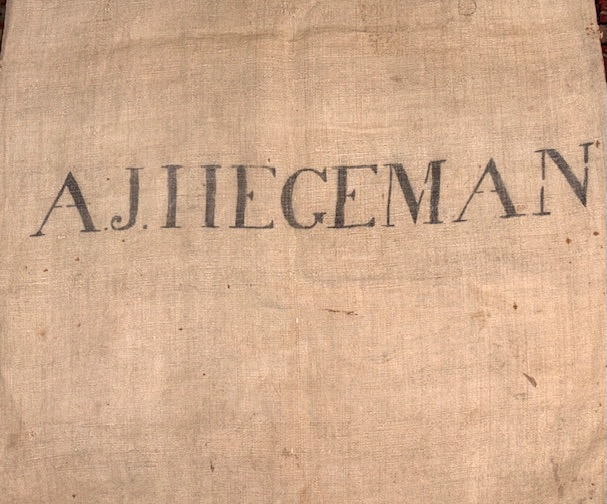
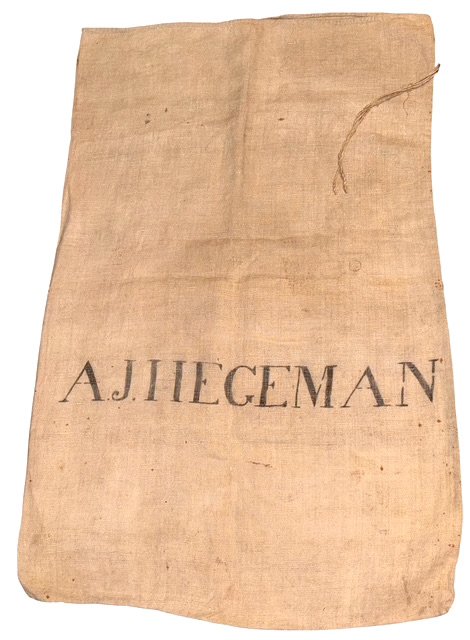
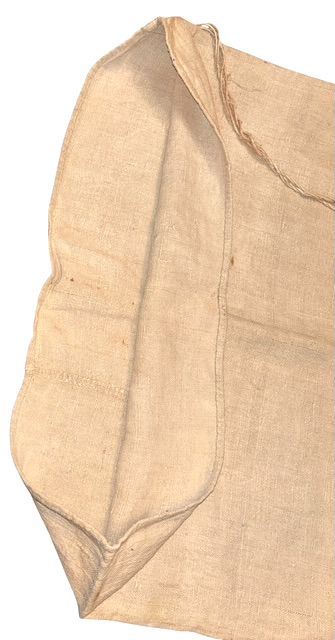
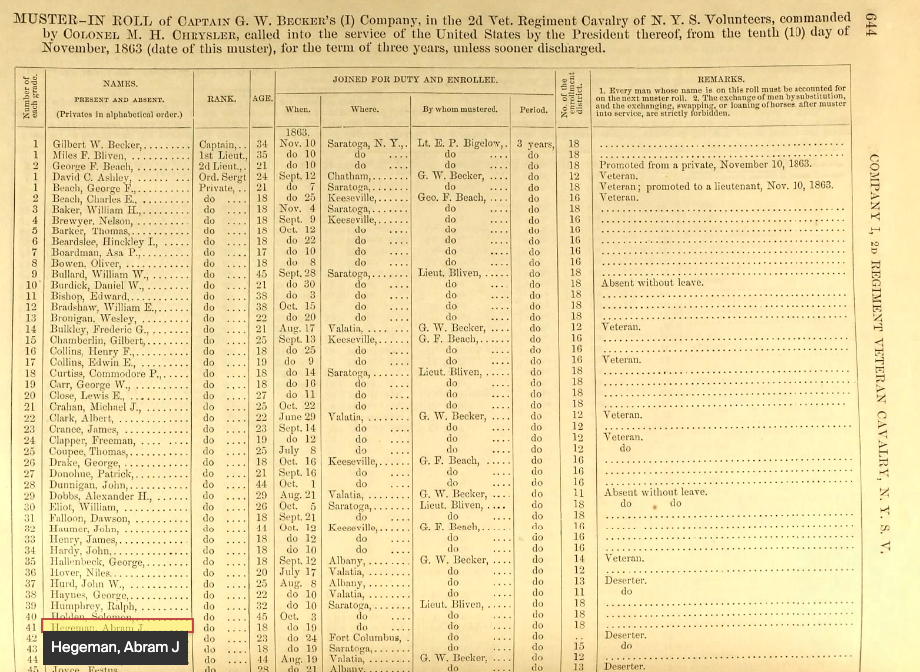
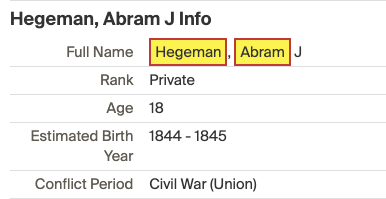
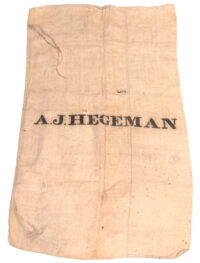
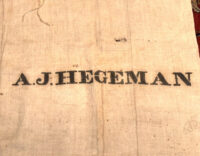
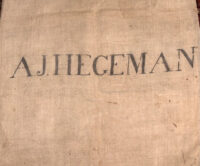
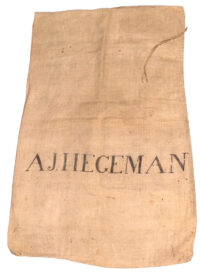
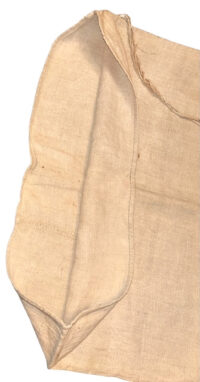
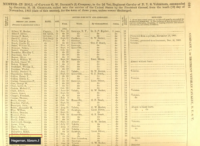
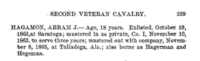
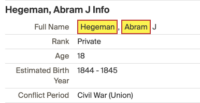
Civil War Duffle Bag – Id’d to Private Abram J. Hegeman Co. I 2nd New York Veteran Cavalry – This duffle bag is constructed of a coarsely woven, cotton material; the bag’s two halves are handsewn together; the open end of the bag has an integral drawstring for closure. Stenciled in large letters on one side of the bag is the name – “A. J. Hegeman”; on the opposite side of the bag is what appears to be Hegeman’s hand-inked name. Research indicates that this Union soldier was Abram Hegeman, also spelled in military records as Hagamon and Hegerman, enlisted at Saratoga, NY, as a Private, in mid-November 1863, in Co. I 2nd NY Veteran Cavalry; Private Hegeman would remain with his regiment until he mustered out in November 1865. During his service, Hegeman would participate, with the Veteran 2nd NY Cavalry, in numerous raids and scouting missions in the Gulf region (see enumerated regimental history below). The duffle bag remains in excellent condition, exhibiting no tears or holes and only some minor staining.
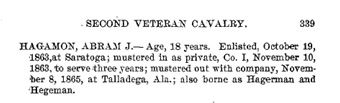
Abram J. Hagamon
Residence was not listed; 18 years old.
Enlisted on 10/19/1863 at Saratoga, NY as a Priv.
On 11/10/1863, he mustered into “I” Co. New York 2nd Vet Cavalry.
He was Mustered Out on 11/8/1865 at Talladega, AL
2nd NY Cavalry
Organized: Saratoga Springs, NY on 7/20/1863
Mustered out: 11/8/1865
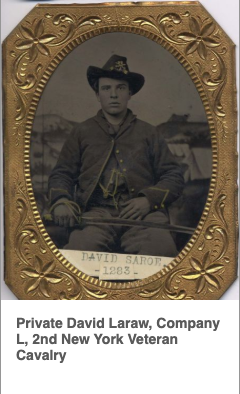
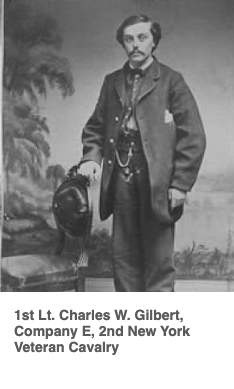
NEW YORK SECOND VETERAN CAVALRY Second Veteran Cavalry.-Col., Morgan H. Chrysler; Lieut.-Cols., Morgan H. Chrysler, Asa L. Gurney; Majs., Duncan Cameron, Edward Van Voast, John S. Fassett. This regiment, known as the Empire Light Cavalry, was largely composed of veterans of the 30th N. Y. infantry, Col. Chrysler having been authorized on June 23, 1863, to reorganize the 30th, which had been discharged by reason of the expiration of its term of service, as a cavalry regiment. The veteran regiment was organized at Saratoga Springs, its companies being chiefly recruited in the counties of Saratoga, Schenectady, Montgomery, Clinton, Essex, Warren, Albany, Rensselaer and Columbia. It was mustered into the U. S. service at Saratoga from Aug. 15 to Dec. 30, 1863, for three years, and left the state by detachments from August to December. It was stationed at Washington during the ensuing winter, whence it embarked for New Orleans, and there joined the Department of the Gulf. Its entire term of service was spent in the South, where it formed part of Arnold’s cavalry division, 19th corps. Assigned to the 5th cavalry brigade, it took part in Banks’ Red River campaign, in which it was 18 times in action and suffered a loss of 77 killed, wounded and missing. It was assigned to the 4th cavalry brigade on its return and through June, July and August was engaged in a number of raids and scouting expeditions, meeting with some losses. In the fall attached to the 1st cavalry brigade, it was active at St. Francisville, Bayou Sara and Fausse river, La., and in November, attached to the separate brigade, cavalry reserve, it skirmished at Clinton, Liberty creek and Pascagoula, Miss., at state line, and at McLeod’s mills, La., where it lost 11 killed and wounded. Its last active service was with the 1st brigade, cavalry division, in March and April, 1865, at College Hill, Pine Barren creek, Cotton creek and Bluff Springs, Fla.; Pollard, Fort Blakely, Mt. Pleasant and Whistler’s station, Ala. Under command of Col. Chrysler, it was mustered out and discharged at Talladega, Ala., Nov. 8, 1865, having lost 5 officers and 30 men killed and mortally wounded; 3 officers and 215 men died of disease and other causes, the heavy mortality from disease being due to the long service of the regiment in the South. It lost in addition a number of men by the foundering of the steamer North America off the coast of Florida in Dec., 1864.
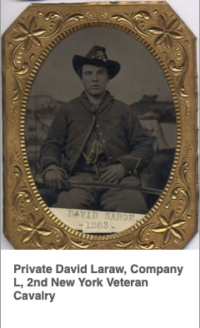
2nd Regiment, New York Veteran Cavalry
Overview:
Organized at Saratoga Springs, N. Y., and mustered in by Companies as follows: “A” August 15, “B” and “F” August 25, “C” September 9, “D” and “E” September 8, “G” October 1O, “H” October 16, “I” and “K” November 10, “L” December 3, and “M” at Cavalry Depot, Washington, D. C., December 30, 1863. Left State by detachments for Washington, D. C., August to December, 1863. Attached to Cavalry Division, 22nd Army Corps, to February, 1864. 5th Brigade, Cavalry Division, 19th Army Corps, Department of the Gulf, February 15 to June, 1864. 4th Brigade, Cavalry Division, Dept. of the Gulf, to August, 1864. Separate Cavalry Brigade, Dept. of the Gulf, to December, 1864. Separate Cavalry Brigade, Reserve Division, Military Division West Mississippi, to February, 1865. Separate Cavalry Brigade, District of West Florida, to March, 1865. 1st Brigade, Lucas’ Cavalry Division, Military Division West Mississippi, to April, 1865. 3rd Brgade, 1st Cavalry Division, Dept. of the Gulf, to July, 1865. District of Alabama, Dept. of the Gulf, to November, 1865.
Service:
Duty in the Defences of Washington, D. C., till February, 1864. Ordered to Dept. of the Gulf February, 1864. Red River Campaign March 10-May 22. Advance from Franklin to Alexandria March 14-26. Monett’s Ferry and Cloutiersville March 29-30. Natchitoches March 31. Campti April 4. Sabine Cross Roads April 8. Pleasant Hill April 9. Bayou Saline April 14. Natchitoches April 19. About Cloutiersville April 22-24. Cane River Crossing Apri 23. Bayou Roberts May 3. Near Wilson’s Landing May 4-5. Well’s and Moore’s Plantations May 6. Retreat to Morganza May 13-20. Mansura May 16. Near Moreauville May 17. Bayou de Glaze May 18. Simsport May 18. Expedition from Morganza to the Atchafalaya River May 29-June 6. Bayou Fordyce Road May 29. Livonia May 30. Bayou Grosse Tete June 1-3. Near Morganza June 24. Franklin July 18. Atchafalaya River July 27. Morgan’s Ferry Road and Atchafalaya River July 28. Marinquin Bayou August 9. Rosedale August 10. Expedition to Clinton August 23-29. Morgan’s Ferry, on Atchafalaya River, August 28 (Detachment). Expedition from Morganza to Fausse River September 13-17. Bayou Maringowen September 13 and 16. Rosedale September 15. Bayou Alabama and Morgan’s Ferry September 20. St. Francisville October 4. Bayou Rara October 5. Fausse River October 16. McLeod’s Mills November 10. Clinton and Liberty Creek, Miss., November 15. Davidson’s Expedition from Baton Rouge against Mobile & Ohio Railroad November 27-December 13. State Line, Pascagoula River, Miss., November 27. Expedition to Morgan’s Ferry December 13-14. Expedition from Atchafalaya River December 16-19. Expedition from Morganza to New Roads January 31, 1865. Scouts to Fausse River and Grosse Tete Bayou February 7-10 (Detachment). Moved to Barrancas, Fla., February, 1865. March to Fort Blakely, Ala., March 20-April 1. College Hill, Fla., March 21. Pine Barren Creek March 23. Canoe Creek or Bluff Springs March 25. Bluff Springs March 25. Pollard, Ala., March 26. Siege operations against Fort Blakely April 1-9. Expedition from Blakdy to Claiborne April 9-17. Near Mt. Pleasant April 11. Grierson’s Raid through Alabama and Georgia April 17-30. Duty in District of Alabama till November. Mustered out at Talladega, Ala., November 8, 1865.
Regiment lost during service 5 Officers and 29 Enlisted men killed and mortally wounded and 3 Officers and 212 Enlisted men by disease. Total 249.
2nd Veteran Cavalry Regiment
Nickname: Empire Light Cavalry
Left the State in detachments: October to December 1863
Mustered out: November 8, 1865
The following is taken from New York in the War of the Rebellion, 3rd ed. Frederick Phisterer. Albany: J. B. Lyon Company, 1912.
June 23, 1863, Col. Morgan H. Chrysler received authority to reorganize the 30th N. Y. Volunteer Infantry, then discharged by reason of the expiration of its term of service, as a regiment of cavalry —the Empire Light Cavalry. July 20, 1863, this designation was changed to 2d Regiment Veteran Cavalry. The regiment was organized at Saratoga Springs, and the companies were mustered in the service of the United States for three years, at Saratoga: A August 15; B and F August 26; C September 9; D and E September 8; G and H October 10 and 16, respectively; I and K November 10; L December 3, 1865; and at the Cavalry Depot, D. C.; Company M December 30, 1863.
They were recruited principally: A at Glens Falls; B at Albany, Amsterdam and Sche-nectady; C at Saratoga; D at Saratoga, Salem, Schroon, Shushan and Whitehall; E at Glens Falls, Albany, Port Henry and Troy; F at Saratoga and Whitehall; G at Saratoga, Glens Falls, Addison, Bath and Schenectady; H at Hoosick Falls, Malone and Plattsburg; I at Albany, Chatham, Saratoga and Valatie; K at Glenville, Granville, Moriah, Johns-burgh, Queensbury, Saratoga and Stony Creek; L at Saratoga, Granville, Chesterfield, Jay,. Fort Ann, Northumberland and Wilton; and M at New York city.
The regiment left the State in detachments, Companies A, B, C, D, E, F, G and H in October; I and K in November; L and M in December, 1863, and served in the Department of Washington, D. C, 22d Corps; in the Department of the Gulf from February 16, 1864, in 5th Cavalry Brigade, 19th Corps; in the 4th Cavalry Brigade, 19th Corps, from June, 1864; in the 1st Cavalry Brigade, 19th Corps, from September, 1864; in the Separate Brigade, Cavalry of the Reserve, 19th Corps, from November, 1864; in the 1st Brigade, Cavalry Division, Department Gulf, from March, 1865; and commanded by Colonel Chrysler, was honorably discharged and mustered out, November 8, 1865, at Talladega, Ala.
During its service it lost by death, killed in action, 2 officers, 10 enlisted men; of wounds received in action, 3 officers, 20 enlisted men; of disease and other causes, 3 officers, 215 enlisted men; total, 8 officers, 245 enlisted men; aggregate, 253; of whom 7 enlisted men died in the hands of the enemy. The large number of men reported drowned is owing to the loss at the foundering of the steamer North America off the coast of Florida December 22, 1864.
The following is taken from The Union army: a history of military affairs in the loyal states, 1861-65 — records of the regiments in the Union army — cyclopedia of battles — memoirs of commanders and soldiers, Volume II: New York, Maryland, West Virginia and Ohio. Madison, WI: Federal Pub. Co., 1908.
Second Veteran Cavalry.—Col.. Morgan H. Chrysler; Lieut. -Cols., Morgan H. Chrysler, Asa L. Gurney; Majs., Duncan Cameron, Edward Van Voast, John S. Fassett. This regiment, known as the Empire Light Cavalry, was largely composed of veterans of the 30th N. Y. infantry. Col. Chrysler having been authorized on June 23, 1863, to reorganize the 30th, which had been discharged by reason of the expiration of its term of service, as a cavalry regiment. The veteran regiment was organized at Saratoga Springs, its companies being chiefly recruited in the counties of Saratoga, Schenectady, Montgomery, Clinton, Essex, Warren, Albany. Rensselaer and Columbia. It was mustered into the U. S. service at Saratoga from Aug. 15 to Dec. 30, 1863, for three years, and left the state by detachments from August to December. It was stationed at Washington during the ensuing winter, whence it embarked for New Orleans, and there joined the Department of the Gulf. Its entire term New York Regiments 203 of service was spent in the South, where it formed part of Arnold’s cavalry division, 19th corps. Assigned to the 5th cavalry brigade, it took part in Banks’ Red River campaign, in which it was 18 times in action and suffered a loss of TJ killed, wounded and missing. It was assigned to the 4th cavalry brigade on its return and through June, July and August was engaged in a number of raids and scouting expeditions, meeting with some losses. In the fall, attached to the 1st cavalry brigade, it was active at St. Francisville, Bayou Sara and Fausse river. La., and in November, attached to the separate brigade, cavalry reserve, it skirmished at Clinton, Liberty creek and Pascagoula, Miss., at state line, and at McLeod’s mills. La., where it lost 11 killed and wounded. Its last active service was with the 1st brigade, cavalry division, in March and April, 1865, at College Hill, Pine Barren creek, Cotton creek and Bluff Springs, Fla.; Pollard, Fort Blakely, Mt. Pleasant and Whistler’s station, Ala. Under command of Col. Chrysler, it was mustered out and discharged at Talladega, Ala., Nov. 8, 1865, having lost 5 officers and 30 men killed and mortally wounded; 3 officers and 215 men died of disease and other causes, the heavy mortality from disease being due to the long service of the regiment in the South. It lost in addition a number of men by the foundering of the steamer North America off the coast of Florida in Dec, 1864.
Second Veteran Cavalry.—Col.. Morgan H. Chrysler; Lieut. -Cols., Morgan H. Chrysler, Asa L. Gurney; Majs., Duncan Cameron, Edward Van Voast, John S. Fassett. This regiment, known as the Empire Light Cavalry, was largely composed of veterans of the 30th N. Y. infantry. Col. Chrysler having been authorized on June 23, 1863, to reorganize the 30th, which had been discharged by reason of the expiration of its term of service, as a cavalry regiment. The veteran regiment was organized at Saratoga Springs, its companies being chiefly recruited in the counties of Saratoga, Schenectady, Montgomery, Clinton, Essex, Warren, Albany. Rensselaer and Columbia. It was mustered into the U. S. service at Saratoga from Aug. 15 to Dec. 30, 1863, for three years, and left the state by detachments from August to December. It was stationed at Washington during the ensuing winter, whence it embarked for New Orleans, and there joined the Department of the Gulf. Its entire term New York Regiments 203 of service was spent in the South, where it formed part of Arnold’s cavalry division, 19th corps. Assigned to the 5th cavalry brigade, it took part in Banks’ Red River campaign, in which it was 18 times in action and suffered a loss of TJ killed, wounded and missing. It was assigned to the 4th cavalry brigade on its return and through June, July and August was engaged in a number of raids and scouting expeditions, meeting with some losses. In the fall, attached to the 1st cavalry brigade, it was active at St. Francisville, Bayou Sara and Fausse river. La., and in November, attached to the separate brigade, cavalry reserve, it skirmished at Clinton, Liberty creek and Pascagoula, Miss., at state line, and at McLeod’s mills. La., where it lost 11 killed and wounded. Its last active service was with the 1st brigade, cavalry division, in March and April, 1865, at College Hill, Pine Barren creek, Cotton creek and Bluff Springs, Fla.; Pollard, Fort Blakely, Mt. Pleasant and Whistler’s station, Ala. Under command of Col. Chrysler, it was mustered out and discharged at Talladega, Ala., Nov. 8, 1865, having lost 5 officers and 30 men killed and mortally wounded; 3 officers and 215 men died of disease and other causes, the heavy mortality from disease being due to the long service of the regiment in the South. It lost in addition a number of men by the foundering of the steamer North America off the coast of Florida in Dec, 1864.
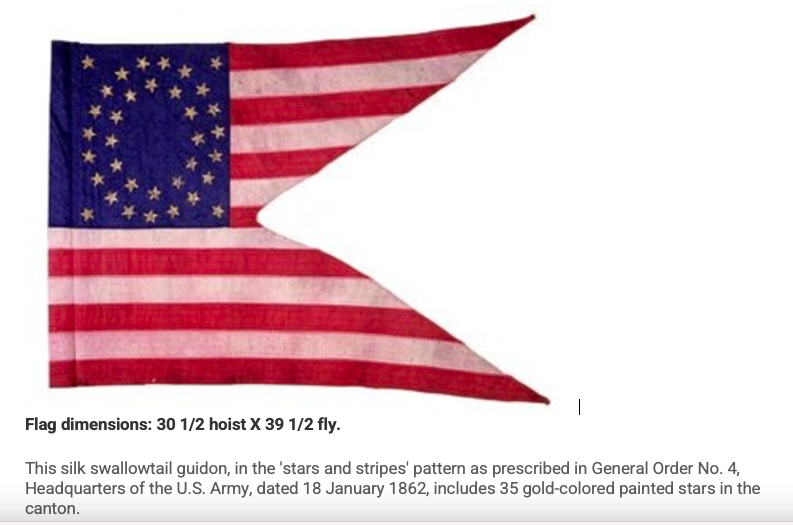
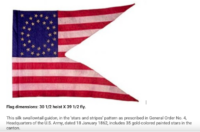
Flag dimensions: 30 1/2 hoist X 39 1/2 fly.
This silk swallowtail guidon, in the ‘stars and stripes’ pattern as prescribed in General Order No. 4, Headquarters of the U.S. Army, dated 18 January 1862, includes 35 gold-colored painted stars in the canton.
Related Items
-
Excellent Original Civil War Officer’s Haversack
$1,450Excellent Original Civil War Officer’s HaversackJuly 9, 2022 -
Confederate Cap Box with Lead Finial and Soldier’s Name Scratched Inside the Cover Flap
$850Confederate Cap Box with Lead Finial and Soldier’s Name Scratched Inside the Cover FlapSeptember 8, 2025 -
Rare Original Civil War Chain-Stitched “US” Issue Blanket
$3,500Rare Original Civil War Chain-Stitched “US” Issue BlanketAugust 3, 2025 -
Id’d Civil War .44 Cal. Pistol Cartridge Box
$425Id’d Civil War .44 Cal. Pistol Cartridge BoxJanuary 4, 2024