
1/9 Ruby Ambrotype and CDV of Artist and Confederate Soldier and Artist Allen C. RedwoodSeptember 25, 2026
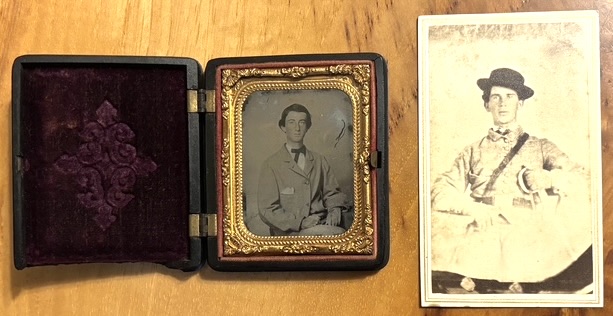
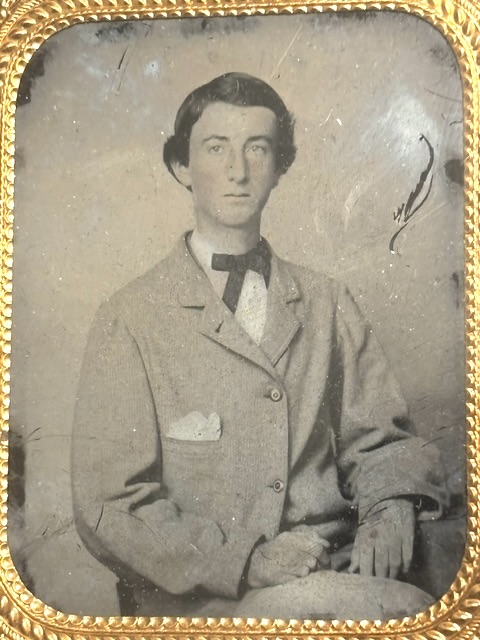
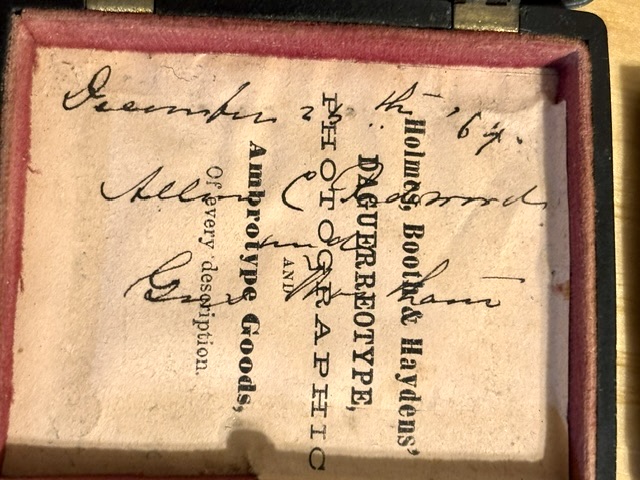
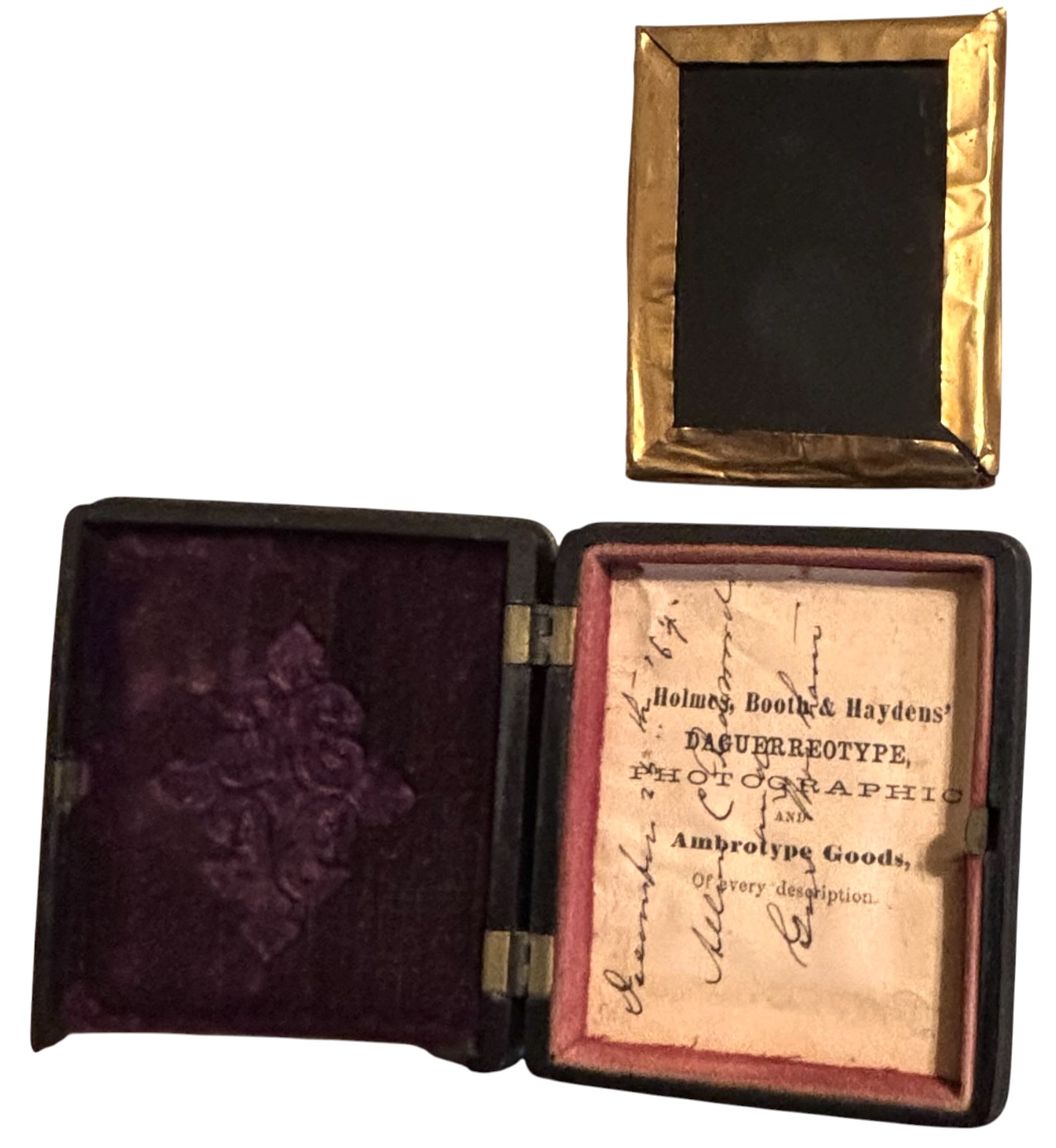
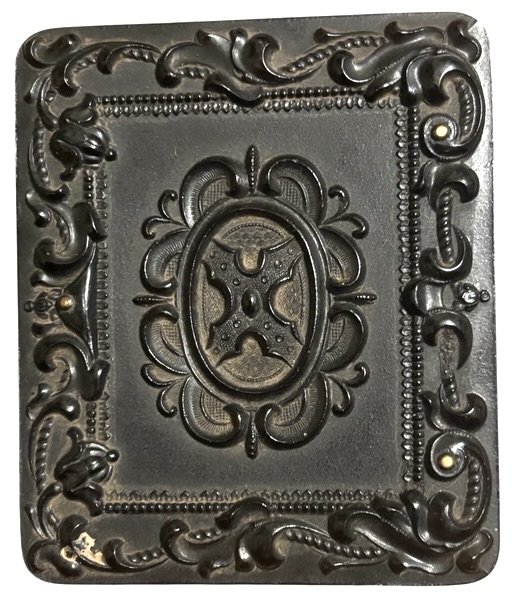
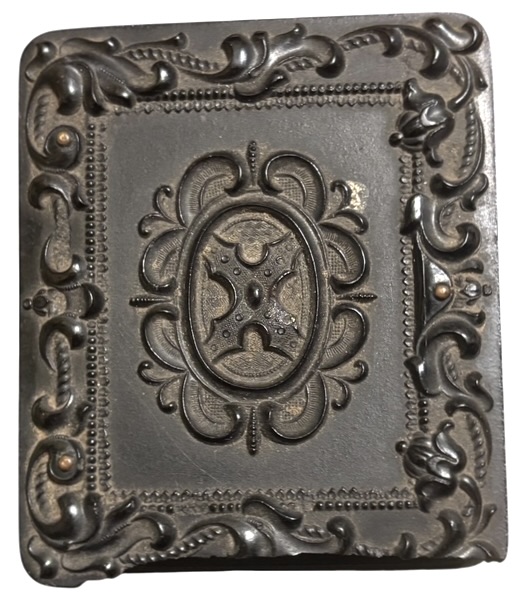
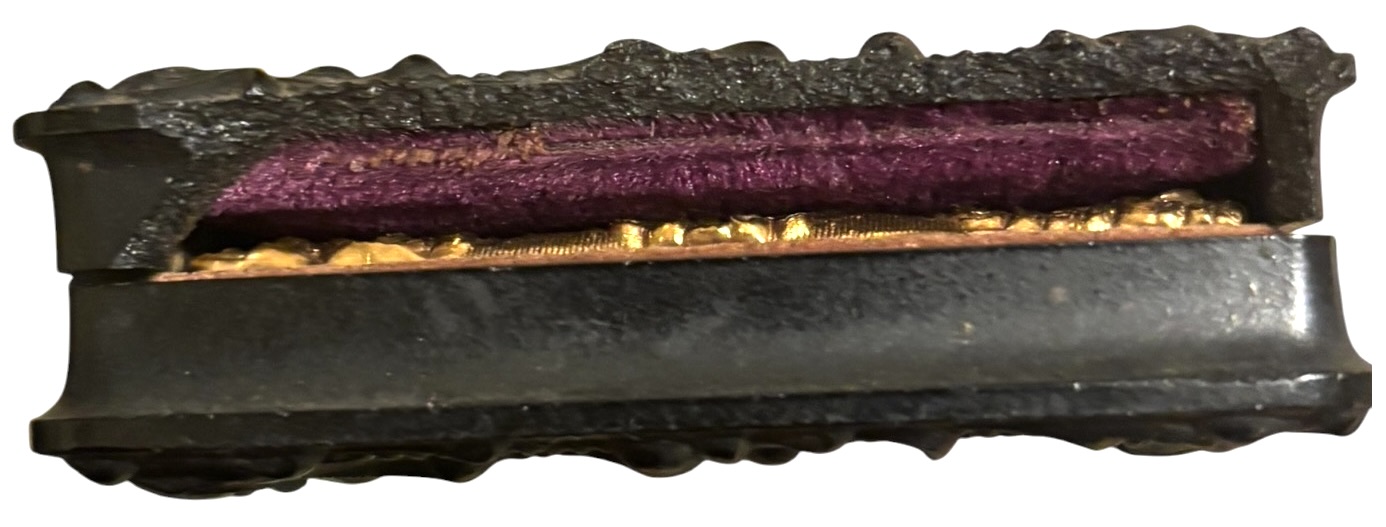
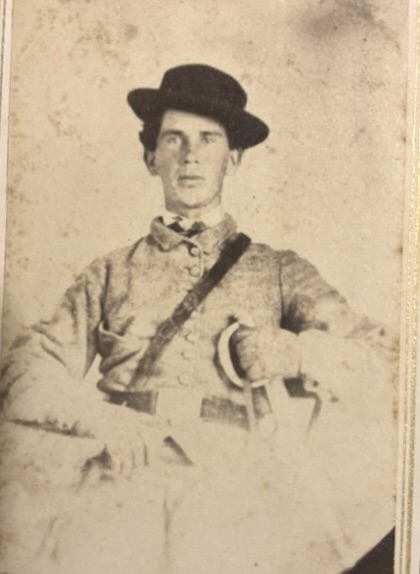
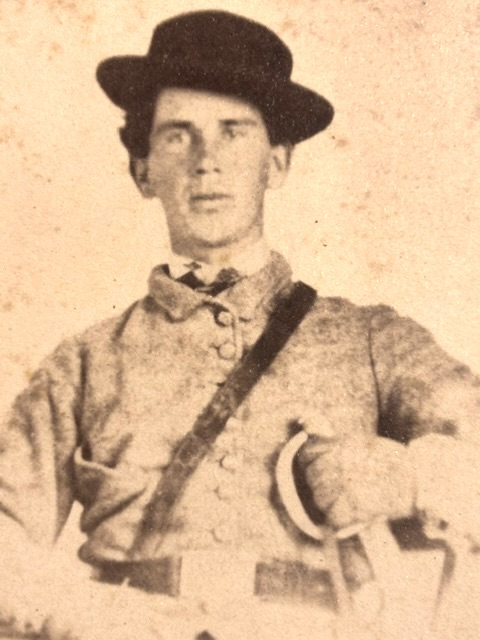
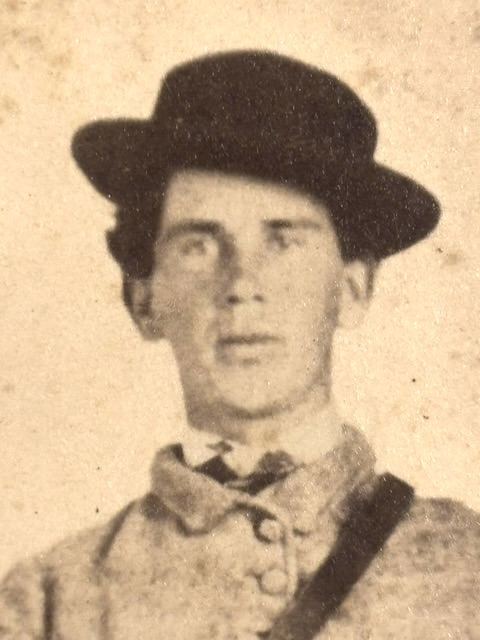
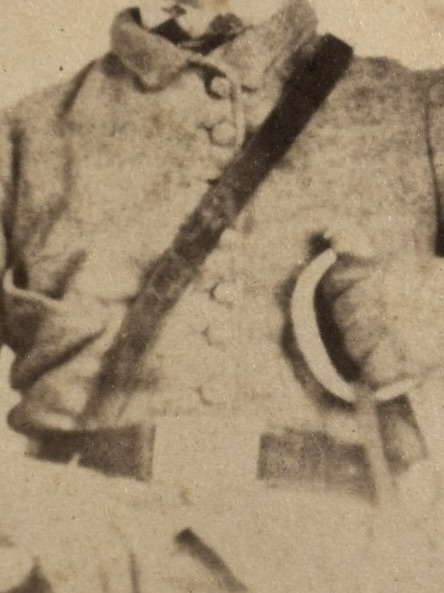
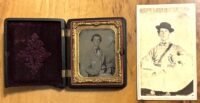
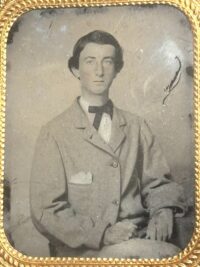
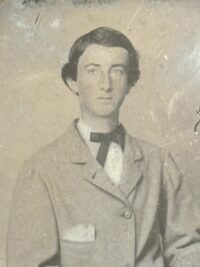
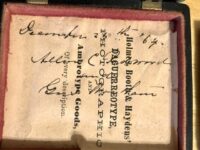
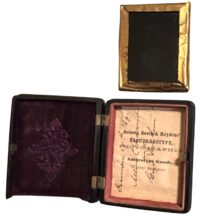
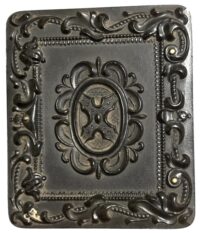
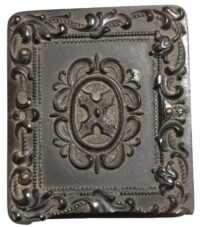
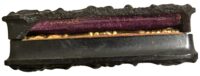
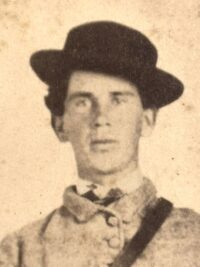
1/9 Ruby Ambrotype and CDV of Artist and Confederate Soldier and Artist Allen C. Redwood – This fine condition ninth plate ruby ambrotype is housed in a complete thermoplastic case – the case has section missing along its bottom edge; the image was possibly photographed by the famed Richmond artist, C.R. Rees and has been published in Military Images Magazine (Vol. XLIII, No. 2 – Spring of 2024 Issue). On the interior of the image case, on the label of the case manufacturer, is inked:
“December 26th ’64,
Allen C. Redwood and
Gus Wortham”
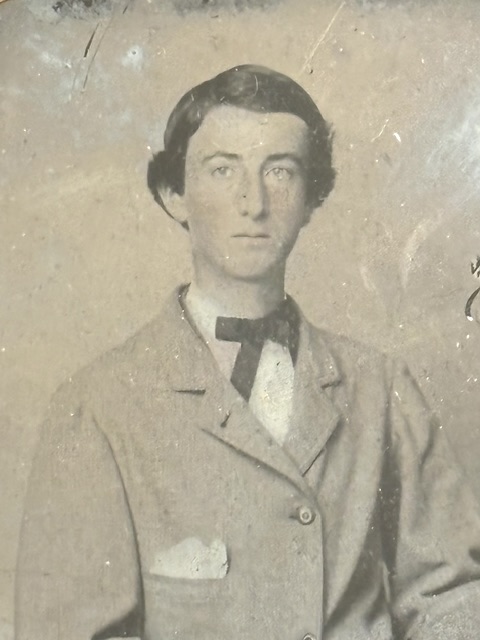
The image depicts Redwood while on a late 1864 furlough to Richmond, where he would visit with friends from the 55th Virginia, to include William G. Wortham (“Gus”); Redwood and Wortham had briefly served together in the Commissary Department of the 55th Virginia, in 1862. The emulsion bears the silvery-pearl and almost three-dimensional appearance that is often noted in Rees’ studio portraits; Redmond’s cheeks are lightly tinted and dots of gilt paint highlight his shirt buttons. Redmond’s his coat exhibits turned wood buttons made by the Gibson Brothers for the Richmond Clothing Bureau uniforms; these appear in a large number of mid to late war portraits.
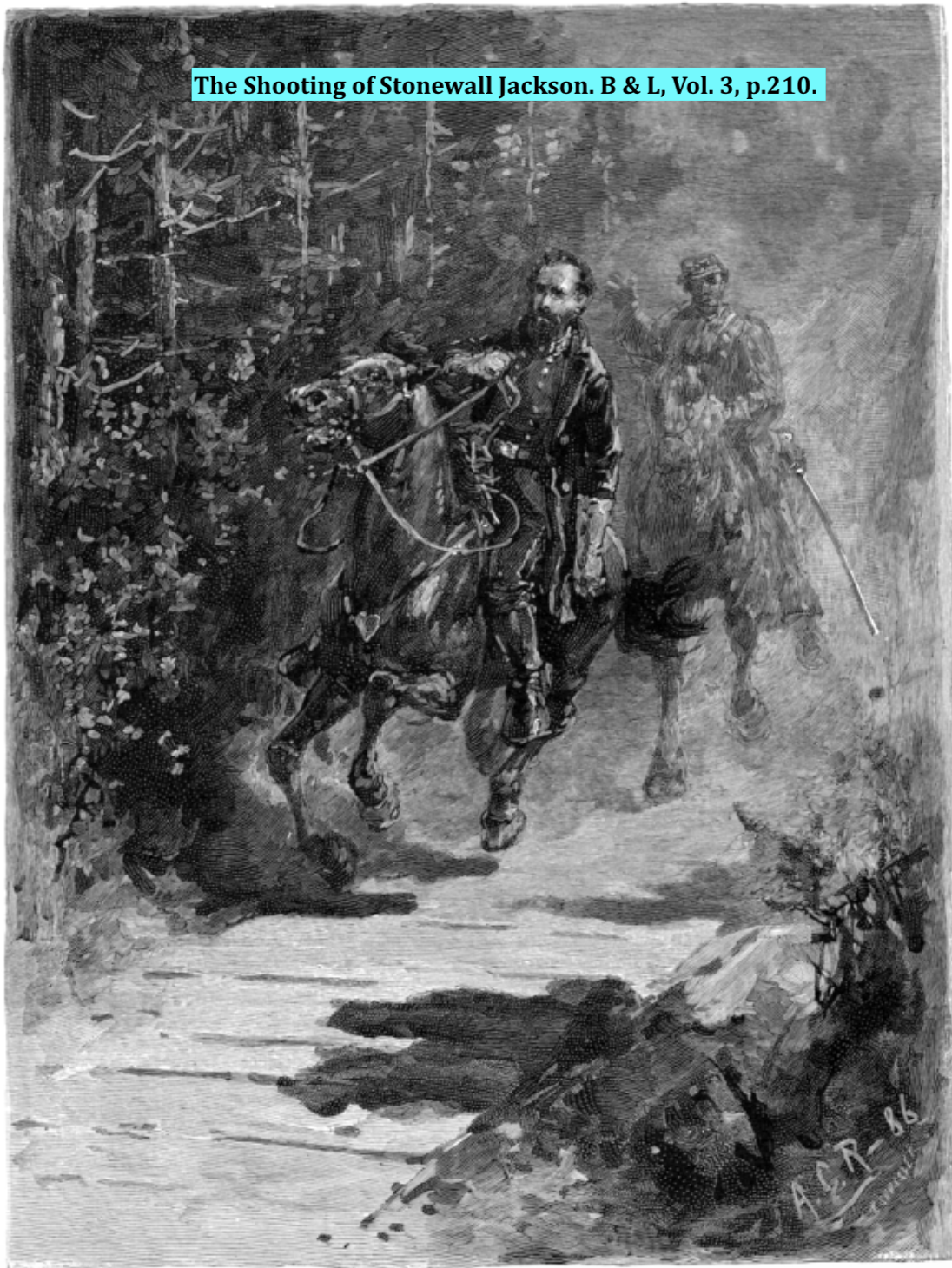
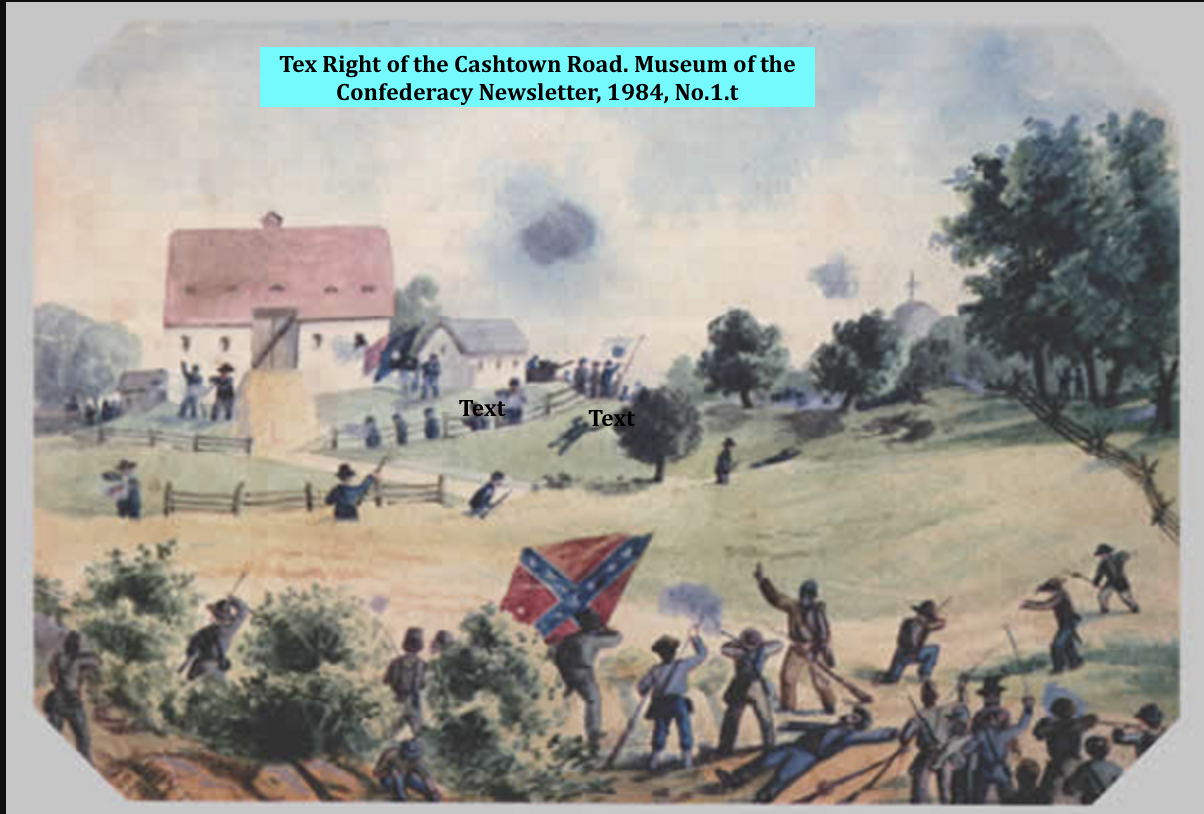
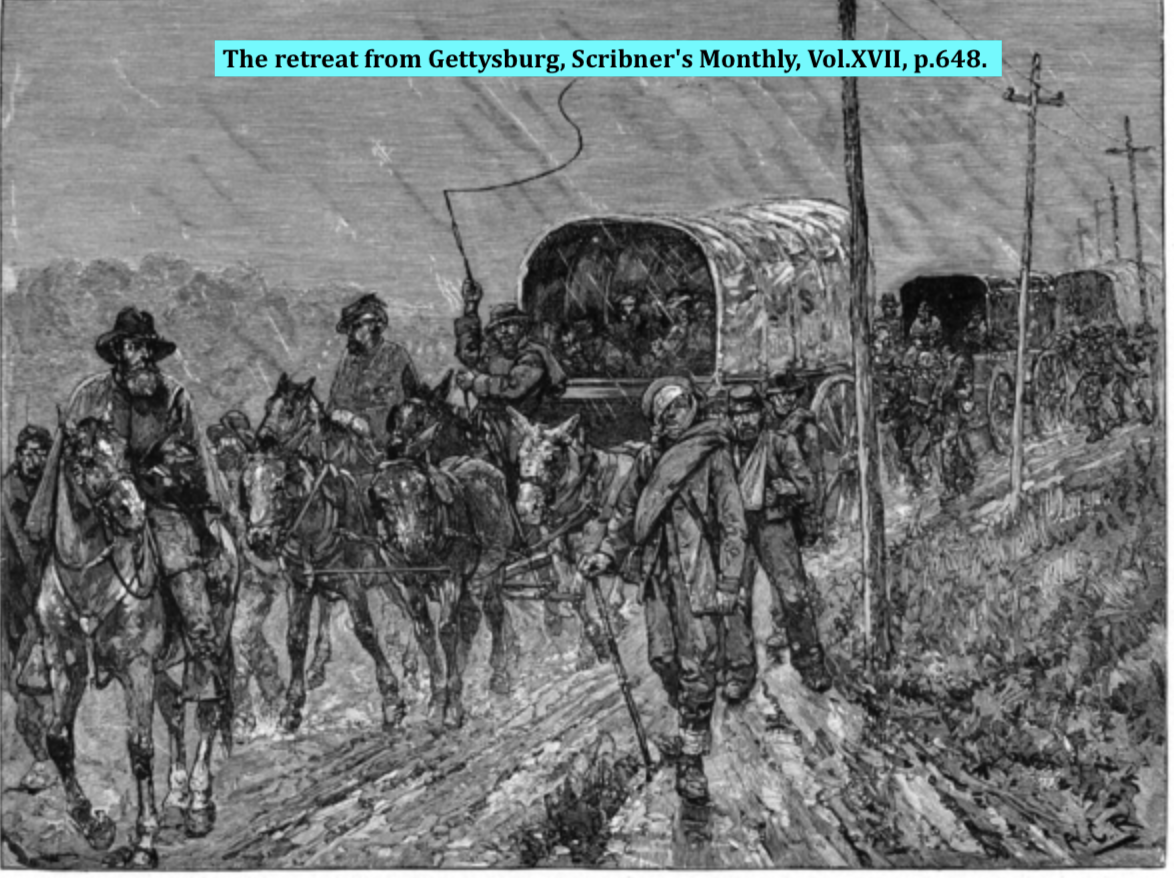
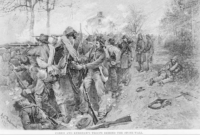
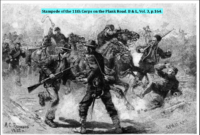
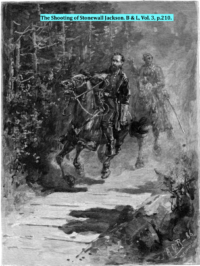
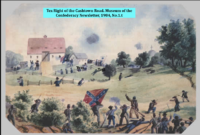
Allen Redwood achieved fame as an artist after the Civil War; he served during the war in the 55th Va. Infantry. As one of Stonewall Jackson’s “Foot Cavalry,” the 55th Virginia Infantry has a significantly interesting history. Redwood was slightly wounded at the Battle of Mechanicsville when his regiment charged and captured a Federal battery. At Second Bull Run he was captured and subsequently paroled ten days later. During his capture Redwood was interviewed by Union General Phil Kearney who would, ironically, die two days later after accidentally riding into the ranks of the 55th Virginia Infantry, Redwood’s unit. In 1863, Redwood was again slightly wounded at Chancellorsville, but was quickly treated and returned to the regiment; of greater historical significance, at the same engagement and before being wounded, Redwood was present when his regiment, along with the 18th North Carolina Infantry, opened fire on General Thomas “Stonewall” Jackson and his staff, mortally wounding Jackson and killing several others. At the battle of Gettysburg, on July 3rd during Pickett’s Charge, the 55th Virginia Infantry, on the extreme left flank, faltered during their advance. Colonel William Steptoe Christian, the regimental color bearer, and a handful of men, including Redwood, continued towards the Brien farm where the 8th Ohio Infantry was entrenched. During this assault, Redwood was wounded in the right elbow; several other men were hit, forcing the detachment to retreat.
In January 1864, three months after recovering from his Gettysburg wound, Redwood transferred into the 1st Maryland Cavalry (CS). He had a horse shot out from under him at a skirmish at Pollard’s Farm, in late May 1864. His battalion then transferred to General Jubal Early’s command and took part in Early’s sortie against Washington, then fought in all later battles and skirmishes in the Shenandoah Valley campaign. In mid-September, he was detailed as Major General Lunsford L. Lomax’s personal escort and from early October served as a clerk and courier for Captain W.K. Martin, Gen. Lomax’s adjutant. It was during his detached service with Gen. Lomax and Capt. Martin that Redwood was granted leave to visit his former regiment and old friends then stationed in Richmond; it was there he sat for this very portrait. Redwood was captured on 7 April 1865. He was held at Camp Hamilton Military Prison near Fortress Monroe for three weeks before transferring to Newport News. Redwood took the Oath of Allegiance on 3 July 1865 and was released to go to his relatives in North Carolina.
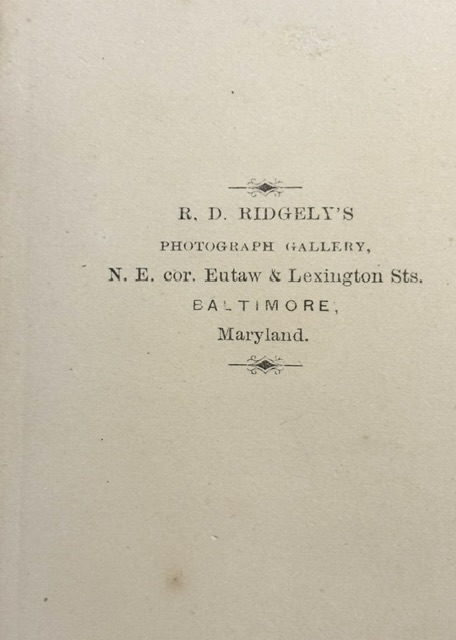
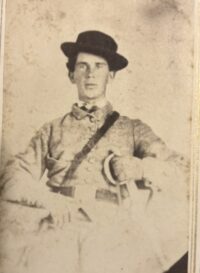
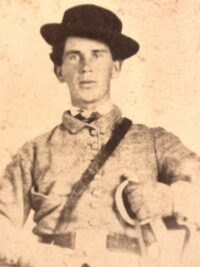
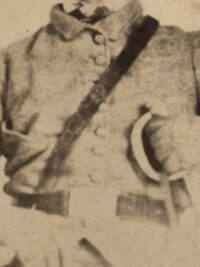
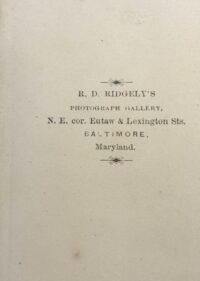
The accompanying CDV of Redmond seemingly was an image taken when he was in the 1st Maryland Cavalry – his coat appears to be some kind of frock coat, constructed of homespun wool; he is wearing a dark colored slouch hat and is holding a saber; his belt exhibits a rectangular belt plate; he either has wide shoulder strap for a canteen or haversack or possibly the strap is attached to his sword belt; the buttons on his jacket appear to be brass military style buttons. This image was made some time in early 1864, when Redmond joined the Maryland Cavalry regiment. The back of the image has a Baltimore photographer’s imprint.
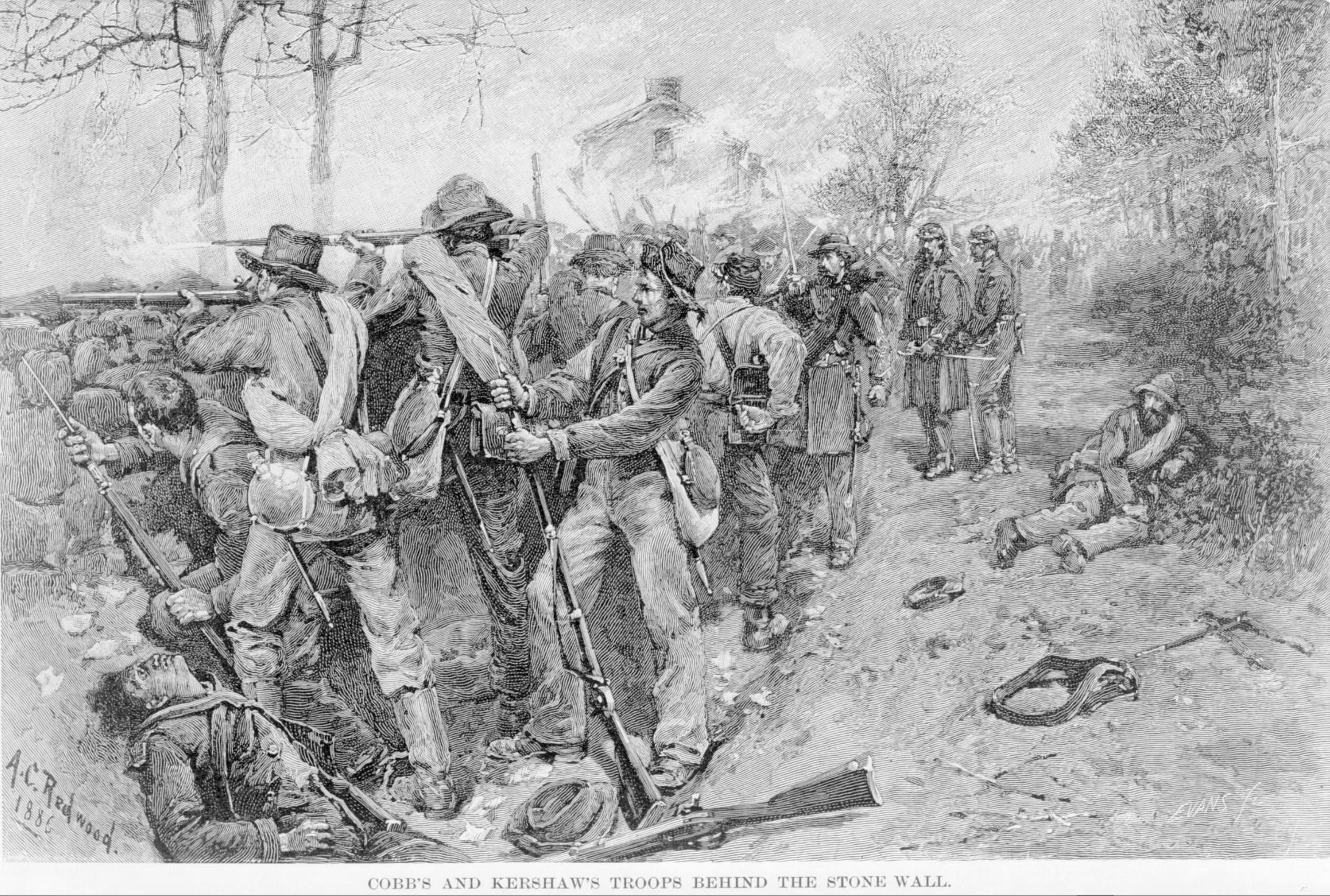
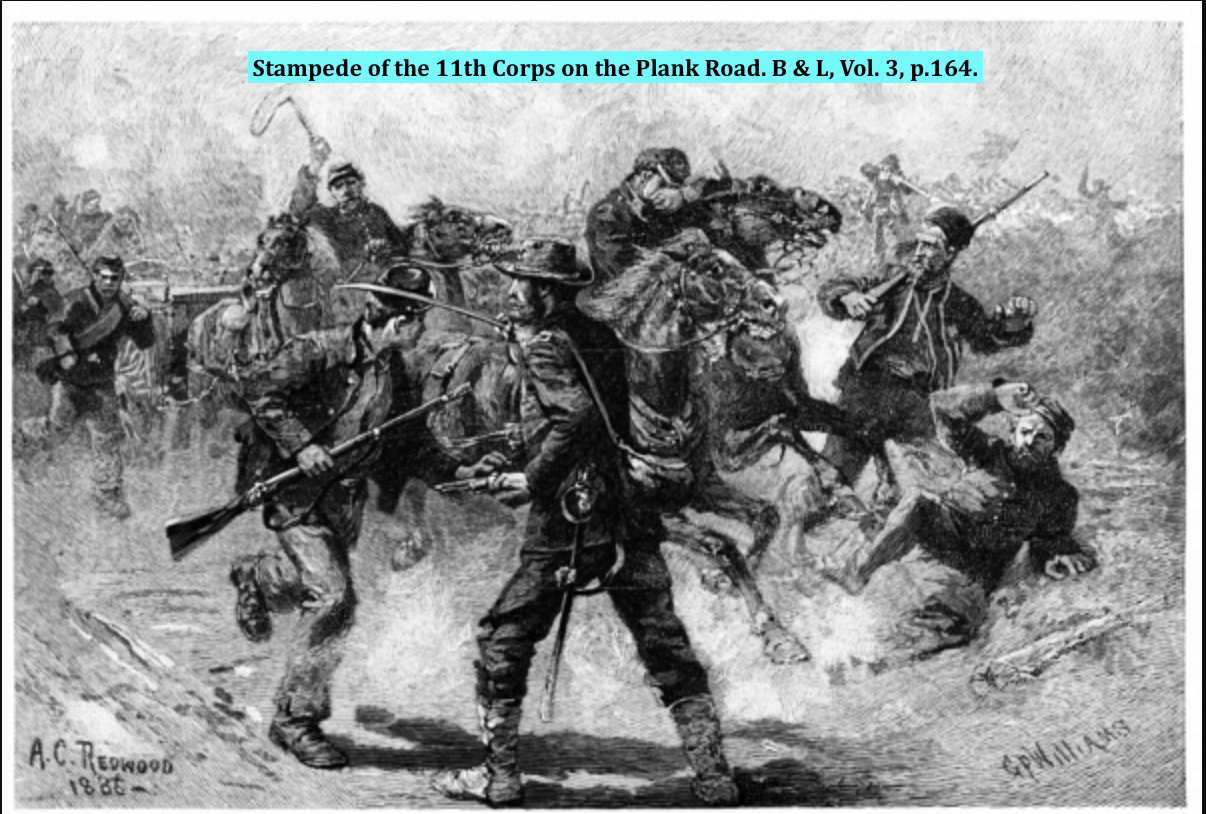
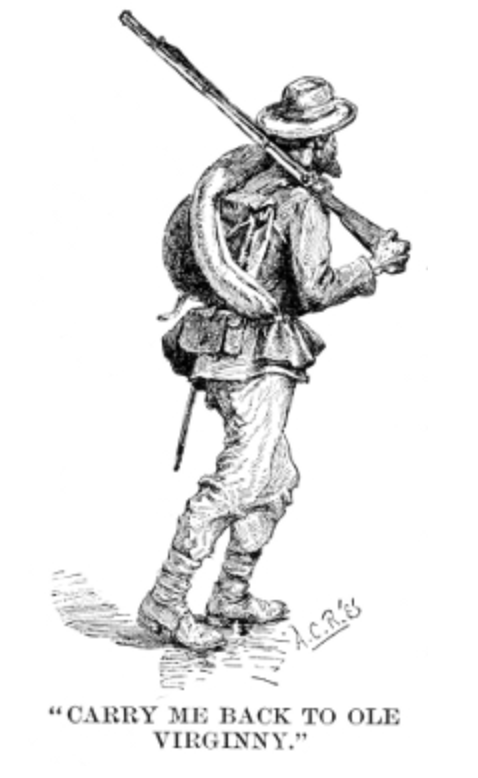
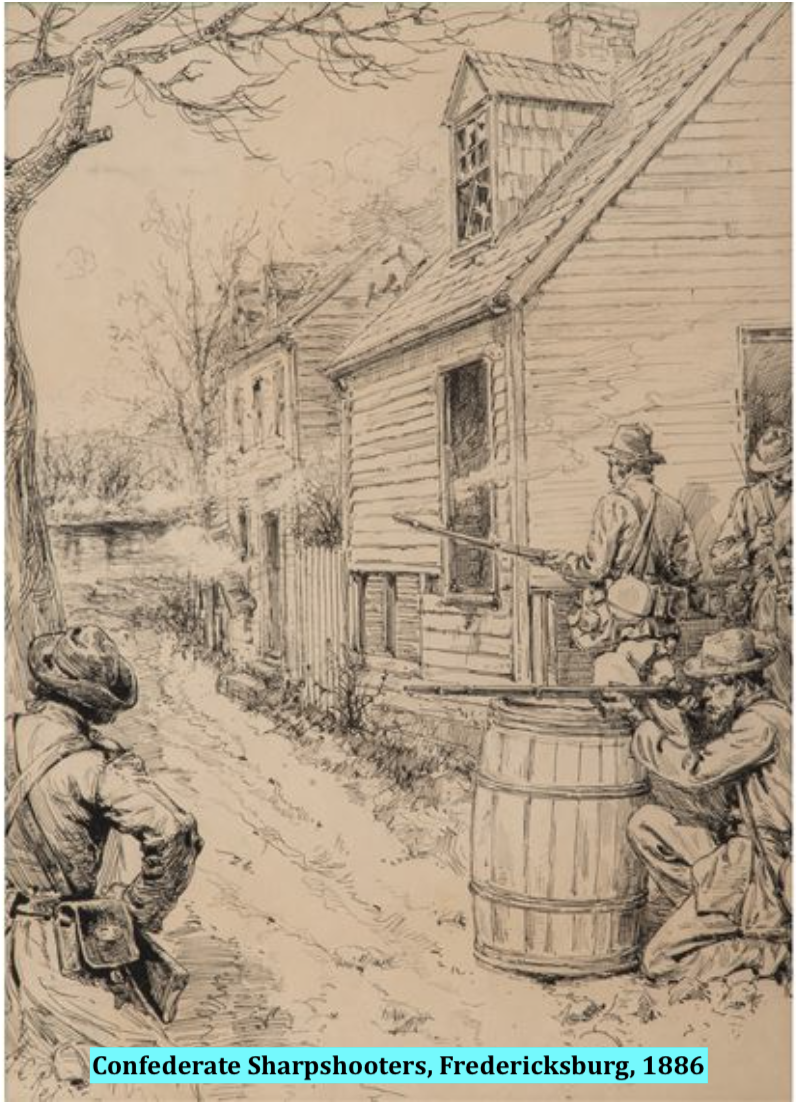
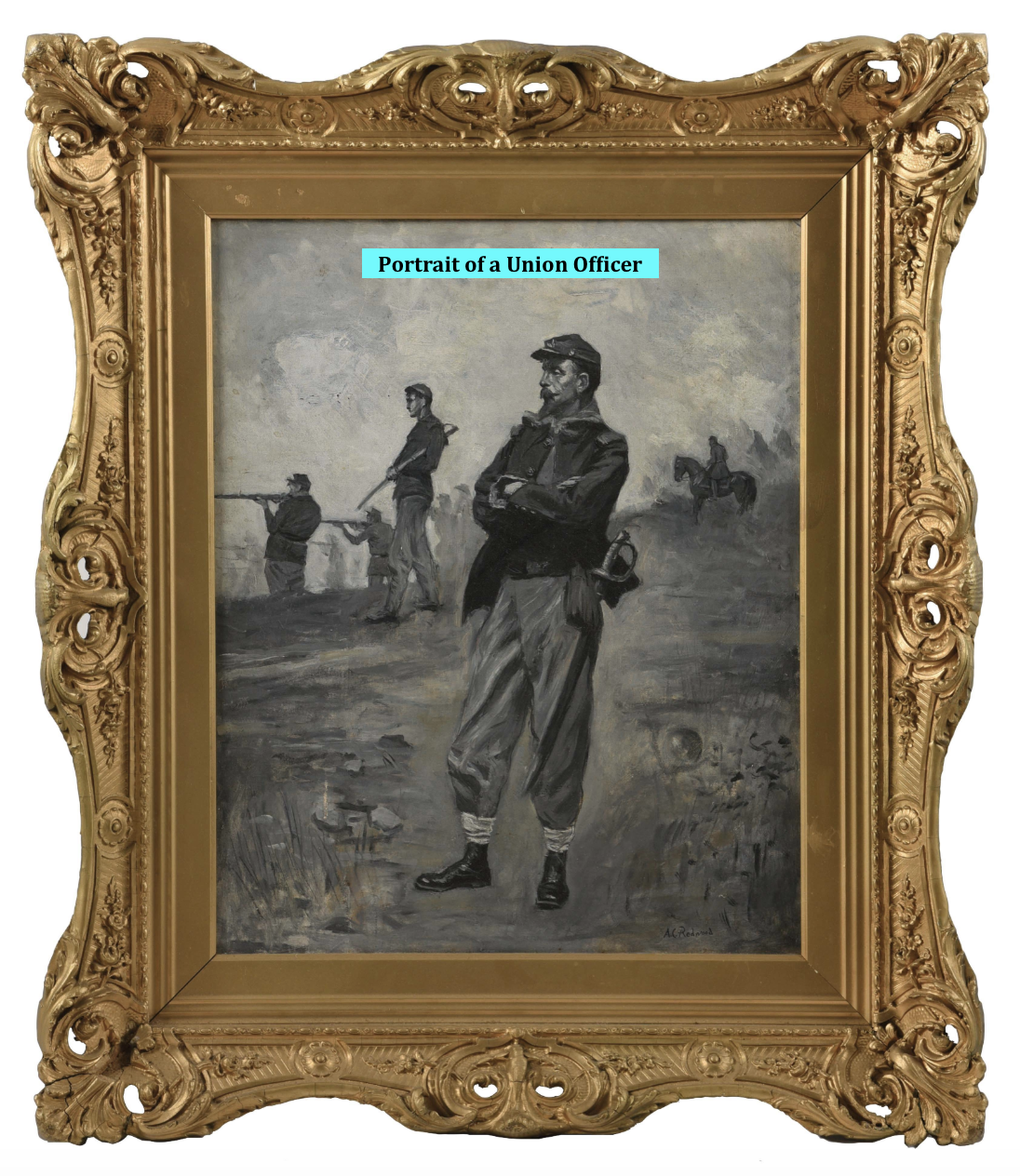
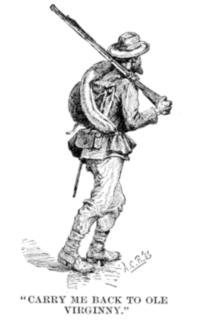
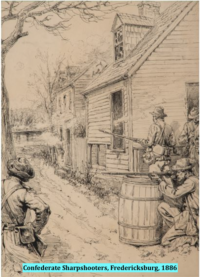
Allen Christian Redwood (1844-1922), a Civil War soldier artist, enlisted with Co. C, 55th Virginia Infantry and served as the unit’s Sergeant-major in 1863. He was wounded at Mechanicsville, captured at Second Manassas, exchanged, then wounded again at Chancellorsville and Gettysburg. He subsequently then transferred to Co. C, 1st Maryland Cavalry and served on the staffs of Generals Lunsford Lomax and Henry Heth. His drawings and sketches are featured throughout the four-volume set, Battles and Leaders of the Civil War. Perhaps responsible for shaping how generations of Americans viewed our Civil War, Redwood’s copious illustrations were featured in numerous post-war publications including The Century magazine’s Battles & Leaders of the Civil War, Frances Trevelyan Miller’s The Photographic History of the Civil War, where this portrait of himself appears in the final volume, and many others. Beyond his published sketches Redwood left behind a number of richly detailed oil, gouache, and watercolor paintings
Born in Lancaster, Virginia in 1844, Allen Redwood became one of the few sketch artists of the Civil War who actually fought in military battles, and his documentation was of noted historical value to the Southern side of the War. In 1882, he traveled West through Idaho to Washington state. By the 1890s, he was a western illustrator for Harper’s, Century and other magazines, and traveled widely in the West. In 1898, Harper’s magazine personnel sent him to Cuba to cover the Spanish …
Allen Christian Redwood
Residence was not listed; a 17-year-old Student.
Enlisted on 7/24/1861 at Urbanna, VA as a Priv.
On 7/24/1861, he mustered into “C” Co. Virginia 55th Infantry.
He transferred out on 1/12/1864
On 1/12/1864, he transferred into “C” Co. Maryland 1st Infantry.
(Date and method of discharge not given.)
He was listed as:
- Wounded 6/26/1862 Mechanicsville, VA (Slightly wounded)
- Returned 7/15/1862 (place not stated) (Estimated day)
- POW 8/29/1862 2nd Manassas, VA
- Exchanged 9/21/1862 (place not stated)
- Detailed 11/15/1862 (place not stated) (Detailed w/regtl Commissary Dept)
- Returned 1/15/1863 (place not stated) (Estimated day)
- Detailed 1/20/1863 (place not stated) (Detailed as Regtl Sergt Major)
- Returned 4/15/1863 (place not stated)
- Wounded 5/2/1863 Chancellorsville, VA (Slighty wounded)
- Returned 5/15/1863 (place not stated) (Estimated day)
- Wounded 7/3/1863 Gettysburg, PA (Wounded in right elbow)
- Returned 10/15/1863 (place not stated)
- Horse shot 5/27/1864 Pollard’s Farm, VA
- Detailed 9/15/1864 (place not stated) (Detailed, orderly to Maj Gnl L. Lomax)
- Detailed 10/4/1864 (place not stated) (Detailed, clerk to Lomax’s adjutant)
- POW 4/7/1865 Somerton, VA
- Oath Allegiance 7/3/1865 (place not stated) (Released)
Born 6/17/1844 in Prospect Hill Plant., Lancaste
Died 12/24/1922 in Ashville, NC
Buried: Riverside Cemetery, Ashville, NC
(Parents: William Holman & Catherine Carter (Chowning) Redwood. Postwar artist & writer, Baltimore & N.Y..)
After the war, he lived in Port Conway, VA
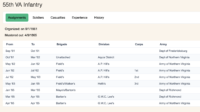
55th Regiment, Virginia Infantry
Overview:
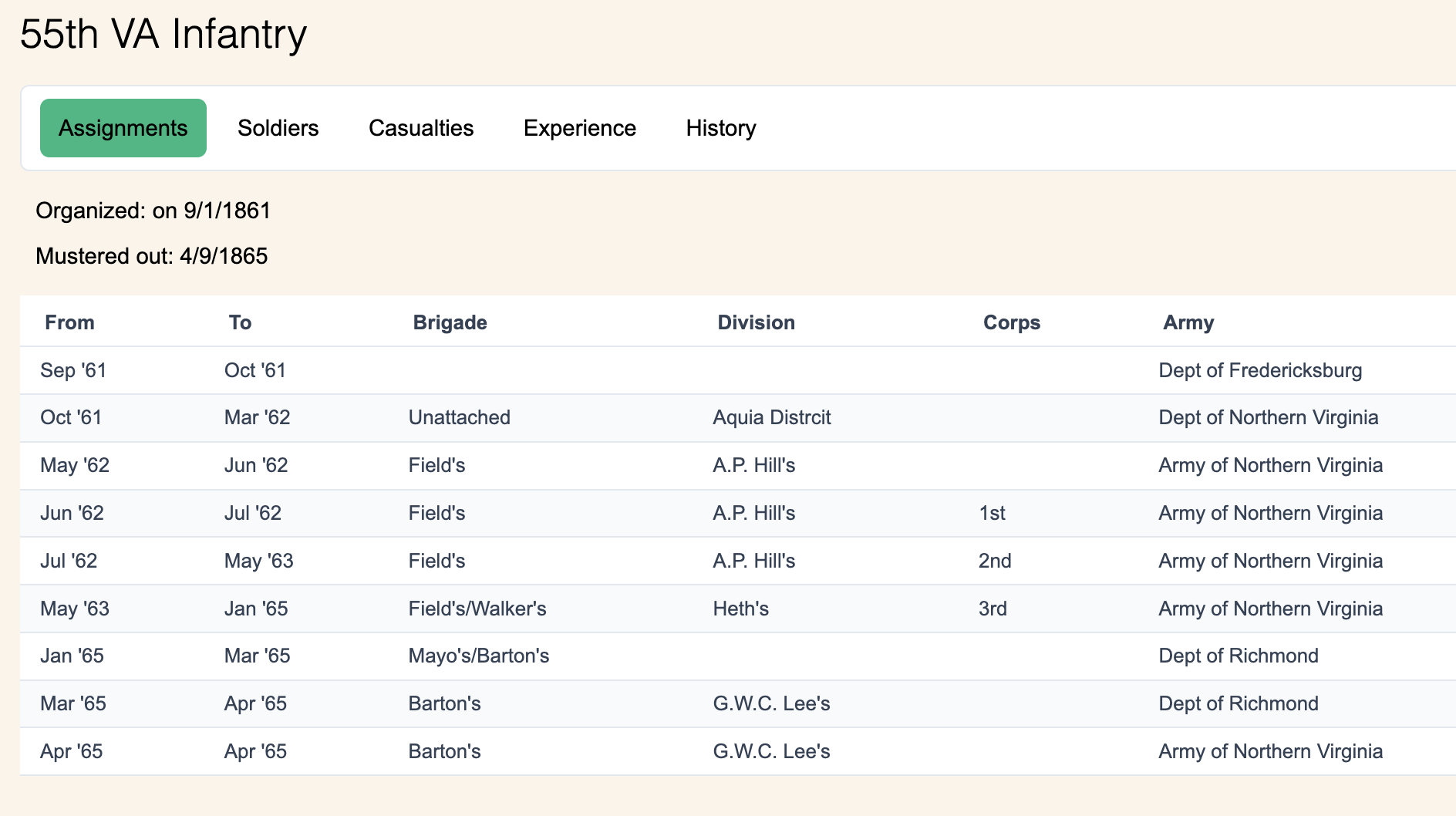
55th Infantry Regiment was organized in September, 1861, by the addition of four companies to W.N. Ward’s “Essex and Middlesex” Battalion of Virginia Volunteers. It was assigned to General Field’s, Heth’s, H.H. Walker’s, and Barton’s Brigade, Army of Northern Virginia. The 55th participated in the campaigns of the army from the Seven Days’ Battles to Cold Harbor, then was involved in the Petersburg siege south of the James River and the Appomattox operations. It sustained 108 casualties during the Seven Days’ Battles, 32 at Second Manassas, 11 at Fredericksburg, and 110 at Chancellorsville. Of the 268 engaged at Gettysburg, twelve percent were killed, wounded, or missing. In February, 1865, the 47th and 55th Regiments were consolidated, but only 2 officers and 21 men of the 55th were present at the surrender. Its field officers were Colonels William S. Christian and Francis Mallory; Lieutenant Colonels Robert H. Archer and Evan Rice; and Majors Thomas M. Burke, Robert B. Fauntleroy, Charles N. Lawson, Andrew D. Saunders, and William N. Ward.
55th Virginia Infantry Regiment
The 55th Virginia Infantry Regiment was created at Fredericksburg in September of 1861 and surrendered at Appomattox Court House in April of 1865. It listed 1,181 men who saw active service with the regiment. Of these 108 men were killed in action and 198 men died of disease.
| 1861 | |
| September | The regiment was organized for one year’s service under the command of Colonel Francis Mallory. It was created from a core of eight militia companies that had organized in May and June:
· Company A, Essex Artillery, enlisted May 21st 1861, commanded by Captain Evan Rice · Company B, Middlesex Artillery, enlisted May 24th 1861, commanded by Captain William Fleet · Company C, Middlesex Southerners, enlisted May 24th 1861, commanded by Captain Andrew Saunders · Company D, Essex Davis Rifles, enlisted June 17th 1861, commanded by Captain Gustavus Garnett Roy · Company E, Westmoreland Greys, enlisted June 24th 1861, commanded by Captain J. Bailey Jett · Company F, Essex Sharpshooters, enlisted May 21st 1861, commanded by Captain Thomas Burke · Company G, Essex Grays, enlisted June 12th 1861, commanded by Captain George Street · Company H, Middlesex Rifles The 55th Virginia Infantry Regiment was assigned to Department of Fredericksburg. |
| October | Assigned to Aquia District, Department of Northern Virginia. |
| 1862 | |
| April | Companies I, K & L were added. |
| April 19 | Union occupation of Fredericksburg. |
| April 28 | Company B converted to Middlesex Artillery Battery |
| May-June | The regiment was reorganized. Assigned to Field’s Brigade, A.P. Hill’s Division, Army of Northern Virginia |
| June-July | Assigned to Field’s Brigade, A.P. Hill’s Division, Longstreet’s Command, Army of Northern Virginia |
| June 10 | Company F of the 5th Alabama Infantry Battalion was transferred to the regiment and became Company F. |
| June 25-July 1 | Seven Days Battles
The regiment lost 108 casualties |
| June 27 | Battle of Gaines’s Mill |
| June 30 | Battle of Frayser’s Farm
Major Thomas M. Burke was killed. |
| July | Assigned to Field’s Brigade, A.P. Hill’s Division, Jackson’s Command, Army of Northern Virginia |
| August 9 | Battle of Cedar Mountain |
| August 28-30 | Second Battle of Manassas (Bull Run)
The regiment brought 82 men to the field and lost 3 men killed, 22 wounded and 5 missing |
| August 28-30 | Battle of Chantilly
Skirmishers of the 55th Virginia killed Union General Phil Kearney. |
| September 12-15 | Siege of Harpers Ferry |
| September 17 | Battle of Sharpsburg (Antietam)
The regiment was commanded by Captain Charles N. Lawson |
| September 20 | Battle of Shepherdstown Ford |
| December 13 | Battle of Fredericksburg
The regiment lost 11 casualties. Captain Lawson was captured after the battle while on leave. |
| 1863 | |
| March 15 | Captain Lawson was exchanged and returned to the regiment. |
| May 1-4 | Battle of Chancellorsville
The regiment was commanded by Colonel Francis Mallory until he was killed in Jackson’s assault on May 3. It lost 110 casualties. During the assault the regiment lost its colonel, lieutenant colonel and every company commander. |
| May | Assigned to Field’s-Walker’s Brigade, Heth’s Division, 3rd Corps, Army of Northern Virginia. The regiment totalled about 480 men. |
| May 26 | Captain Lawson was promoted to major. |
| July 1-3 | Battle of Gettysburg
The 55th Virginia was commanded at Gettysburg by Colonel William S. Christian. It brought 268 men to the field and lost 12% casualties. The regiment was on the left flank of Pickett’s Charge on July 3 and was one of the first regiments to break. |
| July 14 | Falling Waters
The regiment lost 74 men captured, including Colonel Christian. Sargent Charles M. Holton of the 7th Michigan Cavalry Regiment captured the colors. When the regiment returned to Virginia soil it numbered around 130 men under the command of Major Charles N. Lawson. |
| October | Bristoe Campaign |
| November-December | Mine Run Campaign |
| 1864 | |
| May 5-6 | Battle of the Wilderness
The regiment lost its colors during the fighting on May 5. |
| May 8-21 | Battle of Spotsylvania Court House |
| May 22-26 | Battle of North Anna |
| June 1-3 | Battle of Cold Harbor |
| June-April | Siege of Petersburg |
| August 18-21 | Battle of Weldon Railroad
Major Lawson was mortally wounded. |
| September 29 | Squirrel Level Road |
| September 30 | Jones’s Farm |
| October 1 | Pegram’s Farm |
| October 2 | Harman Road |
| 1865 | |
| January-March | Assigned to Mayo’s-Barton’s Brigade, Department of Richmond |
| February | Consolidated with 47th Virginia Infantry Regiment |
| March-April | Assigned to Barton’s Brigade, G.W.C. Lee’s Division, Department of Richmond |
| April | G.W.C. Lee’s Division transferred to Army of Northern Virginia for the evacuation of Richmond. |
| April 6 | Sayler’s Creek |
| April 9 | Appomattox Court House
Two officers and 21 men surrendered. |
1st Maryland Cavalry Battalion
Active May, 1862–April, 1865
Branch Volunteer Army
Type Cavalry
Engagements American Civil War
Maryland campaign
Gettysburg campaign
Valley campaigns of 1864
Overland Campaign
Commanders
Notable commanders
Colonel Harry Gilmor
William E. Jones (general)
Gus Dorsey
History
On May 15, 1862, a group of Marylanders who had been attached to the 1st Virginia Cavalry formed what would formally become the 1st Maryland under Ridgely Brown of Montgomery County. The group was attached to Stonewall Jackson’s Corp and participated in Valley Campaign. It served with the 2nd Virginia Cavalry Regiment under Thomas T. Munford. On September 4, it crossed the Potomac River at Edward’s Ferry participated in the Maryland Campaign. But did not actively fight at Antietam. The unit served under George H. Steuart in the Maryland Line. It formally was organized at Winchester on November 25, 1862, and staff officers were appointed. In spring 1863, the unit was part of the Jones–Imboden Raid under Grumble Jones. Summer 1863 saw it invade the North with the Army of Northern Virginia. It was attached to Ewell’s Corps and acted as scouts and messengers. After the Battle of Gettysburg a portion of the unit, served with John Imboden’s men escorting the wounded.[6] Members of the unit also fought at Monterey Pass. On July 6, it participated at the Battle of Hagerstown.
In early May 1864 a portion of the unit “annoyed” a group of George Custer’s Michigan cavalry. Then Colonel Brown was killed on June 1, near the South Anna River. It participated at the Battle of Trevilian Station[10] In July 1864, it again encountered the Michigan cavalry and it drove the unit to Hanover Town, Virginia. In 1864 a section of the unit, as part of the Valley Campaigns of 1864, invaded Maryland and took part in Gilmor’s Raid across Maryland. July 30 saw it engage, along with the other troops under John McCausland, in the burning of Chambersburg, Pennsylvania. In August, it raided Moorefield, West Virginia.
In 1865, it served in the Appomattox campaign. It was again attached to Munford. At the very end of the war it dispersed and the men returned to their homes rather than surrender to the Union. This after receiving a letter in late April, from Munford near Lynchburg.
1st Regiment, Maryland Cavalry
Overview:
1st Cavalry Regiment began its formation in May, 1862 and became a four-company battalion at Winchester, Virginia in November. It appears that only four additional companies ever joined the unit. The 1st Cavalry served in W. E. Jones’, F. Lee’s, and Lomax’s Brigade, then the Maryland Line. Later it was under the command of W.L. Jackson, W.H. Payne, and T.T. Munford. It fought in the Shenandoah Valley of Virginia, the Pennsylvania Campaign, and at Beaver Dam Station, Pollard’s Farm, and Trevillian’s Station. The unit continued the fight in Early’s Washington Campaign, McCausland’s raid on Chambersburg, and later in the Shenandoah Valley and around Appomattox. In April, 1865, it cut through Federal lines at Appomattox and disbanded. The field officers were Lieutenant Colonels Ridgely Brown, Gustavus W. Dorsey, and Robert C. Smith.
1st Maryland Cavalry Regiment (C.S.A)
Confederate Regiments & Batteries * Maryland
1862
May 15 Company A of the First Maryland Cavalry was organized from members of the 1st Virginia Cavalry Regiment under the command of Captain Ridgely Brown. They were Marylanders who had joined the Virginia regiment when Maryland was forcibly kept in the Union in 1861. After a year of service they chose not to reenlist but to form their own Maryland unit. It was temporarily attached to Colonel Thomas Taylor Munford’s 2nd Virginia Cavalry Regiment in the Shenandoah Valley until a full battalion of Maryland cavalry could be raised.
May 23
Battle of Front Royal
June 2 Woodstock
June 8
Battle of Cross Keyes
The company supported the 1st Maryland Infantry (CSA)
June 9
Battle of Port Republic
August 17 Assigned to Robertson’s Brigade, Cavalry Division, Army of Northern Virginia
August 23 Warrenton (Sulfur Springs)
August 26 Bristoe Station
August 28
Groveton Heights
August 30
Second Battle of Manassas
September 2 Leesburg
September 4
Maryland Campaign
September 4 Crossed the Potomac River at Edward’s Ferry. Reached Poolesville.
September 5 Monocacy Church
September 6 Colonel Munford took command of the brigade as senior colonel when Brigadier General Robertson was transferred to North Carolina. Lieutenant Colonel Richard H. Burks of the 12th Virginia Cavalry, formerly Adjutant of the 2nd Virginia Cavalry, transferred back to the regiment and took command.
September 10 Sugar Loaf
September 14 Burkittsville
September 15
Battle of Crampton’s Gap (South Mountain)
September 17
Battle of Sharpsburg (Antietam)
Covered the right flank of the army and the retreat to Boteler’s Ford.
From the marker for Munford’s Brigade on the Antietam battlefield:
The 2nd and 12th Virginia Cavalry reached the field on September 16 and took position on the extreme right of the Army of Northern Virginia, to cover the lower crossing of the Antietam. The 7th Virginia took position, on the evening of the 16th, on the Hagerstown Pike, northwest of Sharpsburg. It joined the Brigade on the right on the 17th. The Brigade remained on the right until the close of the battle.
Related Items
-
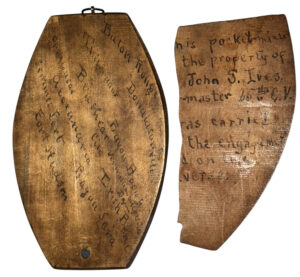
Id’d Civil War Camp Mirror – Lt. and Quartermaster John S. Ives 25th Connecticut Infantry
$750Id’d Civil War Camp Mirror – Lt. and Quartermaster John S. Ives 25th Connecticut InfantryDecember 24, 2021 -
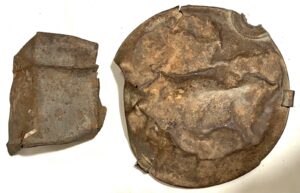
M1858 Smoothside Canteen and Cartridge Box Tin Picked up at the Bloody Angle after the Battle of Spotsylvania and Given to Col. Clark S. Edwards 5th Maine Infantry
M1858 Smoothside Canteen and Cartridge Box Tin Picked up at the Bloody Angle after the Battle of Spotsylvania and Given to Col. Clark S. Edwards 5th Maine InfantryJanuary 14, 2024 -
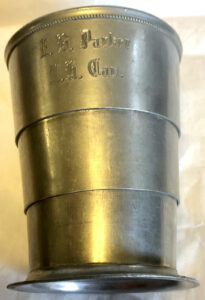
Civil War Pewter Collapsible Cup in its Original Japanned Case – Id’d to Capt. Ezra B. Parker, 1st New Hampshire Cavalry – POW at Libby Prison
$750Civil War Pewter Collapsible Cup in its Original Japanned Case – Id’d to Capt. Ezra B. Parker, 1st New Hampshire Cavalry – POW at Libby PrisonMarch 12, 2022 -
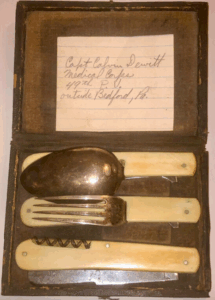
High Quality Civil War Id’d Officer’s Traveling Mess Utensils in Original Case
$1,150High Quality Civil War Id’d Officer’s Traveling Mess Utensils in Original CaseSeptember 25, 2022