
Civil War Id’d Web NCO Sword Sling and Folk Art Carved Truncheon – Sgt. Michael Kehoe Co. C 140th New York InfantryAugust 28, 2026


 Hand Colored Albumen...$3,500
 Quarter Plate Daguer...$6,500
Civil War Id’d Web NCO Sword Sling and Folk Art Carved Truncheon – Sgt. Michael Kehoe Co. C 140th New York Infantry
$950
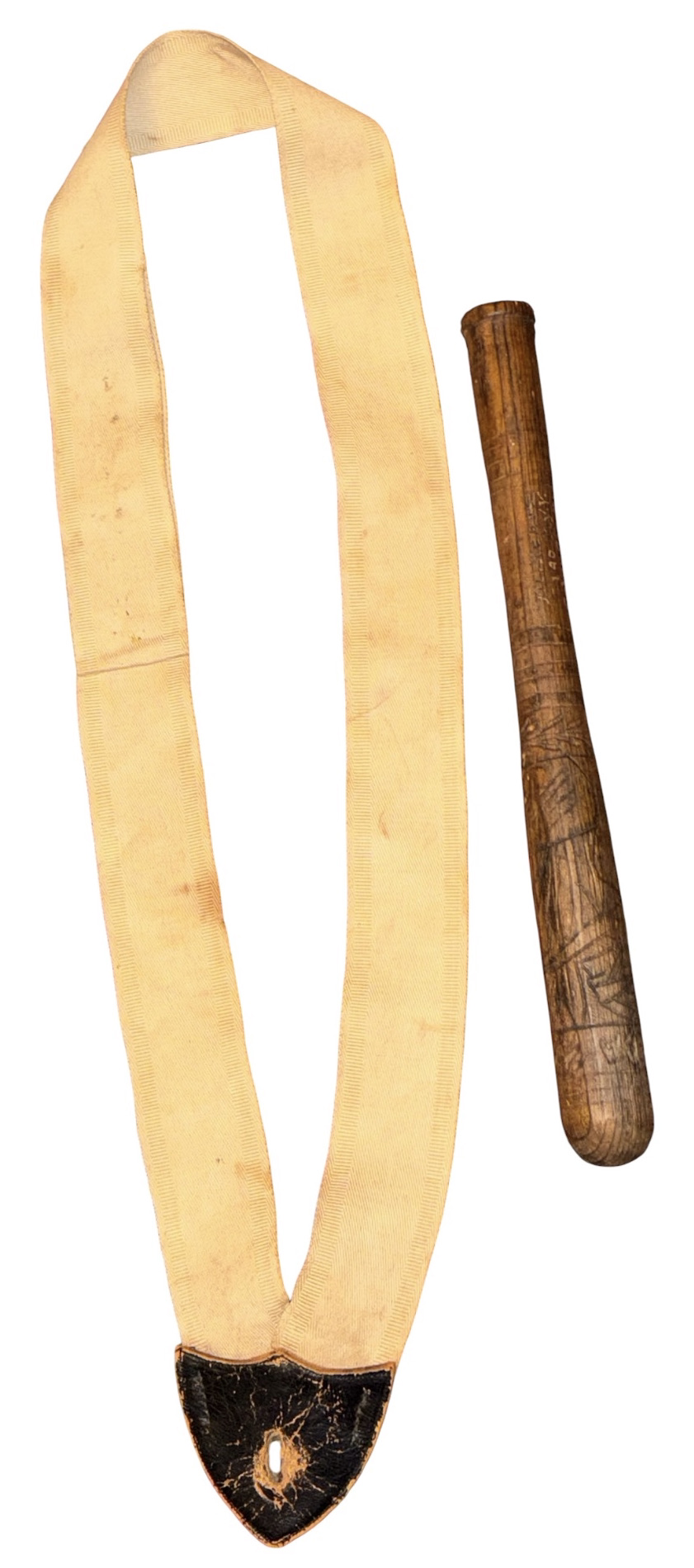
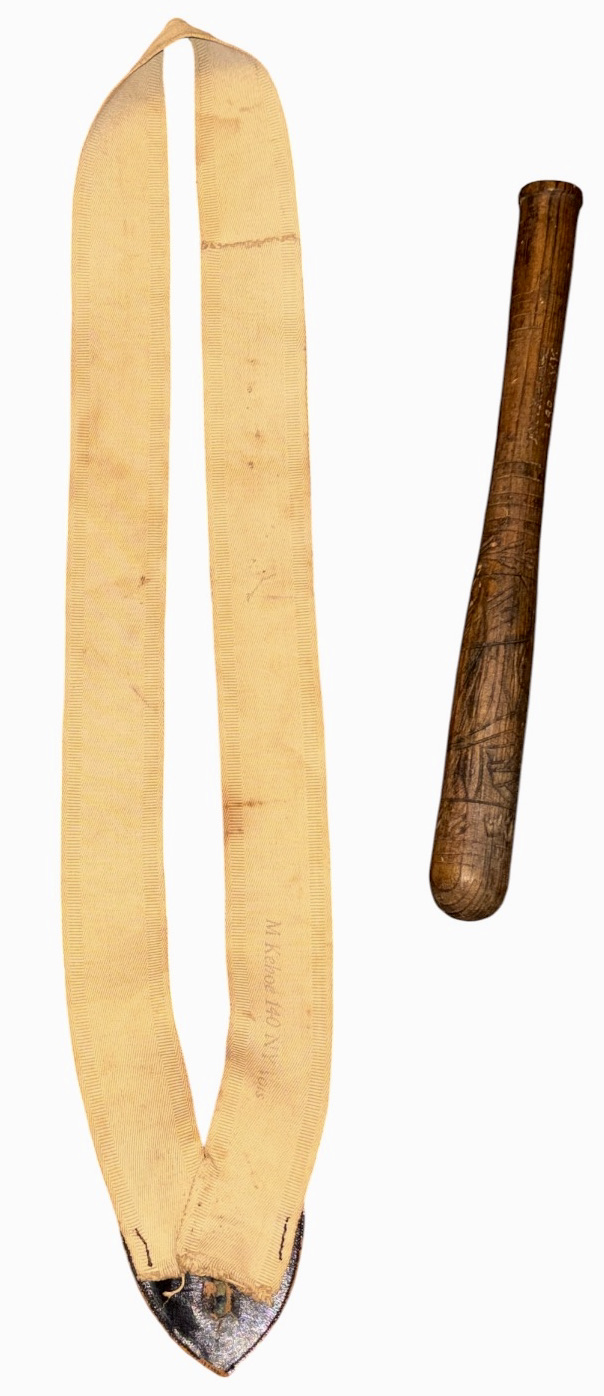
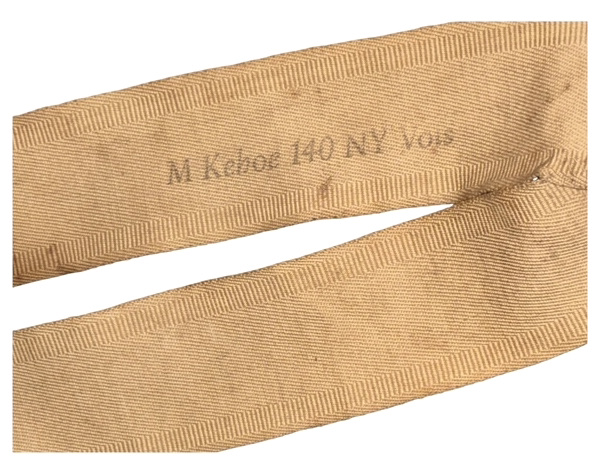
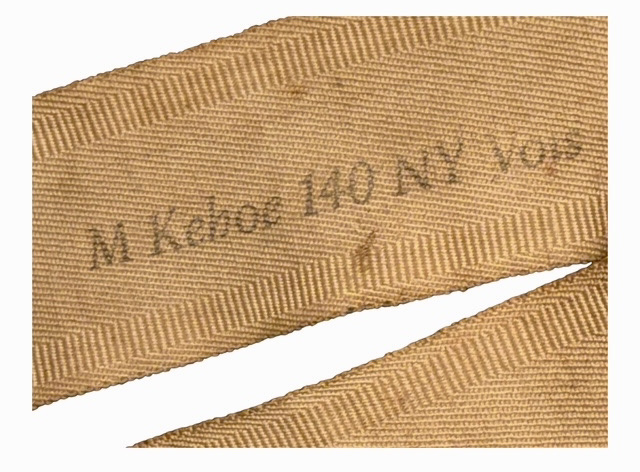
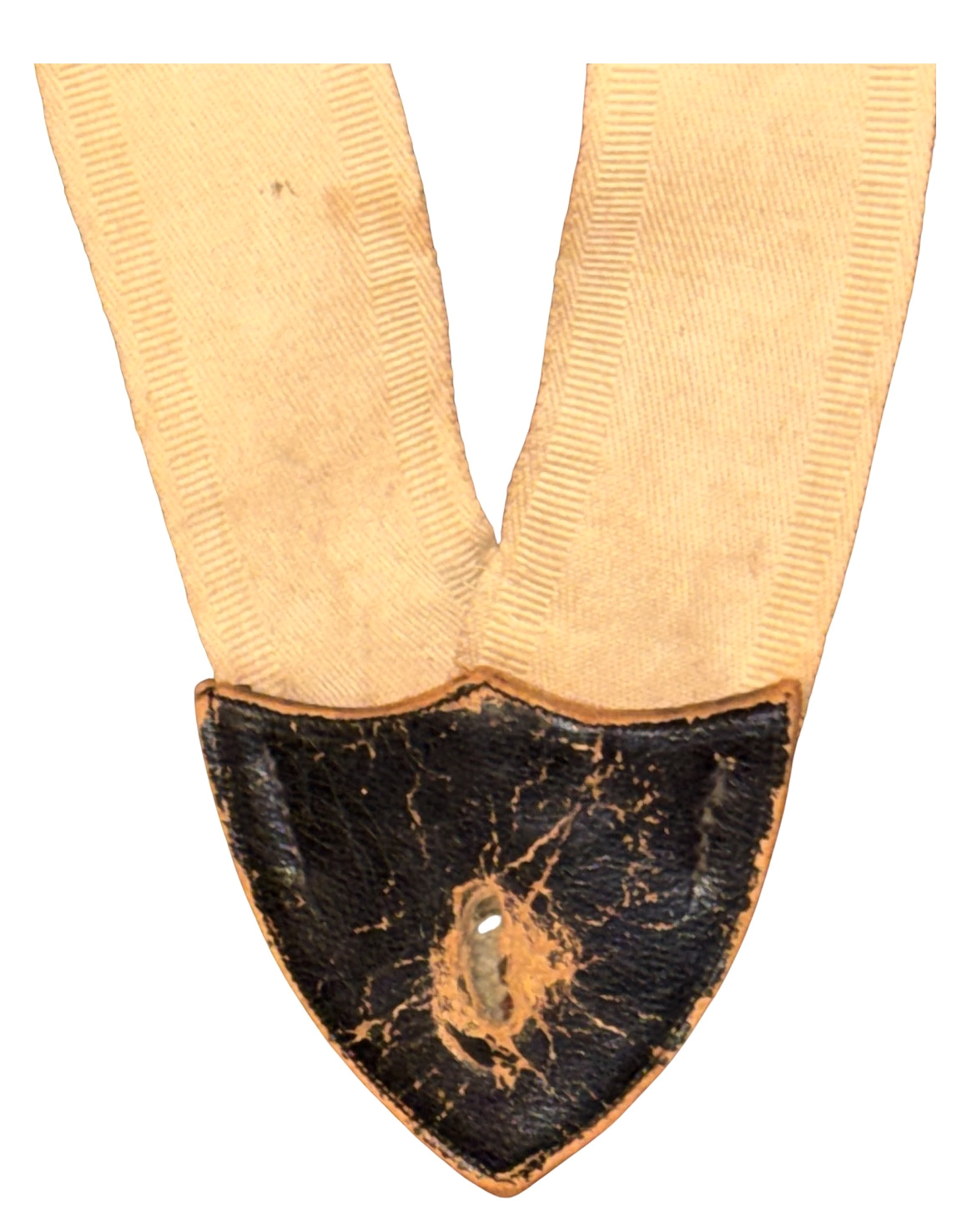
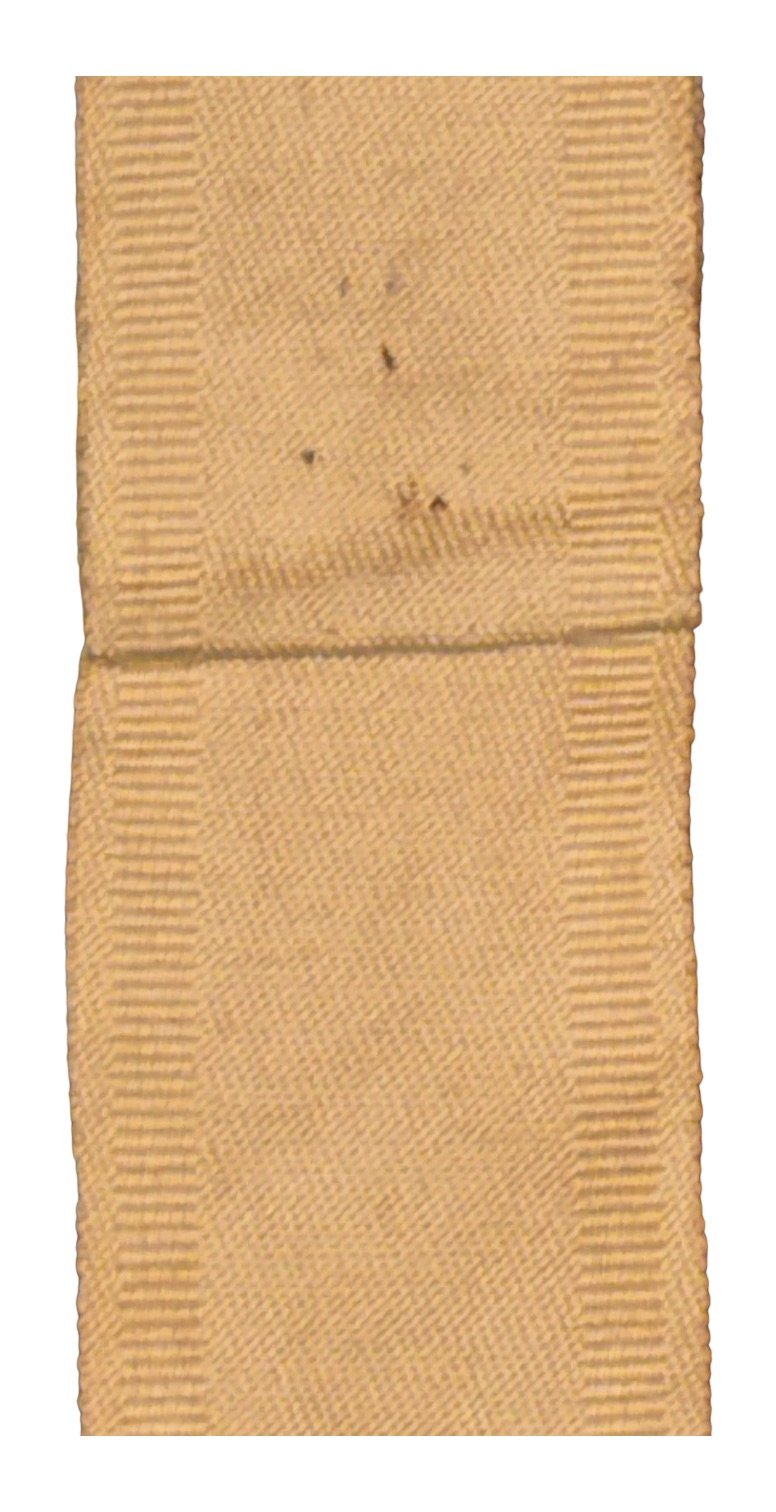
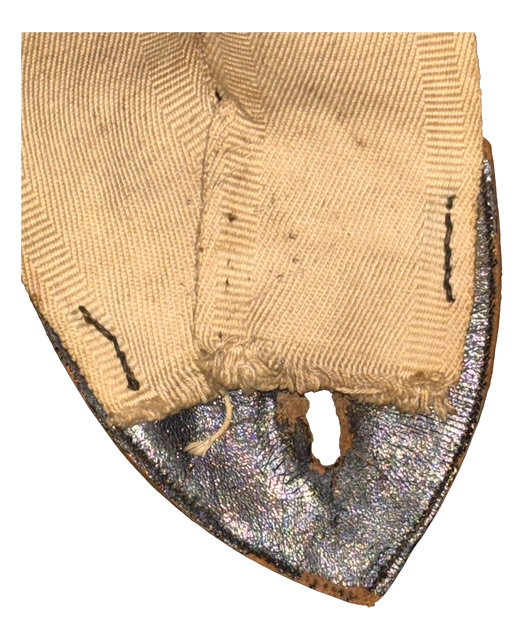
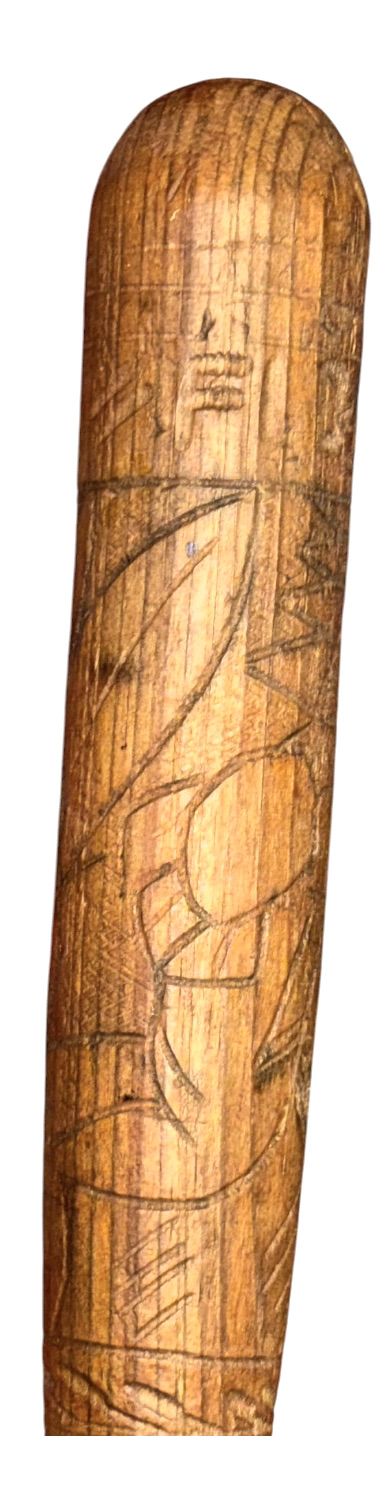
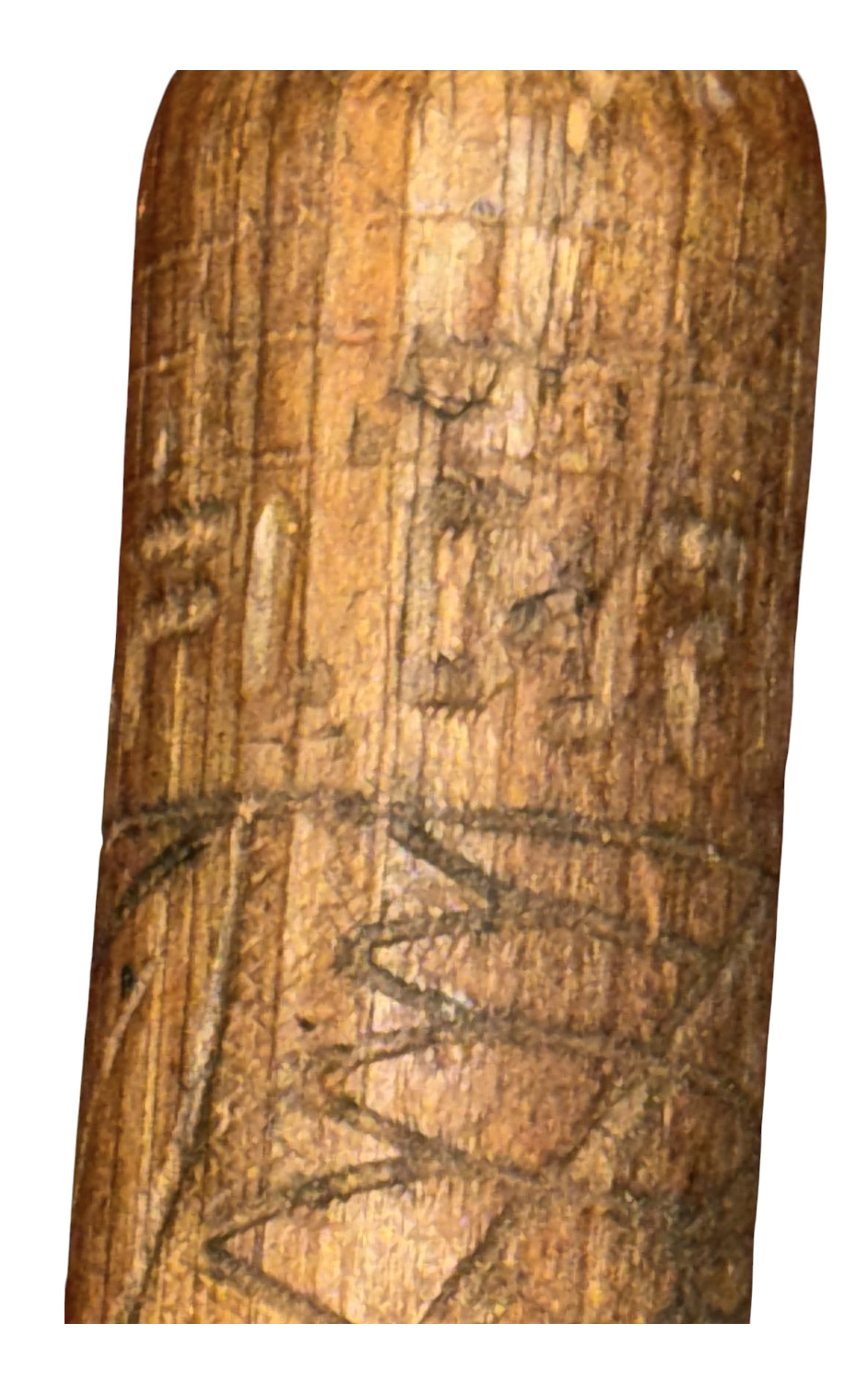
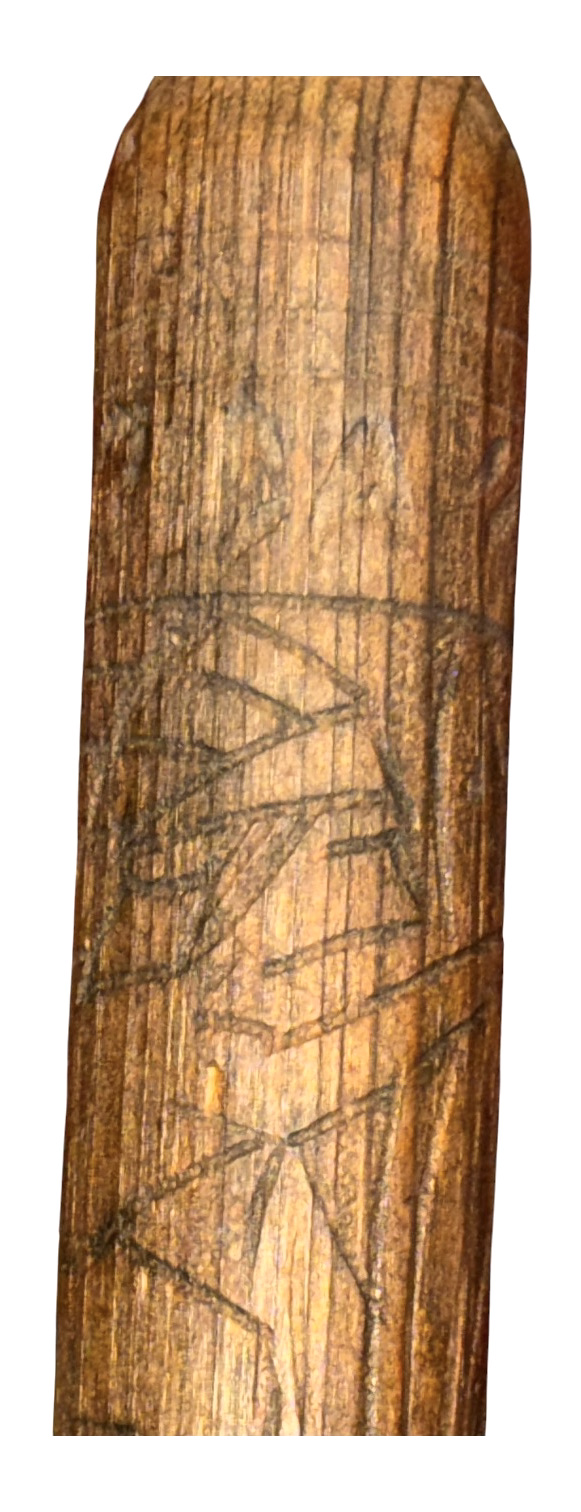
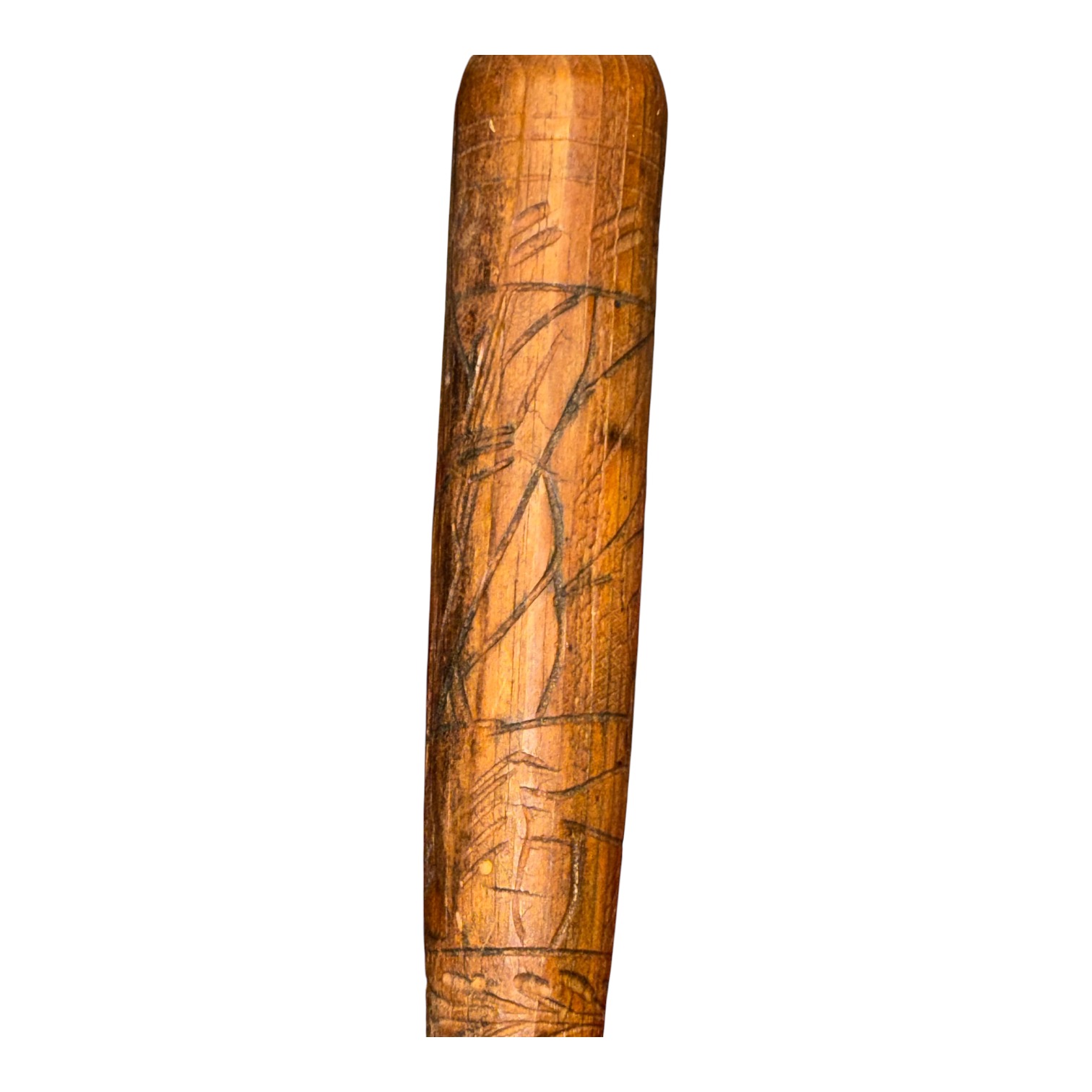
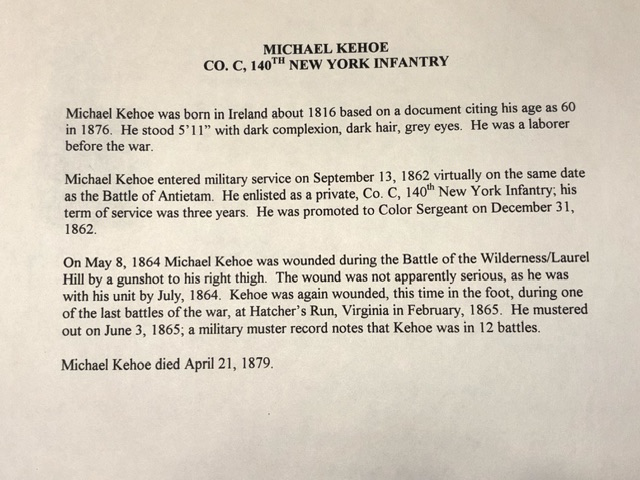
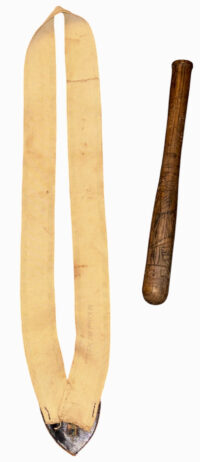
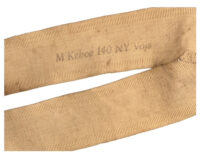
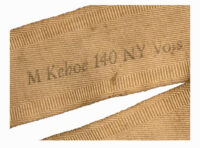
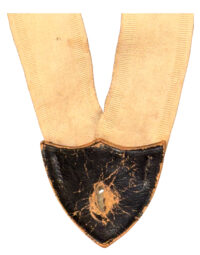
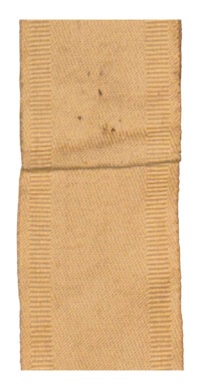
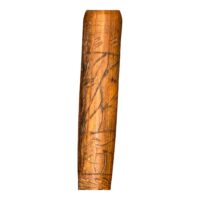
Civil War Id’d Web NCO Sword Sling and Folk Art Carved Truncheon – Sgt. Michael Kehoe Co. C 140th New York Infantry – This NCO sword sling with leather frog is the first of its type we have had; it is clearly stenciled on the cotton webbing with the following:
“M Kehoe 140 NY VOLS”
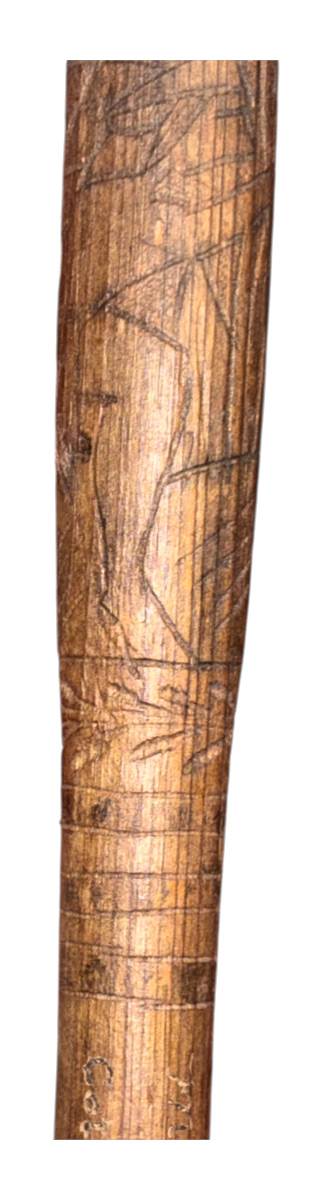
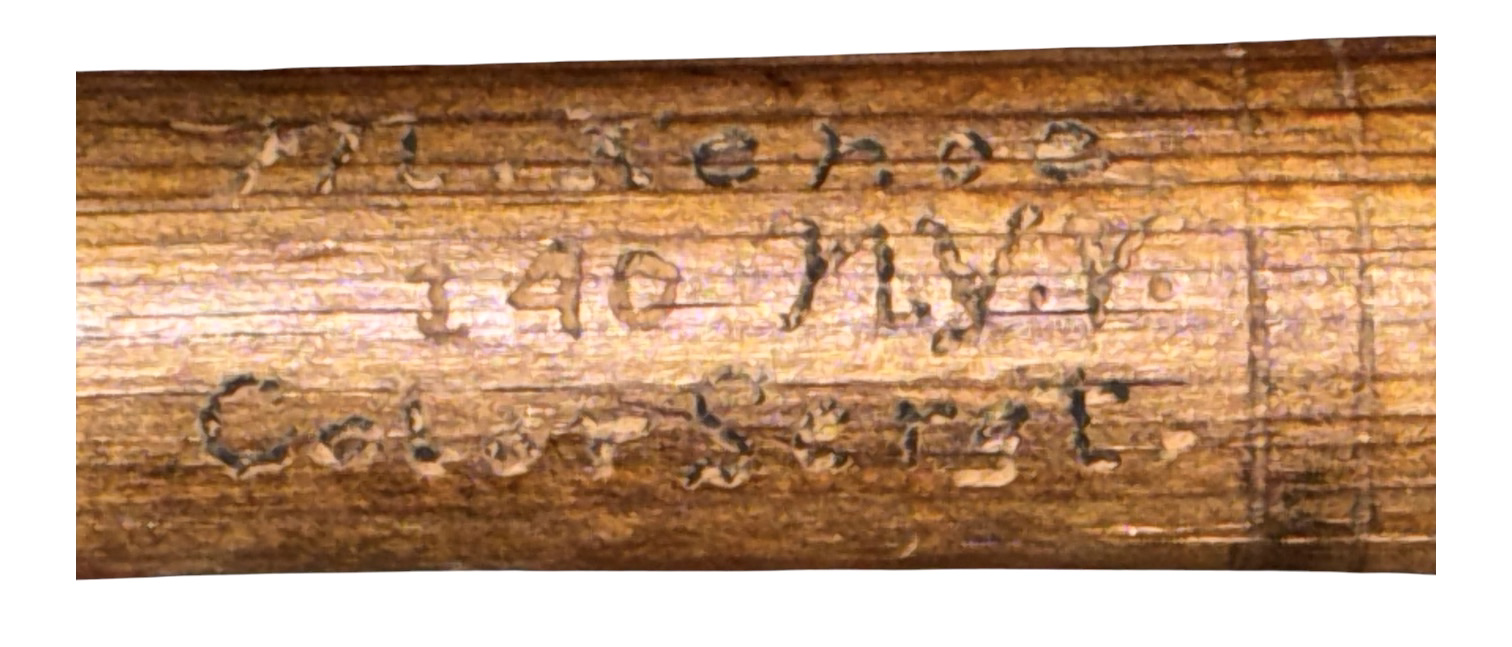
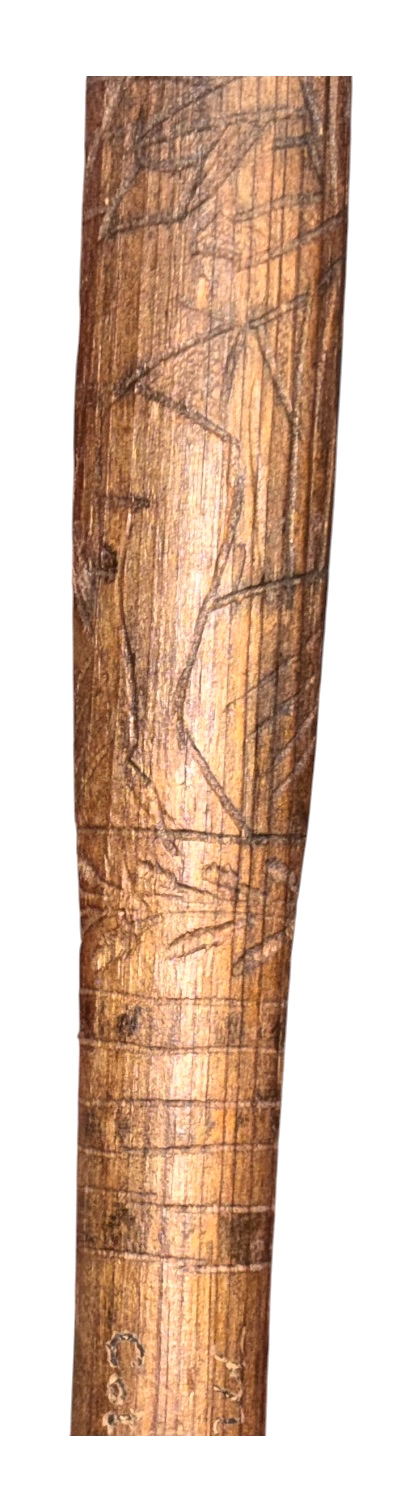
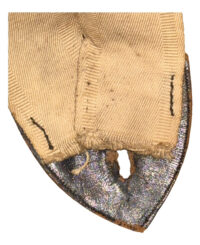
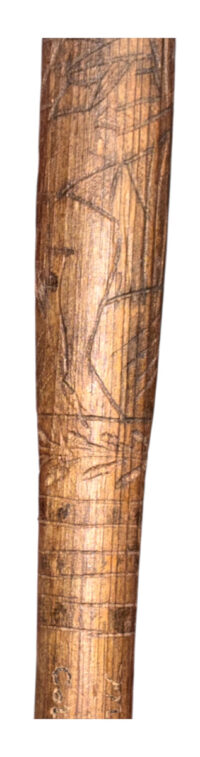
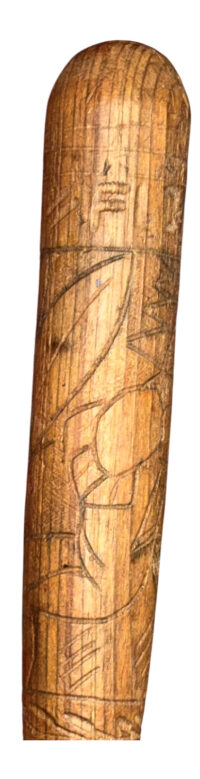
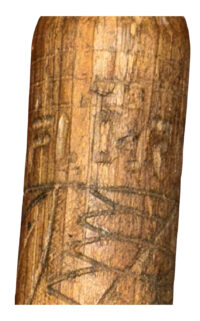
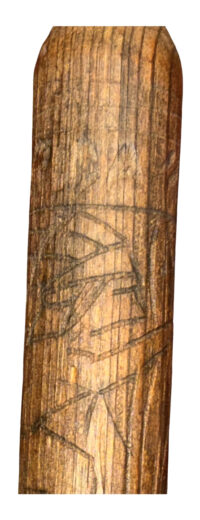
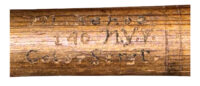
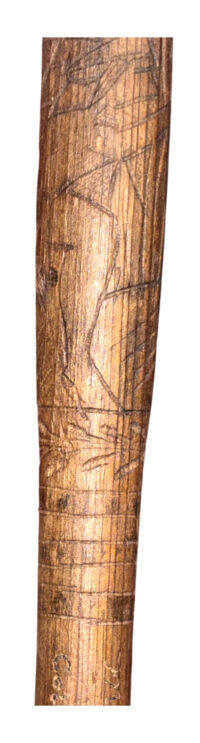
The halves of the sling are hand sewn together and machine sewn to the shield-shaped leather sword frog. Both the sling and frog remain in excellent condition. Accompanying the sling is a “billy club” like truncheon that appears to be made of southern yellow pine – it is in the shape of a miniature baseball bat and is 15.75” in length. The body of the truncheon is heavily carved in an inscribed style with what may possibly be a Native American wearing a headdress, with some additional floral decorative elements around the rest of the truncheon; additionally, there are some letters carved above the Indian figure which appear to be the letters “FL ??? A” – note that several letters are not discernible. Neatly scratched into the hand-holding area of the truncheon is the following:
“M. Kehoe
140 N.Y.V.
Color Sergt.”
The truncheon remains in excellent condition.
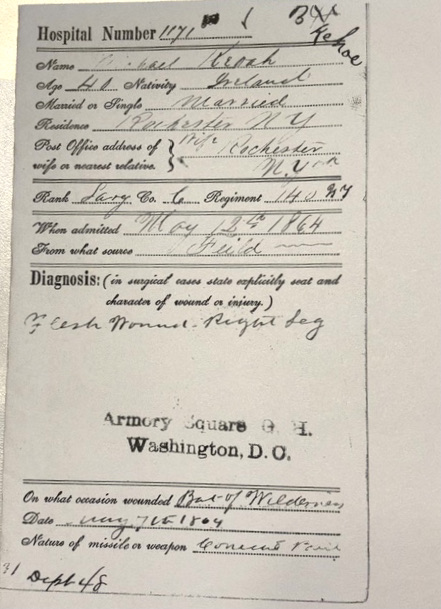
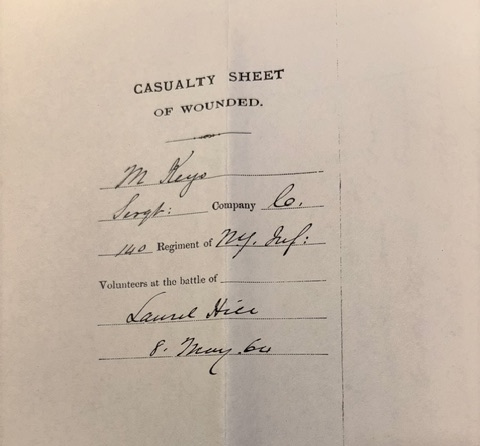
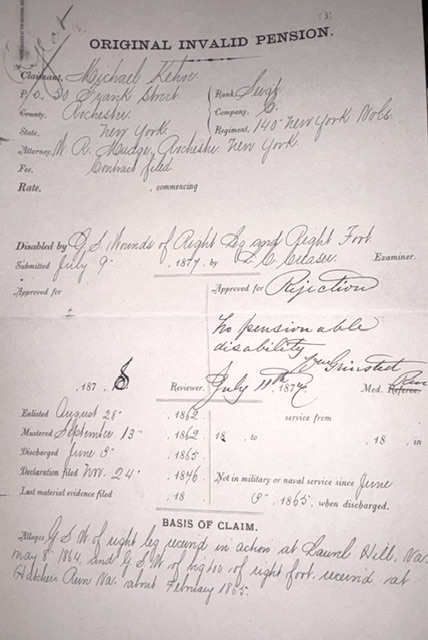
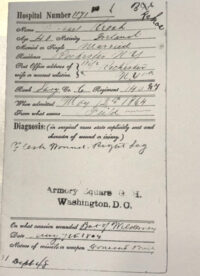
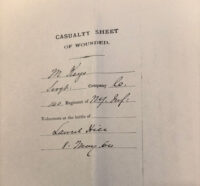
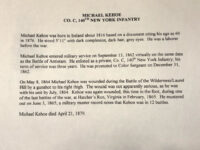
Kehoe and the 140th NY Vols. participated in numerous engagements throughout their service in the Union Army to include Fredericksburg, Chancellorsville, Gettysburg, Mine Run, The Wilderness, Spottsylvania, North Anna, Totopotomy, Cold Harbor, Petersburg, Hatcher’s Run, Five Forks and Appomattox Courthouse. Sergeant Kehoe was wounded at a skirmish at Laurel Hill, Virginia in May 1864 and again at the Battle of Hatcher’s Run, during the Petersburg campaign; he would return to duty and muster out in June 1865.
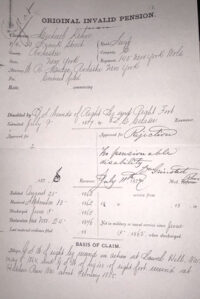
Michael Kehoe
Residence was not listed; 40 years old.
Enlisted on 8/28/1862 at Rochester, NY as a Priv.
On 9/13/1862, he mustered into “C” Co. New York 140th Infantry.
He was Mustered Out on 6/3/1865 at Alexandria, VA
He was listed as:
Wounded 5/8/1864 Laurel Hill, VA
Promotions:
Sergt 5/15/1864140th NY Infantry
Organized: Rochester, NY on 9/13/1862
Mustered out: 6/3/1865
140th Regiment, New York Infantry
Overview:
Organized at Rochester, N. Y., and mustered in September 13, 1862. Left State for Washington, D. C., September 19, 1862. Attached to 2nd Brigade, 1st Division, 12th Army Corps, Army of the Potomac, to October, 1862. 2nd Brigade, 2nd Division, 12th Army Corps, to November, 1862. 3rd Brigade, 2nd Division, 5th Army Corps, to March, 1864. 4th Brigade, 1st Division, 5th Army Corps, to April, 1864. 1st Brigade, 1st Division, 5th Army Corps, to June, 1864. 1st Brigade, 2nd Division, 5th Army Corps, to June, 1865.
Service:
Camp at Arlington Heights, Va., till September 23, 1862. Duty at Bolivar Heights till November. Battle of Fredericksburg, Va., December 12-15. At Falmouth, Va., till April 27, 1862. “Mud March” January 20-24. Chancellorsville Campaign April 27-May 6. Battle of Chancellorsville May 1-5. Gettysburg (Pa.) Campaign June 11-July 24. Battle of Gettysburg, Pa., July 1-3. Pursuit of Lee July 5-24. Duty at Warrenton, Beverly Ford and Culpeper till October. Bristoe Campaign October 9-22. Advance to line of the Rappahannock November 7-8. Rappahannock Station November 7. Mine Run Campaign November 26-December 2. At Beverly Ford till May, 1864. Campaign from the Rapidan to the James May 3-June 15. Battles of the Wilderness May 5-7. Laurel Hill May 8. Spottsylvania May 8-12. Spottsylvania Court House May 12-21. Assault on the Salient May 12. North Anna River May 23-26. On line of the Pamunkey May 26-28. Totopotomoy May 28-31. Cold Harbor June 1-12. Bethesda Church June 1-3. Before Petersburg June 16-18. Siege of Petersburg June 16, 1864, to April 2, 1865. Weldon Railroad June 21-23, 1864. Mine Explosion, Petersburg, July 30 (Reserve). Poplar Springs Church, Peeble¿s Farm, September 29-October 2. Warren’s Raid on Weldon Railroad December 7-12. Dabney’s Mills, Hatcher’s Run, February 5-7, 1865. Appomattox Campaign March 28-April 9. Lewis’ Farm, near Gravelly Run, March 29. White Oak Road March 31. Five Forks April 1. Fall of Petersburg April 2. Pursuit of Lee April 3-9. Appomattox Court House April 9. Surrender of Lee and his army. March to Washington, D. C., May 1-12. Grand Review May 23. Mustered out June 3, 1865. Veterans and Recruits transferred to 5th New York Veteran Infantry.
Regiment lost during service 8 Officers and 141 Enlisted men killed and mortally wounded and 2 Officers and 168 Enlisted men by disease. Total 319.
About the monument to the 140th New York
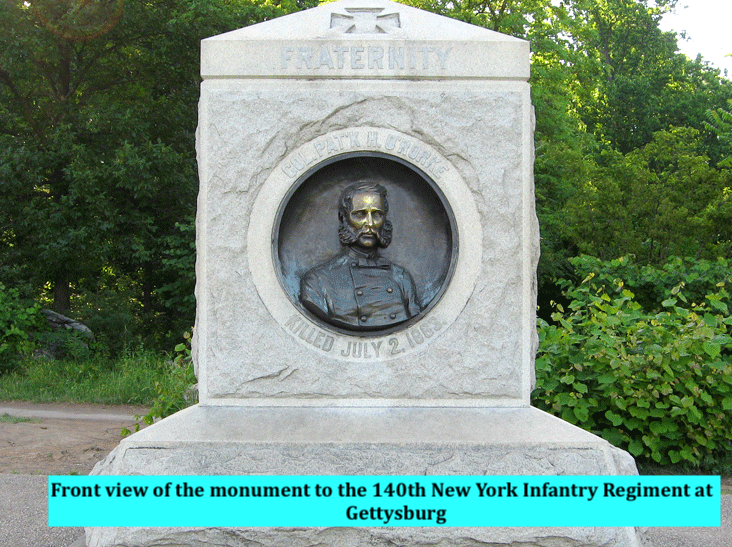
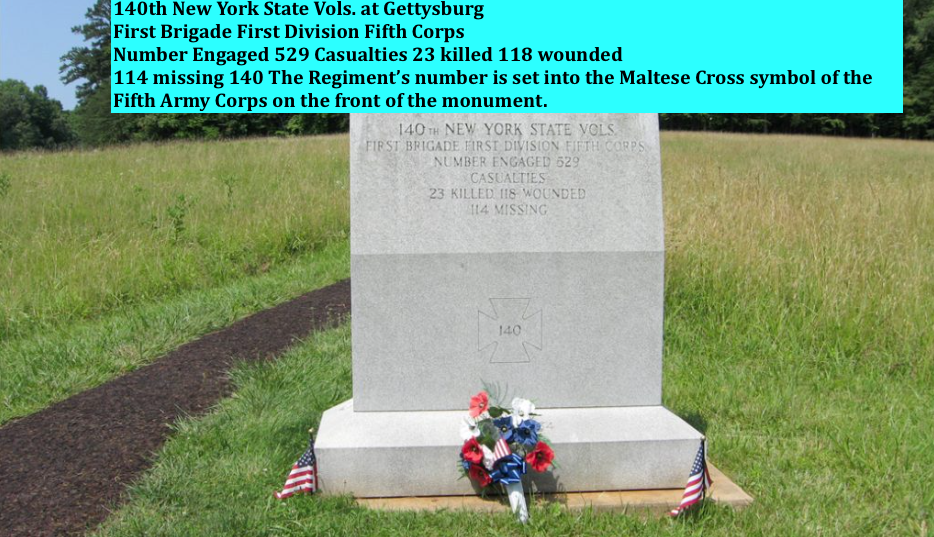
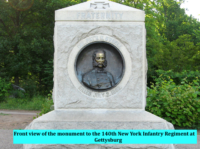
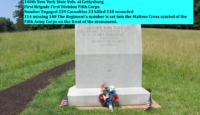
The granite monument stands just over eight and one half feet high at the spot where Colonel Patrick O’Rorke was killed. The Maltese Cross symbol of the Fifth Corps is incised into its front cap. Bronze tablets are set into each side and a bronze bas-relief of Colonel O’Rorke is set into the front of the monument. The bronze of O’Rorke’s nose has been polished for luck by generations of visitors. (But please refrain from rubbing if you visit – it wears away the bronze.) The monument was dedicated by the State of New York in 1889.
The 140th New York at the Battle of Gettysburg
The 140th New York was commanded at the Battle of Gettysburg by Colonel Patrick Henry O’Rorke, a native of Ireland who had moved to Rochester, New York as a child and had been first in his West Point class (West Point Class of 1861). O’Rorke was killed on July 2nd on Little Round Top. Lieutenant Colonel Louis Ernst, a native of Germany who had become a Rochester hardware merchant, took command of the regiment when O’Rorke fell.
NEW YORK ONE HUNDRED AND FORTIETH INFANTRY
(Three Years)
One Hundred and Fortieth Infantry.-Cols., Patrick H. O’Rorke,
George Ryan, Elwell S. Otis, William S. Grantsyne; Lieut.-Cols.,
Louis Ernest, Isaiah F. Force, Elwell S. Otis, William S.
Grantsyne, W. James Clark; Majs., Milo L. Starks, Benjamin F.
Harman, William J. Clark, Willard Abbott, Isaiah F. Force.
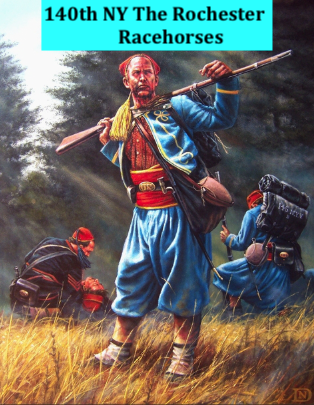
The 140th, the “Rochester Racehorses,” was recruited in Monroe
county, organized at Rochester, and there mustered into the U. S.
service on Sept. 13, 1862, for three years. In June, 1863, it
received by transfer the three years men of the 13th N. Y., and
in Oct., 1864, the veterans and recruits of the 44th.
The regiment left the state on Sept. 19, 1862, proceeded to
Washington and joined the Army of the Potomac in November, being
assigned to the 3d (Warren’s) brigade, 2nd (Sykes’) division, 5th
corps. With this command it was under fire for the first time at
the battle of Fredericksburg, where it lost a few men wounded and
missing.
The 5th corps was only partially engaged at Chancellorsville,
though the 140th lost 21 killed, wounded and missing in that
disastrous battle. Describing this gallant, fighting regiment,
Col. Fox says: “Col., O’Rorke was killed at Gettysburg while
leading his men into action on Little Round Top, where their
prompt action aided largely in seizing that important position,
the regiment losing there 26 killed, 89 wounded and 18 missing.
The 140th was then in Ayres’ division-the division of regulars.
In 1864 the regulars were brigaded in one command under Ayres,
and the 140th was placed in the same brigade; the division was
commanded by Gen. Charles Griffin. But in June, 1864, the
regiment was transferred to the 1st Brigade of Ayres’ (2nd)
division.
This brigade was commanded in turn by Col. Gregory, Gen. Joseph
Hayes, Col. Otis, and Gen. Winthrop. The latter officer fell
mortally wounded at Five Forks. The regiment was in the hottest
of the fighting at the Wilderness and suffered severely there,
losing 23 killed, 118 wounded and 114 captured or missing; total
255.
Three days later it was engaged in the first of the series of
battles at Spottsylvania, in which action Col. Ryan and Maj.
Starks were killed. At Spottsylvania the casualties in the
regiment were 12 killed and 48 wounded; and at the Weldon
railroad, 4 killed, 19 wounded and 51 captured or missing. The
regiment was composed of exceptionally good material; the men
were a neat, clean lot, and in their handsome Zouave costume
attracted favorable attention wherever they appeared.”
The 140th took part in nearly all the great engagements of the
Army of the Potomac from Fredericksburg to the close of the war.
It was actively engaged at Chancellorsville, Gettysburg,
Wilderness, Spottsylvania, Bethesda Church, siege of Petersburg,
Weldon railroad, Poplar Spring Church, Hatcher’s run, White Oak
road and Five Forks.
It was present at Fredericksburg, Bristoe Station, Rappahannock
Station, in the Mine Run campaign, North Anna, Totopotomy, White
Oak swamp and Appomattox. Other important losses incurred
besides those above detailed were, 60 wounded and missing at
Bethesda Church; 22 killed, wounded and missing in the first
assault on Petersburg; 23 killed and wounded at Hatcher’s run;
and 57 killed, wounded and missing during the final Appomattox
campaign.
Col. O’Rorke, when he was killed at Gettysburg, was mounted on a
rock at Little Round Top, cheering on his men. He graduated at
the head of his class at West Point in 1861 and was only 25 years
of age when killed. The regiment was mustered out June 3, 1865,
near Alexandria, Va., under Col. Grantsyne.
Its total enrollment during service was 1,707, of whom 533 were
killed and wounded; 8 officers and 141 men were killed and died
of wounds; 2 officers and 168 men died of disease and other
causes; total deaths, 319, of whom 77 died in Confederate
prisons.
Source: The Union Army, Vol. 2, p. 149
NEW YORK
ONE HUNDRED AND FORTIETH REGIMENT OF INFANTRY.
Monroe County Regiment; Rochester Race Horses.
(Three Years)
August 8, 1862, Capt. Hiram Smith received authority to
recruit this regiment; it was organized at Rochester with
Patrick H. O’Rorke as Colonel, and there mustered in the
service of the United States for three years September 13,
1862. June 26, 1863, the three years’ men of the 13th
Infantry, and October 6, 1864, the members of the 44th
Infantry, not mustered out with their regiments, were
transferred to it. June 3, 1865, the men not to be mustered
out with it were transferred to the 5th Veteran Infantry.
The companies were recruited principally: A at Brockport;
B, C, E, F and K at Rochester; D at Rochester, Brighton, Gates,
Penfield and West Webster; G at Rochester and Churchville; H at
Rochester, Brockport and Fairport; and I at Chili, Greece,
Penfield, Rochester, Ogden, Henrietta and Parma.
The regiment left the State September 19, 1862; it served
in the Provisional Brigade, Casey’s Division, defenses of
Washington, from September, 1862; in the 2d Brigade, 2d
Division, 12th Corps, from October, 1862; in the 3d Brigade, 2d
Division, 5th Corps, from November, 1862; in the 1st Brigade,
1st Division, 5th Corps, from March, 1864; in the 1st Brigade,
2d Division, 5th Corps, from June 6, 1864; and, under Col. W.
S. Grantsyne, it was honorably discharged and mustered out June
3, 1865, near Alexandria, Va.
140TH NY VOLS
1862
Washington DC Defense and Fredericksburg
1863
Chancellorsville and Reinforcement
The Battle of Gettysburg
Remainder of 1863
1864
Volunteers as Zouave
The Overland Campaign
Bloodletting at the Battle of the Wilderness and Spotsylvania Courthouse
North Anna, Totopotomoy Creek and Cold Harbor
Siege of Petersburg and Reinforcement
1865
Mustering Out
Total Casualties
Leaders
Notable Members
Memorials
References
140th New York Infantry Regiment
140th New York Infantry Regiment
Active September 13, 1862 – June 3, 1865
Country United States
Allegiance Union
Type Infantry
Size 1,707
Nickname ‘Rochester Racehorses’
Engagements Battle of Fredericksburg
Battle of Chancellorsville
Battle of Gettysburg
Battle of the Wilderness
Battle of Spotsylvania Court House
Battle of Totopotomoy
Battle of Cold Harbor
Siege of Petersburg
Battle of Weldon Railroad
Battle of Hatcher’s Run
Appomattox Campaign
Commanders
Notable
commanders Colonel Patrick H. O’Rorke †
New York U.S. Volunteer Infantry Regiments 1861-1865
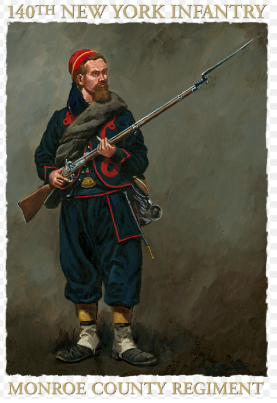
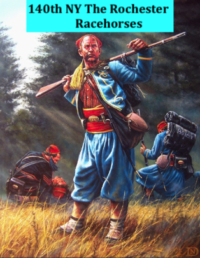
The 140th New York Infantry Regiment was a volunteer infantry regiment that was created on September 13, 1862, for the Union Army during the American Civil War. From January 1864 they wore a Zouave uniform.
Formation
On August 8, 1862, Captain Hiram Smith received authority to form the infantry regiment.The 140th New York Volunteer Infantry Regiment was organized in Rochester, New York and mustered in for three years service on September 13, 1862.
During the American Civil War a Union Army regiment ideally comprised 10 infantry companies. Each company had 100 men for a full regimental strength of 1000 men. The 10 companies of the 140th New York Volunteer Regiment were all recruited from Rochester, New York and the surrounding towns and villages of Monroe County, New York.
A company breakdown with captain and source of volunteers is noted below:
Company A – Captain Milo Starks – Brockport
Company B – Captain Christian Spies -Rochester
Company C – Captain William James Clark – Rochester
Company D – Captain Elwell Stephen Otis – Rochester, Brighton, Gates, Penfield, and West Webster
Company E – Captain Monroe H Hollister – Rochester
Company F – Captain Benjamin F Harmon – Rochester
Company G – Captain Perry B Sibley – Rochester and Churchville
Company H – Captain W. S. Grantsyne – Rochester, Brockport and Fairport
Company I – Captain William F. Campbell – Chili, Greece, Penfield, Rochester, Ogden, Henrietta and Parma
Company K – Captain Patrick J. Dowling – Rochester
The 140th New York Volunteer Infantry Regiment organized and drilled at Camp Fitz-John Porter on the western bank of the Genesee River in Rochester, NY. Camp Fitz-John Porter was also the mustering location for the 108th New York Volunteer Infantry Regiment, and Mack’s 18th New York Independent Artillery Battery.
Initial Command
Colonel – Patrick H. O’Rorke, West Point Military Academy, Graduated 1st in class, June 1861.
Lieutenant Colonel – Louis Ernst
Major – Isaiah Force
Detailed Service
1862
Washington DC Defense and Fredericksburg
The 140th NY left Rochester by train on September 19, 1862, en route to Washington DC after brief stops in Auburn, NY and Elmira, NY for fitting out and supply. The regiment first served in the Provisional Brigade, Casey’s Division in the defensive fortifications around Washington, DC.
The 140th NY was then transferred to the XII Corps, 2nd Division, 2nd Brigade of the Army of the Potomac by October 1862.
In November, 1862 the regiment was reassigned to the V Corps, 2nd Division, 3rd Brigade of the Army of the Potomac. From then on the 140th NY would remain with the V Corps of the Army of the Potomac and see action in, or be present in reserve at most of the major campaigns and engagements in the Eastern Theater of the American Civil War until cessation of hostilities.
The 140th NY first saw combat between December 12–15, 1862 at the Battle of Fredericksburg. After Fredericksburg, the regiment camped through December at Falmouth, VA.
1863
Chancelorville and Reinforcement
The regiment participated in the Chancellorsville Campaign (April 27-May 6, 1863) seeing limited action at the Battle of Chancellorsville (May 1–5). Losses at Chancellorsville were 21 total casualties (killed, wounded, missing or captured).
In June, 1863 the three years men of the 13th New York Volunteer Infantry Regiment were transferred to the 140th NY to replace losses.
The Battle of Gettysburg
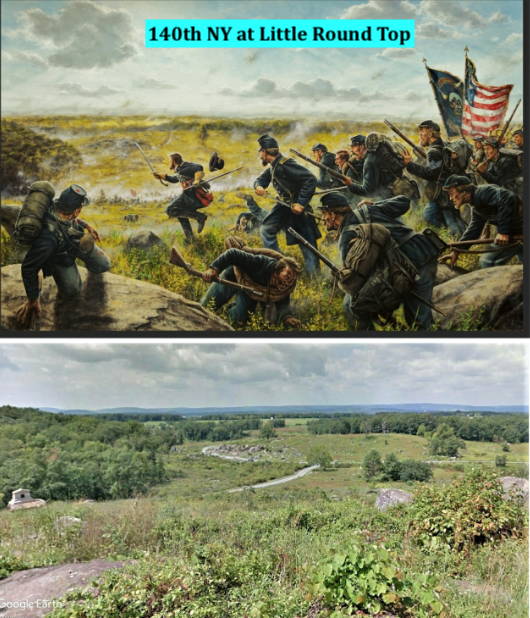
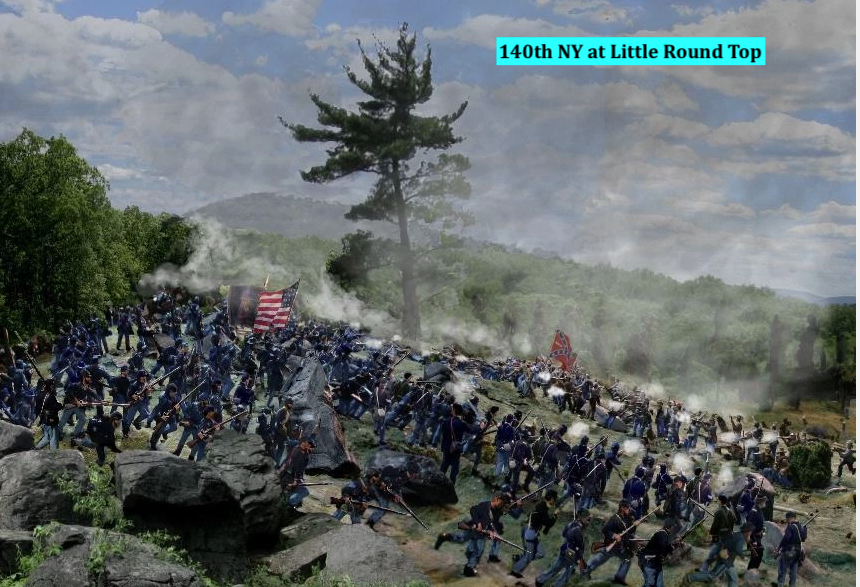
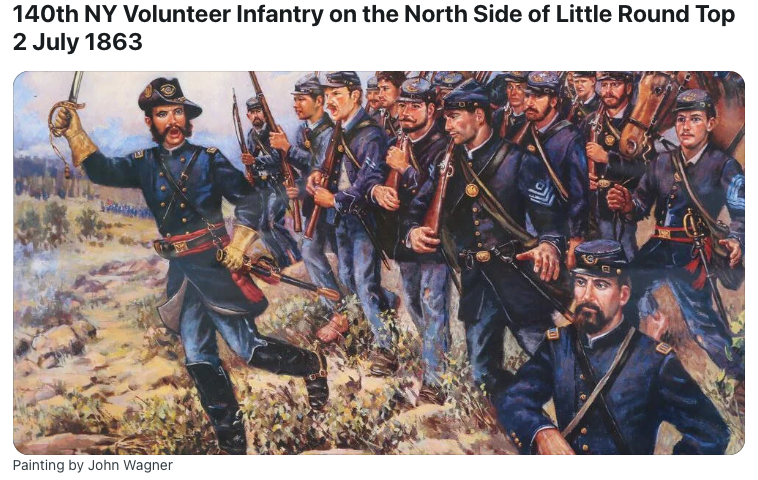
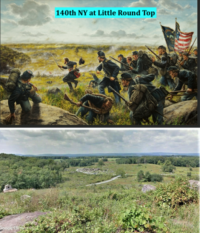
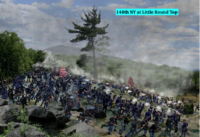
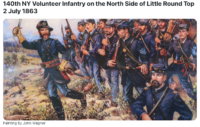
The regiment participated in the Gettysburg Campaign of June 11-July 24. It would engage in its first heavy action of the war during the crucial battle for Little Round Top at the Battle of Gettysburg on July 2, 1863. General Gouverneur K. Warren was putting together a desperate improvised defense of Little Round Top, which was protecting the Union Army’s left flank. General Warren intercepted the 140th New York as it marched on the north slope of Little Round Top en route to support Sickle’s III Corps in the wheat fields. General Warren requested the 140th New York assist reinforcing Vincent’s 16th Michigan Volunteer Infantry which was decimated and under heavy fire on the hill. O’Rorke and his men obliged. Contemporary accounts note that Colonel Patrick “Paddy” O’Rorke, led the way with sword drawn and shouting, “Down this way, boys!”. Without having time to load their weapons A Company and G Company filled in the right flank gap of the 5th Maine. O’Rorke shouted, “Here they are men, commence firing!”. The 140th New York charged over the hill pushing back the 4th Texas Infantry and 5th Texas Infantry Regiments of the Texas Brigade. Although the 140th New York was successful in assisting the defense of the Little Round Top, it cost the regiment 133 total casualties. Colonel O’Rorke was among the dead, having suffered multiple bullet hits.[A marker commemorates the losses the 140th NY endured, including Col. O’Rorke, on Little Round Top at the Gettysburg battleground museum.
“Col. O’Rorke was killed at Gettysburg while leading his men into action on Little Round Top, where their prompt action aided largely in seizing that important position – Colonel Fox.”
Remainder of 1863
Following Gettysburg the 140th was present at the Bristoe Station Campaign, Second Battle of Rappahannock Station, and the Mine Run campaign to close out 1863, but were held in reserve or not involved in major action.
1864
Volunteers as Zouave
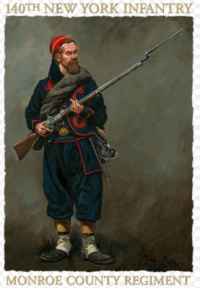
In January 1864 during winter camp at Beverly Ford, VA the regiment was outfitted as Zouaves. These flamboyant uniforms were patterned after elite French army units which had earned military glory in the 1850s, and they were awarded to the 140th NY in recognition of the regiment’s seamless record.
In March 1864 the 140th NY was transferred to V Corps, 1st Division, 4th Brigade, Army of the Potomac.[1][6] An additional transfer followed in April 1864 when the regiment joined the 5th Corps, 1st Division, 1st Brigade of the Army of the Potomac.
The Overland Campaign
In March 1864 General Grant assumed command of all Federal forces and began the Overland Campaign, a relentless push through Virginia toward the Confederacy’s capitol of Richmond, VA throughout that summer. The 140th New York participated in the Campaign from the Rapidan to the James Rivers. The course of this campaign included action in some of the most bloody and devastating battles of American Civil War including the Battle of the Wilderness, Battle of Spotsylvania Court House and Cold Harbor. In the 39 days between May 5 and June 2 the 140th would incur 384 total dead, wounded, missing or captured.
Bloodletting at the Battle of the Wilderness and Spotsylvania Courthouse
The heaviest losses the 140th New York would incur in a single battle were incurred during severe fighting in the Battle of the Wilderness between May 5–7, 1864. The 529 soldiers of the 140th NY led the opening of the battle with a charge across Saunders Field, and were among the first Union troops to engage the Confederacy in battle. The 140th took unsupported flank fire for over 30 minutes and sustained 255 total casualties. Estimates of exact losses are 50 enlisted men, and 3 officers killed in action or died of wounds sustained during battle. A further 98 enlisted and 3 officers injured. 101 total personnel were reported missing or captured. Captain Willard Abbott was counted among the wounded.
“The Regiment melted away like snow. Men disappeared as if the earth had swallowed them up.” – Captain Porter Farley.
Just three days later (May 8, 1864) the 140th was involved in heavy combat during the Battle of Spotsylvania Court House, participating in battle at Piney Branch Church, and Laurel Hill. The regiment suffered 60 additional casualties in total during the Battles of Spotsylvania Court House. Among the dead were Colonel George E. Ryan and Major Milo L. Starks, killed in battle at Laurel Hill
North Anna, Totopotomoy Creek and Cold Harbor
Further Actions in May 1864 included the reserve duty at the Assault on the Salient, Battle of North Anna River, and light action at the Battle of Totopotomoy, where Captain William Grantsyne was injured.
Heavy action continued in The Battle of Cold Harbor (Bethesda Church), where the 140th New York sustained an additional 60 total casualties.
Siege of Petersburg and Reinforcement
In June, 1864 the 140th New York was transferred to V Corps, 2nd Division, 1st Brigade during the Siege of Petersburg. The regiment participated in first assault during the siege of Petersburg sustaining 22 total casualties, including Captain Benjamin Harmon among the wounded.
Throughout the summer and fall of 1864 the 140th New York Regiment participated in Battle of Weldon Railroad and Poplar Spring Church, where Lt. Colonel Elswell Otis was injured.
Reinforcements arrived in October, 1864 as members of the 44th New York Volunteer Infantry Regiment, not mustered out or assigned to other regiments were transferred into the 140th New York.
1865
January 25, 1865 saw many officer promotions to fill the leadership ranks lost due to casualty from the 1864 campaign. Lieutenant Colonel Grantsyne was promoted to colonel, Major W. James Clark to lieutenant colonel and Captain Willard Abbott to major.
Throughout 1865 the 140th New York was present or active in The Battle of Hatcher’s Run, and participated in the Appomattox Campaign to close out the war.
From May 1–12 the 140th New York marched to Washington DC, and participated in the Grand Review of May 23, 1865.
Mustering Out
On June 3, 1865, the 140th Regiment was mustered out near Alexandria, VA under the command of Colonel W.S. Grantsyne, and Lieutenant Colonel W. James Clark. The men not to be mustered out with the regiment were transferred to the 5th New York Veteran Infantry. It is estimated fewer than 245 of the original 1000 men called to arms as the 140th New York Volunteers of Monroe County, NY answered its final call to muster.
Total Casualties
Total war time enrollment for the 140th Regiment was 1,707 men. Available records vary but indicate that 736 men were casualties (killed, injured, missing or captured) due directly to combat. Among them 132 enlisted and 8 officers dead in action or of wounds sustained in action, 304 enlisted and 13 officers injured, and 275 enlisted and 7 officers missing or captured. Disease claimed an additional 168 enlisted and 2 officers. An estimated 77 men died as Confederate prisoners of war, many at Andersonville Prison.
Leaders
Name: Highest Rank
Patrick O’Rorke Colonel 9/13/1862 7/2/1863 † KIA Gettysburg West Point June 1861
George E. Ryan Colonel 7/17/1863 5/8/1864 † KIA Spotsylvania Court House (Laurel Hill) West Point 1857
Served as Assistant Adjutant General on the Staff of General Sykes V Corps prior to assignment to the 140th
Mustered in with rank of Colonel 7/17/1863
William S. Grantsyne Colonel 1/25/1865 6/3/1865 Wounded at Totopotomoy May 1864
Promoted from Captain Company H to Lt. Colonel on 11/15/1864 with rank as of 8/8/1864
Promoted to Colonel 1/25/1865
Colonel of 140th New York during Grand Review and unmuster of 140th New York on 6/3/1865
Louis Ernst Lt. Colonel 9/13/1862 8/15/1863 Resigned Commission Lt. Colonel at formation 9/1862
Acting Colonel between Gettysburg and the appointment of Col. Ryan
Isaiah F. Force Lt. Colonel 8/15/1863 11/6/1863 Discharged due to disability Major at formation 9/13/1862
Promoted to Lt. Colonel 8/15/1863 but not mustered
Elwell Stephen Otis Lt. Colonel 11/6/1863 Fall 1864 Discharged due to injury.
Would return to military duty after the war
Promoted from Captain Company D to Lt. Colonel with rank on 11/23/1863 as of 11/6/1863
Wounded at Poplar Springs Church Sept-Oct 1864
W. James Clark Lt. Colonel 1/25/1865 Promoted from Captain Company C to Major 9/22/1864
Promoted to Lt. Colonel 1/25/1865
Milo S. Starks Major 8/15/1863 5/8/1864 † KIA Spotsylvania Court House (Laurel Hill) Injured at Gettysburg
Promoted from Captain Company A to Major with rank 11/17/1863 as of 8/15/1863
Willard Abbott Major 1/25/1865 6/3/1865 Captain Company H of the 13th New York
Mustered in as Captain Company G NY 140th 10/19/1863
Wounded at The Battle of the Wilderness 5/5/1864
Promoted to Major 1/25/1865
Notable Members
Sergeant Robert F. Shipley – won the Medal of Honor for capturing the flag of the 9th Virginia Infantry (C.S.A.) in hand-to-hand combat at the Battle of Five Forks, VA.
About the monument to the 140th New York at Gettysburg
The granite monument stands just over eight and one half feet high at the spot where Colonel Patrick O’Rorke was killed. The Maltese Cross symbol of the Fifth Corps is incised into its front cap. Bronze tablets are set into each side and a bronze bas-relief of Colonel O’Rorke is set into the front of the monument. The bronze of O’Rorke’s nose has been polished for luck by generations of visitors. (But please refrain from rubbing if you visit – it wears away the bronze.) The monument was dedicated by the State of New York in 1889.
The 140th New York at the Battle of Gettysburg
The 140th New York was commanded at the Battle of Gettysburg by Colonel Patrick Henry O’Rorke, a native of Ireland who had moved to Rochester, New York as a child and had been first in his West Point class (West Point Class of 1861). O’Rorke was killed on July 2nd on Little Round Top. Lieutenant Colonel Louis Ernst, a native of Germany who had become a Rochester hardware merchant, took command of the regiment when O’Rorke fell.
The 140th was marching across the north slope of Little Round Top to the support of Sickle’s 3rd Corps on July 2nd. It was intercepted by General Gouverneur Warren, who was desperately improvising a defense of the vital and undefended hill. By luck, Warren had commanded the brigade in the past and was well known to Colonel O’Rorke. When Warren said, “Paddy, give me a regiment!” O’Rorke was quick to oblige. He immediately took his own regiment there.
After cresting Little Round Top O’Rorke dismounted and led the regiment in column of fours toward the Confederates threatening to break the Union line, drawing his sword and shouting, “Down this way, boys!” As the men began to form a line and O’Rorke shouted, “Here they are men, commence firing!” a Confederate about forty feet away shot O’Rorke in the neck. O’Rorke went down but so did the Confederate; after the fight seventeen bullet wounds were counted in his body.
The addition of 500 fresh men to the Union line was decisive and the Confederate assault fell back. Although the flank held by the 20th Maine was still in danger, the center of the Union line on Little Round Top was secured.
Related Items
-
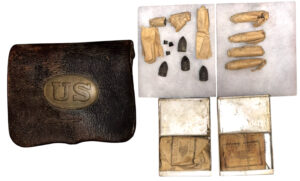
Civil War Pattern 1861 Cartridge Box Containing Unopened Pack of St. Louis Arsenal Cartridges and a Partially Opened Pack of St. Louis Arsenal Cartridges
Civil War Pattern 1861 Cartridge Box Containing Unopened Pack of St. Louis Arsenal Cartridges and a Partially Opened Pack of St. Louis Arsenal CartridgesAugust 2, 2025 -
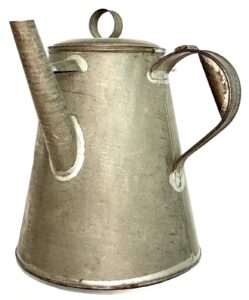
Civil War Period Tinned Side Spout Coffee Pot
Civil War Period Tinned Side Spout Coffee PotSeptember 17, 2024 -
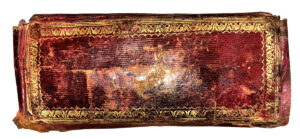
1845 – 1855 Rollup Traveling Surgeon’s Kit
1845 – 1855 Rollup Traveling Surgeon’s KitSeptember 17, 2025 -

Confederate and Union Buttons – Dug and Nondug
Confederate and Union Buttons – Dug and NondugJanuary 12, 2024