
Quarter Plate Daguerreotype of Lt. William Thomas Magruder and His Wife – Magruder Was the Cousin of “Prince” John B. Magruder; Capt. Magruder Was Killed on July 3. 1863 at GettysburgAugust 31, 2026
 Id’d Sharps M1859 ...$4,250
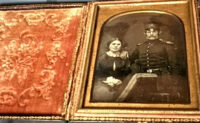
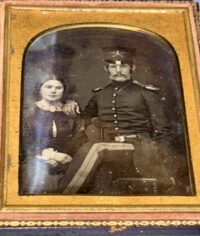
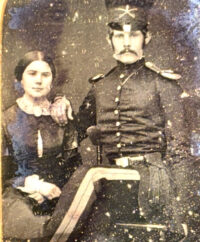
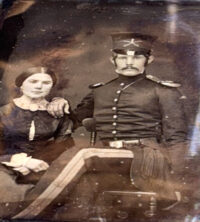
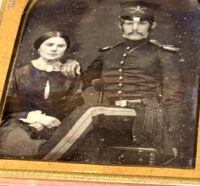
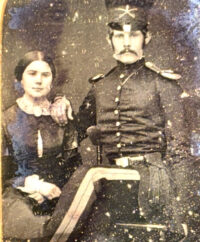
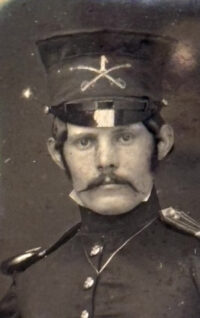
Quarter Plate Daguerreotype of Lt. William Thomas Magruder and His Wife – Magruder Was the Cousin of “Prince” John B. Magruder; Capt. Magruder Was Killed on July 3. 1863 at Gettysburg
SOLD
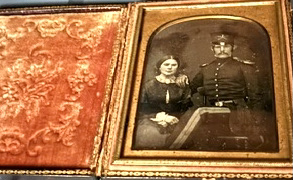
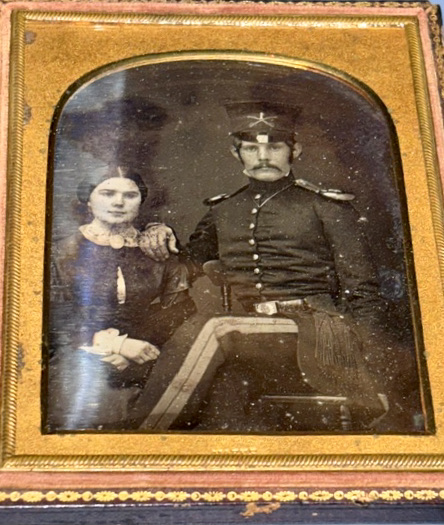
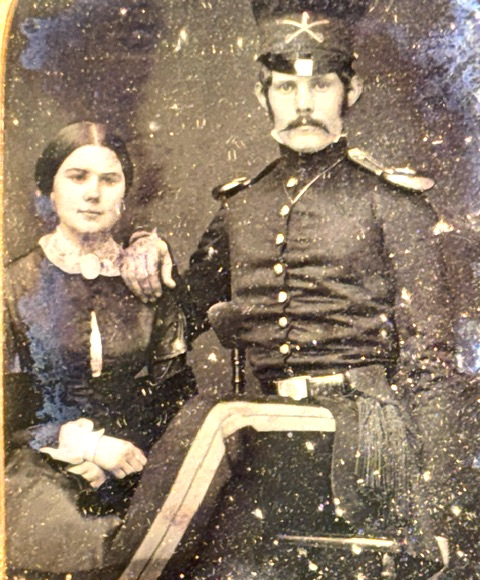
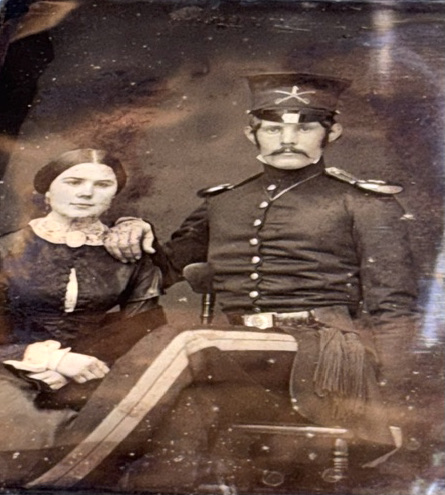
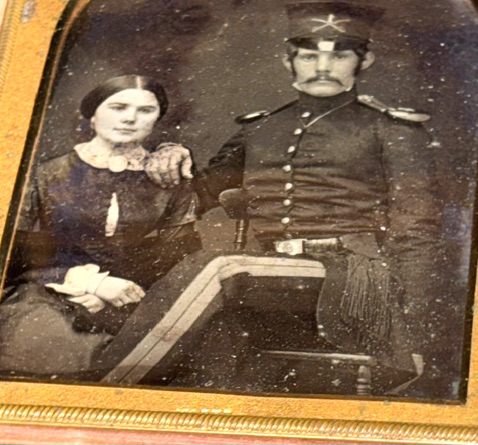
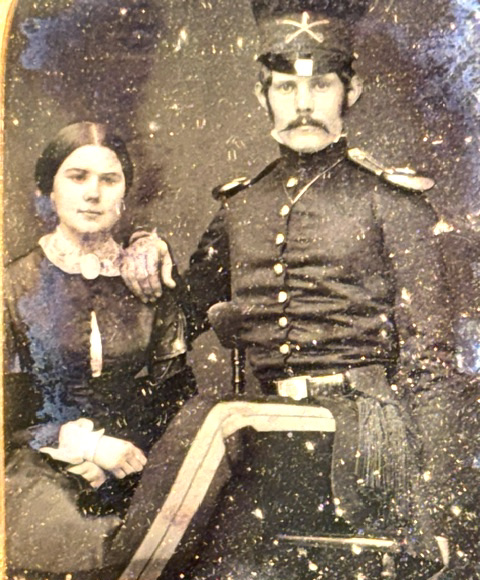
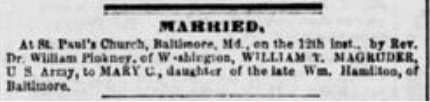
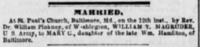
Quarter Plate Daguerreotype of Lt. William Thomas Magruder and His Wife – Magruder Was the Cousin of “Prince” John B. Magruder; Capt. Magruder Was Killed on July 3. 1863 at Gettysburg – Born in 1825, in Prince George’s County, Maryland, William T. Magruder was a cousin of Confederate General John Bankhead Magruder. William graduated from West Point in the Class of 1850, entering the army as a Brevet Lt. 2nd Lt. of the 1st U.S. Dragoons; in March 1855, Magruder was promoted to the rank of 1st Lt. Unusually, Magruder would serve with the 1st U.S. Cavalry at 1st Manassas and during the Peninsula Campaign in 1862. In the early Fall of 1862, Magruder resigned from the U.S. Army and joined the Confederate Army, one of only a handful of U.S. Army officers to do so, at this juncture of the war. Magruder was appointed Captain and Assistant Adjutant to Confederate Gen. Joseph R. Davis. Serving with Confederate troops at Gettysburg, Magruder was killed in action on July 3, 1863 during the fateful Pickett’s Charge; he is reported to have encouraged the men under his command with this exhortation: “Men remember your mothers, wives and sisters and do not halt here.” In response to this, Magruder’s men rushed into battle, traversing the top of Cemetery Ridge; during this movement, Captain Magruder leapt over the stone wall on the western side of the house located there and was subsequently fatally shot.
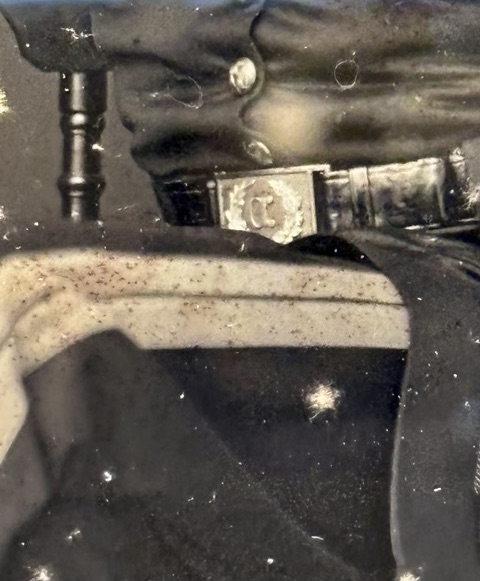
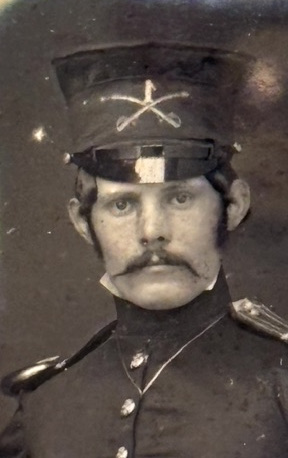
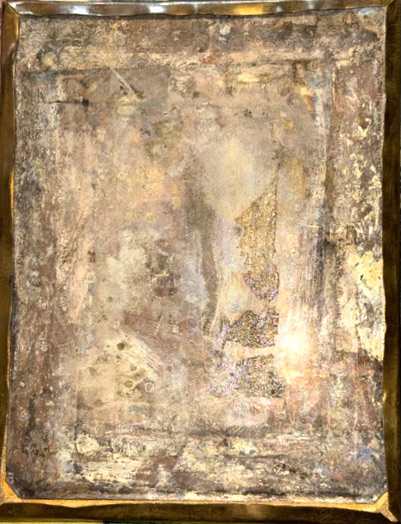
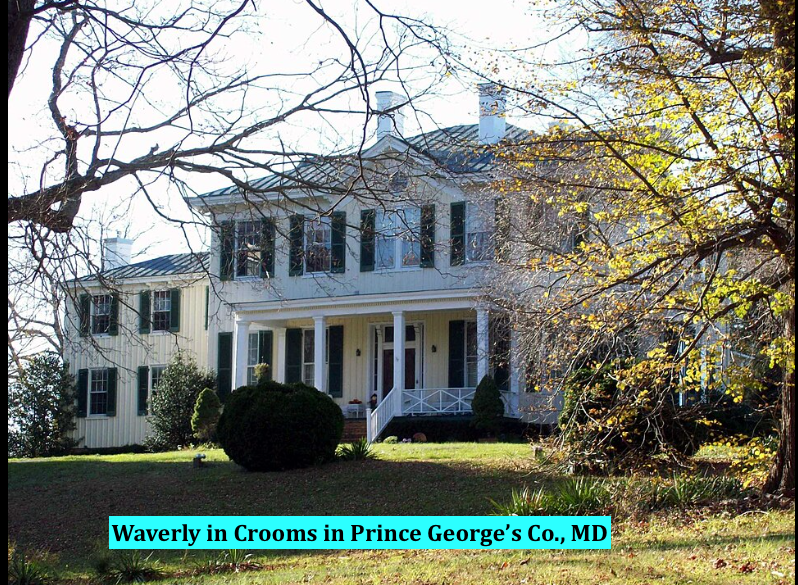
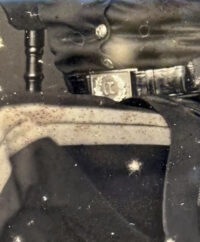
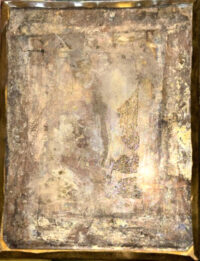
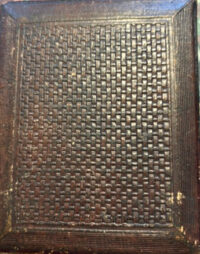
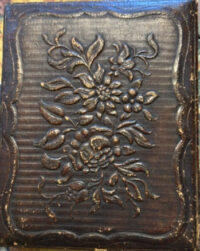
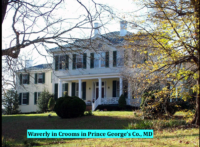
This impressive, quarter plate Dag., still housed in a full case, was taken by Henry R. Marks, operating in Baltimore between 1851 and 1853. In the image, Magruder is depicted as a young officer in a U.S. Regulation Dragoon uniform and cap, wearing a saber belt with a rare Model 1832 Dragoon officer’s belt plate with a raised manuscript “D” in the middle of the plate. The attractive young woman may have been his wife. The image descended through the family of “Waverly”*** in Crooms, Prince George’s County, Maryland. Like many daguerreotypes, this plate exhibits “mirroring”, but is quite distinct and sharp when viewed from an appropriate angle. This same image appears on the “find-a-grave” site for Captain Magruder. https://www.findagrave.com/memorial/39427821/william-thomas-magruder
****Included in this posting is a transcription of a letter written by Union Gen. Stoneman to Post Master General Montgomery C. Blair, in 1862 decrying the non-appointment of Magruder to the rank of Brig. Gen. Magruder’s appointment had been proffered to Secy. of War Edwin Stanton who never acted upon it; shortly thereafter, Magruder resigned his commission in the U.S. Army and joined the Confederate Army.
***Waverly is a historic home located at Croom in Prince George’s County, Maryland. The house, constructed in 1855, is a 2+1⁄2-story, two-part Italianate-style frame house. The casing of the principal entrance is a combination of both the Greek Revival and Italianate styles. Also on the property are two of the original outbuildings, a meat house and a washhouse. It was listed on the National Register of Historic Places in 1987.
William Thomas Magruder
Residence was not listed.
Enlisted as a Capt (date unknown).
On 10/15/1862, he was commissioned into Confederate States Army Adjutant Genl Dept.
He was Killed on 7/3/1863 at Gettysburg, PA
(Estimated date of commission
(Graduate USMA 1850. Resigned US Army October 1, 1862. Cousin of General John Magruder)
William Thomas Magruder, Officer, CSA, Civil War
On July 3, 1863, William T. Magruder was killed in action while trying to rally the men of his brigade during Pickett’s Charge at the Battle of Gettysburg.
Overview
William Thomas Magruder (1829–1863) was a distinguished graduate of the United States Military Academy (1850). After graduation, he served in the U.S. Army on frontier duty. At the start of the Civil War, he was promoted to Captain and fought in the First Battle of Bull Run. In 1862, he resigned his U.S. Army commission and joined the Confederate Army. Magruder was killed during Pickett’s Charge at Gettysburg on July 3, 1863.
Personal Facts
Full Name: William Thomas Magruder
Born: 1829, Upper Marlboro, Maryland
Parents: Fielder Magruder and Matilda (Magruder) Magruder
Education: United States Military Academy (1850)
Occupation: Military officer
Positions: Captain (USA), Captain (CSA)
Spouse: None
Died: July 3, 1863, Gettysburg, Pennsylvania
Buried: Unknown
Biography
Early Life and Education
William Thomas Magruder was born in Upper Marlboro, Maryland, during the 1820s. He was the son of Fielder and Matilda Magruder.
Magruder attended the United States Military Academy from July 1, 1846, to July 1, 1850. He graduated eleventh in his class of forty-four cadets.
U.S. Army Officer
Upon his graduation, the army brevetted Magruder to second lieutenant and sent him to cavalry school at Carlisle, Pennsylvania. On October 9, 1851, officials promoted Magruder to the full rank of second lieutenant.
Magruder spent nearly the next decade campaigning against American Indians in the West, serving at Fort Snelling, Minnesota (1851-1853), Fort Leavenworth, Kansas (1854), Fort Union, New Mexico (1854-1855), and Fort Tejon, California (1856‑58). Army officials promoted Magruder to first lieutenant on March 3, 1855.
Union Officer
As sectional tensions mounted and states began to leave the Union, officials promoted Magruder to captain with the 1st Dragoons on January 8, 1861. Soon after the American Civil War began, Magruder commanded a company at the First Battle of Bull Run (July 21, 1861). In 1861, the army officials re-designated the 1st Dragoons as the 1st U.S. Cavalry. They appointed Magruder as a captain in that regiment on August 3.
Change of Allegiance – Confederate Officer
Magruder served with the 1st Cavalry during Major General George B. McClellan‘s Peninsula Campaign from July 1 to August 3, 1862, when the army granted him a leave of absence. While away on leave, he changed his allegiance and resigned his commission on October 1, 1862, to join the Confederate Army. Magruder was one of four Union officers educated at West Point to switch sides after the Civil War began. The others were Manning M. Kimmel, Richard K. Meade, and Donald C. Stith.
Death During Pickett’s Charge at Gettysburg
Upon joining the Confederate Army, Confederate officials commissioned Magruder as a captain, and he served as a staff officer with Brigadier General Joseph R. Davis’s Brigade in Major General Henry Heth‘s Division of the 3rd Corps of the Army of Northern Virginia. On July 3, 1863, Magruder died on the battlefield while rallying his men during Pickett’s Charge at the Battle of Gettysburg.
The disposition of his remains is unknown.
Accomplishments and Milestones
1829 — William Thomas Magruder was born in Upper Marlboro, Maryland, to Fielder and Matilda Magruder.
1846, July 1 — Magruder entered the United States Military Academy at West Point.
1850, July 1 — He graduated 11th in a class of 44 cadets and was brevetted to second lieutenant, beginning cavalry training at Carlisle, Pennsylvania.
1851, October 9 — Magruder was promoted to second lieutenant.
1851–1858 — Magruder served on frontier duty, campaigning against American Indians at posts such as Fort Snelling, Minnesota; Fort Leavenworth, Kansas; Fort Union, New Mexico; and Fort Tejon, California.
1855, March 3 — He was promoted to first lieutenant.
1861, January 8 — Magruder achieved the rank of captain in the 1st Dragoons.
1861, July 21 — Magruder commanded Union soldiers during the First Battle of Bull Run.
1861, August 3 — The 1st Dragoons were renamed the 1st U.S. Cavalry, and Magruder retained his captaincy.
1862, July 1–August 3 — Magruder served with the 1st U.S. Cavalry in the Peninsula Campaign under Major General George B. McClellan.
1862, October 1 — He resigned his commission in the U.S. Army and joined the Confederate Army, one of four West Point graduates to switch sides during the Civil War.
1862 — Magruder was commissioned as a captain in the Confederate Army and served as a staff officer in Brigadier General Joseph R. Davis’s Brigade within the Army of Northern Virginia.
1863, July 3 — Magruder was killed at the Battle of Gettysburg during Pickett’s Charge while rallying his brigade. His burial site remains unknown.
William Thomas Magruder
Birth
1829
Prince George’s County, Maryland, USA
Death
3 Jul 1863 (aged 33–34)
Gettysburg, Adams County, Pennsylvania
Burial
Green Mount Cemetery
Baltimore, City of Baltimore, Maryland
****Hq2nd Cavalry Division
Army of the Potomac
August 6, 1862
My dear Sir
(Judge M Blair)
I am very sorry and disappointed to learn that Capt. Magruder
of the 1st. Cavalry has not been confirmed as Brig. Gen’l of
Volunteers by the U.S. Senate. I have known him long and well
and know him to be one of the best and well tried officers in
the Army, and one who will as he has ever done do credit to
himself and the government he serves in every position in
which he may be placed. Would it be presuming too far to ask
you to see the President and request him to entertain Capt.
Magruder’s claims to some one of the vacancies which have been
made in the Brigadiers by the recent promotions to Major
Generals. He has been in the service sixteen years, is a
thorough and experienced soldier, and zealous loyal and
faithful.
I am very respectfully
Your obedient Servant
George Stoneman
Brig Gen’l
George Stoneman was a classmate of this particular officer,
William Thomas Magruder. Both graduated from West Point,
Stoneman in 1846 and Magruder in 1850. According to military
records, Magruder was promoted to Capt. in January of 1861. On
the 3rd of August 1861, he was transferred to the 1st.
Cavalry. The gentleman to whom this letter was written was
Postmaster General Montgomery Blair. He obviously presented
this letter to Lincoln who submitted it to Sec. of War
Stanton. Lincoln signed it on Aug. 11, 1862. Apparently
Stanton did not do anything with it as Magruder was not
promoted and resigned his commission on October 1, 1862.
Why did this happen? Could it be that he was turned down
because he was the brother of the famous Confederate general
“Prince” John Magruder? Shortly thereafter, he was appointed a
Captain – acting adjutant general in the Confederate States of
America. As detailed in “Mississippi at Gettysburg”, he
reappears as a member of the 11th Mississippi in Joseph Davis’
brigade. The 11th Mississippi joined Davis on the night of July
2, 1863 and was positioned for the assault just below the
crest of Seminary Ridge in a skirt of timber. The 55th North
Carolina sat on the right and the 11th Mississippi on the
left. To their immediate north was the Bryan barn, a frame
building that represented the “high-water mark” for
Mississippians that afternoon. This was just 47 yards beyond
the point where General Armistead fell.
Captain Magruder was killed on the wall just to the left of
the Bryan barn – while urging others, by order and example, to
do their duty. As for George Stoneman, who served as Chief of
Cavalry, Army of the Potomac, under George B. McClellan, after
leaving the military, he moved to California and served as
that state’s governor, 1883-7.
The Gettysburg Campaign: Part III: Pickett’s Charge
A Sketch of the History of the Second Mississippi Infantry Regiment:
The Gettysburg Campaign: Part III: Pickett’s Charge
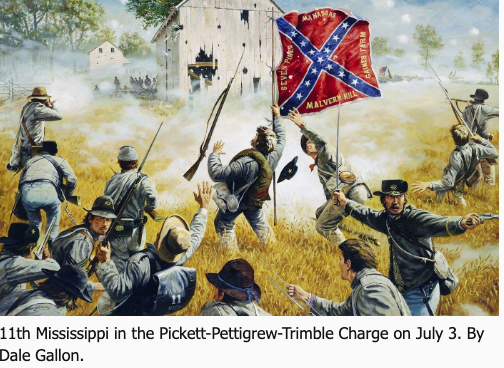
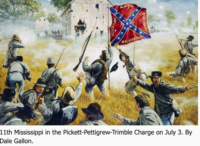
On July 3rd, Davis’ decimated brigade was placed in line in Heth’s Division (now commanded by Brigadier General James Johnston Pettigrew due to a disabling head wound received by Heth on July 1st). Colonel John M. Brockenbrough’s Virginia brigade was deployed on the left. Next came Davis, then Pettigrew’s Brigade (commanded now by Colonel James K. Marshall of the 52nd North Carolina), and Archer’s Brigade (now under the leadership of Colonel Birkett D. Fry of the 13th Alabama, with Archer’s capture on July 1st). Archer’s Brigade would dress on the left of Pickett’s Division during the advance. Davis formed his men with the 55th North Carolina on the right, followed by the 2nd and 42nd Mississippi with the 11th Mississippi on the brigade left. The four regiments in the brigade may have now numbered as few as 1,000 men. The 11th Mississippi, which saw no action on July 1st, was probably the largest regiment. The 2nd Mississippi, now numbering only 60 muskets* – less than a full-strength company – was undoubtedly the smallest [*Author’s note: other accounts put the survivors of the 2nd Mississippi as high as 200 rank and file in line on July 3rd. Based upon the subsequent reports of the fighting and numbers involved during the retreat from Gettysburg, I tend to believe the survivors in the regiment numbered closer to the 200 number than the 60 muskets referenced by Vairin]. Bearing another set of colors during the charge was Color Sergeant Christopher Columbus Davis, who had been ill on July 1st.[1]
Following a massive Confederate artillery barrage, which unfortunately did not have the desired effect of driving the Union batteries from their positions on Cemetery Ridge, the Southern infantry were moved into position. When the order was given to advance, the gray lines swept forward in magnificent array. The Southern cannoneers ceased firing and cheered the infantrymen as they advanced beyond the guns. Pettigrew’s division emerged from the woods with banners flying in the cannon smoke. Davis recalled, “the order to move forward was given and promptly obeyed. The division moved off in line, and, passing the wooded crest of the hill, descended to the open fields that lay between us and the enemy.” Breaking into the sunlight, Davis’ men realized the magnitude of their task. Vairin wrote in his diary that Davis’ Brigade “joined in making the last grand charge which was so disastrous to our army.”[2]
The lines advanced across the fields in perfect order. Awed by the spectacle, Federal gunners did not contest the advance at first. Davis later reported, “Not a gun was fired at us until we reached a strong post and rail fence about three-quarters of a mile from the enemy position, when we were met by a heavy fire of grape, canister, and shell, which told sadly upon our ranks.”[3]
Under the deadly rain of shot and shell, the Southern infantry pressed forward and Davis proudly reported, “Under this destructive fire, which commanded our front and left with fatal effect, the troops displayed great coolness, were well in hand, and moved steadily forward, regularly closing up the gaps made in their ranks.” The Confederate lines swept over several fences and quickly restored their alignment each time. The artillery fire, however, became more telling, and as they neared the Emmitsburg Road, Brockenbrough’s small Virginia brigade began to waver. The commander of the 8th Ohio Infantry Regiment, west of the Emmitsburg Road, saw an opportunity to take the Confederate line in flank and poured a heavy fire into Brockenbrough’s left. The Virginians broke and fled to the rear, leaving Davis’ Brigade, and particularly the 11th Mississippi, exposed in turn. The unopposed troops on the Federal right flank overlapping Davis’ line in that direction wheeled left and poured a deadly enfilade fire into the Mississippians’ already depleted lines. Still the men pressed on, and as unit cohesion was lost, they continued in small groups and individually toward the Federal line. Davis reported that as his men neared the stone wall, they “were subjected to a most galling fire of musketry and artillery, that so reduced the already thinned ranks that any further effort to carry the position was hopeless and there was nothing left but to retire to the position originally held, which was done in more or less confusion.”[4]
Confederate casualties were appalling. Thousands of men were killed or wounded and left upon the field as remnants of Pickett’s, Pettigrew’s, and Major General Isaac R. Trimble’s commands sought shelter on Seminary Ridge. Davis’ Brigade suffered greater losses than any other Confederate brigade at Gettysburg. As remnants of the wrecked regiments regrouped west of Seminary Ridge, Davis took stock of the magnitude of his losses and wept. All the field officers were casualties. The losses among the junior officers were staggering. The 2nd Mississippi, which entered Pickett’s Charge with only 60 men, now counted only one unwounded survivor.[5]
At the height of the fighting, as Lieutenant Colonel David Humphreys led the remnant of his proud regiment near the Brian Barn on Cemetery Ridge, Sergeant Davis, the gallant color-bearer of the 2nd Mississippi, was shot down, along with his colors. Although severely wounded, he managed to tear the colors from the staff and hide them under his body. Lt. Col. Humphreys would die in the assault.
As fate would have it, Lieutenant Colonel Dawes decided to take a riding tour of the scene of the carnage following Pickett’s Charge. Dawes slowly worked his horse among the dead and wounded bodies on Cemetery Ridge near the Angle, where the grand assault had climaxed. Just then, one of the wounded men in gray caught sight of Dawes, who was still in possession of the captured colors of the 2nd Mississippi from the fight at the Railroad Cut on July 1st. The wounded man cried out in a faint voice, “You have got our colors, let me see them.” Hearing the man’s appeal, Dawes moved toward the wounded Confederate. As he approached, he noted the man was badly, possibly mortally, wounded. He dismounted and knelt beside the wounded sergeant. “This man and I had quite an interview” recalled Dawes, during which time the Confederate sergeant identified himself as a color-bearer in the 2nd Mississippi Infantry. “The poor fellow was quite affected to see his colors,” noted the 6th Wisconsin commander, “and I did all I could to comfort him.” The men talked of the action on July 1st, after which Dawes had to leave. Although he later wrote that “I did all in my power to secure for him aid and attention,” he noted with regret that “I do not know whether this sergeant survived his wound.”[6] The unidentified sergeant must have been Davis.[7]
The 2nd Mississippi entered the battle at Gettysburg with an estimated strength of 492.[8] It reported 232 killed and wounded, but did not separately report any numbers for those captured or missing. At least 88 officers and men of the regiment were taken prisoner at the Railroad Cut on July 1st. The compiled service records show for the period of July 1-5, that 49 men were killed, 114 wounded and not captured, 110 wounded and captured, and 138 captured and apparently unwounded. Thus, the total casualty count comes to 411 of the 492 men present at the start of the battle. Some uncertainty exists in these numbers, however, because 28 records only exist as Federal prisoner of war documents. An additional 43 records confirm only that an individual was admitted to a Confederate hospital in Virginia with a battle wound during the period immediately after the Gettysburg campaign and corroborating information is not provided in the company muster records. If we assume that 1/3 of each of these two groups are misidentified, the number of total Gettysburg casualties comes down to 388. Thus, if Busey’s and Martin’s strength estimate is correct, the 2nd Mississippi suffered losses of in the range of 79%-84% (killed, wounded and captured).[9] Actually, a casualty rate of 80% agrees well with the single company that actually reported its strength at the battle. Company B reported its strength at 66 “aggregate” on July 1st, and had suffered 53 casualties by the close of July 3rd. If indeed only one unwounded member of the regiment returned from Pickett’s Charge, obviously not all 66 men present of this company were in the fight. The situation must have been similar in the other companies making up the balance of the regiment. This would leave between 81-104 men that were apparently unengaged but present during the battle (perhaps detailed to non-combat support activities).[10]
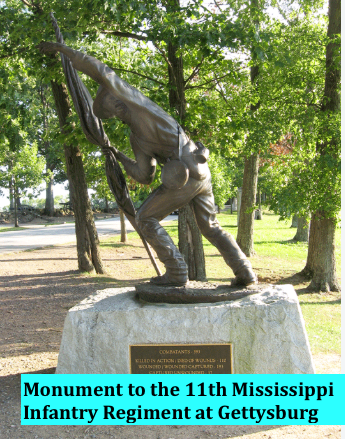
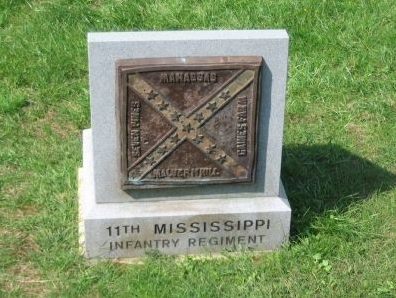
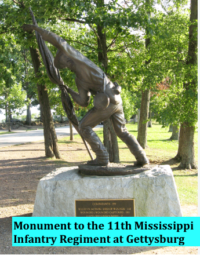
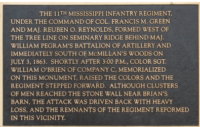
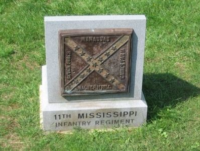
Monument at Gettysburg to the 11th Mississippi Infantry
Inscription:
(Front):
11th Mississippi
Infantry Regiment
(Within the flag relief):
Manassas
Seven Pines
Gaines Farm
Malvern Hill
(Plaque):
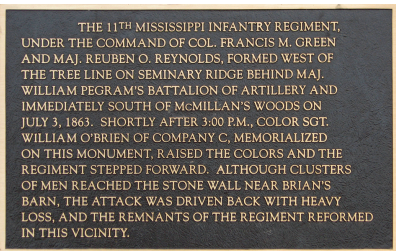
July 3, 1863
The 11th Mississippi Infantry Regiment, with its ranks growing thinner at every step, advanced with the colors to the stone wall near the Brian Barn.
The Regiment was here “subjected to a most galling fire of musketry and artillery that so reduced the already thinned ranks that any further effort to carry the position was hopeless, and there was nothing left but to retire.”
Report of Brig. Gen. Joseph R. Davis.
(Lower Inscription):
Combatants – 393
Killed in Action / Died of Wounds – 110
Wounded / Wounded Captured – 193
Captured unwounded – 37
Non-casualty – 53
Related Items
-
Civil War Pewter Collapsible Cup in its Original Japanned Case – Id’d to Capt. Ezra B. Parker, 1st New Hampshire Cavalry – POW at Libby Prison
$750Civil War Pewter Collapsible Cup in its Original Japanned Case – Id’d to Capt. Ezra B. Parker, 1st New Hampshire Cavalry – POW at Libby PrisonMarch 12, 2022 -
Renown Richmond Sculptor Edward V. Valentine’s Personal Photographs of General Robert E. Lee Utilized by Valentine When Sculpting a Statuette of Lee
$4,200Renown Richmond Sculptor Edward V. Valentine’s Personal Photographs of General Robert E. Lee Utilized by Valentine When Sculpting a Statuette of LeeMarch 29, 2024 -
Superior Example of an Identified Confederate Beehive Style Slouch Hat – Capt. Willis C. Bright Co. E 8th Tennessee Infantry
$25,000Superior Example of an Identified Confederate Beehive Style Slouch Hat – Capt. Willis C. Bright Co. E 8th Tennessee InfantryJanuary 13, 2025 -
1/9 Plate Ambrotype of Lt. John M. Ward Co. B 6th South Carolina Cavalry
$2,3501/9 Plate Ambrotype of Lt. John M. Ward Co. B 6th South Carolina CavalryMarch 21, 2024