
Handwritten Personal Account of the 19th Massachusetts Infantry’s Actions During the Peninsula Campaign Written in 1897 by Capt. John P. Reynolds Co. D 19th Massachusetts InfantryApril 16, 2026
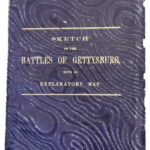
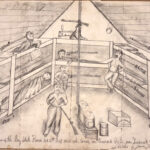 Rare Soldier Drawn D...$1,250
Handwritten Personal Account of the 19th Massachusetts Infantry’s Actions During the Peninsula Campaign Written in 1897 by Capt. John P. Reynolds Co. D 19th Massachusetts Infantry
$1,250
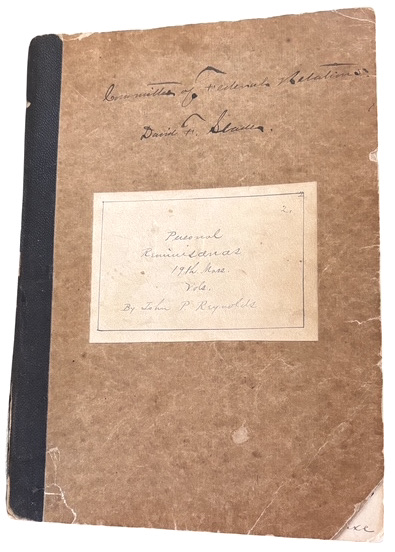
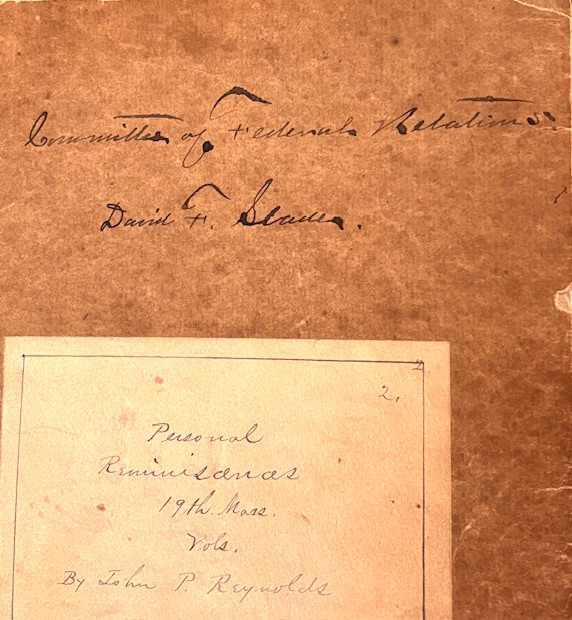
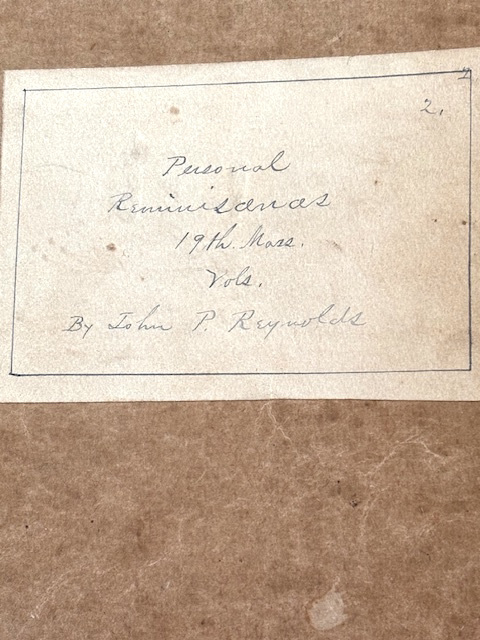
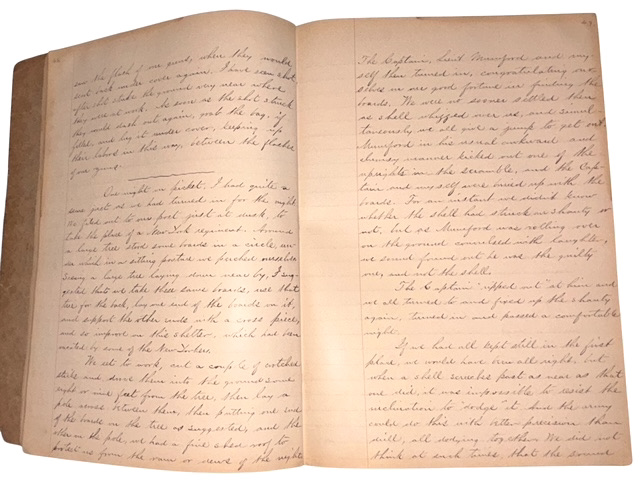
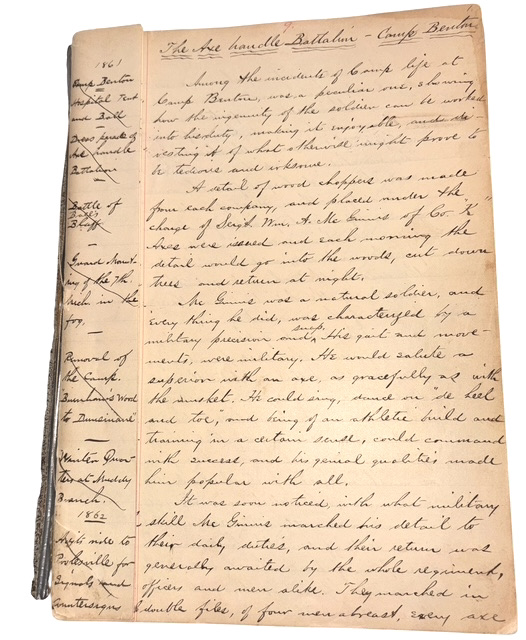
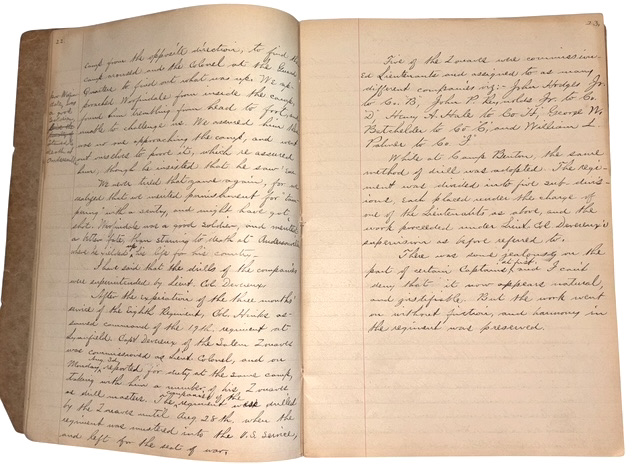
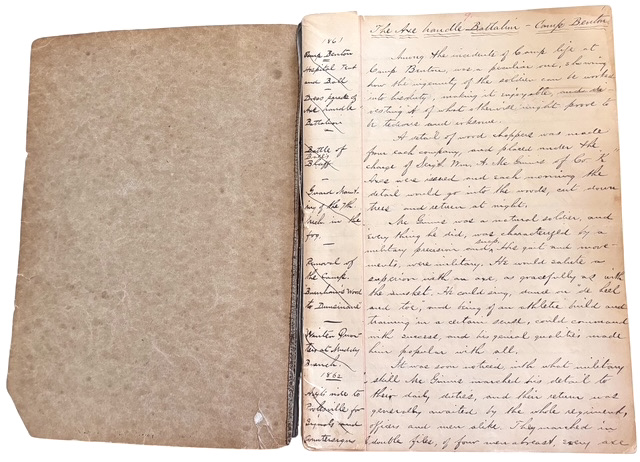
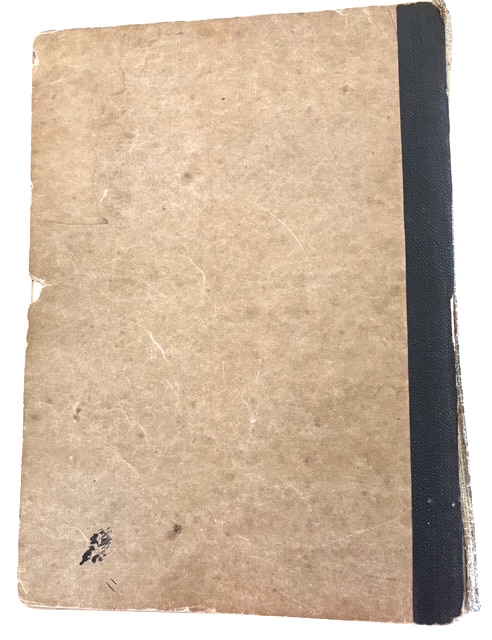
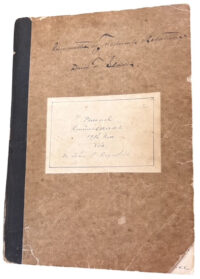
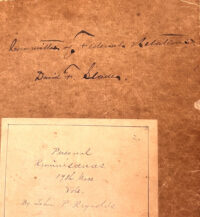
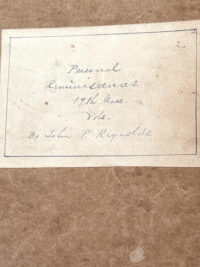
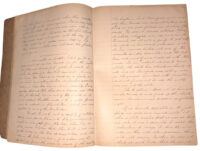
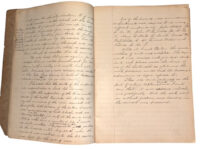
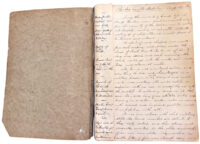
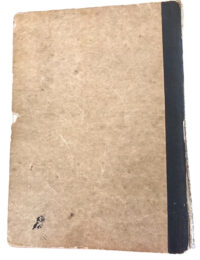
Handwritten Personal Account of the 19th Massachusetts Infantry’s Actions During the Peninsula Campaign Written in 1897 by Capt. John P. Reynolds Co. D 19th Massachusetts Infantry – This highly detailed, handwritten account of the activities of the 19th Massachusetts Infantry during the Peninsula Campaign, was composed by Capt. John P. Reynolds, in 1897; Reynolds was with his regiment on September 17, 1862, at Antietam, where he was significantly wounded by gunshots to his right elbow and left ankle. Lt. Reynolds would ultimately be discharged from his regiment, due to complications from his wounds and join the ranks of the Invalid Corps, at the rank of Captain, in 1863. Capt. Reynolds’ account is bound within by front and back, thin pasteboard covers; the front cover has an old, cream colored, title paper, with the following handwritten title:
“Personal
Reminiscences
19th Mass.
Vols.
By John P. Reynolds”
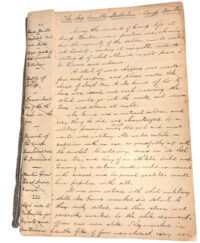
Several of the booklet’s first, several pages were trimmed by Capt. Reynolds so that he could list something akin to a chronological table of contents; some of the titles of these are as follows: “Battle of Ball’s Bluff; Reconnaissance at Yorktown; Battle of Fair Oaks; Savage Station; White Oak; Glendale; Malvern Hill; Arms and legs from the Operating Hospital look like cord wood”. This engrossing, first-hand account is one of three such accounts written by Capt. Reynolds; the other two booklets are in the collection of the Massachusetts Historical Society. The booklet remains in overall very good condition; the actual book covers have some scuffing and one small section of the front, lower right corner is missing; the front cover has separated from its attachment to the spine of the booklet. All of Reynolds’ interior, handwritten accounts remain in excellent, readable condition.
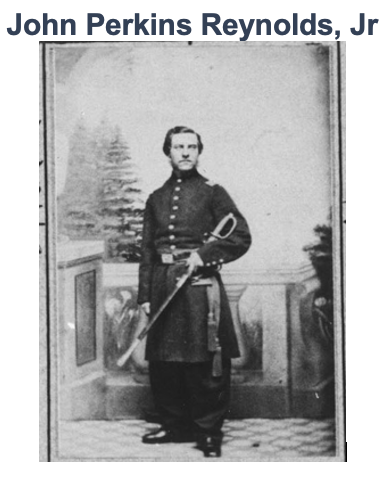
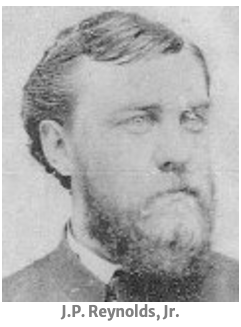
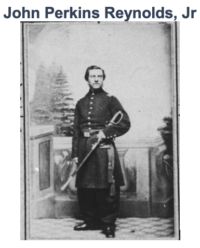
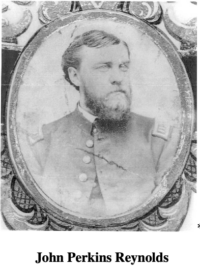
John Perkins Reynolds, Jr
Residence Salem, MA; a 20-year-old Clerk.
Enlisted on 4/15/1861 as a Corpl.
On 4/30/1861, he mustered into “I” Co. Massachusetts 8th Infantry.
He was Mustered Out on 8/1/1861 at Boston, MA
On 8/28/1861, he was commissioned into “D” Co. Massachusetts 19th Infantry.
He was disch wounds on 11/5/1863
On 3/5/1864, he was commissioned into Veteran Reserve Corps 21st.
He was Mustered Out on 6/30/1866
He was listed as:
- Wounded 9/17/1862 Antietam, MD
Promotions:
- 2nd Lieut 8/28/1861 (As of Co. D 19th MA Inf)
- Capt 2/27/1863
- Capt 3/5/1864 (As of 21st VRC)
- 1st Lieut 11/29/1861
Intra-regimental company transfers
- From company D to company E (As of 19th MA Inf)
Born 6/1/1840 in Salem, MA
Member of GAR Post # 34 (Phillip H. Sheridan) in Salem, MA
Died 6/19/1919
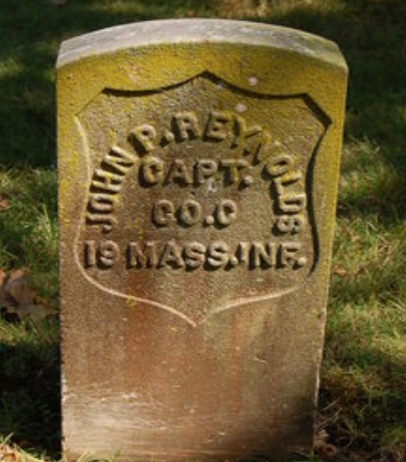
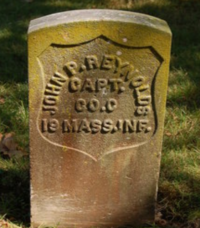
Buried: Harmony Grove Cemetery, Salem,Essex Co, MA
(Parents: John Perkins & Sarah Rebecca (Roberts) Reynolds)
Federal (USV)
Lieutenant
John Perkins Reynolds, Jr.
(1840 – 1919)
Home State: Massachusetts
Branch of Service: Infantry
Unit: 19th Massachusetts Infantry
Before Antietam
Born June 1, 1840, John P. Reynolds was A 21 year old clerk from Salem, he enlisted 15 April 1861 as Corporal, Company I – the Salem Zouaves – 8th Massachusetts Militia for three months. They served at Annapolis, guarding the USS Constitution, at Relay House, MD (May 11-June 26), and at Baltimore (June 26-July 29). He mustered out 1 August 1861. He was among 5 men from the Salem Zouaves who were drillmasters for the new 19th Regiment as it was forming, and he was commissioned 2nd Lieutenant, Company D, 19th Massachusetts Infantry on 22 August 1861. He was promoted to First Lieutenant on 29 November 1861, transferred to Company G, and was acting Adjutant.
On the Campaign
He was wounded in action at Antietam on 17 September 1862:
At an early part of the fight Lieut. Reynolds was wounded in the ankle and was ordered to the rear by Lieut. Col. Devereux. He hobbled back to his company, however, and stayed long enough to receive another wound, this time in the elbow of his sword arm. Col. Devereux said later, jokingly, that “it served him just right for disobeying his commander,” but complimented him at the time in his official report [?].
The rest of the War
He was commissioned Captain on 27 February 1863, but did not muster at that rank, due to being absent, wounded. He was transferred to Company E, date not given. He was discharged for wounds 5 November 1863. He was appointed Captain in the Veteran Reserve Corps (VRC) on 5 March 1864 and was discharged on 30 June 1866 from the 13th Regiment, VRC.
After the War
He returned to Salem and manufactured escutcheons [see his patent] – plates to honor veterans, and was a clerk in the office of the Massachusetts Adjutant General, in the State House, Boston.
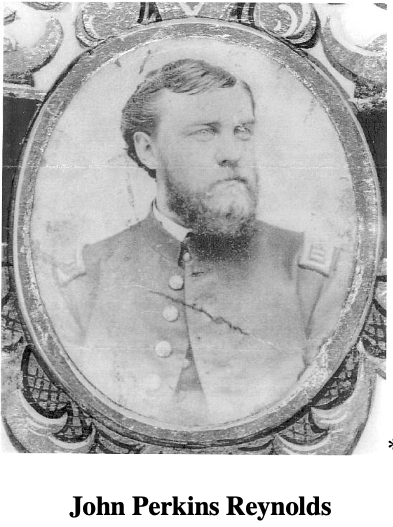
John Perkins Reynolds
June 1, 1840 – June 19, 1919
John P. Reynolds was born in Salem, MA and lived most of his life from childhood to death at the same house on Northey Street (the house number changed from 13 to 27 Northey during that time.)
The only time his residence was not in Salem was when he was a soldier during the Civil War. He was with the first group to join at the start of the war in April 1861. He was first a part of the Salem Light Infantry, also known as the Salem Zouaves, then with the 19th MA Infantry, where he was promoted to Captain. He wrote journals about his experiences. The journal that has his time with the Salem Zouaves is at the Clements Library, University of Michigan, and I have place a transcription is here. His journal while he was with the 19th MA Infantry is at the Massachusetts Historical Society.
Our family had a 1861 letter to John from his friend (and later brother-in-law) Jonathan Osborn. (Jonathan Osborn is my husband’s 3rd Great-grandfather.) The letter is here.
He was wounded at Antietam in his ankle and his elbow. His pension file is filled with descriptions of the health problems he had for the rest of his life, including his right elbow being permanently bent.
I am not sure when he met his future wife, Mary Ellen Henville, but I assume he corresponded with her while he was away at war. Because of his wounds, he was officially discharged on Nov 5, 1863. I assume that he was already back home in Salem by this time because his marriage to Mary Ellen Henville was also on Nov 5, 1863. His service record lists that he was in the 21st Veteran Reserve Corps from 1864-1866, but I don’t know what that involved. His oldest son, was born in Indiana in July 1864, but I don’t have any other records that show the family in Indiana.
After the war, he worked at the Adjutant General’s office at the Boston State House. He also obtained a patent for a system of displaying a veteran’s service record as a work of art called an escutcheon. A copy of the patent is here. His business records are at the Hayes Presidential Library in Fremont, OH.
My husband’s family are descendents of Mary Ellen Henville’s sister Amelia Henville Osborn.
- John Perkins Reynolds (b.1 Jun 1840;d.19 Jun 1919)
+ Mary Ellen Henville (b.5 Nov 1843;m.5 Nov 1863;d.27 Aug 1909)
2. Augustus Govea Reynolds (b.30 Jul 1864;d.1929 or 1930)
+ Mary S. or L. Stevens (b.May 1865;m.Abt 1887;d.Aft 1930)
3. Marjorie Reynolds (b.Oct 1889)
+ Herbert W. Jackson (b.Abt 1865;m.Abt 1929)
3. Carolyn Reynolds (b.1901;d.1902)
2. Sarah May Reynolds (b.1868;d.1870)
2. John Perkins Reynolds Jr (b.1871;d.1895)
2. Nellie Henville Reynolds (b.23 Mar 1876;d.Aft 1942)
+ Tyler Woodbury Janes (b.1876;m.Abt 1909;d.1925)
3. Sylvia Ward Janes (b.19 Mar 1917)
2. Sarah Sallie Ward Reynolds (b.1 Jan 1878)
2. Percival Roberts Reynolds (b.Dec 1879;d.1896)
John Perkins Reynolds
Civil War record:
John Perkins Reynolds , Jr
Residence: Salem, Massachusetts Occupation: Clerk
Service Record: Enlisted as a Corporal on 15 April 1861 at the age of 21Enlisted in Company I, 8th Infantry Regiment Massachusetts on 30 April 1861.Mustered out Company I, 8th Infantry Regiment Massachusetts on 01 August 1861 in Boston, MA. Promoted to Full Lieutenant 2nd Class on 28 August 1861 (As of Co. D 19th MA Inf) Commission in Company D, 19th Infantry Regiment Massachusetts on 28 August 1861.Promoted to Full Lieutenant 1st Class on 29 November 1861 effective 29 November 1861Wounded on 17 September 1862 at Antietam, MD. Promoted to Full Captain on 27 February 1863. Discharged because of wounds Company D, 19th Infantry Regiment Massachusetts on 05 November 1863. Promoted to Full Captain on 05 March 1864 (As of 21st VRC) Commission in 21st Regiment RC on 05 March 1864. Mustered out 21st Regiment RC on 30 June 1866 VRC – veteran reserve corps.
Transcription of his journal from June – July 1861when he was in the Salem Zouaves.
Census Records:
1850 census Ward 2 Salem, MA;
John P. Reynolds, 42, mason;
Sarah R. 41, MA;
Sarah E. 16, MA;
John P. 10, MA;
Mary S. 6, MA;
Lucy E. 9/12, MA.
1860 census Ward 2, Salem MA;
John P. Reynolds, 52, master mason, MA;
Sarah R. 51, MA;
Sarah E. 27, MA;
John P. Jr, 20, clerk, MA;
Mary L, 16, MA;
Lucy E., 11, MA;
Charlotte E. 7, MA.
1870 census 2nd Ward, Salem MA;
John P. Reynolds, 30, escutcheon Manf., MA;
Mary E., 27, NY;
Ang. G. 6, Iowa;
Catherine Reynolds, 17, work stitching shop, MA.
1880 census 13 Northey St, Salem, MA;
John P. Reynolds, 40, clk in auditor office State House, MA, MA, MA;
Mary E. 37, NY, West Indies, MA;
Augustus G., 15, Indiana, MA, NY;
John P. Jr, 8, MA;
Mary E., 4, MA;
Sarah W. 2, MA;
Perceval R. 6/12, Dec, MA.
1900 census 27 Northey St. Salem, MA;
John ? Reynolds, Jun 1840, 60, married 37 years, MA, MA, MA, clerk Adj. Genl Office State House;
Mary ?, Nov 1843, 56, 6 children, 3 living, NY, Danish West Indies, MA;
Nellie, Jun 1876, 23, MA, clerk jewerly;
Sallie W. Jan 1878, 21 MA;
Wilhelmenia Proulx, servant, 42, Widow, Canada.
1910 census 27 Northey, Salem, MA;
John P. Reynolds, 69, MA, clerk, State House;
Sallie W. Reynolds, daughter, 32, MA;
Annie Mitchell, Black, Servant, 36, born SC.
City Directories:
(Living with his father, John P. Reynolds, Sr)
1850 Salem, MA, John P. Reynolds, mason, house 13 Northey.
1861 Salem, MA, John P. Reynolds, mason, house 13 Northey.
1884 Salem, MA, John P. Reynolds, captain, clerk, (Auditor’s office, State House, Boston), house 13 Northey.
1888-1889 Salem, MA, John P. Reynolds, clerk; military escutcheons, adjutant general’s office, State House, Boston, location 2: 13 Northey.
1890-1891 Salem, MA, John P. Reynolds, clerk; military escutcheons, adjutant general’s office, State House, Boston, location 2: 13 Northey.
1893-1894 Salem, MA, John P. Reynolds, clerk; military escutcheons, adjutant general’s office, State House, Boston, location 2: 13 Northey.
1904 Salem, MA,
John P. Reynolds, clerk (State House, B.) h. 27 Northey.
Miss Nellie H. Reynolds clerk, 231 Essex, b. 27 Northey
Miss Sallie W. Reynolds, clerk, 231 Essex, b. 27 Northey
1910 Salem, MA, John P. Reynolds, clerk (State House, B.), h. 27 Northey.
(The 1942 directory shows John P. Reynolds’ daughter Nellie Janes and her daughter, Sylvia Janes, living at 27 Northey.)
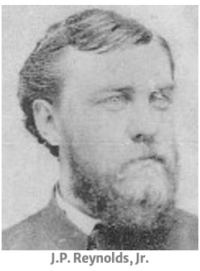
John Perkins Reynolds Jr. Veteran
Birth
1 Jun 1840
Salem, Essex County, Massachusetts, USA
Death
19 Jun 1919 (aged 79)
Salem, Essex County, Massachusetts, USA
Burial
Salem, Essex County, Massachusetts
Civil War Union Army veteran. Corporal, Co. I, Eighth Massachusetts Infantry., Captain, Co. C, 19th Massachusetts Infantry. Husband of Mary Ellen Henville.
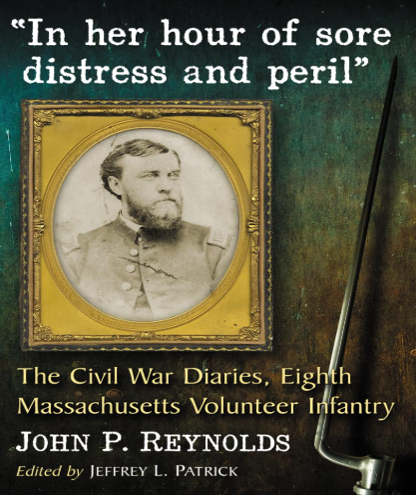
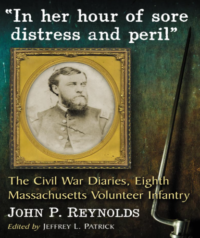
“In her hour of sore distress and peril”: The Civil War Diaries of John P. Reynolds, Eighth Massachusetts Volunteer Infantry, edited by Jeff Patrick, offers a detailed, literate account of a Union soldier’s life in 1861. Reynolds, a member of the “Salem Zouaves,” recorded daily activities, including the defense of Washington, D.C., and the “rescue” of the U.S.S. Constitution.
19th Regiment, Massachusetts Infantry
Overview:
Organized at Lynnfield August 28, 1861. Left State for Washington, D. C., August 30. Attached to Lander’s Brigade, Division of the Potomac, to October, 1861. Lander’s Brigade, Stone’s (Sedgwick’s) Division, Army of the Potomac, to March, 1862. 3rd Brigade, 2nd Division, 2nd Army Corps, Army of the Potomac, to March, 1864. 1st Brigade, 2nd Division, 2nd Army Corps, to June, 1865.
Service:
-Camp at Meridian Hill till September 12, 1861. Moved to Poolesville, Md., September 12-15. Guard duty on the Upper Potomac till December. Operations on the Potomac October 21-24. Action at Ball’s Bluff October 21. Moved to Muddy Run December 4, and duty there till March 12, 1862. Moved to Harper’s Ferry, thence to Charlestown and Berryville March 12-15. Ordered to Washington, D. C., March 24, and to the Peninsula. March 27. Siege of Yorktown April 5-May 4. West Point May 7-8. Battle of Fair Oaks, Seven Pines, May 31-June 1. Seven days before Richmond June 25-July 1. Oak Grove, near Fair Oaks, June 25. Sappony Church and Savage Station June 29. White Oak Swamp and Glendale June 30. Malvern Hill July 1. Ball’s Bluff July 8. At Ball’s Bluff till August 15. Movement to Alexandria August 15-28, thence to Fairfax C. H. August 28-31. Cover Pope’s retreat from Bull Run August 31-September 1. Maryland Campaign September-October. Battle of South Mountain September 14 (Reserve). Battle of Antietam September 16-17. Moved to Harper’s Ferry September 22, and duty there till October 30. Advance up Loudon Valley and movement to Falmouth, Va., October 30-November 17. Battle of Fredericksburg December 11-15. (Forlorn hope to cross Rappahannock at Fredericksburg December 11.) Duty at Falmouth, Va., till April, 1863. Chancellorsville Campaign April 27-May 6. Maryes’ Heights, Fredericksburg, May 3. Salem Heights May 3-4. Gettysburg (Pa.) Campaign June 11-July 24. Battle of Gettysburg July 2-4. Advance from the Rappahannock to the Rapidan September 13-17. Bristoe Campaign October 9-22. Bristoe Station October 14. Advance to line of the Rappahannock November 7-8. Mine Run Campaign November 26-December 2. Robertson’s Tavern, or Locust Grove, November 27. At Stevensburg till May, 1864. Demonstration on the Rapidan River February 6-7. Campaign from the Rapidan to the James May-June. Battles of the Wilderness May 5-7. Laurel Hill May 8. Spottsylvania May 8-12. Po River May 10. Spottsylvania C. H. May 12-21. Assault on the Salient May 12. North Anna River May 23-26. On line of the Pamunkey May 26-28. Totopotomoy May 28-31. Cold Harbor June 1-12. Before Petersburg June 16-18. Siege of Petersburg June 16, 1864, to April 2, 1865. Jerusalem Plank Road June 22-23, 1864. Demonstration north of the James July 27-29. Deep Bottom July 27-28. Strawberry Plains, Deep Bottom, August 14-18. Ream’s Station August 25. Boydton Plank Road, Hatcher’s Run, October 27-28. Dabney’s Mills, Hatcher’s Run, February 5-7, 1865. Watkin’s House March 25. Appomattox Campaign March 28-April 9. Crow’s House March 31. Fall of Petersburg April 2. Sailor’s Creek April 6. High Bridge and Cumberland Church April 7. Appomattox C. H. April 9. Surrender of Lee and his army. At Burkesville till May 2. March to Washington May 2-13. Grand Review May 23. Duty at Washington till June 30. Mustered out June 30 and discharged July 22, 1865.
Regiment lost during service 14 Officers and 147 Enlisted men killed and mortally wounded and 133 Enlisted men by disease. Total 294.
19th Massachusetts Infantry Regiment
United States Regiments & Batteries > Massachusetts > 19th Massachusetts Infantry Regiment
The 19th Massachusetts Infantry Regiment lost 14 officers and 147 enlisted men killed or mortally wounded and 133 enlisted men to disease during the Civil War. It is honored by a monument at Gettysburg.
| 1861 | |
| August 28 | the 19th Massachusetts Infantry Regiment was organized at Lynnfield under Colonel Edward W. Hinks (formerly colonel of the 8th Massachusetts Infantry) Lt. Colonel Arthur Devereux (former captain in the same regiment) and Major Henry How |
| August 30 | Left State for Washington, D.C. via Philadelphia; attached to Lander’s Brigade, Division of the Potomac |
| September 12 | Camp at Meridian Hill |
| September 12-15 | Moved to Poolesville, Md. and guard duty on the Upper Potomac |
| October | Assigned to Lander’s Brigade, Stone’s (Sedgwick’s) Division, Army of the Potomac |
| October 21-24 | Operations on the Potomac |
| October 21 |
Action at Ball’s Bluff |
| December 4 | Moved to Muddy Run |
| 1862 | |
| March | Assigned to 3rd Brigade, 2nd Division, 2nd Corps, Army of the Potomac |
| March 12-15 | Moved to Harper’s Ferry, thence to Charlestown and Berryville March |
| March 24 | Ordered to Washington, D.C. |
| March 27 |
Peninsula CampaignTo the Peninsula |
| April 5-May 4 |
Siege of Yorktown |
| May 7-8 |
West Point |
| May 31-June 1 |
Battle of Fair Oaks, Seven Pines |
| June 25-July 1 |
Seven days before Richmond |
| June 25 |
Oak Grove, near Fair OaksLieutenant Warner and several enlisted men were killed and Lieutenant J. H. Rice and around 60 enlisted men wounded. |
| June 29 |
Peach Orchard and Savage Station |
| June 30 |
White Oak Swamp and GlendaleColonel Hincks and Captain Devereux (Lt. Colonel Devereux’s brother) were wounded and Major How and Lieutenant David Lee killed. Captain Edmund Rice took command of the regiment. |
| July 1 |
Malvern Hill |
| July 8 – August 15 | Harrison’s Landing |
| August 15-28 | Movement to Alexandria |
| August 24-28 | Moved on the steamship Atlantic to Alexandria |
| August 28-31 | To Fairfax C. H. |
| August 31- September 1 |
Cover Pope’s retreat from Bull Run |
| September-October |
Maryland CampaignColonel Hinks resumed command, |
| September 14 |
Battle of South Mountain (In Reserve) |
| September 16-17 |
Battle of Antietam (Sharpsburg)Colonel Hinks was the first to fall, seriously wounded, leaving Lieutenant Colonel Devereux in command. Devereux was ill and exercised command for only a short time before turning it over to Captain Harrison G. O. Weymouth. Captain George W. Batchelder was killed. From the brigade marker at Antietam:Dana’s Brigade, following Gorman’s in column of attack, passed through the East Woods, crossed the Cornfield and the Hagerstown Pike, about 50 yards in rear of Gorman, and entered the West Woods, where its advance was checked about 40 yards east of this point. Its left flank having been attacked and turned, by McLaws’ and Walker’s Divisions, it was compelled to retire. A portion of the Brigade, with the 1st Minnesota Infantry, occupied a line near the Nicodemus house which it held for a time until, its flank having been again turned, it retired to the woods and fields east of the Hagerstown Pike. |
| September 22 | Moved to Harper’s Ferry |
| October 30-November 17 | Advance up Loudon Valley and movement to Falmouth, Va. |
| November 29 | Colonel Hincks, still on convalescent leave, promoted to brigadier general |
| December 11-15 |
Battle of FredericksburgThe regiment was a “forlorn hope” to cross the Rappahannock at Fredericksburg. Lieutenant Colonel Devereux was still very sick in camp, so the regiment was commanded by Captain Harrison G.O. Weyouth, who was badly wounded, losing his leg. |
| Decmber – April | Duty at Falmouth, Va. |
| 1863 | |
| April 27-May 6 |
Chancellorsville Campaign |
| May 1 | Lieutenant Colonel Devereux was promoted to colonel |
| May 3 |
Maryes’ Heights. Fredericksburg |
| May 3-4 |
Salem Heights |
| June 11-July 24 |
Gettysburg Campaign |
| July 2-4 |
Battle of GettysburgThe 19th Massachusetts Infantry Regiment was commanded by Colonel Arthur F. Devereaux. It brought 231 men to the field, losing 9 killed, 61 wounded and 7 missing. Colonel Devereaux noted that the opening shot of the artillery barrage preceding Pickett’s Charge struck Lieutenant S.S. Robinson of the 19th, “cutting his body nearly in two, killing him instantly.” While there is no doubt of Robinson’s death, there are four other contradictory accounts of the first shot, including one by the 19th’s own Lieutenant J.B.G. Adams, who claimed to have had the shot pass over him while lying in a field hospital just behind the lines.* From one of a series of iron signs on the south side of the Copse of Trees:Nineteenth Massachusetts Volunteer Infantry. The position of this regiment in line of battle was 119 yards S.S.E. and is represented by its monument. The 19th Massacusetts and 42d New York Regiments were the first troops to attack Pickett’s Division in flank. “Passing at this time Colonel Devereux, commanding the 19th Massachusetts Volunteers, anxious to be in the right place, appled to me for permission to move his regiment to the right and to the front where the line had been broken.” – Hancock’s official report. Major Edmund Rice was awarded the Medal of Honor for his actions at the height of Pickett’s Charge, when he led a countercharge into Confederate attackers who had broken the Union lines, holding them in check with a thin line of men for several minutes until reinforcements arrived to turn the tide. He fell severly wounded, the officer nearest the enemy. The regiment captured the colors of the 14th, 19th, 53rd and 57th Virginia Infantry Regiments. *From George R. Stewart, Pickett’s Charge: A Microhistory of the Final Attack at Gettysburg, July 3, 1863, p126 < See Colonel Devereaux’s Official Report for the 19th Massachusetts in the Battle of Gettysburg > |
| September 13-17 | Advance from the Rappahannock to the Rapidan |
| October 9-22 |
Bristoe Campaign |
| October 14 |
Bristoe Station |
| November 7-8 | Advance to line of the Rappahannock |
| November 26- December 2 |
Mine Run Campaign |
| November 27 | Robertson’s Tavern, or Locust Grove |
| December – May | At Stevensburg |
| February 6-7 | Demonstration on the Rapidan |
| 1864 | |
| February 27 | Colonel Devereux resigned |
| March | Assigned to 1st Brigade, 2nd Division, 2nd Corps |
| May-June |
Campaign from the Rapidan to the James |
| May 5-7 |
Battle of the Wilderness |
| May 8 |
Laurel Hill |
| May 8-21 |
Battle of Spottsylvania Court House |
| May 10 |
Po River |
| May 12 |
Assault on the Salient |
| May 23-26 |
North Anna River |
| May 26-28 | On line of the Pamunkey |
| May 28-31 |
Totopotomoy |
| June 1-12 |
Battle of Cold Harbor |
| June 16-18 |
First Assault on Petersburg |
| June 16 |
Siege of Petersburg |
| June 22-23 |
Jerusalem Plank Road |
| July 27-29 | Demonstration north of the James |
| July 27-28 | Deep Bottom |
| August 14-18 |
Strawberry Plains, Deep Bottom |
| August 25 |
Ream’s Station |
| October 27-28 |
Boydton Plank Road, Hatcher’s Run |
| 1865 | |
| February 5-7 |
Dabney’s Mills, Hatcher’s Run |
| March 25 | Watkin’s House |
| March 28-April 9 |
Appomattox Campaign |
| March 31 | Crow’s House |
| April 2 |
Fall of Petersburg |
| April 6 |
Sailor’s Creek |
| April 7 |
High Bridge and Farmville |
| April 9 |
Appomattox Court HouseSurrender of Lee and his army. |
| April 10 – May 2 | At Burkesville |
| May 2-13 | March to Washington |
| May 23 | Grand Review |
| May 24 – June 30 | Duty at Washington |
| June 30 | The 19th Massachusetts Infantry Regiment mustered out |
| July 22 | The men were discharged |
19th Massachusetts Infantry Regiment
| 19th Regiment Massachusetts Volunteer Infantry | |
| Active | August 28, 1861 – July 22, 1865 |
| Country | United States |
| Allegiance | Union |
| Branch | Infantry |
| Equipment | |
| Engagements |
|
| Commanders | |
| Colonel | Edward Winslow Hincks |
| Colonel | Arthur F. Devereux |
| Lieutenant Colonel | Ansel Dyer Wass |
| Lieutenant Colonel | Edmund Rice |
| Insignia | |
| II Corps (2nd Division) badge | |
| Massachusetts U.S. Volunteer Infantry Regiments 1861-1865 | ||||
|
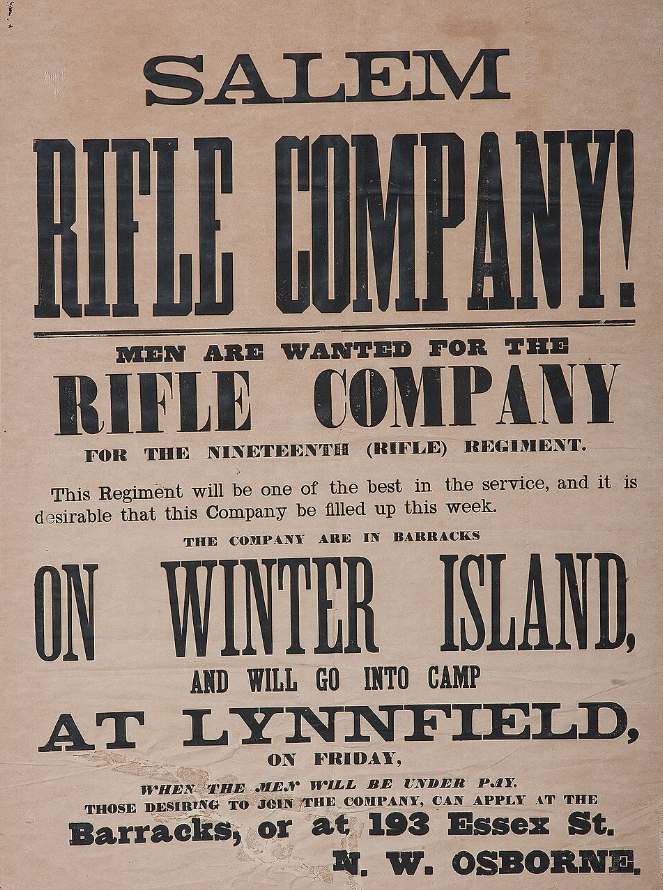
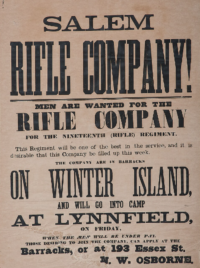
Recruiting broadside the “Rifle Company for the 19th (Rifle) Regiment” of Massachusetts, stating that the “Regiment will be one of the best in the service.”Tattered flags of the 19th Massachusetts Infantry Regiment. From the Liljenquist Family Collection of Civil War Photographs, Prints and Photographs Division, Library of Congress
The 19th Regiment Massachusetts Volunteer Infantry was an infantry regiment that served in the Union Army during the American Civil War.
Service history
The 19th Massachusetts was organized at Camp Schouler in Lynnfield, Massachusetts, in April 1861. The 19th was largely composed of Essex County men. Its core began as three companies of the state militia’s 1st Battalion Massachusetts Rifles from Essex County.
Initial training
The three militia Rifle companies were Company A from West Newbury, B from Newburyport, and C from Rowley. Seven other companies were recruited. D, E, and I were recruited in Boston. F and G were men from Middlesex, Cambridge and Lowell respectively. Company H was recruited in Roxbury. The final, tenth company, Company K, was formed from the Tiger Fire Zouaves of Boston.
Men in the regiment were initially issued uniforms from the stocks of the dark-green militia rifle coats that would be replaced by the standard U.S. blue frock or sack coats that were issued just before the Peninsula Campaign in the spring of 1862. These stocks were soon depleted so that most of the companies other than the first three and last were without uniforms. Up until August 1, the regiment was slowly building up. The Commonwealth issued the new recruits either Model 1841 Mississippi rifles that had been upgraded with sights, bayonets, and new bores from the existing stocks within the Essex and Middlesex armories or Model 1842 Springfield smoothbore muskets from armories in Boston and Middlesex.
The regiment followed the standard structure of the three-year volunteer regiments of ten companies of 83-101 men (which could be split into two battalions on an ad hoc basis) and a field staff of 36–66. The officers were divided into field staff who ran the regiment and battalions and the line or company officers who ran the companies.
On August 1, the 19th received its colonel, Edward W. Hincks, and as its lieutenant colonel, Arthur F. Devereux. Both men had prior militia and federal experience. Colonel Hinks, originally from Maine, had moved from Bangor to Boston as a printer in 1849. By 1855, he had been a state legislator and a Boston city councilor. He had affiliated and drilled in the Commonwealth’s militia service with the 8th Massachusetts Militia Regiment as one of the regiment’s field officers, and commanded the 8th Massachusetts during its three months’ service from April to July 1861. Lieutenant Colonel Devereux had also mobilized with Hincks as commander of the regiment’s Company J, which had historically been the Salem Light Infantry but Devereux had outfitted and trained as the Salem Zouaves. The same order that assigned Hincks as the colonel, also named the 19th as “the proper rendezvous for all members of the Eighth Regiment desirous of again enlisting in the service of the country.”
Hincks and Devereux were both experienced militia officers who had already seen service when the 8th Massachusetts had been mobilized for 90-days service in April 1861. The 8th had earned a good reputation for discipline, drill, and ability. Deverux’s company of Salem Zouaves had a reputation as one of the best drilled companies in the Commonwealth. The 8th had mustered out on July 29 and Hincks, Devereux, and the Salem Zouaves re-enlisted upon their return and immediately reported to the training camp in Lynnfield. The injection of Devereux and his Zouaves into the regiment led many to realize their prior training had been inadequate. Hincks and Devereux remedied the situation by assigning a Salem Zouave to each company as the drill sergeant. The non-commissioned officers (NCOs) from this company also were commissioned and assigned to each company. By the end of their time in Lynnfield, every company in the regiment had officers and NCOs who had served 90-day service in the 8th Massachusetts Militia’s Salem Zouaves.
In the camp, the regiment turned in most of their Windsor, Vermont produced Model 1841s and received the Model 1856 Enfield Rifle. Also known as “the 2-band Enfield” and “Sergeants’ Rifle,” it was the rifle that the British army issued to its rifle regiments and to sergeants in its line battalions. A handful of the Model 1841s that were in excellent condition and had been modified to .58 caliber and with rear sights and bayonets were retained, but most of the men received the new rifles and were impressed with them.
Due to a lack of personnel and infrastructure ready when the war began, the federal government left the recruiting, equipping, and providing of recruits to the states with reimbursement to come from the federal level upon muster into federal service. Since the states were handling the process, existing militia companies building to full-strength followed the existing militia practice of voting in new recruits which made recruitment slower than the new volunteer companies in the regiment. The recruiting for the militia companies nd the nw volunteer companies were working slowly when the defeat at Bull Run shook Washington, DC. In response, on July 22, Lincoln authorized the call-up of 500,000 more three-year enlistments. The debacle spurred the The next day, the Secretary of War issued a call for all available regiments and detachments to be hurried forward at once.
The salting of the regiment’s companies with Salem Zouaves and other veterans of the Eighth injected a new vim and vigor into recruitment and training. The capable veterans brought a renewed sense of purpose and ramped up the training with the all field officers receiving their commissions by August 3 and the last of the staff and line officers on August 22. Despite still lacking its full paper strength, the regiment mustered into Federal service for a three-year enlistment on August 28, 1861, under the command of Colonel Hinks. The plan was to continue recruiting to bring the regiment up to strength in Massachusetts and send the recruits on in groups of drafts.
Deployment
The regiment learned that it would be joining the Army of the Potomac and spend the next two days in transit via Boston, Fall River, New York, Philadelphia, and Baltimore, to reach New Jersey Avenue Station in Washington, DC[28]
Transit
At 15:00, Wednesday, August 28, the regiment was formed in line at Camp Schouler in Lynnfield, received its State Colors, and boarded the train on the waiting at the side of the camp. The train traveled through Salem and Lynn, arriving at North Station at 17:15. The arrival was a novel experience to many members of the regiment from the small towns in Essex and Middlesex who had never been to Boston before. The 19th marched to Boston Common where a brief farewell from the governor and state officials was given, and they had a brief meal. After an hour, it left and arrived 19:30 at the Old Colony depot joined by the 17th Massachusetts where it boarded a Fall River Line train which would take them to a Fall River Line boat for New York.
The steam ship from Fall River entered New York Harbor on Thursday morning, August 29, went up the Hudson, and disembarked on Manhattan at 13:00. It marched to the 7th New York barracks at City Hall, where it was fed in its mess, and the enlisted men received a few hours in the afternoon to see the sights. In the early evening, they marched up Broadway, through Canal to Vestry Street, to Pier 39, and went on board the Ferry boat John Potter, of the Camden and Amboy Line. Once across the Hudson in Perth Amboy, the 19th and 17th boarded the Pennsylvania Railroad train for Washington.
At 03:30 on Friday, the train carrying the two regiments stopped in Philadelphia where they received an early morning breakfast from supportive local citizens. After two hours, they were back on board the train and arrived in Baltimore at the Philadelphia, Wilmington and Baltimore Railroad‘s President Street Station midmorning.
Due to a thirty-year-old ordinance banning steam engines operating in the city, there was no direct steam rail connection between President Street Station and the Baltimore and Ohio Railroad‘s Camden Station. Rail cars that transferred between the two stations had to be pulled by horses along Pratt Street down ten blocks to the southwest to Camden Yards. Union troops marched down Pratt to the other station. It in this transfer on April 19, as the 6th Massachusetts transferred between stations, a mob of anti-war supporters and Southern sympathizers attacked the train cars and blocked the route. When it became apparent that they could travel by horse no further, the four companies, about 240 soldiers, got out of the cars and marched in formation down Pratt Street where they were attacked by the mob and opened fire in response.
As a result, units got off the train immediately upon arrival at President Street, and marched under arms down Pratt Street the ten-block distance to Camden Yards. The horse-drawn rail cars only carried equipment under guard. The 19th was well aware of the large minority of southern sympathizers and also that despite the majority remaining unionist, it was also a slave state. As they began marching, they were aware of the noticeabley cold reception and glares from some of the local citizens. As the 19th and 17th turned left down Howard Street, they noticed the roof of Camden Yards filled with bullet holes from the riot of April 19.
On board a steam train again, the men soon pulled out of Camden Yards bound for Washington. This was the first time many of the men saw slaves working in fields as they passed by on the train. They also duly noted soldiers on guard duty all along the rail line between Baltimore and Washington, and for the first time saw the meting out of military punishment. The trip from Baltimore to Washington was long and tedious with continual side-tracking to yield to regular, scheduled passenger service.
In Washington
At midnight Friday, August 30, 1861, the 19th arrived at Washington Union Station, and marched into halted at Soldiers’ Rest. The regiment stood in formation under arms until a Pennsylvania regiment that had arrived just before them finished supper. The men were served a “”very bad”” meal of “mouldy soft bread, boiled salt pork and very poor coffee.” In response, COL Hincks made “a vigorous protest” to the officer-in-charge giving “him religious instructions.”
Since the Pennsylvania regiment had taken the barracks billeting, the 19th slept outside on the ground, luckily on a warm night, until disturbed around 04:00 by a grazing herd of hogs. The next morning when the 19th marched in to breakfast, they found that Hincks’ “draft had been honored,” and received “a more respectable meal.” This was a portend of the life to come in the Army, and some of the older men were already finding their patriotic ardor fading.
During the afternoon, the regiment slung knapsacks and marched down Pennsylvania Avenue three miles to their new campground on Meridian Hill. The 19th set up its regimental camp there, and saw the sixteen wagons it brought with it from Camp Schouler exchanged for eleven standard issue army wagons. The fact that some of the officers and men had served in the 8th Massachusetts previously proved a great advantage, as COL Hinks began a rigid training/drill regimen that would remain routine as long as he commanded the 19th. As active drilling began in earnest, Hincks divided the field officers’ duties. Hincks ran battalion drills, LTC Devereaux the manual of arms, and MAJ Howe taught camp and regimental guard/security. Since many of these veterans already had many connections among the military officials at the Capitol and throughout the District, the 19th received better logistical support than otherwise would have been the case. Encamped on the hillside, the men found battalion drill very hard, yet “from early morn till dewy eve” they went through their paces. This was done Monday through Saturday, and on Sundays, the men marched out by companies, seated in the shade, and learned the Articles of War from the officers.
At Meridian Hill, the regiment began to take on the look and air of soldiers, not knowing the future worth of all the drills, fatigues, and labors that griped about daily. This would continue for the next two weeks. While at the hill, the regiment’s camp was across on the street from that of the 7th Michigan, and many close friendships immediately sprang up between the men of the two regiments, which lasted during the entire service of the regiments.
1861 Operations along the Potomac
On September 13, the men received word that they were assigned to brigade of BGEN Frederick W Lander and ordered to march to Poolesville, Md., then the headquarters of that division, known as the “Corps of Observation,” commanded by BGEN Charles P Stone. Some of the older men who had been in the militia found the first real march of a substantial distance quite difficult where some of the younger men “fresh from school or indoor life, could endure more than the men of mature years who had at first laughed at them.” The route on that day passed through Leesboro and Rockville. Just before we arriving at Rockville, the men received ten rounds of ammunition and ordered to “Load at will.” With the earlier service of the men in the 8th, and the 19th’s passage through Baltimore in mind, they had been warned to be wary of Rockville’s strong secession sentiment, but passed through without incident. Before dusk, the regiment stopped for the night by a stream in Darnestown that fed into the Potomac.
The next day, Saturday, September 14, they joined their brigade at Poolesville in the evening, greeted by the men of the 15th Massachusetts, who had prepared supper and coffee for them upon arrival. This act was greatly appreciated and formed the basis a solid bond between the two regiments, which lasted throughout the war. The next day, Sunday, September 15, they marched two miles out of Poolesville to Camp Benton near Edward’s Ferry on the Potomac, which was to be their home for several months.
At the camp, which was on a plain, drill and instruction continued from morning until night, interspersed at intervals with picket duty. In a short time, the ability and experience of Hincks, Devereux, Howe, and the cadre from the Salem Zouaves led to a high state of discipline that attracted onlookers from other states’ regiments who would surround the guard lines at drill and watch the manoeuvres taking notes. The afternoon battalion movement drills, rigid discipline on guard duty, and the wearing of newly issued dress coats with brass shoulder scales and leather neck stocks led other men to refer to the regiment as “The Nineteenth Regulars.” The men took this nickname with pride, finding their unit noticeably different from other regiments being commended by their superiors for their performance. The surgeon, Dr. Dyer, wrote home:
Through the untiring exertions of Colonel Hinks, who is emphatically a working man, the general condition of the regiment has vastly improved: cleanliness and order are strictly enforced. Under the superintendence of Lieut. Col. Devereux, the companies have acquired a proficiency in drill not surpassed by many older troops. Under charge of Major Howe, the important duties of the guard are well attended to. Other departments are in good hands, and a system of strict accountability is rigidly enforced.
Ball’s Bluff
Further information: Battle of Ball’s Bluff
Lander’s Brigade, Stone’s (Sedgwick’s) Division, Army of the Potomac, to March 1862. 3rd Brigade, 2nd Division, II Corps, Army of the Potomac, to March 1864. 1st Brigade, 2nd Division, II Corps, to June 1865.
Post-war
The 19th Massachusetts mustered out of service on June 30, 1865, and was discharged July 22, 1865.
Affiliations, battle honors, detailed service, and casualties
Organizational affiliation
Attached to:
- Lander’sBrigade, Division of the Potomac, to October, 1861.
- Landers Brigade, Stone’s(John Sedgwick‘s) Corps of Observation, Army of the Potomac (AoP), to March, 1862.
- 3rd Brigade’ 2nd Division, II Corps, AoP, to March, 1864.
- 1st Brigade, 2nd Division, II Corps, AoP, to June, 1865.
List of battles
The official list of battles in which the regiment bore a part:[54]
- Siege of Yorktown
- Battle of Seven Pines
- Seven Days Battles
- Battle of White Oak Swamp
- Battle of Antietam
- Battle of Fredericksburg
- Battle of Chancellorsville
- Battle of Gettysburg
- Bristoe Campaign
- Mine Run Campaign
- Battle of the Wilderness
- Battle of Spotsylvania Court House
- Battle of Totopotomoy Creek
- Battle of Cold Harbor
- Siege of Petersburg
- First Battle of Deep Bottom
- Second Battle of Deep Bottom
- Second Battle of Ream’s Station
- Battle of Boydton Plank Road
- Appomattox Campaign
- Battle of Sutherland’s Station
- Battle of Sailor’s Creek
- Battle of Appomattox Court House
Detailed service
1861
- Left Massachusetts for Washington, D.C., August 30.
- Camp at Meridian Hill until September 12, 1861.
- Moved to Poolesville, Md., September 12–15.
- Guard duty on the Upper Potomac until December.
- Operations on the Potomac October 21–24.
- Action at Ball’s Bluff October 21.
- Moved to Muddy Run December 4, and duty there until March 12, 1862.
1862
- Moved to Harpers Ferry, then to Charlestown and Berryville March 12–15.
- Ordered to Washington, D.C., March 24, and to the Peninsula March 27.
- Siege of Yorktown April 5-May 4.
- West Point May 7–8.
- Battle of Fair Oaks, Seven Pines, May 31-June 1.
- Seven days before Richmond June 25-July 1.
- Oak Grove, near Fair Oaks, June 25.
- Peach Orchard and Savage Station June 29.
- White Oak Swamp and Glendale June 30.
- Malvern Hill July 1.
- Harrison’s Landing July 8. At Harrison’s Landing until August 15.
- Movement to Alexandria August 15–28, thence to Fairfax Court House August 28–31.
- Cover Pope’s retreat from Bull Run August 31-September 1.
- Maryland Campaign September–October.
- Battle of South Mountain September 14 (reserve).
- Battle of Antietam September 16–17.
- Moved to Harpers Ferry September 22, and duty there until October 30.
- Advance up Loudon Valley and movement to Falmouth, Va., October 30-November 17.
- Battle of Fredericksburg December 11–15. (Forlorn Hope to cross Rappahannock at Fredericksburg December 11.)
- Duty at Falmouth, Va., until April 1863.
1863
- Chancellorsville Campaign April 27-May 6.
- Maryes’ Heights. Fredericksburg, May 3.
- Salem Heights May 3–4.
- Gettysburg Campaign June 11-July 24.
- Battle of Gettysburg July 2–4,
- Advance from the Rappahannock to the Rapidan September 13–17.
- Bristoe Campaign October 9–22.
- Bristoe Station October 14.
- Advance to line of the Rappahannock November 7–8.
- Mine Run Campaign November 26-December 2.
- Robertson’s Tavern, or Locust Grove, November 27.
- At Stevensburg until May 1864.
1864[53]
- Demonstration on the Rapidan February 6–7.
- Campaign from the Rapidan to the James May–June.
- Battles of the Wilderness May 5–7.
- Laurel Hill May 8.
- Spotsylvania May 8–12.
- Po River May 10.
- Spotsylvania Court House May 12–21.
- Assault on the Salient May 12.
- North Anna River May 23–26.
- On line of the Pamunkey May 26–28.
- Totopotomoy May 28–31.
- Cold Harbor June 1–12.
- Before Petersburg June 16–18.
- Siege of Petersburg June 16, 1864, to April 2, 1865.
- Jerusalem Plank Road June 22–23, 1864.
- Demonstration north of the James July 27–29.
- Deep Bottom July 27–28.
- Strawberry Plains, Deep Bottom, August 14–18.
- Ream’s Station August 25.
- Boydton Plank Road, Hatcher’s Run, October 27–28.
- Dabney’s Mills, Hatcher’s Run, February 5–7, 1865.
1865
- Watkin’s House March 25.
- Appomattox Campaign March 28-April 9.
- Crow’s House March 31. Fall of Petersburg April 2.
- Sailor’s Creek April 6.
- High Bridge and Farmville April 7.
- Appomattox Court House April 9. Surrender of Lee and his army.
- At Burkesville until May 2.
- March to Washington May 2–13.
- Grand Review of the ArmiesMay 23.
- Duty at Washington until June 30.
Casualties
The regiment lost a total of 294 men during service; 14 officers and 147 enlisted men killed or mortally wounded, 133 enlisted men died of disease.
Commanders
- Colonel Edward Winslow Hinks
- Colonel Arthur Forrester Devereux
- Colonel Edmund Rice
Armament
Soldiers in the 1st Battalion Massachusetts Rifles, the three core Essex County militia companies were armed with Model 1841 Mississippi rifles. These rifles had been manufactured by contract in 1844 in Windsor, Vermont by the Robbins, Kendall, and Lawrence Armory (RK&L) which had also made the 1855 modifications of increasing the bore to .58 and fitting them with a sword bayonet. The 19th Massachusetts was an 1861, Army of the Potomac, three-year volunteer regiment built around a core of prewar militia, that greatly increased the number of men under arms in the federal army. As with many of these volunteers, initially, there were not enough Model 1841s to go around so the 15th, 16th and 19th were issued a mix of imported and Robbins and Lawrence produced Pattern 1856 Enfield short rifle. These were the standard rifles for the British army Sergeants in line battalions and the rifle regiments. The similar size to the M1841 (they both had 33-inch barrels) meant that the three regiments were issued the P1856. The 1856 Enfield was a .577 calibre Minié-type muzzle-loading rifle that like all other nominal .577 caliber weapons could fire U.S. government issued .58 paper cartridges. It was used by both armies and was the second most widely used Enfield in the Union forces. By the time of the Peninsula campaign, the Model 1841s had been turned back in to the Commonwealth so that the regiment had been completely issued the 1856 Enfield with the saber bayonet. Between Fredericksburg and Chancellorsville, the regiment drew model 1855, 1861 National Armory (NA) and contract rifle-muskets. The regiment reported the following surveys:
Fredericksburg
- A — Unreported, probably mix of Pattern 1856 Enfield, sabre bayonet, (.58 and .577 Cal.); Model 1841 Mississippi rifles, sabre bayonet, (.58 Cal.)
- B — 14 Pattern 1856 Enfield, sabre bayonet, (.58 and .577 Cal.)
- C — Unreported, probably mix of Pattern 1856 Enfield, sabre bayonet, (.58 and .577 Cal.); Model 1841 Mississippi rifles, sabre bayonet, (.58 Cal.)
- D — 34 Pattern 1856 Enfield, sabre bayonet, (.58 and .577 Cal.)
- E — 25 Pattern 1856 Enfield, sabre bayonet, (.58 and .577 Cal.)
- F — 41 Pattern 1856 Enfield, sabre bayonet, (.58 and .577 Cal.)
- G — Unreported, probably mix of Pattern 1856 Enfield, sabre bayonet, (.58 and .577 Cal.); Model 1841 Mississippi rifles, sabre bayonet, (.58 Cal.)
- H — 14, Pattern 1856 Enfield, sabre bayonet, (.58 and .577 Cal.)
- I — Unreported, probably mix of Pattern 1856 Enfield, sabre bayonet, (.58 and .577 Cal.); Model 1841 Mississippi rifles, sabre bayonet, (.58 Cal.)
- K — 13, Pattern 1856 Enfield, sabre bayonet, (.58 and .577 Cal.)
Chancellorsville
- A — 15 Pattern 1856 Enfield, sabre bayonet, (.58 and .577 Cal.); 3 Springfield Rifled Muskets, model 1855, 1861, NA and contract, (.58 Cal.)
- B — 14 Pattern 1856 Enfield, sabre bayonet, (.58 and .577 Cal.); 4 Springfield Rifled Muskets, model 1855, 1861, NA and contract, (.58 Cal.)
- C — 17 Pattern 1856 Enfield, sabre bayonet, (.58 and .577 Cal.); 5 Springfield Rifled Muskets, model 1855, 1861, NA and contract, (.58 Cal.)
- D — 29 Pattern 1856 Enfield, sabre bayonet, (.58 and .577 Cal.); 2 Springfield Rifled Muskets, model 1855, 1861, NA and contract, (.58 Cal.)
- E — 29 Pattern 1856 Enfield, sabre bayonet, (.58 and .577 Cal.);
- F — 21 Pattern 1856 Enfield, sabre bayonet, (.58 and .577 Cal.); 4 Springfield Rifled Muskets, model 1855, 1861, NA and contract, (.58 Cal.)
- G — 21 Pattern 1856 Enfield, sabre bayonet, (.58 and .577 Cal.); 2 Springfield Rifled Muskets, model 1855, 1861, NA and contract, (.58 Cal.)
- H — 18 Pattern 1856 Enfield, sabre bayonet, (.58 and .577 Cal.); 4 Springfield Rifled Muskets, model 1855, 1861, NA and contract, (.58 Cal.)
- I — 20 Pattern 1856 Enfield, sabre bayonet, (.58 and .577 Cal.); 7 Springfield Rifled Muskets, model 1855, 1861, NA and contract, (.58 Cal.)
- K — 13 Pattern 1856 Enfield, sabre bayonet, (.58 and .577 Cal.); 3 Springfield Rifled Muskets, model 1855, 1861, NA and contract, (.58 Cal.)
- Uniform
The men of the regiment were issued their initial uniforms as they became available during training in Lynnfield. The members who had been Salem Zouaves apparently retained their distinctive uniform for a while before adopting the standard federal uniform of dark blue sack coats, sky blue trousers, and the sky blue winter overcoat.[ Company K retained their Zouave uniform through 1863; it consisted of dark blue Zouave jacket trimmed in sky blue, sky blue fez, sky blue waist sash, and sky blue pantaloons tucked into canvas gaiters.From photographs in the regimental history, the Hardee hat and slouch hat seemed to be more common than the kepi, or forage cap, among the non-Zouave companies in the regiment.
Notable members
- Adolphus Greely– Medal of Honor recipient in recognition of his long and distinguished career; the second person to be awarded the Medal of Honor for “lifetime achievement”
- Edmund Rice– Medal of Honor recipient for action at the Battle of Gettysburg, July 3
- John G. B. Adams, Company I – Medal of Honor recipient for action at the Battle of Fredericksburg
- Benjamin Franklin Falls, Company A – Medal of Honor recipient for action at the Battle of Gettysburg, July 3; killed in action at the Battle of Spotsylvania
- Benjamin H. Jellison, Company C – Medal of Honor recipient for action at the Battle of Gettysburg, July 3
- Joseph H. De Castro, Company I – Medal of Honor recipient for action at the Battle of Gettysburg, July 3; the first Hispanic-Americanto be awarded the United States‘ highest military decoration for valor in combat
- John H. Robinson, Company I – Medal of Honor recipient for action at the Battle of Gettysburg, July 3
- J. Franklin Dyer, MD, Regimental surgeon, author of The Journal of a Civil War Surgeon (2003)
Monuments and memorials
During the 1880s, planning was undertaken to erect a monument on the Gettysburg National Battlefield which would honor the 1863 service of the 19th Massachusetts Volunteer Infantry at Gettysburg. That 7-foot tall monument, with a carved relief of a cartridge box on its top and of a bugle and knapsack on its slanting front face was subsequently produced by Smith Granite Company in Westerly, Rhode Island. It was dedicated by the Commonwealth of Massachusetts in 1885. The granite monument is located on Hancock Avenue at 39.811503°N 77.235416°W near the Copse of Trees.
Related Items
-
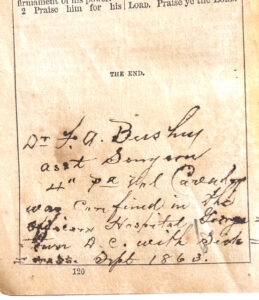
Civil War Id’d Bible Carried by Surgeon Franklin A. Bushey Field & Staff 3rd Pa. Infantry, Field & Staff 4th Pa. Cavalry
Civil War Id’d Bible Carried by Surgeon Franklin A. Bushey Field & Staff 3rd Pa. Infantry, Field & Staff 4th Pa. CavalryApril 11, 2026 -
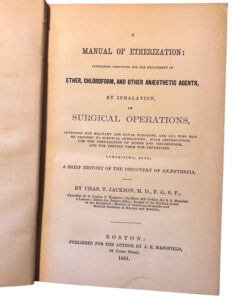
Rare 1st Edition Civil War Medical Book Entitled: A Manual of Etherization : Containing Directions for the Employment of Ether, Chloroform, and Other Anæsthetic Agents, by Inhalation, in Surgical Operations; with Instructions for the Preparation of Ether and Chloroform, and for Testing Them for Impurities. Comprising, also, a Brief History of the Discovery of Anæsthesia – By Charles T. Jackson
$850Rare 1st Edition Civil War Medical Book Entitled: A Manual of Etherization : Containing Directions for the Employment of Ether, Chloroform, and Other Anæsthetic Agents, by Inhalation, in Surgical Operations; with Instructions for the Preparation of Ether and Chloroform, and for Testing Them for Impurities. Comprising, also, a Brief History of the Discovery of Anæsthesia – By Charles T. JacksonJanuary 24, 2026 -
Richmond Antebellum Period M. E. Church South Bible Positioned in the R, F & P Railroad Station on Broad Street
$450Richmond Antebellum Period M. E. Church South Bible Positioned in the R, F & P Railroad Station on Broad StreetMarch 7, 2026 -

1869 Register of the Confederate Dead Hollywood Cemetery Richmond with Foldout Map
$4501869 Register of the Confederate Dead Hollywood Cemetery Richmond with Foldout MapDecember 16, 2023