
CDV of Private William Henry Dorsey of Co. K, 1st Virginia Cavalry RegimentOctober 1, 2026
 Early Civil War Peri...$2,350
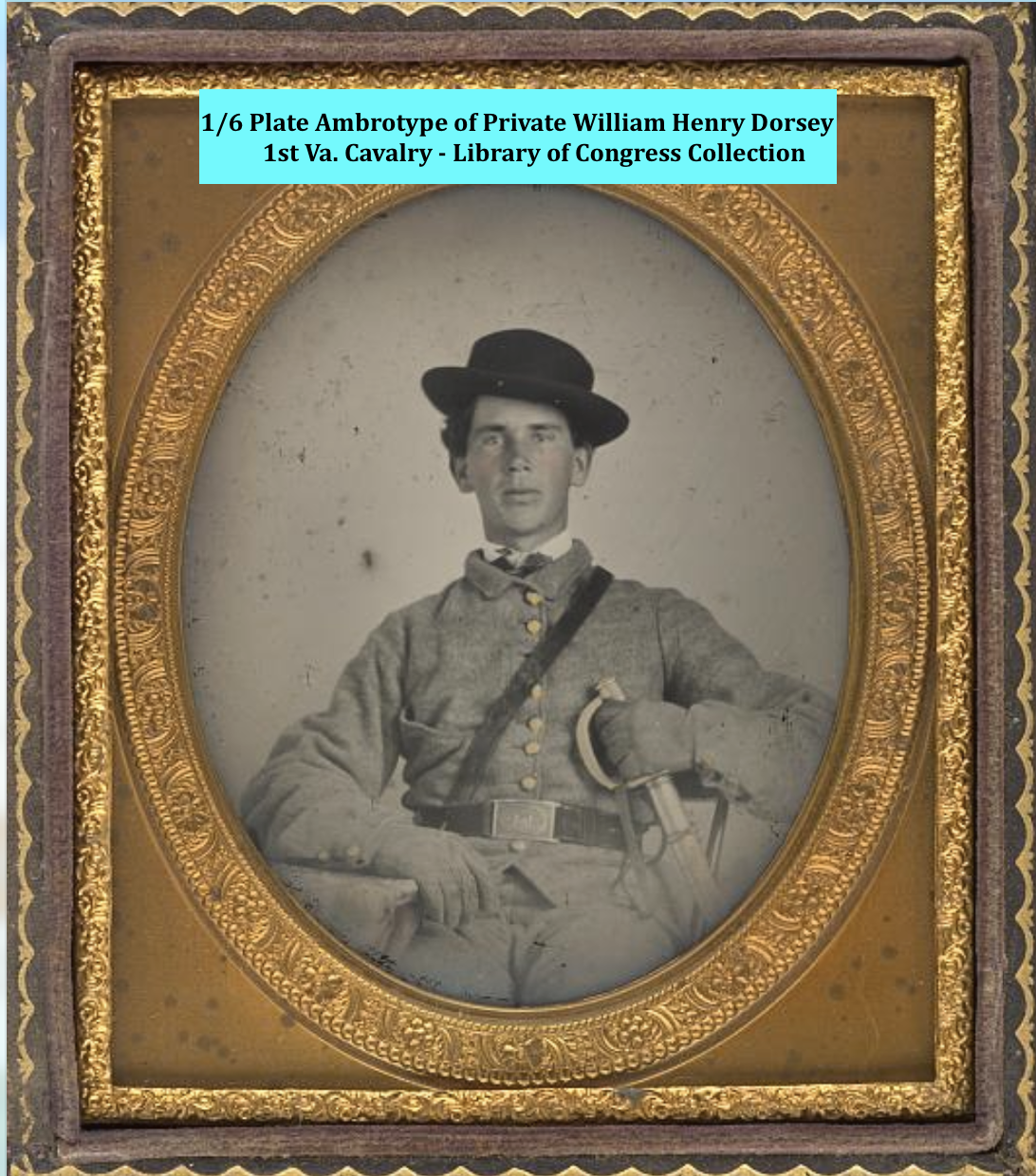
 1/6 Plate Ambrotype ...$1,250
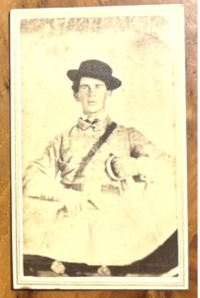
CDV of Private William Henry Dorsey of Co. K, 1st Virginia Cavalry Regiment
$1,150
ON HOLD
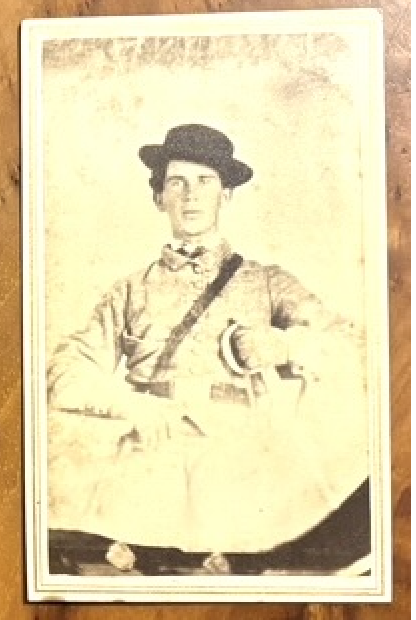
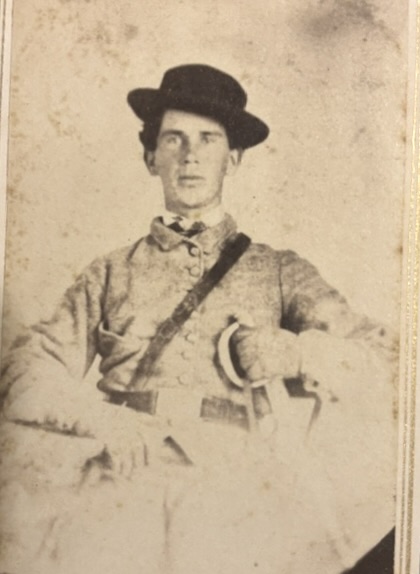
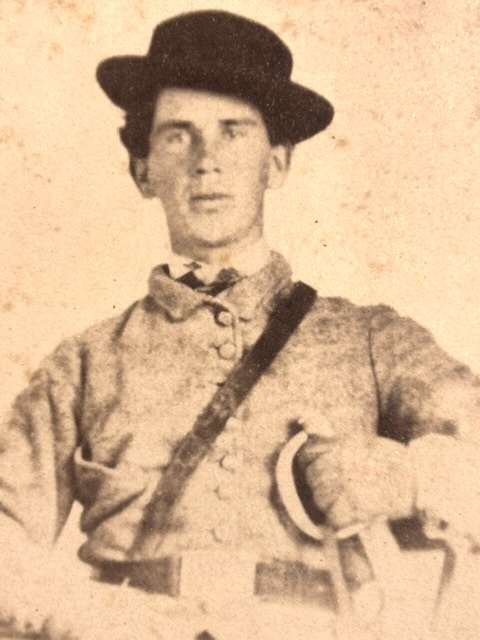
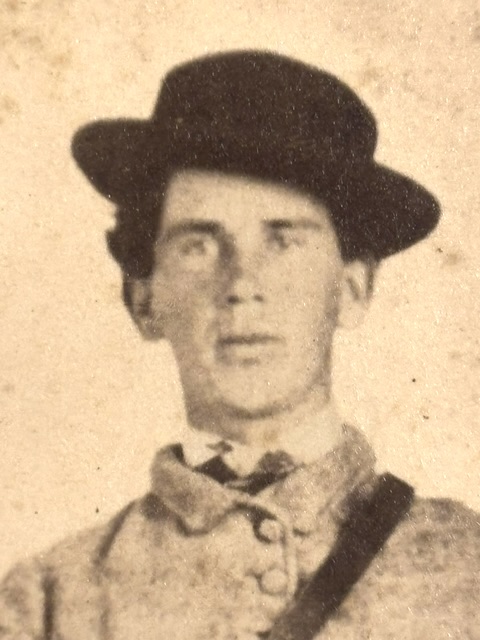
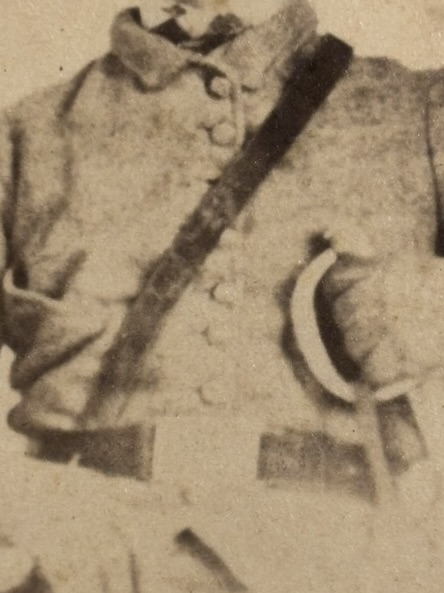
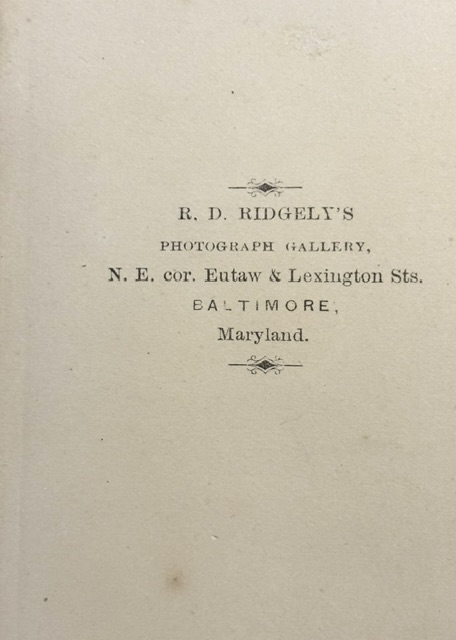
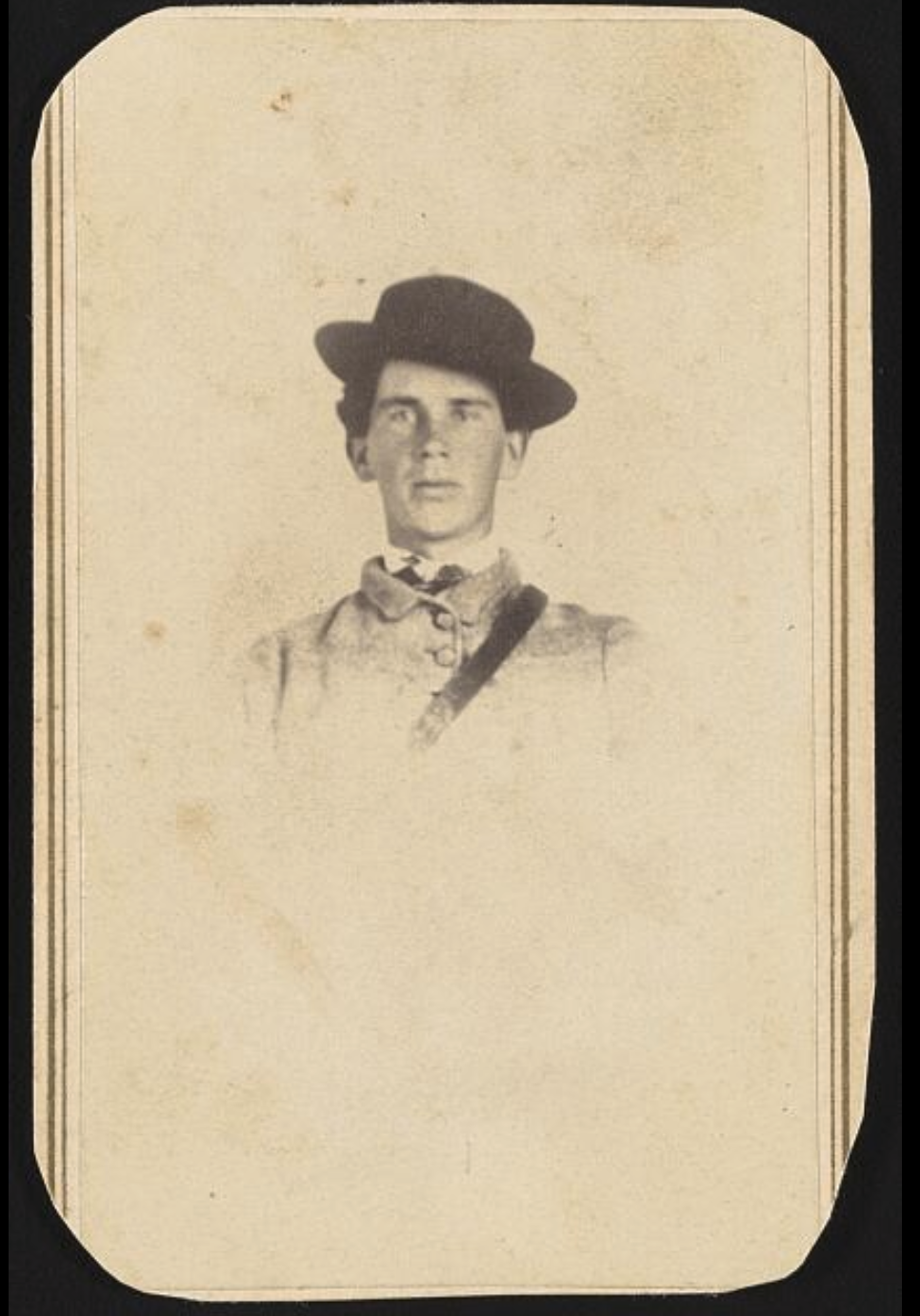
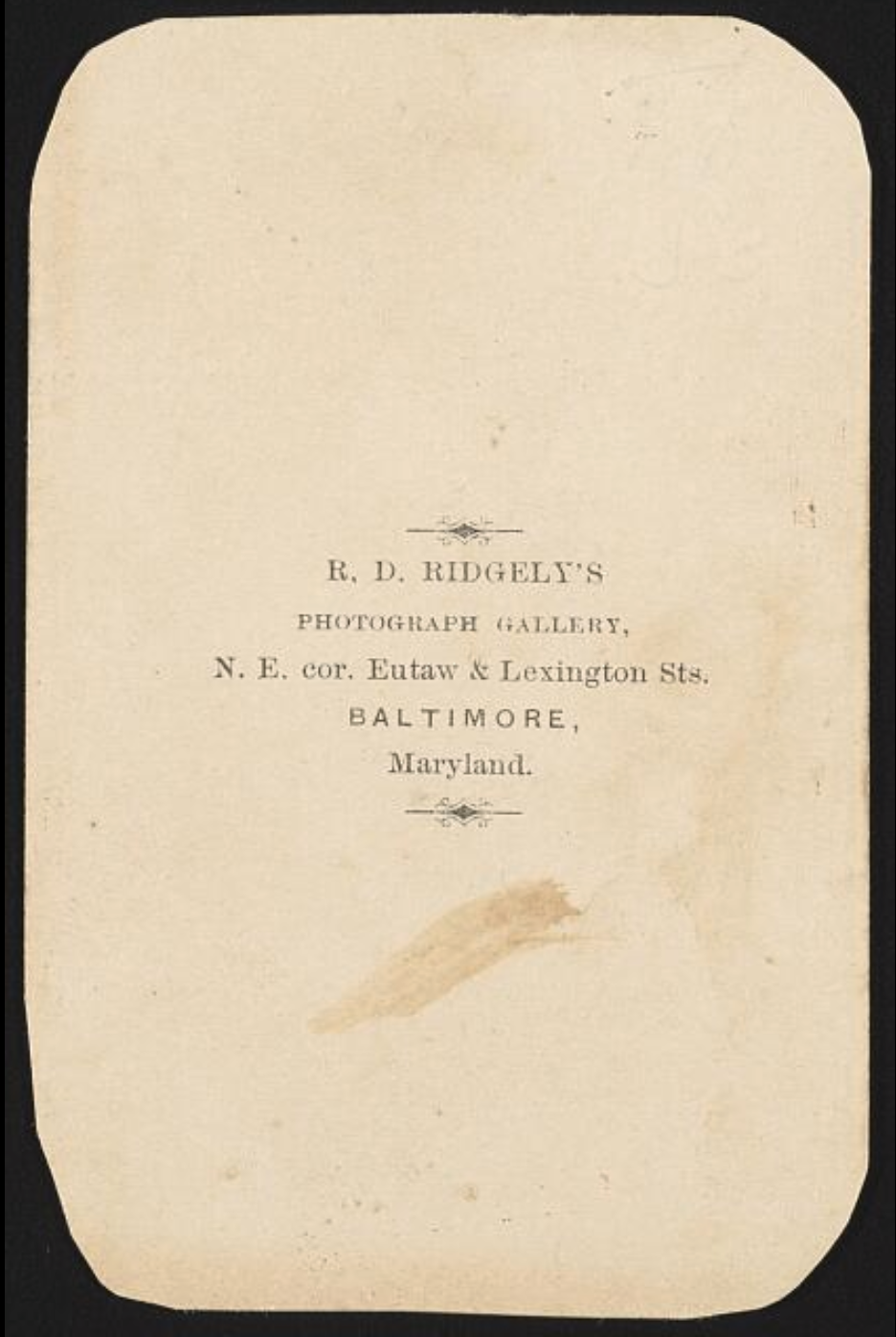
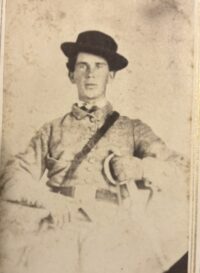
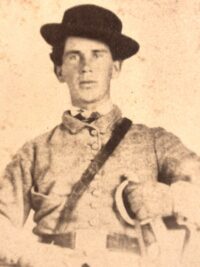
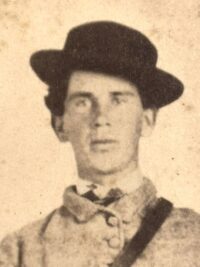
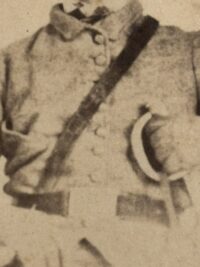
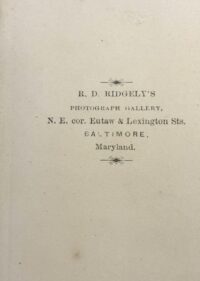
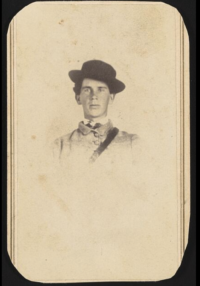
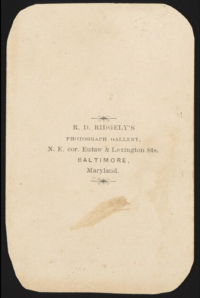
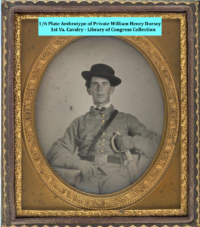
CDV of Private William Henry Dorsey of Co. K, 1st Virginia Cavalry Regiment – This CDV depicts Private Dorsey of Co. K 1st Virginia Cavalry. Dorsey is wearing a sword belt with a rectangular Maryland belt plate; the soldier has a shoulder strap which appears to go under his belt, as it is perhaps a canteen strap; he is holding a saber with a sword knot hanging from the knuckle bow; Dorsey is wearing a nine-button shell jacket and dark colored slouch hat. This image, as a tinted 1/6 plate ambrotype, appears in Dave Mark’s book “Maryland Confederate Faces”, as an unidentified Maryland cavalryman; another version of this image, as a CDV, that only is a bust view of Dorsey, is in the Library of Congress collection; both this CDV we are offering and the Library of Congress bust view, CDV, have a Baltimore photographer’s back mark – ***R.D. Ridgely. The 1/6 plate ambrotype that appeared in Dave Mark’s book, is now in the Library of Congress’ collection and identified as Private William Henry Dorsey. Private Dorsey was wounded on approximately May 10, 1863 and hospitalized at Charlottesville, Virginia; he was wounded again on October 11, 1863, at Raccoon Ford, Virginia, and killed on May 9, 1864, at Spotsylvania Court House, Virginia. The CDV remains in overall excellent condition.
William Henry Dorsey
Residence Martinsburg, WV; 16 years old.
Enlisted on 12/28/1862 at Leesburg, VA as a Priv. On 12/28/1862, he mustered into “K” Co. Virginia 1st Cavalry.
He was Killed on 5/9/1864 at Spotsylvania Court House, VA; He was listed as:
- Wounded 5/10/1863 (place not stated) (Estimated day)
- Hospitalized 5/15/1863 Charlottesville, VA (With wound, estimated day)
- Returned 6/2/1863 (place not stated)
- Wounded 10/11/1863 Raccoon Ford, VA
- Returned 11/15/1863 (place not stated) (Estimated day)
Born in 1846 in Maryland
*** R.D. Ridgely (Richard D. Ridgely, born approx. 1829) was a 19th-century professional photographer who operated a prominent portrait studio in Baltimore, Maryland, during the American Civil War era.
Studio Location and Active Years
- Name: R.D. Ridgely’s Photograph Gallery
- Location: Northeast corner of Eutaw and Lexington Streets, Baltimore, MD.
- Active Period: Actively producing work—including popular carte de visite (CDV) albumen prints—roughly between 1862 and the late 1860s.
Notable Work and Legacy
- Civil War Portraits: Ridgely’s gallery captured numerous historic CDVs of soldiers and local citizens during the 1860s, including documented portraits of both Union and Confederate service members (such as Private William Henry Dorsey of the 1st Virginia Cavalry).
- Historical Mentions: His studio is referenced in regional photographic history archives, such as research compiled in the Photographicus Baltimorensis overview of 19th-century Maryland practitioners.
1st Regiment, Virginia Cavalry
Overview:
1st Cavalry Regiment completed its organization at Winchester, Virginia, in July, 1861. Unlike most regiments, the 1st contained twelve companies. The men were from the counties of Frederick, Berkeley, Rockbridge, Clarke, Washington, Augusta, Jefferson, Amelia, Loudoun, Rockingham, and Gloucester. After taking part in the Battle of First Manassas, the unit was brigaded under Generals J.E.B. Stuart, F. Lee, Wickham, and Munford. It participated in more than 200 engagements of various types including the Seven Days’ Battles and Stuart’s ride around McClellan. The regiment was active in the conflicts at Gainesville, Second Manassas, Sharpsburg, Fredericksburg, Kelly’s Ford, Chancellorsville, Brandy Station, Gettysburg, Bristoe Station, The Wilderness, Todd’s Tavern, Spotsylvania, Bethesda Church, and Cold Harbor. Later it was involved in Early’s operations in the Shenandoah Valley, the defense of Petersburg, and the Appomattox Campaign. In April, 1862, it totalled 437 men, lost eight percent of the 310 engaged at Gettysburg, and had 318 fit for duty in September, 1864. The cavalry cut through the Federal lines at Appomattox and later disbanded. Only 1 man from this unit were present at the surrender. The field officers were Colonels R. Welby Carter, James H. Drake, William E. Jones, Fitzhugh Lee, William A. Morgan, and James E.B. Stuart; Lieutenant Colonels L. Tiernan Brien and Charles R. Irving; and Major Robert Swan.
1st Virginia Cavalry Regiment
| 1861 | |
| May 3 | Mustered into Virginia service for one year under the command of Acting Colonel J.H. Drake. Formed from companies of independent horse in the field at Harpers Ferry. Virginia. It was made up of 12 companies of men from the counties of Amelia, Augusta, Berkeley, Clarke, Frederick, Gloucester, Jefferson, Loudoun, Rockbridge, Rockingham and Washington:
· Company A, Newtown Light Dragoons: Captain J. H. Drake · Company B, Berkeley Troop: Captain J. B. Hoge · Company C, Rockbridge Dragoons No.1: Captain M. X. White, Jr. · Company D, Clarke Cavalry: Captain J. F. Hardesty · Company E, Valley Rangers: Captain W. Patrick · Company F, Shepherdstown Troop: Captain W. A. Morgan · Company G, Amelia Light Dragoons: Captain C. R. Irving · Company H, Loudoun Light Horse: Captain R. W. Carter · Company I , Harrisonburg Cavalry: Captain T. L. Yancey · Company K, Rockingham Cavalry or River Rangers: Captain E. S. Yancey · Company L, (1st) Washington Mounted Rifles: Captain William E. Jones · Company L, (2nd) Gloucester Light Dragoons: Captain J. W. Puller · Company M, Howard Dragoons: Captain G. R. Gaither, JR. · Company N, Natchez Cavalry or Adams Troop: Captain W. T. Martin · Company O, Sumter Mounted Guards: Captain W. M. Stone |
| July 1 | Mustered into one year’s Confederate service |
| July 16 | Lieutenant Colonel James E.B. Stuart, Provisional Army of Virginia, was appointed colonel of the 1st Virginia Cavalry. |
| July 21 |
Battle of Manassas (Bull Run)The 1st Virginia Cavalry’s charge helped shatter the Federal line. Captain Hardesty of company C resigned. H.M. Nelson was appointed captain but was not present for duty, so Lieutenant W. Taylor of Company D took temporary command of Company C for the battle. |
| August | Major William E. Jones was promoted to colonel |
| September 24 | Colonel Stuart was promoted to brigadier general. |
| September 29 | Fitzhugh Lee was appointed lieutenant colonel |
| October 9 | Company D was assigned to the 6th Virginia Cavalry. |
| Colonel Jones lost to Lieutenant Colonel Fitzhugh Lee in the election for colonel in the fall reorganization of the army. Lee was appointed lieutenant colonel of the 1st Virginia Cavalry and Jones became colonel of the 7th Virginia Cavalry. | |
| 1862 | |
| April | The regiment totaled 437 men. Fitzhugh Lee was elected colonel, James H. Drake to lieutenant colonel and and Captain Luke Tiernan Brien to major. |
| June 12-15 |
Stuart’s Ride Around McClellan |
| June 25-July 1 |
Seven Days Before Richmond |
| July 24 | Colonel Lee was promoted to brigadier general. Lieutenant Colonel Drake was promoted to Colonel, Major Brien to lieutenant colonel, and Captain Richard W. Carter of Company H was promoted to major. |
| July 28 | The Cavalry Division of the Army of Northern Virginia was created under the command of Major General James E.B. Stuart. The 1st Virginia was assigned to the brigade of Brigadier General Fitzhugh Lee, along with the 3rd, 4th, 5th and 9th Virginia Cavalry and Breathed’s Battery of Horse Artillery. |
| September 17 |
Battle of AntietamThe regiment was commanded by Lieutenant Colonel Brien. From the War Department marker for F. Lee’s Brigade on the Antietam battlefield:The 1st Cavalry, detached on the 10th, rejoined on the morning of the 17th and the Brigade took position on the left of Jackson’s Command, which it assisted in resisting the Union advance. On September 18th and 19th the Brigade covered the withdrawal of the Army of Northern Virginia to the south bank of the Potomac. |
| October | Lieutenant Colonel Brien resigned, probably due to health reasons. Major Carter was promoted to lieutenant colonel. |
| December |
Battle of Fredericksburg |
| 1863 | |
| March 17 |
Battle of Kelly’s Ford |
| April 30-May 6 |
Chancellorsville Campaign |
| June 9 |
Battle of Brandy Station |
| June 3 – July 24 |
Gettysburg Campaign |
| July 1-3 |
Battle of GettysburgThe 1st Virginia Cavalry was commanded by Colonel James Drake. It lost 25 men out of the 310 engaged From the monument to F. Lee’s Brigade on the Gettysburg battlefield:July 3. The Battalion being on duty with Ewell’s Corps the Brigade brought only five regiments to this field where it arrived soon after midday and took position on the left of Hampton’s Brigade on the edge of the neighboring woods. It participated actively in the conflict which ensued. |
| July 15 |
Shepherdstown, West Virginia |
| July 16 |
Leetown, West VirginiaColonel James Drake was killed. Major William A. Morgan was wounded, but remained with the regiment and took command. Morgan was promoted to lieutenant colonel effective the next day. |
| September 9 | Stuart’s Cavalry Division was enlarged to a corps. Brigadier General Fitzhugh Lee was promoted to major general and given command of a division. Colonel Williams Wickham was promoted to brigadier general and given command of the brigade, which was assigned to Fitz Lee’s division. |
| November 26-December 2 |
Mine Run Campaign |
| December 17 | Colonel Carter was captured at Upperville, near his home and well away from his regiment. He would spend the next eight months in Federal prison camps at Camp Chase, Ohio, Fort Delaware and Hilton Head. |
| 1864 | |
| February 6-7 | Operations on the Rapidan, Morton’s Ford |
| February 28 – March 4 |
Kilpatrick-Dahlgren Raid, Defence of Richmond |
| March 1 | Skirmishes at Hanover Junction and Ashland |
| March 3 | Skirmish at Tunstall Station |
| May 5-7 |
Battle of The Wilderness |
| May 7 |
Battle of Todd’s Tavern |
| May 8 | Alsop’s Farm, Spotsylvania |
| May 9-24 | Sheridan’s Expedition to the James |
| May 9-10 | Beaver Dam Station |
| May 11 |
Yellow TavernColonel William Cheek was badly wounded. Captain Gustavus Dorsey of Company K told how he was near General Stuart when he was mortally wounded, and caught him when he fell from his horse. |
| May 11 | Ground Squirrel Church |
| August 4 | Colonel Carter was exchanged and returned to command of the regiment. |
| mid-August | The regiment transferred with Fitz Lee’s Division to the Shenandoah Valley with Lieutenant General Jubal Early’s Army of the Valley |
| August 16 | Front Royal |
| August 18 | Opequon Creek |
| August 19-21 | Berryville |
| September 1864 | The 1st Virginia Cavalry Regiment reported 318 men fit for duty |
| October 9 |
Battle of Tom’s BrookColonel Carter was cashiered for “misbehavior in the face of the enemy” and neglect of duty.” |
| November | Brigadier General Wickham resigned to take up his seat in Congress. Colonel Thomas Mumford of the 2nd Virginia Cavalry took command of the brigade as senior colonel. |
| December | Lieutenant Colonel Morgan was promoted to colonel. |
| 1865 | |
| January | The brigade’s men were disbanded to their homes to forage their mounts through the winter. |
| mid-March | The regiment re-formed and moved to the Richmond area |
| April 1 |
Battle of Five Forks |
| April 6 |
Battle of High Bridge |
| April 9 |
Appomattox Court HouseThe Cavalry cut through Union lines and escaped, leaving behind only one member who surrendered there. |
| April 11 | the 1st Virginia Cavalry Regiment disbanded at Lynchburg. |
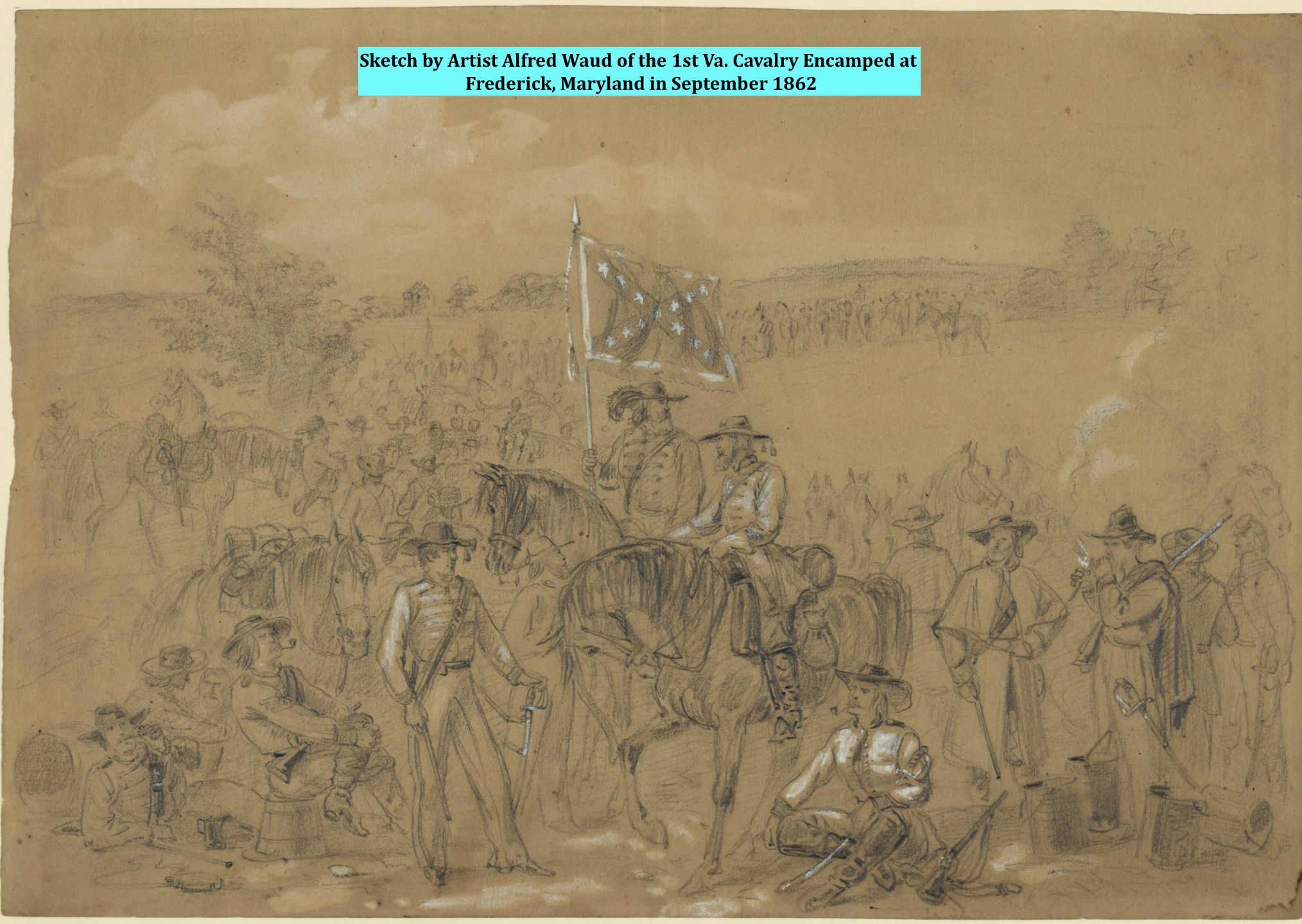
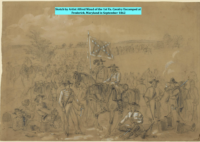
***See sketch of the 1st Va. Cavalry by noted Civil War artist Alfred Waud; in the sketch. In Waud’s sketch, a member of the 1st Virginia Cavalry carries the Confederate battle flag in this on-the-scene sketch made by Harper’s Weekly illustrator Alfred R. Waud. The Northern artist was trapped behind enemy lines in September 1862 and detained for a time by Confederate troopers encamped in Frederick, Maryland. Waud took the opportunity to create this pencil and Chinese white drawing, the basis for an engraving that appeared in the September 27, 1862, edition of the magazine. In the accompanying Harper’s text, Waud described the 1st Virginia Cavalry as “one of the two crack regiments of the Confederate service.” According to Waud, many of the men in the unit were “of considerable social standing, that is, most of them—F.F.V.’s [First Families of Virginia] … [T]hey bragged of having their own horses, and, in many cases, of having drawn no pay from the Government, not needing the paltry remuneration of a private.”
Related Items
-
Fine Civil War Officer’s Autograph Book – 3rd NY Infantry – Close to 40 Signatures
$850Fine Civil War Officer’s Autograph Book – 3rd NY Infantry – Close to 40 SignaturesApril 23, 2021 -
Id’d Civil War Camp Mirror – Lt. and Quartermaster John S. Ives 25th Connecticut Infantry
$750Id’d Civil War Camp Mirror – Lt. and Quartermaster John S. Ives 25th Connecticut InfantryDecember 24, 2021 -
Id’d Homespun Mid-Seam Blanket of Private Ernest M. Copp Co. K 2nd Massachusetts Cavalry
$650Id’d Homespun Mid-Seam Blanket of Private Ernest M. Copp Co. K 2nd Massachusetts CavalryJanuary 17, 2023 -

Early Civil War Commission of Lt. Charles P. Herring (Later a Brig. General) in the Gray Reserves of Philadelphia Signed by Pennsylvania Wartime Governor Andrew Curtin
$375Early Civil War Commission of Lt. Charles P. Herring (Later a Brig. General) in the Gray Reserves of Philadelphia Signed by Pennsylvania Wartime Governor Andrew CurtinDecember 18, 2022