
Civil War Field Glasses and Case Picked up on the Gaines’ Mill Battlefield by Col. Clark S. Edwards 5th Maine InfantryJune 14, 2026
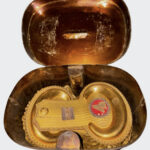
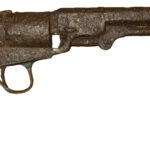
Civil War Field Glasses and Case Picked up on the Gaines’ Mill Battlefield by Col. Clark S. Edwards 5th Maine Infantry
SOLD
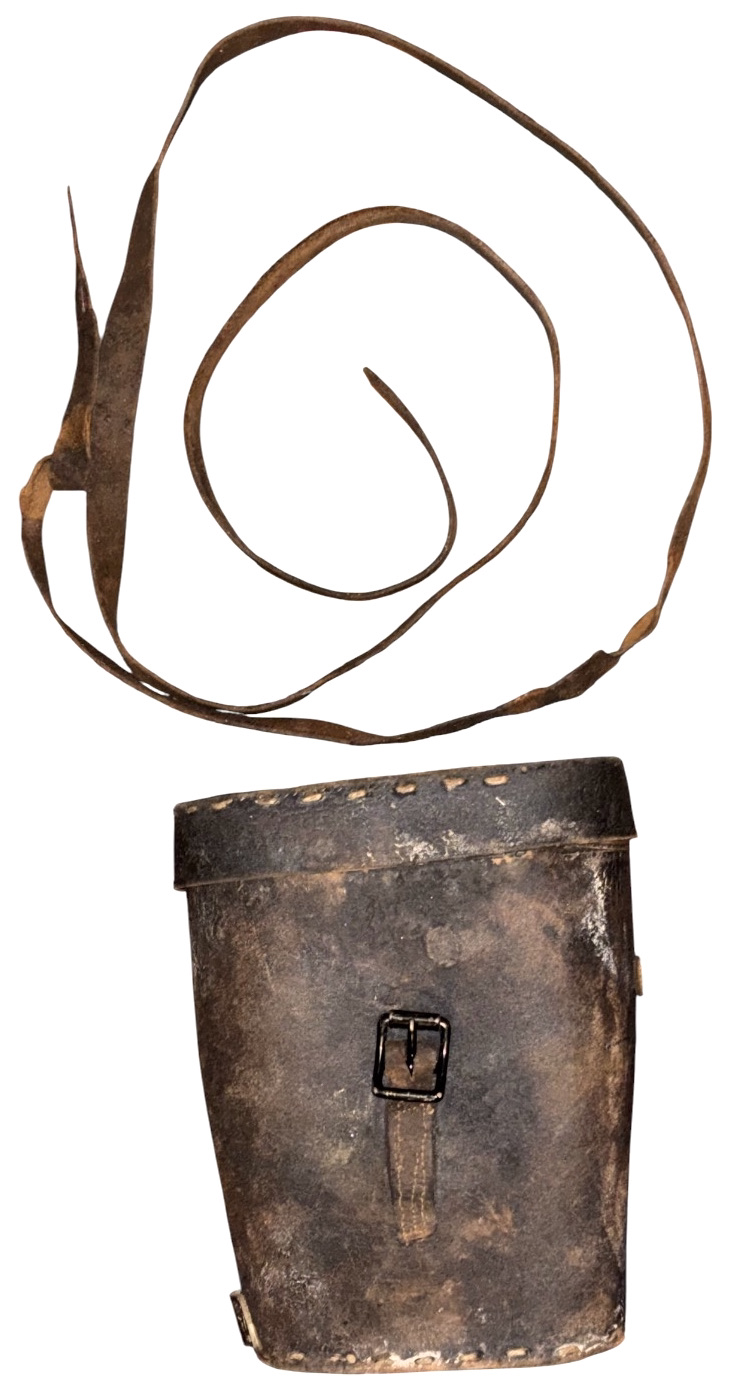
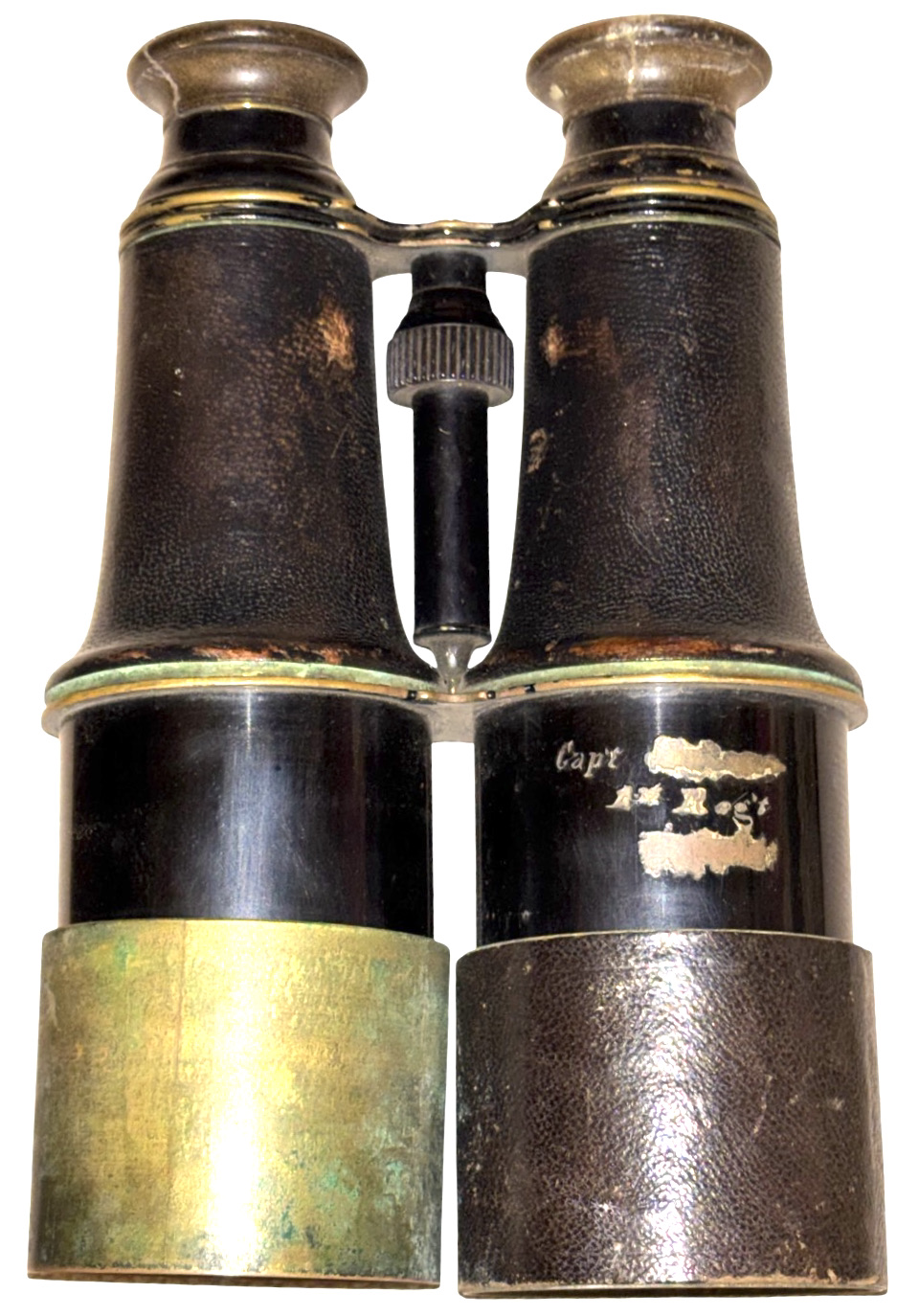
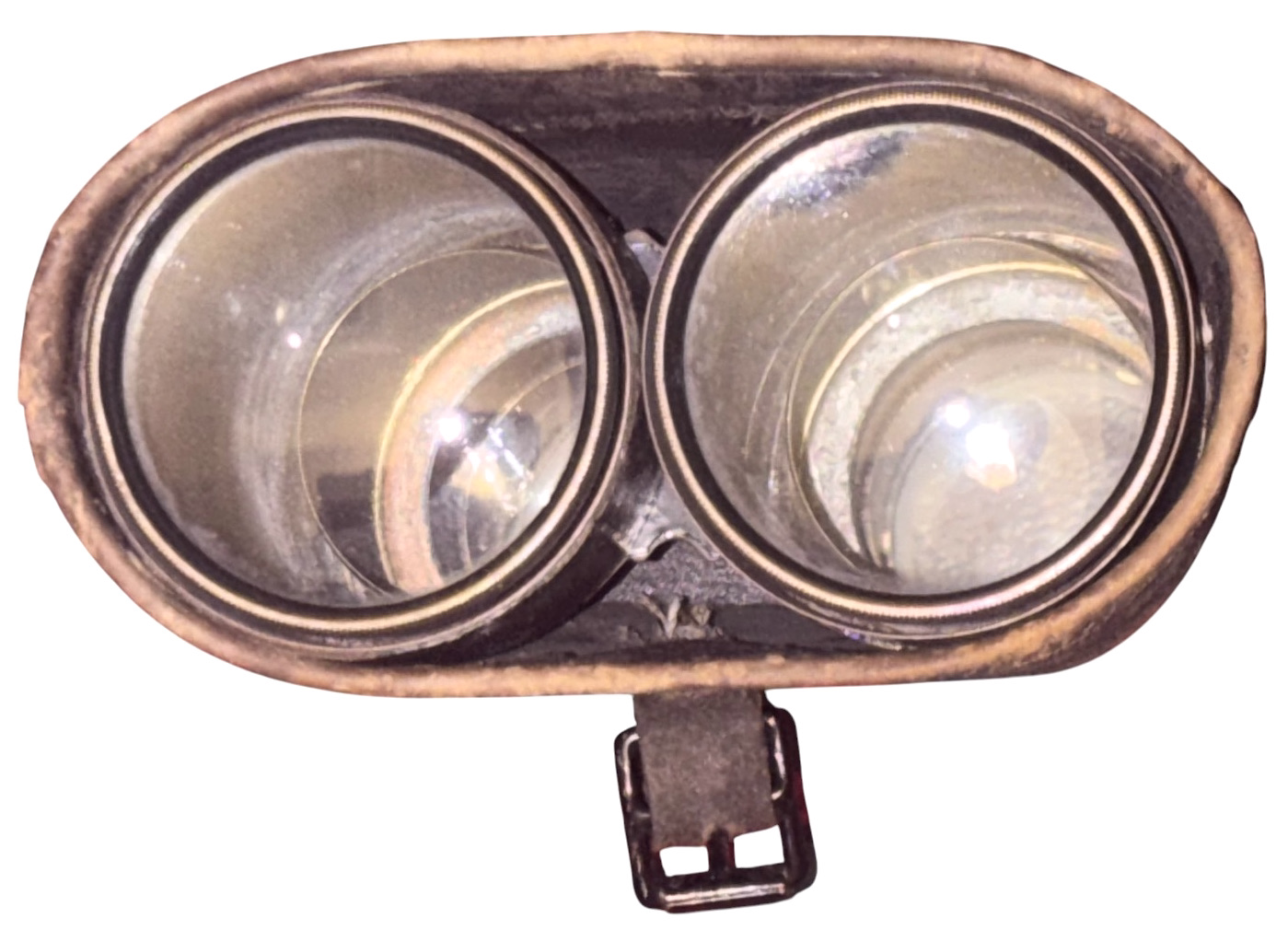
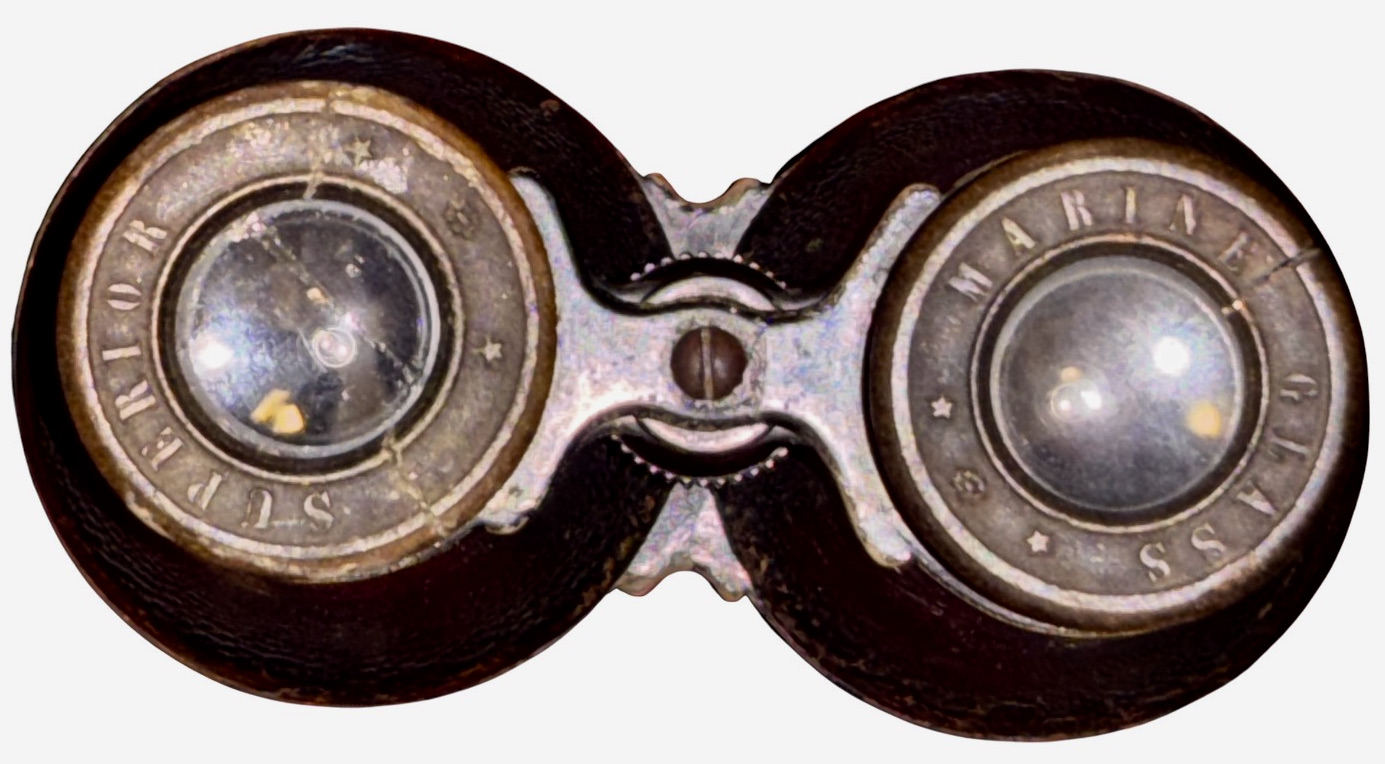
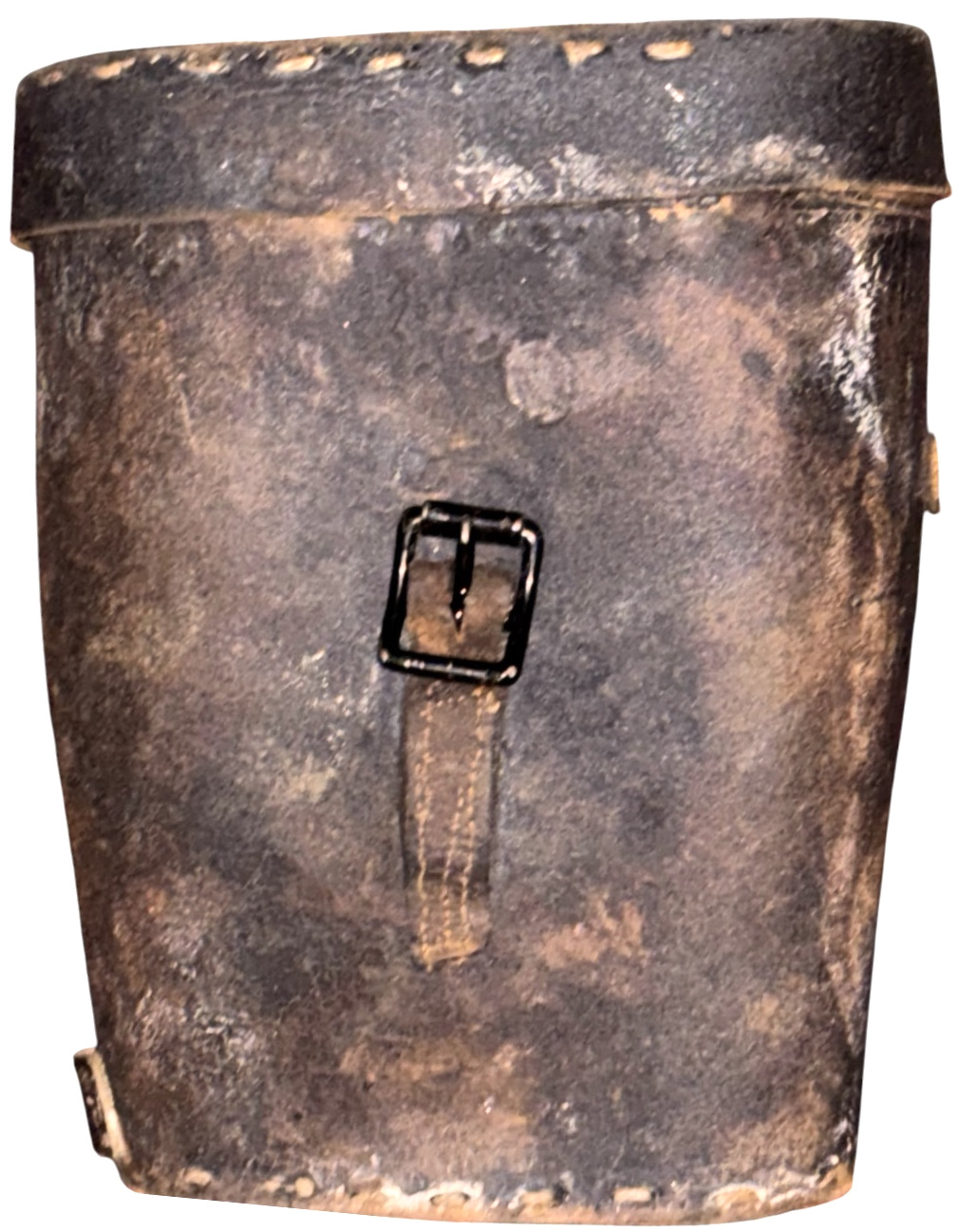
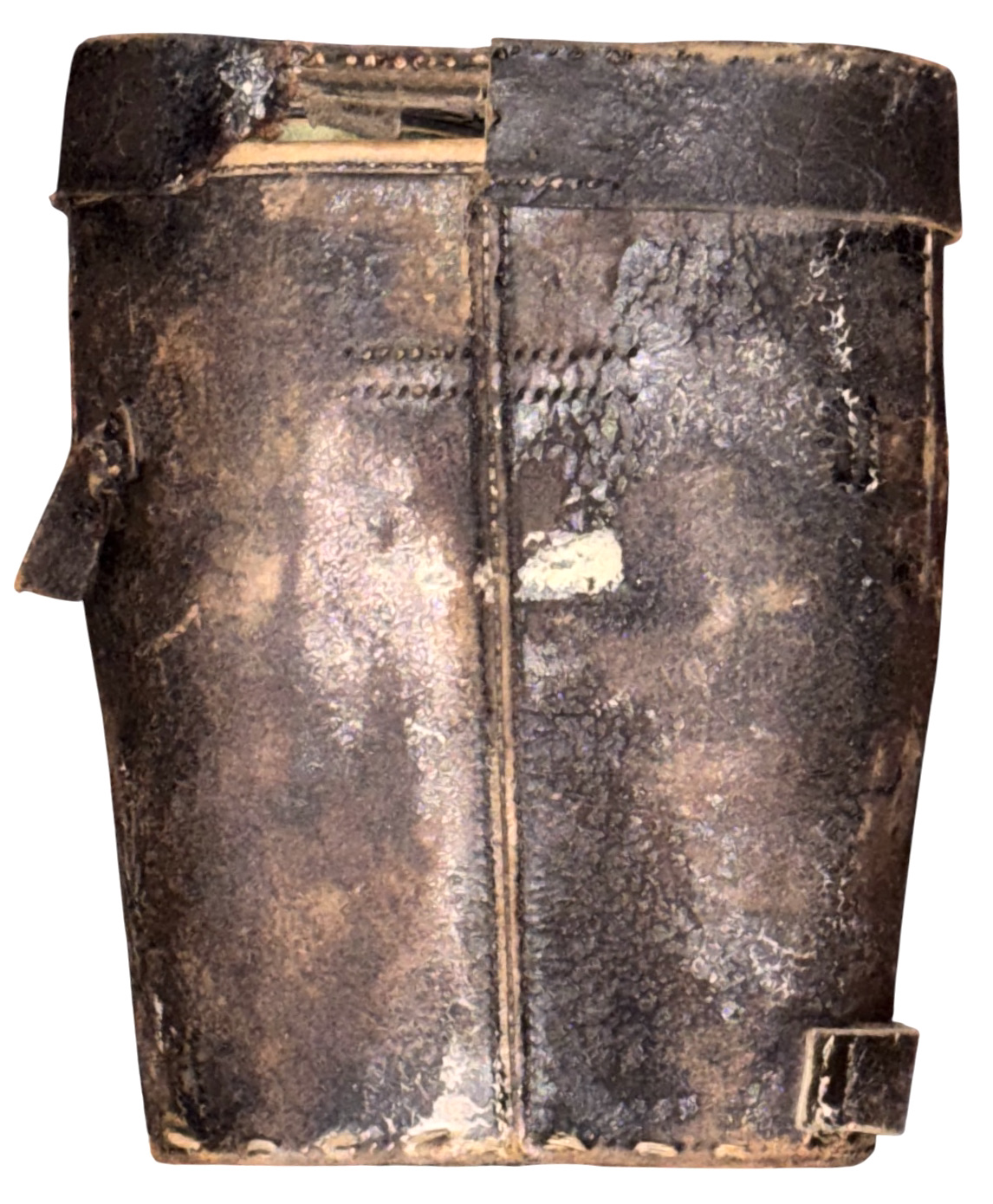
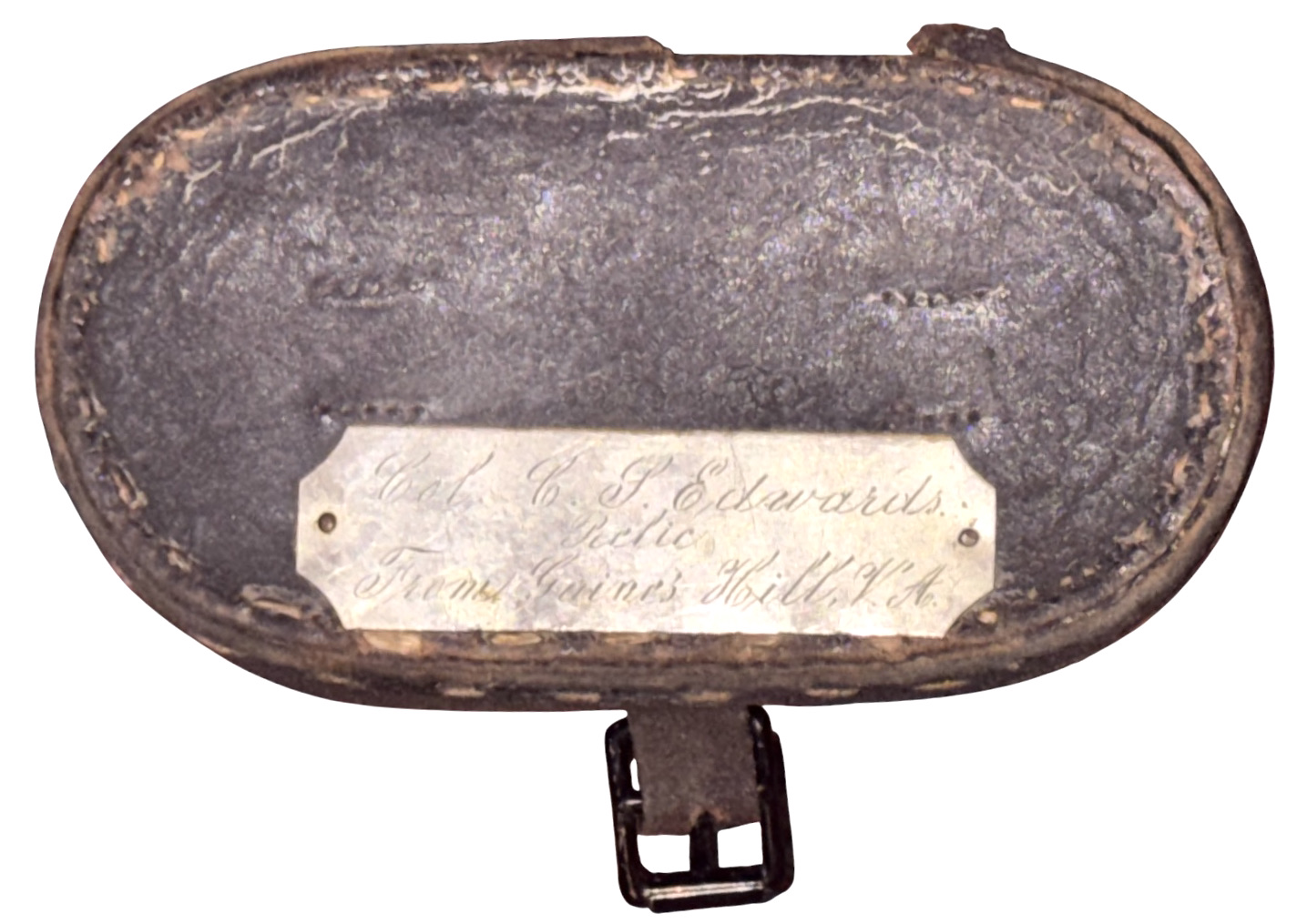
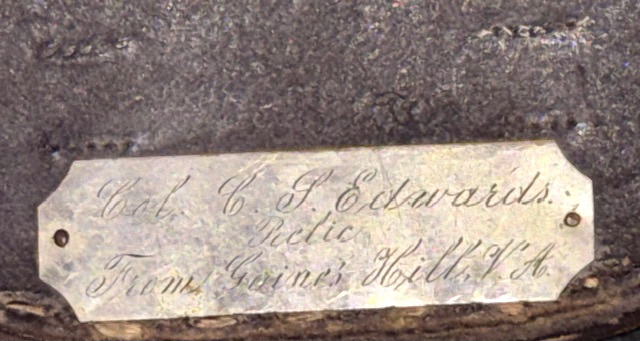
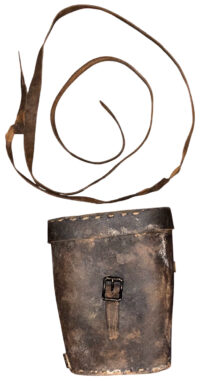
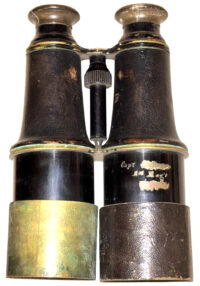
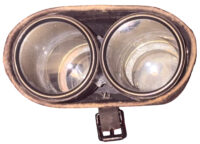
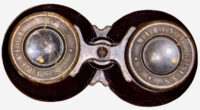
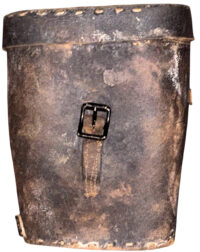
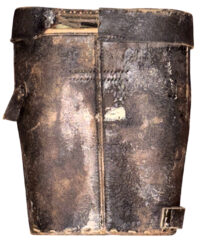
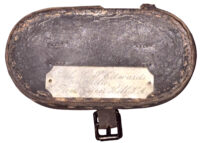
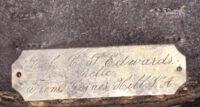
Civil War Field Glasses and Case Picked up on the Gaines’ Mill Battlefield by Col. Clark S. Edwards 5th Maine Infantry – These field glasses are American made and definitively from the Civil War period. The eyepiece lenses are contained within gutta percha surrounds – one of the surrounds has a raised letter descriptor – “SUPERIOR”; the other surround has another raised letter descriptor – “MARINE GLASS”. The focus stem is also constructed of gutta percha, typical of war period glasses. Although one of the eyepiece lenses is cracked, the optics remain fine. Common to military field glasses, this pair exhibits extendable sunshades over the objective lenses. One sunshade barrel remains covered with brown, pebble grain leather; the other no longer retains the leather cover. Also typical of war period glasses, the bridge between the eyepiece lenses is straight, not bent to conform to the bridge of the user’s nose. This pair of field glasses retains its original, war period, black bridle leather, carrying case and shoulder strap; the strap is no longer affixed to the case proper; one end of the strap has been broken off, seemingly during the period of use. The case is intact but is no longer hinged to the case body. Significantly, affixed to the top of the case is an elongated, silver escutcheon that is nicely engraved, during the war (evidenced by the style of engraving) with the following:
“Col. C.S. Edwards.
Relic
From Gaines’ Hill, VA.”
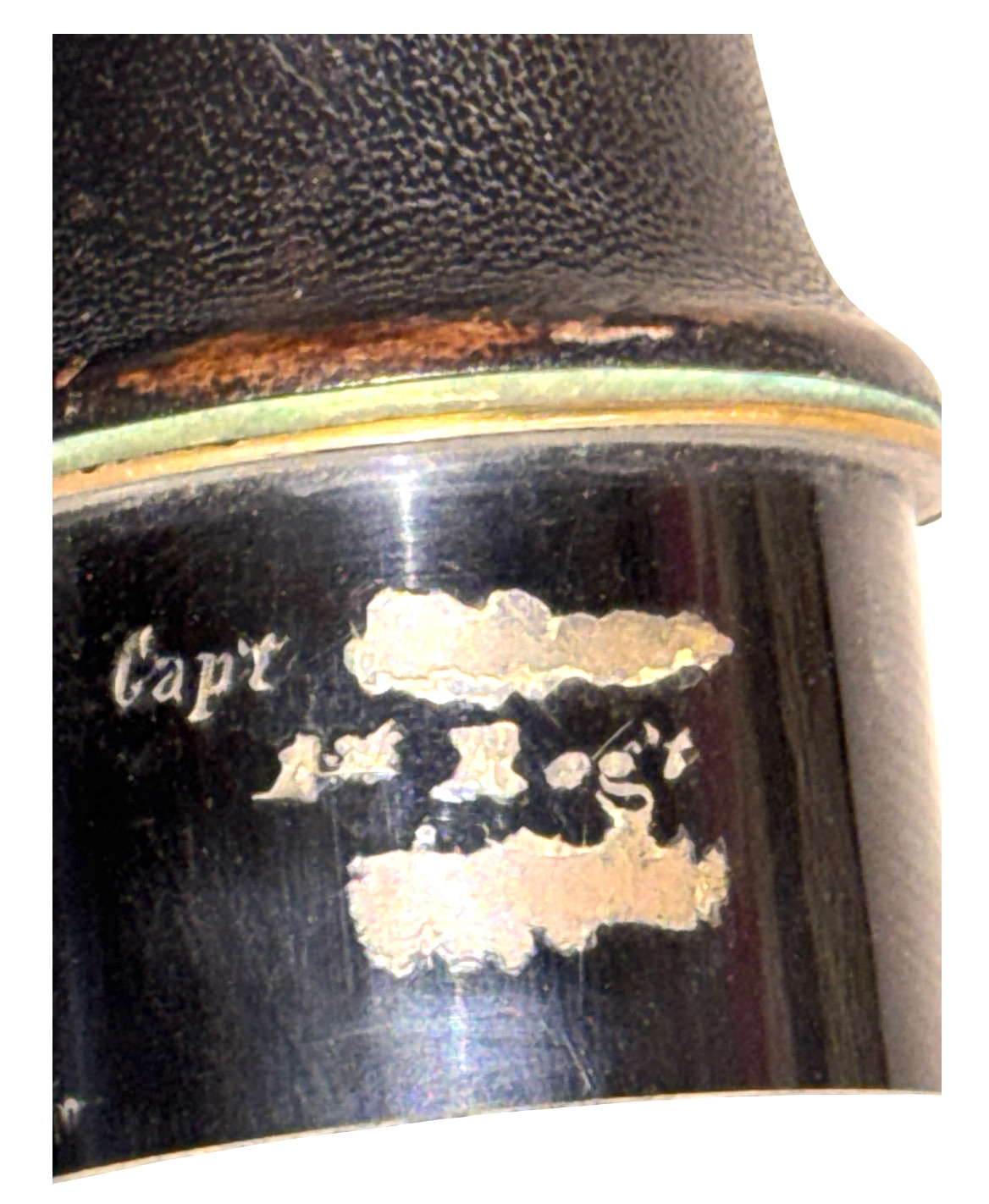
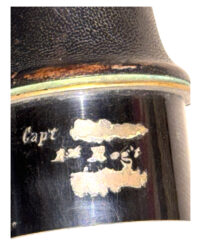
Also of significance, stylistically scratched into a section of one of the black lacquered objective lens tubes, exposed when the sunshade is extended, is the following (although it appears that the Federal discoverer of the field glasses, at Gaines’ Mill, scratched out, what may have been the Confederate officer’s name and regimental designation):
“Capt. ???
1st Reg’t ???”
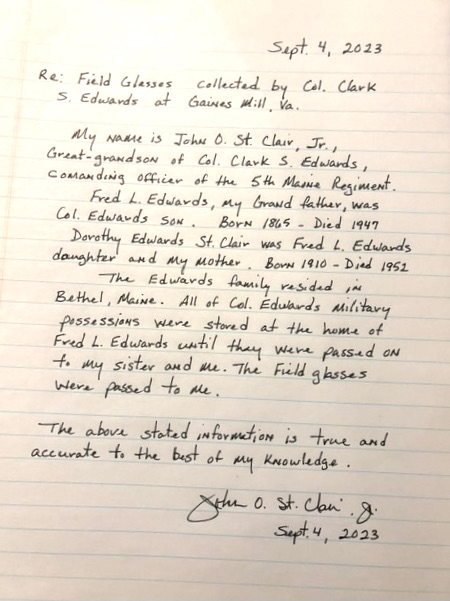
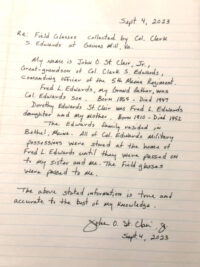
Included with the field glasses is a letter of provenance, written and signed by the great grandson of Col. Edwards.
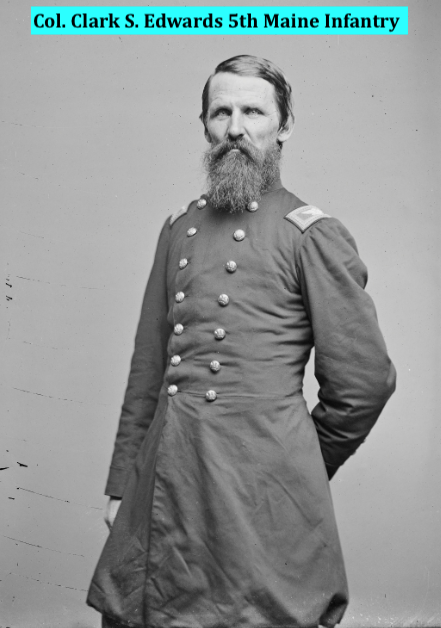
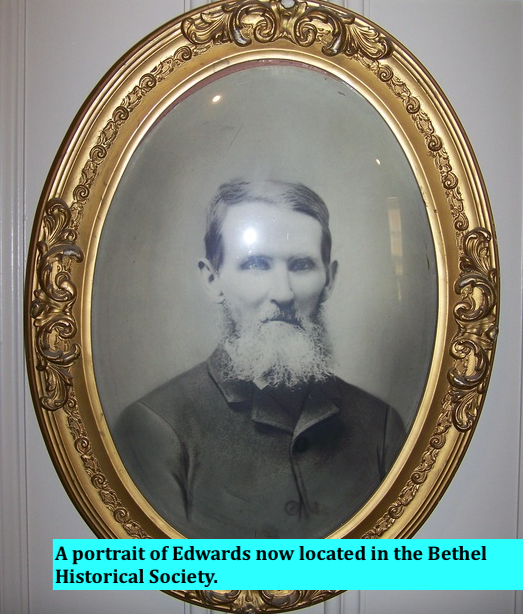
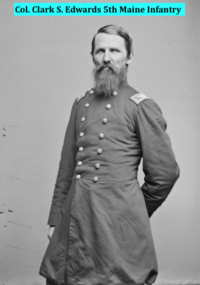
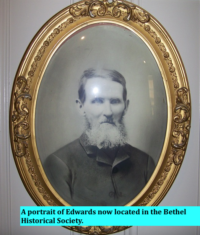
Colonel Clark Swett Edwards (1824 – 1903) organized, at the onset of the Civil War, the volunteer Bethel Maine Rifle Company. Shortly thereafter, Edwards was promoted to the rank of Colonel of the 5th Maine Infantry. Col. Edwards would remain with this regiment throughout the war, seeing combat at multiple, significant engagements, to include the Battle of Gaines’ Mill, in June 1862, where the 5th Maine would sustain numerous casualties. It appears that Col. Edwards picked this pair of cased field glasses on the field at Gaines’ Mill; in consideration of the remnants of the original owner’s name and regiment, these glasses were probably in the possession of a Confederate officer at the start of the action at Gaines’ Mill. Col. Edwards would be in command of the 5th Maine, at the Battle of Gettysburg as well as numerous other engagements. In 1864, Edwards would muster out, at the rank of Brevet Brigadier General. General Edwards, after the war, was appointed by the Governor of Maine, to the state’s Gettysburg Commission; in 1886, Edwards was Maine’s Democratic Party’s gubernatorial candidate; in 1893, he was appointed to the Columbia Exposition Commission (the World Fair of 1893 in Chicago).
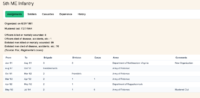
Clark Swett Edwards
Residence Bethel, ME; 37 years old.
Enlisted on 6/24/1861 as a Captain.
On 6/24/1861, he was commissioned into “I” Co. Maine 5th Infantry.
He was Mustered Out on 7/27/1864
Promotions:
- Major 7/1/1862
- Lt Colonel 11/22/1862
- Colonel 1/8/1863
- Brig-General 3/13/1865 by Brevet
Intra-regimental company transfers
- 7/1/1862 From company I to Field & Staff
Born 3/26/1824 in Otisfield, ME
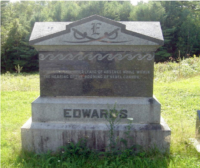
Died 5/3/1903 in Bethel, ME
MAINE FIFTH INFANTRY (Three Years) Fifth Infantry.–Cols., Mark H. Dunnell, Nathaniel J. Jackson, Edward A. Scammon, Clark S. Edwards; Lieut.-Cols., Edwin Illsley, William S. Heath, Edward A. Scammon, Clark S. Edwards, Capt. Millett of Co. A; Majs., Samuel C. Hamilton, Edward A. Scammon, Clark S. Edwards, Capt. Millett, A. S. Daggett. This regiment was recruited from the third militia division of the state. It was mustered into the service of the United States on June 24, 1861, and numbered 1,046 men. It was made up entirely of new companies and was raised at a time when a spirit of intense patriotism prevailed throughout the state, so that little exertion was required to fill its ranks. It left Maine for Washington on June 26, fully equipped and armed with Springfield muskets and bayonets. On its way through New York city it was the recipient of a beautiful flag, presented by the loyal sons of Maine there resident. It remained in camp at Meridian Hill, Washington, until July 5, when it commenced its march to the battle-field of Bull Run. During its three years of severe service, it was engaged in eleven pitched battles and eight skirmishes, prior to its participation in the terrible campaign of the Wilderness under Grant. Its list of battles includes First Bull Run, West Point, Gaines’ Mill, Charles City Cross-Roads, Crampton’s Gap, Antietam, Fredericksburg, Salem Heights, Gettysburg, Rappahannock Station, Wilderness, Spottsylvania Court House and Cold Harbor. In the battle of Gaines’ Mill the 5th lost 10 killed, 69 wounded and 16 missing, its gallant Col. Jackson was carried wounded from the field and Lieut.-Col. Heath was among the killed. At Rappahannock Station, the regiment was conspicuous for its gallantry, and captured 4 standards of the enemy. The flags were presented to Gen. Meade, who said: “In the name of the army and the country I thank you for the services you have rendered, particularly for the example you have set and which I doubt not on future occasions will be followed and emulated.” In a gallant charge on the enemy’s works at Spottsylvania Court House, more than half of the regiment was lost in crossing an open field subject to a raking fire of canister, but it captured the works, and took 2 flags and a large number of prisoners. In addition to the 6 captured flags, the 5th had the record of taking more men prisoners than it carried on its own rolls. It left the front near Petersburg, June 22, 1864, and started for home, arriving in Portland on the 28th with 216 men, who were mustered out of service, July 27, 1864, the veterans and recruits having been transferred to the 7th Me. During its term of service it had received some 500 recruits. Source: The Union Army, vol. 1 ********************************************************************************** Report of Col. Mark H. Dunnell, Fifth Maine Infantry. ALEXANDRIA, VA., July 26, 1861. SIR: The Fifth Regiment of Maine Volunteers is now in quarters in this city. It came to this place with the rest of your brigade on Monday. Their reports which have been called for, and the condition of the regiment, have not allowed me time to report the action of the regiment on the field July 21, and as you were and eye-witness of its action, I have not deemed it necessary to make so great haste in the preparation of this report. I deem it due to many of the officers of my regiment to make a report. The rapid movement of our men for many miles before the commencement of the action completely unfitted them for the labor of the action. None but an immediate eye-witness can fully realize the real sufferings of the men during the march. The best stoutest and bravest men failed, and fell by the roadside. The colonel, major, and surgeon were on the field, and took part in the action by a discharge of their respective duties. Capt. Scammon, Company H; Capt. Thompson, Company D; Capt. Thomas, Company G; Capt. Sherwood, Company F; Capt. Goodwin, Company B, and Capt. Heald, Company A, were each with their respective companies, and with marked courage and self-possession discharged their duties. Capt. Noyes was under arrest. Capt. Tobie was absent on furlough, and Capt. Sawyer and Capt. Edwards were absent by reason of exhaustion caused by the march. Lieut. Barrows, of Company C; Lieut. Buckman, of Company K; Lieut. Walker, of Company G; Lieut. Munson, of Company H; Lieut. Sawyer, of Company G; Lieut. Walker, of Company F, and Lieut. Millett, of Company A, were the only lieutenants in their companies at the time of the action, and these officers deserve much praise for the heroic manner in which they met duty. Company B was fully at the time of the action. Capt. Goodwin and Lieuts. Stevens and Pillsbury were all present, and it is to be reported that not one of Company B was killed or mortally wounded. Capt. Sherwood was badly wounded in the left arm by a musket ball. Lieut. Kenniston, Company D, was wounded and then taken prisoners. Dr. Buxton, surgeon, and hospital stewards were taken by the enemy. The officers and privates of the regiment are in great need of rest, and, when fully recruited, will, I doubt not, be ready to meet any of the demands may be made upon their endurance or their courage. Very respectfully, your obedient servant, MARK H. DUNNELL, Col. Fifth Regiment Maine V.M. Col. O.O. HOWARD, Commanding Third Brigade, Third Division. Source: Official Records PAGE 421-2 OPERATIONS IN MD., PA., VA., AND W. VA. [CHAP. IX. [Series I. Vol. 2. Serial No. 2.] ********************************************************************************** Antietam after battle report: Report of Col. Nathaniel J. Jackson, Fifth Maine Infantry, of the battle of Crampton’s Pass. HEADQUARTERS FIFTH MAINE REGIMENT, Camp near Williamsport, Md., September 23, 1862. SIR: I have the honor to submit the following report of events that transpired on the 14th instant at the battle of Crampton’s Pass, as far as relates to this regiment: About 3.30 o’clock p.m., in company with the remainder of the brigade, we received orders to move forward. We were formed in the first line of battle, in company with the Sixteenth New York Volunteers, our position being upon the left. We immediately moved forward in line to assault the enemy’s lines, under a severe and galling fire. Arriving within about 500 yards, we became engaged with the enemy’s infantry. Our line rested behind a rail fence, which position we maintained for upward of an hour, when our ammunition became completely exhausted. We then fell back a short distance, our position being occupied by a portion of Gen. Newton’s brigade. We then received orders to fix bayonets and charge upon the enemy, which we did at double-quick. We remained upon the battle-field during the night. Both officers and men behaved in a noble manner. Our loss was 4 killed and 28 wounded. I am, sir, very respectfully, your obedient servant, N.J. JACKSON, Col., Commanding Regiment. Lieut. R.P. WILSON, Actg. Asst. Adjt. Gen., Hdqrs. Second Brigade, Gen. Slocum’s Div. Source: Official Records: Series I. Vol. 19. Part I, Reports. Serial No. 27
| 5th Maine Infantry Regiment | |
| Active | June 24, 1861, to July 27, 1864 |
| Country | United States |
| Allegiance | Union |
| Branch | United States Army |
| Type | Infantry |
| Commanders | |
| Colonel | Mark H. Dunnell |
| Maine U.S. Volunteer Infantry Regiments 1861-1865 | ||||
|
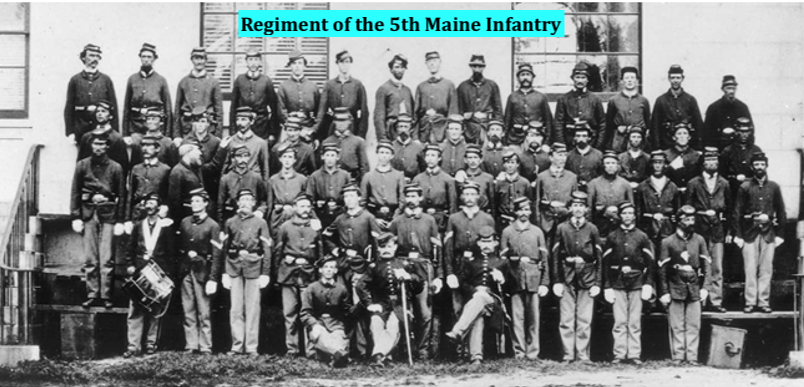
The 5th Maine Infantry Regiment was an infantry regiment of the Union Army during the American Civil War.
Service
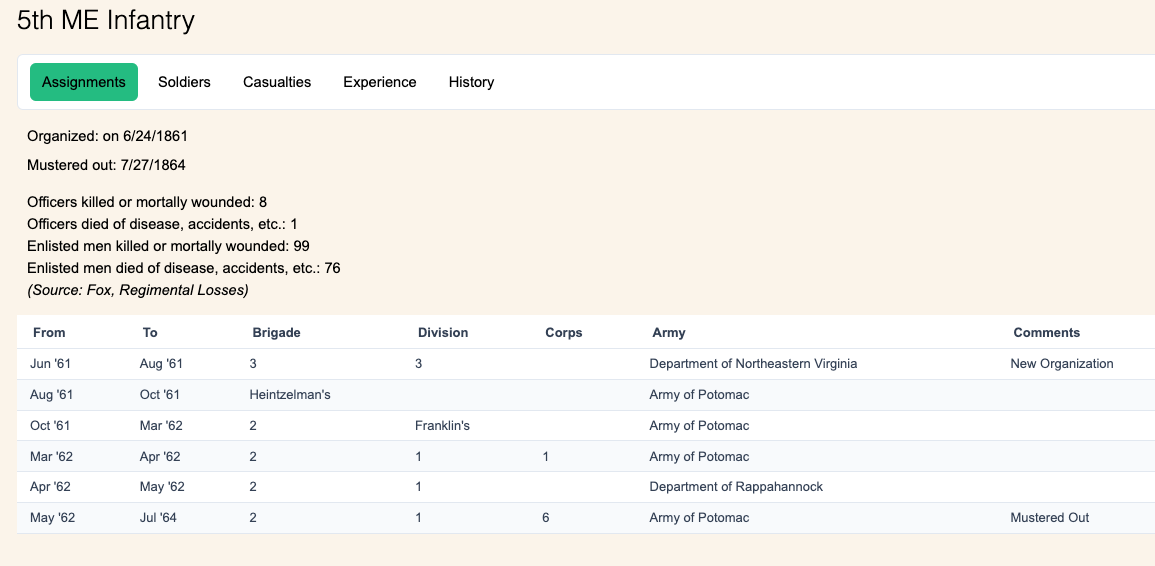
Organized at Portland, Maine and mustered in June 24, 1861. Left State for Washington, D.C., June 26. Attached to Howard’s Brigade, Heintzelman’s Division, McDowell’s Army of Northeastern Virginia, to August, 1861. Heintzelman’s Brigade, Division of the Potomac, to October, 1862. Slocum’s Brigade, Franklin’s Division, Army of the Potomac, to March, 1862. 2nd Brigade, 1st Division, 1st Army Corps, Army Potomac and Dept. of the Rappahannock, to May, 1862. 2nd Brigade, 1st Division, 6th Army Corps, Army Potomac, to June, 1864.
Afterward, the regiment was combined with those of the 7th Maine Infantry to form the 1st Maine Veteran Volunteer Infantry Regiment.
Mark Hill Dunnell, First Commander of the 5th Maine.
Today the 5th Maine’s memory is preserved at the Fifth Maine Regiment Community Center on Peaks Island, Maine, formerly a reunion house for the regiment’s veterans.
Detailed History
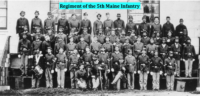
This regiment was recruited from the third militia division of the state. It was mustered into the service of the United States on June 24, 1861, and numbered 1,046 men. It was made up entirely of new companies and was raised at a time when a spirit of intense patriotism prevailed throughout the state, so that little exertion was required to fill its ranks. It left Maine for Washington on June 26, fully equipped and armed with Springfield muskets and bayonets. On its way through New York City it was the recipient of a beautiful flag, presented by the loyal sons of Maine there resident. It remained in camp at Meridian Hill, Washington, until July 5, when it commenced its march to the battlefield of Bull Run. During its three years of severe service, it was engaged in eleven pitched battles and eight skirmishes, prior to its participation in the terrible campaign of the Wilderness under Grant. Its list of battles includes First Bull Run, West Point, Gaines’ Mill, Charles City Cross-Roads, Crampton’s Gap, Antietam, Fredericksburg, Salem Heights, Gettysburg, Rappahannock Station, Wilderness, Spottsylvania Court House and Cold Harbor. In the battle of Gaines’ Mill the 5th lost 10 killed, 69 wounded and 16 missing, its gallant Col. Jackson was carried wounded from the field and Lieut.-Col. Heath was among the killed. At Rappahannock Station, the regiment was conspicuous for its gallantry, and captured 4 standards of the enemy. The flags were presented to Gen. Meade, who said: “In the name of the army and the country I thank you for the services you have rendered, particularly for the example you have set and which I doubt not on future occasions will be followed and emulated.” In a gallant charge on the enemy’s works at Spotsylvania Court House, more than half of the regiment was lost in crossing an open field subject to a raking fire of canister, but it captured the works, and took 2 flags and a large number of prisoners. In addition to the 6 captured flags, the 5th had the record of taking more men prisoners than it carried on its own rolls. It left the front near Petersburg, June 22, 1864, and started for home, arriving in Portland on the 28th with 216 men, who were mustered out of service, July 27, 1864, the veterans and recruits having been transferred to the 7th Me. During its term of service it had received some 500 recruits.
Engagements
- First Bull Run
- Peninsular Campaign
- West Point
- Gaines Mill
- Goldings Farm
- Malvern Hill
- Crampton’s Gap(Antietam Campaign)
- Antietam
- Fredericksburg
- Chancellorsville
- Gettysburg
- Funkstown, MD
- Rappahannock Station (Bristoe Campaign)
- Locust Grove (Mine Run Campaign)
- Wilderness
- Spotsylvania
- North Anna
- Cold Harbor
- Petersburg
Detailed service
Organized at Portland, Maine and mustered in June 24, 1861. Left State for Washington, D.C., June 26. Attached to Howard’s Brigade, Heintzelman’s Division, McDowell’s Army of Northeastern Virginia, to August, 1861. Heintzelman’s Brigade, Division of the Potomac, to October, 1862. Slocum’s Brigade, Franklin’s Division, Army of the Potomac, to March, 1862. 2nd Brigade, 1st Division, 1st Army Corps, Army Potomac and Dept. of the Rappahannock, to May, 1862. 2nd Brigade, 1st Division, 6th Army Corps, Army Potomac, to June, 1864.
SERVICE.–Camp at Meridian Hill, Washington, D.C. until July 16, 1861. Advance on Manassas, Va., July 16–21. Battle of Bull Run July 21. Duty in the Defenses of Washington until March, 1862. Expedition to Pohick Church, Va., October 3, 1861. Advance on Manassas, Va., March 10–15, 1862. McDowell’s advance on Fredericksburg, Va., April 4–12. Ordered to the Peninsula April 22. Siege of Yorktown (on Transports) April 24-May 4. West Point May 7–8. Seven days before Richmond June 25-July 1. Gaines’ Mill June 27. Golding’s Farm June 28. Savage Station June 29. Charles City Cross Roads and Glendale June 30. Malvern Hill July 1. At Harrison’s Landing until August 15. Retreat from the Peninsula and movement to Centreville August 15–27. In works at Centreville August 27–31. Assist in checking Pope’s rout at Bull Run and cover retreat to Fairfax C. H., September 1. Maryland Campaign September–October. Crampton’s Pass, South Mountain, September 14. Battle of Antietam September 16–17. At Hagerstown, Md., September 26 to October 29. Movement to Falmouth, Va., October 29-November 19. Battle of Fredericksburg December 12–15. “Mud March” January 20–24, 1863. Chancellorsville Campaign April 27-May 6. Operations at Franklin’s Crossing April 29-May 2. Maryes Heights, Fredericksburg, May 3. Salem Heights May 3–4. Banks’ Ford May 4. Operations about Deep Run Ravine June 6–13. Battle of Gettysburg, Pa., July 2–4. Near Funkstown, Md., July 10–13. Hagerstown July 13. Bristoe Campaign October 9–22. Advance to line of the Rappahannock November 7–8. Rappahannock Station November 7. Mine Run Campaign November 26-December 2. Campaign from the Rapidan to the James River May 3 to June 15. Battles of the Wilderness May 5–7; Laurel Hill May 8; Spotsylvania May 8–12; Spotsylvania C. H. May 12–21. “Bloody Angle,” assault on the Salient, May 12. North Anna River May 23–26. On line of the Pamunkey May 26–28. Totopotomoy May 28–31. Cold Harbor June 1–12. Before Petersburg June 19–22. Ordered to the rear for muster out. Mustered out July 27, 1864, expiration of term. Veterans and Recruits transferred to 6th Maine Infantry.
Casualties
107 men were killed in action or died of wounds, while another 77 died of disease. Another reference only has 137 men dying or being killed in battle (though same volume, in appendix, also claims 143 for casualty count).
Commanders
- Mark H. Dunnell
- Nathaniel J. Jackson
- Edward Scamman
- Clark S. Edwards
5th Regiment, Maine Infantry
Overview:
Organized at Portland and mustered in June 24, 1861. Left State for Washington, D. C., June 26. Attached to Howard’s Brigade, Heintzelman’s Division, McDowell’s Army of Northeastern Virginia, to August, 1861. Heintzelman’s Brigade, Division of the Potomac, to October, 1862. Slocum’s Brigade, Franklin’s Division, Army of the Potomac, to March, 1862. 2nd Brigade, 1st Division, 1st Army Corps, Army Potomac and Dept. of the Rappahannock, to May, 1862. 2nd Brigade, 1st Division, 6th Army Corps, Army Potomac, to June, 1864.
Service:
Camp at Meridian Hill till July 16, 1861. Advance on Manassas, Va., July 16-21. Battle of Bull Run July 21. Duty in the Defences of Washington till March, 1862. Expedition to Pohick Church, Va., October 3, 1861. Advance on Manassas, Va., March 10-15, 1862. McDowell’s advance on Fredericksburg, Va., April 4-12. Ordered to the Peninsula April 22. Siege of Yorktown (on Transports) April 24-May 4. West Point May 7-8. Seven days before Richmond June 25-July 1. Gaines’ Mill June 27. Golding’s Farm June 28. Savage Station June 29. Charles City Cross Roads and Glendale June 30. Malvern Hill July 1. At Harrison Landing till August 15. Retreat from the Peninsula and movement to Centreville August 15-27. In works at Centreville August 27-31. Assist in checking Pope’s rout at Bull Run and cover retreat to Fairfax C. H., September 1. Maryland Campaign September-October. Crampton’s Pass, South Mountain, September 14. Battle of Antietam September 16-17. At Hagerstown, Md., September 26 to October 29. Movement to Falmouth, Va., October 29-November 19. Battle of Fredericksburg December 12-15. “Mud March” January 20-24, 1863. Chancellorsville Campaign April 27-May 6. Operations at Franklin’s Crossing April 29-May 2. Maryes Heights, Fredericksburg, May 3. Salem Heights May 3-4. Banks’ Ford May 4. Operations about Deep Run Ravine June 6-13. Battle of Gettysburg, Pa., July 2-4. Near Funkstown, Md., July 10-13. Hagerstown July 13. Bristoe Campaign October 9-22. Advance to line of the Rappahannock November 7-8. Rappahannock Station November 7. Mine Run Campaign November 26-December 2. Campaign from the Rapidan to the James River May 3 to June 15. Battles of the Wilderness May 5-7; Laurel Hill May 8; Spottsylvania May 842; Spottsylvania C. H. May 12-21. “Bloody Angle,” assault on the Salient, May 12. North Anna River May 23-26. On line of the Pamunkey May 26-28. Totopotomoy May 28-31. Cold Harbor June 1-12. Before Petersburg June 19-22. Ordered to the rear for muster out. Mustered out July 27, 1864, expiration of term. Veterans and Recruits transferred to 6th Maine Infantry.
Regiment lost during service 8 Officers and 99 Enlisted men killed and mortally wounded and 1 Officer and 76 Enlisted men by disease. Total 184.
5th Maine Infantry Regiment
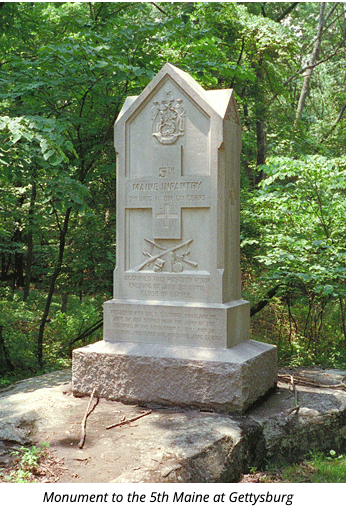
The 5th Maine Infantry Regiment lost 8 officers and 99 enlisted men killed or mortally wounded and 1 officer and 76 enlisted men to disease during the Civil War. The regiment is honored by a monument at Gettysburg.
| 1861 | |
| Organized at Portland under Colonel Mark H. Dunnell, on temporary leave of absence as United States Consul at Vera Cruz, Mexico. | |
| June 24 | The 5th Maine Infantry Regiment mustered in under the command of Colonel Mark Dunnell. |
| June 26 | The regiment left Maine for Washington, D.C. Camp at Meridian Hill attached to Howard’s Brigade, Heintzelman’s Division, McDowell’s Army of Northeastern Virginia |
| July 16-21 |
Advance on Manassas, Virginia |
| July 21 |
Battle of Bull Run (Manassas)After an exhausting forced march to the battlefield the regiment lost over 400 casualties. |
| August 4 | Duty in the Defenses of Washington assigned to Heintzelman’s Brigade, Division of the Potomac |
| September 2 | Colonel Mark Dunnell resigned and returned to his post as United States Consul at Vera Cruz. Nathaniel Jackson, formerly of the 1st Maine Infantry, was assigned as colonel. There was a near mutiny in the regiment when an outsider was brought in, and several officers resigned. |
| September 25 | Captain Edward A. Scamman of Company H was promoted to major. |
| October | Attached to Slocum’s Brigade, Franklin’s Division, Army of the Potomac |
| October 3 | Expedition to Pohick Church, Virginia. |
| December | Brigade commander Henry Slocum replied to a letter from Maine’s Governor Washburn, who was concerned about the 5th Maine.
“I do not think there is a regiment in the entire army which has improved so rapidly as Col. Jackson’s has. The change has been wonderful. Their sick list is less than one third of what it was two months since. The men are cleanly, well drilled and ambitious. They are becoming proud of their regiment and are uniting cordially with Col. Jackson in all his efforts. I shall be greatly disappointed if this regiment does not do credit to your state.” |
| 1862 | |
| March | Attached to 2nd Brigade, 1st Division, 1st Corps, Army Potomac |
| March 10-15 | Advance on Manassas, Virginia. |
| April 4-12 | McDowell’s advance on Fredericksburg, Va. Attached to the 1st Division, Department of the Rappahannock |
| April 22 |
Peninsula CampaignOrdered to the Virginia Peninsula. |
| April 24-May 4 |
Siege of Yorktown (on Transports) |
| May 7-8 |
West Point |
| May | Attached to 2nd Brigade, 1st Division, 6th Corps, Army Potomac |
| June 25-July 1 |
Seven days before Richmond |
| June 27 |
Gaines’ MillThe regiment lost 10 men killed, 69 wounded and 16 missing. Colonel Jackson was wounded and Lieutenant Colonel Heath was killed. Major Edward Scamman took command of the regiment. |
| June 28 |
Golding’s Farm |
| June 29 |
Savage Station |
| June 30 |
Charles City Cross Roads and Glendale |
| July 1 |
Malvern Hill |
| July | At Harrison’s Landing |
| July 25 | Major Scamman was promoted to lieutenant colonel. |
| August 27-31 | In works at Centreville |
| September 1 | Assisted in checking Pope’s rout at Bull Run and covered its retreat to Fairfax C. H. |
| September-October |
Maryland CampaignColonel Jackson returned to command of the regiment after recovering from his Gaines Mill wound. |
| September 14 |
Battle of South MountainThe regiment lost 4 men killed and 28 wounded in fighting at Crampton’s Gap. After engaging in a firefight which exhausted their ammunition, they fell back a short distance, and were then ordered to assault the enemy line in a bayonet charge, They did so, carrying the position. |
| September 16-17 |
Battle of AntietamFrom the War Department tablet for Slocum’s Division on the Antietam battlefield:Slocum’s Division followed Smith’s in its march from near Crampton’s Pass on the morning of the 17th, and upon reaching the field, occupied the ground from which Smith was advancing; Torbert’s Brigade in the center on either side of this road; Newton’s Brigade on the right connecting with Hancock, and Bartlett’s Brigade on the left, extending beyond the cemetery and into the low ground between Mumma’s and Roulette’s. Beyond supporting the Artillery the Division was not actively engaged. |
| September 24 | Colonel Jackson was promoted to brigadier general. Lieutenant Colonel Scamman took commad of the regiment. |
| September 26 – October 29 | At Hagerstown, Md. |
| October 29 – November 19 |
Movement to Falmouth, Virginia. |
| November 1 | Lieutenant Colonel Scamman was promoted to colonel and Major Clark Edwards to lieutenant colonel. |
| December 12-15 |
Battle of Fredericksburg |
| 1863 | |
| January 20-24 |
“Mud March” |
| January 8 | Colonel Scamman resigned due to the “state of (his) private affairs at home.” |
| March 2 | Lieutenant Colonel Clark S. Edwards was appointed colonel |
| April 27-May 6 |
Chancellorsville Campaign |
| April 29-May 2 | Operations at Franklin’s Crossing |
| May 3 |
Maryes Heights, Second Fredericksburg |
| May 3-4 |
Salem Heights |
| May 4 |
Banks’ Ford |
| June 6-13 | Operations about Deep Run Ravine |
| July 2-4 |
Battle of GettysburgThe 5th Maine Infantry Regiment was commanded by Colonel Clark Edwards. It brought 340 men to the field, was in reserve and suffered no casualties. |
| July 10-13 | Near Funkstown, Md. |
| July 13 | Hagerstown |
| October 9-22 |
Bristoe Campaign |
| November 7-8 | Advance to line of the Rappahannock |
| November 7 |
Rappahannock Station |
| November 26- December 2 |
Mine Run Campaign |
| 1864 | |
| May 3 to June 15 |
Campaign from the Rapidan to the James River |
| May 5-7 |
Battle of the Wilderness |
| May 8 |
Laurel Hill |
| May 8-21 |
Spotsylvania Court House |
| May 12 |
Assault on the Salient “Bloody Angle” |
| May 23-26 |
North Anna River |
| May 26-28 | On line of the Pamunkey |
| May 28-31 |
Totopotomoy |
| June 1-12 |
Cold Harbor |
| June 19-22 |
First Assault on Petersburg.Ordered to the rear for muster out. |
| July 27 | The 5th Maine Infantry Regiment mustered out on the expiration of its term. Veterans and Recruits were transferred to 6th Maine Infantry Regiment. |
5th Maine Infantry Regiment at Gettysburg
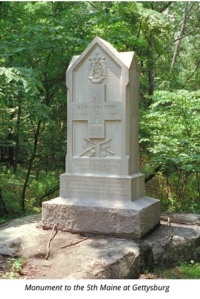
The monument to the 5th Maine Infantry Regiment is south of Gettysburg on the west side of Sedgwick Avenue just north of Wheatfield Road. (Sedgwick Avenue tour map) The state of Maine erected the monument in 1889.
The 5th Maine at Gettysburg
Colonel Clark S. Edwards commanded the 5th Maine at the Battle of Gettysburg. It brought 340 men to the field and suffered no casualties.
The regiment arrived at the battlefield late on July 2. It formed behind the 5th Corps, some of which was giving ground, then advanced to the front and held the position through the night. Late on July 3 the regiment supported the 1st Brigade, 3rd Division, 5th Corps in an advance through the Wheatfield and the woods on the south. The advance captured about 200 prisoners of Benning’s Georgia Brigade and the colors of the 15th Georgia Infantry Regiment.
| Attached to the 2nd Brigade, 1st Division, 6th Corps, Army of the Potomac |
Text from the monument:
5th Maine Infantry
2nd Brig. 1st Div. 6th Corps
Occupied this position from evening of July 2nd until close of battle.
Mustered into the U.S. Service Portland, Me. June 24, 1861. Served with the Army of the Potomac in the field from Bull Run to Petersburg. Mustered out, Portland, June 27,1864.
When news of the attack on Fort Sumter reached the small town of Bethel, Maine, Clark S. Edwards was high on a ladder shingling his roof. He immediately climbed down, obtained permission from the appropriate authorities to form a company of men, and set out to gather recruits from Bethel and the surrounding towns.
This group became Company I, Fifth Regiment Maine Volunteer Infantry with Edwards as its Captain. He rose through the ranks and was appointed Colonel of the regiment following the resignation of Colonel E.A. Scammon in January 1863.
Following the war Col. Edwards, who had been breveted to Brigadier General for bravery in battle, returned to Bethel to engage in farming. In 1898 he was appointed Maine’s Commissioner to the Columbian Exposition in Chicago. In that capacity he directed the construction of the State of Maine building which now stands in Poland Spring, Maine.
General Edwards retained close ties with his comrades in the Fifth Maine, spending many a summer day at the “cottage” on Peaks Island. His comrades, in turn, eulogized him in a stirring funeral service attended by Joshua Chamberlain.
Edwards, Clarke S. (Clarke Swett), 1824-1903
Clarke S. Edwards was born in 1824. He lived in Bethel, Maine, prior to the start of the Civil War. After the attack on Fort Sumter, Edwards formed a company of men, eventually Company I, 5th Regiment, Maine Infanry. Edwards began the war with the rank of captain and was later made a colonel in January 1863. He was brevetted Brigadier General of US Volunteers in March 1865. Following the Civil War, he returned to his farm and family in Maine. He died in 1903.
Civil War Union Brevet Brigadier General. Born March 26, 1824, in Otisfield, Maine, he was a merchant when the Civil War broke out and enlisted in the 5th Maine Infantry, Union Army. Elected as Captain of Company I of the 5th Maine, he participated in nearly every major battle in the eastern theater of the war, including the First and Second Bull Runs, Chancellorsville, Antietam, Fredericksburg, Gettysburg, Rappahannock Station, Wilderness, Spotsylvania, and Cold Harbor. By July of 1864, as Colonel in command of the 5th Maine Regiment, he was notable for capturing six Confederate flags, taking more then 1200 prisoners, 1700 small arms and 1 caisson. For gallantry in action, he was brevetted Brigadier General of US Volunteers on March 13, 1865. After the war he returned home and pursued his interests in agriculture and business. He died at age 79 in Bethel, Maine.
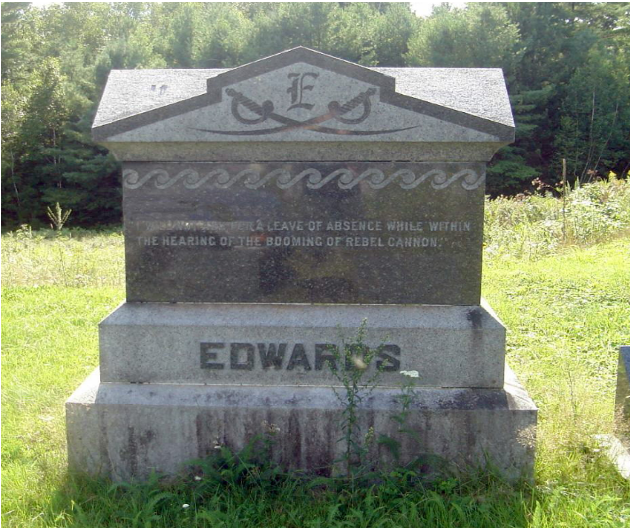
Inscription
“I will not ask for a leave…While within the hearing…of Rebel
Cannon”
The Vernon Street home of General Clark S. Edwards was trimmed in patriotic bunting for the 1896 centenary of Bethel’s incorporation as a town. Visible behind the porch roof balustrade, Edwards distinguished himself in several major Civil War engagements, including the Battle of Gettysburg. He ran unsuccessfully as the Democratic candidate for Governor of Maine in 1886 and was appointed Maine’s Commissioner for the 1893 World’s Columbian Exposition at Chicago.
BG Clark Swett Edwards Veteran
Birth
26 Mar 1824
Otisfield Gore, Cumberland County, Maine, USA
Death
3 May 1903 (aged 79)
Bethel, Oxford County, Maine, USA
Burial
Bethel, Oxford County, Maine, USA
Related Items
-
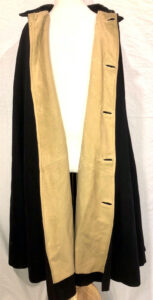
Rare Civil War Officer’s Cloak Possibly Id’d to Gen. Horace Porter
$6,500Rare Civil War Officer’s Cloak Possibly Id’d to Gen. Horace PorterMarch 22, 2023 -
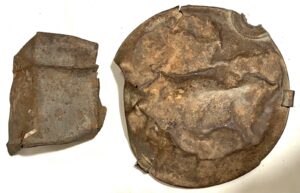
M1858 Smoothside Canteen and Cartridge Box Tin Picked up at the Bloody Angle after the Battle of Spotsylvania and Given to Col. Clark S. Edwards 5th Maine Infantry
M1858 Smoothside Canteen and Cartridge Box Tin Picked up at the Bloody Angle after the Battle of Spotsylvania and Given to Col. Clark S. Edwards 5th Maine InfantryJanuary 14, 2024 -
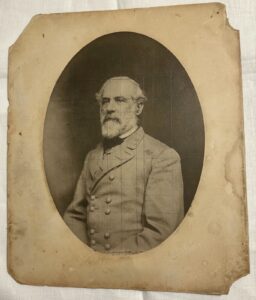
Renown Richmond Sculptor Edward V. Valentine’s Personal Photographs of General Robert E. Lee Utilized by Valentine When Sculpting a Statuette of Lee
$4,200Renown Richmond Sculptor Edward V. Valentine’s Personal Photographs of General Robert E. Lee Utilized by Valentine When Sculpting a Statuette of LeeMarch 29, 2024 -
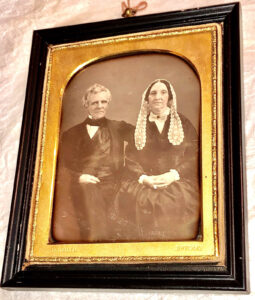
Half Plate Daguerreotype of Civil War Chaplain Rev. Burr Baldwin and his Wife Cornelia Baldwin c. 1850
$650Half Plate Daguerreotype of Civil War Chaplain Rev. Burr Baldwin and his Wife Cornelia Baldwin c. 1850January 14, 2024