
Id’d Federal Issue Dismounted Greatcoat – Sergeant James H. Newton Co. K 9th Vermont Infantry and Co. F 17th Vermont Infantry – KIA at SpotsylvaniaJuly 5, 2026

Id’d Federal Issue Dismounted Greatcoat – Sergeant James H. Newton Co. K 9th Vermont Infantry and Co. F 17th Vermont Infantry – KIA at Spotsylvania
$4,500
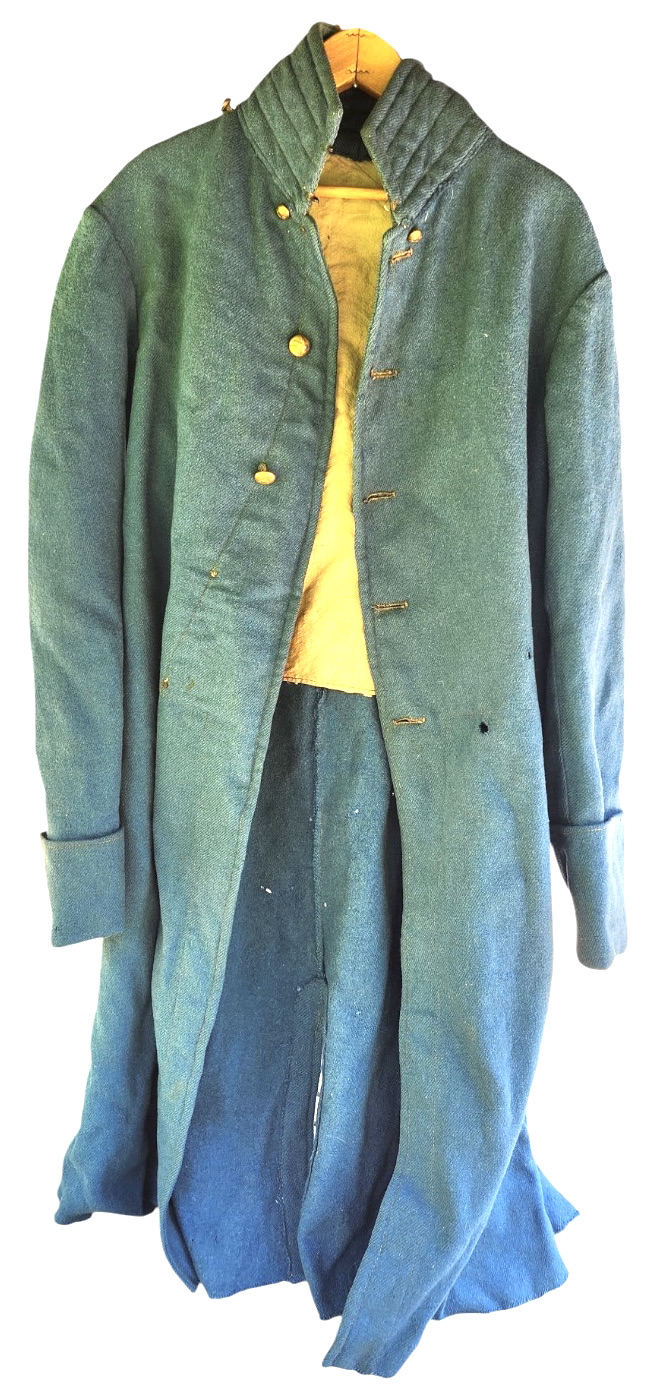
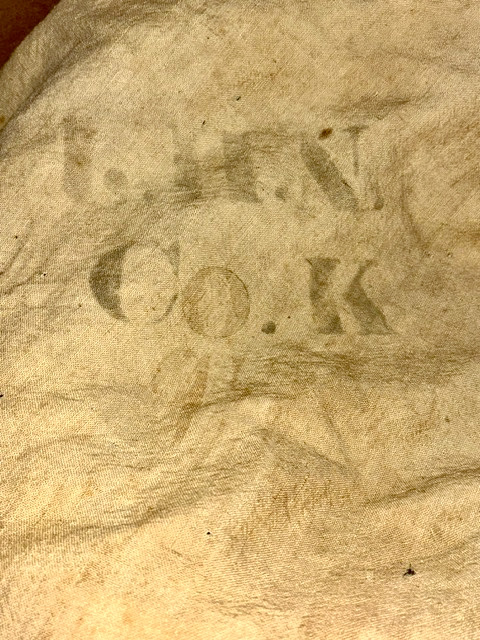
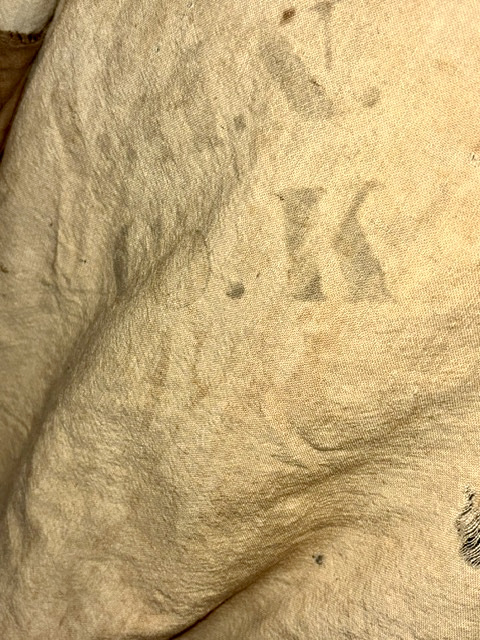
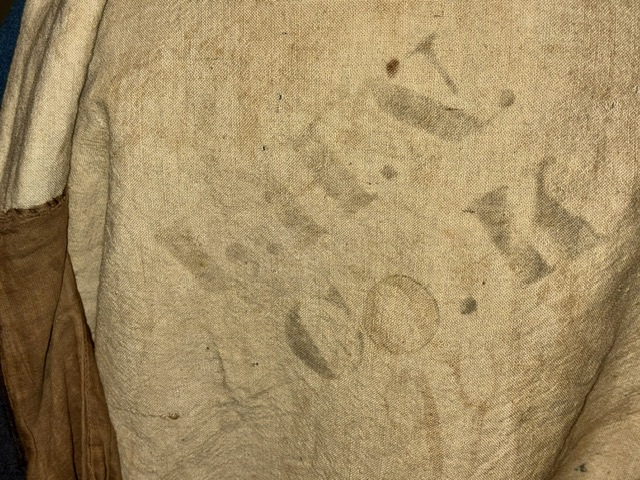
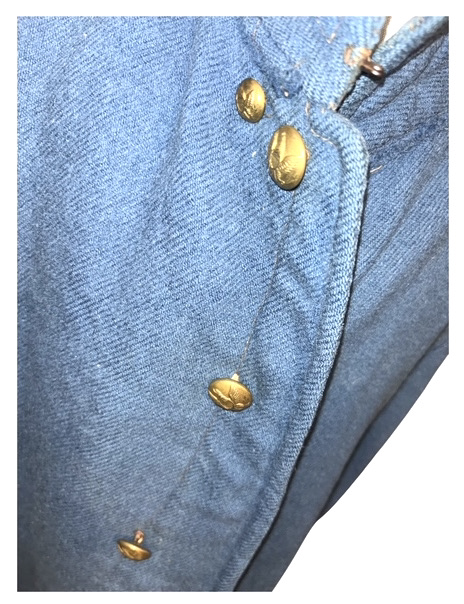
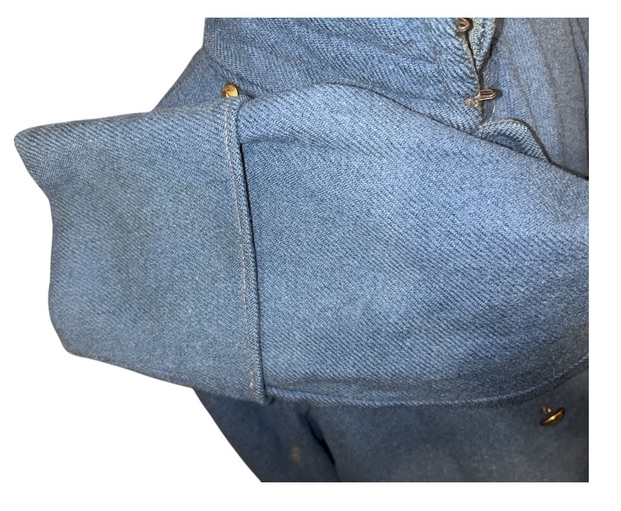
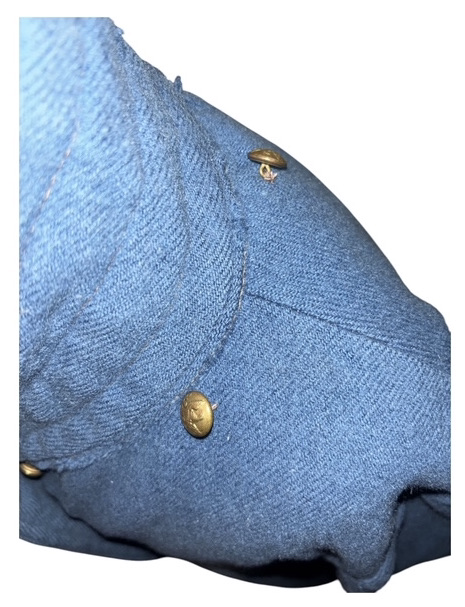
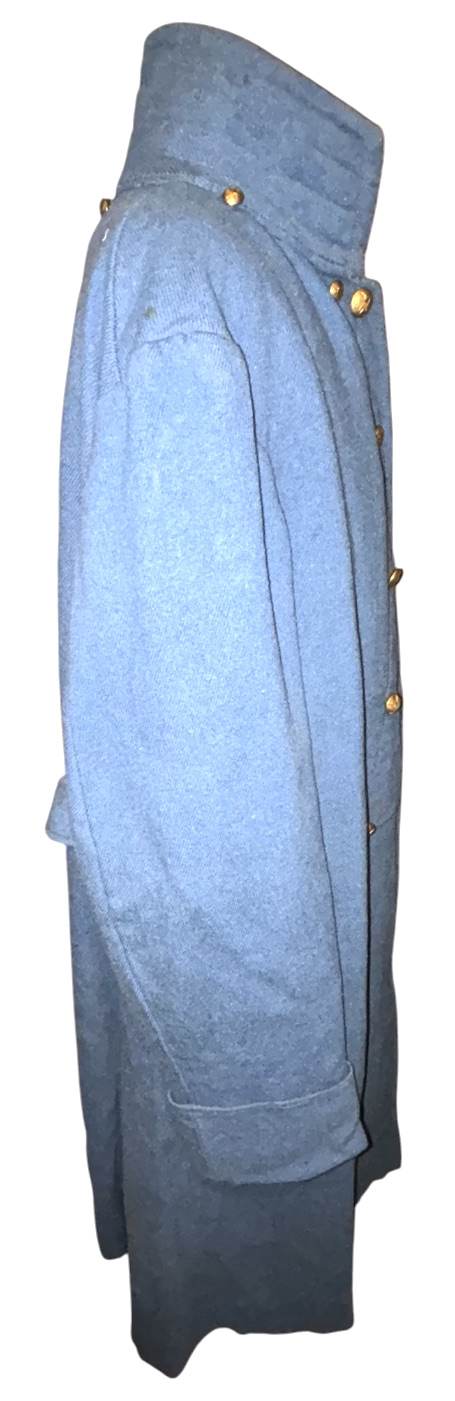
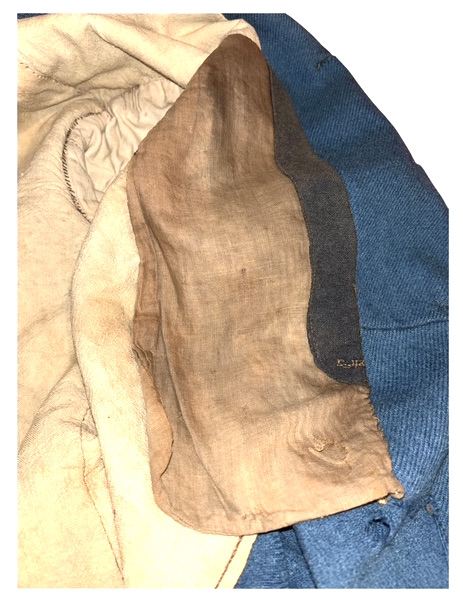
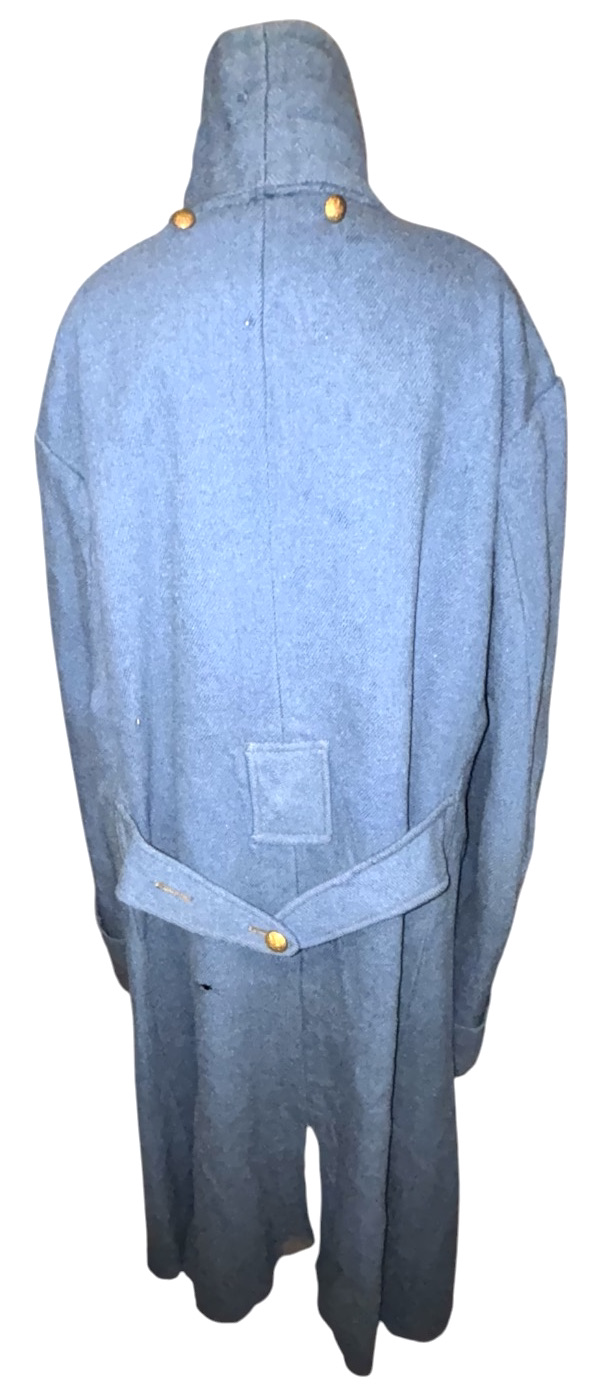
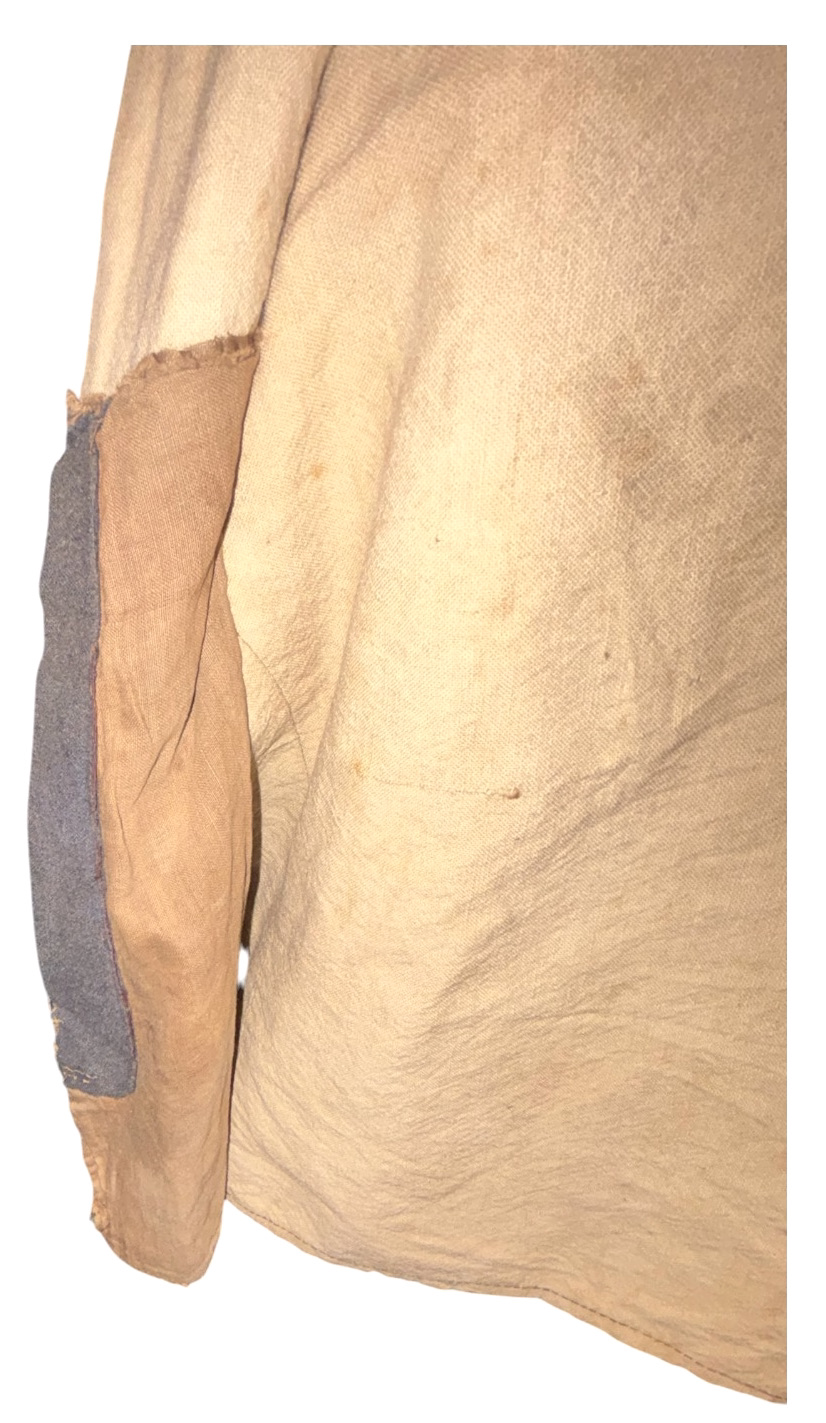
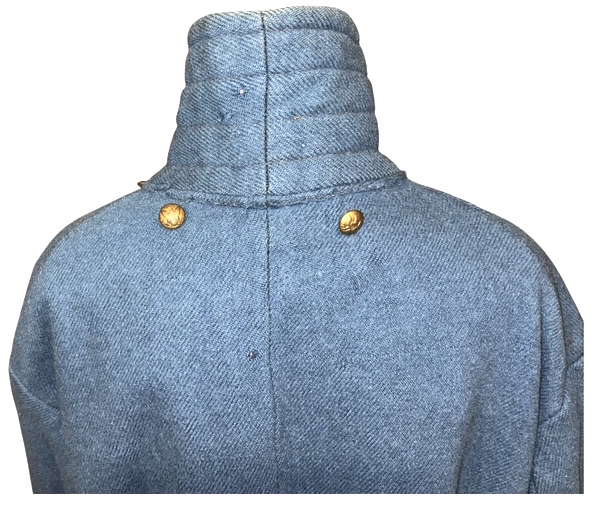
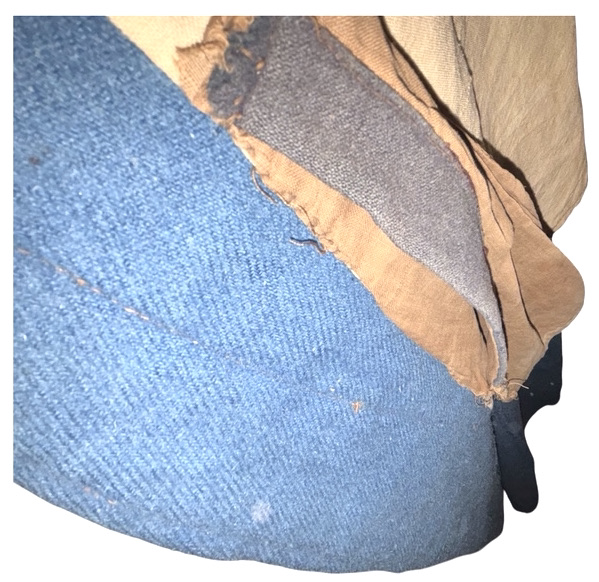
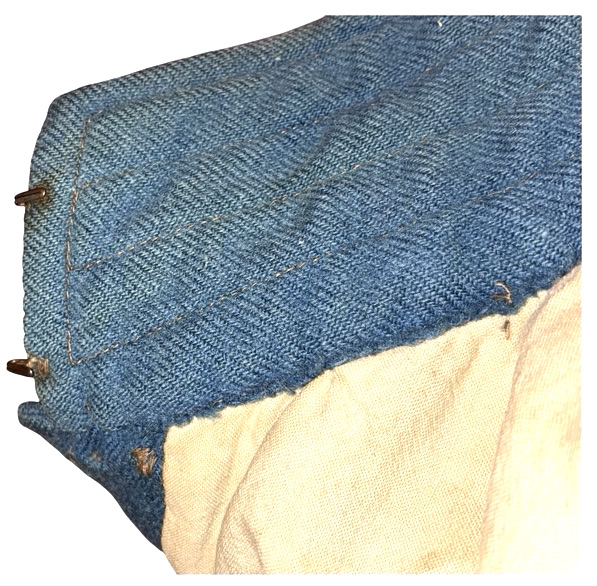
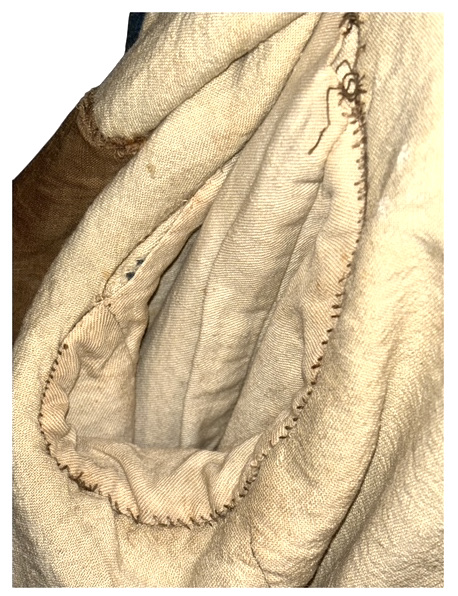
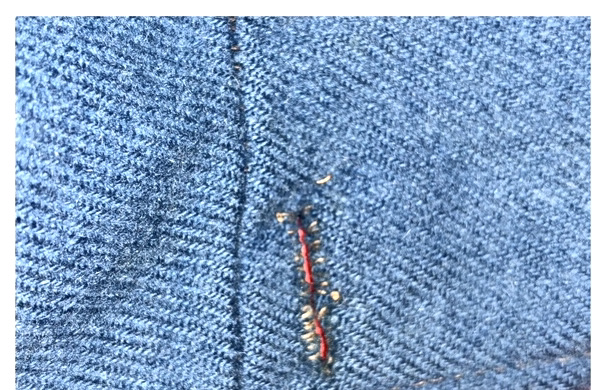
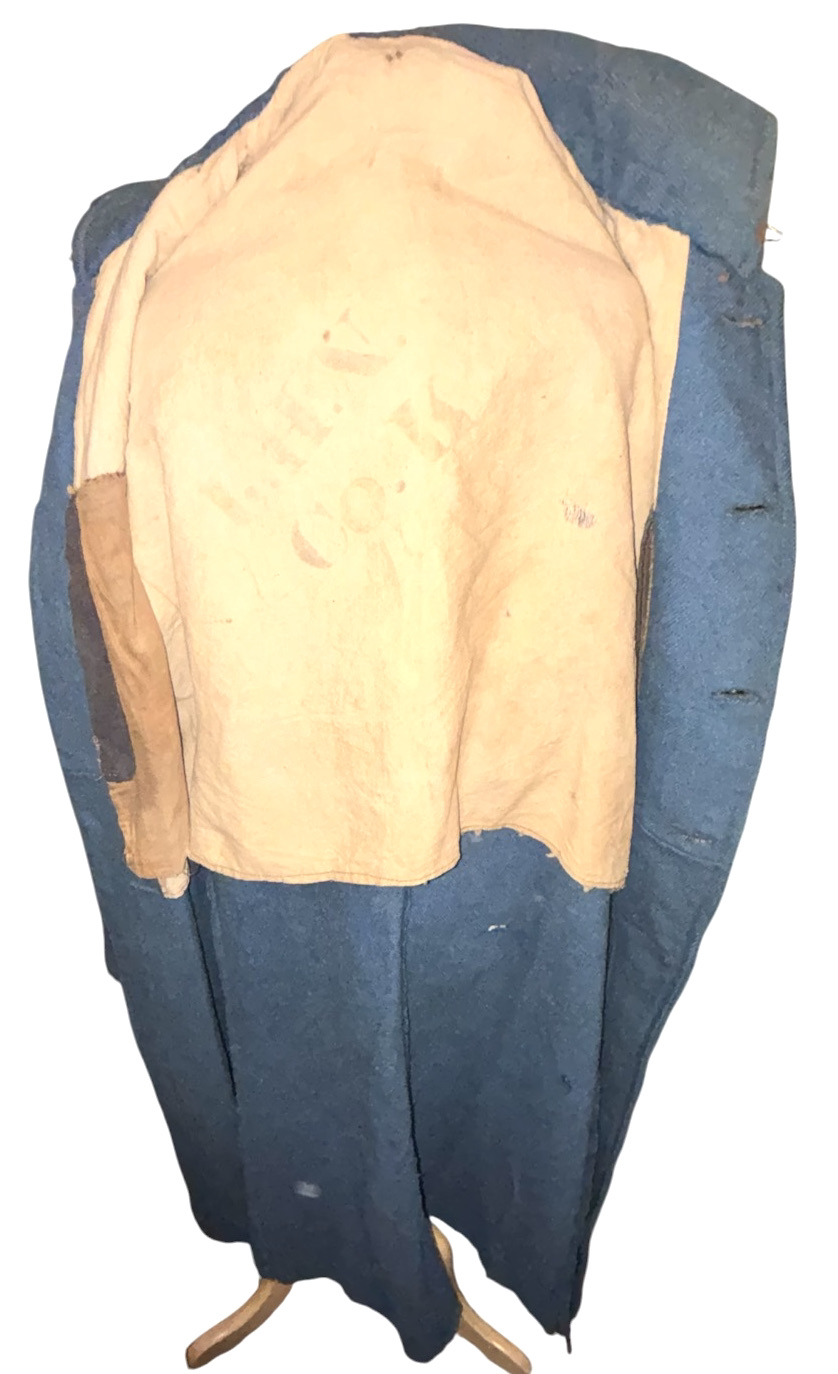
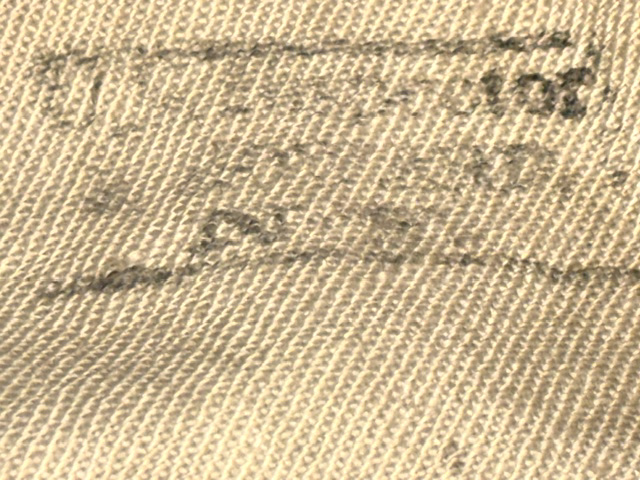
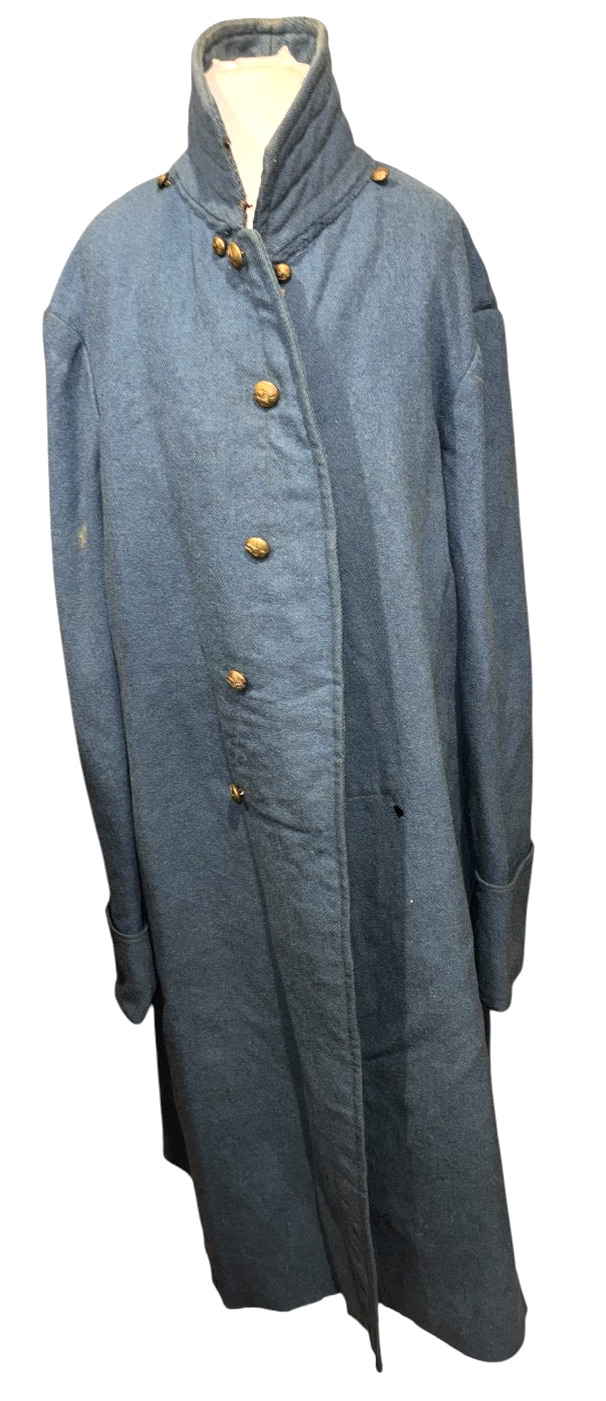
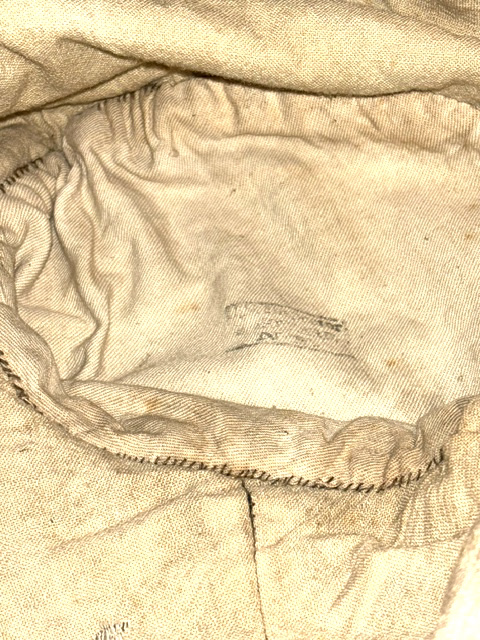
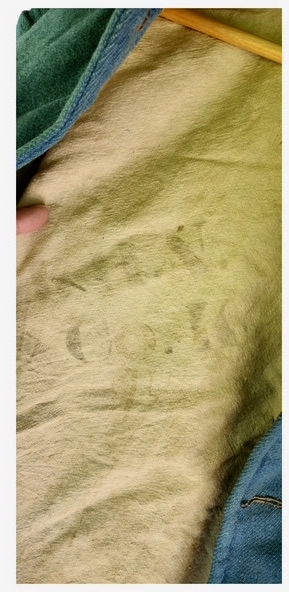
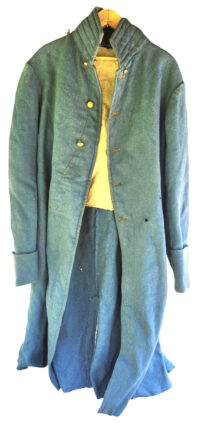
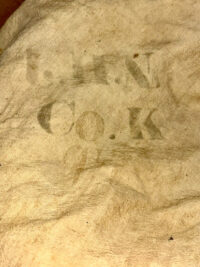
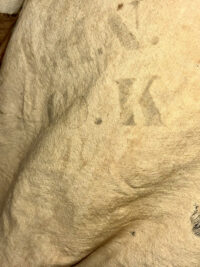
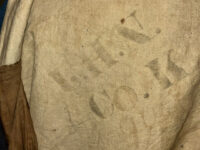
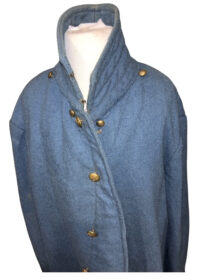
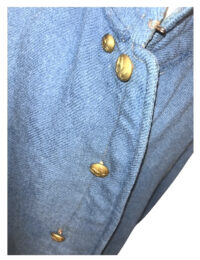
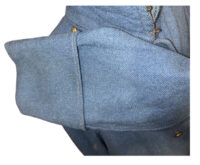
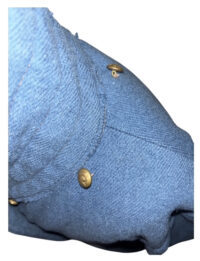
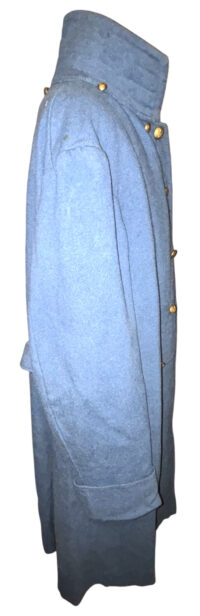
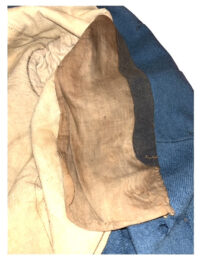
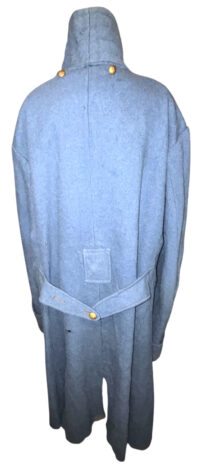
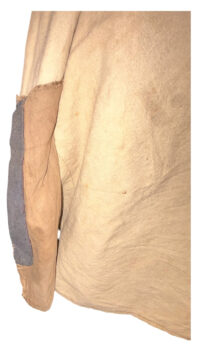
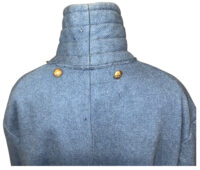
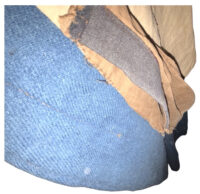
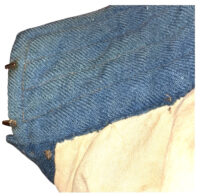
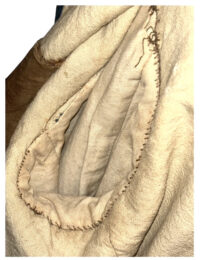
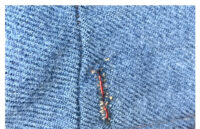
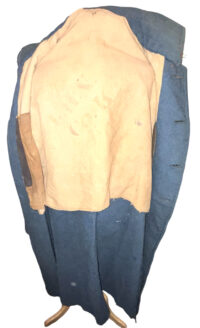
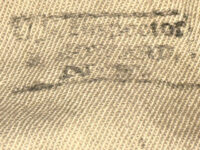
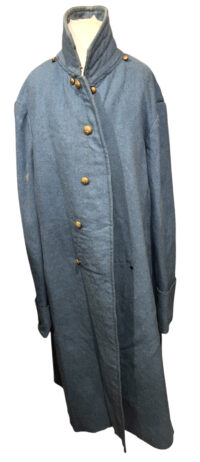
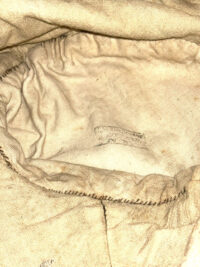
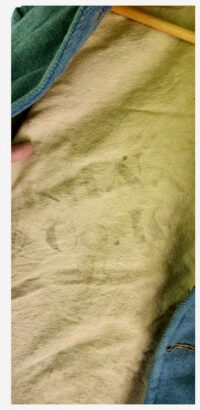
Id’d Federal Issue Dismounted Greatcoat – Sergeant James H. Newton Co. K 9th Vermont Infantry and Co. F 17th Vermont Infantry – KIA at Spotsylvania – This is a superb example of a wartime, Federal issue, enlisted man’s infantry greatcoat; there are some unique aspects of this coat that we have not encountered before – the lining of the front buttons are in an angular configuration, with the bottom of the four, General Service eagle buttons, at a wider position from the edge of the coat, than the top coat button – we assume that this is just a contractor’s design; also, the cape is no longer present, although the coat retains six general service eagle buttons around the collar to allow the soldier to attach or unbutton a cape; finally, there are two well-constructed breast pockets on either side of the interior of the coat, made of brown cotton. The coat proper is constructed of the usual, sky blue, heavy kersey weave wool; the lining is an osnaburg like, coarse cotton; the sleeve linings are made of cotton; the interior exhibits mostly handwork; all buttonholes are hand whipped. The left, interior sleeve lining clearly shows the U.S. inspector’s oval stamp, although we cannot make out the name or location of the inspector. The coat has the typical, dismounted, standup collar, with two, black japanned closure hook and eyes; the exterior of each sleeve terminates with the regulation, rolled up cuffs. The coat remains in excellent condition, with two or three very small insect nips; the color is excellent, and the lining is in excellent condition. Lightly stenciled, in large letters and a single number is the following:
“J. H. N.
Co. K
9 U ?”
The initials, company and numerical designation represent: James H. Newton, Co. K 9th Vermont Infantry. James H. Newton, from Newfane, Vermont, enlisted, at the rank of Corporal, in June 1862, mustering into Co. K of the 9th Vermont Infantry in July of the same year, subsequently rising to the rank of Sergeant later that July. Newton was discharged for disability in May 1863; he would later re-enlist in Co. F of the 17th Vermont, as a Private, in October of 1863. Newton was killed in action on May 12, 1863, at the Battle of Spotsylvania. This greatcoat seemingly was his during his first tour of duty with the 9th Vermont. The excellent condition of the greatcoat is a result of Newton’s short term of initial service.
James H. Newton
Residence Newfane, VT.
Enlisted on 6/9/1862 as a Corpl.
On 7/9/1862, he mustered into “K” Co. Vermont 9th Infantry.
He was disch disability on 5/20/1863
Promotions:
- Sergt 12/6/1862
James H. Newton
- Residence Newfane, VT.
Enlisted on 10/15/1863 as a Priv. - On 4/12/1864, he mustered into “F” Co. Vermont 17th Infantry.
He was Killed on 5/12/1864 at Spotsylvania Court House, VA
James H Newton
| Name | James H Newton |
| Enlistment Date | 9 Jun 1862 |
| Enlistment Rank | Corporal |
| Muster Date | 9 Jul 1862 |
| Muster Place | Vermont |
| Muster Company | K |
| Muster Regiment | 9th Infantry |
| Muster Regiment Type | Infantry |
| Muster Information | Enlisted |
| Rank Change Date | 6 Dec 1862 |
| Rank Change Rank | Sergt |
| Muster Out Date | 20 May 1863 |
| Muster Out Information | disch disability |
| Side of War | Union |
| Survived War? | Yes |
| Residence Place | Newfane, Vermont |
James H Newton
| Name | James H Newton |
| Enlistment Date | 15 Oct 1863 |
| Enlistment Rank | Private |
| Muster Date | 12 Apr 1864 |
| Muster Place | Vermont |
| Muster Company | F |
| Muster Regiment | 17th Infantry |
| Muster Regiment Type | Infantry |
| Muster Information | Enlisted |
| Muster Out Date | 12 May 1864 |
| Muster Out Place | Spotsylvania Court House, Virginia |
| Muster Out Information | Killed |
| Side of War | Union |
| Survived War? | No |
| Residence Place | Newfane, Vermont |
9th VT Infantry
Organized: Brattleboro, VT on 7/1/1862
Mustered out: 12/1/1865
VERMONT NINTH REGIMENT. (THREE YEARS). BY HON. JOEL C. BAKER, FIRST LIEUTENANT NINTH REGIMENT. THE various disasters to the Union Arms in the Shenandoah Valley during the early months of our civil war enabled the volunteers from Vermont to make history, as well as to show the vigor and skill with which the sons of the Green Mountains could prepare for and meet an emergency. In the spring of 1862, recruiting ceased in this State, because it was understood that the regiments already at the front were the full proportion of Vermont to end the war. General Banks was advancing up the valley, and, with the examples of Milroy and Patterson before his eyes, it was confidently expected that this expedition would close to the army at Richmond the store house nearest it, and, at the same time, press at the back door of the rebel capital, while McClellan and his magnificent army of the Potomac thundered in at the front gate. Early in May, Stonewall Jackson made a rush down the valley, and the army of Banks was flying over the track his predecessors had taken towards Harper’s Ferry and the Potomac. May 21, 1862, Governor Holbrook received a telegraphic order from the War Department, to raise at once another regiment of infantry, followed four days later by a dispatch requiring the immediate forwarding to Washington of the entire volunteer and militia force in the State. Orders were at once issued for the immediate enlistment of the Ninth regiment of infantry, in the shortest possible time, at recruiting offices in twelve different counties of the State. Lieut.-Col. George J. Stannard of the Second was called home to assist in the work, and was commissioned as Colonel of the new regiment, and in six weeks from the receipt of the first telegraphic order the Ninth regiment was fully organized and in camp at Brattleboro. The regiment was mustered into the service of the United States July 9, 1862, for three years, with 920 officers and men. The situation was critical, and in six days after the regiment was mustered, July 15, it started for Washington under telegraphic orders, being the first regiment organized under the President’s summons for help to protect the National Capital. The short time to recruit and organize the regiment, with the superior order of men in its ranks, attracted great attention on the route from the Green Mountains to Philadelphia, and admiring crowds gathered around it and lined the streets and housetops on its march from Madison Square to the Battery in New York City. The officers were dined at the Fifth Avenue Hotel, and the men were well fed, and left the city amidst salutes, and cheers, and ovations, and as they halted before going upon the ferry boat to cross North river, Mr. Horace Greeley addressed them in a patriotic speech from the wheel house of the boat. The trip from Jersey City to Baltimore was uneventful, but at the latter city treason was rampant, and the streets were filled with a rough, scowling mass of men, who, by look and speech, indicated their resentment and desire for mischief. The regiment, under orders from its gallant Colonel, loaded its muskets and marched through the city, willing to take its first baptism of fire and blood there and then. The attack on the Sixth Massachusetts on that ground had produced its effect, and this regiment was prepared and ready for any attack that rebel enterprise should invoke. No assault was made, and Washington was reached in the night. Three days were spent there accustoming the well fed sons of Vermont to the worst fare which they were required to live upon during their entire service. Sunday, July 19, Colonel Stannard with his regiment marched about fifteen miles to Cloud’s Mills, and became a part of the division of General Sturgis. On the 24th, the regiment started for the Shenandoah, and the second day afterwards was at Winchester, and went into camp north of the city, and formed a part of a detached brigade then, or soon after, commanded by Brig.-Gen. Julius White, a vigorous, aggressive and capable officer, who was ordered to intrench and hold this place against the same force that less than three months before had routed the splendid army of Banks. General White went to work, and during the month of August, built, by details from his brigade, a bastioned fort, and armed the same with heavy guns. Under this service the men soon became drilled to hard service, and the frequent fights with bushwhackers at night, and the skirmishing often, and sometimes daily, with small bodies of irregular rebels who infested the region, developed the men rapidly into veteran soldiers, serviceable for any emergency. Major Stowell was made chief of scouts, and several of the more adventurous of the commissioned officers of the regiment took tours of rapid riding with the scouts and with the cavalry, and in that way gained considerable experience in riding, fighting and running, as well as digging in the trenches. About the first of September, it was known that Jackson was approaching, and only two things could be done–one was to follow the example of all before us and retreat precipitately, and the other to stay and be taken by old Stonewall. The example of other great men who had been in our place was taken, and a night march was made to Harper’s Ferry, to be there, by treachery or incompetency, surrendered into the hands of the rebels. While in the valley various detachments of the Ninth were engaged in various skirmishes, some of them making much noise and little bloodshed. The story of the surrender of Harper’s Ferry has been too often told in history and is too long to receive more than a passing notice. It was humiliating to the country, but to the Ninth regiment and its commanding officer it never brought a blush of shame, and the government marked its approval of his command by promoting Stannard to a Brigadier a few months later. General White compliments the officers and men of the regiment as being distinguished for gallantry in the affair. The night before the surrender, in the absence of Colonel Miles, General White, with the Ninth Vermont and two other small battalions, and a section of Rigby’s battery met an assault of a full division of Confederate troops, commanded by Gen. A. P. Hill, and repulsed them. Harper’s Ferry was followed by six months in Chicago. The regiment went there as paroled prisoners, were exchanged Jan. 10, 1863, and remained as guard of the confederate prisoners captured at Murfreesboro and Arkansas Post until about the 1st of April. It then went in detachments with the prisoners in Camp Douglas to City Point, Va., and turned the prisoners over to the Confederate Commissary of Prisoners. At Chicago, small- pox, and restlessness at the situation, for a while kept the men grumbling and uneasy, and several officers resigned and have since won fame and wealth in civil life in the west, while a considerable number of enlisted men went into the regular army and other organizations about to go into active service at the front. In April, 1863, the Confederate General Longstreet besieged the village and fortifications of Suffolk, Va., and laid it under close siege until he was recalled by General Lee, to march north to take part in the invasion of Pennsylvania and the battle of Gettysburg. The Nansemond was navigable to Suffolk with gunboats, and General Peck with his twenty thousand troops was greatly aided by the gunboats that came up the river. The skirmishing was almost constant for several weeks, and there was seldom an hour when the rattle of musketry and the roar of artillery was not heard in all parts of the besieged camps, and the Ninth regiment had its ful1 share of the hard work, and detachments of it did brilliant service in encounters with the enemy, especially in the capture of Battery Huger, at Hill’s Point, the reconnoissance on the Edenton Road, and the pursuit to the Blackwater. In June, after Longstreet raised his siege, the Ninth, with the balance of Wistar’s brigade, went to Yorktown, and when General Keyes was sent to march into Richmond, while Lee and his army were away on the Gettysburg campaign, the Ninth Vermont, Nineteenth Wisconsin and a New York Battery occupied West Point. The affair failed for want of vigor. It was one of those needless failures that, prior to 1864, marked the course of the Union Army in Virginia. How Sheridan, or Custer, or Kilpatrick, or Stannard would have swept into Richmond had they had the opportunity of leading the troops at White House Landing and West Point, while Lee and the Army of Northern Virginia were pressing on towards the high water mark at Gettysburg. Perhaps, however, the times were not ripe for three such victories as Vicksburg, Gettysburg and Richmond, all at one time. After the failure of the attempt to capture Richmond in the absence of its defenders, Wistar’s brigade lay at Yorktown from July to October, languishing with all kinds of miasmatic diseases and writing home dismal letters, in which historical allusions were grotesquely mingled with lonesome descriptions of the country and people, and discouragements about the health of the regiment, and of the whole prospect of the Union cause. Upon one or two occasions the monotony of ague, fevers and sickness was broken by a swift march of a few miles into the surrounding country, and those who were able to go came back invigorated and improved in health and spirits. July 25, one of these expeditions brought the troops into slight contact with bushwhackers, but generally the surrounding country was only peopled by superannuated whites and negroes, of but little account to themselves, and no substantial support to their friends in the rebel army. In the latter part of October, through the personal efforts of Senator Solomon Foot and Gov. J. Gregory Smith, an order was procured from the Secretary of War to remove the regiment to a healthier location. The regiment, on the 24th of October, in company with part of the Ninety-ninth New York, put to sea, and after a tempestuous passage arrived at Morehead City, North Carolina, and were directed to take possession of Newport Barracks, ten miles up the railroad from Morehead City towards New Berne. This proved to be a healthy location; the men began to improve immediately and the sick were taken from the various hospitals where they had been left, to the new camp, and for several months the light duty of guarding the railroad from Morehead to Croatan was performed by the regiment, with no Confederate force except detached posts of from twenty-five to sixty men nearer than thirty miles, although the country was filled with roving bands of bushwhackers in small squads of four to ten men. The health of the regiment improved fast, and on the 12th day of November, eighteen officers and two hundred sixty-four men were reported for duty. December 1, 1863, Maj. Charles Jarvis, a gallant and enthusiastic officer, and the idol of his command, was shot and killed a few miles outside our picket lines by a small squad of rebel soldiers returning to the army from a furlough. The beginning of 1864 found the regiment at Newport Barracks numbering but one short of five hundred officers and men, of whom one short of three hundred were present for duty. January 27, the regiment, with about an equal number of cavalry, made a forced march of thirty miles in the night, and captured the entire garrison at Young’s Cross Roads, without firing a gun. The force captured consisted of one officer and twenty-seven cavalrymen, with their horses, arms and equipments. The same day there arrived in camp three hundred and fifty recruits from Vermont, increasing the aggregate to 844. The recruits had but just been assigned to the companies and got their names upon the rolls, when General Pickett made an advance on New Berne, with six brigades of infantry and a full proportion of field artillery and cavalry. Pickett sent one of his brigades, commanded by General Martin, consisting of three regiments of infantry, a battalion of cavalry and three field pieces, to capture the Ninth Vermont at Newport Barracks. About nine o’clock on the morning of February 2, Martin struck the outpost at Gales Creek, held by Company H, and drove it in. At 11 o’clock the Confederates appeared before Bogue Sound Block House held by company B, and commenced firing with infantry and artillery. The defenders, consisting of 62 men, half of whom had first received arms as soldiers that morning, returned the fire and continued to hold their ground until nearly surrounded, when, by order of the commanding officer, the company fell back upon the run and succeeded in reaching Morehead City. As soon as the outlying companies, H and B, were disposed of the rebels continued their march towards the camp at Newport. The regiment had been thrown forward about two miles and opened fire upon the rebel column when it appeared. The fight became general and lasted until dark, the Ninth being pressed back by mere force of numbers, and fighting like heroes, the new men lacking somewhat in drill and experience, but making it up in bravery and marksmanship. At night the Yankee boys had been crowded back to the Newport river, and, to prevent annihilation or capture, passed over the railroad and highway bridges and set them on fire, and made a night march to Beaufort unmolested and unpursued. The casualties were three killed, fourteen badly wounded, and forty-seven captured. The rebel loss was three officers and fifteen men killed, and thirty wounded. Pretty good shooting for raw recruits. Work became more active from this time forward; both parties kept upon the alert. The Ninth Vermont and the Twenty- first Connecticut advanced to Newport Barracks on the 5th, and Martin’s forces fell back before them and retreated to Wilmington, without further serious fighting. Outposts were re-established at Gales Creek, and a company stationed at Kennedy’s Mills. The position at Newport was strengthened and was not again attacked. March, 16, 1864, the regiment met with a severe loss in the death of Maj. Amasa Bartlett, from brain fever. Major Bartlett was one of the most promising young officers who went from Vermont to the war. He was popular alike with all, and his death was a loss which was deeply felt throughout the entire command. In April, word was received that the Confederate Commissary Department had a detail fishing on Bogue Banks. A detail of twenty men made the party a visit, and captured the entire party with 500 pounds of sea-trout, the fishing utensils and three boats. Two days later fifty men of the Ninth made a dash into Swansboro and captured a rebel Lieutenant and seventeen men of the Seventh North Carolina Cavalry, with their horses and arms, and a field-piece, destroyed a quantity of contraband goods, and returned with their prisoners and spoils, without losing a man. Capt. S. H. Kelley commanded both these details. In May, the Ninth accompanied an expedition to Jacksonville, the county seat of Onslow County, on the New River, and one company of the regiment was alone in that rebellious village for several hours, but was withdrawn a very short time before an overwhelming force of rebels crossed into town. This expedition was a march of eighty miles in four days, several skirmishes, and operated to cause the rebel forces to concentrate on the road to Wilmington. During the balance of the summer to September 1st, the regiment was broken up and stationed at outposts around New Berne. September 15, 1864, being the second anniversary of the surrender at Harper’s Ferry, the regiment arrived in front of Petersburg, and on Friday, the 16th was assigned to Second Brigade, Second Division, Eighteenth Army Corps, Army of the James, Maj.-Gen. E. O. C. Ord commanding, and its history was part of the history of that gallant Corps until it was broken up. Two days after its arrival on the Bermuda Front, the regiment received another detachment of recruits, increasing its numbers to 1,129. September 17, 1864, Lieut. E. W. Jewett, company A, with Sergt. Charles F. Branch, company C, with one hundred picked men, were sent as a support to an isolated, exposed earth-work on the Bermuda Front, known as Redoubt Dutton. This point was sometimes called Butler’s Slaughter-pen, and it was near where Heckman’s Brigade was badly cut up a few days before. The redoubt was named for Col. A. H. Dutton, Twenty-first Connecticut Vols., a brave and accomplished officer who was killed near the spot, and was equipped with siege howitzers, mostly 24 pounders. The location was peculiarly exposed, and was one of the most important positions on that front. It was very heavily built and armed, and stood on a bluff facing southward, and was flanked by a deep ravine upon the east and west. From the redoubt northward the ground sloped gently to a heavy line of Confederate earthworks about two hundred yards distant. Behind this earthwork were planted nine batteries fully manned. The Union lines were built somewhat in the form of a letter S, and held the Tenth and Eighteenth Army Corps, with twenty-two batteries so arranged as to enfilade nearly every portion of the enemy’s line. Our picket line was tortuous and extended over the front, and required a heavy force daily. The detail from the Ninth lived in gopher holes on the east side of the bluff, but spent more than half of their time for more than six weeks, in the rifle pits under the muzzles of the guns of the redoubt. On Saturday, September 24th, a shotted salute of 100 guns was fired at sunset in honor of Sheridan’s victory in the valley; again on the 30th, another was fired. The music of shot and shell from two hundred cannon playing over the heads of the Vermont support was terrific. This salute brought on a determined attack from the enemy, and the brunt of the assault fell upon Redoubt Dutton. It was admitted that the steady, well-directed fire of the Vermont line disarranged and broke two well organized lines of battle at less than one hundred and fifty yards. On Thursday, October 20, Cedar Creek was celebrated by one hundred guns shotted with shell, bearing on the enemy’s lines. On November 11, the line was weakened to re-enforce our troops on the railroad farther south, and at about nine o’clock a furious assault was made by the Confederates on our line of pickets, forcing them back. Some militia from Pennsylvania, enlisted for one hundred days, broke and sought shelter within the main line, leaving Lieutenant Jewett and his Vermonters alone to defend the redoubt from assault, and also do picket duty for the night. They held their ground, saved the redoubt and received the hearty congratulations of the artillery officers under their protection. The guns thundered all night. Lieutenant Jewett resigned November 24th, and left the detachment under command of Sergeant Branch. This young non-commissioned officer kept his command well in hand and handled it, in its exposed position, with the skill of a veteran officer, and showed the ability which afterwards was given further development in command of a company. November 29, General Graham relieved this detail and they rejoined the regiment at Chapin’s Farm after seven weeks of arduous service under almost continuous and heavy fire which showed the stuff of which Vermont soldiers were made. September 29, the Ninth participated in the battle of Chapin’s Farm, on the north side of the James. Stannard’s division carried Fort Harrison, and the Ninth Vermont alone was ordered to carry Battery Morris and the line of works of which it was a part. It made the charge, carried the works and drove its rebel defenders to the rear in confusion. The regiment was pushed forward for an assault up on Fort Gilmer, but it was not ordered to charge that strong-hold, and was recalled at night to join in the necessary work of putting in order the works taken, so they could be held against counter assaults which came the next day under the eye of General Lee himself, but were futile. On the 27th of October, the regiment took part in the battle of Fair Oaks, known as Fair Oaks 3d, and after the Federal repulse on that field, the Ninth Vermont was hastily recalled to form part of the provisional division sent to New York, under General Butler, to protect that city from anticipated riots during the presidential election. One company came to Troy, N. Y., upon the same errand. Upon its return from New York, the regiment, as part of the Third Division of the Twenty-fourth Corps, was called on heavily for details, and engaged in the winter watch of the Rebel Capital, always on the alert to take advantage of any delinquency of the foe. At brigade and division inspections held during the winter, the Ninth Vermont was pronounced, in General Orders from Division Headquarters, to be the best regiment in the division. As the time drew near for the collapse of the giant rebellion, both sides prepared for the struggle. All the Twenty-fourth Corps except the Third Division, went south of the James to assist the Army of the Potomac, and this division, commanded by the gallant Devens, with two divisions of colored troops of the Twenty-fifth Corps with Weitzel at their head, lay watching, ready to spring at the first sign of weakening. The thunders of battle around Petersburg were distinctly heard, and at last the long waited for signal came, and on the morning of the 3d of April, 1865, before the dawn, the garrison withdrew and as soon as there was any light, the picket line advanced over and beyond the fortifications. This line, composed of men from the Ninth Vermont and their comrades of the Twelfth New Hampshire, rallied upon the road and went forward at a run, outstripping the colored troops and passing through the blazing streets of Richmond, amidst lines of a shouting and praying race, hailing the blue coated visitors as representatives of the power that brought them freedom and salvation, and only halted at the Confederate White House, the home of President Jefferson Davis. That public functionary was not at home, but was a fugitive from the wrath to come. For two weeks after the surrender of Richmond, the Ninth Vermont regiment was part of its provost guard, and its colonel, Bvt. Brig.-Gen. Edward H. Ripley, had command of the troops in the city for a much longer time. A few days more and Lee surrendered, followed by Johnston and the other Rebel Armies. The work was over, and on the 13th of June came the muster out of the original members, the journey home and disbanding. About 400 of the recruits remained in the service until December when they were mustered out, and the Ninth Vermont Volunteers became a thing of the past. By virtue of General Orders, the regimental colors bore the names of the following battles in which the regiment was conspicuous and had a meritorious part: Harper’s Ferry, Newport Barracks, Chapin’s Farm, Fair Oaks, and Fall of Richmond. The following skirmishes and battles of lesser dignity were not inscribed upon its colors, but in which either the entire regiment or parts of it, bore an honorable part, and in which its blood was shed for the cause of the country: Winchester, Va., Aug., 1862; Siege of Suffolk, Va., April to July, 1863; Nansemond, Va., April to July, 1863; Edenton Road, Va., April to July, 1863; Blackwater, Va., April to July, 1863; Gloucester Court House, Va., July 25, 1863; Young’s Cross Roads, N. C., January 27, 1864; Bogue Sound, N. C., February 2, 1864; Gales Creek, N. C., February 2, 1864; Swansboro, N. C., April 29, 1864; Jacksonville, N. C., May 9, 1864; Redoubt Dutton, (Bermuda Front) Va., Sept. 24-30, 1864; Redoubt Dutton, (Bermuda Front) Va., Nov. 11, 1864. Perhaps the fact that this regiment is the only one from the State that lost its colors at the hands of the enemy should be referred to. At the time of the betrayal and surrender at Harper’s Ferry, Colonel Stannard refused to surrender for a time, but when he succumbed to the orders of his superior officer and was about to march his regiment upon the heights to stack arms, the officers of the regiment cut its national colors into pieces, and parceled it out among themselves, and kept it out of the hands of the enemy. The intention was to so dispose of both flags, but in the excitement and necessary haste, the State flag was not entirely distributed and the larger part of it fell into the hands of the rebels. It was sent to Richmond as a trophy, and came back to the State through the War Department. The Ninth Vermont does not feel any disgrace at the loss of the flag because it was in no fault. When it marched into Richmond at the head of the column and captured the rebel archives, the flag was re-taken by the same command from which it was taken, and its colors occupy as proud a place in the State Capitol as any, though not carried over as many bloody fields as the colors of the regiments of the old Vermont Brigade. At Harper’s Ferry, the Ninth regiment did not surrender for over two hours after the other troops, for the reason that Colonel Stannard entertained the hope that he could fight his way out in some direction and reach the Army of the Potomac, which was known to be near us. When he saw the white flag raised he marched his regiment out of its place in the battle line on Bolivar Heights and down to the lower road leading into Harper’s Ferry. En route, he called for fifty volunteers, who formed rapidly at the head of the regiment and started to lead the column in the direction of the Union troops on the other side of Harper’s Ferry. Moving down the road he encountered the head of a rebel division which had crossed the Shenandoah River from Loudon Heights. This put an end to his endeavor to get away, as this column out-numbered his forces ten to one. The men then lay sullenly by the roadside waiting for something to turn up, until ordered by authority that could not be disobeyed, to march to Bolivar Heights and stack arms alongside the other Union troops. Marching up the rocky road, the entire command moved silently and in tears, and as they passed Stonewall Jackson, who stood by the roadside, he noticed the appearance of the men and said, “Don’t feel bad men, don’t feel bad, God’s will must be done.” Col. Dudley K. Andross, who had a special grievance, made reply to this: “Very well, General Jackson, but there will be a change in God’s will within 48 hours,” and that change was manifested at the battle of Antietam within the time predicted. ENGAGEMENTS. Harper’s Ferry, Va., Sept. 13-15, 1862. Newport Barracks, Va., Feb. 2, 1864. Chapin’s Farm, Va., Sept. 29 and 30, 1864. Fair Oaks, Va., Oct. 27, 1864. Fall of Richmond, Va., April 3, 1865.
17th VT Infantry
Organized: on 2/1/1864
Mustered out: 7/14/1865
VERMONT SEVENTEENTH REGIMENT (THREE YEARS.) BY HON. JOEL H. LUCIA, FIRST LIEUTENANT SEVENTEENTH REGIMENT. THE history of this regiment is a peculiar one. Its birth was almost shrouded in mystery; its infancy and early life a continued struggle for existence. For many months its growth was so slow and precarious as to raise grave doubts whether it would ever attain the dignity of a regimental organization. Its recruiting was authorized by the government July 2, 1863, and August 3, 1863, Gov. Frederick Holbrook directed that it be raised. The intention was to put into the field a regiment of veterans. Gettysburg had just been fought and won. The Second Vermont Brigade, composed of nine months men, having there won glory and renown and made an enviable record, had recently been mustered out, and it was expected that many of these men, flushed with their great victory and justly proud of the record made, would be eager to enlist in the new regiment. This did not prove to be the case, and recruiting was slow indeed. October 17, 1863, President Lincoln issued a call for 300,000 men to fill up the regiments then in the field. It was just at that time that Gov. J. Gregory Smith came into office, and with the push, energy and persistency which characterized him in whatever he undertook, with eager patriotism and possibly with the pardonable pride of wishing to put a regiment into the field, he succeeded in getting the orders relating to recruits so modified as to allow them to be put into the regiment then being raised. Nearly every town in the State contributed to its ranks. So cosmopolitan was it that it would be difficult to name a locality from which any one company originated. The following statement, giving the names of the Captains will be of some assistance perhaps: Company A–Stephen F. Brown, Franklin and Grand Isle counties, with a few from other parts of the State. Company B–Andrew J. Davis, Chittenden and Addison counties, together with a few from Lamoille. Company C–Frank Kenfield, Lamoille and Washington counties, with several from Addison and others. Company D–Henry A. Eaton, Windsor county principally, but several from other counties. Company E–George S. Robinson, Washington county mostly. Company F–Lyman E. Knapp, Windham and Windsor counties, with some from nearly all the others. Company G–Eldin J. Hartshorn, Caledonia, Essex and Windsor counties, with a few from the other counties. Company H–Charles W. Corey, Addison county, with a sprinkling from the other counties. Company I–Daniel Conway, mostly Orange and Rutland counties. Company K–John L. Yale, Chittenden and Washington counties mostly. Enlistments for the original organizations began as early as August 21, 1863, and ended September 22, 1864. The regiment was mustered into service from time to time, mostly in squads; nearly all of Company A, and more than half of B, on January 5, 1864, but it was almost nine months later when the last squad of company K was mustered and that company organized. Parts of companies C, D and E were mustered in March, 1864. April 12, 1864, most of F and G, with a squad of H; the balance of H in May, 1864; I, in April, May, July and August, and K in August and September, 1864. February 10, 1864, a commission as Colonel was issued to Francis V. Randall, who had seen service as Captain in the Second Vermont regiment and had distinguished himself as Colonel of the Thirteenth Vermont at Gettysburg, but he could not be mustered until the ten companies of his regiment were organized and did not join the regiment at the front until October 27, and never had the opportunity of leading into battle the regiment he had worked so long to recruit. The first detachment, a battalion of seven companies, left Burlington April 18, 1864, under Lieut.-Col. Charles Cummings, who had served with credit in the same rank in the Sixteenth regiment. The organization was further perfected by the appointment of William B. Reynolds, a captain of the Sixth Vermont as Major, James S. Peck, late adjutant of the Thirteenth Vermont as Adjutant, Buel J. Derby, late of the Twelfth Vermont as Quartermaster, P. O’Meara Edson, assistant surgeon of the Vermont Cavalry as Surgeon. No Chaplain was appointed, a fact which caused much conjecture. The regiment was fortunate in its officers, field, staff and line. They were men of tried bravery and discretion–brave, not rash- careful of their men, but sparing not when blows were needed. No regiment ever had a more capable, earnest and faithful surgeon than Dr. Edson. Made up as it was, the battalion had had no opportunity for drill and but little for discipline. Its third attempt at battalion drill was on the bloody field of the Wilderness to the sound of the enemy’s guns. It reached Alexandria, Virginia, April 22, and three days later was assigned to the Second Brigade, Second Division, Ninth Corps. The brigade consisted of the Sixth, Ninth and Eleventh New Hampshire regiments, with the Thirty-first and Thirty-second Maine regiments and was commanded by Col. Simon G. Griffin of the Sixth New Hampshire. The division by Gen. R. B. Potter and the corps by General Burnside. The regiment began at once its active service, going almost directly from its rendezvous to the field of battle. April 27, it marched with the brigade for Bristoe Station, stopping for the night near Fairfax Court House; on May 4, to Bealeton Station; on the 5th, crossed the Rappahannock at Rappahannock Station, and on the same day the Rapidan at Germanna Ford. The measles were breaking out in the regiment, which, with the hard marching new to most of the men, so reduced their numbers that only about 400 halted at night on the battlefield of the Wilderness near the Sixth Corps. Ignorant of the extent of the carnage of the first day’s fight, as well as of what the morrow held in store, tired, foot-sore, exhausted, they threw themselves on the ground for rest and sleep. Soon after midnight they were awakened, and at 2 A. M. were off, leading the advance of the corps along the Germanna Plank Road, thence to the center of the Union lines, where the division was placed in readiness for a general assault to be made at dawn. The corps failed to get into position for the assault at the time fixed, though Griffin’s brigade was in line of battle at sunrise, the Seventeenth having the right of the line, and advanced through woods and open fields until the skirmishers struck the enemy’s line and were driven back to the woods. About 9 A. M., the Seventeenth advanced through the pine undergrowth, at times crawling on hands and knees, drove the enemy’s line from behind a rail fence and occupied its position. This it held during the forenoon, although disconnected and without support on the right, and until after the regiment on its left had gone back. Here, alone and exposed, it repulsed an attack upon both flanks, holding its position until noon. Several were wounded here, among them Captain Brown of company A, who lost an arm. About noon the brigade moved some distance to the left. A little later, the regiment being on the right of the division line formed in the rear of Hancock’s Corps which were holding the line without attempting to advance, was exposed to a sharp musketry fire, when Lieutenant-Colonel Cummings received a scalp wound and was taken to the rear, and the command devolved on Major Reynolds. Captain Kenfield of company C and Lieutenant Martin of company E were wounded at this time. About 2 P. M., Griffin’s brigade was ordered to attack the enemy occupying some log breastworks in the wood beyond a swampy ravine. It moved out rapidly and passing over troops lying in front, charged and drove back the enemy’s line. Two hundred prisoners, some of them officers, were taken by the brigade in this advance. The enemy attacked the brigade with re-enforcements and it fell back to near its former position, which it held during the remainder of the day and night, throwing up breastworks, and until withdrawn later, without being again actively engaged. In this, its first battle, the regiment gave undoubted evidence of the possession of the same high qualities of courage, daring, coolness and persistency which had made the First Vermont Brigade so famous throughout the entire army, and had won so proud a name for the Second Brigade at Gettysburg. The official report says: “No colors were advanced beyond those of the Seventeenth in this charge.” It is sufficient praise to say that the regiment did its full share of the brigade’s fighting, and that its men acquitted themselves on that field in all respects like Vermont veterans. Its losses, ten killed, sixty-four wounded, ten of them mortally, and six missing, a total of eighty out of 313 men, much greater than those of any other regiment in the brigade, show the work to which it was put. On May 10 the regiment moved with the corps towards Spottsylvania Court House, crossing and re-crossing the Ny River. On the 11th, it took up position before the enemy’s entrenchments north of the Court House. For three days some of the other corps had been engaged in severe fighting here without definite result or advantage. The space allotted to this sketch will not permit details of each engagement in which the regiment took part; yet it may truthfully be said that in the bloody work of this most unsatisfactory battle, to every call made upon it, whether to hold a position of great danger, to advance in skirmish line or in line of battle, to charge the enemy in open field or behind entrenchments, to repel a charge, to support an assaulting line or column, to silence a troublesome battery, to change position in open field under severe fire, or to check the retreat of a repulsed line, it gallantly and promptly responded, and by its soldierly conduct increased the admiration of its officers and the confidence of its associates. To all this the official reports bear testimony. The regiment’s loss here was twelve killed, fifty- eight wounded and two missing, a total of seventy-two out of about 250. Captain Knapp of company F, Lieutenants Gilmore of company A and Kingsbury of company F were of the wounded. The movement from the vicinity of Spottsylvania Court House to the North Anna began by the brigade on the evening of May 20; on the 23d, Lieutenant-Colonel Cummings resumed command; on the 24th, the regiment, with the brigade, crossed the North Anna and began at once to entrench the position, and were under fire on the 25th and 26th. On the 26th the river was re-crossed and the regiment marched easterly, then southerly until the night of the 28th, when it crossed the Pamunkey at Dabney’s Ferry, near Hanover Town. On the 30th it advanced almost to Totopotomoy Creek, and on the afternoon of the next day advanced with the brigade, driving the enemy in front from their works and sending them some distance on the run, its loss being one killed and four mortally wounded. This position was occupied for two days, when the corps was withdrawn towards Cold Harbor. While this was in progress its rear was attacked by a strong force and was in great peril until the divisions of Potter and Wilcox got into position near Bethesda Church and held the enemy in check. Late in the afternoon the division was attacked in the rear, but the attack was met and warded off by Griffin’s brigade chiefly. The next day, June 3, Griffin’s brigade had the right of the corps and held the extreme right of the army near Bethesda Church, and took no active part in the general assault of the morning. In the afternoon, in a movement of Griffin’s brigade to support the First Brigade in an assault on the enemy’s works, the regiment was on the extreme right and came into open field at right angles with the brigade line and fully exposed to the sharp enfilading fire of the enemy’s skirmishers. A part of the regiment was detached and sent to the right to assist our skirmishers and the annoying fire was soon silenced. In front of the line was found a strong rifle pit filled with the enemy, and a masked battery. The brigade, not receiving the support expected on the right, withdrew, keeping up, meanwhile, a rapid fire. The loss of the regiment was one killed, seventeen wounded–five mortally; of these were Captain Davis of company B and Lieutenant Gibson of company D. On the 7th and 8th the regiment participated in the fighting and had two men mortally wounded. Under date of June 8, Lieutenant-Colonel Cummings in his official report says: “During the last 15 days we have been under fire every day but 3, and 2 of these days we were on the march.” June 8 company H, Captain Corey, with fifty-seven men reported to the regiment, increasing its numbers to 235 muskets. On the 9th the corps was moved to a position near Cold Harbor, and here the regiment remained on the front line, constantly under the fire of the pickets and sharp-shooters of the enemy, until the general move to Petersburg. After dark on the night of the 12th, the corps was withdrawn from its position and moved towards the James, which it reached, after a march of 48 hours, on the night of the 14th, with but four or five hours for rest and sleep. Here the regiment halted for 24 hours, waiting for the bridge to be laid and the wagon trains to come up, as rations had run short. At 9 P. M. of the 15th, the regiment once more took up the line of march, crossed the James some distance below Charles City, and pushed on toward Petersburg, making that night the most severe march of its entire service, over roads of deep sand and on short rations. So telling had been the pace kept up through the night that when the halt was ordered for breakfast, not a company of the regiment had more than eight men in line to stack arms, and some only four. A short rest and the march was resumed, and about noon, having covered 22 miles, marching the last few hours to the booming of guns, the regiment was in front of Petersburg. No time for rest here, for before night, the regiment having changed position several times, was in line of battle with the brigade to support a portion of the Second Corps about to make an assault on the enemy’s entrenchments. The line advanced gallantly across the open field, and although fully exposed to the fire of the enemy’s batteries, the regiment suffered no loss. That charge was only partially successful, resulting in the capture of two redans, so arrangements were made for Griffin to assault at daylight, with his and Curtin’s brigade of the same division. The night was intensely dark and was wholly spent in getting the troops into position for the proposed assault, now crawling over felled timber and through underbrush, then moving a little this way and that, all through the night maintaining the deepest silence, but without sleep or rest. At the first sign of coming day orders were whispered along the line and the men spring to their feet, not a shot is to be fired, the bayonet the sole reliance, and rush forward up the hill, carrying the enemy’s skirmish line before them, and are at and over the breastworks before the half awakened enemy is aware whether it is friend or foe that call with so little warning. The charge was successful and resulted in sweeping the line of the enemy for a mile or more and in the capture of 600 prisoners, 1,500 stands of arms, a stand of colors, four pieces of artillery, caissons and horses. The colors, two of the guns and many of the prisoners were taken by the Seventeenth. A peculiar coincidence of the affair was that on June 17, the Seventeenth Vermont captured the colors, Adjutant and about 70 men of the Seventeenth Tennessee. The regiment lost six killed and twenty wounded, seven fatally, going into the charge with 135 men. Lieutenant Guyer of company C was one of the killed. The regiment advanced its lines on the 18th and 19th having four men wounded on the skirmish line on the 18th, two mortally, and on the 19th, in the trenches, three killed and two wounded, one of whom died. From that time until July 29 it occupied the advance line which it could only approach by a covered way, close up to the enemy’s works and constantly exposed to his fire. The loss during that period in killed and wounded was about one each day. This was the most severe and trying time of its service. Some evidence of its exhausting nature is furnished by the fact that from June 25 to July 21 the number for duty was reduced from 250 to 150, by the loss above stated, by the wearing effect of the strain of being constantly under fire, with some sickness, in spite of the return of many who had been sick or wounded earlier in the season. July 30 that most important affair, the explosion of the mine under Elliott’s Salient occurred. The story of the mine has often been told, but seldom fairly. Great injustice has been done General Burnside in the recitals. The gallant corps that made the fight unaided and alone, losing more than 4000 of its men, deserves better treatment concerning that affair than historians have accorded it. General Burnside had fixed upon his plan of assault, his troops had been drilled with special reference to its execution, and all his arrangements had been made with that in view. On the evening before the assault he is compelled by his superior officers to change his plan in entirety and in detail and sent out to fight single handed, not his battle, but theirs. It seemed almost the irony of fate, not only that he should have been sent to make the fight contrary to his own better judgment, but that his associates, on the right and left, should have failed to fire even a single gun to attract the enemy’s attention while he withdrew his poor broken, bleeding corps, when it became evident to spectator and participant that there was nothing to stay for longer except death. It is some consolation to find that General Grant, too great and just to be opinionated, admitted in his testimony before the committee on the conduct of the war, that he was then of the opinion that if Burnside had been permitted to carry out his own plan, the assault would probably have been successful, and that meant the capture of Petersburg in July, 1864, instead of April, 1865. General Meade does not go so far, but he admits that he may have been mistaken. Of the work of the Seventeenth in that affair little need be said, and no member of the regiment need blush for the part he played that day. Lieutenant-Colonel Cummings had been ill for some weeks and unfit for service, and Major Reynolds led the regiment, numbering eight officers and 120 men. All that men could do they did, but in vain, and when all was over, “They that had fought so well Came through the jaws of death, Back from the mouth of hell, All that was left of them.” The loss of the regiment was ten killed, forty six wounded, eighteen missing, total seventy-four. Major Reynolds, than whom no braver officer could be found in any regiment, was killed while encouraging his men to beat back the enemy. Of the other officers who were with the regiment, Lieutenants Martin of company E, Hicks of company F, Bingham of company G and Converse of company H were killed; Captain Kenfield of company C and Lieutenant Pierce of company D were captured, leaving only one, Lieutenant Needham of company H, to come back from the enemy’s lines, and he died a week later from wounds received that day. The fragment of a regiment that remained was divided into two battalions under First Sergeants Judson and Lucia of companies A and H respectively, and Adjutant Peck, the only commissioned officer present except the Surgeon, assumed command, although sick. The regiment numbered hardly more than 100 now present and many of these were under the surgeon’s care. It was a sorry time. Peck was soon succeeded in command by Captain Knapp, who was released from detached service that he might return to his regiment, and he in a short time by Captain Eaton, who was also allowed to return and soon after promoted to Major. Lieutenant-Colonel Cummings soon after went to Vermont because of his health and Major Eaton continued in command. August 13, company I, Capt. Daniel Conway, with 87 men, joined the regiment. Officers and men began to return to the regiment and September 1 there were 233 present for duty. About the 18th of August the Fifth Corps, occupying the line next on our left was moved to the left to take the Weldon railroad, and our corps moved along to occupy the vacated position. On the 19th Potter’s division, with two other divisions of the corps, went to the support of the Fifth Corps that had been attacked. With this aid the Fifth Corps held its position on the railroad and even gained some ground which was enclosed within the Union entrenchments. Two days later the enemy made a desperate attempt to drive the Fifth Corps from its position on the railroad. Potter’s division took part in the fighting, the regiment was in line, but was not put in and sustained no loss. For a few days the regiment occupied Fort Sedgwick, commonly called Fort Hell, just opposite the rebel Fort Mahone, which usually was called Fort Damnation, appropriate names for the two. During most of September the duties of the regiment were of a less dangerous nature, strengthening the works on the line to the left of the Jerusalem Plank Road. Late in the month it was proposed to force back the enemy’s right and swing our left in towards Petersburg to get possession of certain roads, and perhaps ultimately to reach the Southside railroad. The junction of the roads aimed at was at Peebles farm five or six miles south and west of Petersburg. An advance line of Confederate works about a mile in front of this main line guarded the position. The movement was made by General Warren with two divisions of the Fifth Corps and General Parke with the Second and Third divisions of the Ninth Corps. Early in the forenoon, Warren swung his line around, pushing before it the enemy’s skirmishers and his advance line, which fell back reluctantly but without stubborn contest. The divisions of the Ninth Corps being in reserve at the right had to march some distance to reach the position assigned them at the left of the Fifth Corps. Shortly after noon the Seventeenth, with Griffin’s brigade, had passed beyond the former line of the Fifth, across the field over which that corps had fought earlier in the day and was well around the left of the Fifth as then deployed, and facing north. Through someone’s fault the brigade was sent much too far to the left, and after being partly deployed in some woods, was re-called, moved a mile or more to the right, then to the front passing close by the Peebles house, and along the road at the right of the woods. When the line was being formed for the advance, Surgeon Edson requested Lieutenant-Colonel Cummings to send with him a good man to take charge of the Stretcher Corps, who would see that they did not lag behind. Lieutenant Lucia, who had returned on the 28th from a few days stay in the hospital at City Point, and was awaiting the arrival of his commission sent out but recently, volunteered for the duty. It is said that on this occasion the Stretcher Corps and stretchers kept on the advance line steadily abreast with the colors, but were not needed. By one of those inexcusable mysteries, blunders really, so common during the war, a portion of the Fifth Corps failed to be in place, leaving a wide gap over low woodland between the right of Griftin’s brigade and the left of the Fifth Corps. Through this gap a large force of the enemy made its way to our rear, and while the brigade was pressing the enemy in front it was savagely assaulted in flank and rear, and at the same time in its front. On the discovery of the force in our rear the order had been given to fall back, but its execution was another thing, and in doing so many of the brigade were killed, wounded and captured. It was here that Lieutenant Lucia, in trying to bring off his little command, lost his left arm. Griffin’s brigade having the right of the line, with the Seventeenth its right regiment, was driven back in great disorder. The First Brigade shared a similar fate, as also one brigade of the Third Division. Potter’s whole line was forced back more than a mile, losing heavily in prisoners. Near the Pegram house a final stand was made, the broken and disordered fragments of the Ninth Corps were halted, and with the aid of a division of the Fifth Corps, checked the advance of the enemy about dark and permanently held the line. The loss of the regiment was eight killed, three of them officers, forty wounded, two mortally, and twenty-seven missing, nine of whom died in the hands of the enemy, total seventy-five. Lieutenant-Colonel Cummings fell gallantly encouraging his men, and his last order was, “Look out for the colors.” Major Eaton, conspicuous there as elsewhere for his coolness, was killed, as was also Lieutenant Tobin of company I. There was a woody swamp and stream to be crossed in falling back, and here, with the confusion into which the troops had already been thrown by the appearance of the enemy in their rear, they became inextricably mixed. Adjutant Peck on his way out, made several attempts to rally the scattered men around the colors. In this he met with some success, and at one point the temporary line so formed retarded the progress of the advancing enemy long enough to enable a section of a battery to withdraw and save its guns. Captain Knapp, after making his way out of the swamp and woods with such members of the regiment as he had been able to collect, found Adjutant Peck with the color-guard and colors and assumed command, and reported the regiment as on duty near the Peebles house, where it remained that night, and the next morning was ordered to a position in the new line which had been formed a half mile to the rear and near the Pegram house. A day or two later Adjutant Peck, with Captain Conway and Lieutenant Norton, were sent to the hospital, and Captain Knapp for nearly a month commanded the regiment, having at first but 84 men, Surgeon Edson being the only other commissioned officer present for duty. October 27, company K, Captain Yale, with 95 men and Colonel Randall joined the regiment. The losses of the regiment in killed and wounded up to this time exceeded by nearly one-third the number it took into its first fight. October 27 the regiment participated in the movement made by the Second, Fifth and Ninth Corps on the enemy’s works at Hatcher’s Run. The burden of the fighting fell to the Second and Fifth Corps, and the regiment sustained no loss. The next day it returned to its position on the line. Sometime in November the corps was moved to the extreme right with its line extending from the river to the left as far as Jerusalem Plank Road. Griffin’s brigade had the left of this line, and Colonel Randall was placed in command of Fort Davis situated on the brigade’s line, with his, the Thirty-first Maine and Fifty-sixth Massachusetts regiments and two batteries, and there all remained until February 11, 1865, when the regiment was moved about a mile to the left where it occupied a position on the advance line until the final breaking up in April. During the winter the regiment took part in frequent skirmishes between pickets, varied with occasional artillery duels between Fort Davis and its neighbors across the field, and lost several men, but was in no pitched battle. In November, Seth W. Langdon was appointed Assistant Surgeon in place of Dr. Spohn, resigned. February 27, 1865, Surgeon Edson resigned and took with him the love and respect of every man in the regiment. In March, J. C. Rutherford, Assistant Surgeon of the Tenth Vermont, was appointed to the vacancy, and he proved a competent and efficient surgeon and worthy successor. In November, 1864, Captain Knapp had been promoted to Major, and in December to Lieutenant-Colonel, and several changes and promotions had also occurred in the line. Early in March Colonel Randall went to Vermont on a thirty days’ leave, and he returned to the regiment at Burkesville on the day after Lee’s surrender. In the final assault at Petersburg the regiment, as always, performed its part well; Lieutenant-Colonel Knapp had command. On the night of April 1, moving out after midnight, the regiment, with the Second Maryland, pierced the enemy’s picket line between Forts Sedgwick and Davis and sweeping to the left took it entirely in to the point where the Ninth Corps line joined the Sixth, gathering in about 250 prisoners by the move. It then took position in the rear of Fort Davis ready to join in the assault to be made at daybreak. In the assault, the regiment and brigade, after some fighting and repulse, rallied and forcing the enemy back, then, being in turn forced back, finally obtained so firm a lodgment in the enemy’s works that the attempt to drive them out was abandoned. Firing was kept up for some time, but the battle was already won. And thus in a manner worthy of the organization that had so bravely made its first fight, its last was ended. Its loss was ten killed and thirty-nine wounded, five fatally. Lieuts. J. Edson Henry of company K and C. W. Ellsworth of company B died a few days later of wounds received. The list of wounded included at least five officers; an equal number were brevetted for gallant conduct on that occasion. On the morning of the 3d the regiment passed through Petersburg and took up the march in pursuit of Lee, reaching Burkesville on the 8th. Complimentary orders for our conduct at the assault and now and then official announcements of captures by Sheridan’s force or other parts of the pursuing army, assisted in the weary march. On the 9th we moved towards Farmville, but on the receipt of the official report of Lee’s surrender, were ordered back to Burkesville. Here Colonel Randall joined the regiment and was put in command of the place. Guarding the town, the immense quantities of captured property and the numerous prisoners, kept the regiment on duty until the 20th, when it joined the brigade and marched to City Point, and thence by transports went to Alexandria, reaching that place about April 30. Going into camp about three miles southwest of the city, it remained, performing guard and patrol duty, taking part in the grand review at Washington, May 23, and having some of its officers and men on detached service at the city, until July 14, when it left for Vermont. Arriving at Burlington on the 18th, the men were welcomed back by the people, cheered with speeches and refreshed with a good breakfast, well served by the good ladies of the place, then marched to the Marine Hospital, where, on the 24th, they were paid off and went to their homes, and the Seventeenth passed into history. General Griffin, and no one could so well know as he, says: “The Seventeenth Vermont bore an active and honorable part in Grant’s Campaign through the Wilderness, in the siege of Petersburg, and in the capture of Lee. It was composed of the best material, and was one of the regiments upon which I could always rely with perfect confidence, however difficult or dangerous the duty to be performed. It was a regiment which’reflected great credit upon the State, and one of which the people of Vermont have a right to be proud.” The logic of figures does a seeming injustice to the fair record of this regiment. In the final statement it is shown to have among its gains, “Recruits 232.” Of this number, 120 were men who enlisted as substitutes or were drafted and never went to the front. They were never more than paper men, yet the regiment is charged with them and they swell its aggregate. In officers, its death loss was fourteen, exceeding that of any other Vermont regiment. And its percentage of entire death loss in battle, even including in the aggregate of its men the 120 whose record stands, “Deserted, never joined company,” is only exceeded by one Vermont regiment. Considering its period of service, it is a record which tells of duty faithfully performed and one of which any Vermonter may well be proud. “When can their glory fade?” ENGAGEMENTS. Wilderness, Va., May 6 to 9, 1864. Spottsylvania, Va., May 12 to 15, 1864. Spottsylvania, Va., May 18, 1864. North Anna, Va., May 25 and 26, 1864. Totopotomoy, Va., May 31, 1864. Bethesda Church, Va., June 3, 1864. Cold Harbor, Va., June 7 and 8, 1864. Petersburg, Va., June 17, 1864. Petersburg Mine, Va., July 30, 1864. Weldon Railroad, Va., Aug. 21, 1864. Poplar Spring Church, Va., Sept. 30, 1864. Hatcher’s Run, Va., Oct. 27 and 28, 1864. Petersburg, Va., Apr. 2, 1865.
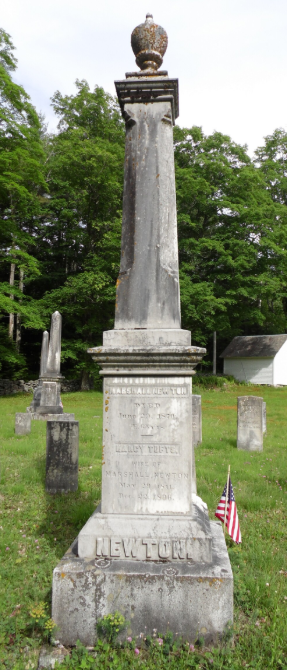
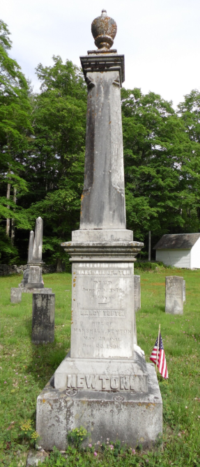
1SGT James H. Newton Veteran
Birth
4 Dec 1843
Newfane, Windham County, Vermont, USA
Death
12 May 1864 (aged 20)
Virginia, USA
Cenotaph
Newfane, Windham County, Vermont, USA
Civil War Soldier
4th Sergeant, Co. K, 9th Vermont Infantry
1st Sergeant, Co. F, 17th Vermont Infantry
Killed in Action at Battle of the Wilderness
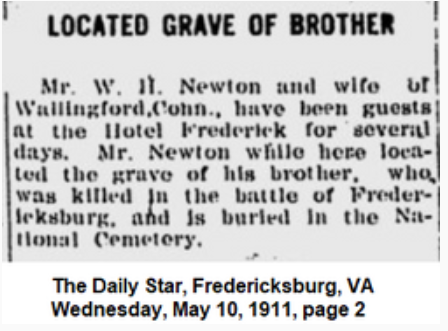
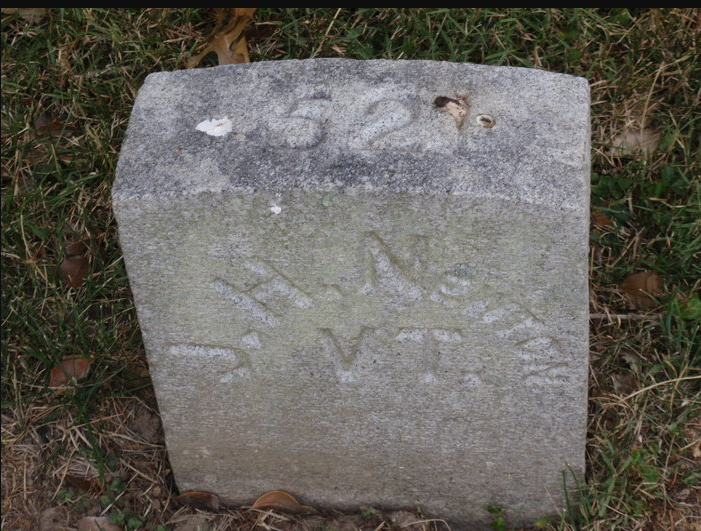
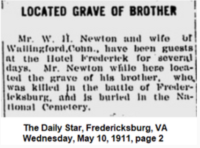
This is a cenotaph. Actual burial is at Fredericksburg National Cemetery.
Inscription
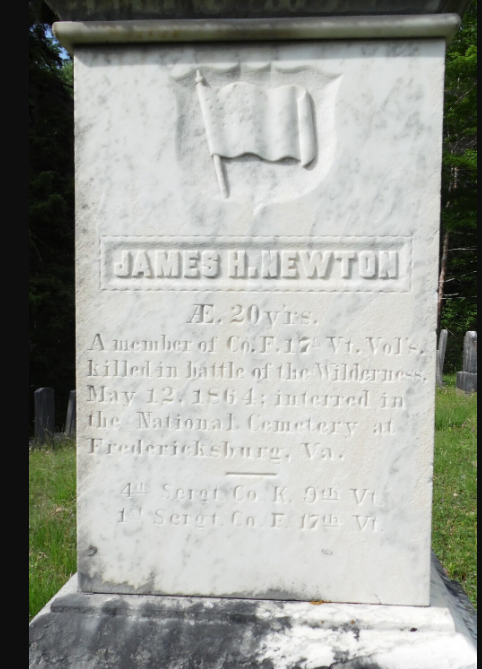
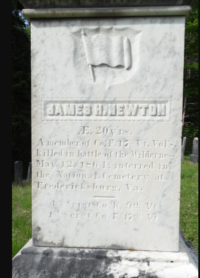
JAMES H. NEWTON
AE. 20 yrs.
A member of Co. F. 17th Vt. Vol’s.
killed in battle of the Wilderness
May 12, 1864: interred in
the National Cemetery at
Fredericksburg, VA.
4th Sergt. Co. K. 9th Vt.
1st Sergt. Co. F. 17th Vt.
James Holland Newton
Birth
4 Dec 1843
Newfane, Windham County, Vermont, USA
Death
12 May 1864 (aged 20)
Spotsylvania County, Virginia, USA
Cenotaph
West Wardsboro, Windham County, Vermont
Killed in the Battle of the Wilderness, interred in the National Cemetery at Fredericksburg, Va. Member of Co. F. 17th Vt. Vols.
1SGT James Holland Newton Veteran
Birth
4 Dec 1843
Newfane, Windham County, Vermont, USA
Death
12 May 1864 (aged 20)
Spotsylvania County, Virginia, USA
Burial
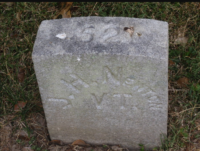
Fredericksburg National Cemetery
Fredericksburg, City of Fredericksburg, Virgini
Related Items
-
New Research Regarding Marines’ Image on the Brandywine – Extremely Rare 1862 Albumen Image of the Crew of the USS Brandywine Joined on Deck by Full Dress U.S. Marines
$2,150New Research Regarding Marines’ Image on the Brandywine – Extremely Rare 1862 Albumen Image of the Crew of the USS Brandywine Joined on Deck by Full Dress U.S. MarinesNovember 28, 2020 -
Renown Richmond Sculptor Edward V. Valentine’s Personal Photographs of General Robert E. Lee Utilized by Valentine When Sculpting a Statuette of Lee
$4,200Renown Richmond Sculptor Edward V. Valentine’s Personal Photographs of General Robert E. Lee Utilized by Valentine When Sculpting a Statuette of LeeMarch 29, 2024 -
Fine Civil War Officer’s Autograph Book – 3rd NY Infantry – Close to 40 Signatures
$850Fine Civil War Officer’s Autograph Book – 3rd NY Infantry – Close to 40 SignaturesApril 23, 2021 -
1/9 Plate Ambrotype of Lt. John M. Ward Co. B 6th South Carolina Cavalry
$2,3501/9 Plate Ambrotype of Lt. John M. Ward Co. B 6th South Carolina CavalryMarch 21, 2024