
Id’d Pre-Civil War U.S. Navy Lieutenant’s Frock Coat – Lt. Thomas Roney – Aboard the USS Powhatan and USS SumpterAugust 5, 2026

Id’d Pre-Civil War U.S. Navy Lieutenant’s Frock Coat – Lt. Thomas Roney – Aboard the USS Powhatan and USS Sumpter
$4,250
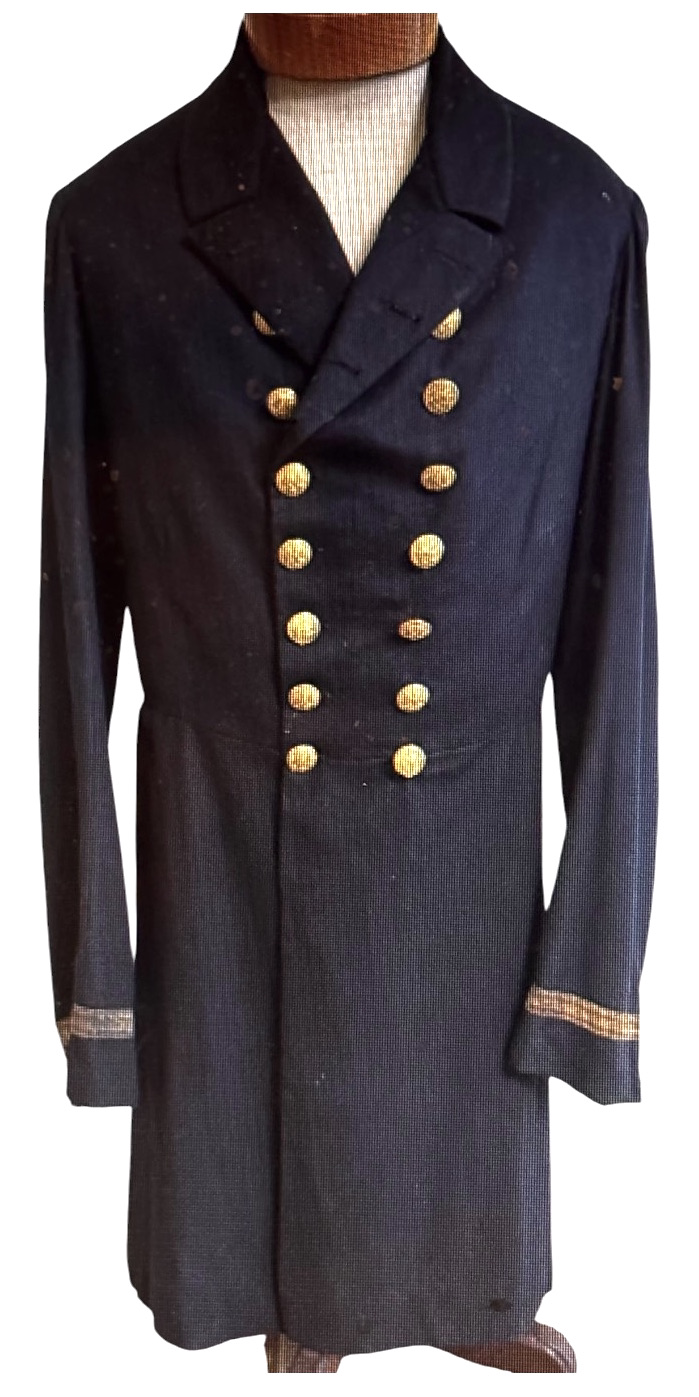
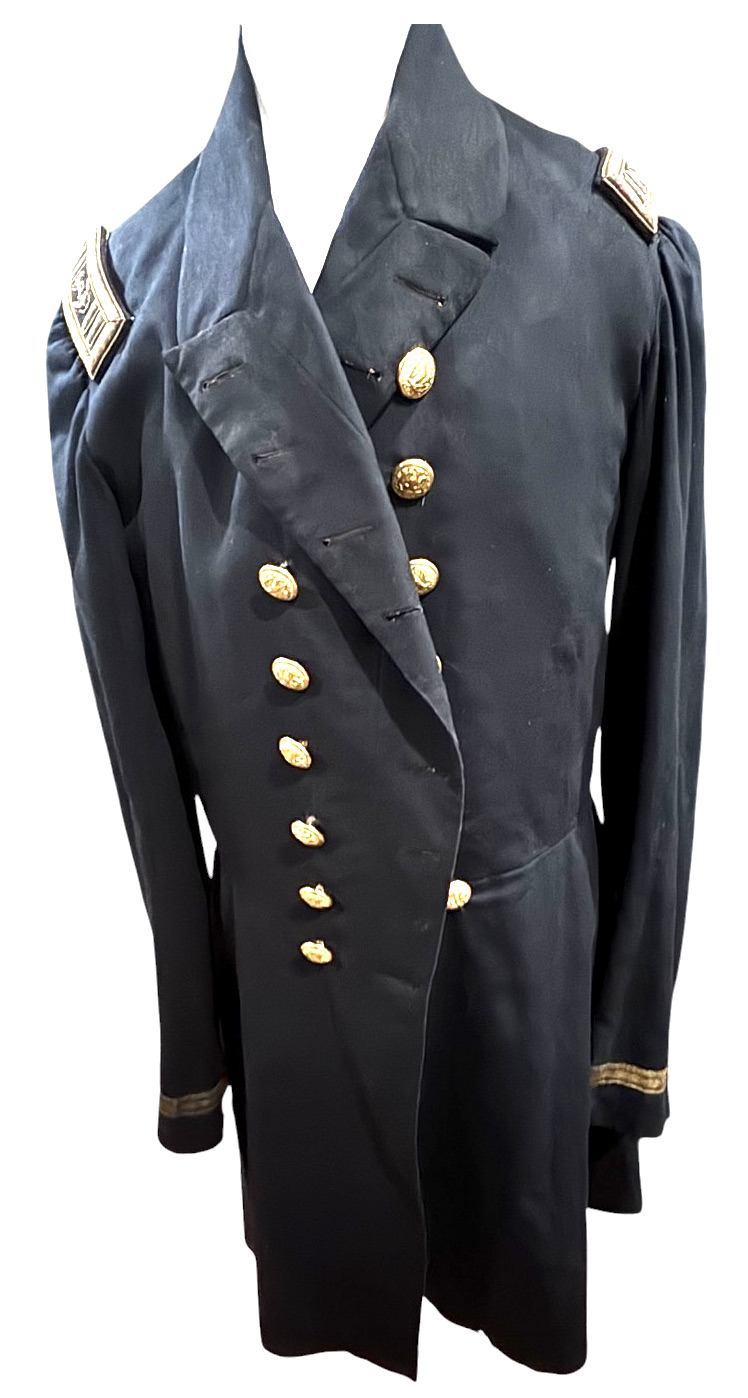
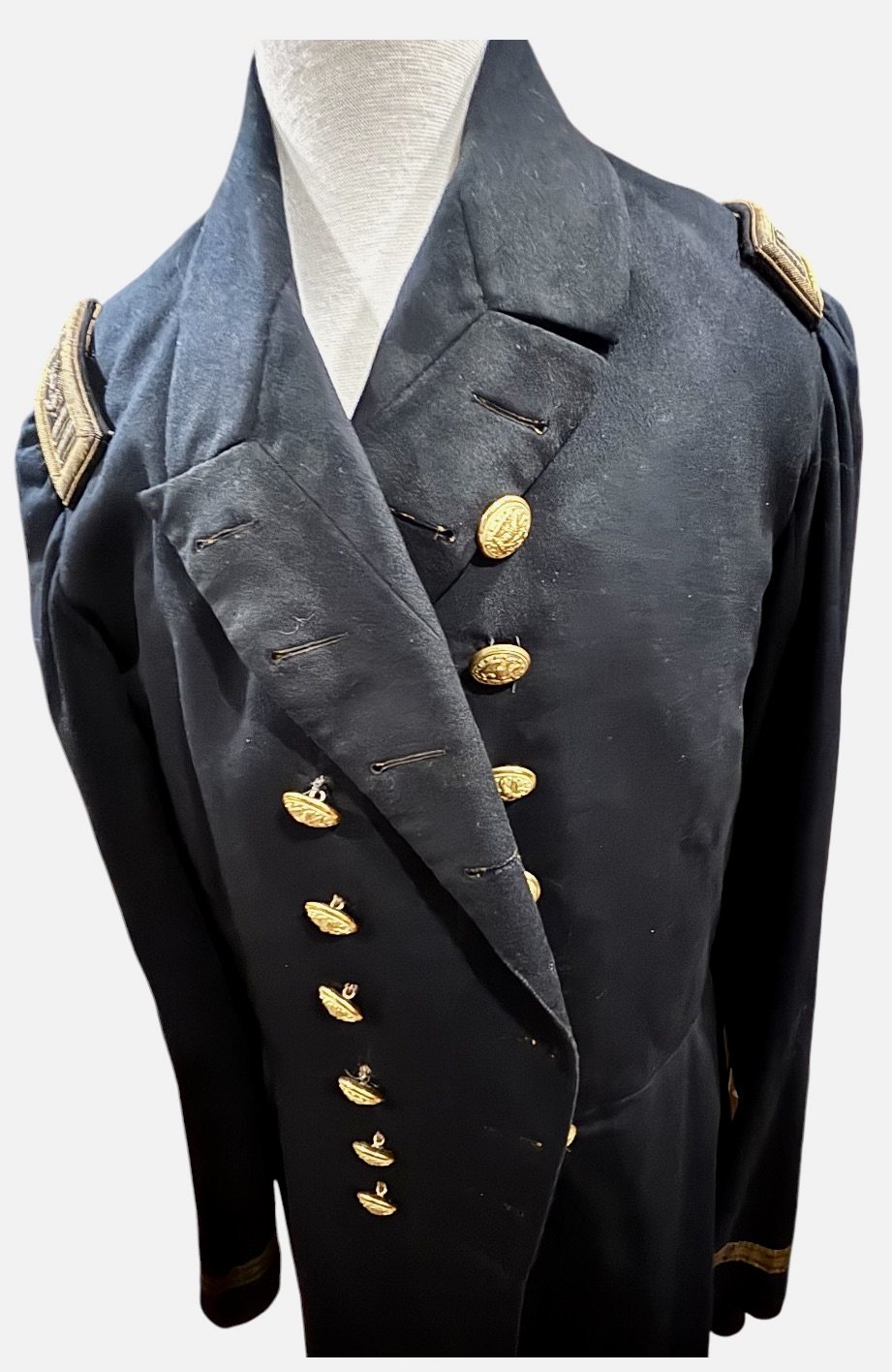
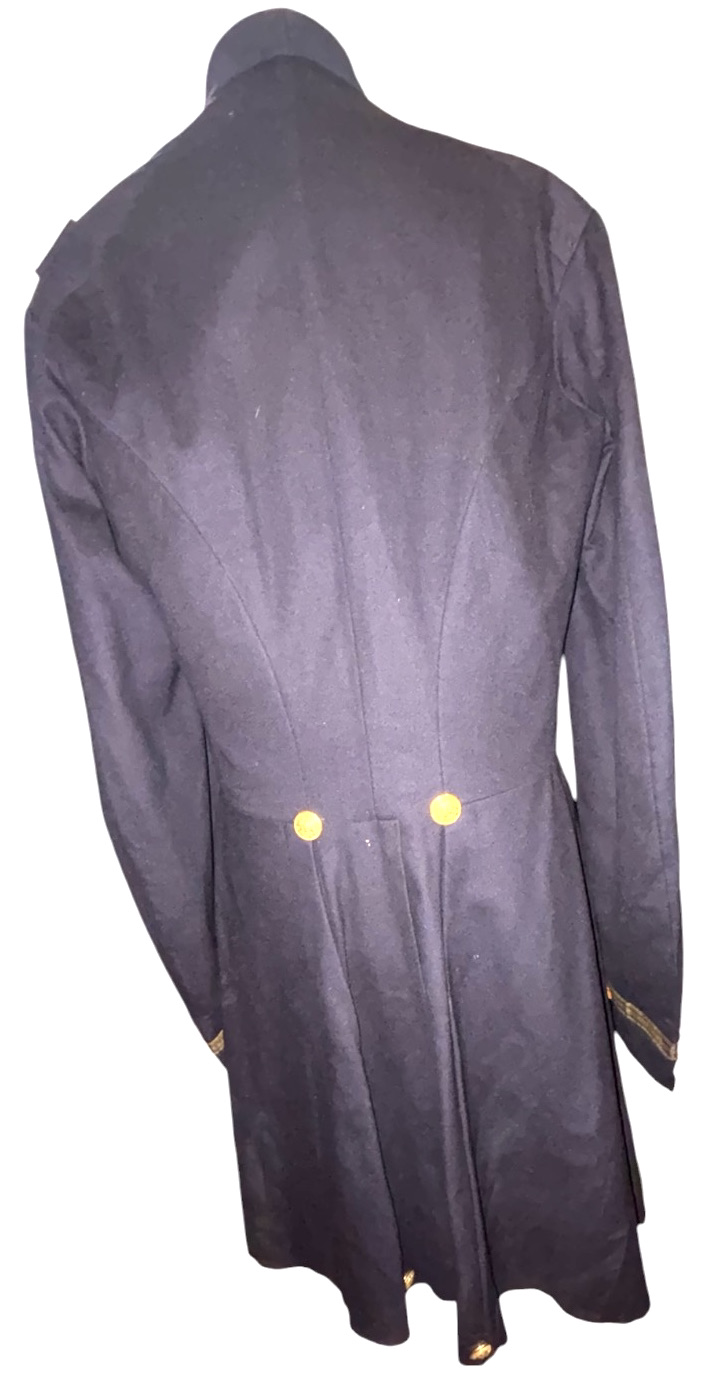
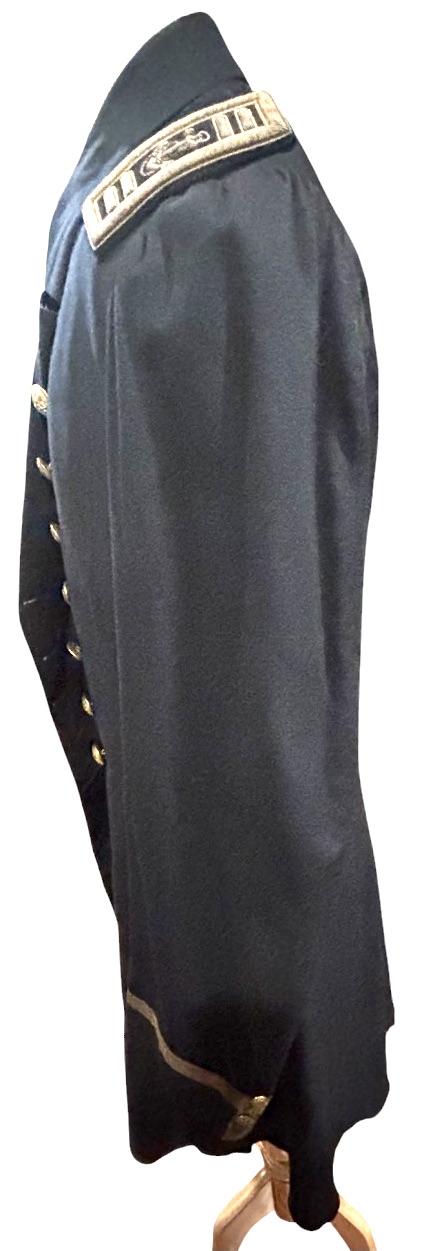
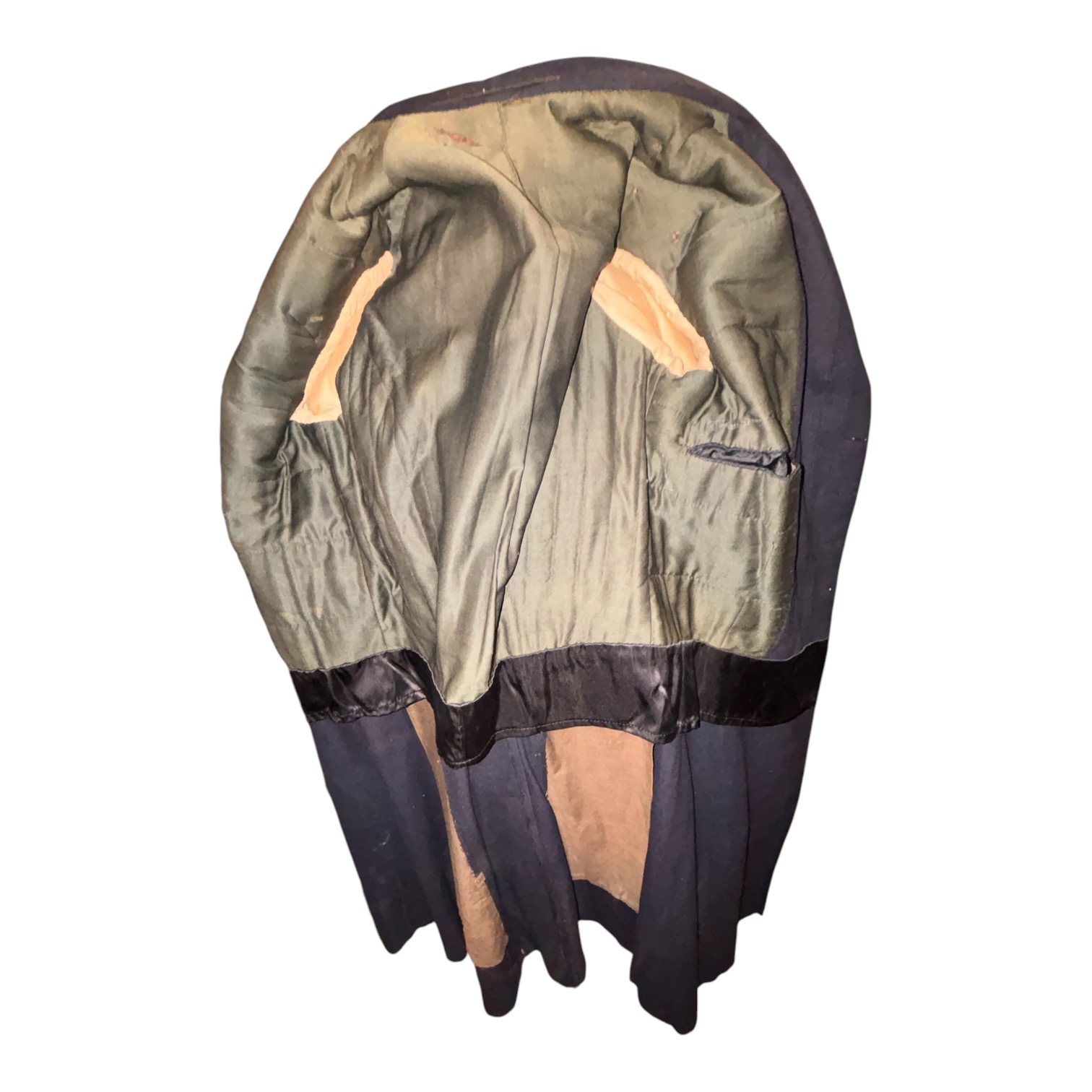
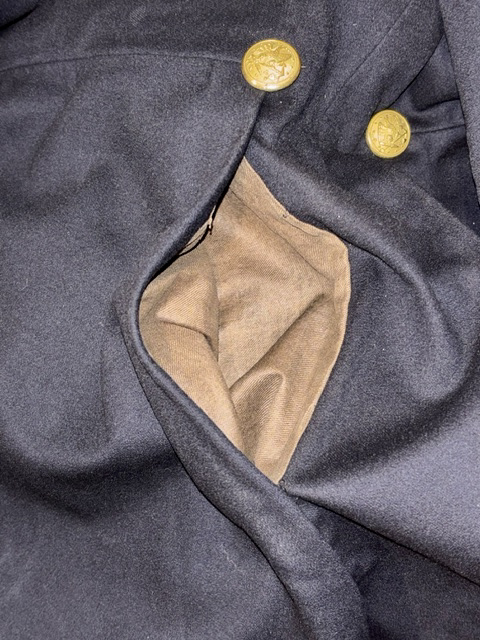
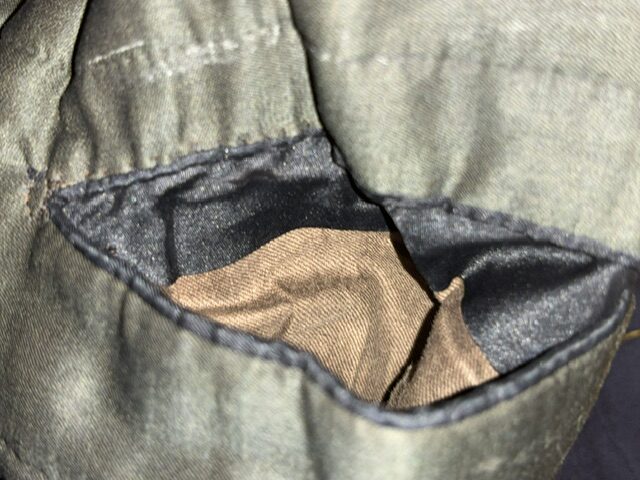
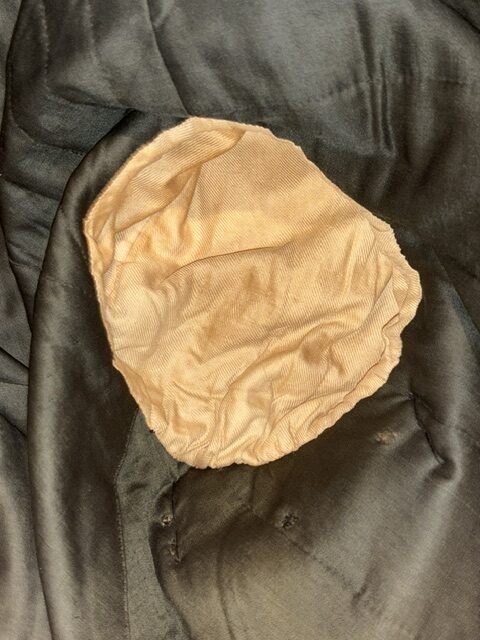
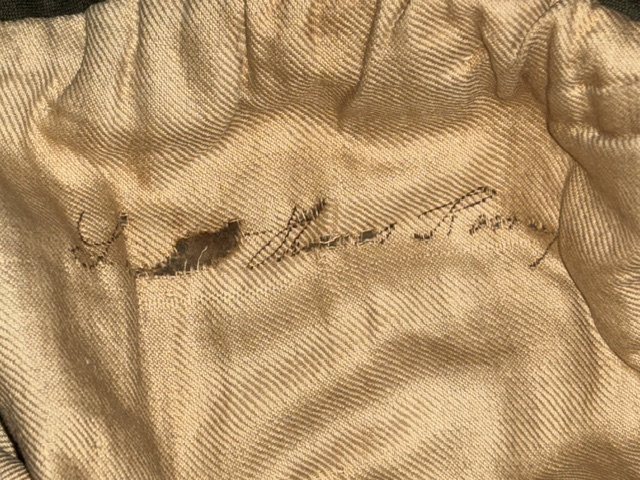
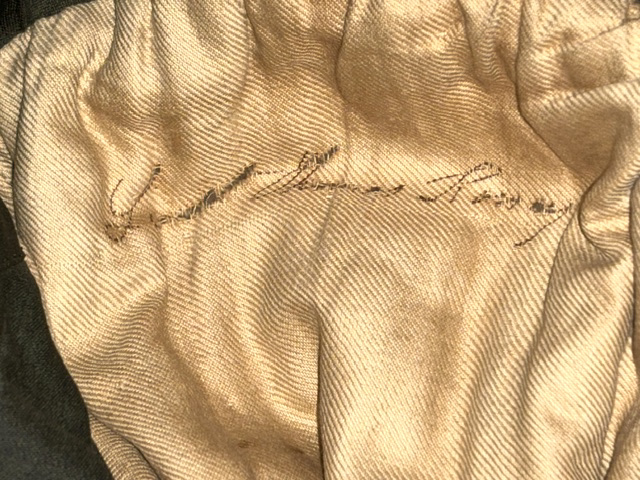
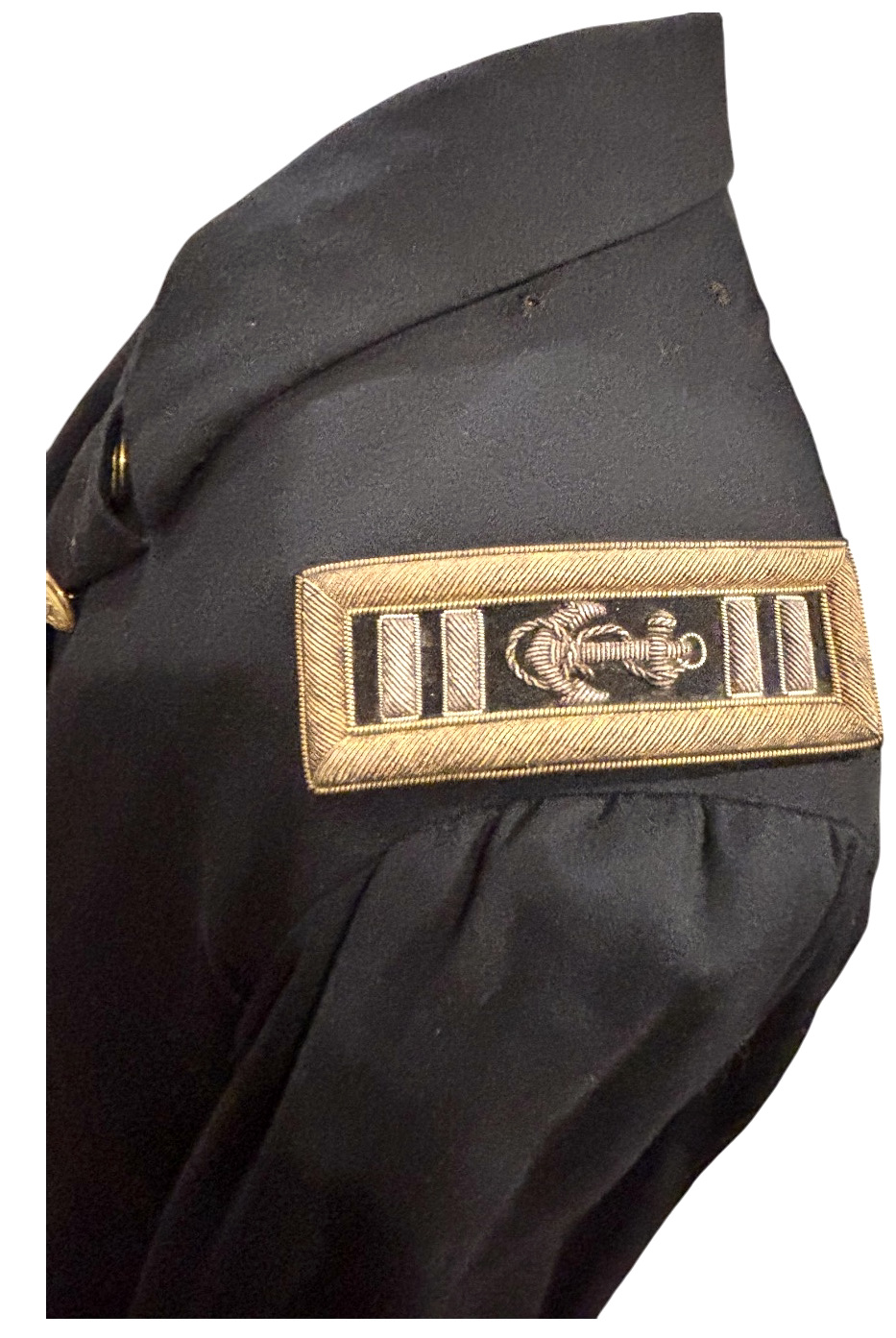
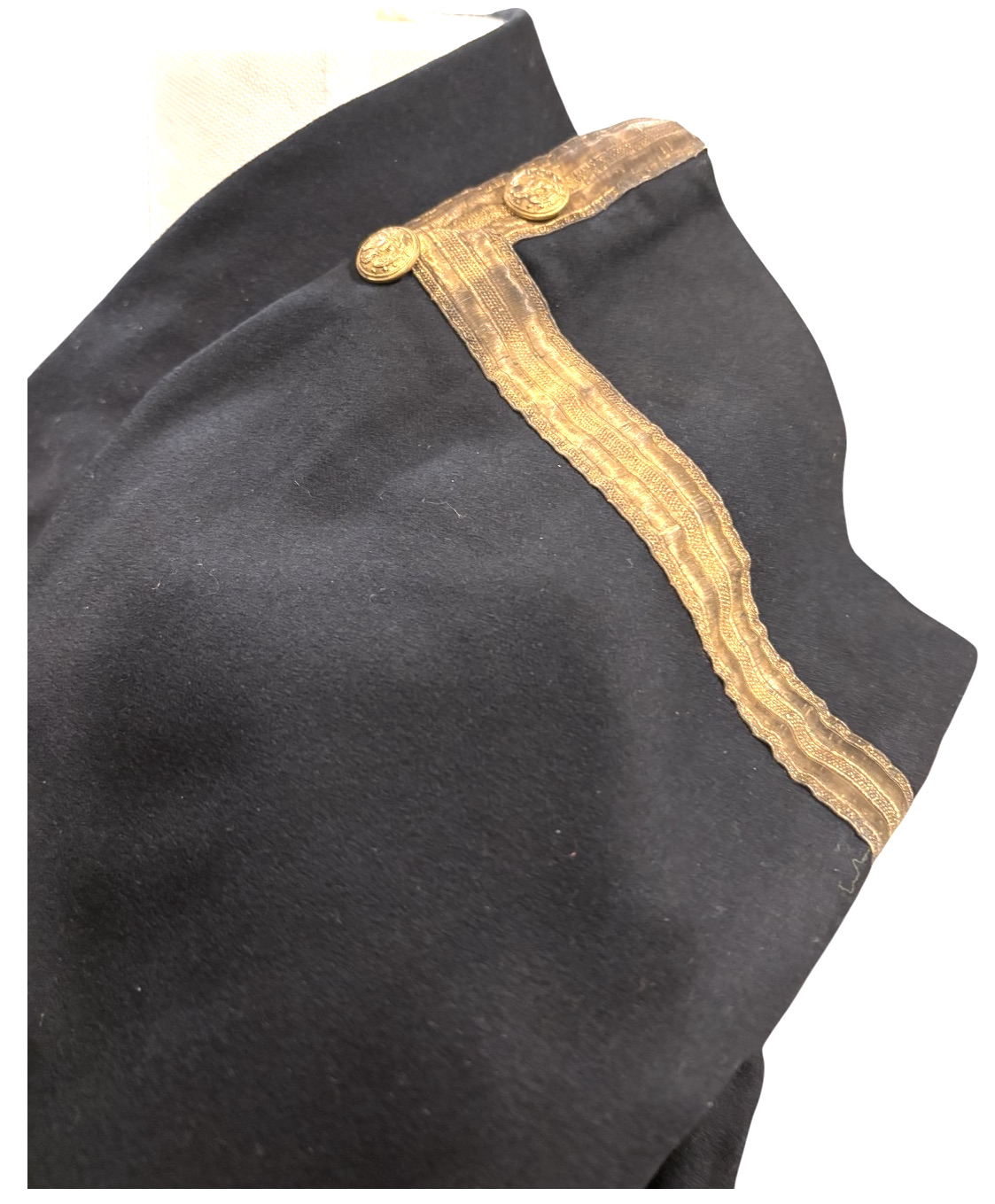
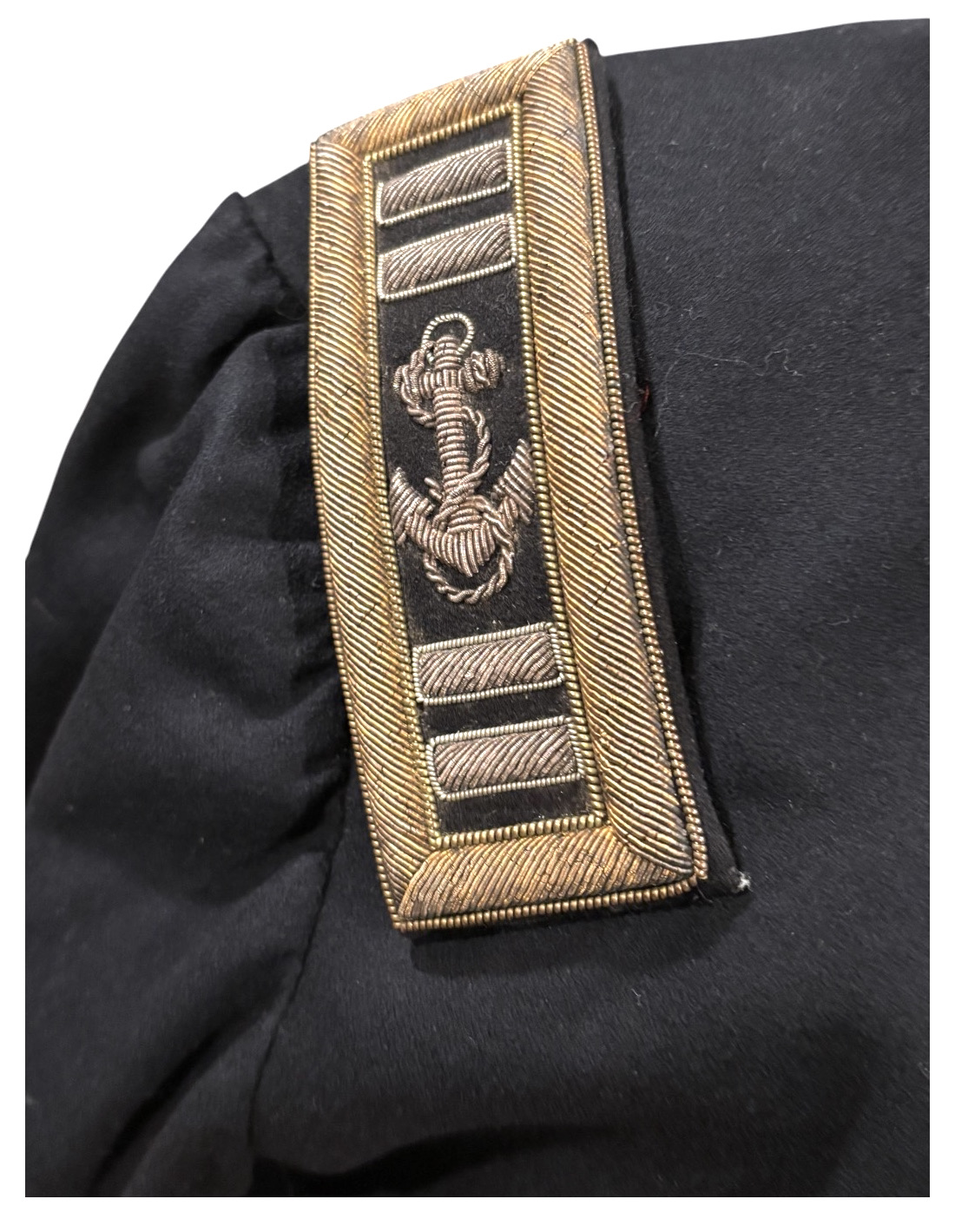
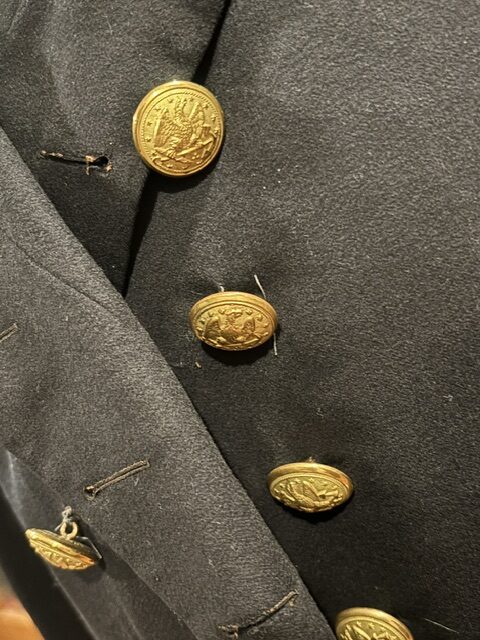
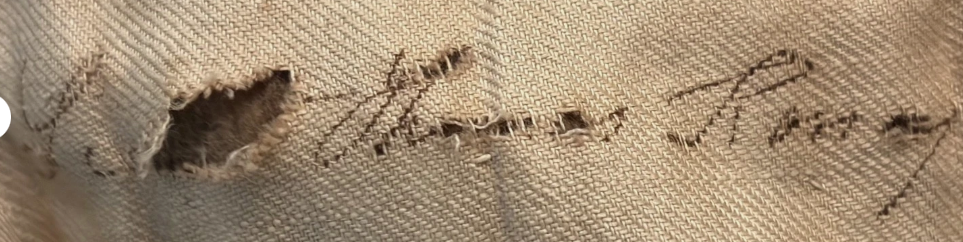
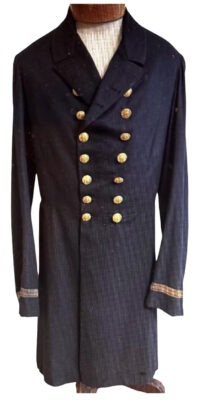
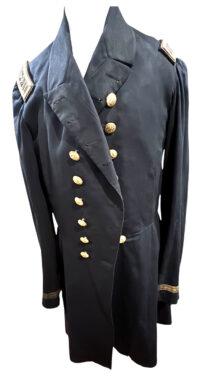
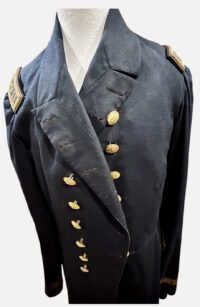
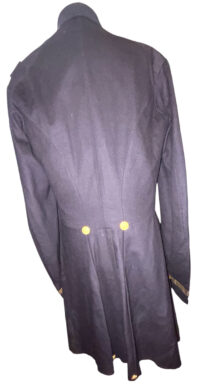
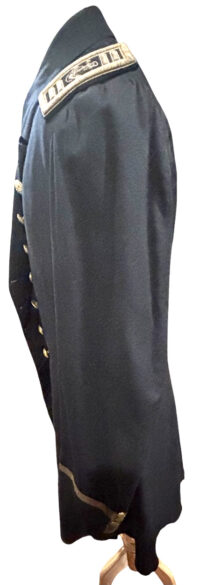
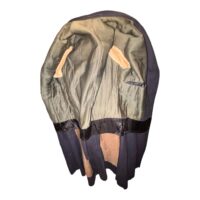
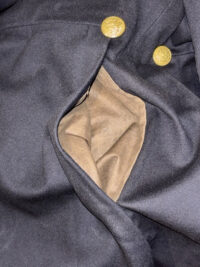
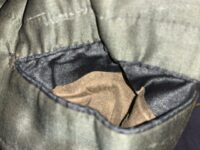
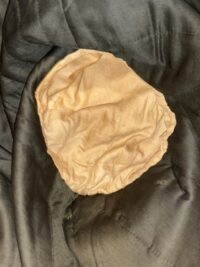
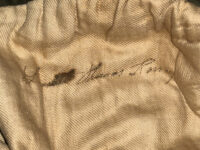
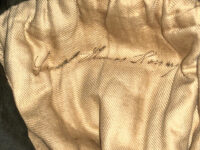
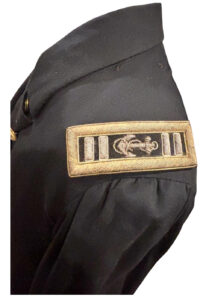
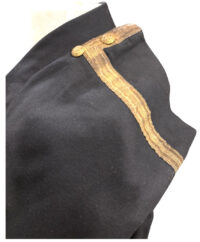
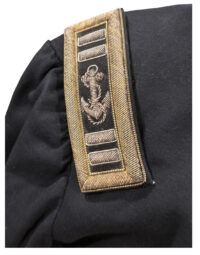
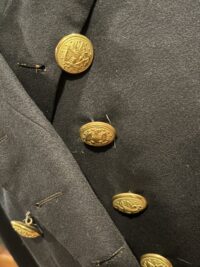
Id’d Pre-Civil War U.S. Navy Lieutenant’s Frock Coat – Lt. Thomas Roney – Aboard the USS Powhatan and USS Sumpter – Navy Lieutenant’s Frock Coat (Uniform Regulations 1852-July 1862). This particular frock was owned by Lieutenant Thomas Roney (served in the Navy from 1841 until his death at sea in 1860). Roney’s name is in period ink inside his left sleeve. A frock coat like this one would have been worn by Navy Lieutenant’s during the first two years of the Civil War. During this period, Navy lieutenants wore shoulder straps on the frock for “service dress” or epaulettes for “undress.” This coat has four small holes in each shoulder for shoulder straps or epaulettes that were tied in place. The coat remains in excellent condition, with one or two very small (1/8”) moth holes
Thomas Roney, son of William Roney, Sr. and Alice Roney of Baltimore, was warranted a Midshipman in the United States Navy on March 3, 1841 and served initially aboard U.S.S. Cyane (Sloop-of-war), which was cruising on the Pacific Station. In 1845 he was ordered to the coast of Brazil, ultimately serving aboard U.S.S. Bainbridge (Brig) and U.S.S. Raritan (Frigate). Returning to Baltimore late in 1846, Roney proceeded to the U.S. Naval School in Annapolis that December for instruction, where he remained through July 1847.
On August 10, 1847, Roney was promoted to Passed Midshipman and was subsequently attached to U.S.S. Taney (Schooner), which was deployed to the Mediterranean to counter Mexican privateers. By October 1849, Roney was assigned to the Naval Observatory in Washington, serving under Matthew Fontaine Maury. Duty aboard U.S.S. Saranac (Screw sloop-of-war), U.S.S. Columbia (Frigate), and U.S.S. Bainbridge (Brig) followed in 1850. By early 1852, Roney was serving aboard U.S.S. St. Mary’s in the Pacific Squadron. By 1855, he was reported as being aboard U.S.S. Portsmouth (Sloop-of-war).
On April 18, 1855, Roney received his warrant as a Master, and on September 14 of that same year, he was commissioned a Lieutenant. By 1856, he was serving aboard U.S.S. Supply (Store ship), and by 1858, he was attached to U.S.S. Powhatan (Side-wheel steamer). In 1860, Roney was ordered to the Africa Squadron. Lieutenant Thomas Roney died on April 20, 1860 while on duty off the West coast of Africa. Bio courtesy NIMITZ LIBRARY USNA: Roney and Warden Family Papers, 1805-1871 (bulk 1805-1853): Finding Aid
Thomas Roney was an officer in the United States Navy who began his naval career as a midshipman in the 1840s.
His career and personal life in the 1840s included the following notable details:
- Early Service: He was appointed as a Midshipman on March 3, 1841. In 1845, he was stationed in Norfolk, Virginia, serving aboard the USS Portsmouth.
- Naval Academy: He was a member of the U.S. Naval Academy Class of 1847 and officially became a Passed Midshipman on August 10, 1847.
- The Somers Mutiny: As an Acting Midshipman, his family was highly tuned to naval affairs. In January 1843, his mother wrote a letter to Roney relaying the news of the infamous mutiny incident aboard the USS Somers.
- Family Roots: He hailed from the Baltimore-based Roney and Warden families. Many of his personal letters and family records from this era are currently preserved in the Special Collections & Archives at the U.S. Naval Academy’s Nimitz Library.
- Later Career & Life: He eventually rose to the rank of Lieutenant on September 14, 1855. He passed away on April 20, 1860, but historical records show his legacy and name are maintained in the USNA Virtual Memorial Hall. [1, 2, 3, 4, 5]
Thomas Roney ’47
Date of birth: ~1825
Date of death: April 20, 1860
Age: 35
Loss
Thomas died on April 20, 1860 of “mental prostration” “off Kabenda, West Coast of Africa;” he was 35 years old. He had recently been placed in command of the steamship Sumpter.
Other Information
From researcher Kathy Franz:
In Majumba (aka Mayumba), West Africa, on March 18, 1860, Lieutenant Charles S. McDonough was suspended because of officer reports against him, and he asked to be put on furlough during his trial. Thomas Roney took his place commanding the Sumter and died at Kabenda/Cabinda on April 20. He was buried with full military and masonic honors.
The following notice was written on May 7 off Majumba: The Officers of the U. S. S. Mohican and U. S. S. Sumpter assembled together this day, consequent upon the death of Lieut. THOMAS RONEY, U. S. N.: and Comdr. S. W. GODON having been called to the chair, the following resolutions were passed: Resolved, That we offer to the friends and relations of the deceased our heartfelt sympathy and condolence in their recent bereavement. Resolved, That in the death of Lieut. Roney the service has sustained the loss of one of its most faithful and devoted servants. The deceased dedicated his life to the Navy, brought to it high talents, great energy and a most unselfish devotion to his duties. As a messmate he won the affection and confidence of his brother officers by his warm-hearted and generous nature and by his many social virtues. It was with pain that we witnessed the grief and reluctance with which during the past few months, he has been forced to acknowledge that disease was depriving him of the ability to discharge the official duties which he has always performed with such pride and pleasure. Resolved, That in memory of the deceased we wear crape on the left arm for thirty days, and that we cause a suitable monument to be placed over his remains. Resolved, That a detailed account of the circumstances of the death of the deceased and of his place of burial, together with a copy of these resolutions, be sent to his friends and also to the Masonic Lodge of which he was a member. Signed, J. PEMBROKE JONES, LT., Secretary.
At the end of February 1850, Roney was ordered to the Saranac, but in August, he requested the Bainbridge. Two months later, he was broke from an amount checked against him at the 4th Auditors office and an advance that he had already spent. He requested to be ordered to the mail steamer Georgia so he could get sea pay and get out of debt, but he remained on the Bainbridge through 1852. In May 1853, he requested an advance to join the John P. Kennedy. In June, he left the schooner Fennimore Cooper at Commander Ringgold’s request so he could testify at the trial of suspected slaver R. P. Brown. After the trial, Roney wanted to rejoin Ringgold’s expedition, but having missed the ship and spending his advance to buy a lieutenant’s uniform, he now was without pay. On August 27, he reported to the Cyane at Portsmouth, New Hampshire, but she had already sailed. She must have returned because he requested a transfer from her on September 23 to the St. Mary’s. In 1856 he lived at Orange Courthouse, Virginia, and while next serving on the Powhatan, he made an $80/month allotment.
On October 9, 1856, Roney married Fannie Piper Robertson (1832-1914) at the Orange Court House in Virginia. She was from Culpeper County, Virginia. Their daughter Fannie lived with her grandmother Ann Robertson in 1860. Roney’s son Thomas was born in June 1858. He was raised by Fannie’s brother Walter Somerville Robertson and his wife Josephine. Walter had lost an arm during the Civil War. The younger Thomas would die in February 1862, at age 3 years, 8 months, and 22 days. On December 22, 1870, Roney’s widow Fannie married John A. Roberts.
On November 10, 1857, Roney again allotted $80 of his pay per month to his wife. In January 1859, he wanted to proceed home to Baltimore.
Roney was on the Powhatan in 1858, and after two years, she came into Philadelphia on August 17, 1860. The newspaper reported that she visited more harbors on the China station than any flagship and had quite a narrow escape from total destruction when she grounded on May 27, 1859. She was repaired at Shanghai and had several deaths and court martials on board during her voyage. Even though the newspaper wrote Roney was an officer on board, he was actually detached in Shanghai and came home to Rapidan Station, Virginia. He was next on the Alleghany, the Crusader and the Mohican before taking command of the Sumpter***
The newspaper has resolutions to his Mason lodge giving details of his burial in Africa.
His father William was a captain in the War of 1812. His mother was Alice (McBlair.) Siblings were: William, Jr., a merchant in Baltimore; Alice 1808-1813; Margaret 1810-1813; Margaret Ann (Mrs. James Warden) 1815-1852; John born 1819; Edward born 1828; and Alice McBlair (Mrs. Hugh Roney) 1830-1912.
He was appointed to the Naval Academy from Maryland. Roney is buried in Kabenda, which is now in the Democratic Republic of the Congo.
Career
From the Naval History and Heritage Command:
Midshipman, 3 March, 1841. Passed Midshipman, 10 August, 1847. Master, 2 March, 1855. Lieutenant, 14 September, 1855. Died 20 April, 1860.
In 1845 he was aboard the ship Portsmouth in Norfolk, Virginia.
The August 16, 1860 edition of the New York Times carried a report mentioning him as aboard the side wheel steamer Powhatan (1850), which had just returned to Philadelphia after a cruise to China. Note this date is after his listed date of death (and nowhere near Africa).
*** The steamship USS Sumter (often spelled Sumpter) was part of the U.S. Navy’s Africa Squadron in 1860, where she was utilized to patrol the West African coast and intercept illegal slave traders.
The ship’s service during this period is notable in naval history:
- Mission: In the late 1850s, the U.S. Navy realized that traditional sailing vessels were ineffective at catching swift, modern slave-trading ships. The Sumter was one of the screw steamers assigned to the African Slave Trade Patrol to bolster this effort.
- 1860 Operations: Operating off the western coast of Africa, Sumter actively cruised the coastline and took mail to ports like Fernando Po.
- Recall: In 1861, as the United States descended into the Civil War, the squadron was recalled to the United States so that its vessels could enforce the Union blockade of Confederate ports.
Related Items
-
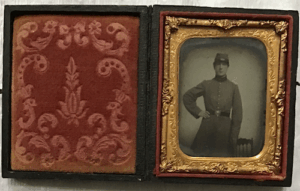
1/9 Plate Ambrotype of Lt. John M. Ward Co. B 6th South Carolina Cavalry
$2,3501/9 Plate Ambrotype of Lt. John M. Ward Co. B 6th South Carolina CavalryMarch 21, 2024 -
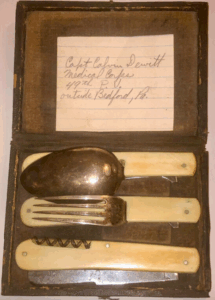
High Quality Civil War Id’d Officer’s Traveling Mess Utensils in Original Case
$1,150High Quality Civil War Id’d Officer’s Traveling Mess Utensils in Original CaseSeptember 25, 2022 -
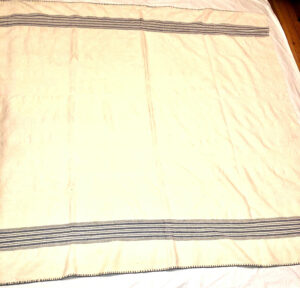
Id’d Homespun Mid-Seam Blanket of Private Ernest M. Copp Co. K 2nd Massachusetts Cavalry
$650Id’d Homespun Mid-Seam Blanket of Private Ernest M. Copp Co. K 2nd Massachusetts CavalryJanuary 17, 2023 -
Civil War Period Flour Barrel from Richmond, Virginia Mill
$750Civil War Period Flour Barrel from Richmond, Virginia MillMay 17, 2024