
Id’d M1858 Smooth Side Canteen Used by Capt. Francis Xavier Ward Co. H 1st Maryland Infantry and Confederate Aide-de-CampAugust 7, 2026


Id’d M1858 Smooth Side Canteen Used by Capt. Francis Xavier Ward Co. H 1st Maryland Infantry and Confederate Aide-de-Camp
SOLD
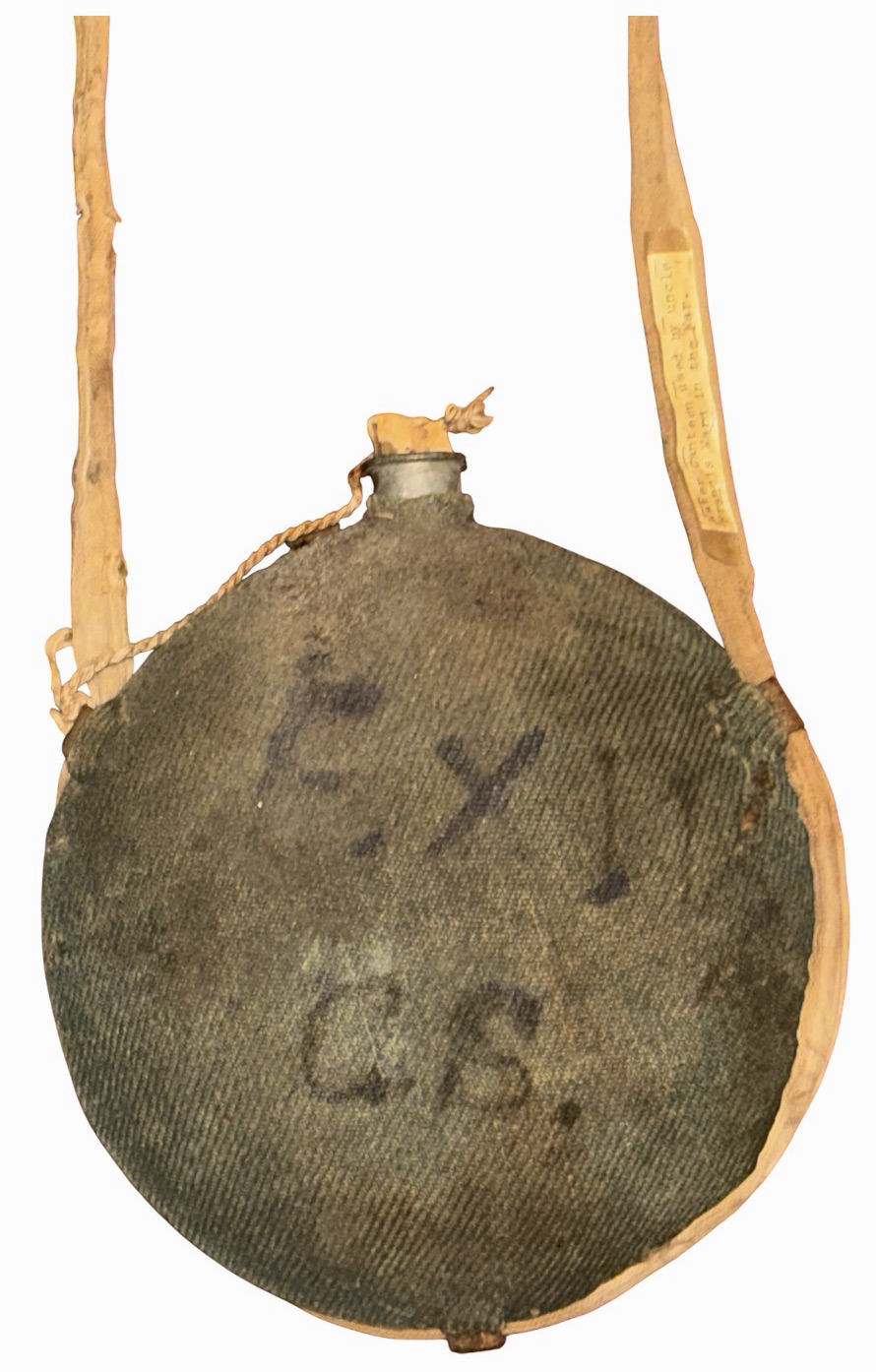
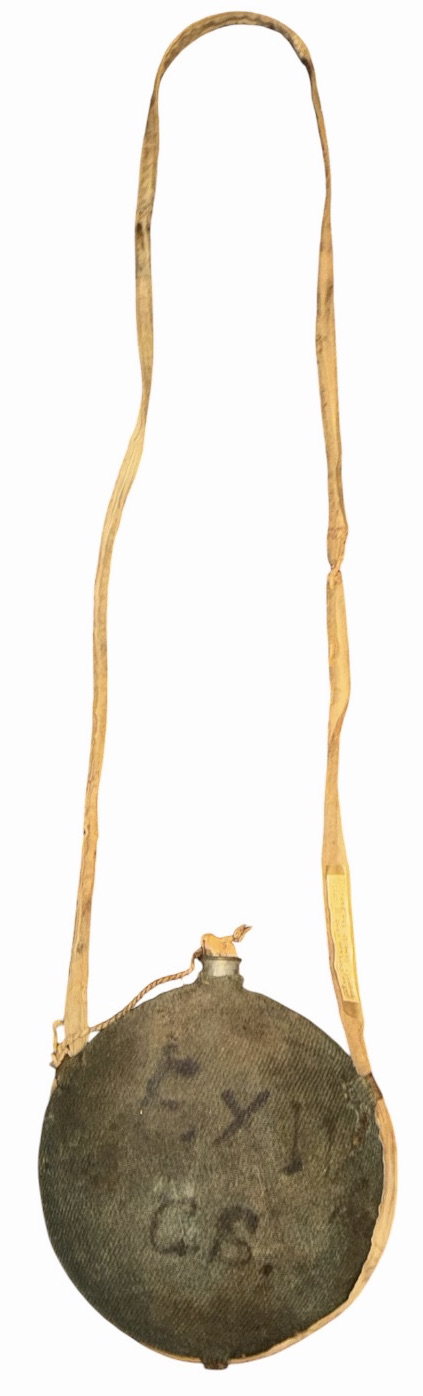
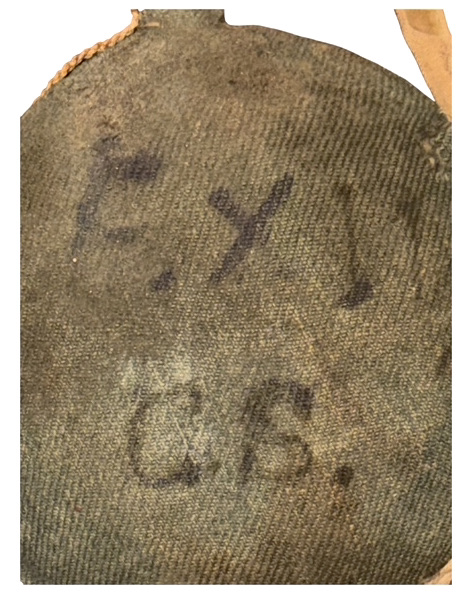
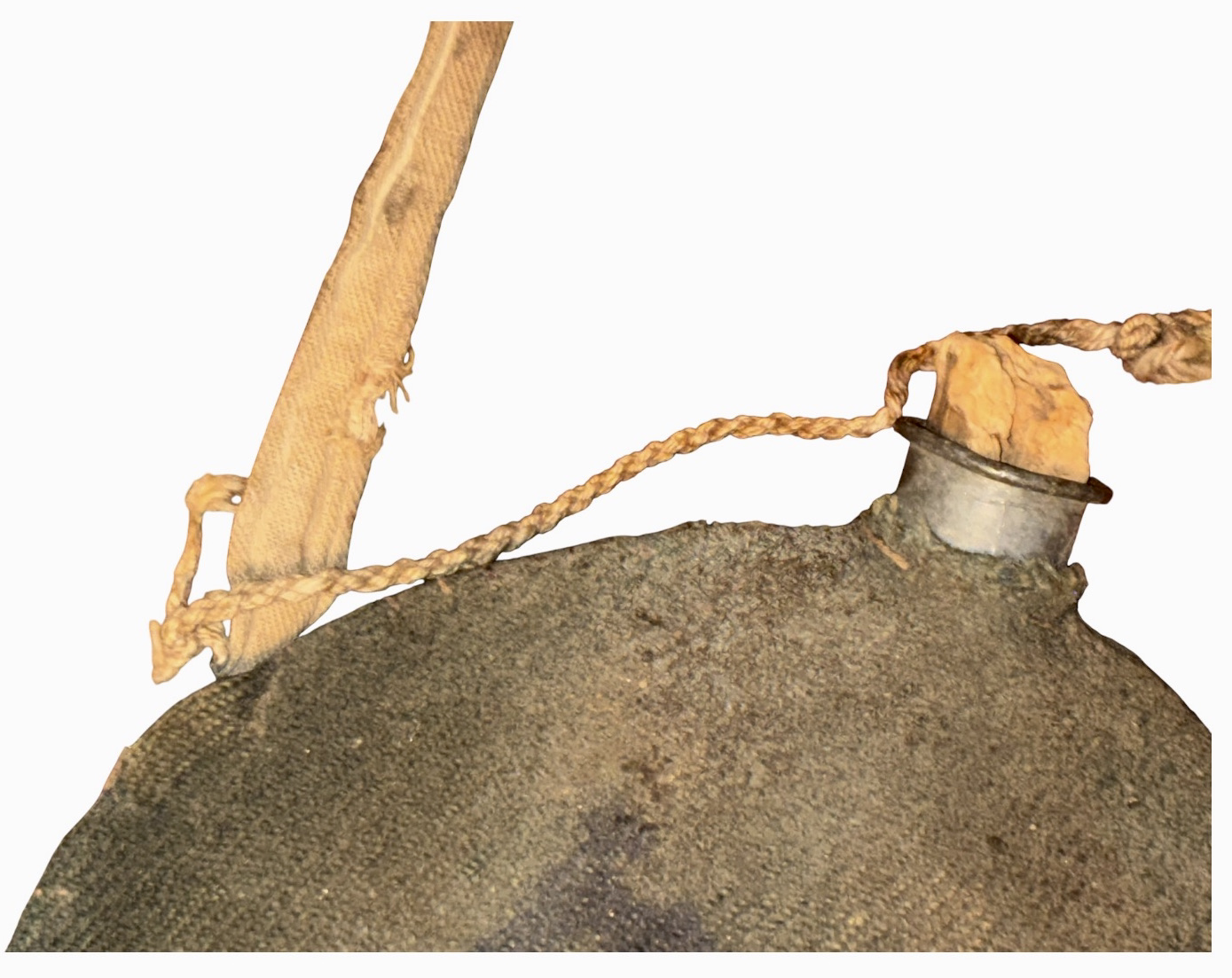
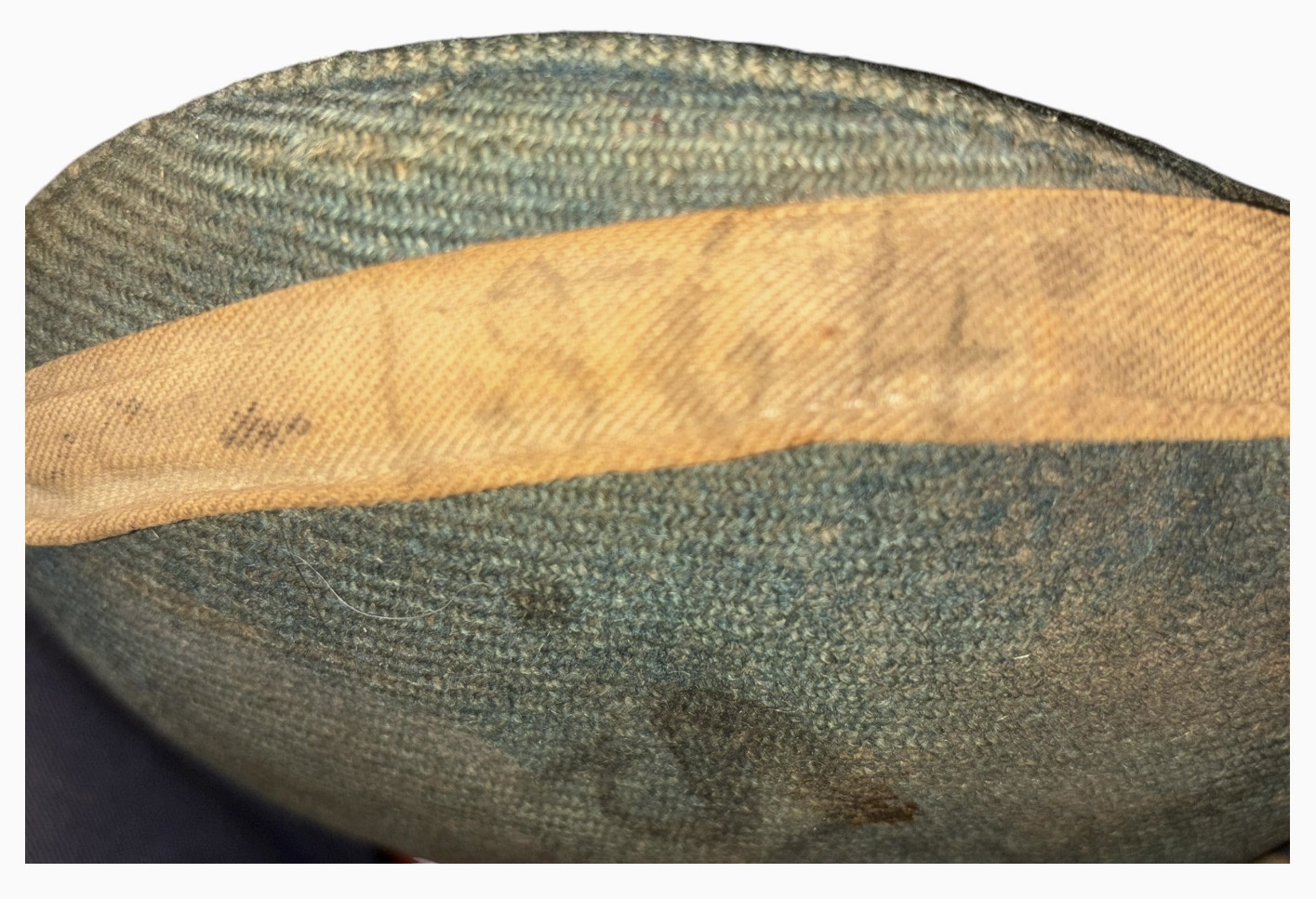
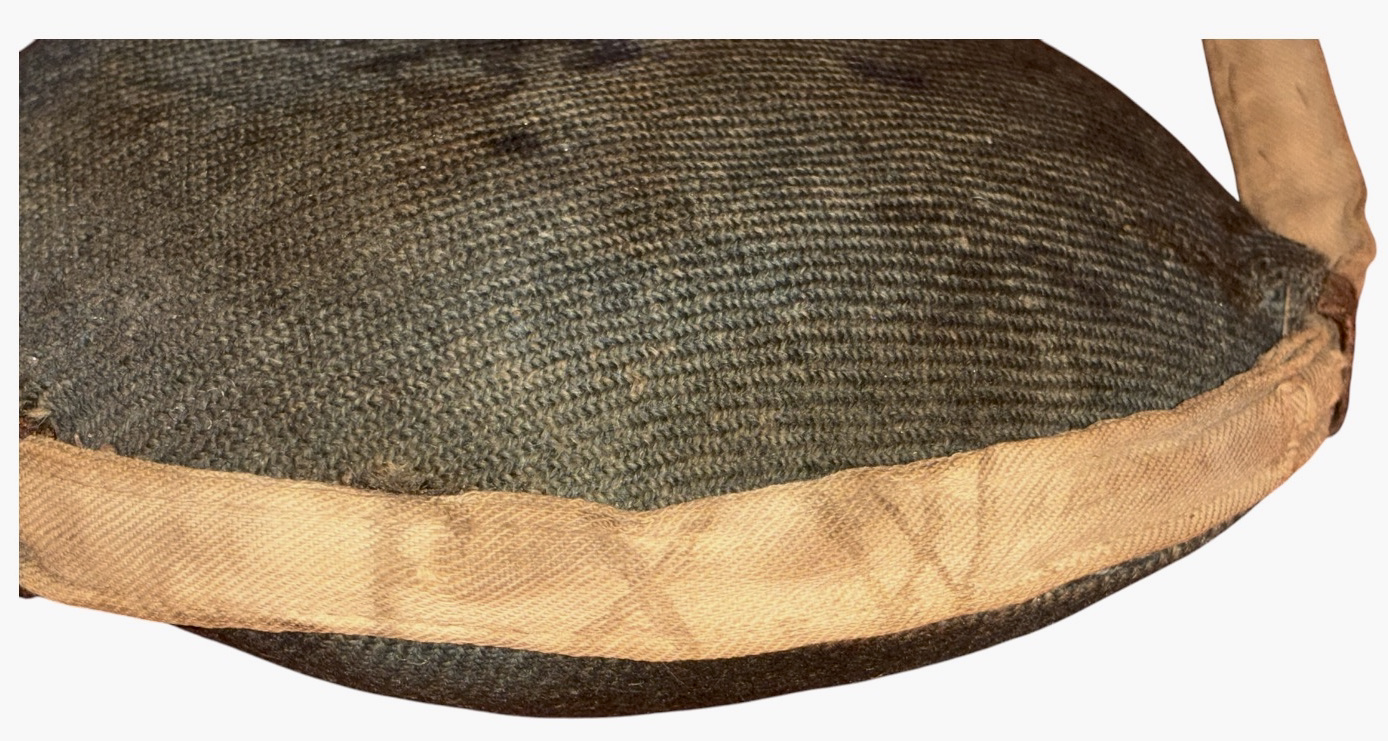
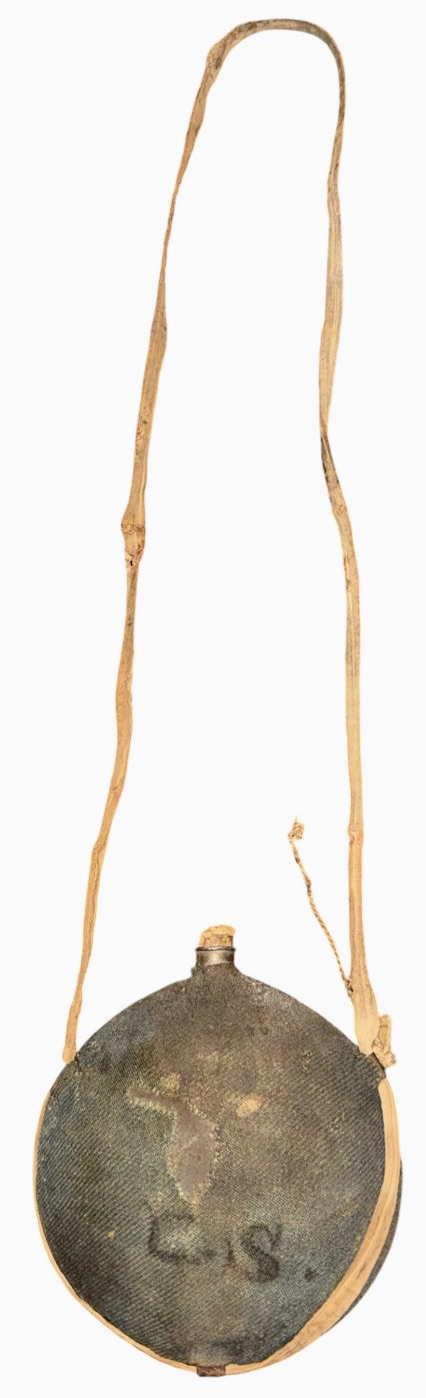
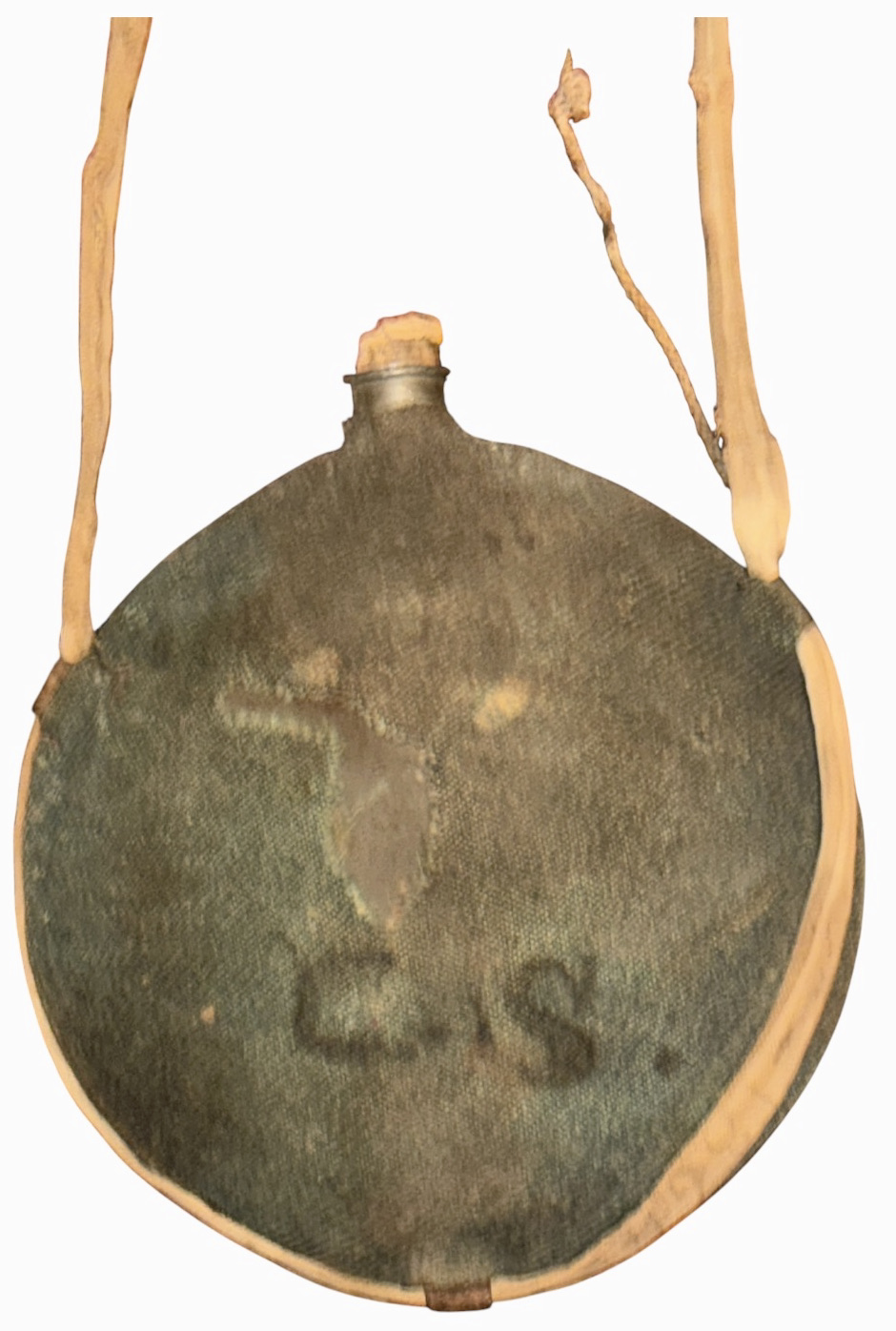
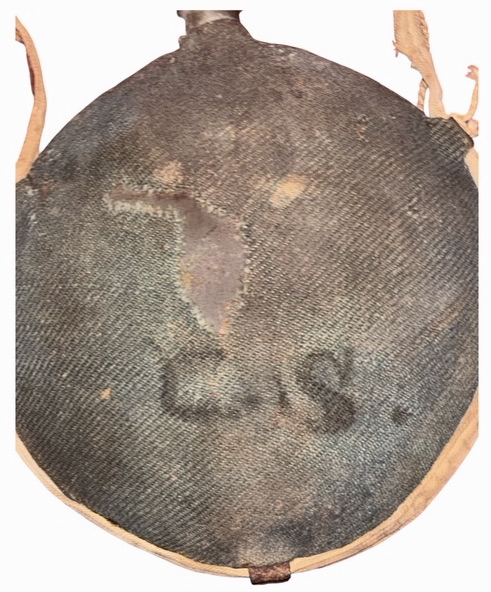
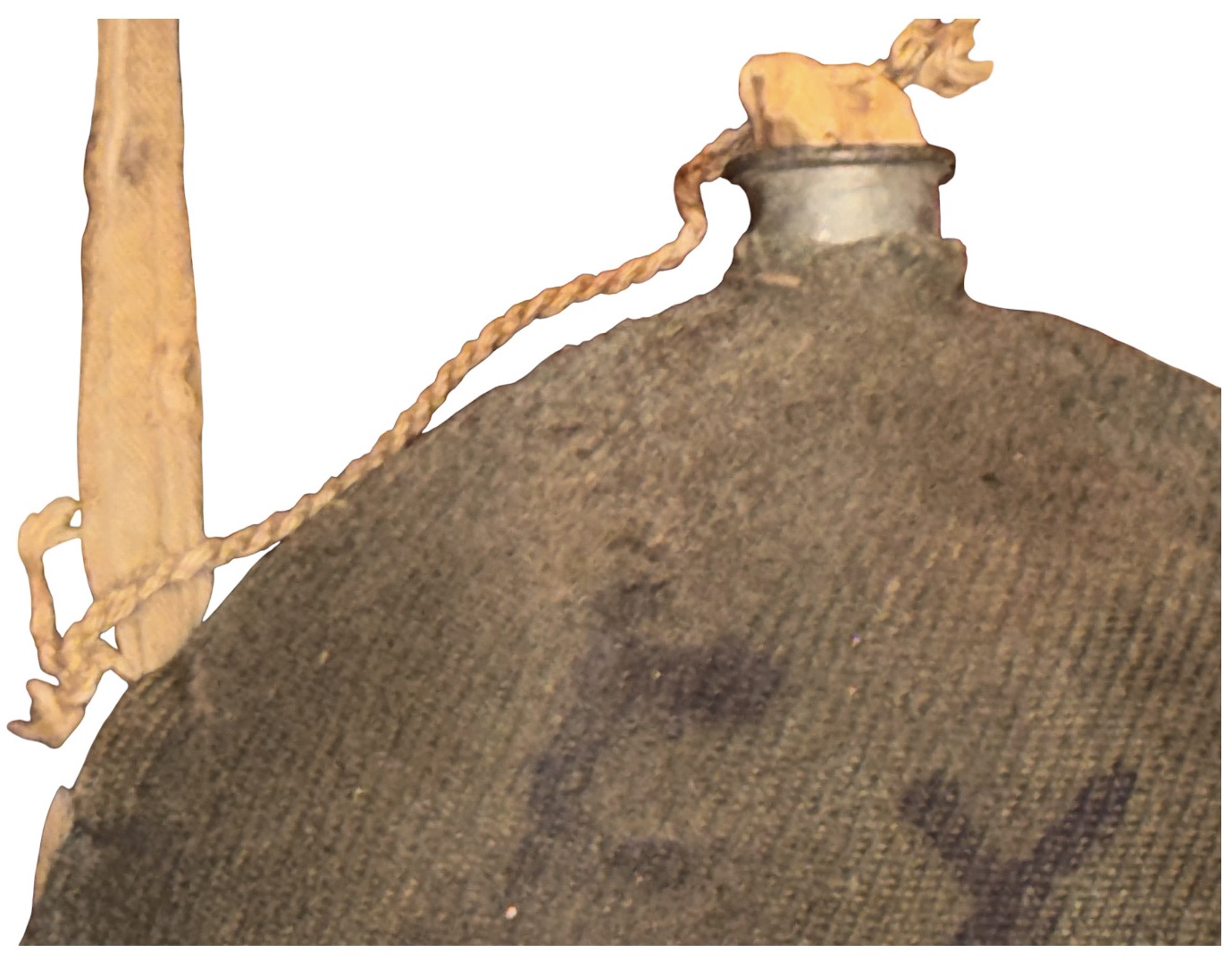
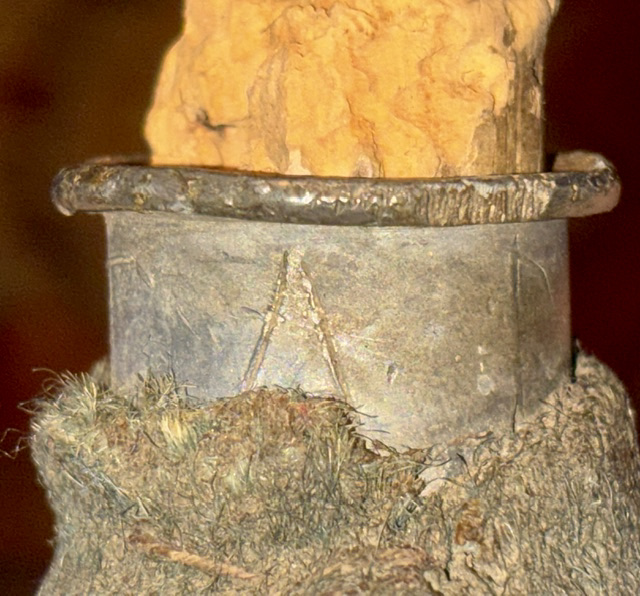
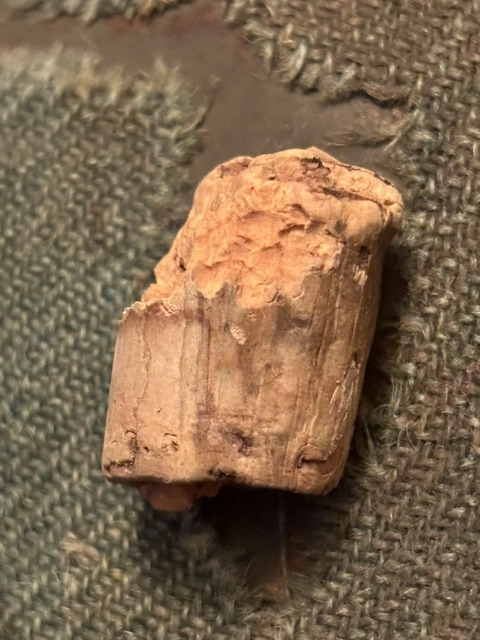
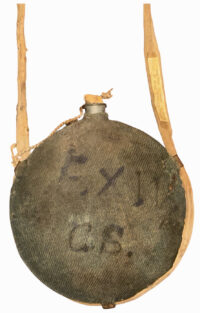
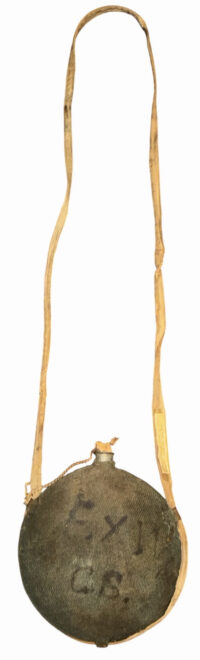
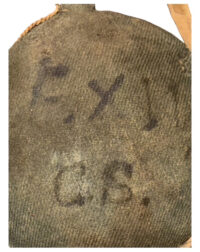
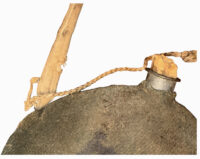
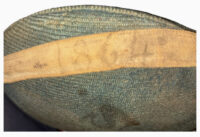
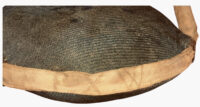
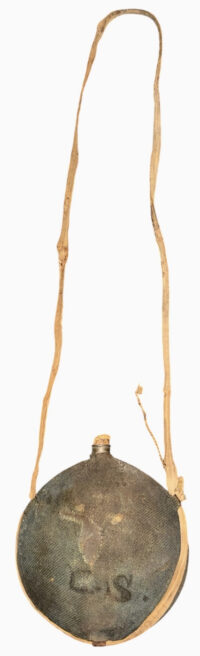
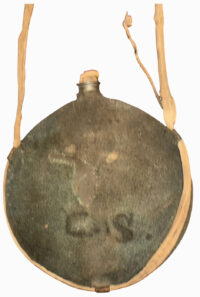
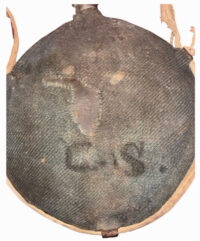
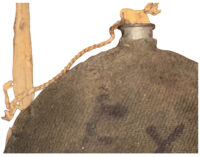
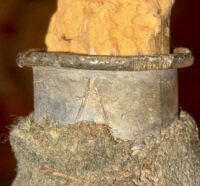
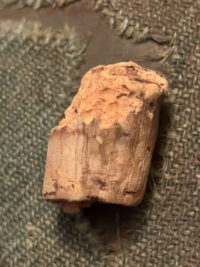
Id’d M1858 Smooth Side Canteen Used by Capt. Francis Xavier Ward Co. H 1st Maryland Infantry and Confederate Aide-de-Camp – This typical M1858 U.S. smooth side canteen has its original, sky blue wool cover and cotton sling; the canteen remains in fairly good condition, but exhibits some period use staining; there is a small patch of the cover missing on one side of the canteen. The canteen retains an original cork, which clearly shows human teeth marks impressed by pulling the cork out to drink; the original ring stopper is not present and appears to have had a length of twine that once held it – the original twisted twine is still present. Of significance is the crudely inked initials on one side of the canteen:
“F X W’
Below this are the letters “C.S.”; on the other side of the canteen are also the letters “C.S.”. At the bottom of the canteen, inked on the cotton strap is:
“1864
FXW’
Sewn to one side of the cotton sling in what appears to be late 19th century typing is the following:
“Water Canteen used by Uncle Francis Ward in the war.”
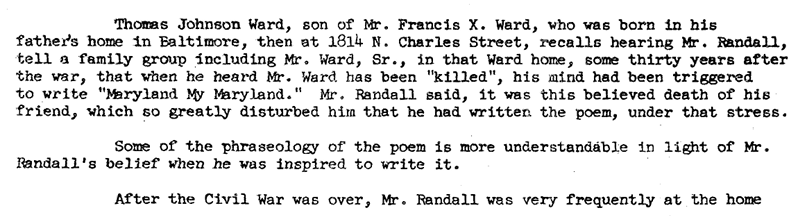
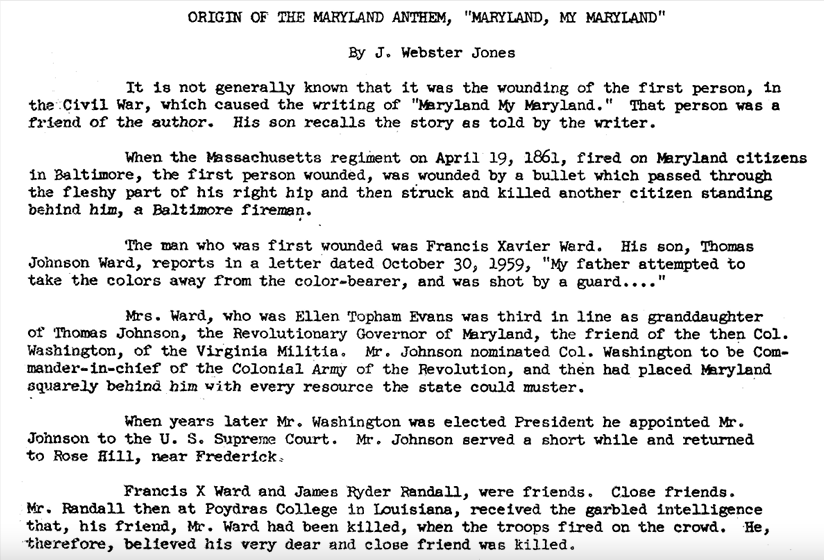
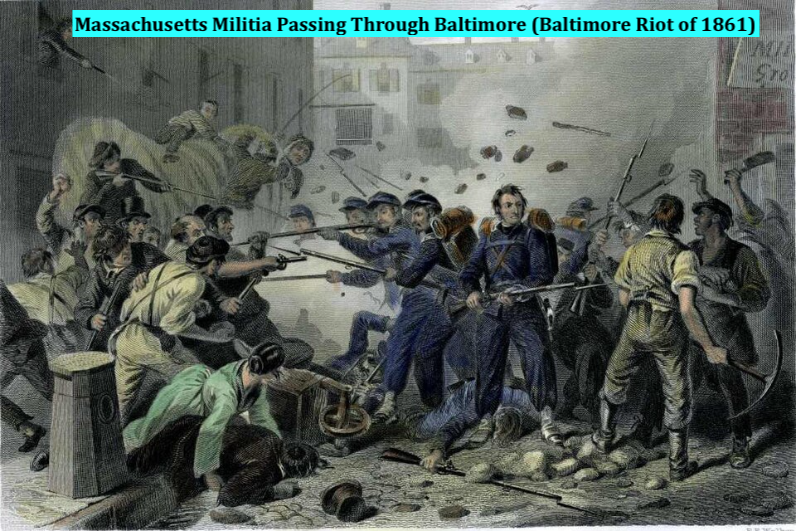
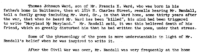
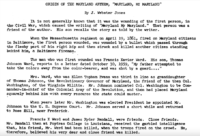
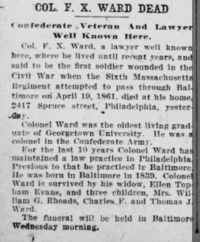
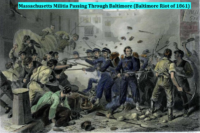
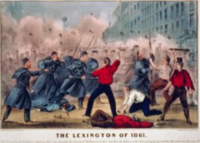
Born in 1838, Francis Xavier Ward became a prominent Baltimore lawyer; during the Civil War he became an officer in the 1st Maryland Infantry (Maryland Confederate). Ward participated in the riots in Baltimore on April 19, 1861 and was wounded when combating the 6th Massachusetts troops as they tried to get to train cars to Washington, DC in response to President Lincoln’s call for 75,000 volunteers. He would ultimately become an adjutant of the 1st Maryland Infantry CSA and Staff officer for Stonewall Jackson and was with Gen. Lee at Appomattox. During the riots on April 19, 1861, Ward was shot while trying to wrest a South Carolina flag from a Massachusetts soldier; he is therefore credited with being the first Confederate casualty of the Civil War. *** (See history and account of the Baltimore Riots of April 19, 1861 at the end of this listing)
Francis Xavier Ward
Residence Baltimore, MD; a 21-year-old Law Student.
Enlisted on 6/18/1861 at Richmond, VA as a 2nd Lieut.
On 6/18/1861, he was commissioned into “H” Co. Maryland 1st Infantry.
He was disch on 8/17/1862
(Unit disbanded)
On 3/17/1865, he was commissioned into Confederate States Army Aide-De-Camp.
He was Surrendered on 4/9/1865 at Appomattox Court House, VA
(Aide to General Wilcox)
He was listed as:
Injured 4/19/1861 Baltimore, MD (Injured during riots with 6th MA Inf.)
Oath Allegiance 5/29/1865 Richmond, VA
Promotions: 1st Lieut 5/1/1862 (1st Lieut & Adjutant), Capt 3/17/1865 (Captain & Aide-de-Camp)
Born 7/11/1839 in Baltimore, MD
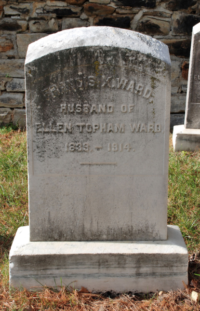
Died 8/9/1914 in Philadelphia, PA
Buried: St Ignatius Church, Baltimore, MD
(Father: William Ward)
After the war, he lived in Baltimore, MD & Philadelphia, PA
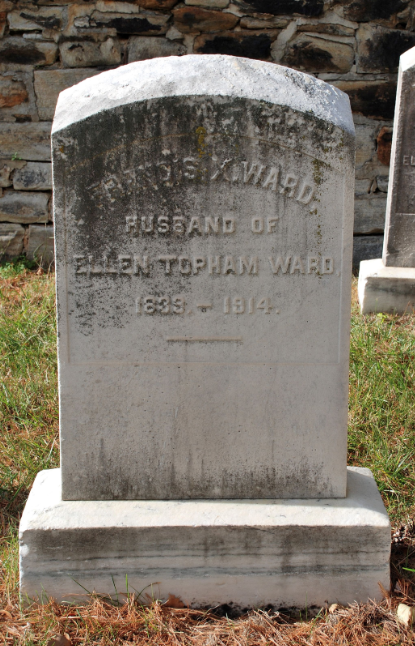
When Col. Francis Xavier Ward was born on 11 July 1839, in Maryland, United States, his father, William Ward, was 35 and his mother, Rebecca Abbott, was 33. He married Ellen Topham Evans on 2 November 1874, in Carroll, Maryland, United States. They were the parents of at least 4 sons and 1 daughter. He lived in Baltimore, Maryland, United States in 1900 and Philadelphia, Philadelphia, Pennsylvania, United States in 1910. He died on 9 August 1914, in Philadelphia, Pennsylvania, United States, at the age of 75, and was buried in Green Mount Cemetery, Baltimore, Baltimore, Maryland, United States.
1st Maryland Infantry Regiment: Camp Johnson, near Winchester, Virginia This engraving shows the 1st Maryland Infantry Regiment “playing football before evening parade”. Published in Harper’s Weekly on August 31, 1861. The Marylanders wear uniforms received in May and June 1861
Active 1861-1862
Engagements First Battle of Manassas
Shenandoah Valley Campaign
Peninsular Campaign
Commanders
Colonel of the Regiment Col. Francis J. Thomas (April-June 1861)
Col. Arnold Elzey (June-July 1861)
The 1st Maryland Infantry Regiment was a regiment of the Confederate army, formed shortly after the commencement of the American Civil War in April 1861. The unit was made up of volunteers from Maryland who, despite their home state remaining in the Union during the war, chose instead to fight for the Confederacy. The regiment saw action at the First Battle of Manassas, in the Shenandoah Valley Campaign, and in the Peninsular Campaign. It was mustered out of service in August 1862, its initial term of duty having expired. Many of its members, unable or unwilling to return to Union-occupied Maryland, went on to join a new regiment, the 2nd Maryland Infantry, CSA, which was formed in its place.
History
Baltimore riots of April 1861
After the bombardment of Fort Sumter on April 12–14, 1861, President Lincoln called for the states to send troops to preserve the Union. On April 19, Southern sympathizers in Baltimore attacked Union troops passing through by rail, causing what were arguably the first casualties of the Civil War. Major General George H. Steuart, commander of the Maryland State Militia, and most of his senior officers were strongly sympathetic to the Confederacy. He ordered the militia to turn out, armed and uniformed, to repel Federal soldiers. Perhaps knowing of these sympathies, and that public opinion in Baltimore was divided, Governor Thomas Holliday Hicks did not order out the militia.
Joining the Confederacy
Arnold Elzey, colonel of the regiment, promoted by President Jefferson Davis to brigadier general after the First Battle of Manassas.
During the early summer of 1861, several thousand Marylanders crossed the Potomac River to join the Confederate Army. Most of the men enlisted into regiments from Virginia or the Carolinas, but six companies of Marylanders formed at Harpers Ferry into the Maryland Battalion. Among them were members of the former volunteer militia unit, the Maryland Guard Battalion, initially formed in Baltimore in 1859.
Captain Bradley T. Johnson, commander of Company A., refused the offer of the Virginians to join a Virginia Regiment, insisting that Maryland should be represented independently in the Confederate army.[When the regiment was organized the first commander was Colonel Francis J. Thomas, a graduate of West Point in the class 1844. His choice as commander was vocally objected by several company commanders, and on June 8 he was relieved of command. It was agreed that Arnold Elzey, a seasoned career officer from Maryland, would take command. His executive officer was the Marylander George H. Steuart, who would later be known as “Maryland Steuart” to distinguish him from his more famous cavalry colleague JEB Stuart.
The 1st Maryland Infantry Regiment was officially formed on June 16, 1861, and, on June 25, two additional companies joined the regiment in Winchester.[3] Its initial term of duty was for twelve months.
Civil War
In June 1861 General Johnston evacuated Harper’s Ferry, and the 1st Maryland was ordered to assist in destroying its arsenal of weaponry.
Battle of First Manassas
At the First Battle of Manassas, also known as the First Battle of Bull Run, on July 21, 1861, the 1st Maryland was combined with the 13th Virginia Infantry, 10th Virginia Infantry and 3rd Tennessee Regiments to form the 4th Brigade, led by Brigadier General E. Kirby Smith. Smith’s men were late in arriving at the battle and approached the Confederate left near Chinn Ridge. The battle got off to a bad start when Elzey was forced to assume temporary command of the brigade, as General Smith was shot from his horse and injured by enemy fire. However, Elzey was able to bring his men into line facing the flank of the Federal army, the brigade commanded by General Oliver O. Howard. His men advanced to the edge of a wood without being detected by the Union army and opened fire, after which they charged over open ground into the Union position. Soon they were joined by Colonel Jubal A. Early on the Confederate left flank and shortly afterwards Howard’s line began to disintegrate. As the federal forces fled, General Beauregard congratulated Elzey, commending him as “the Blucher of the day”.
After the battle Elzey was promoted to brigade commander, and Colonel George H. Steuart was given command of the 1st Maryland Regiment. Major Bradley Johnson was appointed his second in command.
During the winter of 1861-2 the regiment was quartered at Centerville. In April 1862 it was marched back to the Rappahannock River, and assigned to the command of General Richard S. Ewell, following which the regiment joined General “Stonewall” Jackson in the Shenandoah Valley, meeting him at Luray, Virginia. At this point an unsuccessful attempt was made to form a “Maryland Line” in the CSA, uniting all Maryland units under one command.
Training and discipline
Lieut. Col. George H. “Maryland” Steuart, a strict disciplinarian.
Under Steuart’s command the regiment was drilled relentlessly. Steuart soon began to acquire a reputation as a strict disciplinarian, eventually gaining the admiration of his men, though initially unpopular as a result. Steuart was said to have ordered his men to sweep the bare dirt inside their bivouacs and, rather more eccentrically, was prone to sneaking through the lines past unwitting sentries, in order to test their vigilance. On one occasion this plan backfired, as Steuart was pummeled and beaten by a sentry who later claimed not to have recognized the general. Eventually however, Steuart’s “rigid system of discipline quietly and quickly conduced to the health and morale of this splendid command.” According to Major W W Goldsborough, who served under Steuart at Gettysburg: “…it was not only his love for a clean camp, but a desire to promote the health and comfort of his men that made him unyielding in the enforcement of sanitary rules. You might influence him in some things, but never in this”. George Wilson Booth, a young officer in Steuart’s command at Harper’s Ferry in 1861, recalled in his memoirs: “The Regiment, under his master hand, soon gave evidence of the soldierly qualities which made it the pride of the army and placed the fame of Maryland in the very foreground of the Southern States”.
Shenandoah campaign and the expiry of the regiment’s term of duty
Colonel Bradley T. Johnson, commander of the 1st Maryland, and “one of the handsomest men” in the regiment.
On May 17 the initial 12-month term of duty of C Company expired, and the men began to clamor for their immediate discharge. By this time Steuart had been promoted brigadier general, assigned with the task of forming the Maryland Line, and Colonel Bradley Tyler Johnson had succeeded to command of the regiment. Johnson reluctantly agreed with the men, but could not disband the entire regiment in mid-campaign, and discontent began to spread. By May 22, on the eve of the Battle of Front Royal, discontent became open mutiny. Steuart and Johnson argued with the men to no avail, though news of the rebellion was kept secret from General Jackson. When given orders to engage the enemy, Johnson addressed his soldiers:
“You have heard the order, and I must confess are in a pretty condition to obey it. I will have to return it with the endorsement upon the back that ‘the First Maryland refuses to meet the enemy’, despite being given orders by General Jackson. Before this day I was proud to call myself a Marylander, but now, God knows, I would rather be known as anything else. Shame on you to bring this stigma upon the fair name of your native state – to cause the finger of scorn to be pointed at those who confided to your keeping their most sacred trust – their honor and that of the glorious Old State. Marylanders you call yourselves – profane not that hallowed name again, for it is not yours. What Marylander ever before threw down his arms and deserted his colors in the presence of the enemy, and those arms, and those colors too, placed in your hands by a woman? Never before has one single blot defaced her honored history. Could it be possible to conceive a crime more atrocious, an outrage more damnable? Go home and publish to the world your infamy. Boast of it when you meet your fathers and mothers, brothers, sisters and sweethearts. Tell them it was you who, when brought face to face with the enemy, proved yourselves recreants, and acknowledged yourselves to be cowards. Tell them this, and see if you are not spurned from their presence like some loathsome leper, and despised, detested, nay abhorred, by those whose confidence you have so shamefully betrayed; you will wander over the face of the earth with the brand of ‘coward’, ‘traitor’, indelibly imprinted on your foreheads, and in the end sink into a dishonored grave, unwept for, uncared for, leaving behind as a heritage to your posterity the scorn and contempt of every honest man and virtuous woman in the land.”
Johnson’s speech seems to have worked where threats had failed, and the Marylanders rallied to the regimental colors, seizing their weapons and crying “lead us to the enemy and we will prove to you that we are not cowards”]
Battle of Front Royal
At the Battle of Front Royal, May 23, 1862, the 1st Maryland was thrown into battle with their fellow Marylanders, the Union 1st Maryland Infantry Regiment. After hours of desperate fighting the Southerners emerged victorious. When the prisoners were taken, many men recognized former friends and family. According to Goldsborough:
“nearly all recognized old friends and acquaintances, whom they greeted cordially, and divided with them the rations which had just changed hands”.]
Among the prisoners was Charles Goldsborough, captured by his brother, William Goldsborough, who would go on to write the history of the Maryland Line in the Confederate Army.
Battle of Winchester
Just two days later, on May 25, 1862, the 1st Maryland fought again at the First Battle of Winchester, another Confederate victory. After the battle, Colonel Johnson, who was described by Goldsborough as “one of the handsomest men in the First Maryland”, was the recipient of some not entirely welcome female attention:
“having dismounted from his horse in an unguarded moment, [Col. Johnson] was espied and singled out by an old lady of Amazonian proportions, just from the wash tub, who, wiping her hands and mouth on her apron as she approached, seized him around the neck with the hug of a bruin, and bestowed upon him half a dozen kisses that were heard by nearly every man in the command, and when at length she relaxed her hold the Colonel looked as if he had just come out a vapor bath”.
Battle of Cross Keys
The unit again saw action at the Battle of Cross Keys on June 8, where the 1st Maryland were placed on General Ewell’s left, successfully fighting off three assaults by Federal troops. At Cross Keys George H. Steuart, was severely injured in the shoulder by grape shot, and had to be carried from the battlefield.[A ball from a canister shot had struck him in the shoulder and broken his collarbone, causing a “ghastly wound”. The injury did not heal well, and did not begin to improve at all until the ball was removed under surgery in August. It would prevent him from returning to the field for almost an entire year, until May 1863.
Peninsula Campaign
On June 26 the 1st Maryland fought at the Battle of Gaines’ Mill where the regiment held off an assault by Federal infantry until the Baltimore Light Artillery could be wheeled into place to dislodge the Federal troops. They saw action the next day when they participated in an attack which captured a number of guns, weapons and many prisoners.
The regiment also saw action on 1 July 1862 at the Battle of Malvern Hill, this time a Union victory. The regiment was held in reserve, but still suffered severe casualties from the heavy barrage of the Federal artillery. On July 2 they fought off a Federal cavalry attack in a brief skirmish.
Disbandment
By late summer the Southern capital of Richmond, Virginia was considered safe from Federal attack, and the Regiment’s one-year term of duty having expired, it was soon disbanded. Company A. was assigned to escort duty, bringing General Jackson’s prisoners to Richmond, and soon after this it was mustered out of service. On August 17 the rest of the regiment was also disbanded at Gordonsville, Virginia. In September 1862 the regiment’s former commander, Colonel Bradley Tyler Johnson, and many members of his staff, finding themselves without a command, offered their services to General “Stonewall Jackson”.
However, the soldiers of the disbanded regiment found themselves in a precarious position, being unable to return home to Union-occupied Maryland, having effectively committed themselves to the Confederacy for the duration of the war. With little choice but to fight on, many went on to join other units of artillery, or cavalry, while others waited to form a new Maryland Infantry Regiment, which would become known as the 2nd Maryland Infantry, CSA in order to distinguish it from the original regiment. The new regiment would suffer such severe casualties during the course of the war that, by the time of General Robert E. Lee’s surrender at Appomattox Court House on April 9, 1865, only around forty men remained.
Col Francis Xavier Ward
Birth Date 1838
Birth Place Maryland
Death Date 9 Aug 1914
Death Place Philadelphia, Philadelphia County, Pennsylvania
Cemetery Green Mount Cemetery
Burial or Cremation Place Baltimore, City of Baltimore, Maryland
Father
William Ward
Mother
Rebecca Ward
Spouse
Ellen Topham Ward
Children
M. Topham Evans Ward
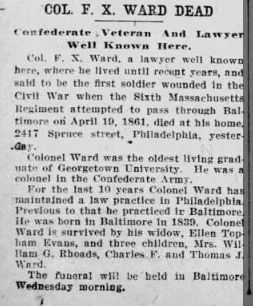
WARD – On Sunday, August 9, 1914, at his home, in Philadelphia, COL. FRANCIS XAVIER, age 75 years, formerly of Baltimore, son of the late William and Rebecca Abbott Ward and beloved husband of Ellen Topham Evans Ward. His widow and children – Mrs. William Gibbons Rhoads, Charles Francis Ward and Thomas Johnson Ward – survive him.
A Requiem Mass will be offered for the repose of his soul at St. Ignatius’ Catholic Church this Wednesday, August 12, at 11 A.M. Interment (private) in Greenmount Cemetery. [Kindly omit flowers.]
The Baltimore Sun – Wednesday, August 12, 1914:
Prominent Baltimore Lawyer, Francis Xavier Ward, Maryland Confederate, wounded in the Baltimore riot vs Massachusetts militia troops, adjutant of the 1st Maryland infantry CSA, Staff officer for Stonewall Jackson, with Lee at Appomattox.
Civil War veteran – Captain, Aide de Camp, General Elzey’s Staff, C.S.A
***April 19, 1861 – The Baltimore Riot – https://civilwartraveler.blog/2023/05/14/the-baltimore-riot/
After the fall of Fort Sumter, President Lincoln on April 15th issued a call for 75,000 militia for a period of 90 days. Two days later Virginia seceded from the Union. These troops coming by rail from the north would have to pass through Baltimore. Baltimore was the fourth largest city in the Union at the time. In the 1860 Presidential election Lincoln had received only 2,294 of the 90,000 votes cast in Maryland. Trouble was anticipated given the strong southern sympathies of the city. The police chief, George P. Kane, was an outspoken advocate of secession.
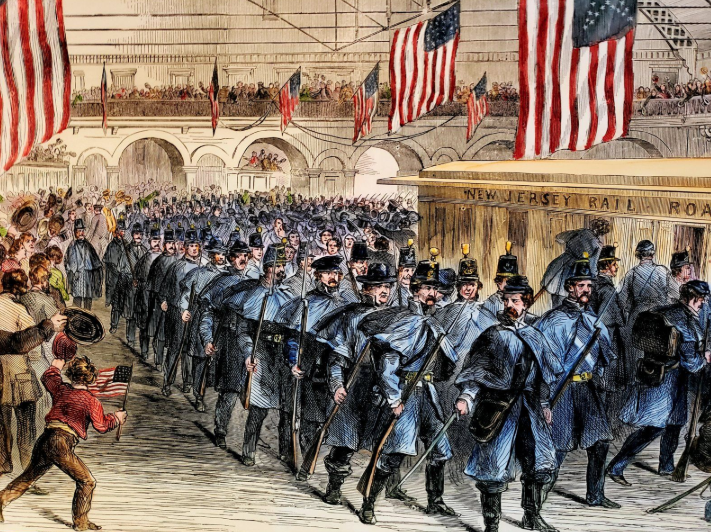
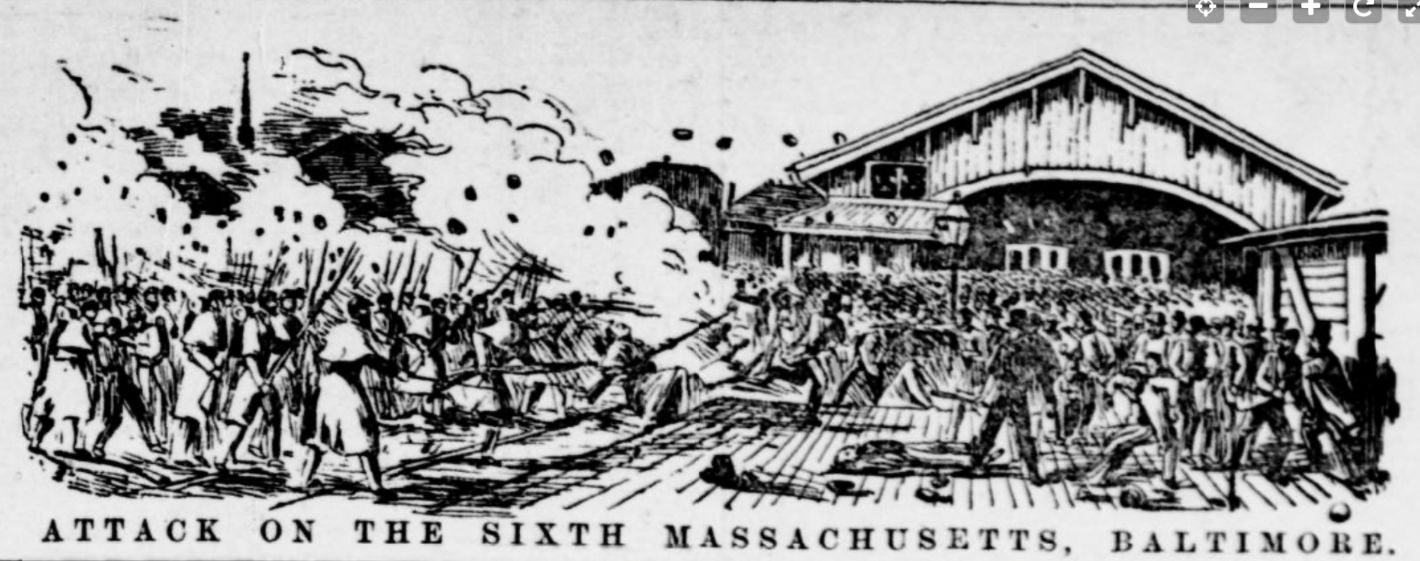
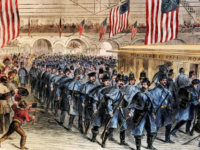
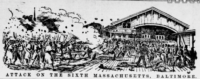
In addition, Baltimore’s railroad system created a logistical challenge. Southbound trains arrived via the Philadelphia, Wilmington and Baltimore Railroad’s President Street Station (#1 in the map above). The only outbound rail line to Washington, DC was the Baltimore and Ohio Railroad’s Camden Station (#6 in the map), which was 1.5 miles across town. A rail line ran along Pratt Street between the two stations but the cars had to be individually pulled by horses to get from one station to the other. A city ordinance prohibited locomotives from passing through Baltimore. On April 19, 1861, 720 soldiers from the Sixth Massachusetts commanded by Colonel Edward Jones would attempt to run this gauntlet through a mob of angry Southern sympathizers determined to prevent them from reaching Washington, D.C. Also arriving in Baltimore with the 6th MA were 1200 volunteers of the 26th PA under Colonel William F. Small. The soldiers of the 26th PA, however, unlike the 6th MA, were not in uniform. The 6th MA departed first and were in nine cars each pulled by a team of four horses. As they turned on to Pratt Street from President Street the mob blocked the tracks over the bridge at Jones Falls near Concord and Pratt Streets. The first eight cars managed to make it successfully through the obstruction, but the final car was forced to return to the President Street Station. This car contained companies C, D, I and L of the 6th MA under the command of Captain Albert S. Follansbee, and the brigade band of Lowell, Massachusetts. Colonel Jones ordered Follansbee to proceed on foot to Camden Station as quickly as possible following the railroad tracks. The band stayed behind at the station. As the men marched on to Pratt Street they could see the 8th and final rail car not far ahead of them. The mob by this time had grown out of control. Edward W. Beatty picked up a musket that was dropped by a soldier, who had been injured by a flying rock, and shot and killed a soldier. The soldiers then began firing back into the crowd. Follansbee and his men ran the final blocks to Camden Station. The confrontation left 4 soldiers of the 6th MA and 12 citizens dead in what was the first bloodshed of the Civil War. The 26th PA unable to leave the President’s Street Station were advised by Governor Hicks to return to Pennsylvania. Prior to their return they were attacked by the mob and one of their men, George Leisenring, was killed. The band members tore the regimental stripes off their uniforms and blended into the city.
There are six Civil War Trails tablets along the 1.6-mile route known as the Baltimore Riot Trail. The Baltimore Civil War-President Street Station Museum at the corner of President and Fleet Streets near the first tablet interprets the city’s role in the Civil War.
1- Death at President Street Station– The 6th MA arrived at President Street Station at 10:00 AM. Colonel Edward Jones ordered the men to load their weapons as the 9 cars containing soldiers were pulled individually by four horses toward the Camden Street Station. The first eight cars arrived safely. The ninth car was forced to return back to the President Street Station after the crowd blocked the tracks. Jones ordered Captain Albert Follansbee to march the four companies from that car to Camden Station as quickly as possible.
2- Flag Waving at Flag Street– As Captain Follansbee marched his 240 men up President Street the crowd threw rocks and bricks at them. As they reached the corner of Fawn Street two of the men were knocked down and injured. The crown taunted the men with a Palmetto flag (South Carolina). One of the soldiers, Leander Lynde, tore the flag from the pole and carried it off. A single Baltimore policeman agreed to help them reach Camden Station which was about a mile away.
3- Barricade at Jones Falls Bridge– Near the bridge here an anchor and other objects placed on the tracks derailed the 8th car carrying Major Benjamin Watson’s company. Watson commandeered a team of horses and managed to get the car back on the tracks. The mob threw rocks and bricks at the car causing the frightened driver to unhitch his horses and flee. He was brought back at gunpoint. By the time Follansbee’s remaining 4 companies reached the bridge on foot it had been barricaded and an unloaded cannon was there, but the men were able to pass.
4- Combat at Pratt Street– In this area a soldier was struck by a rock and dropped his musket. Edward W. Beatty, a port customs officer, picked up the weapon, and fired the first shot into Captain Follansbee’s column. The men returned fire killing William Clark from Company C of the 15th South Carolina Heavy Artillery, the first Confederate casualty of the war. As he tried to seize the regimental flag, Francis Xavier Ward in the crowd was wounded.
5- Keep Back or I Shoot– Four soldiers were killed. Corporal Sumner Henry Needham (Company I) was struck in the head and died. Privates Luther C. Ladd and Addison Whitney, both from Company D, were shot and killed. Private Charles Taylor (Company D) was beaten to death. The mayor, George W. Brown, and the Police Chief George P. Kane assisted the remainder of the men to safety.
6- Last Shots at Camden Station– Colonel Edward Jones ushered Captain Follansbee’s men into the cars and shut all the blinds. When departing at 1:30 PM a final shot from the train killed Robert W. Davis a local merchant. Four soldiers from the 6th MA were killed and 36 wounded. Twelve civilians were also killed and many others wounded.
Some of the citizens that died- James Clark- shot in the head, James Myers- shot in the right side, Flannery, John McCann, Malony, William Reed, Robert W. Davis, and William Clark
The aftermath- Later that evening under orders from the Governor, Mayor and Police Chief secessionists burned the railroad bridges, tore up track and cut telegraph lines to the north. With Union troops unable to pass through Baltimore Lincoln and the capital city were cut off from the rest of the Union. The 8th MA under Benjamin Butler traveling by rail and ferry reached Annapolis and occupied the Naval Academy on April 21st. Two regiments (3rd MA, 4th MA) were sent by sea to reinforce Fort Monroe at the mouth of the James River on Old Point Comfort. Butler began repairing the railroad between Annapolis and Washington, D.C. opening a route for troop transport that bypassed Baltimore. The 7th NY arrived in the nation’s capital on the 24th much to Lincoln’s relief. On April 27th the President issued General Order 100 imposing martial law and suspending the writ of habeas corpus in Maryland. The police chief George Kane and mayor George Brown were arrested. Judges, state legislators, private citizens and newspaper editors were imprisoned with no formal charges ever filed. Initially many of these men were confined at Fort McHenry.
On May 13th Butler moved 1000 troops from the 8th MA and six cannons overland into Baltimore. The cannons were moved to the top of Federal Hill and aimed straight at the heart of the city markedly reducing secessionist activity. Lincoln’s General-in-Chief Winfield Scott recalled Butler to Washington, D.C. because he had occupied Baltimore and sent troops to Frederick without orders. He was replaced by Major General George Cadwalader. Cadwalader was appointed the military commander in Maryland on May 15 and established his headquarters at Fort McHenry. The city would remain occupied for the rest of the war. Butler was unique in that he was a Democrat that supported the war and very popular in Massachusetts. Lincoln, a Republican, could not afford to alienate him at this early stage of the war. As a result, Butler was promoted to Major General of Volunteers and reassigned to Fort Monroe where he was given command of the fort and the Department of Virginia and North Carolina.
The Pratt Street Riot
Pratt Street Riot
Background
Following the secession of the southern States and the bombardment of Fort Sumter, President Abraham Lincoln called for 75,000 men to be raised from the militia of the states in order to put down the rebellion. These troops were to be transported to Washington, D.C. so that they might protect the Capitol. At this time, the most efficient means to transport such large numbers of men was by rail, and the only routes to Washington passed through Baltimore.
Marylanders were divided in their sympathies. While many disliked the idea of secession, they felt that it was a state’s right to secede from the union if it chose to. Many also felt that Maryland should not permit troops to pass through the state to attack a sister state, and others mistrusted the President’s intentions, suspecting that the troops would be used to force Maryland to remain in the Union.
The Riot
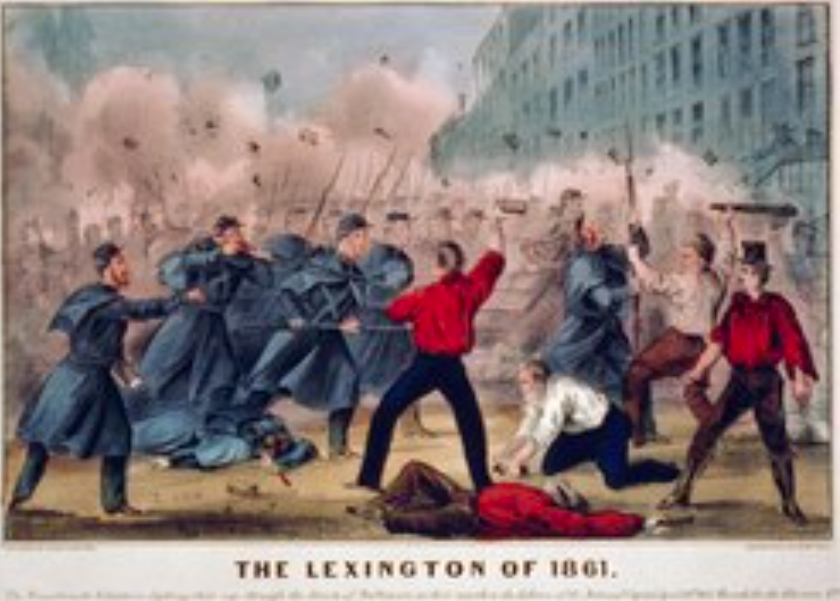
On April 19, 1861, mere days after the surrender of Fort Sumter, the situation in Baltimore exploded into violence. The 6th Massachusetts Infantry arrived at the President Street Station and began the process of changing trains. The cars were disconnected and pulled by horses down Pratt Street to Camden Station. As the process continued, a crowd gathered and with each moment it became more and more unruly. All but two of the cars had been transferred when the crowd blocked the tracks with timbers and anchors.
The two cars returned to the President Street Station and the soldiers disembarked to the howls and jeers of the mob. The troops then marched back down Pratt Street, led by a man carrying a rebel flag, and followed by the mob. At Gay Street some of the mob began tearing up paving stones and throwing them at the soldiers. Other men were seen brandishing pistols and muskets. Someone fired a shot.
The frightened officers ordered the troops to fire into the crowd. This angered the mob further, and they began to attack the soldiers with considerable ferocity. Citizens threw stones and bricks and fired shots at the soldiers. The soldiers returned the fire. Rioters, soldiers, and innocent bystanders fell dead and wounded. The Mayor bravely attempted to stop the battle without success. Then the police arrived.
Marshal Kane put his policemen between the two groups and escorted the troops to Camden Station, where they boarded the train and left Baltimore. The Pratt Street Riot was over. The riot resulted in the first casualty list of the war. Eight rioters, one innocent bystander and three soldiers were killed, twenty four soldiers and an unknown number of civilians wounded.
Its Effects
Baltimore quickly felt the effects of the riot. The Governor and Mayor called out the militia to prevent further bloodshed. When a threat was made against Fort McHenry, one of the militia units was sent to help the U.S. Army defend it. Knowing that there were secessionists in the militia ranks, the commander of the Fort accepted the help on the condition that the militia could come no closer to the Fort than the Catholic chapel a half mile from the Fort or he would fire on them.
In May, less than a month after the riot, General Butler and the 6th Mass. entered the city and built earthworks on Federal Hill. Cannon were placed in the works so that they could be fired on the city. Civilians who had demonstrated secessionist sympathies were arrested and taken to Fort McHenry, where they were held without charge. Determined to maintain federal control over Maryland, Abraham Lincoln suspended the writ of habeas corpus on April 27, 1861. The United States Army could arrest anyone suspected of treasonous activities and hold them in military instillations. Many political figures and private citizens found themselves in the confines of Fort McHenry throughout the war.
Finally, in June, 1861, Maryland voted on secession. By that time Maryland was an occupied state, and the choice no longer existed.
Maryland, My Maryland
The despot’s heel is on thy shore,
Maryland!
His torch is at thy temple door,
Maryland!
Avenge the patriotic gore
That flecked the streets of Baltimore,
And be the battle queen of yore,
Maryland, My Maryland!
James Ryder Randall
Related Items
-
Southern Wagon Saddle Adapted For Confederate Military Use
$950Southern Wagon Saddle Adapted For Confederate Military UseMay 16, 2021 -

Original Regimentally Painted, Civil War Knapsack – Co. F 5th U.S. Infantry
$550Original Regimentally Painted, Civil War Knapsack – Co. F 5th U.S. InfantryDecember 10, 2021 -
Original Civil War Regulation Eagle Drum
Original Civil War Regulation Eagle DrumSeptember 27, 2025 -

Original Civil War Carbine Sling
Original Civil War Carbine SlingSeptember 30, 2025