
Original Civil War Period Surgeon’s Chloroform Tin ContainerMarch 26, 2026
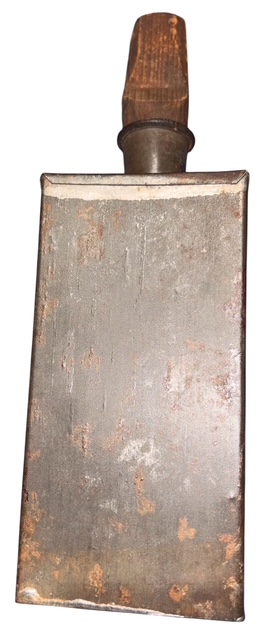
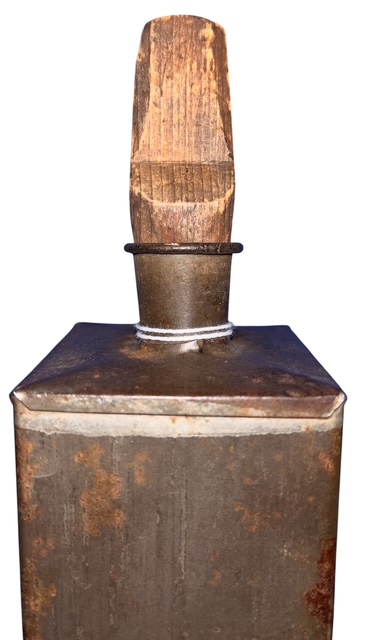
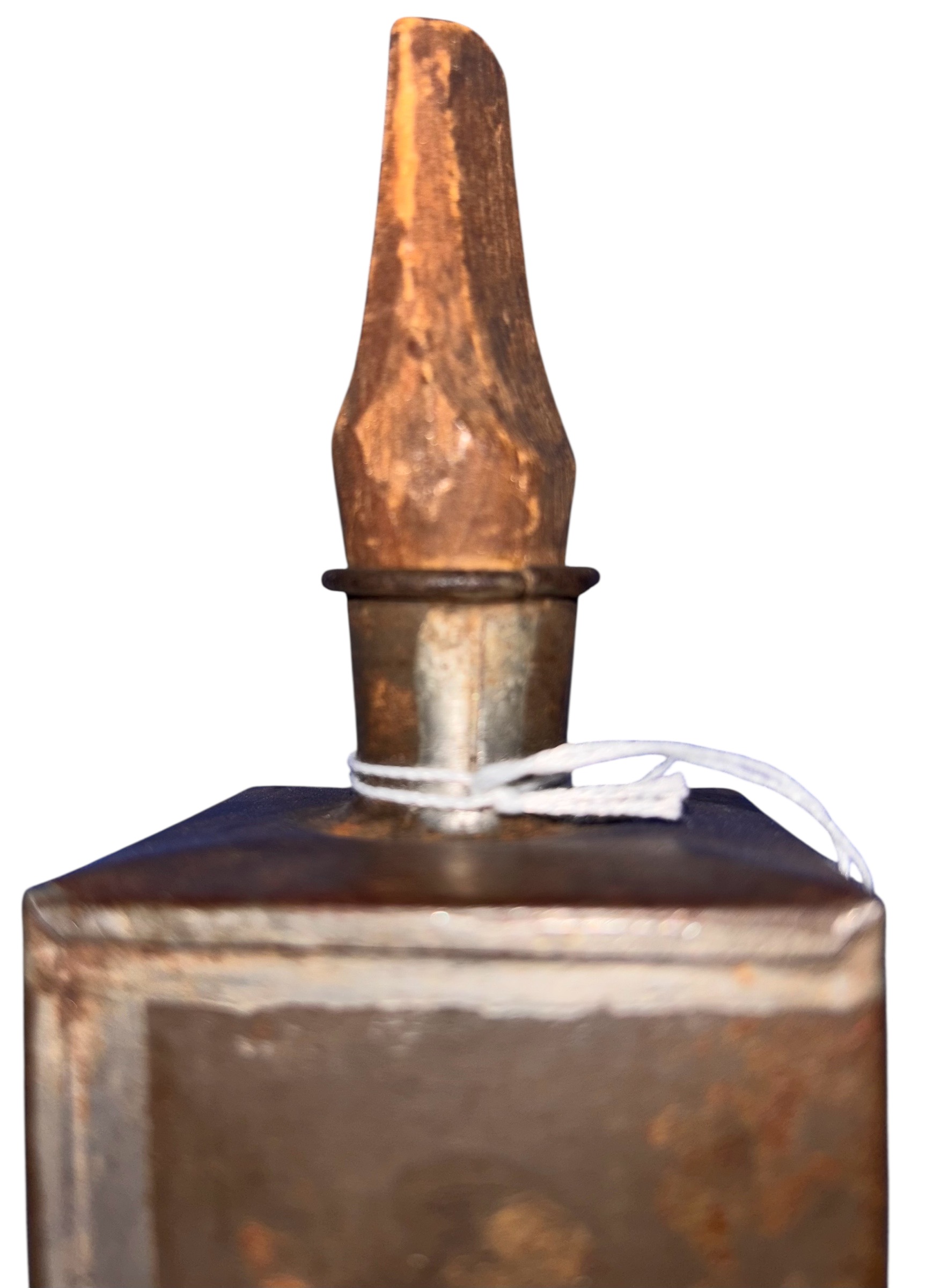
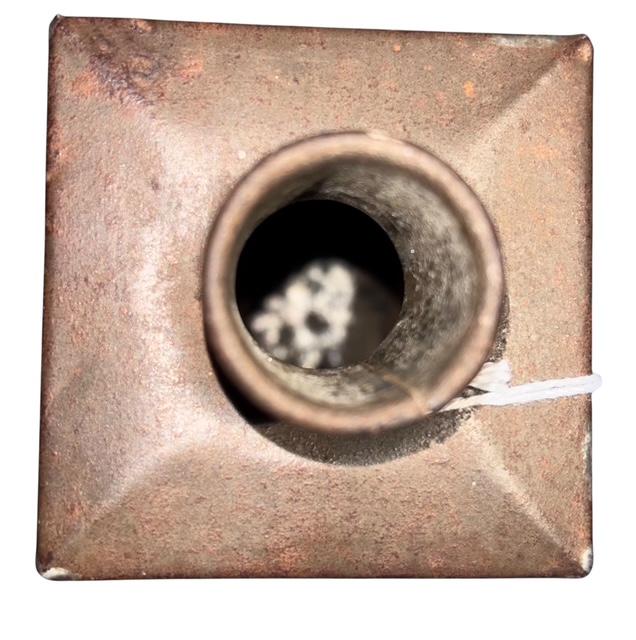
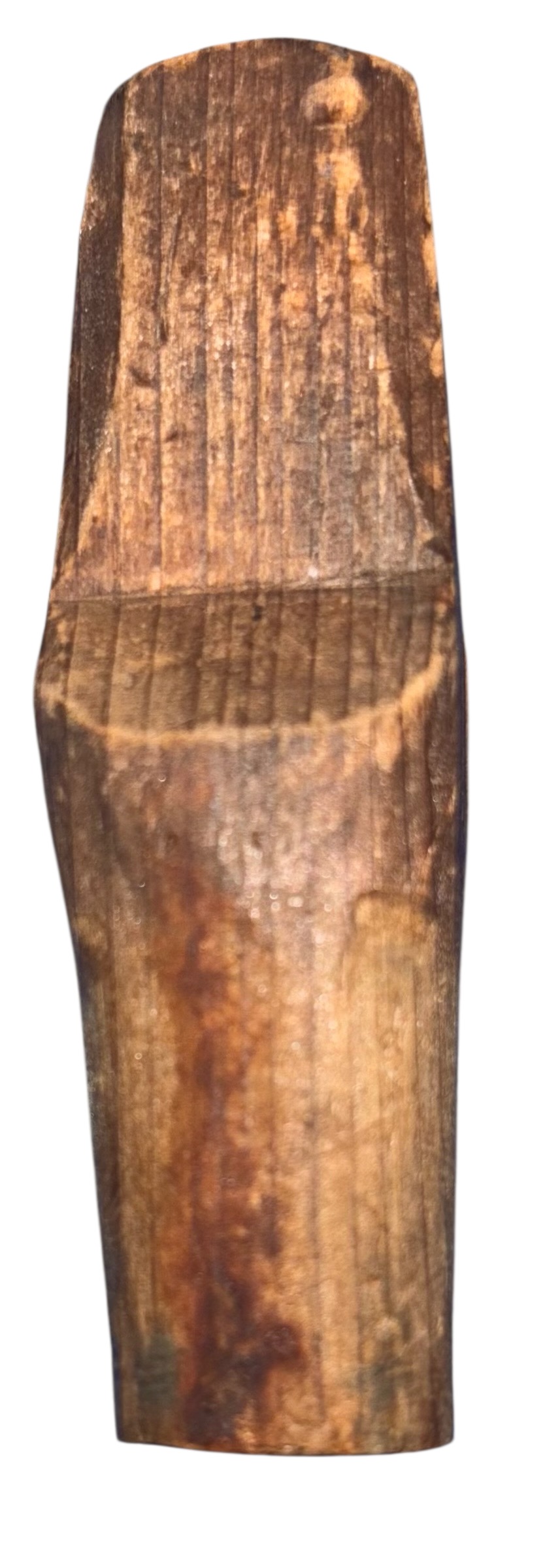
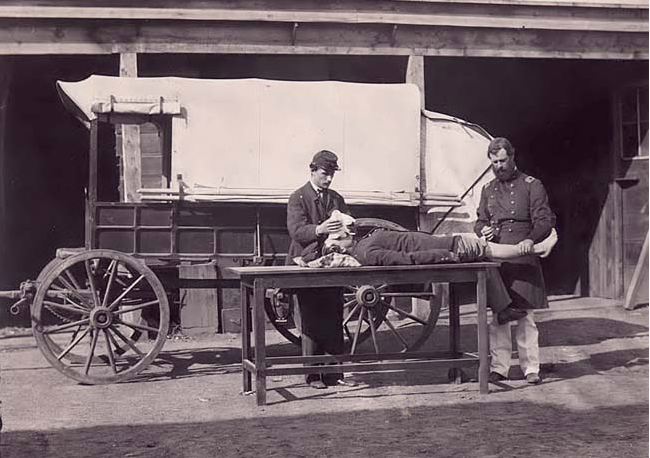
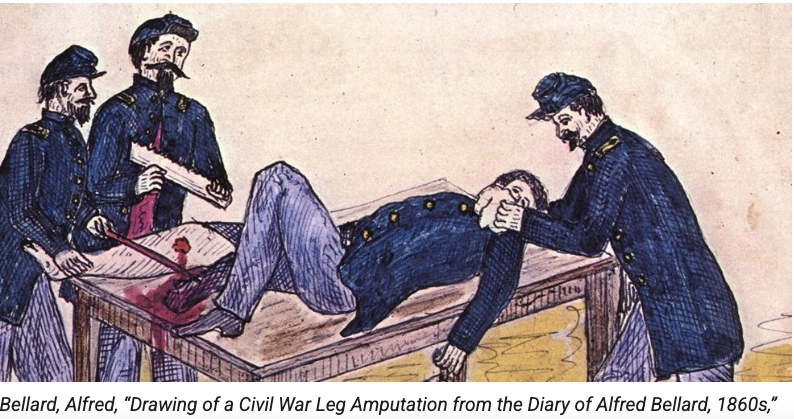
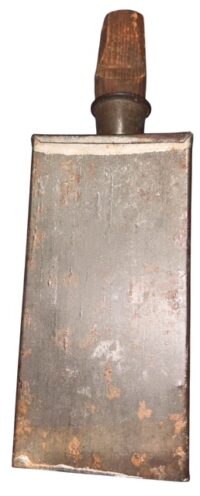
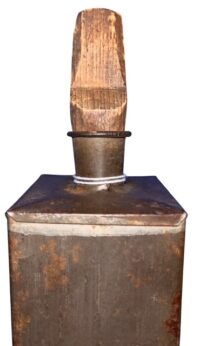
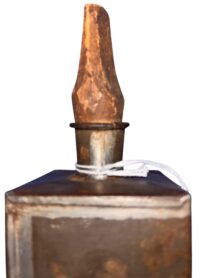
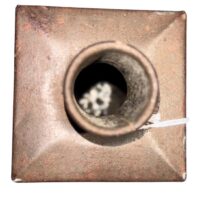
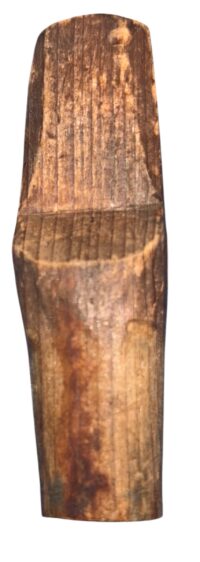
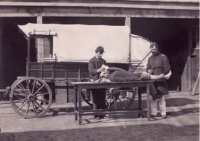
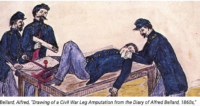
Original Civil War Period Surgeon’s Chloroform Tin Container – Chloroform was utilized by Civil War surgeons to anesthetize wounded soldiers prior to a surgical procedure. During the course of the Civil War, chloroform gradually replaced ether as an incapacitating agent to subdue struggling and suffering patients. The pre-operative administration of Chloroform was accomplished by dripping the liquid onto a cloth, sponge, or paper cone, which was then held over the wounded soldier’s nose and mouth for inhalation. Chloroform was favored over ether because it was non-flammable and required smaller, faster doses, generally taking about nine minutes to induce unconsciousness. This squared, rectangular tin is constructed of gray, sheet iron or “tin”, joined by lead soldering. The circular spout is stoppered by a hand-carved, tubular piece of yellow pine. The tin remains in overall excellent condition.
From the National Museum of Civil War Medicine:
Ether was used less frequently since more of the substance was needed to produce the desired effect and it took an average of seventeen minutes to work. The best method of administration was to use a folded towel or bell-shaped sponge which was large enough to cover the nose and mouth. This was then soaked with the anesthetic. Another drawback for using ether was that it was flammable, a dangerous matter in an era of gas and candle lighting.
Both ether and chloroform were manufactured in large medical laboratories run by the armies on both sides. Some private laboratories, like Squibb’s, contracted with the Union Army to produce drugs and developed an improved way to distill ether.
Ether is made by distilling a mix of ethanol and sulphuric acid. It is highly explosive, so care must be taken both when manufacturing and administering the drug. Chloroform is an organic compound and is usually created by the chlorination of ester alcohol or methane. It is much more stable than ether and can safely be used around open flame.
Only a low dose of anesthetic was used during the Civil War, just enough to make the patient insensitive to pain. Surgeons worked quickly and could complete a major operation in a matter of minutes. Many men moaned and moved about due to the agitating effects of a light dose of anesthetic. Some had to be held down by assistants, but they were unconscious and could not feel pain. Outside observers may have assumed that the men were being operated upon with no anesthetic, not understanding that the groans and thrashing movements were caused by the chloroform or ether. These observations, combined with Civil War bullets found with pig’s teeth marks, have helped lend credence to the myth of “biting the bullet.”
In the rare cases where anesthetics were not used, a number of reasons were reported. Lack of supply, especially for the Confederates due to the blockade, is one of the most common. Another is that some gravely wounded men were already unconscious and did not need an anesthetic.
A recent review of the primary sources from the Civil War—soldiers’, surgeons’ and nurses’ diaries, plus medical manuals—failed to turn up any contemporary references to biting the bullet, especially during surgery. The surgical manuals do not advocate placing anything in the patient’s mouth. Placing a bullet between the teeth of a prone man who is likely to scream in pain is not the smartest thing to do.
Related Items
-
Civil War Period Silver Card Case Brought Home by F.M. Gibson, 40th Mass. Infantry
$625Civil War Period Silver Card Case Brought Home by F.M. Gibson, 40th Mass. InfantryMay 2, 2020 -
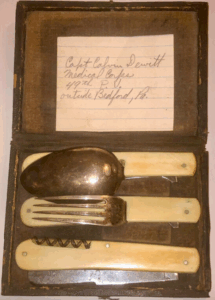
High Quality Civil War Id’d Officer’s Traveling Mess Utensils in Original Case
$1,150High Quality Civil War Id’d Officer’s Traveling Mess Utensils in Original CaseSeptember 25, 2022 -

Fine C.1830 – 1850 Side Saddle
$300Fine C.1830 – 1850 Side SaddleSeptember 27, 2021 -

Civil War Veteran Created Cane with Bullet Embedded
$295Civil War Veteran Created Cane with Bullet EmbeddedNovember 29, 2024