
Significant Confederate Civil War Period Mourning Portrait of Mrs. Charles F. Fisher – Wife of Col. C. H. Fisher 6th North Carolina Infantry – KIA at First Bull RunOctober 30, 2026
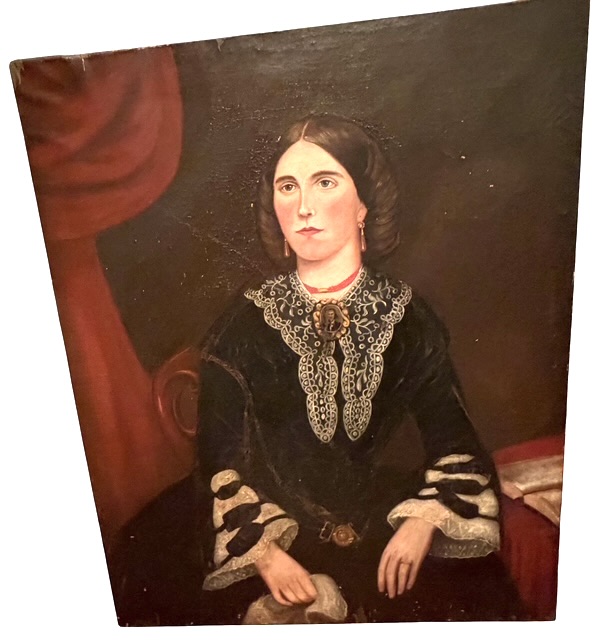
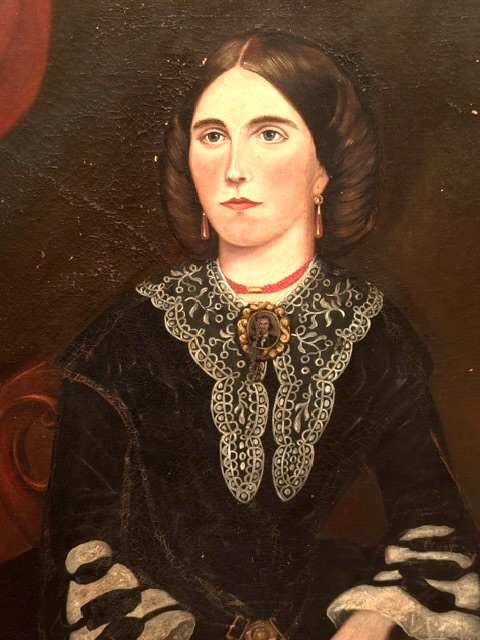
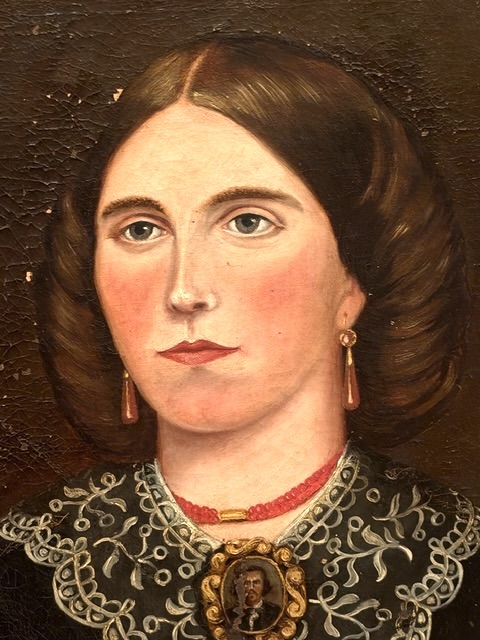
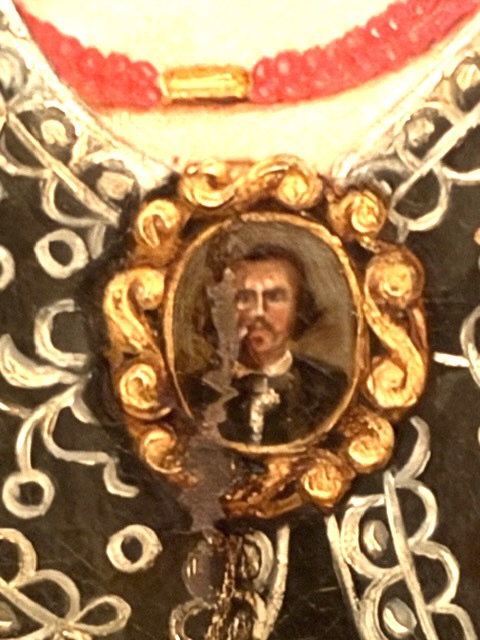
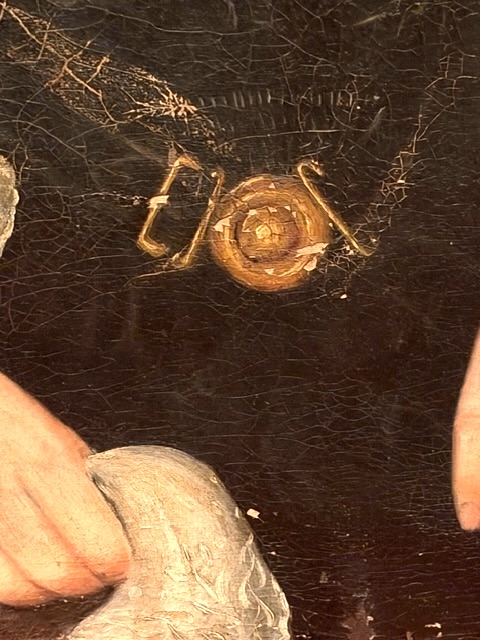
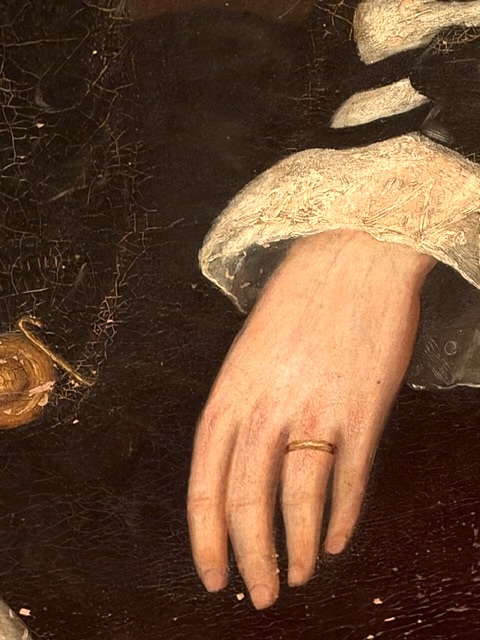
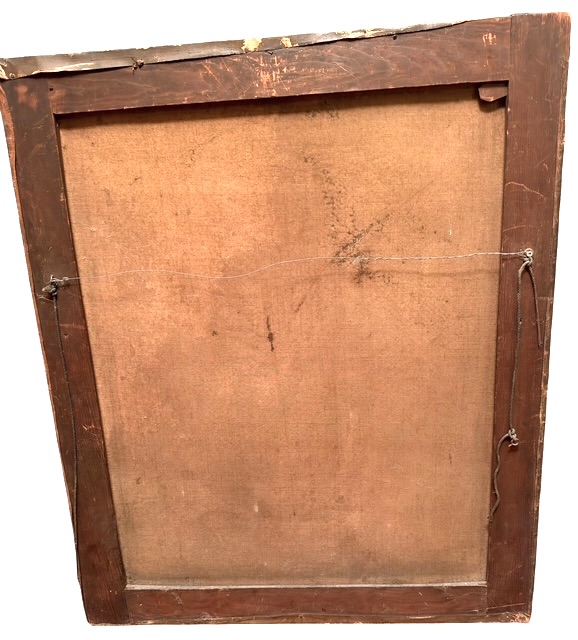
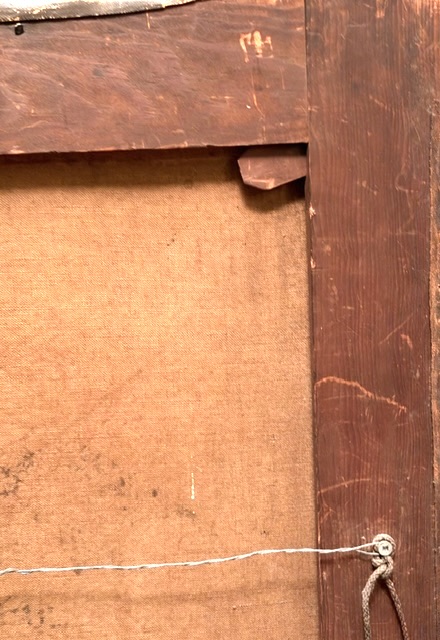
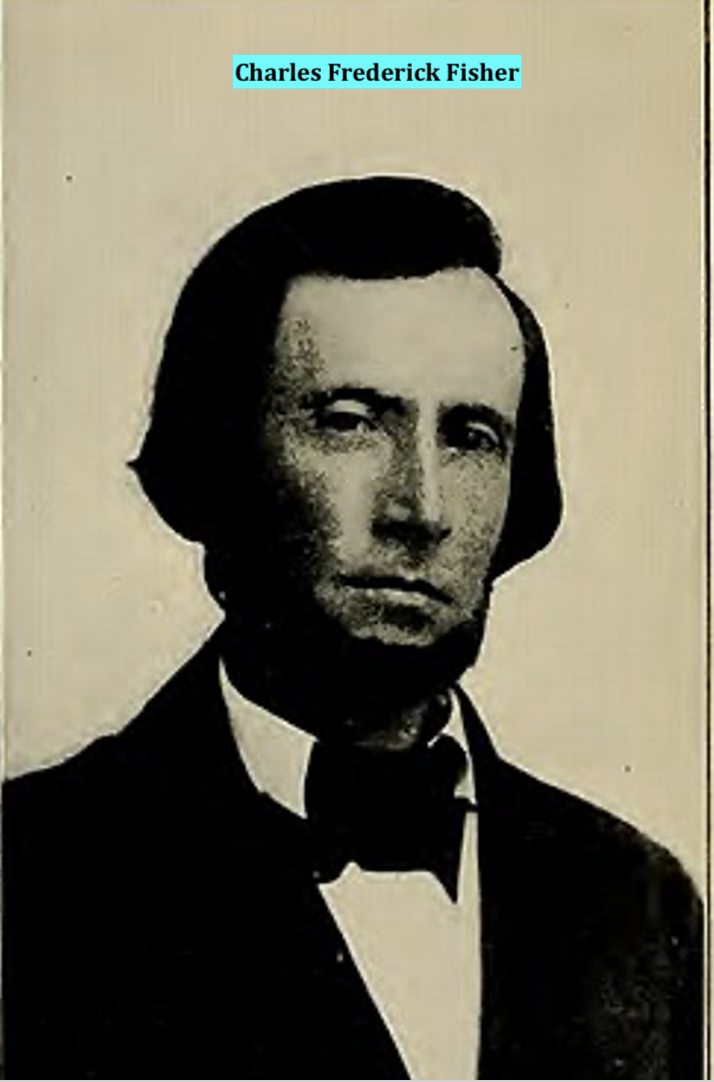
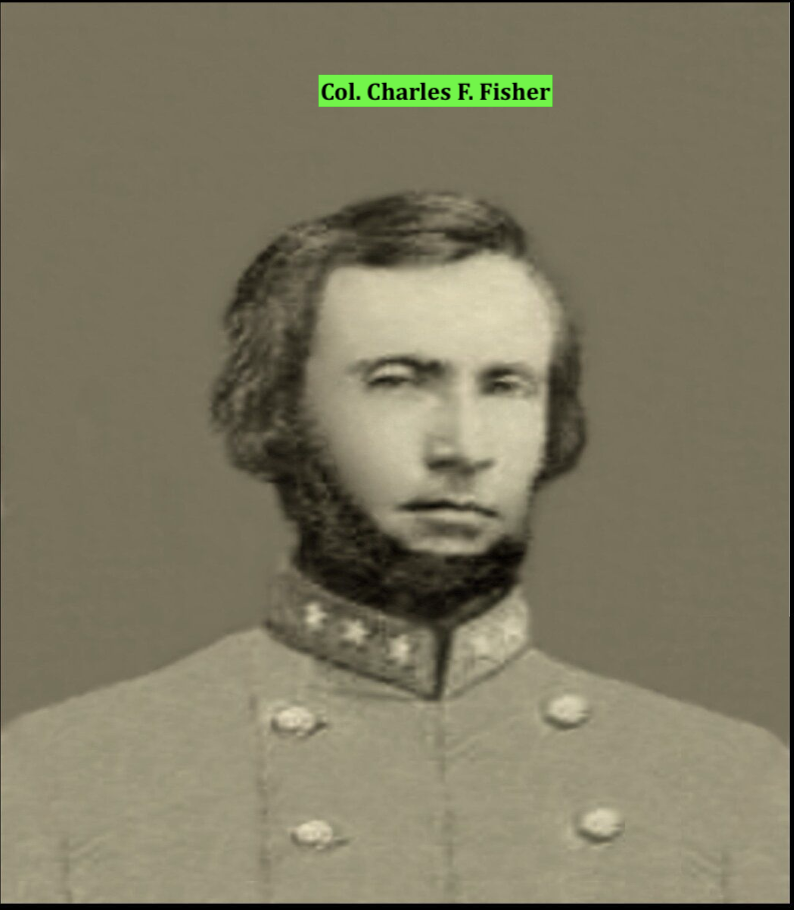
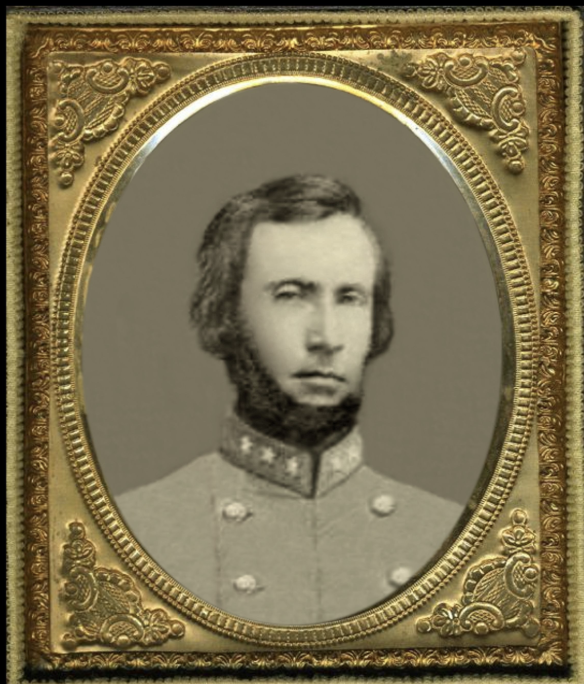
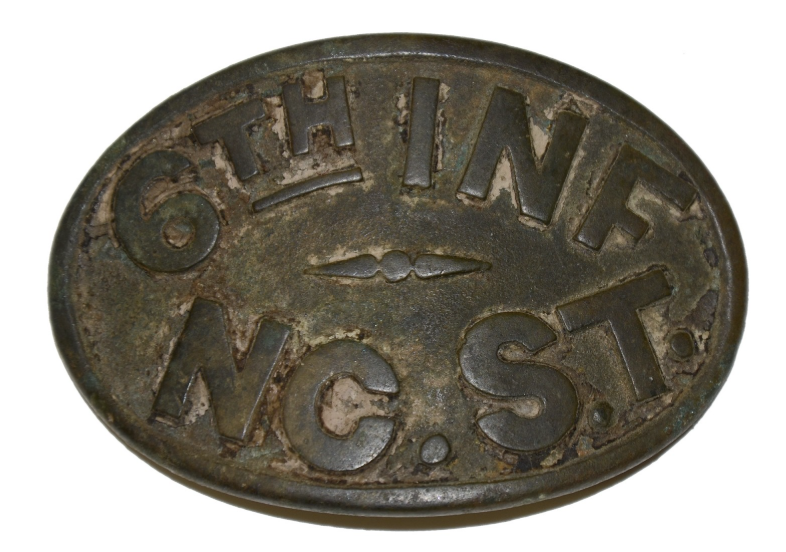
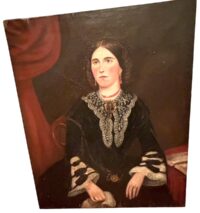
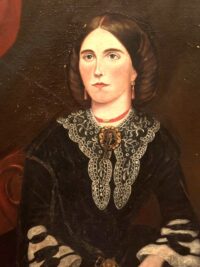
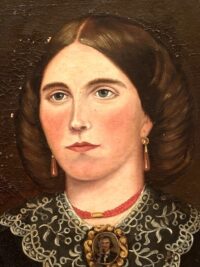
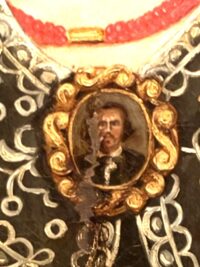
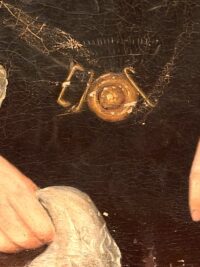
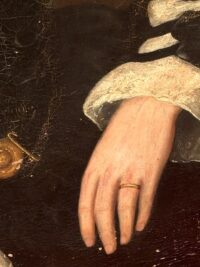
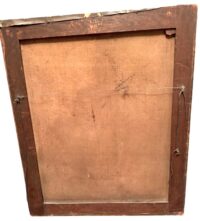
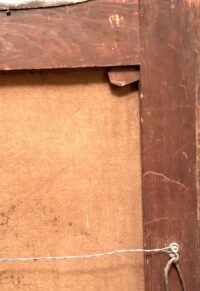
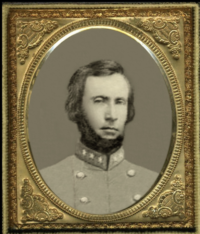
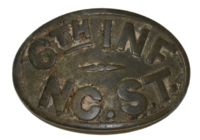
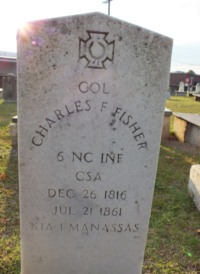
Significant Confederate Civil War Period Mourning Portrait of Mrs. Charles F. Fisher – Wife of Col. C. H. Fisher 6th North Carolina Infantry – KIA at First Bull Run – In this oil on canvas portrait, Mrs. Charles F. Fisher is depicted in mid-Victorian mourning attire (it appears to be in the latter stages of the elaborate and lengthy Victorian mourning ritual); she is wearing a mourning brooch bearing her late husband’s image, and she is wearing Col. Fisher’s sword belt with a two-piece, tongue and wreath belt plate. The black lace over his white cuffs is another indication of the latter stage of the Victorian mourning custom adhered to by women of the Civil War period. This painting was purchased directly from the Fisher family in the late 1970s or early 1980s by the late, prominent art and antiques dealer, Ann Gray; her art gallery is still functioning in the historic Church Hill section of Richmond. The painting is in overall very good condition, with some scattered, small areas of paint loss; the canvas stretcher is an early example, as it is not mitered and has at least one stretcher spline remaining; the work is unframed. It is quite rare to obtain a war period portrait of a woman in Victorian mourning garb; additionally, the subject of this work was the wife of a significant Confederate officer – Col. Charles Frederick Fisher was a wealthy North Carolinian who organized and outfitted the 6th NC Infantry. The 6th North Carolina State Troops were organized in Burlington, North Carolina by men from Alamance, Chatham, Caswell, Rowan, Wake, Orange, Mecklenburg, Burke, Catawba, Mitchell and Yancey Counties. Charles Fisher assembled and outfitted the regiment in May of 1861. Fisher equipped the soldiers in the unit, also designing and supplying a regimentally specific cast belt plate, well known to collectors today. Colonel Fisher was killed at the battle of 1st Bull Run on July 21, 1861. The 6th NC Infantry went on to fight in every major engagement of the war, as an element of the Army of Northern Virginia, serving under Generals Bee, Whiting, Law, Hoke, Godwin and Lewis.
The portrait is accompanied by a letter of provenance from highly respected archaeologist, antiques’ dealer and renown ceramics expert Robert Hunter.
Measurements: 30” x 36”
Elizabeth R. CALDWELL Fisher, (married in 1845, the bond is dated 17 July; a marriage announcement was in a 6th of September newspaper.) She was the daughter of the Hon. David Franklin Caldwell and 26 y/o per the various newspaper announcements of her 18 March 1850 death.
(While it is thought that she is buried in Old Lutheran Cemetery, Salisbury, NC, her name is not listed in “The Old Lutheran Cemetery, Salisbury, North Carolina Since 1768”.
| Charles Frederick Fisher | |
| Born | December 26, 1816 |
| Died | July 21, 1861 (aged 44) |
| Burial place | Old Lutheran Church Cemetery Salisbury, North Carolina |
| Spouse | Elizabeth Caldwell |
| Relatives | Charles Fisher (father) |
| Military career | |
| Allegiance | Confederate States of America |
| Branch | Confederate States Army |
| Service years | 1861 |
| Rank | Colonel |
| Commands | 6th North Carolina Infantry Regiment |
| Conflicts | American Civil War |
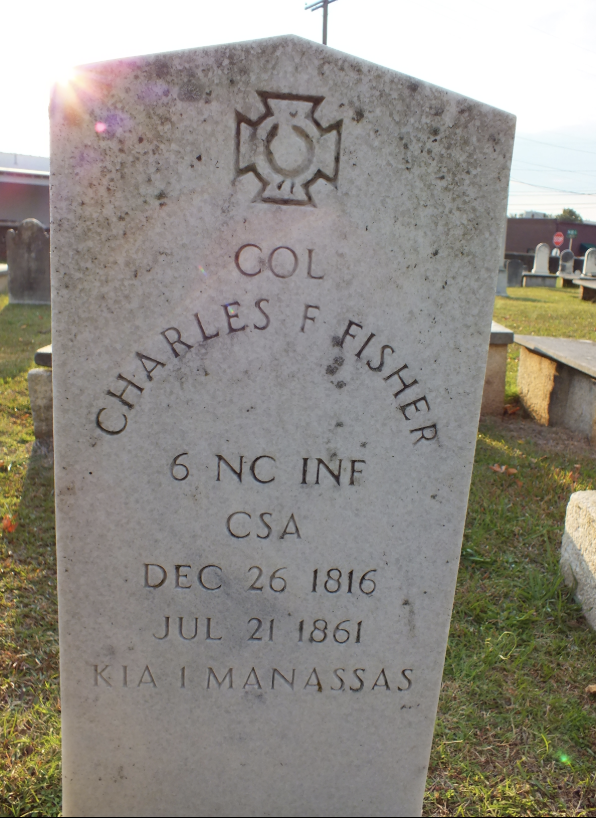
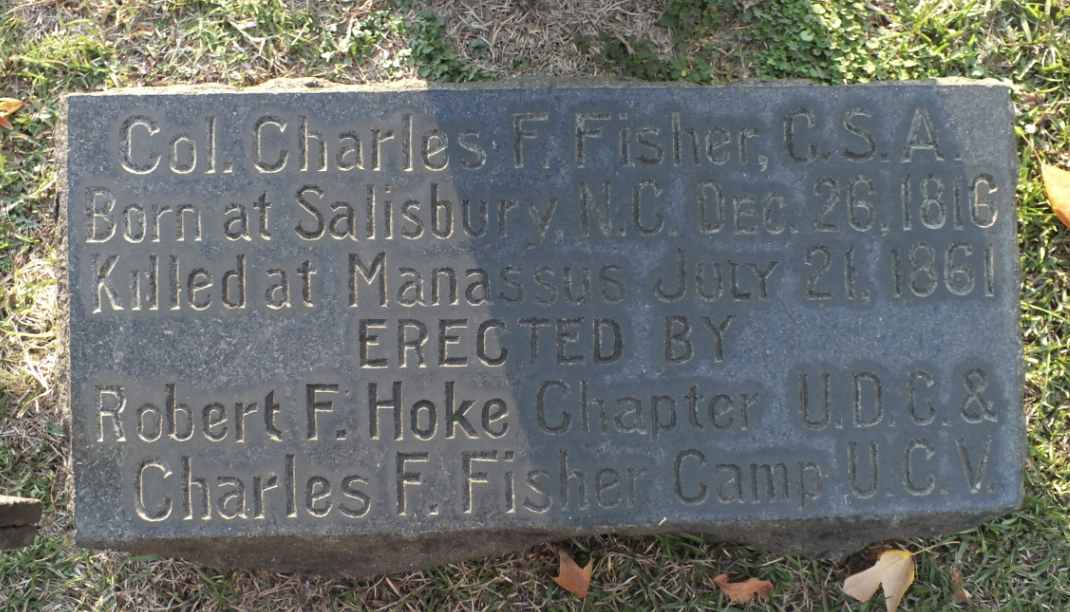
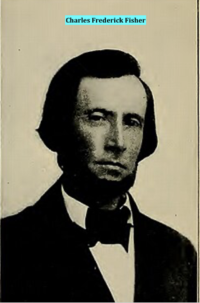
Charles Frederick Fisher (December 26, 1816 – July 21, 1861) was an American attorney, engineer, and soldier from Salisbury, the county seat of Rowan County, North Carolina. He served as President of the North Carolina Railroad and died in battle as an officer leading the 6th North Carolina regiment of the Confederate States Army.
Early and family life
Fisher was born in Salisbury in 1816 to Christine Beard Fisher and her husband, legislator and plantation owner Charles Fisher. His paternal grandfather, Frederick Fisher, had migrated to western North Carolina from Shenandoah County, Virginia, and had served as an officer in the local militia during the American Revolutionary War. His maternal grandparents were Lewis Beard and Susan Dunn, and his maternal great-grandfather, lawyer John Dunn, was an ardent Tory during that war.
After a local private education, Fisher entered Yale University in 1835, but failed to complete his freshman year. Fisher married Ruth Caldwell (daughter of businessman and legislator from Guilford County, North Carolina, David Caldwell), and they had three children who were reared by relatives after Fisher’s death. Although the Fishers were Lutheran or Episcopalian, their orphaned eldest daughter Christine was raised by a Catholic aunt and converted to Catholicism and later become an author of many novels, some supporting the Lost Cause.
Career
Although he never received a formal educational degree, Fisher became farmer, miner, and journalist in his home Rowan County. His father was a politician for 28 years, much of which time Fisher supported him as copublisher of the Western Carolinian. A Democrat, Fisher won his first political office in 1854, when Rowan County voters elected him as a state senator.
The following year, Fisher became president of the North Carolina Railroad, succeeding former governor John Morehead. While still the railroad’s president, he was also selected as its principal contractor to build a line to Morganton, North Carolina. Slow construction progress and high costs produced considerable criticism, particularly from Jonathan Worth (businessman, lawyer, Whig legislator and president of the competing Fayetteville and Western Plank Road Company). In 1859, despite Worth’s continued criticism, the railroad’s stockholders (including Whigs) re-elected Fisher as its president. Fisher became friends with Vermont-born Sewall Lawrence Fremont (née Fish, 1816–1886), a former U.S. Army artilleryman who had become chief engineer and superintendent of the Wilmington and Weldon Railroad in eastern North Carolina in 1854.
American Civil War
During the American Civil War Fisher and Fremont both joined the Confederate States Army. Fisher became a Colonel commanding the 6th North Carolina Infantry Regiment. He died leading a charge on a Union Army battery at the First Battle of Bull Run, supporting North Carolina General Thomas Lanier Clingman as well as Fisher’s cousin (who became General after that battle) Jubal Early.[ Whether the fatal bullet was from friendly fire of the Fourth Alabama or Second or Eleventh Mississippi, or from the New York Zouaves or other Union soldiers from the Sudley Road will never be known.
Legacy
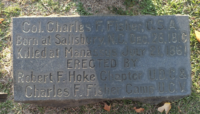
Fisher was buried at the Old Lutheran Cemetery in Salisbury. Propaganda made Fisher an early hero of the Confederacy and later of the Lost Cause. His troops erected a marker where he fell, which was later damaged by souvenir hunters and is now replaced by a U.S. flagpole. His friend S.L. Fremont came to command North Carolina’s coastal defense and named Fort Fisher at the mouth of the Cape Fear River for his gallantry.[10] Later, the United Confederate Veterans and Daughters of the Confederacy established memorial markers. North Carolina chief justice Benjamin Franklin White, formerly a Confederate Captain, published a laudatory account of Fisher’s death in 1901 His hat is at the North Carolina Museum of History.
Charles Frederick Fisher
Born: December 26, 1816
Birthplace: Salisbury, North Carolina
Father: Colonel Charles Frederick Fisher 1788 – 1849
Mother: Christina Beard 1788 – 1848
Wife: Elizabeth Clarissa Ruth Caldwell 1821 – 1850
(Buried: Old Lutheran Church Cemetery, Salisbury, North Carolina)
Children:
Frances Christine Fisher Tiernan 1846 – 1920
(Buried: Chestnut Hill Cemetery, Salisbury, North Carolina)
Anne McBride “Annie” Fisher 1849 – 1925
Education:
Attended Yale University
Occupation before War:
Mine Owner, and Planter in Salisbury, North Carolina
Editor of Western Carolinian Newspaper
1854 – 1855: North Carolina State Senator
1855 – 1861: President of North Carolina Railroad
Civil War Career:
1861: Colonel of 6th North Carolina Infantry Regiment
1861: Killed during the First Battle of Bull Run, while leading a charge
Died: July 21, 1861
Place of Death: Manassas, Virginia
Age at time of Death: 44 years old
Burial Place: Old Lutheran Church Cemetery, Salisbury, North Carolina
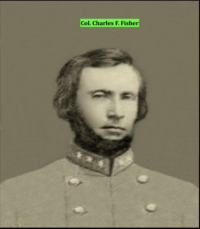
Col. Charles Frederick Fisher.
| Charles Frederick Fisher, President of the North Carolina Railroad Company and stominent resident of Salisbury, the county seat of Rowan Countv Fisher, a tall, slender man with a scraggiy bronze beard, had long been a controversial figure in state business circles, and was the onlv son of Charles Fisher and his wife, Christina Beard. |
He had been born in Salisbury on December 26, 1816, in an atmosphere of comparative wealth. Young Fisher attended classical schools in Salisbury and entered Yale University in 1835, but left college in his freshman year for reasons which are not quite clear. He later engaged in agriculture and mining and was for several years associated with Dr. Austin in the publication of the Western Carolinian in Salisbury.“
In 1854, Fisher represented Rowan County as a Democrat in the North Carolina Senate. He was elected President of the North Carolina Railroad in 1855
Unfortunately, we know little of Fisher’s private life except the fact that he was happily married to Elizabeth R. Caldwell, a daughter of David F. Caldwell. One daughter, Frances Christine, later a famous writer under the name of Christian Reid, was born to this union
Shortly after the Sixth had taken Ricketts’ battery, Colonel William Smith stumbled across the body of Fisher Later, other Confederates, hurrying to the battlefield from Manassas Junction, passed a lone rider on horseback carrying Fisher‘s body, “cold and stiff in death.” The colonel’s remains were carried in front of the saddle in the direction of the junction Captain York of Company I, Sixth Regiment, sent a telegram to Governor Clark on the 22nd:
Col. Chas. F. Fisher was killed in battle today. Send notice to family. His body on the way.
The body reached Raleigh on the morning of July 2-1 on the mail train from Petersburg An escort of the Twelfth Regiment North Carolina Troops under Colonel James J. Pettigrew accompanied the remains. Fisher’s death created a deep impression on the minds of the people of North Carolina. When the train carrying the body reached Raleigh, crowds filed into the car which contained Fisher’s coffin, on top of which were “placed the sword and hat of the deceased patriot.” People saw that there were two bullet holes in the hat, revealing the fact that the fatal bullet had passed entirely through Fisher’s head. The train carrying the body was draped in mourning, while the flag on the State Capitol was lowered to halt-mast.The Raleigh Register exclaimed:
A braver man than Colonel Fisher never lived. He carried his life in his hand for the service of his country, and at the hour of need freely offered it upon its altar.
On the afternoon of July 24 Fisher’s body arrived at Salisbury, his home town. Almost the entire population of the town was at the station to meet the remains which were escorted by “Capt. Cole’s Company of Guilford men.” Eight pallbearers bore the coffin through the streets to the Episcopal Church followed by a “very long procession of citizens. . . .” The funeral services were very solemn. The Salisbury Brass Band played for the occasion with ‘measured music.” It was evening when Fisher’s body was lowered into the grave. According to the Salisbiny Carolina Watchman.
The exercises there were deeply solemn, though brief. It was indeed a touching moment. Manly bosoms heaved with emotion . . . soon the mound of yellow clay rose to mark the resting place of an intrepid patriot of the revolution of 1861. . . . He is gone. Peace to his ashes, and forever green be the laurels of his memory..
As the thunderous crashes of the military salute echoed in the evening stillness all Salisbury wept.
Burial: Old Lutheran Church Cemetery, Salisbury, Rowan County, North Carolina
Related Items
-
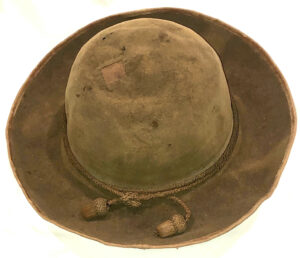
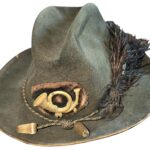
Superior Example of an Identified Confederate Beehive Style Slouch Hat – Capt. Willis C. Bright Co. E 8th Tennessee Infantry
$25,000Superior Example of an Identified Confederate Beehive Style Slouch Hat – Capt. Willis C. Bright Co. E 8th Tennessee InfantryJanuary 13, 2025 -
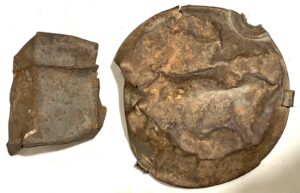
M1858 Smoothside Canteen and Cartridge Box Tin Picked up at the Bloody Angle after the Battle of Spotsylvania and Given to Col. Clark S. Edwards 5th Maine Infantry
M1858 Smoothside Canteen and Cartridge Box Tin Picked up at the Bloody Angle after the Battle of Spotsylvania and Given to Col. Clark S. Edwards 5th Maine InfantryJanuary 14, 2024 -
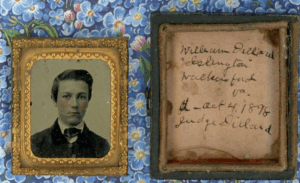
1/16 PLATE RUBY AMBROTYPE OF VMI CADET WILLIAM T. DILLARD WOUNDED IN THE BATTLE OF NEW MARKET
$1,8501/16 PLATE RUBY AMBROTYPE OF VMI CADET WILLIAM T. DILLARD WOUNDED IN THE BATTLE OF NEW MARKETDecember 18, 2023 -
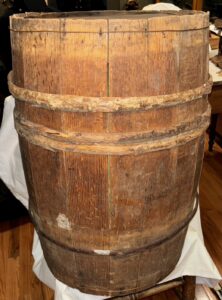
Civil War Period Flour Barrel from Richmond, Virginia Mill
$750Civil War Period Flour Barrel from Richmond, Virginia MillMay 17, 2024