
Rare Late 18th Century Large Trephining and Surgical KitJuly 2, 2026
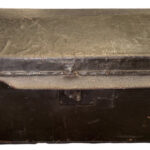

Rare Late 18th Century Large Trephining and Surgical Kit
$4,750
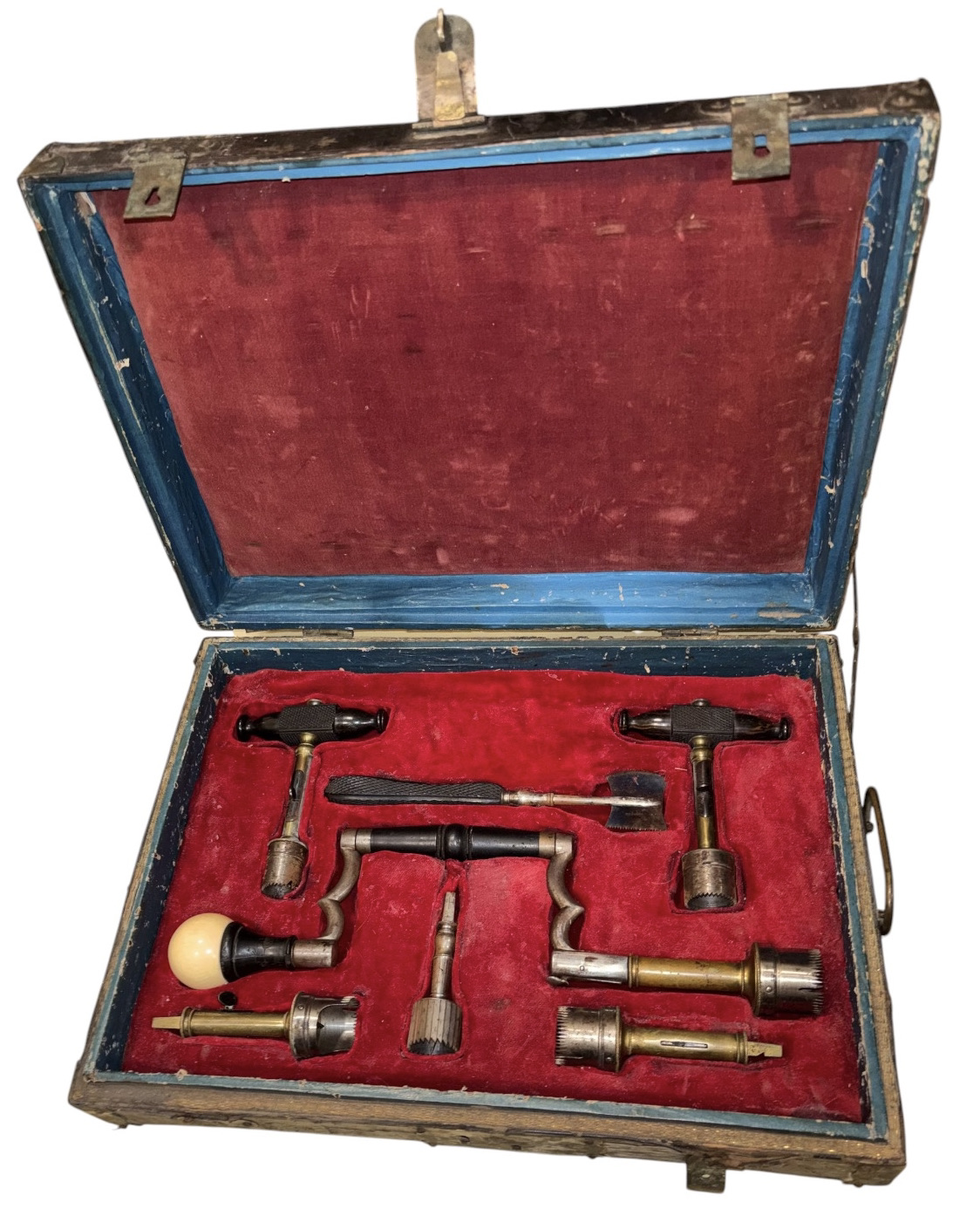
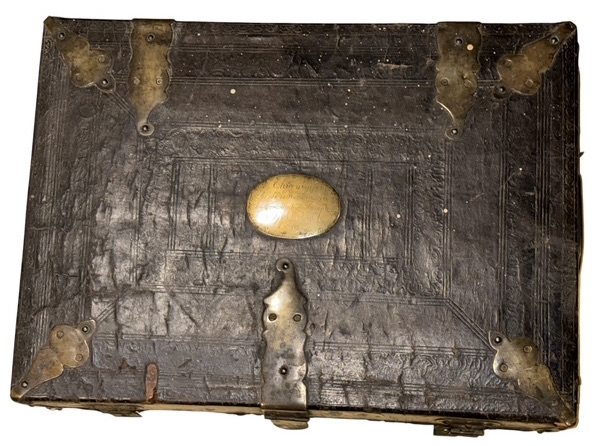
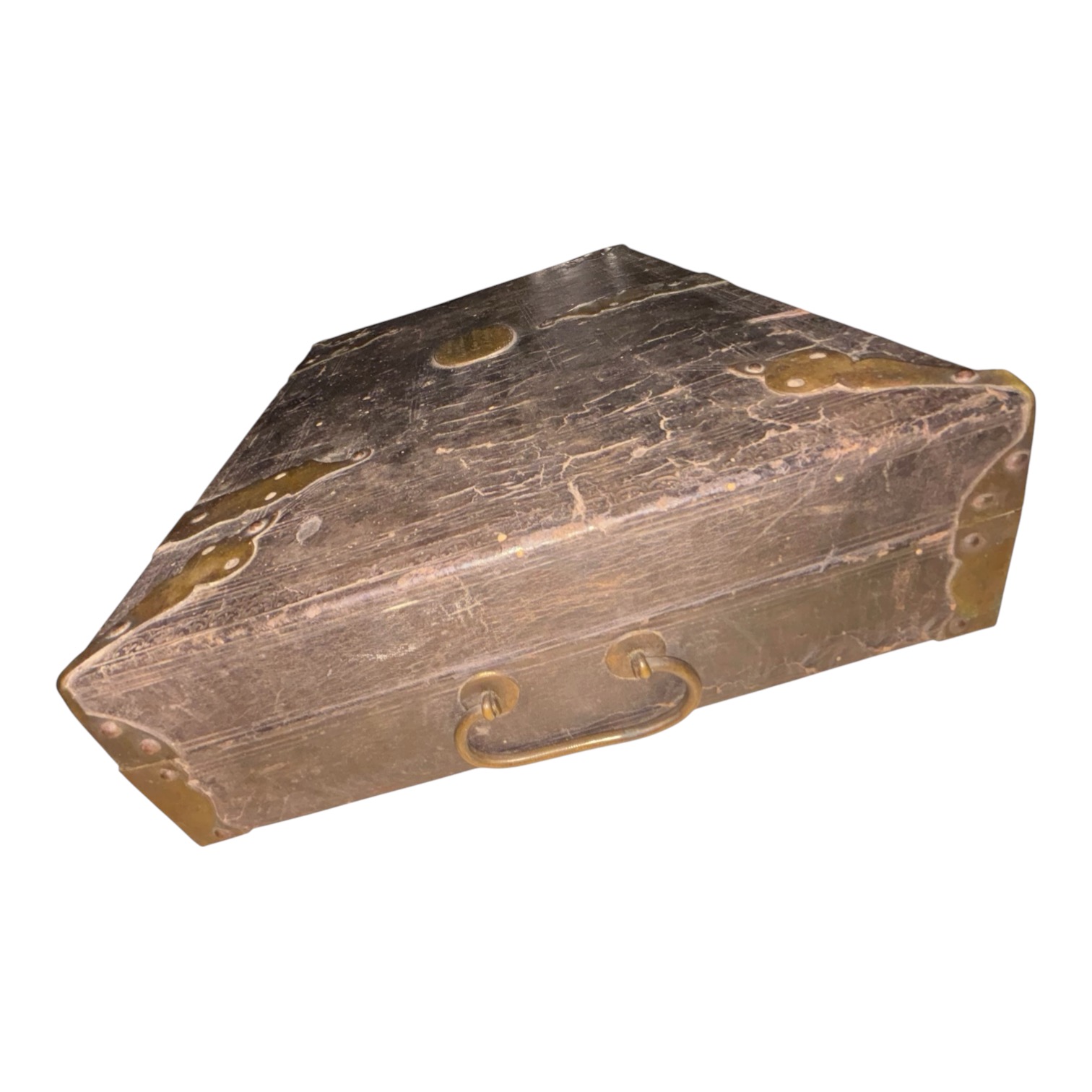
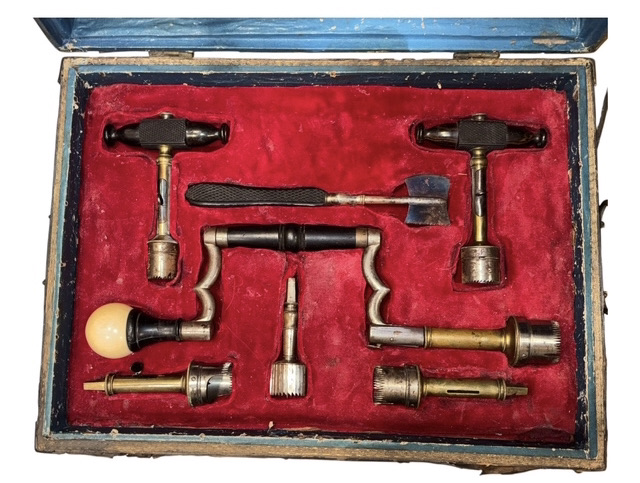
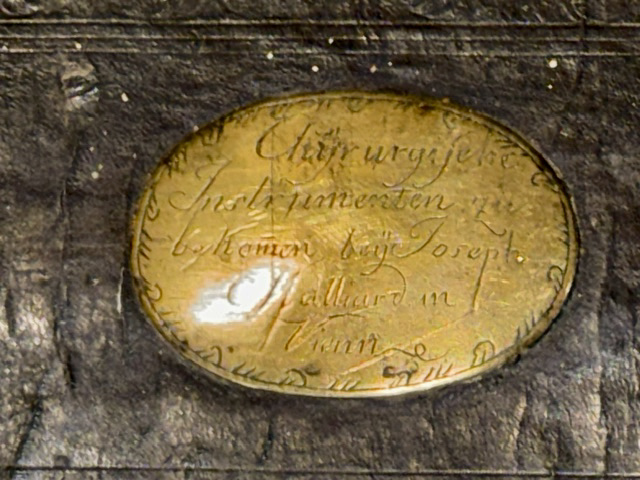
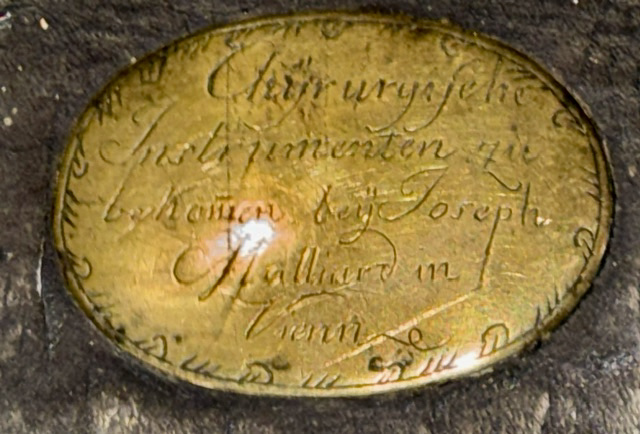
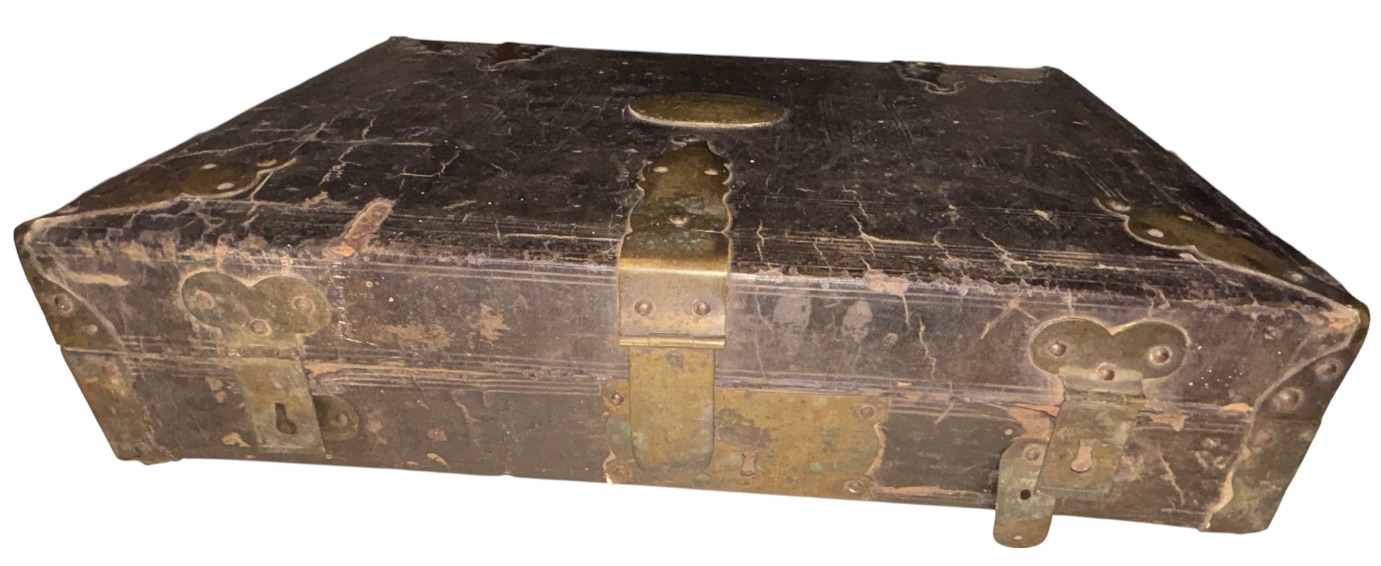
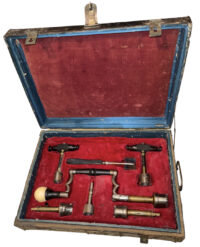
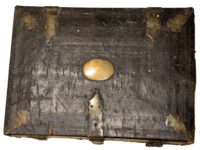
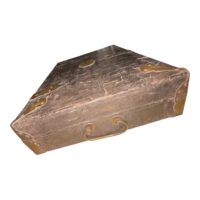
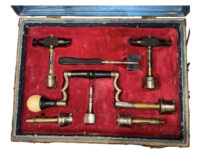
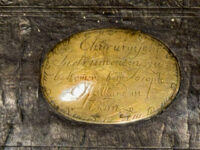
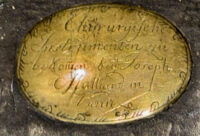
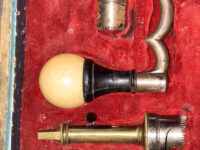
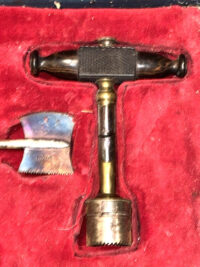
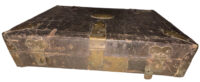
Rare Late 18th Century Large Trephining and Surgical Kit – Although we have had trephining surgical tools as elements in 19th century surgical kits, as well as seeing small trephining kits, this example is the earliest and most substantial that we have encountered. This kit’s component tools are housed in a large, leather covered box, accented with decorative brass hardware; atop of the box’s exterior is a brass escutcheon with the following engraved on it:
“Chyruryfehe
Instrumenten
Kamen by Joseph
Malliard in
Vienna”
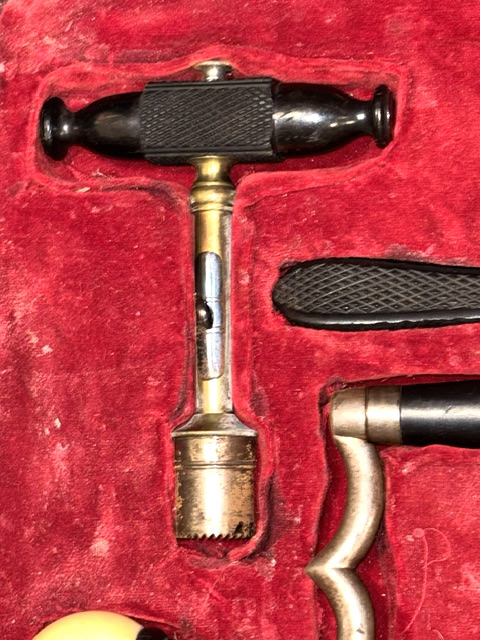
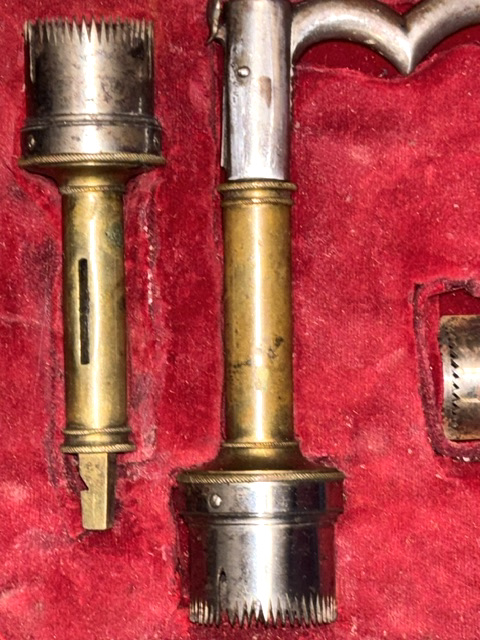
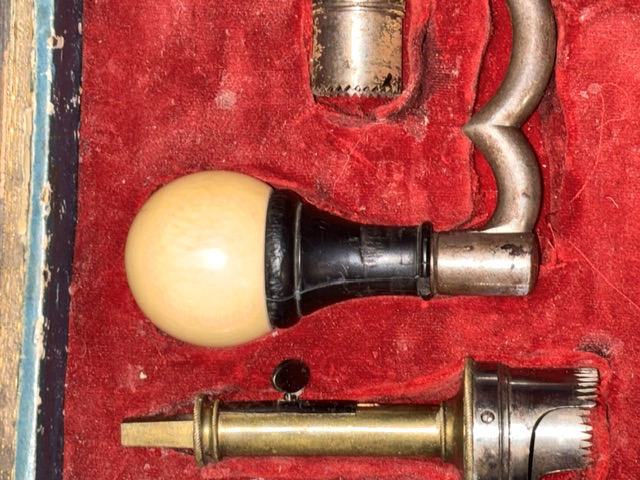
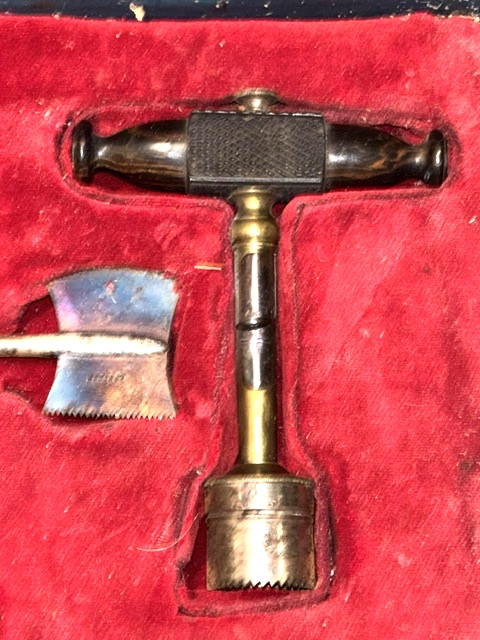
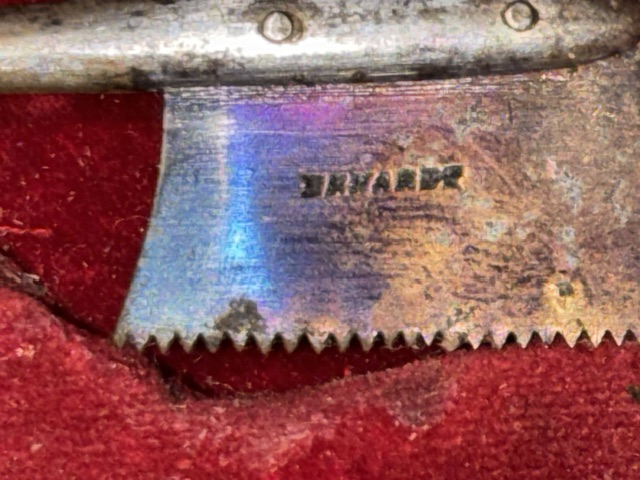
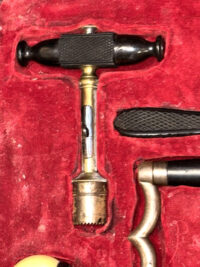
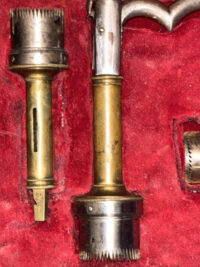
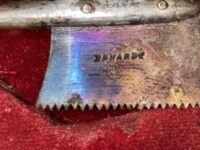
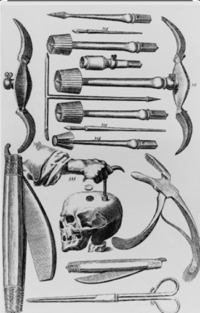
Joseph Malliard was a significant surgical and medical related instrument maker in Vienna, Austria in the late 18th century (more information on him is enumerated below); Malliard worked for and with the Vienna military hospital in the late 18th century. This superbly appointed box is lined in red velvet, with custom-conformed compartments for each of the various components. Amongst the multiple trephining, circular saws, is a Hey’s saw and a most imposing bracing bit to affix to a trephining saw, to provide extra leverage in the process of alleviating intra-cranial pressure – this extremely well-made device has a large, ivory spherical, hand-holding end. This rare kit remains in excellent condition; the leather covering of the exterior has some minor cracking, but not lifting off the box proper and remains supple, with no flaking. This is by far the most unique 18th and early 19th century piece of medical / surgical history that we have encountered.
Measurements: L – 14.5”; W – 10.75”; Depth – 3.5”
Joseph Malliard, or Maliar, a cutler, made a series of surgical instruments for Giovanni Alessandro Brambilla (1728-1800). As models, Brambilla gave him not only French and English instruments, but also the tables of his Instrumentarium chirurgicum militare Austriacum, published in German in 1780 and in Latin in 1782.
In the context of Austrian medical history, Joseph Malliard (sometimes spelled Maillard) was a master craftsman and instrument maker who worked for the Vienna military hospital and the Josephinum in the late 18th century.
The Josephinum houses unique collections of the Medical University of Vienna, among them 1192 anatomical wax models ordered by Emperor Josef II and 45 surgical instrument sets of 17th cent. by Giovanni A. Brambilla
Historical Significance
Alongside surgeon Alessandro Brambilla, Malliard helped design and produce 65 standardized military surgical cased sets. These kits were ordered by Emperor Joseph II for the newly founded Josephinum and featured elegantly crafted Surgical Cased Sets Collection in Josephinum made of the finest steel, ivory, and ebony. This project established Austria as an innovator in standardized, high-quality medical instrumentation.
Visiting the Collection
Today, the original surgical kits crafted by Malliard are preserved and publicly displayed at the Josephinum Surgical Cased Sets Collection in Vienna. The museum houses these instruments as art relics bridging early and modern surgery.
(Note: If you are instead looking for Maillard in the context of modern healthcare, the name usually refers to the “Maillard reaction”, a chemical process related to Plant-Based Proteins and Their Modification and Processing for …, or the popular French manufacturer of bicycle hubs, rather than modern Austrian medical instruments.)
Surgical Cased Sets Collection in Josephinum
In the heart of Vienna, in the grand neoclassical Josephinum, lies a treasure of history and science: a collection of surgical sets created under the direction of Giovanni Alessandro Brambilla, the Chief Surgeon of the Habsburg monarchy. These instruments, precision crafted by the famous Viennese master Joseph Malliard, are not just relics of medicine, but symbols of an era that sought to combine art, innovation and practicality in the pursuit of healing.
Visionary: Brambilla
The story begins in 1785, when the Josephinum Military Medical and Surgical Academy was founded by decree of Emperor Joseph II. Giovanni Alessandro Brambilla (1728-1800), the emperor’s personal surgeon and the Chief Surgeon of the State, was charged with organizing and raising the standards of medical education and practice throughout the empire. Brambilla’s plan was grandiose and innovative – the existing system of training doctors did not provide a solution to the task set for him. University study was too complex, gave a lot of theoretical knowledge and despite the duration of training, provided very little practical training, focusing on therapeutic rather than operative care of patients. Surgery, in fact, was separated from the medical sciences. Brambilla decided to create a centralized institution, where would receive theoretical and practical training hundreds of military doctors-surgeons, so necessary for the rapidly growing army – an instrument for the implementation of the ambitious plans of the Habsburgs to unite the vast empire under Austrian banners.
Brambilla realized the important role surgical instruments played in the success of operations. He envisioned a collection of specialized sets of instruments that would be available to medics throughout the Habsburg Empire, ensuring standardization, uniformity, and quality. For this he turned to Joseph Malliard, a craftsman from Vienna.
Craftsman: Malliard
Joseph Malliard was no ordinary tool maker. Known for his meticulous attention to detail and innovative techniques, he was the perfect collaborator for Brambilla’s project. Brambilla provided Malliard with sketches based on French and English instruments, as well as illustrations from his own publication, Instrumentarium Chirurgicum Militare Austriacum (Austrian Military Surgical Instrumentation), first published in 1780 in German and then in 1782 in Latin language.
Together they designed and produced many sets of surgical cases, each for specific procedures, from amputations to cranial operations. The surgical instruments were arranged in 56 red leather boxes according to the direction of their use and, along with their detailed descriptions, served both to train future surgeons at the Josephinum and as a model for their standardized production for use throughout the Habsburg monarchy, greatly improved the quality and efficiency of medical instrument production in Austria in that era.
These cases were not just functional – they became works of art. Crafted from the finest steel and housed in wooden cases covered in red leather with gilded ornamentation, the instruments reflected both the precision of their purpose and the elegance of their era. The handles were made of ivory or black ebony. The sets were arranged according to their medical purpose – dissection, amputation, trepanation, and obstetrics. All of them were carefully labeled and placed in the pits of their respective boxes in a well-thought-out order.
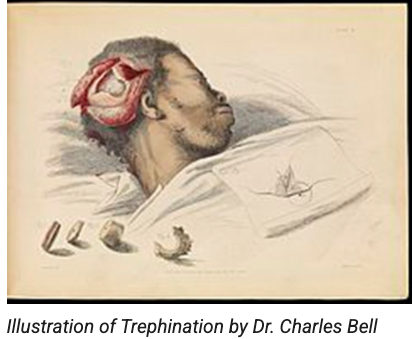
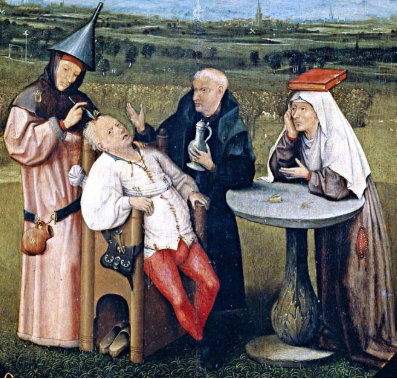
Trephining or trepanation, is a surgical procedure in which a hole is intentionally drilled, scraped, or cut into the human skull. Dating back to the Stone Age, it is considered one of the oldest known surgical interventions. Historically, trephining was performed using rudimentary tools like stone, obsidian, or bronze.
- Medical Purpose: It was often utilized to treat head injuries, relieve intracranial pressure, or manage conditions like chronic headaches and epilepsy.
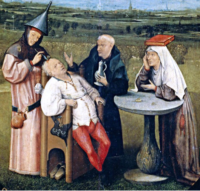
- Spiritual Purpose: In many ancient cultures, it was believed that drilling holes would allow trapped “evil spirits” or demons causing mental illness or abnormal behavior to escape.
- Survival Rates: Archaeological discoveries of trephined skulls with healed bone edges indicate that many patients survived the primitive surgery.
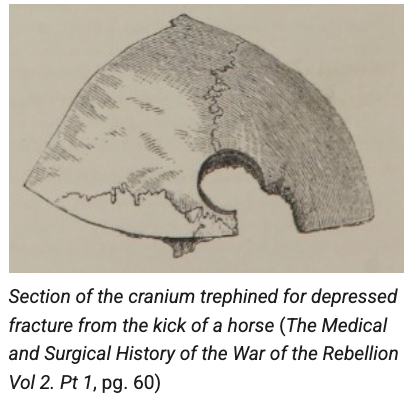
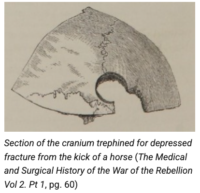
- During the Civil War, surgeons performed trephining (trepanning)—drilling or cutting a circular hole into the skull—primarily on soldiers who suffered depressed skull fractures or penetrating bullet wounds. The procedure aimed to relieve intracranial pressure, drain blood, and remove shattered bone fragments.
- Despite the use of anesthetics like chloroform, the surgery was notoriously risky. Because Civil War doctors operated prior to the widespread acceptance of germ theory and antiseptics, postoperative infections were incredibly common. Consequently, trephining carried a staggering mortality rate of about 50% to 60%.
A Hole in the Head–Civil War Trephination (National Museum of Civil War Medicine)
Posted on: October 27th, 2022
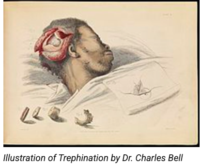
Neurosurgery is one of the most difficult and complex types of surgery. The brain and nervous systems control all life-sustaining processes in the body and the smallest mistake can lead to countless post-surgical complications. The birth of American neurosurgery can at least be traced to the Civil War but the tradition of opening the skull has been going on for thousands of years. Some of the earliest examples of trephination and brain surgery come from Peru circa 400 BC while also being observed throughout Europe during the medieval period.[1] Originally, the technique is believed to have been used for headaches, trauma to the head, and to release evil spirits from the body by either cutting or drilling a hole in the skull.
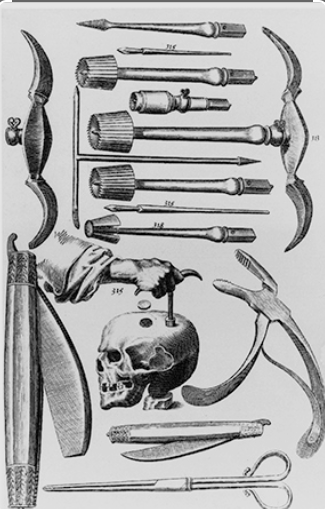
The device used for trephination, known as a trephine, has an interchangeable wooden handle that can be placed on trephines of assorted sizes, and a rotating metal cutting head used to cut a hole in the skull. The trephine has a metal spike in the center of the cutting head to keep the material being cut in place and to secure its removal. Other implements used in the trephination process are a scalpel, bone brush, and a Hey’s saw.
First the surgeon would sedate the patient and begin to use the scalpel to slowly separate the skin from the skull. Once a sufficient space was created, the surgeon would then use the trephine to cut a hole near the wound or use the Hey’s saw to scrape away at the skull. If done correctly, the dura mater is left untouched, and the pieces of fractured bone or the bullet are removed. Trephination was one of the more dangerous surgeries that carried some of the most risk if done incorrectly – leading to its high mortality rate. Around 200 instances of trephination were performed during the Civil War with a staggering 57% mortality rate.[2] Despite this, many of those that survived lived fairly normal lives with little neurological deficits.
During the Civil War, there was debate within the medical community over the effectiveness of trephination in patient survival. While it was a risky procedure, there were instances where it was necessary. Dr. John J. Chisholm was one of the doctors against trephination. Chisholm used a more conservative approach when appropriate but did recognize that in cases of a depressed skull fracture, trephination could save the patient’s life.[3] Dr. Chisholm and his counterparts, who advocated for caution when facing injuries to the head, recalled the experiences of trephination in the Crimean War where some reported the mortality rate of the procedure to be 100%.
In the post-war years, renowned Civil War surgeon Samuel W. Gross published a paper comparing treatment outcomes of gunshot wounds to the skull using trephination and the conventional method of treatment. The conventional method consisted of a more conservative approach where an operation would only be performed if symptoms of compression of the brain were showing[4]. Dr. Gross found “in his examination of 160 cases in which the trephine was employed that the death rate was 60.62 percent. By contrast, in the 573 cases in which the expectant method was used the mortality rate was 74.34 percent.”[5] While trephination still carried a considerable risk, Dr. Gross found that the mortality rate was much lower, and patients often survived more than the expectant method.
Corporal John Colvin, Company B, 16th Pennsylvania Cavalry suffered a saber cut to the forehead on January 2, 1864. Corporal Colvin’s case was described in this way “the right parietal bone was badly fractured near the sagittal and frontal sutures. About one square inch of the bone being loose, was removed, together with several spiculae, and a sharp projection was removed by Hey’s saw.”[6] Hey’s saw was one of the several instruments developed in surgeries of the cranium. Corporal Colvin experienced one delirious night followed by no presented symptoms for the duration of his stay in the Cavalry Corps Hospital. He was returned to his regiment several weeks later on January 28.
On October 3, 1864, Private William H. Lowey, Co. C, 6th Tennessee Cavalry was wounded near Memphis, Tennessee receiving a “punctured fracture of the right parietal bone, near its superior posterior angle, produced by a blow of a musket, the hammer passing through both tables of the cranium.”[7] His treatment began in his regimental hospital but was later moved to Gayoso Hospital ten days later when he began to exhibit several symptoms of a compressed skull fracture. Acting Assistant Surgeon Julius Brey removed a circular portion of the skull near the wound site and examined the brain. Brey’s examination found no visible injury to the dura mater, the membrane that surrounds the brain and spinal cord. Fragments of the skull were removed, and cold water dressings were applied to the wound area. Private Lowey did become restless for several days and at nights, on occasion, delirious. Doctors prescribed Private Lowey extract of Cannabis Indica which did improve some of his symptoms. On October 18, Private Lowey came down with a case of pneumonia and cerebral hernia on November 3. Two weeks later on November 17, Private Lowey died of his wounds after entering a coma.[8]
Some of the first blood to be spilled during the Civil War happened in Baltimore on April 19, 1861. One week after the attack on Fort Sumter by South Carolina Confederates, the 6th Massachusetts disembarked their train in Baltimore to head to another train for Washington. During this period between trains, southern sympathizers crowded the 6th MA and began throwing stones at the men along Pratt Street. The soldiers turned and fired into the crowd; four soldiers died, thirty-six were wounded, and twelve civilians were killed.
One of the soldiers killed during the riot was Private Sumner H. Needham, Co. I, 6th Massachusetts. Private Needham was struck in the forehead with a brick and was taken to Baltimore University where he was examined by future Surgeon General William A. Hammond who determined that a trephine needed to be used. Dr. Hammond performed the operation, however, it was not successful and Private Needham died several hours later.[9] The rest of the wounded men from the regiment were taken to the US Capitol Building and were treated by former teacher and future world-class humanitarian Clara Barton.
Dr. William Hammond, after his service in the Civil War, became a founding member of the American Neurological Society and went on to shape the future of neuroscience and neurosurgery. Trephination is one of the oldest surgical procedures in human history and it is still used today. Modern neurosurgeons often perform what is known today as “burr holes.” The purpose of a burr hole is to relieve pressure on the brain when intracranial pressure builds up due to increased levels of fluid in and around the brain. Over the past 160 years, the field of neuroscience has evolved with technological advancements in imagery, medicines, and techniques. Neurosurgery was a delicate and fragile process during and before the Civil War, and while it still is today, modern technological advancements have reduced the risks of death or neurological deficits by a considerable amount.
Related Items
-
Excellent Original Civil War Officer’s Haversack
$1,450Excellent Original Civil War Officer’s HaversackJuly 9, 2022 -
Civil War Period Silver Card Case Brought Home by F.M. Gibson, 40th Mass. Infantry
$625Civil War Period Silver Card Case Brought Home by F.M. Gibson, 40th Mass. InfantryMay 2, 2020 -

Additional Group of Civil War or Pre-Civil War Period Personal Items
Additional Group of Civil War or Pre-Civil War Period Personal ItemsAugust 21, 2022 -
Civil War Period Confederate Currency
Civil War Period Confederate CurrencyFebruary 8, 2022